Posts Tagged ‘history of ideas’
“Ultimately, it is the desire, not the desired, that we love”*…

Or is it? The web– and the world– are awash in talk of the Mimetic Theory of Desire (or Rivalry, as its creator, René Girard, would also have it). Stanford professor (and Philosophy Talk co-host) Joshua Landy weights in with a heavy word of caution…
Here are two readings of Shakespeare’s Hamlet. Which do you think we should be teaching in our schools and universities?
Reading 1. Hamlet is unhappy because he, like all of us, has no desires of his own, and therefore has no being, properly speaking. The best he can do is to find another person to emulate, since that’s the only way anyone ever develops the motivation to do anything. Shakespeare’s genius is to show us this life-changing truth.
Reading 2. Hamlet is unhappy because he, like all of us, is full of body thetans, harmful residue of the aliens brought to Earth by Xenu seventy-five million years ago and disintegrated using nuclear bombs inside volcanoes. Since it is still some time until the practice of auditing comes into being, Hamlet has no chance of becoming “clear”; it is no wonder that he displays such melancholy and aimlessness. Shakespeare’s genius is to show us this life-changing truth.
Whatever you make of the first, I’m rather hoping that you feel at least a bit uncomfortable with the second. If so, I have a follow-up question for you: what exactly is wrong with it? Why not rewrite the textbooks so as to make it our standard understanding of Shakespeare’s play? Surely you can’t fault the logic behind it: if humans have indeed been full of body thetans since they came into existence, and Hamlet is a representation of a human being, Hamlet must be full of body thetans. What is more, if everyone is still full of body thetans, then Shakespeare is doing his contemporaries a huge favor by telling them, and the new textbooks will be doing us a huge favor by telling the world. Your worry, presumably, is that this whole body thetan business is just not true. It’s an outlandish hypothesis, with nothing whatsoever to support it. And since, as Carl Sagan once said, “extraordinary claims require extraordinary evidence,” we would do better to leave it alone.
I think you see where I’m going with this. The fact is, of course, that the first reading is just as outlandish as the second. As I’m about to show (not that it should really need showing), human beings do have desires of their own. That doesn’t mean that all our desires are genuine; it’s always possible to be suckered into buying a new pair of boots, regardless of the fact that they are uglier and shoddier than our old ones, just because they are fashionable. What it means is that some of our desires are genuine. And having some genuine desires, and being able to act on them, is sufficient for the achievement of authenticity. For all we care, Hamlet’s inky cloak could be made by Calvin Klein, his feathered hat by Diane von Furstenberg; the point is that he also has motivations (to know things, to be autonomous, to expose guilt, to have his story told accurately) that come from within, and that those are the ones that count.
To my knowledge, no one in the academy actually reads Hamlet (or anything else) the second way. But plenty read works of literature the first way. René Girard, the founder of the approach, was rewarded for doing so with membership in the Académie française, France’s elite intellectual association. People loved his system so much that they established a Colloquium on Violence and Religion, hosted by the University of Innsbruck, complete with a journal under the ironically apt name Contagion. More recently, Peter Thiel, the co-founder of PayPal, loved it so much that he sank millions of dollars into Imitatio, an institute for the dissemination of Girardian thought. And to this day, you’ll find casual references to the idea everywhere, from people who seem to think it’s a truth, one established by René Girard. (Here’s a recent instance from the New York Times opinion pages: “as we have learned from René Girard, this is precisely how desires are born: I desire something by way of imitation, because someone else already has it.”) All of which leads to an inevitable question: what’s the difference between Girardianism and Scientology? Why has the former been more successful in the academy? Why is the madness of theory so, well, contagious?…
Are we really dependent on others for our desires? Does that mechanism inevitably lead to rivalry, scapegoating, and division? @profjoshlandy suggests not: “Deceit, Desire, and the Literature Professor: Why Girardians Exist,” in @StanfordArcade. Via @UriBram in @TheBrowser. Eminently worth reading in full.
* Friedrich Nietzsche (an inspiration to Girard)
###
As we tease apart theorizing, we might spare a thought for William Whewell; he died on this date in 1866. A scientist, Anglican priest, philosopher, theologian, and historian of science, he was Master of Trinity College, Cambridge.
At a time when specialization was increasing, Whewell was renown for the breadth of his work: he published the disciplines of mechanics, physics, geology, astronomy, and economics, while also finding the time to compose poetry, author a Bridgewater Treatise, translate the works of Goethe, and write sermons and theological tracts. In mathematics, Whewell introduced what is now called the Whewell equation, defining the shape of a curve without reference to an arbitrarily chosen coordinate system. He founded mathematical crystallography and developed a revision of Friedrich Mohs’s classification of minerals. And he organized thousands of volunteers internationally to study ocean tides, in what is now considered one of the first citizen science projects.
But some argue that Whewell’s greatest gift to science was his wordsmithing: He created the words scientist and physicist by analogy with the word artist; they soon replaced the older term natural philosopher. He also named linguistics, consilience, catastrophism, uniformitarianism, and astigmatism.
Other useful words were coined to help his friends: biometry for John Lubbock; Eocine, Miocene and Pliocene for Charles Lyell; and for Michael Faraday, electrode, anode, cathode, diamagnetic, paramagnetic, and ion (whence the sundry other particle names ending -ion).

“A mind that is stretched by a new idea can never go back to its original dimensions”*…
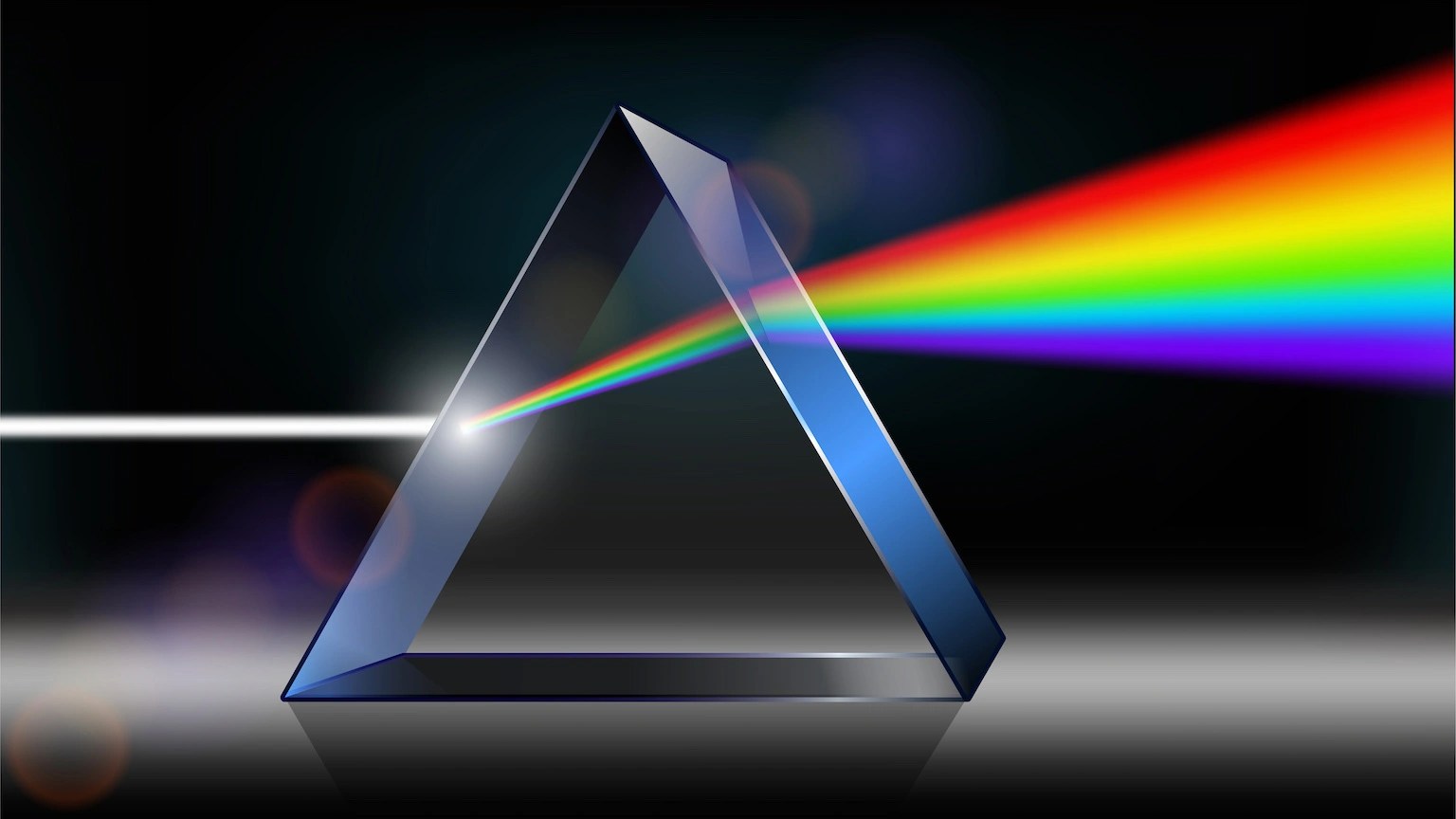
Alex Berezow observes (in an appreciation of Peter Atkins‘ Galileo’s Finger: The Ten Great Ideas of Science) that, while scientific theories are always being tested, scrutinized for flaws, and revised, there are ten concepts so durable that it is difficult to imagine them ever being replaced with something better…
In his book The Structure of Scientific Revolutions, Thomas Kuhn argued that science, instead of progressing gradually in small steps as is commonly believed, actually moves forward in awkward leaps and bounds. The reason for this is that established theories are difficult to overturn, and contradictory data is often dismissed as merely anomalous. However, at some point, the evidence against the theory becomes so overwhelming that it is forcefully displaced by a better one in a process that Kuhn refers to as a “paradigm shift.” And in science, even the most widely accepted ideas could, someday, be considered yesterday’s dogma.
Yet, there are some concepts which are considered so rock solid, that it is difficult to imagine them ever being replaced with something better. What’s more, these concepts have fundamentally altered their fields, unifying and illuminating them in a way that no previous theory had done before…
The bedrock of modern biology, chemistry, and physics: “The ten greatest ideas in the history of science,” from @AlexBerezow in @bigthink.
* Oliver Wendell Holmes
###
As we forage for first principles, we might send carefully-calcuated birthday greetings to Georgiy Antonovich Gamov; he was born on this date in 1904. Better known by the name he adopted on immigrating to the U.S., George Gamow, he was a physicist and cosmologist whose early work was instrumental in developing the Big Bang theory of the universe; he also developed the first mathematical model of the atomic nucleus. In 1954, he expanded his interests into biochemistry and his work on deoxyribonucleic acid (DNA) made a basic contribution to modern genetic theory.
But mid-career Gamow began to shift his energy to teaching and to writing popular books on science… one of which, One Two Three… Infinity, inspired legions of young scientists-to-be and kindled a life-long interest in science in an even larger number of other youngsters (including your correspondent).

“We do not inherit the earth from our ancestors, we borrow it from our children”*…

… and the interest rate on that loan is rising.
There’s much discussion of what’s causing the sudden-feeling spike in prices that we’re experiencing: pandemic disruptions, nativist and protectionist policies, the over-taxing of over-optimized supply chains, and others. But Robinson Meyer argues that there’s another issue, an underlying cause, that’s not getting the attention it deserves… one that will likely be even harder to address…
Over the past year, U.S. consumer prices have risen 7 percent, their fastest rate in nearly four decades, frustrating households and tanking President Joe Biden’s approval rating. And no wonder. High inflation corrodes the basic machinery of the economy, unsettling consumers, troubling companies, and preventing everyone from making sturdy plans for the future…
For years, scientists and economists have warned that climate change could cause massive shortages of major commodities, such as wine, chocolate, and cereals. Financial regulators have cautioned against a “disorderly transition,” in which the world commits only haphazardly to leaving fossil fuels, so it does not invest enough in their zero-carbon replacements. In an economy as prosperous and powerful as America’s, those problems are likely to show up—at least at first—not as empty grocery shelves or bankrupt gas stations but as price increases.
That phenomenon, long hypothesized, may be starting to actually arrive. Over the past year, unprecedented weather disasters have caused the price of key commodities to spike, and a volatile oil-and-gas market has allowed Russia and Saudi Arabia to exert geopolitical force.
“This climate-change risk to the supply chain—it’s actually real. It is happening now,” Mohamed Kande, the U.S. and global advisory leader at the accounting firm PwC, told me.
…
How to respond to these problems? The U.S. government has one tool to slow down the great chase of inflation: Leash up its dollars. By raising the rate at which the federal government lends money to banks, the Federal Reserve makes it more expensive for businesses or consumers to take out loans themselves. This brings demand in the economy more in line with supply. It is like the king in our thought experiment deciding to buy back some of his gold coins.
But wait—is it always appropriate to focus on dollars? What if the problem was caused by too few goods? Worse, what if the economy lost the ability to produce goods over time, throwing off the dollars-to-goods ratio? Then what was once an adequate number of dollars will, through no fault of its own, become too many...
… if the climate scars on supply continue to grow, does the Federal Reserve have the right tools to manage? Stinson Dean, the lumber trader, is doubtful. “Raising interest rates will blunt demand for housing—no doubt. But if you blunt demand enough to bring lumber prices down, you’re destroying the economy,” Dean told me. “For us to have lower lumber prices, we can only build a million homes a year. Do you really want to do that?
“Raising rates,” he said, “doesn’t grow more trees.” Nor does it grow more coffee, end a drought, or bring certainty to the energy transition. And if our new era of climate-driven inflation takes hold, America will need more than higher interest rates to bring balance to supply and demand.
A provocative look at the tangled roots of our inflation, suggesting that “The World Isn’t Ready for Climate-Change-Driven Inflation,” from @yayitsrob in @TheAtlantic. Eminently worth reading in full. Via @sentiers.
* Native American proverb
###
As we dig deeper, we might send carefully calculated birthday greetings to Frank Plumpton Ramsey; he was born on this date in 1903. A philosopher, mathematician, and economist, he made major contributions to all three fields before his death (at the age of 26) on this date in 1930.
While he is probably best remembered as a mathematician and logician and as Wittgenstein’s friend and translator, he wrote three paper in economics: on subjective probability and utility (a response to Keynes, 1926), on optimal taxation (1927, described by Joseph E. Stiglitz as “a landmark in the economics of public finance”), and optimal economic growth (1928; hailed by Keynes as “”one of the most remarkable contributions to mathematical economics ever made”). The economist Paul Samuelson described them in 1970 as “three great legacies – legacies that were for the most part mere by-products of his major interest in the foundations of mathematics and knowledge.”
For more on Ramsey and his thought, see “One of the Great Intellects of His Time,” “The Man Who Thought Too Fast,” and Ramsey’s entry in the Stanford Encyclopedia of Philosophy.

“In the lingo, this imaginary place is known as the Metaverse”*…

The estimable Genevieve Bell looks back beyond Neal Stephenson’s Snow Crash to the deeper-than-you-might-think history of “the metaverse”– and explains the importance of understanding it…
…histories are more than just backstories. They are backbones and blueprints and maps to territories that have already been traversed. Knowing the history of a technology, or the ideas it embodies, can provide better questions, reveal potential pitfalls and lessons already learned, and open a window onto the lives of those who learned them. The metaverse—which is not nearly as new as it looks—is no exception…
I think there are even earlier histories that could inform our thinking. Before Second Life. Before virtual and augmented reality. Before the web and the internet. Before mobile phones and personal computers. Before television, and radio, and movies. Before any of that, an enormous iron and glass building arose in London’s Hyde Park. It was the summer of 1851, and the future was on display… The Great Exhibition of the Works of Industry of All Nations, as the extraordinary event was formally known, was the brainchild of Prince Albert, Queen Victoria’s beloved consort…
Just as there is a straight line from the Midway to Coney Island to Disneyland, there is a straight line from the White City to the 1939 New York World’s Fair to the Consumer Electronics Show. We can also draw a line between the Great Exhibition and today’s metaverse. Like the virtual world that the metaverse’s promoters promise, the Great Exhibition was a world within the world, full of the splendors of its day and promises about the future. But even as it opened up new spaces of possibility—and profit—it also amplified and reproduced existing power structures through its choices of exhibits and exhibitors, its reliance on the Royal Society for curation, and its constant erasure of colonial reality. All this helped ensure that the future would look remarkably British. The exhibition harnessed the power of steam and telegraphy to bring visitors to a space of new experiences, while masking the impact of such technological might; engines and pipes were hidden underground out of plain sight. It was a deliberate sleight of hand. If Brontë saw magic—not power, xenophobia, and nationalism—that was what she was intended to see.
I think our history with proto-metaverses should make us more skeptical about any claims for the emancipatory power of technology and technology platforms. After all, each of them both encountered and reproduced various kinds of social inequities, even as they strove not to, and many created problems that their designers did not foresee. Yet this history should also let us be alive to the possibilities of wondrous, unexpected invention and innovation, and it should remind us that there will not be a singular experience of the metaverse. It will mean different things to different people, and may give rise to new ideas and ideologies. The Great Exhibition generated anxiety and wonder, and it alternately haunted and shaped a generation of thinkers and doers. I like to wonder who will author this metaverse’s Bleak House or Alice in Wonderland in response to what they encounter there.
The Great Exhibition and its array of descendants speak to the long and complicated human history of world-making. Exploring these many histories and pre-histories can be generative and revelatory. The metaverse will never be an end in itself. Rather, it will be many things: a space of exploration, a gateway, an inspiration, or even a refuge. Whatever it becomes, it will always be in dialogue with the world that has built it. The architects of the metaverse will need to have an eye to the world beyond the virtual. And in the 21st century, this will surely mean more than worrying about ancient elm trees and the tensile strength of glass. It will mean thinking deeply about our potential and our limitations as makers of new worlds…
To understand what we are—and should be—building, we need to look beyond Snow Crash: “The metaverse is a new word for an old idea,” from @feraldata in @techreview via @sentiers (soft paywall). Eminently worth reading in full.
See also “So what is “the metaverse,” exactly?” (source of the image above).
* Neal Stephenson, Snow Crash
###
As we stew over simulacra, we might recall that it was on this date in 1903 that Morris Michtom began selling stuffed bears in his toy shop on this day in 1903. Earlier, he had asked President Theodore Roosevelt for permission to use the president’s nickname, Teddy, to which the president agreed. Soon, other toy companies were churning out copies of their own “Teddy Bears”– still among the most popular children’s toys (and also popular as adult gifts signifying affection, congratulations, or sympathy).

“My work consists of two parts; that presented here plus all I have not written. It is this second part that is important.”*…

On the occasion of it centenary, Peter Salmon considers the history, context, and lasting significance of Wittgenstein‘s revolutionary first work…
One hundred years ago, a slim volume of philosophy was published by the then unknown Austrian philosopher Ludwig Wittgenstein. The book was as curious as its title, Tractatus Logico-Philosophicus. Running to only 75 pages, it was in the form of a series of propositions, the gnomic quality of the first as baffling to the newcomer today as it was then.
1. The world is all that is the case.
1.1 The world is a totality of facts not of things.
1.11 The world is determined by the facts, and by their being all the facts.
1.12 For the totality of facts determines what is the case, and also whatever is not the case.
1.13 The facts in logical space are the world.And so on, through six propositions, 526 numbered statements, equally emphatic and enigmatic, until the seventh and final proposition, which stands alone at the end of the text: “Whereof we cannot speak, thereof we must remain silent.”
The book’s influence was to be dramatic and far-reaching. Wittgenstein believed he had found a “solution” to how language and the world relate, that they shared a logical form. This also set a limit as to what questions could be meaningfully asked. Any question which could not be verified was, in philosophical terms, nonsense.
Written in the First World War trenches, Tractatus is, in many ways, a work of mysticism…
Ludwig Wittgenstein’s Tractatus is as brilliant and baffling today as it was on its publication a century ago: “The logical mystic,” from @petesalmon in @NewHumanist.
* Ludwig Wittgenstein
###
As we wrestle with reason and reality, we might recall that it was on this date in 1930 that Dashiell Hammett‘s The Maltese Falcon— likely a favorite of Wittgenstein’s— was published. In 1990 the novel ranked 10th in Top 100 Crime Novels of All Time list by the Crime Writer’s Association. Five years later, in a similar list by Mystery Writers of America, the novel was ranked third.

You must be logged in to post a comment.