“By failing to prepare, you are preparing to fail”*…
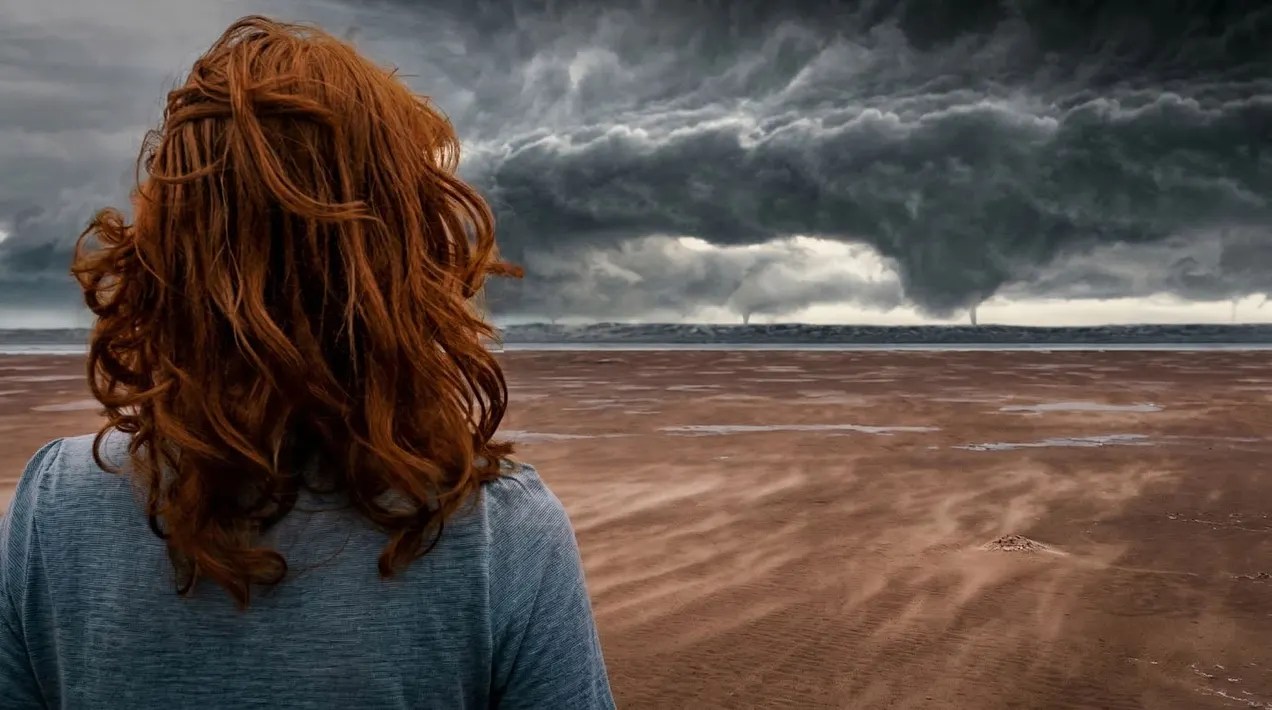
Further, in a fashion, to yesterday’s post, a piece by Nate Hagens on preparing for what promises to be (to put it politely) a challenging future. It’s via (R)D‘s old friend Patrick Tanguay (and his wonderful newsletter Sentiers), who does the introductory honors…
Nate Hagens has spent two decades mapping what he calls the “more-than-human predicament,” the interlocking crises of fossil fuel depletion, ecological overshoot, and economic fragility. This piece marks a shift in his focus: the diagnostic work is largely done, and the current moment demands a framework for action rather than further description of the problem. It’s quite long and perhaps a bit dry, but considering the complexity of everything he’s talking about, I think it reaches a nice balance between all the things and “ok, I can read this, sit with it, and have a well ordered map of what needs doing and a framework from which to work.” The framework has four levels—personal psychological grounding, trusted network-building, six broad intervention fronts, and a timeline—premised on the idea that none of the material work is possible without first stabilising the individual (“being human”) and building shared understanding among people who see the situation clearly.
The six fronts—physical infrastructure, ecological intervention, dignity systems for the dispossessed, governance, culture and meaning, and economic transition—are not a menu but an interdependent set of domains where work is needed simultaneously. Some are familiar territory for anyone thinking about collapse and resilience; others are less obvious. Hagens insists, correctly, on including dignity infrastructure for people who will lose livelihoods as supply chains contract and jobs are automated, and treats culture and collective meaning-making as essential rather than supplementary. He also argues directly that ideological critique, however accurate, is not a plan. That the moment calls for moving from naming what’s wrong to building what comes next.
What gives the framework its structure is the timeline underneath it all: three overlapping phases. Phase A is the stability window that still exists in much of the world, and the one in which trust, infrastructure, and institutions must be built while surplus and coordination capacity remain. Phase B is the period of shocks and triage, already beginning in places, where the goal is to hold systems together and prevent cascades. Phase C is the stable destination—regenerative, locally embedded, equitable—that gives the earlier phases their direction. Hagens’ central argument is that what gets built now sets the initial conditions for everything that follows, and that path dependence operates at a civilisational scale.
Most of the positive climate outcomes we are likely to see in the next twenty years will not come from technology, they will come from curtailed economic expansion driven by the very forces I described at the beginning of this essay: war, debt, and energy depletion. We already got a preview of this during the pandemic as economic activity halted. Industrial activity contracting is not a climate policy, but it is a climate outcome. […]
Subsidiarity and local governance capacity: decisions made at the lowest appropriate level, which in many cases is probably much more local than we currently assume. Communities need the ability to govern their own resource allocation when higher-level institutions can’t or won’t. […]
Collective imagination and sensemaking: the role of arts and creative work in helping communities grieve, adapt, and imagine. This is not a luxury, it is how human groups have always metabolized disruption to continue working together. […]
Shared reality and sovereign visioning: the capacity of communities to tell their own story and find their own vision for the future rather than have it told for them by algorithms, demagogues, or strangers with large followings. In a period of disruption, the communities that hold together will have a strong enough shared cultural narrative to metabolize hardship without breaking apart. This is not a soft category, it is essential and has the ability to bear weight. […]
This window is finite, and many of us – especially in the last few weeks – are increasingly aware that it is closing. We just don’t know exactly how fast. But everything that can only be built in stability – institutional trust, physical infrastructure, knowledge transfer, and relationships – has to be built now, in this window, before conditions change. […]
What does it look like? Regenerative, resilient, human-scale, embedded in local ecology, equitable in a way that does not depend on infinite growth to fund redistribution, and rich in meaning, social connection, and all the things that actually make human life good.
Eminently worth reading in full. The logic of Pascal’s wager suggests that we take Hagens’ advice seriously: “What to Do as the World Falls Apart: A Framework for Action,” from @natehagens.bsky.social (via @inevernu.bsky.social).
Evidence that taking action can matter: “Scientists have scrapped the worst‑case climate scenario – because action is making a difference,” from Andrew King.
And a reminder that there’s more action to take: “The world is heading toward a financial crisis – the state of US politics has left us ill-prepared,” from Eduardo Porter.
* Widely (but incorrectly) attributed to Benjamin Franklin
###
As we prepare, we might recall that the Academy of the Distrustful was founded in the library room of the Palau Dalmases in Barcelona. A Baroque literary and musical academy with the aim of promoting the study of classical and Catalan history and poetry, mostly in Spanish, by fourteen scholars headed by the noble Pau Ignasi de Dalmases i Ros. In the event, it lasted only several years: during the War of the Spanish Succession several of its members supported Charles III of Austria over (the man who became) Philip V of Spain— and disbanded the group.
On this date in 2005, 2025, the 325th anniversary of its foundation, the Academy was reconstituted as a humanities academy (in the broadest sense of the term) in the Sala Dalmases of the Historical Archive of the City of Barcelona.

You must be logged in to post a comment.