Posts Tagged ‘climate’
“A finite game is played for the purpose of winning, an infinite game for the purpose of continuing the play”*…

We all know that our behavior has to change if we’re going to continue healthily and happily to inhabit the earth. And we all have a few ideas of changes we can make to make a difference. But they are mostly incremental and remedial. What might a society designed to have a healthy relationship to its environment look like? Spencer R. Scott has some guidelines…
Many see the Industrial Revolution as its own kind of Renaissance. Over the past 300 years it enabled an accumulation of wealth that the world has never before seen. Yet, industrialization and the fossil-fuels that aided its growth did not come without a price. As a recent report warns, six of nine planetary boundaries have been exceeded. This unprecedented material abundance is only enjoyed by some, yet has polluted and put at risk the whole world’s air, rivers, oceans, forests, and food, and has caused two of humanity’s largest crises: climate change and the biodiversity crisis. The era of the industrial civilization is foreclosing on itself, and many are now pointing to the need for an ecological civilization to take its place. This would be a true Renaissance, where human and ecological flourishing alike are at the center of everything we do.
Before industrialization, humanity existed in an agricultural civilization during which productivity was low and people were organized around meeting basic needs. The industrial civilization ushered in a new high-productivity era that inevitably affected peoples’ values, lifestyles, beliefs, and the institutions that governed them. An ecological civilization will similarly necessitate a major paradigm shift. As Jeremy Lent asserts in “What Does An Ecological Civilization Look Like?”, we need “a transformation in the way we make sense of the world, and a concomitant revolution in our values, goals, and collective behavior.”
From Latin, ecology means “knowledge of home” and ecological means the “applied knowledge of home.” While the old industrial system is characterized by an indifference to how life on this planet works, an ecological civilization operates with ecological principles at its core – with behaviors, values, goals, and institutions organized around the applied knowledge of life on Earth.
In her book, Biomimicry: Innovation Inspired by Nature, Janine Benyus outlines some of Life’s Principles here on Earth:
Life runs on sunlight. Life rewards cooperation. Life builds from the bottom up. Life banks on diversity. Life recycles everything. Life builds resilience through diversity, decentralization, and redundancy. Life optimizes rather than maximizes. Life selects for the good of the whole system. In short, life creates the conditions conducive to life.
Inspired by Benyus’ Life’s Principles and the work of sustainable development scholar, Jiahua Pan, I created 6 ingredients for an ecological civilization…
Six ingredients for a more resilient future: “An Ecological Civilization is the Renaissance We’ve Been Waiting For,” from @SpencerRScott.
* James Carse, Finite and Infinite Games
###
As we think systemically, we might spare a thought for Guillaume Amontons; he died on this date in 1705. A physicist who made formative contributions to the understanding of friction, he was also an accomplished designer of scientific instruments– perhaps most notably, the air thermometer, which relies on increase in volume of a gas (rather than a liquid) to measure temperature. His approach led to the emergence of the concept of “absolute zero” (long before the advent of cryogenics). These days, there’s more attention at the other end of the scale…


“No water, no life. No blue, no green.”*…

Between AD 1275 and 1300, the Anasazi, a civilization that had thrived in the canyonlands of the Four Corners area of the American Southwest for a thousand years, simply vanished, abandoning their urban centers, their irrigated lands, their sacred enclosures. Their descendants, the Hopi and Zuni, tell of a time of drought, the end of the rains. Without food in the desert, one can live for a fortnight; without water, perhaps a day. The collapse of the Anasazi occurred in a single generation.
The drought in the American Southwest has now entered its twenty-third year– and as Wade Davis explains in an excerpt from his book River Notes: Drought and the Twilight of the American West, the historic drought of the last couple of decades is threatening the Colorado River (on which 40 million Americans and 5.5 million acres of agriculture depend) and raising that specter again…
… We are today in the third decade of a drought that, despite heavy snowpacks in California and parts of the mountain west, remains unrelenting.
Over the last century, the river’s flow has averaged roughly 15 million acre-feet a year, far less than the 17.5 million acre-feet that planners anticipated when water rights were apportioned to the seven states of the basin — Wyoming, Colorado, Utah, New Mexico, Nevada, Arizona, and California — in 1922. In that year, the population of Arizona was roughly 350,000, that of Nevada a mere 80,000. Between 2000 and 2022, the flow of the river dropped to an average of 12 million acre-feet; over the last three years the annual flow has been but 10 million acre-feet. Even as the volume of water coming down the Colorado has dramatically declined, the seven states of the basin continue to clamor for allotments based on flawed assessments established nearly a century ago, exerting rights to consume what the river cannot provide.
As a result, during a drought of historic severity, water consumption has consistently surpassed the total natural flow of the river; altogether since 2000, water use has out-stripped supply by 33.6-million acre-feet (an acre-foot is 325,851 gallons). To meet demand, water has been diverted from the major reservoirs. Lake Mead, last full in 1983, is today down to 28 percent of capacity, 1,040 feet above sea level, the lowest it has been since the floodgates closed in the 1930s. If the reservoir drops below 950 feet, the Hoover Dam will no longer generate hydroelectric power. At 895 feet, the reservoir becomes a deadpool; water can no longer pass through the dam. The river downstream ceases to exist.
The situation at Lake Powell is equally grim. Its capacity is now down to 22 percent. In February 2023, the reservoir dropped to 3,522 feet above sea level, the lowest since the Glen Canyon Dam became operational in 1963. Should the water level drop another 32 feet, which can readily occur in a year, it will no longer be possible to generate electricity that today powers and cools the homes and businesses of 4.5 million citizens. A power outage in Phoenix, coinciding with a two-day heat wave, could result in half the population — 800,000 or more — seeking emergency care in hospitals set up to handle but 3,000 patients. An estimated 12,800 would die. At 3,370 feet, Lake Powell will reach deadpool. The Glen Canyon Dam will be but a concrete plug. Water will cease to flow, cutting off the drinking supply of well over 25 million Americans, including most of those living in Phoenix, Las Vegas, Tucson, and much of the Los Angeles basin.
…ordinary American families are already experiencing shortages that would have been unthinkable in 2006. For decades, the Arizona city of Scottsdale has provided the Rio Verde Foothills, a community of two thousand homes, with access to its municipal water supply, sourced from the Colorado. On January 1, 2023, this supply was cut, a decision made by a city facing its own crisis, leaving the people of Rio Verde no option but to buy water by the truckload at prices that tripled overnight. Those who dug wells discovered that, after years of drought, the water table had fallen by hundreds of feet. Residents have turned to using paper plates and urinating outside, even while coping with monthly water bills as costly as their mortgage payments.
Cities such as Las Vegas have implemented strict conservation measures, banning ornamental grass, limiting water deliveries to golf courses, reducing the size of swimming pools, using recycled water whenever possible. Yet despite these efforts, Las Vegas still uses twice as much water as the average US consumption. Hedging its bets, the city is building a three-mile-long tunnel that will come up at the bottom of Lake Mead, a $1.4-billion drain to ensure that if the reservoir ever runs dry, Las Vegas will get the last drop.
In the end, what Las Vegas and other cities do hardly matters, for the elephant in the room remains agriculture. Fully 80 percent of the water drawn from the Colorado goes to irrigating some 5.5 million acres, most of which is used to grow alfalfa and grass to feed cattle, and not only in the United States. Alfalfa grown in Arizona is exported by the ton to fatten cattle in Asia and the Middle East…
Water, water– not a drop to drink? “The Climate Crisis Could Mean the Twilight of the American West,” from @authorwadedavis in @RollingStone. Eminently worth reading in full.
* Sylvia Earle
###
As we dowse, we might spare a thought for Bjørn Helland-Hansen; he died on this date in 1957. A pioneering oceanographer, his studies of the physical structure and dynamics of the oceans and their interactions with the atmosphere were instrumental in transforming oceanography from a science that was mainly descriptive to one based on the principles of physics and chemistry.

“Ice contains no future, just the past, sealed away”*…

From her new book, Ice: From Mixed Drinks to Skating Rinks—A cool history of a hot commodity, Amy Brady…
Despite more than 150 years’ worth of study and experimentation, no one really knows why ice is slippery….
Nineteenth-century Americans used ice to store perishable foods in amounts that astounded visitors from Europe, where an ice trade had yet to be developed. Apples, for example, became so commonplace in the young republic that visitors coined the phrase “as American as apple pie.”…
By WWII, the burgeoning industry of electric refrigeration was catching up to the ice industry, and companies like the Southland Ice Company were forced to rethink their business plans. Southland began selling kitchen staples like milk and bread alongside their ice. The combination became so popular, the company extended its hours to keep up with demand, and within a few years renamed itself after its new hours of operation. The 7-Eleven was born, and convenience stores today still sell ice…
Between WWII and 1975, the amount of electricity refrigerators consumed grew by more than 350 percent. Today, a look at energy use around the globe reveals that the cooling industry (refrigerators, freezers, and air conditioners) accounts for almost 10 percent of all CO2 emissions…
Six more cool facts at “10 Things You Probably Didn’t Know about Ice,” from @ingredient_x in @Orion_Magazine.
* Haruki Murakami
###
As we chill, we might recall that it was on this date in 1982 that record low temperature of -117 F was recorded in Antarctica. That record was broken the following year, also in Antarctica, at -128.6 F– a mark that stands to this date, as Antartica has been warming… leading Dr. Brady to ask, “in an age of accelerating global warming… can ice in the freezer and ice on our planetary poles continue to coexist?”
“Strange, strange are the dynamics of oil and the ways of oilmen”*…

… and at the same time, all too predictable…
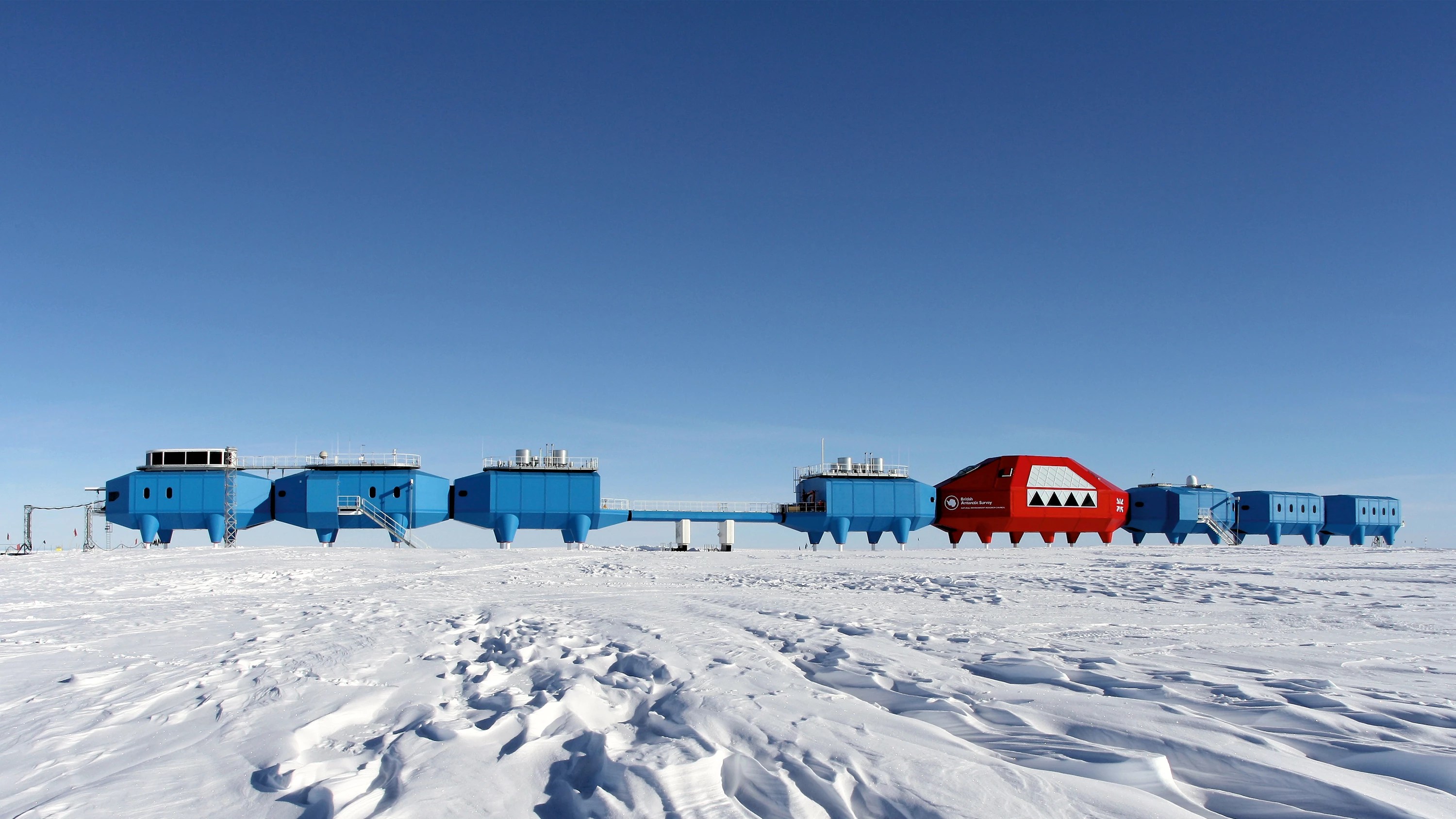
Oil executives love to talk about the energy transition. But for all the platitudes about technologies such as hydrogen and carbon capture, most are doubling down on what they know best.
Oil.
Spending on new offshore oil projects over the next two years is projected to soar to levels not seen in a decade.
In Saudi Arabia, the state-owned oil giant is embarking on a series of massive offshore expansion projects designed to boost the kingdom’s crude production. The United Kingdom and Norway are pumping more money into the North Sea in hopes of lifting out more oil. Exxon Mobil Corp., America’s oil giant, is plowing money into projects in waters off Guyana and Brazil.
The offshore revival represents a shift after a decade of focus on onshore shale plays and amounts to a vote of confidence in oil’s long-term future. The move is notable as it follows several years of mounting talk of diversifying oil companies’ business models…
The world is still likely to consume large amounts of oil for decades to come, even if energy transition efforts gain steam and global crude demand begins to decline. That means investment in new or expanded fields is needed to offset declining production from existing wells. The result is something of a race, with oil companies seeking to identify fields that can produce at low oil prices and outlast competitors in a shrinking market…
Rystad Energy, a consulting firm, reckons that offshore spending will eclipse $100 billion in 2023 and 2024. That would mark the first time offshore oil investment eclipses the $100 billion mark in consecutive years since 2012 and 2013, the firm said. Offshore spending will account for 68 percent of spending on newly sanctioned projects over the next two years, compared with 40 percent from 2015 and 2018…
At first glance, offshore projects appear ill-suited for a world moving away from oil. Offshore development is incredibly expensive and time consuming. Exxon’s Payara development off Guyana, for instance, comes with a $9 billion price tag. Hydraulically fracturing and drilling a shale well, by comparison, is relatively cheap and quick.
Yet shale production is increasingly challenged. Output from shale wells tends to fall quickly, meaning new wells have to be quickly drilled to offset production losses. After more than a decade of intense drilling, many of the most productive locations in the United States have been tapped, analysts say.
Rising interest rates also present a challenge for U.S. shale producers. Many shale companies are relatively small by industry standards and rely on debt to fuel their drilling programs.
Offshore, meanwhile, tends to be the domain of large producers, which are flush with cash after a year of record profits and better able to finance projects from their own balance sheets. Offshore platforms also rely on massive economies of scale, producing vast amounts of oil for decades at a time. Exxon’s Payara project, for example, is projected to deliver 224,000 barrels of oil a day…
More at: “Offshore oil is about to surge,” from @EENewsUpdates.
Related: Countries spent a record-breaking $1 trillion on fossil fuel subsidies in 2022– “Want to cut global emissions by 10%? Stop fossil-fuel subsidies.”
* Thomas Pynchon, Gravity’s Rainbow
###
As we contemplate carbon, we might spare a thought for Harry Coover; he died on this date in 2011. A chemist and inventor (with 460 patents), he is best remembered as the creator of Super Glue.
In 1951, while working at Eastman Kodak, Coover accidentally discovered (then patented) the adhesive properties of cyanoacrylate monomers that needed neither heat nor pressure to permanently bond between a wide variety of surfaces. His creation was initially marketed as “Eastman 910,” largely for industrial purposes. In 1963, Loctite purchased the patent and business from Eastman Kodak, and began marketing (what they trademarked “Super Glue”) more broadly. While it still found industrial use (and then medical application, e.g., repairing arteries, veins, teeth, and as a spray to seal open wounds of soldiers during combat in Vietnam), its big push was into the consumer market. Memorable advertising showed a car lifted by a crane using an attachment bonded with just a few drops.

“Am I as admirable as that ant?”*…
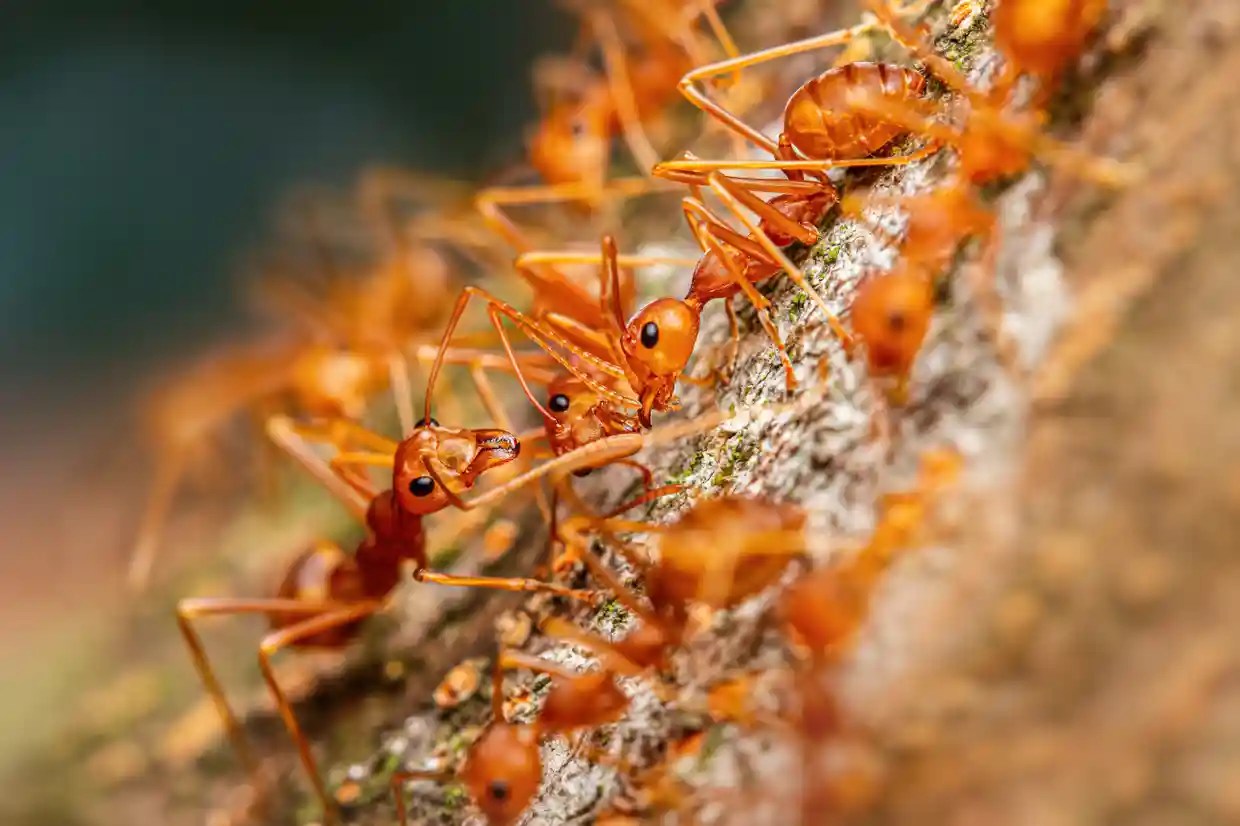
There are lots of ants on earth. And, as Anna Turns explains, they play a big role as ecosystem engineers– as well as providing insights on everything from the climate to aging…
To most of us, they are small, uninteresting and sometimes annoying, but 2022 revealed just how ubiquitous ants are and how indispensable they are to the planet. Scientists revealed in September that there are an estimated 20 quadrillion (or 20 million billion) ants globally – that’s 2.5 million for every person on the planet.
More than 12,000 known species of ant live in all sorts of habitats, from the Arctic to the tropics and they represent one of the most diverse, abundant and specialist groups of animals on the planet. Leafcutter ants are fungus farmers, slave-making ants capture broods to increase their work force, while wood ants herd aphids to the juiciest parts of a plant to harvest their honeydew sap…
Experts agree that ants are ecosystem engineers because they play a crucial role in decomposing organic matter, recycling nutrients, improving soil health, removing pests and dispersing seeds. But, historically, ants haven’t attracted as much attention as crop pollinators, such as bees, which perhaps have more of an obvious economic value. That bias could soon change. Ants have been used as a biological pest control on citrus crops in China for centuries, and research published in August indicates that the pest control potential of some predatory ants could work better than some agricultural chemicals.
The wonders of ant biology throw up plenty of other possibilities for real-world applications. Queen ants that live more than 30 years – yet have the same genetic material as a short-lived worker ant – could teach us something about senescence. Nobody understands how queens store sperm for decades inside their bodies without any degradation, despite colonies living in different climates. Meanwhile, Schultheiss’ [Dr Patrick Schultheiss, of the University of Würzburg] research into ant navigation – how they find food and how they behave when they get lost – could help build mathematical models that instruct a robot searching for missing people.
Looking back at how ants evolved can shed light on a huge array of other plants and animals, too. Butterflies that rely on ants to tend to their caterpillars could disappear if those ants are wiped out, says Corrie Moreau, a professor at Cornell University: “Nature is this intricate woven tapestry and if you pull one thread, you’ll never know which is the critical thread that makes the whole thing fall apart.”…
“Insects and us: a mind-blowing 20 quadrillion ants and what they mean for the planet,” from @AnnaTurns in @guardian.
###
As we get antsy, we might spare a thought for Swedish botanist Carl Linné, better known as Carolus Linnaeus, “the Father of Taxonomy,” died on this date in 1778. Historians suggest that the academically-challenged among us can take heart from his story: at the University of Lund, where he studied medicine, he was “less known for his knowledge of natural history than for his ignorance of everything else.” Still, he made is way from Lund to Uppsala, where he began his famous system of plant and animal classification– still in use today.

You must be logged in to post a comment.