Posts Tagged ‘temperature’
“Before beginning, plan carefully”*…

The marvelous Matt Levine on one of the vexing challenges facing those who preserve themselves cryogenically…
See, if you go to a regular trusts and estates lawyer, she will ask you questions like “if your spouse and children die before you, whom do you want to inherit your estate,” but if you go to a science fiction trusts and estates lawyer, she will ask you questions like “if your frozen head cannot be attached to a fresh body and reanimated in 200 years, but your consciousness can be cloned in a computer simulation, would you like your estate to go to the cloned consciousness or stay with the frozen head?” Meanwhile I suppose if you go to a regular financial planner, he will ask you questions like “how much equity risk are you comfortable taking between now and retirement,” while if you go to a science fiction financial planner, he will ask you questions like “where are you most comfortable investing for the next 200 years, given that you will not be able to change your asset allocation decisions during that time, because you’ll be dead?”
When you are a kid, science fiction is fun because it imagines amazing futuristic technologies. And then you grow up and you realize that what’s really fun are the legal and financial technologies that are called into being by those physical technologies: Sure sure sure reviving a frozen head is great, but how does the frozen head get a credit card? Bloomberg’s Erin Schilling reports:
Estate attorneys are creating trusts aimed at extending wealth until people who get cryonically preserved can be revived, even if it’s hundreds of years later. These revival trusts are an emerging area of law built on a tower of assumptions. Still, they’re being taken seriously enough to attract true believers and merit discussion at industry conferences.
“The idea of cryopreservation has gone from crackpot to merely eccentric,” said Mark House, an estate lawyer who works with Scottsdale, Ariz.-based Alcor Life Extension Foundation, the world’s largest cryonics facility with 1,400 members and about 230 people already frozen. “Now that it’s eccentric, it’s kind of in vogue to be interested in it.”
He and others are trying to answer questions that at times seem more like prompts in a philosophy class.
Can money live indefinitely?
Are you dead if your body is cryonically preserved?
Are you considered revived if you have only your brain?
And if you’re revived, are you the same person?
So many good legal questions — “House considers the revived person to be different in the eyes of the law, in part because a person can’t be the beneficiary of their own trusts” — but also great financial ones.
Here’s one: Should you buy Bitcoin for your long sleep? The argument for Bitcoin is that you can hold it, indefinitely, without relying on anyone else: If you put 10 Bitcoin in a wallet and only you know the private key, and then you die and get frozen and come back in 200 years, no one will have taken your Bitcoin, legal rules about inheritance and perpetual trusts don’t matter, and you don’t need some succession plan for the trustees and financial advisers who will take care of your assets. You just have to make sure you remember your private key as you’re dying. Legal rules can change, human institutions can change, but your Bitcoin is immutable.
The argument against Bitcoin is, of course, what if people stop valuing Bitcoin? Putting your money in Bitcoin is a hedge against change in other human institutions, but it puts a lot of eggs in the basket of one human institution, “treating Bitcoin as money.” It’s a bit weird to bet that that’s more permanent than anything else.
More generally, what is money anyway? “It may be difficult to know what role money will play in a post-[artificial general intelligence] world,” says OpenAI to its investors, and what if OpenAI gets to artificial general intelligence before anyone gets around to unfreezing the heads? You might be leaving your future self all the wrong stuff…
Very long-term planning: “Cryogenics Law,” from @matt_levine via Ingrid Burrington’s wonderful newsletter, “Perfect Sentences” (in this instance, “Sure sure sure reviving a frozen head is great, but how does the frozen head get a credit card?).
* Marcus Tullius Cicero
###
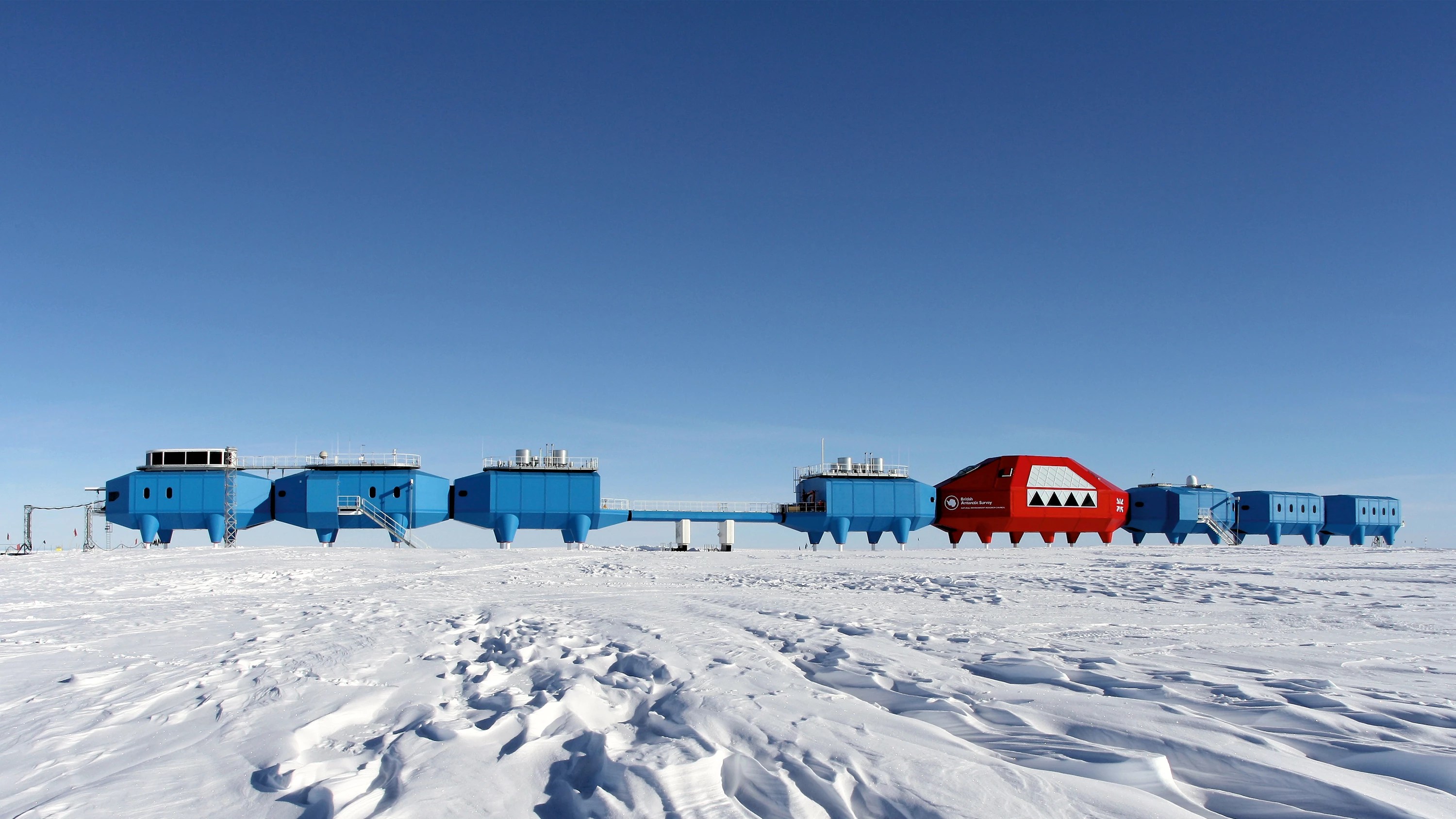
As we chill, we might recall that it was on this date in 1983 that the coldest (natural) temperature ever recorded on Earth was registered by the research station at Vostok, Antarctica: -128.5 degrees Fahrenheit (-89.2 degrees Celsius).

We might also note that today– July 20, 2024– is the date on which the action in Octavia Butler’s Parable of the Sower begins: “…in 2024, when society in the United States has grown unstable due to climate change, growing wealth inequality, and corporate greed…”

“Leaves of Three, Leave Them Be”*…

Gabrielle Emanuel on the one of climate change’s winners– the hiker’s scourge, poison ivy…
Over a decade ago, when Peter Barron started removing poison ivy for a living, he decided to document his work.
“Every year I always take pictures of the poison ivy as it’s blooming,” said Barron, who is better known as Pesky Pete, of Pesky Pete’s Poison Ivy Removal.
He still remembers the photos he took of the very first tiny, red, shiny poison ivy leaves popping out in Massachusetts and southern New Hampshire.“
When I first started, it was May 10 or May 11,” he remembered. “I was so excited. I was like, ‘Wow, the season is here’.”
Now, if he lines up all his photos from 14 years, the first sighting comes almost a month earlier. In 2023, his first glimpse was on April 18.
Barron may have unwittingly documented an effect of climate change.
Poison ivy is poised to be one of the big winners in this global, human-caused phenomenon. Scientists expect the dreaded three-leafed vine will take full advantage of warmer temperatures and rising levels of carbon dioxide in the atmosphere to grow faster and bigger — and become even more toxic.
Experts who have studied this plant for decades warn there are likely to be implications for human health. They say hikers, gardeners, landscapers and others may want to take extra precautions — and get better at identifying this plant — to avoid an itchy, blistering rash…
Ugh: “Bigger, earlier and itchier: Why poison ivy loves climate change,” from @gabrieman and @WBUR.
* Adage
###
As we cache cortisone cream, we might send carefully-calibrated birthday greetings to Guillaume Amontons; he was born on this date in 1663. A physicist and scientific instrument inventor, he developed the air thermometer – which relies on increase in volume of a gas (rather than a liquid) to measure temperature – and used it (in 1702) to measure change in temperature in terms of a proportional change in pressure. This observation led to the concept of absolute zero in the19th century.
Deaf from childhood, Amontons worked on inventions for the hearing impaired, among them the first telegraph, which relied on a telescope, light, and several stations to transmit information over large distances. And Amontons’ laws of friction, relied upon by engineers for 300 years, state that the frictional force on a body sliding over a surface is proportional to the load that presses them together and is independent of the areas of the surfaces.

“Ice contains no future, just the past, sealed away”*…

From her new book, Ice: From Mixed Drinks to Skating Rinks—A cool history of a hot commodity, Amy Brady…
Despite more than 150 years’ worth of study and experimentation, no one really knows why ice is slippery….
Nineteenth-century Americans used ice to store perishable foods in amounts that astounded visitors from Europe, where an ice trade had yet to be developed. Apples, for example, became so commonplace in the young republic that visitors coined the phrase “as American as apple pie.”…
By WWII, the burgeoning industry of electric refrigeration was catching up to the ice industry, and companies like the Southland Ice Company were forced to rethink their business plans. Southland began selling kitchen staples like milk and bread alongside their ice. The combination became so popular, the company extended its hours to keep up with demand, and within a few years renamed itself after its new hours of operation. The 7-Eleven was born, and convenience stores today still sell ice…
Between WWII and 1975, the amount of electricity refrigerators consumed grew by more than 350 percent. Today, a look at energy use around the globe reveals that the cooling industry (refrigerators, freezers, and air conditioners) accounts for almost 10 percent of all CO2 emissions…
Six more cool facts at “10 Things You Probably Didn’t Know about Ice,” from @ingredient_x in @Orion_Magazine.
* Haruki Murakami
###
As we chill, we might recall that it was on this date in 1982 that record low temperature of -117 F was recorded in Antarctica. That record was broken the following year, also in Antarctica, at -128.6 F– a mark that stands to this date, as Antartica has been warming… leading Dr. Brady to ask, “in an age of accelerating global warming… can ice in the freezer and ice on our planetary poles continue to coexist?”
“Reality is that which, when you stop believing in it, doesn’t go away”*…

Quantum mechanics arose in the 1920s, and since then scientists have disagreed on how best to interpret it. Many interpretations, including the Copenhagen interpretation presented by Niels Bohr and Werner Heisenberg, and in particular, von Neumann-Wigner interpretation, state that the consciousness of the person conducting the test affects its result. On the other hand, Karl Popper and Albert Einstein thought that an objective reality exists. Erwin Schrödinger put forward the famous thought experiment involving the fate of an unfortunate cat that aimed to describe the imperfections of quantum mechanics.
In their most recent article, Finnish civil servants Jussi Lindgren and Jukka Liukkonen, who study quantum mechanics in their free time, take a look at the uncertainty principle that was developed by Heisenberg in 1927. According to the traditional interpretation of the principle, location and momentum cannot be determined simultaneously to an arbitrary degree of precision, as the person conducting the measurement always affects the values.
However, in their study Lindgren and Liukkonen concluded that the correlation between a location and momentum, i.e., their relationship, is fixed. In other words, reality is an object that does not depend on the person measuring it. Lindgren and Liukkonen utilized stochastic dynamic optimization in their study. In their theory’s frame of reference, Heisenberg’s uncertainty principle is a manifestation of thermodynamic equilibrium, in which correlations of random variables do not vanish.
“The results suggest that there is no logical reason for the results to be dependent on the person conducting the measurement. According to our study, there is nothing that suggests that the consciousness of the person would disturb the results or create a certain result or reality,” says Jussi Lindgren…
The full story at: “A new interpretation of quantum mechanics suggests that reality does not depend on the person measuring it.”
* Philip K. Dick
###
As we admire amateur achievement, we might spare a thought for another profoundly-gifted amateur, James Prescott Joule; he died on this date in 1889. A seminal physicist and mathematician, he did “his science” in his free time; in his day job, he managed his family’s brewery.
Joule studied the nature of heat, and discovered its relationship to mechanical work– work that was prompted by his concern as a brewer to get the most from his steam (and later electric) engines. This led to the law of conservation of energy, which in turn led to the development of the first law of thermodynamics. The SI derived unit of energy, the joule, is named for him.
Joule’s earliest published work met with substantial resistance, as it depended on very precise measurements of heat that most in his audience believed infeasible– but that Joule, drawing on his brewer’s craft, had in fact achieved.
He worked with Lord Kelvin to develop an absolute thermodynamic temperature scale, which came to be called the Kelvin scale. Joule also conducted experiments on magnetostriction, via which he found the relationship between the current through a resistor and the heat dissipated, which is known as Joule’s first law.

You must be logged in to post a comment.