Archive for November 2024
“A cynic is a man who knows the price of everything, and the value of nothing”*…

In times like these, it’s all too easy to resort to (or indeed, to relapse into) cynicism. In an excerpt from his recent book Hope for Cynics, the director of the Stanford Social Neuroscience Lab, Jamil Zaki, offers an alternative…
… Over the last few years, I’ve met dozens of self-proclaimed cynics. Besides the obvious contempt for people, most have something else in common: a harsh pride. It may feel better to believe in people than to be cynical, they say. But we can’t go around thinking whatever we want, just like we can’t pretend tiramisu is a health food. Cynics might live hard lives, but that’s just the price of being right.
If cynicism is a sign of intelligence, then someone who wants to appear smart might put it on, like wearing a suit to a job interview. And indeed, when researchers ask people to appear as competent as possible, they respond by picking fights, criticizing people, and removing friendly language from emails—performing the gloomiest version of themselves to impress others.
Most of us valorize people who don’t like people. But it turns out cynicism is not a sign of wisdom, and more often it’s the opposite. In studies of over 200,000 individuals across thirty nations, cynics scored less well on tasks that measure cognitive ability, problem-solving, and mathematical skill. Cynics aren’t socially sharp, either, performing worse than non-cynics at identifying liars. This means 85 percent of us are also terrible at picking lie detectors. We choose Colleens to get to the bottom of things when we should join team Sue.
In other words, cynicism looks smart, but isn’t. Yet the stereotype of the happy, gullible simpleton and the wise, bitter misanthrope lives on, stubborn enough that scientists have named it “the cynical genius illusion.”
If cynicism is a pathogen, we can create resistance to it with skepticism: a reluctance to believe claims without evidence. Cynicism and skepticism are often confused for each other, but they couldn’t be more different. Cynicism is a lack of faith in people; skepticism is a lack of faith in our assumptions. Cynics imagine humanity is awful; skeptics gather information about who they can trust. They hold on to beliefs lightly and learn quickly…
Timely advice: “Instead of Being Cynical, Try Becoming Skeptical,” from @zakijam in @behscientist.
* Oscar Wilde
###
As we reframe, we might recall that it was on this date (which is, by the way, Fibonacci Day) in 1644 that John Milton, best remembered, of course, for his epic poem Paradise Lost, published Areopagitica; A speech of Mr. John Milton for the Liberty of Unlicenc’d Printing, to the Parlament of England. A prose polemic opposing licensing and censorship, it is among history’s most influential and impassioned philosophical defenses of the principle of a right to freedom of speech and expression. The full text is here.

“Listening to both sides of a story will convince you that there is more to a story than both sides”*…
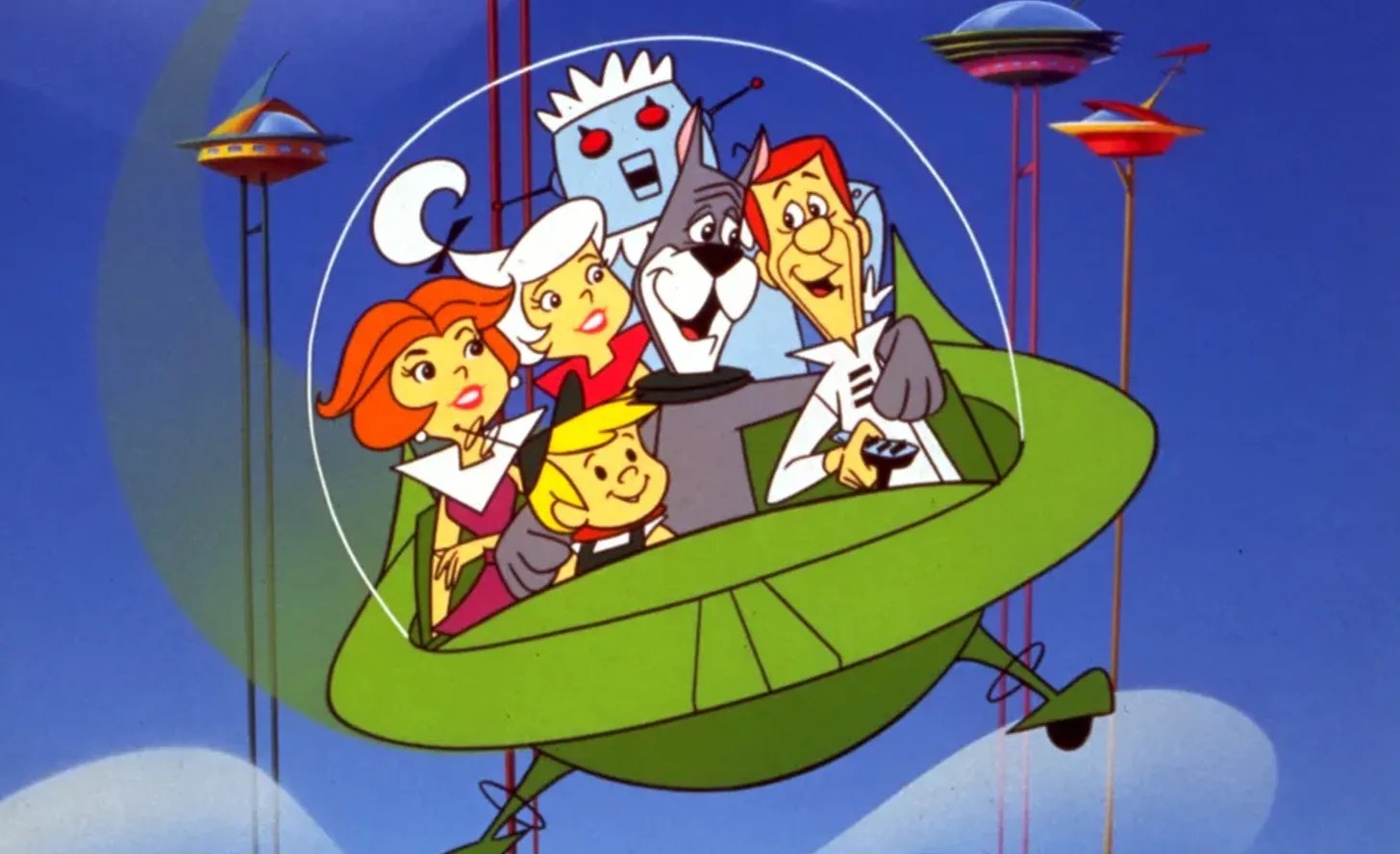
Regular readers will have deduced that I am something of a techno-optimist. While I worry that human misapplication (exploitation) of new technologies could create new dangers and/or further concentrate wealth and power in too few hands, I believe that emerging tech could– should– help humanity deal with many of its gravest challenges, certainly including climate change. At the same time, I am disposed to thinking about large issues/problems systemically.
Rianne Riemens shares neither of my enthusiasms; she sounds a critical note on techno-optimism, systems thinking– and more specifically, on the application of the latter to the former…
Today, American tech actors express optimistic ideas about how to fix the Earth and halt climate change. Such “green” initiatives have in common that they capture the world in systems and propose large systemic, and mostly technological, solutions. Because of their reliance on techno-fixes, representatives of Silicon Valley express an ideology of ecomodernism, which believes that human progress can be “decoupled” from environmental decline. In this article, I show how “whole-systems thinking” has become a key discursive element in today’s ecomodernist discourses. This discourse has developed from the 1960s onwards – inspired by cybernetic, ecological and computational theories – within the tech culture of California. This paper discusses three key periods in this development, highlighting key publications: the Whole Earth Catalog of the 1960s, the Limits to Growth report in 1972 and the cyberspace manifestoes of the mid 1990s. These periods are key to understand how techno-fixes became a popular answer to the climate crisis, eventually leading to a vision of the world as an ecosystem that can be easily controlled and manipulated, and of technological innovation as harmless and beneficial. I argue that “whole-systems” thinking offers a naive and misleading narrative about the development of the climate crisis, that offers a hopeful yet unrealistic perspective for a future threatened by climate change, built on a misconception of Earth as a datafied planet.
In “The Techno-Optimist Manifesto” (Citation2023) venture capitalist Marc Andreessen argues why we should all be techno-optimists, especially if we are worried about the future impact of the climate crisis. According to Andreessen, promoting unlimited technological progress is the only option: “there is no inherent conflict between the techno-capital machine and the natural environment”. If we generate unlimited clean energy, we can improve the natural environment, whereas a “technologically stagnant society ruins it” (Andreessen, Citation2023). This is possible, he writes, because technologies enable processes of dematerialization and will eventually lead to material abundance. And, “We believe the market economy is a discovery machine, a form of intelligence—an exploratory, evolutionary, adaptive system” (Andreessen, Citation2023). The manifesto thus conceptualizes technology as immaterial and the capitalist economy as an evolutionary system: it presents techno-fixes as a harmless form of environmental action, and economic growth as an inevitable process that political powers should not interfere with.
The “Techno-Optimist Manifesto” is an example of a form of techno-optimism that places full trust in the potential of capitalist tech companies to help humanity “innovate” its way out of a climate crisis. Andreessen (Citation2023) cites historical figures including Buckminster Fuller, Stewart Brand, Douglas Engelbart and Kevin Kelly as the inspiration for his manifesto, showing that the work of these figures and their communities is being remixed and reappropriated into the future visions of contemporary techno-optimists. In this article, I analyse how the belief in the environmental potential of techno-fixes is engrained in the ideology and history of “Silicon Valley” and is discursively constructed through a language of “whole-systems thinking”. I use the concept of whole-systems thinking as a lens to study how simplified notions taken from whole-systems theory and cybernetics played and still play a key role in techno-environmental discourse in the post-war era in the United States. I zoom in on three key events that help explain the origins and evolution of popular whole-systems thinking: the Whole Earth Catalog community led by Stewart Brand in the 1960s, the Limits to Growth report by the Club of Rome in the 1970s and the cyberlibertarian community in the 1990s. I will show how a new language emerged that used simplified notions of systems-thinking to promote the idea that technology would help understand, manage and save a planet in peril.
Through a discourse analysis of primary sources and literature review I present a critical reading of these events in the light of today’s techno-optimistic environmental discourse. My corpus exists of a number of primary sources, including the aforementioned “Techno-Optimist Manifesto” (2023), Limits to Growth report (Meadows et al., Citation1972), editions of the Whole Earth Catalog and CoEvolution Quarterly, Barlow’s Declaration of the Independence of Cyberspace (1996), texts by Kevin Kelly (Citation1998) and Stewart Brand (Citation2009) and An Ecomodernist Manifesto (Asafu-Adjaye et al., Citation2015). I have discursively analysed these sources for their discussion of systems thinking as well as environmental concerns. By analysing how whole-systems thinking became a popular way of addressing environmental issues, I aim to provide a “post-war genealogy” (Pedwell Citation2022) of the term and critique today’s promises about how tech can save the climate. As Johnston (Citation2020) has argued, tracing the development of a cultural perception of trust in techno-fixes reveals a complex and multi-sided history. I claim that the environmental dimension of techno-optimistic discourses requires a critical reconsideration of the ideological underpinnings of Silicon Valley, described as the “Californian Ideology” by Barbrook and Cameron (Citation1996). I will demonstrate how ecomodernism, including its belief that human progress can be “decoupled” from environmental decline, allows us to better understand, and critique, the environmental ideology of Silicon Valley.
I will first expand on contemporary ecomodernism and present my thesis that “decoupling” nature from culture has come to underlie whole-systems thinking in contemporary techno-optimistic discourse. In the following three sections, I highlight a few historical moments to demonstrate the development of the cultural perception of techno-fixes, specifically as a means of managing the environment. I show how whole-systems thinking became popularized by the Whole Earth community, got incorporated in environmental debates through the Limits to Growth report and is reflected in cyberutopian dreams about immaterial societies. Building on my necessarily brief history, I argue that techno-fixes can be strategically presented as ideal solutions if the world and environment are imagined as simple systems and technology as immaterial and harmless. Finally, I return to contemporary US tech culture and argue that it is shaped by, and co-shapes, the ideology of ecomodernism in which nature and culture are decoupled. I conclude that this worldview expresses itself today in corporate visions, resulting in a false hope about how to innovate our way out of the climate crisis…
Eminently worth reading in full (if in the end, as for me, less as a wholesale rejection of techno-optimism and systems thinking than as a cautionary counterweight): “Fixing the earth: whole-systems thinking in Silicon Valley’s environmental ideology,” from @WeAreTandF.
(image above: source)
###
As we tangle with tech, we might pause to remember a man who bridged our understanding of the systems of the world from one paradigm to another: Sir Arthur Stanley Eddington, OM, FRS; he died in this date in 1944. An astrophysicist, mathematician, and philosopher of science known for his work on the motion, distribution, evolution and structure of stars, Eddington is probably best remembered for his relationship to Einstein: he was, via a series of widely-published articles, the primary “explainer” of Einstein’s Theory of General Relativity to the English-speaking world; and he was, in 1919, the leader of the experimental team that used observations of a solar eclipse to confirm the theory.

“No one knows toward what center human things are going to gravitate in the near future, and hence the life of the world has become scandalously provisional”*…

The estimable Ted Gioia has pulled a 2022 essay from his newsletter up from behind the paywall. It was very relevant then; if anything, more relevant now…
Back in 2014, I sketched out a widely-read outline of an alternative interpretation of cultural conflict. Curiously enough, the conceptual tools I used came from a 1929 book from philosopher José Ortega y Gasset entitled The Revolt of the Masses—a work that offers surprisingly timely insights into our current situation.
That article stirred up a lot of debate at the time, but the whole situation has intensified further since 2014. Everything I’ve seen in those eight years has made painfully clear how insightful Ortega had been. The time has come to revisit that framework, summarizing its key insights and offering predictions for what might happen in the future.
Here’s part of what I wrote back in 2014:
First, let me tell you what you won’t find in this book. Despite a title that promises political analysis, The Revolt of the Masses has almost nothing to say about conventional party ideologies and alignments. Ortega shows little interest in fascism or capitalism or Marxism, and this troubled me when I first read the book. (Although, in retrospect, the philosopher’s passing comments on these matters proved remarkably prescient—for example his smug dismissal of Russian communism as destined to failure in the West, and his prediction of the rise of a European union.) Above all, he hardly acknowledges the existence of ‘left’ and ‘right’ in political debates.
Ortega’s brilliant insight came in understanding that the battle between ‘up’ and ‘down’ could be as important in spurring social and cultural change as the conflict between ‘left’ and ‘right’. This is not an economic distinction in Ortega’s mind. The new conflict, he insists, is not between “hierarchically superior and inferior classes…. upper classes or lower classes.” A millionaire could be a member of the masses, according to Ortega’s surprising schema. And a pauper might represent the elite.
The key driver of change, as Ortega sees it, comes from a shocking attitude characteristic of the modern age—or, at least, Ortega was shocked. Put simply, the masses hate experts. If forced to choose between the advice of the learned and the vague impressions of other people just like themselves, the masses invariably turn to the latter. The upper elites still try to pronounce judgments and lead, but fewer and fewer of those down below pay attention.
This dynamic is now far more significant than it was eight years ago. So I want to share 15 observations on the emerging vertical dimension of cultural conflict—these both define the rupture and try to predict how it will play out…
Read on for: “15 Observations on the New Phase in Cultural Conflict” from @tedgioia.bsky.social.
(Image above: source)
* José Ortega y Gasset in The Revolt of the Masses… where he also observed: “Liberalism – it is well to recall this today – is the supreme form of generosity; it is the right which the majority concedes to minorities and hence it is the noblest cry that has ever resounded in this planet. It announces the determination to share existence with the enemy; more than that, with an enemy that is weak. It was incredible that the human species should have arrived at so noble an attitude, so paradoxical, so refined, so acrobatic, so antinatural. Hence, it is not to be wondered at that this same humanity should soon appear anxious to get rid of it. It is a discipline too difficult and complex to take firm root on earth.”
###
As we contend with contention, we might send rational birthday greetings to an avatar of the Enlightenment (which did so much to spawn liberalism), Francois-Marie Arouet, better known as Voltaire; he was born on this date in 1694. The Father of the Age of Reason, he produced works in almost every literary form: plays, poems, novels, essays, and historical and scientific works– more than 2,000 books and pamphlets (and more than 20,000 letters). He popularized Isaac Newton’s work in France by arranging a translation of Principia Mathematica to which he added his own commentary.
A social reformer, Voltaire used satire to criticize the intolerance, religious dogma, and oligopolistic privilege of his day, perhaps nowhere more sardonically than in Candide.

“Faith is a fine invention / When gentlemen can see, / But microscopes are prudent / In an emergency”*…

Microscopy has been around for centuries; it began to emerge as a field of scientific investigation with the emergence of compound microscopes in Europe around 1620. Antonie van Leeuwenhoek developed a very high magnification simple microscope in the 1670s and is often considered to be the first acknowledged microscopist and microbiologist. His fellow pioneer, Robert Hooke (author of what many to believe to have been van Leeuwenhoek’s inspiration, the ground-breaking Micrographia, published in in 1665), wrote “By the help of microscopes, there is nothing so small, as to escape our inquiry; hence there is a new visible world discovered to the understanding.”
Optical microscopes remain central tools in science, and have been joined by optical, electron, and scanning probe microscopes (along with the emerging field of X-ray microscopy). But, as Joao Inacio Silva illustrates, they are also fascinating objects, things of beauty…
Antique microscopes are amazing scientific instruments, from times when craftsmanship was as important as functionality and performance. The beauty of these instruments is manifested in countless ways, including the history of their makers and their technological developments, and their contribution to the development of microbiology and other fields of science, and all combine to inspire a feeling of admiration that a microscope can be so beautiful, elegant, and functional after so many years. An antique microscope is a work of art as well as science.
This [site] describes a collection of microscopes, which started as a hobby some years ago, and is always being updated with interesting new instruments….
For example:

Gustave Moreau (1805 – 1880) was a manufacturer of binoculars operating in Paris from 1830. The business of Moreau was merged with other opticians in 1849, forming the Deraisme house (167 Rue Saint-Maur, Paris), which specialised in binoculars and spotting telescopes, particularly for military use. Moreau is best known for the creation of the famous ‘Monkey Microscope’. [Pictured at the top] Microscope 199 is a drum-like microscope and is engraved with ‘Moreau’ in its inside base… The instrument should be dated to the mid-19th century.

Moritz (M.) Pillischer emigrated from Hungary to London, England, in 1845. He opened an independent shop that produced microscopes and other scientific and mathematical instruments in about 1849. Moritz’s nephew, Jacob (who adopted the name “James”), moved to London around 1860 to work for his uncle. Jacob later became Moritz’s son-in-law, after marrying one of his daughters. Pillischer did not make his own lenses until 1854, but instead provided French-made objectives with his instruments. Moritz Pillischer was elected as a Fellow of the Royal Microscopical Society in 1855 and joined the Quekett Microscopical Club in 1869. By 1881, Moritz had moved to Hove, Sussex, although he retained ownership of the Pillischer optical business. He handed over ownership of the business to Jacob in 1887 and passed away in his Sussex home in 1893. Jacob joined the Quekett Microscopical in 1895, and the Royal Microscopical Society in 1898. After Jacobs’ death in 1930, the company was inherited by Jacob’s three children, Edward, Leopold, and Bertha, and the business was liquidated in 1947. Microscope 17 is a version of Pillischer’s Student microscope from c. 1860, with the serial number 1011 (Figure 1). The microscope is finished in lacquered brass and has an extendable eyepiece tube, original Pillisher lenses, rack and pinion main focus and fine focus. It has a square stage with manually adjustable slide rest. Below the stage is a mirror and a revolving wheel to control the level of light. Pillischer introduced this version of student microscope in the late 1854, and the basic form of this microscope was then used in other models over the next several decades, including the Saint Thomas Hospital (introduced in 1873) and the International (introduced in 1876) models (Figure 1). The microscope came with its original wooden box and several accessories, including a live box used for the observation of wet or dry animals. Early models of live boxes were constructed of ivory or brass and would often fit into the hole in the stage. Later, they were fitted onto a rectangular brass slide above the stage.
Many, many more delights at the “Microscope Museum“, a glorious collection of antique microscopes and other scientific instruments.
* Emily Dickinson
###
As we look closely, we might spare a thought for Christain Goldbach; he died on this date in 1764. A mathematician, lawyer, and historian who studied infinite sums, the theory of curves, and the theory of equations, he is best remembered for his correspondence with Leibniz, Euler, and Bernoulli, especially his 1742 letter to Euler containing what is now known as “Goldbach’s conjecture.”
In that letter he outlined his famous proposition:
Every even natural number greater than 2 is equal to the sum of two prime numbers.
It has been checked by computer for vast numbers– to more than a trillion trillion– but remains unproved.
(Goldbach made another conjecture that every odd number is the sum of three primes; it has been checked by computer for vast numbers, but also remains unproved.)

Goldbach’s letter to Euler (source, and larger view)
“The greatest wealth is health”*…

On the state of healthcare around the world, three charts…


* Virgil
###
As we contemplate care, we might send revealing birthday greetings to Leopold Auenbrugger; he was born on this date in 1722. A physician, he devised the diagnostic technique of percussion (the art of striking a surface part of the body with short, sharp taps to diagnose the condition of the parts beneath the sound)– by which he could estimate the amount of fluid in a patient’s chest and the size of his/her heart.
Auenbrugger was simply applying an approach he’d learned as boy, tapping his father’s wine casks to determine how full they were. After seven years of clinical investigation, he published the method in Inventum Novum (1761), though his technique did not gain recognition and acceptance until years after his death. When a translator republished the work in French (1808) the method gained acceptance around the world, and through time (to the present) as a fundamental diagnostic procedure… for which Auenbrugger is considered one of the fathers of modern medicine.

You must be logged in to post a comment.