Posts Tagged ‘techno-optimism’
“Listening to both sides of a story will convince you that there is more to a story than both sides”*…
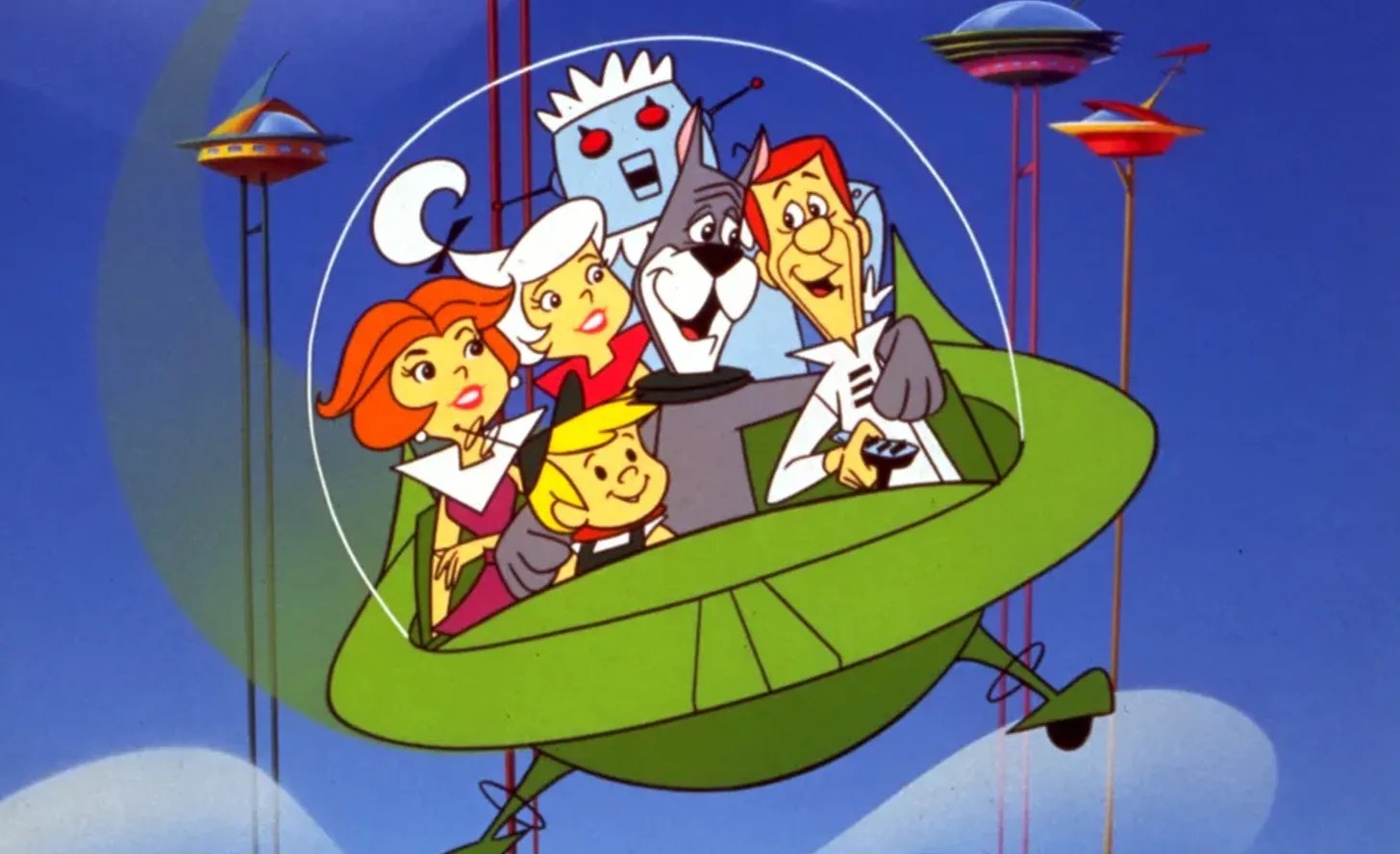
Regular readers will have deduced that I am something of a techno-optimist. While I worry that human misapplication (exploitation) of new technologies could create new dangers and/or further concentrate wealth and power in too few hands, I believe that emerging tech could– should– help humanity deal with many of its gravest challenges, certainly including climate change. At the same time, I am disposed to thinking about large issues/problems systemically.
Rianne Riemens shares neither of my enthusiasms; she sounds a critical note on techno-optimism, systems thinking– and more specifically, on the application of the latter to the former…
Today, American tech actors express optimistic ideas about how to fix the Earth and halt climate change. Such “green” initiatives have in common that they capture the world in systems and propose large systemic, and mostly technological, solutions. Because of their reliance on techno-fixes, representatives of Silicon Valley express an ideology of ecomodernism, which believes that human progress can be “decoupled” from environmental decline. In this article, I show how “whole-systems thinking” has become a key discursive element in today’s ecomodernist discourses. This discourse has developed from the 1960s onwards – inspired by cybernetic, ecological and computational theories – within the tech culture of California. This paper discusses three key periods in this development, highlighting key publications: the Whole Earth Catalog of the 1960s, the Limits to Growth report in 1972 and the cyberspace manifestoes of the mid 1990s. These periods are key to understand how techno-fixes became a popular answer to the climate crisis, eventually leading to a vision of the world as an ecosystem that can be easily controlled and manipulated, and of technological innovation as harmless and beneficial. I argue that “whole-systems” thinking offers a naive and misleading narrative about the development of the climate crisis, that offers a hopeful yet unrealistic perspective for a future threatened by climate change, built on a misconception of Earth as a datafied planet.
In “The Techno-Optimist Manifesto” (Citation2023) venture capitalist Marc Andreessen argues why we should all be techno-optimists, especially if we are worried about the future impact of the climate crisis. According to Andreessen, promoting unlimited technological progress is the only option: “there is no inherent conflict between the techno-capital machine and the natural environment”. If we generate unlimited clean energy, we can improve the natural environment, whereas a “technologically stagnant society ruins it” (Andreessen, Citation2023). This is possible, he writes, because technologies enable processes of dematerialization and will eventually lead to material abundance. And, “We believe the market economy is a discovery machine, a form of intelligence—an exploratory, evolutionary, adaptive system” (Andreessen, Citation2023). The manifesto thus conceptualizes technology as immaterial and the capitalist economy as an evolutionary system: it presents techno-fixes as a harmless form of environmental action, and economic growth as an inevitable process that political powers should not interfere with.
The “Techno-Optimist Manifesto” is an example of a form of techno-optimism that places full trust in the potential of capitalist tech companies to help humanity “innovate” its way out of a climate crisis. Andreessen (Citation2023) cites historical figures including Buckminster Fuller, Stewart Brand, Douglas Engelbart and Kevin Kelly as the inspiration for his manifesto, showing that the work of these figures and their communities is being remixed and reappropriated into the future visions of contemporary techno-optimists. In this article, I analyse how the belief in the environmental potential of techno-fixes is engrained in the ideology and history of “Silicon Valley” and is discursively constructed through a language of “whole-systems thinking”. I use the concept of whole-systems thinking as a lens to study how simplified notions taken from whole-systems theory and cybernetics played and still play a key role in techno-environmental discourse in the post-war era in the United States. I zoom in on three key events that help explain the origins and evolution of popular whole-systems thinking: the Whole Earth Catalog community led by Stewart Brand in the 1960s, the Limits to Growth report by the Club of Rome in the 1970s and the cyberlibertarian community in the 1990s. I will show how a new language emerged that used simplified notions of systems-thinking to promote the idea that technology would help understand, manage and save a planet in peril.
Through a discourse analysis of primary sources and literature review I present a critical reading of these events in the light of today’s techno-optimistic environmental discourse. My corpus exists of a number of primary sources, including the aforementioned “Techno-Optimist Manifesto” (2023), Limits to Growth report (Meadows et al., Citation1972), editions of the Whole Earth Catalog and CoEvolution Quarterly, Barlow’s Declaration of the Independence of Cyberspace (1996), texts by Kevin Kelly (Citation1998) and Stewart Brand (Citation2009) and An Ecomodernist Manifesto (Asafu-Adjaye et al., Citation2015). I have discursively analysed these sources for their discussion of systems thinking as well as environmental concerns. By analysing how whole-systems thinking became a popular way of addressing environmental issues, I aim to provide a “post-war genealogy” (Pedwell Citation2022) of the term and critique today’s promises about how tech can save the climate. As Johnston (Citation2020) has argued, tracing the development of a cultural perception of trust in techno-fixes reveals a complex and multi-sided history. I claim that the environmental dimension of techno-optimistic discourses requires a critical reconsideration of the ideological underpinnings of Silicon Valley, described as the “Californian Ideology” by Barbrook and Cameron (Citation1996). I will demonstrate how ecomodernism, including its belief that human progress can be “decoupled” from environmental decline, allows us to better understand, and critique, the environmental ideology of Silicon Valley.
I will first expand on contemporary ecomodernism and present my thesis that “decoupling” nature from culture has come to underlie whole-systems thinking in contemporary techno-optimistic discourse. In the following three sections, I highlight a few historical moments to demonstrate the development of the cultural perception of techno-fixes, specifically as a means of managing the environment. I show how whole-systems thinking became popularized by the Whole Earth community, got incorporated in environmental debates through the Limits to Growth report and is reflected in cyberutopian dreams about immaterial societies. Building on my necessarily brief history, I argue that techno-fixes can be strategically presented as ideal solutions if the world and environment are imagined as simple systems and technology as immaterial and harmless. Finally, I return to contemporary US tech culture and argue that it is shaped by, and co-shapes, the ideology of ecomodernism in which nature and culture are decoupled. I conclude that this worldview expresses itself today in corporate visions, resulting in a false hope about how to innovate our way out of the climate crisis…
Eminently worth reading in full (if in the end, as for me, less as a wholesale rejection of techno-optimism and systems thinking than as a cautionary counterweight): “Fixing the earth: whole-systems thinking in Silicon Valley’s environmental ideology,” from @WeAreTandF.
(image above: source)
###
As we tangle with tech, we might pause to remember a man who bridged our understanding of the systems of the world from one paradigm to another: Sir Arthur Stanley Eddington, OM, FRS; he died in this date in 1944. An astrophysicist, mathematician, and philosopher of science known for his work on the motion, distribution, evolution and structure of stars, Eddington is probably best remembered for his relationship to Einstein: he was, via a series of widely-published articles, the primary “explainer” of Einstein’s Theory of General Relativity to the English-speaking world; and he was, in 1919, the leader of the experimental team that used observations of a solar eclipse to confirm the theory.

“If you fall in love with a machine there is something wrong with your love-life. If you worship a machine there is something wrong with your religion.”*…

In trying times, a positive attitude is more important– and harder to muster– than ever. But as the always-provocative LibrarianShipwreck observes, certain forms of optimism can, if they become pervasive, all-too-easily turn into problems in their own rights. Consider, for example, the flavor of the moment, techno-optimism…
There are moments in which it is difficult to feel particularly positive about how things are going in the world. Social cohesion frays. Politicians fail to respond to the crises of the moment. Social movements for justice are met with violent repression. History is suppressed. Xenophobic authoritarianism crawls out from the swamp to claim new victims. Looming environmental hazards grow closer. Pandemics are catastrophically mismanaged. The rich keep getting richer. The list goes on. It can be difficult to find a place in which to place your hopes for the future when the present seems so dire. After all, many no longer believe that god(s), or charismatic politicians, or social movements will save us. Granted, this has not given rise to widespread despair or nihilism (even if such sentiments can be detected at society’s edges), for there still exist certain forces that capture and channel people’s hopes and longings. And prominent amongst these is technology.
What follows is an attempt to consider some of the aspects and implications of techno-optimism. It is an attitude that has become somewhat taken for granted, which is precisely why it is important to consider what it is and how it functions.
It is hard to escape techno-optimism. For it is the attitude that one encounters nearly everywhere. This is not the just attitude of the press release, the advertisement, and the carefully produced launch event—it is the ambient music that plays in the background of daily life. Techno-optimism is the basic stance of a society in which people enjoy the fruits of high-technology, and though they may have some quibbles about specifics, are basically happy with the gadgets that surround them and resistant to the idea that any of these devices should be (or could be) turned off. It is an attitude that comes to be when a significant portion of a population have interwoven their faith in future progress with the idea of future technological advancements. Techno-optimism is a vision of tomorrow that sees only a choice between a high-tech metropolis and a desolate wasteland, and so (naturally) opts for the high-tech metropolis. To be taken in by techno-optimism one need not hang on a Silicon Valley CEO’s every word, it is sufficient to be impressed by the latest smartphone iteration. To partake in techno-optimism one need not dream of the singularity, it is sufficient to believe that since there is no alternative to all of these gadgets and platforms that one might as well be comfortable with them.
Techno-optimism has less to do with the individuals who hold the belief, and more to do with a broader societal stance that most individuals accept. And this stance—that societal progress is incumbent upon technological progress and that one should therefore be optimistic about technological progress—is fairly common.
…
In certain academic fields, scholars caution their students against falling for technological determinism. That being the overly simplistic belief that “technology drives history.” Granted, many of those same scholars, are quick to emphasize that technology matters, and can still be an important factor, but that social/political/historic/economic changes are driven by a lot more than just machines. Thus such academics work hard to show the ways in which history does not look like [Cause: new technology X] = [Result: social change Y], by emphasizing all of the things that take place in that “=” sign. What social conditions made it possible for that new technology to be taken up? Which groups pushed for the new technology because they saw it as a way of increasing their own power, and which groups resisted? What older technological systems were necessary for this new one to come into being? What economic forces made this new technology feasible? What were the various forms that this new technology originally appeared in before one particular model of it began to dominate? In short, those who study technology (at least in some disciplines), work hard to make it clear that technology doesn’t drive history. Indeed, in some academic circles, the charge of technological determinism is still an insult.
Alas, techno-optimism is to a large extent a belief that “technology drives history.” What’s more it’s a belief that technology has driven history in a good direction and that therefore technology can be trusted to keep driving history in that good direction. It is a straight line narrative of a world of improvement in which the abacus eventually leads to the smartphone, without getting overly bogged down in a story of Cold War military funding. It provides a worldview which is all highways with only passing attention being paid to the crashes that smolder on the side of the road (and with those being treated merely as stumbling blocks). Academics may bristle at the idea that “technology drives history,” but they find themselves trying to counter a belief that is fairly commonly accepted by the broader society. In fairness, it may be out of style for a person to declare that they think technology is driving history, but it is not at all out of style for a person to state that they consider themselves to be technologically optimistic—which is another way of saying that they feel cheerful when they consider the direction in which they think technology is driving history.
…
At moments when social progress seems stuck, technology can provide an appealing alternative. After all, real progress on serious social issues can be slow and filled with backsliding, but over the last ten years the Playstation really has gotten better. To a large extent we find ourselves treading water, but the flashy gadgets affixed to our life preserver keep getting more impressive…even if we still find ourselves in this cold water. Techno-optimism keeps us waiting: waiting for the next iteration of a device, waiting for the next “big” gadget, waiting for the next update, waiting for the download, waiting for the tech company that will finally get it right, waiting for the technology that will finally fix the problems that have (up to now) proven impervious to easy technological fixes. We wait, and we wait, and we wait. But as long as we get to partake in technologies moving through their iterations, we get to feel as if we are moving as well. If our smartphone has moved ahead, than surely this means that we have moved ahead with it, because it is our smartphone, right? And that new smartphone might be a bit faster, it might have a better camera, it might work as an appealing status symbol, but where you were (where we were) with this new smartphone model is not particularly different from where we were with the previous smartphone model.
The history of technology certainly demonstrates that there have been moments throughout history when technological shifts have made large significant changes. Though careful historians have worked diligently to emphasize that, contrary to popular narratives, those shifts were rarely immediate and usually interwoven with a host of social/political/economic changes. Nevertheless, techno-optimism keeps people waiting for that next big technological leap forward. The hopeful confidence in that big technological jump, which is surely just around the corner, keeps us sitting patiently as things remain largely the same (or steadily get worse). Faced with serious challenges that our politics seem incapable of addressing, and which technological change have so far been able to miraculously solve, techno-optimism keeps the focus centered on the idea of an eventual technological solution. And most importantly this is a change that will mean that we do not need to do much, we do not need to act, we do not need to be willing to change, we just need to wait and eventually the technology will come along that will do it all for us.
And so we wait. And so we keep waiting, for technology to come along and save us from ourselves.
“Theses on Techno-Optimism,” from @libshipwreck. Eminently worth reading in full, even if– especially if, like your correspondent– you are a techno-optimist.
[Image above: source]
* Lewis Mumford
###
As we interrogate our enthusiasm, we might spare a thought for Don Featherstone; he died on this date in 2015. An artist, he is surely best remembered for his creation of the plastic pink flamingo lawn ornament in 1957, while working for Union Products. It went on sale the following year– and now adorns lawns nationwide.
In 1996, Featherstone was awarded the 1996 Ig Nobel Art Prize for his creation; that same year, he began his tenure as president of Union Products, a position he held until he retired in 2000.

You must be logged in to post a comment.