Sumana Roy, with an arboreal meditation on time and rebellion against the straight line…
Have you seen the shape of a solitary tree on a mountaintop? There is no arrogance—it is not the monarch of all it surveys; its shape is that of survival, of fighting annihilation. If a morning hints at the DNA of the approaching day, might the shapes of young plants give us an intimation of what they will look like in advanced age? It must be this sense of amorphousness in the tree branches, going and growing, that makes me think of the shape of smoke, rising dark from the mouths of moving machines, marking the air as they travel, annotating their journey. . . . Are there knowledge systems in these shapes that might inform our understanding of art, creativity, knowledge systems, of time and history, of life and the living?
From the foothills I stare at the mountains and watch the evening grow; daylight suddenly ages, then dies. In the moment’s susurration, one could forget that the sun will return in the morning. Lights wink in the houses on the hills, spare sets of eyes for the dark—or like flowers budding, then blossoming. But that analogy doesn’t quite hold, because for those lights to be flowers, the houses need to be treelike. And our houses are not shaped like trees.
It is difficult to compare the shapes of trees with almost anything else. A flag flutters in the wind, and I can sense the longing of my mind to compare the character of that movement with those of leaves annotating the wind. But the flag mast is not a tree branch and no leaf moves like a flag, not even the banana leaf, whose behavior I’ve often mistaken for a Buddhist prayer flag. Sometimes when I watch leaves being tickled by the wind, I look at the tree nervously. It reminds me of a parent throwing their child up to the sky and catching her again, carrying her in so many ways, with risk as much as assurance. In this is a knowledge system of trust, how the branches hold the leaves and allow them to move without fear.
And what can a leaf’s shape tell us about its home? A palm’s leaf is like paper torn into strips that still manages to hold itself up. Where does such a shape come from? Does it offer protection from the wind, preempting what a strong sea breeze will eventually do? I have seen what such wind can do to billboards—puncturing them, tearing the faces of models and actors with unrelenting force, with a kind of strength that one can imagine only of bombs. There’s also the opposite: the shining solidity of a glossy jackfruit leaf confident even against the bullets of tropical rain. And their branches—hardy, patriarchal and solid, fortresslike, for they must hold the many fruits that cling like baby monkeys to their mothers. When I see the branches of different species, it is as if I can see their birth certificates. It is as if the shapes of the branches are a consequence of a negotiation, not only between the tree and the wind, but also between the tree second-guessing the behavior of the wind generally as well as the particularity of the wind in its home. What I see before me, then, is the shape of the creative process—the arrival of an idea in a leaf’s unfurling, followed by the acknowledgement of life’s exigencies and pauses in the influences of wind, water, and light. When it comes to branches, then, nothing beyond the search for sunlight is modular—everything is ad hoc, growth is provisional, spontaneity is not a choice but a compulsion. A tree’s diet is simple—water and light, but often inconsistent, and in its branches we see the shape of improvisation, of how artists and scientists adapt as circumstances change.
I am aware that I am seeking something beyond the botanical when I graze upon these branches. Is there a hidden history about form, about genre or about genealogy that I crave? In trees, I find a unit of time that is different from other kinds of living time—time is visible in the girth and growth of their branches, a history of ingestion manifest in the visual biography of its form. The difference in the ideas of time perhaps comes from our conditioning in stillness and mobility and, of course, from the directions of movement. Trees move, but usually—by which I mean visibly—northward; humans, mammals, and animals in our vicinity travel east or westward. In this, too, is the variety of our experiences of time.
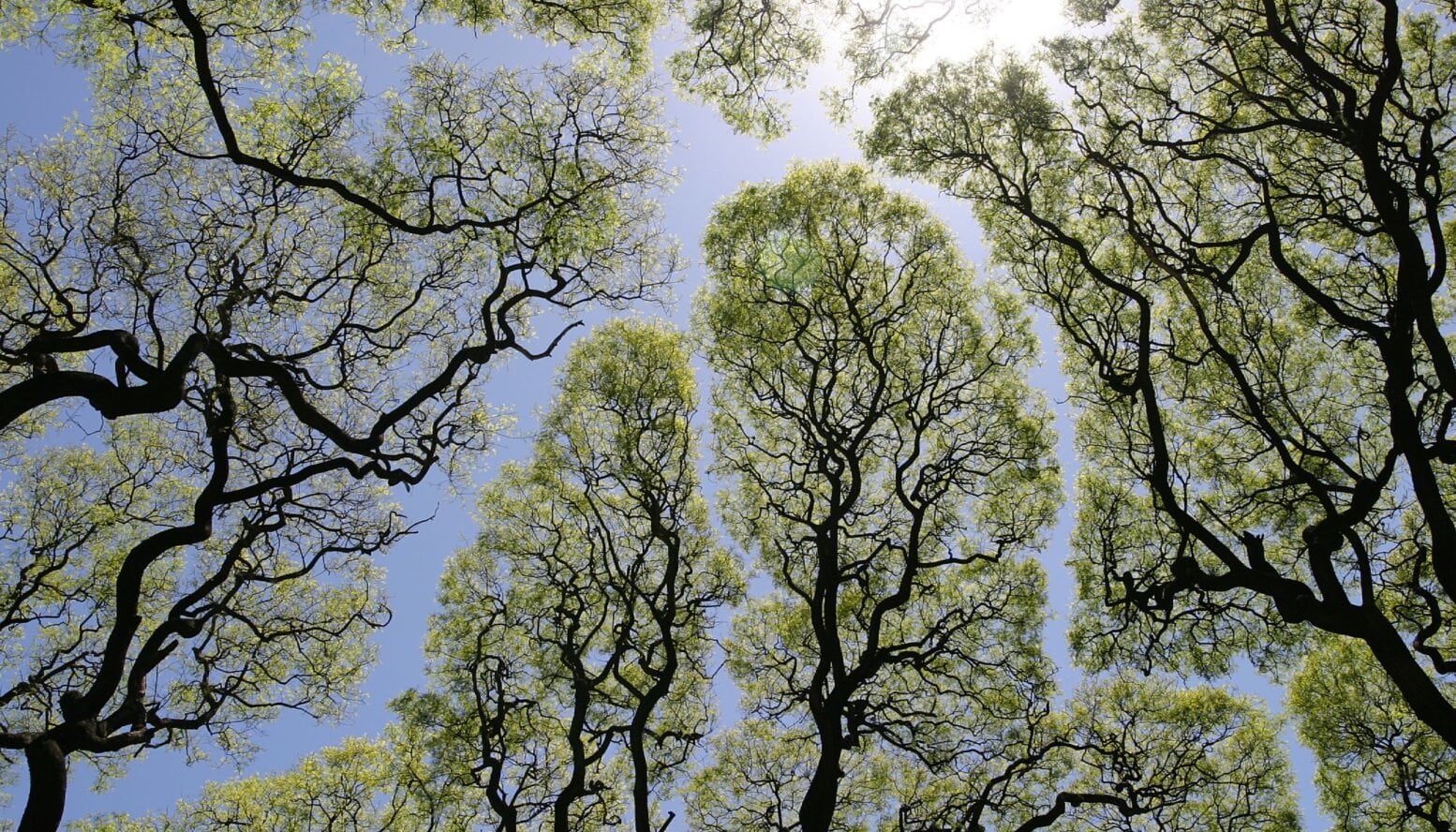
I think of tree branches that, in search of light, have moved in the same direction. I will never know whether they wanted to meet—their crowns are, of course, shy, as the name of the phenomenon reminds us. The arrangement of branches might, for a moment, remind us of railway tracks, but there is no intimation in the latter of the death, the knowledge system we are all moving toward. Adulthood is the realization that time does not die with our death, and though one might be penniless and without possessions, one will always leave behind something: time, memories, an inheritance, for strangers to use. The absence of humans to the eye when looking out at the landscape from a train also does something—when humans do appear, they feel like numerals on a large clock, something upon which the eye may rest upon, but only for a moment, no longer. I don’t know of any tree whose branches are arranged around the trunk like the numbers on a dial. Sometimes I see a flight of stairs. They seem to disrupt the flow of time. I gradually begin to see that the uneven branches of trees, of varying lengths and thickness, do the same. Sometimes black smoke billows out of chimneys of brick kilns. In its sturdy curving, it has the arrogance of a statue—it stays in that position, as if it were holding its breath underwater, refusing to move. It looks ominous at first and comical in the end, like ambition does. How is its waywardness different from those of tree branches? Does it move like the branches of a tree, seeking something that it needs, or is it without hunger? The smoke will dissipate, of course, but the branches remain. But do they behave similarly in occupying the sky? The heads of the tea shrubs in the tea estates, growing beside the railway track—the youngest leaves picked by human hands keep the bushes flat as does the annual trimming in winter. In the difference of height and growth between the well-endowed shade trees and the tea plants is a quantifiable measure of a history of oppression.
Think of how branches get thinner as they move away from the earth. In this, they are not unlike air itself, in that the form of the trees becomes mirror images of roots. What does that do to our consciousness, for there is no resemblance between our feet and our head? Thin trees—young, planted recently—are straighter than older trees, in that they are like humans themselves, erect when younger, then slouching with age. Is Time erect like that? When does Time grow like grass? See how the branches touch the sky—poking, punctuating, even puncturing it. In these shapes also is some kind of constant self-revision, like a river that is constantly changing its course. Or at least that is what it seems like to an outsider species such as myself. In every knot, in every hole, in every bend, in every stop, in every pause, in every crest, in every depression, in every curl is a history of resistance offered by its surroundings. Form, then, is the result of a negotiation with the world, both of affiliation and disaffiliation, of support as much of antagonism. A history is revealed to us without any middleman or interpretation—a history that is so direct it surprises us, for we are not used to it. The shape of these branches—of history itself—is a rebellion against the straight line, against its autocracy. It reminds me that nothing can be reversed, that “undo” is a capitalist scam, that W. S. Merwin could not “unchop” a tree by assembling its branches together again…
As Gary Snyder reminds us, “Nature is not a place to visit, it is home.”
* Herman Hesse
###
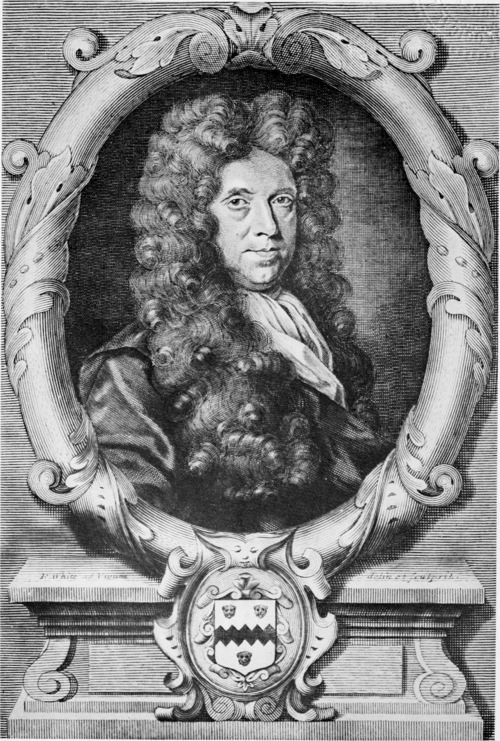
As we learn from our elders, we might send fruitful birthday greetings to Nehemiah Grew; he was born on this date in 1641. A plant anatomist and physiologist, he is known as the “Father of Plant Anatomy.” Grew trained, then practiced, as a physician; but his passion was plants. In 1665, he was elected a Fellow of the Royal Society on the strength of his paper The Anatomy of Vegetables begun. In 1682, he published what is considered his most important work, Anatomy of Plants…
It was divided into four books, Anatomy of Vegetables begun, Anatomy of Roots, Anatomy of Trunks, and Anatomy of Leaves, Flowers, Fruits and Seeds, and was illustrated with eighty-two plates, while appended to it were seven papers mostly of a chemical character.The Anatomy is especially notable for its descriptions of plant structure. He described nearly all the key differences of morphology of stem [or trunk] and root, showed that the flowers of the Asteraceae are built of multiple units, and correctly hypothesized that stamens are male organs. Anatomy of Plants also contains the first known microscopic description of pollen. – source
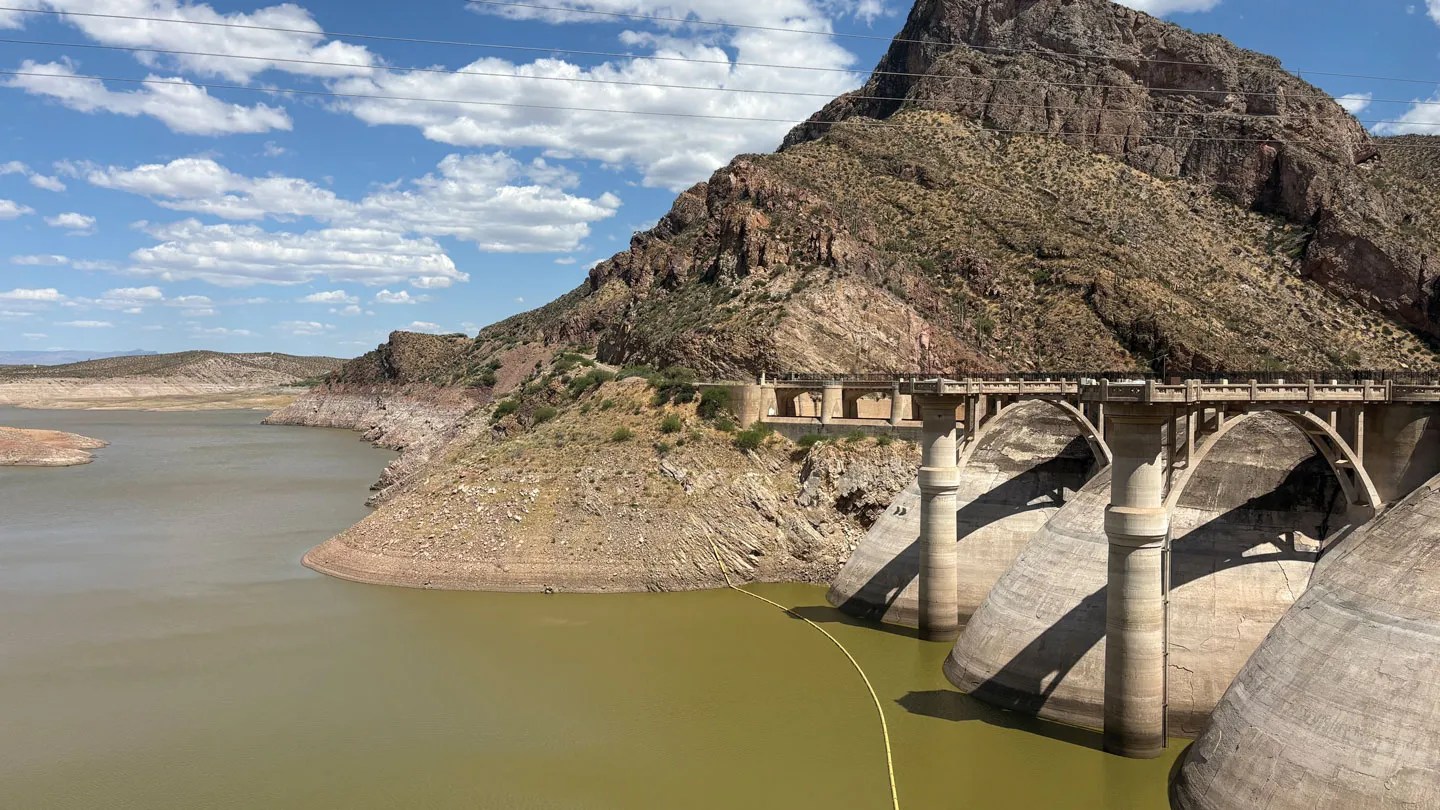
Water levels are running dangerously low in reservoirs across the U.S. Southwest. Declining flows in the Gila River have pushed levels to below 1 percent of capacity in Arizona’s San Carlos Reservoir
The Western U.S. is grappling with an extended drought. Nikk Ogasa explores the possibility that this continued dryness (and the fires and other hazards associated with it) could be our new climate change induced reality…
Kearny, Ariz., is a town on the brink. Located at the foot of the Dripping Spring Mountains in eastern Arizona, this small community of 2,000 people sources its water from the Gila River, a verdant waterway that snakes by the southern edge of town.
But in March, the snowpack feeding the river had dropped to precipitous levels: It was just 1 percent of its historic norm for that time of year. The Gila River water commissioner slashed Kearny’s allotment of river water by some 85 percent. And in April, town officials announced that “Zero Day” was approaching, at which point the taps would run dry.
“We need rain,” says Norm Warren, a lifelong Kearny resident. He owns the only large grocery store within a 45-minute drive of the town. Without tap water for refrigerator cooling systems, Warren says he won’t be able to store perishable products like meats and fresh produce.
Kearny’s dilemma foreshadows a crisis building across the American Southwest. Since 2000, the region — which includes Arizona, New Mexico, California, Utah, Colorado and parts of northern Mexico — has endured a historic “megadrought,” or a period of severe dryness that persists for decades. Scientists say it’s the driest this region has been in 1,200 years.
“We’re 27 years into it, and it shows no signs of letting up,” says Brad Udall, a water and climate researcher at Colorado State University in Fort Collins.
Scientists point to two factors causing the drought — rising temperatures and declining precipitation. Heat from human-caused climate change creates a thirsty atmosphere that is more effective at drying out the landscape, says Kevin Anchukaitis, a dendrochronologist who runs the University of Arizona Laboratory for Tree-Ring Research in Tucson. As for the lack of rain, many researchers wonder if it is simply a stroke of bad luck.
But a controversial study published in Nature in 2025 suggests something far more ominous: Humankind has disrupted a naturally occurring climate cycle in the Pacific Ocean that historically ushered episodes of wet weather into the Southwest. If that’s true, Udall says, things are not looking good for places like Kearny. Other researchers worry that the megadrought may be locked in place for the foreseeable future…
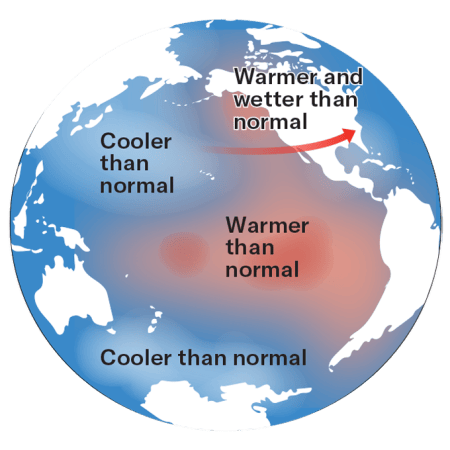
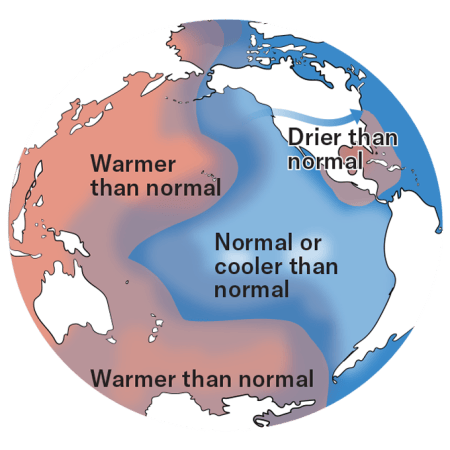
[Ogasa unpacks both the more traiditional analysis and the new hypothesis– that human behavior has disrupted the Pacific Decadal Oscillation, or PDO, an alternating climate pattern in which areas of warmer and cooler than normal surface waters switch their positions on a timescale of many decades…]
… “The conventional wisdom suggested that the PDO could shift any given year, and we [wouldn’t] have to worry about drought [after that],” says climate scientist Jeremy Klavans of the University of Miami.
But he and colleagues weren’t so sure. They dug into that assumption, analyzing more than 500 simulations of the PDO from a dozen major climate models. They examined how the PDO shifted — and stabilized — in the presence of outside forces such as volcanic eruptions, solar variation and levels of greenhouse gases and aerosols.
Their finding: Greenhouse gas and aerosol emissions had effectively hijacked the behavior of the PDO over the last 50 years by altering atmospheric temperatures, the team reported in 2025 in Nature.
Ballooning concentrations of industrial aerosols — which can have an atmospheric cooling effect — probably pushed the PDO to increasingly favor its warm phase starting in the 1950s, the researchers say. But in the 1980s, clean air legislation decreased aerosol emissions even as greenhouse gas levels continued to rise and warm the atmosphere. That combination drove the PDO toward its cool phase, making drought conditions more likely in the Southwest. Instead of being a rare event, drought “becomes kind of commonplace,” Klavans says….
… the current climate models may actually be underestimating the potential duration of the ongoing megadrought, based on those findings, says study coauthor Victoria Todd, a climate scientist at the National Center for Atmospheric Research in Boulder, Colo.
That could be bad news for the American Southwest, Udall says. Even if people stopped emitting greenhouse gases today, planet-warming carbon dioxide will continue to accumulate in the atmosphere, locking the PDO and megadrought into place, potentially for decades. If the emerging science is right, then the Southwest is going to keep getting drier and drier, Udall says. “No question about it.”
Warm Phase (1977-1998): During the PDO’s warm phase, the Pacific jet stream (red arrow) moves south over North America, drawing wet weather patterns into the Southwest.
Cool phase (1999–now): When the PDO switches to its cool phase, the Pacific jet stream (blue arrow) moves north, diverting wet weather patterns out of the Southwest and making drought more likely.
The hypothesis that human emissions have disrupted the PDO could be put to the test this year. That’s because scientists are predicting a historically strong El Niño, a Pacific climate pattern characterized by months of warmer than normal sea surface temperatures in the eastern equatorial Pacific. El Niños often bring wet conditions to the Southwest — and they have been known to force the PDO into a different phase. For example, the 1976–1977 El Niño helped push the PDO into a warm phase for nearly a quarter of a century.
But a powerful El Niño in 2015 wasn’t able to force the switch for more than a few years. That suggests the PDO may be slowly changing, Klavans says. “Something’s different here.”
Even if the current El Niño is strong enough to force the PDO into a warm phase, no one should expect the megadrought to go away any time soon, Seager says. “We’re talking about something that’s been going on for a few decades now. Even one very wet winter is not going to be enough to restore Colorado River reservoirs to where they would preferably be.”…
… Even in the best-case scenarios, the Southwest never returns to the wet years of the 1980s and ’90s, when lakes Powell and Mead reached maximum capacity numerous times, the researchers reported in 2023 in npj Climate and Atmospheric Science. The findings instead suggest that, regardless of what the PDO does, the region will face a far drier climate than it did in its recent past. In other words, even if the megadrought were to end, the Southwest faces an uncertain future when it comes to water, according to the study.
Communities need to prepare for the future by improving their water conservation efforts and infrastructure, Anchukaitis says. Those practices will grow only more crucial as the Southwest’s population continues to balloon: Utah, Texas, Nevada, Colorado and Arizona are among the 10 fastest growing states by population this decade, according to a 2024 report by the University of Virginia’s Weldon Cooper Center for Public Service.
Even if wet weather returns, Anchukaitis says, the cities of the Southwest shouldn’t fall into complacency. “[More rain] doesn’t mean that … megadroughts aren’t going to come back,” he says. “Maybe it buys us some time to ease systems into a new way of thinking.”…
As we pray for rain, we might recall that it was on this date in 2006 that NASA recorded th largest ozone hole in the atmosphere to date. From September 21-30, the average area was 10.6 million square miles, as measured by the Ozone Monitoring Instrument on NASA’s Aura satellite. At the worst point, a record low of 1.2 Dobson Units compared to a 125 DU non-hole reading. For the past several decades, each year during the Southern Hemisphere Spring (Northern Hemisphere Autumn) chemical reactions due to chlorine and bromine man-made compounds in the atmosphere cause the destruction of ozone in the stratosphere over the southern polar region… all contributing to the phenomenon discussed above.
False-color view of total ozone over the Antarctic pole. The purple and blue colors are where there is the least ozone, and the yellows and reds are where there is more ozone. (source)
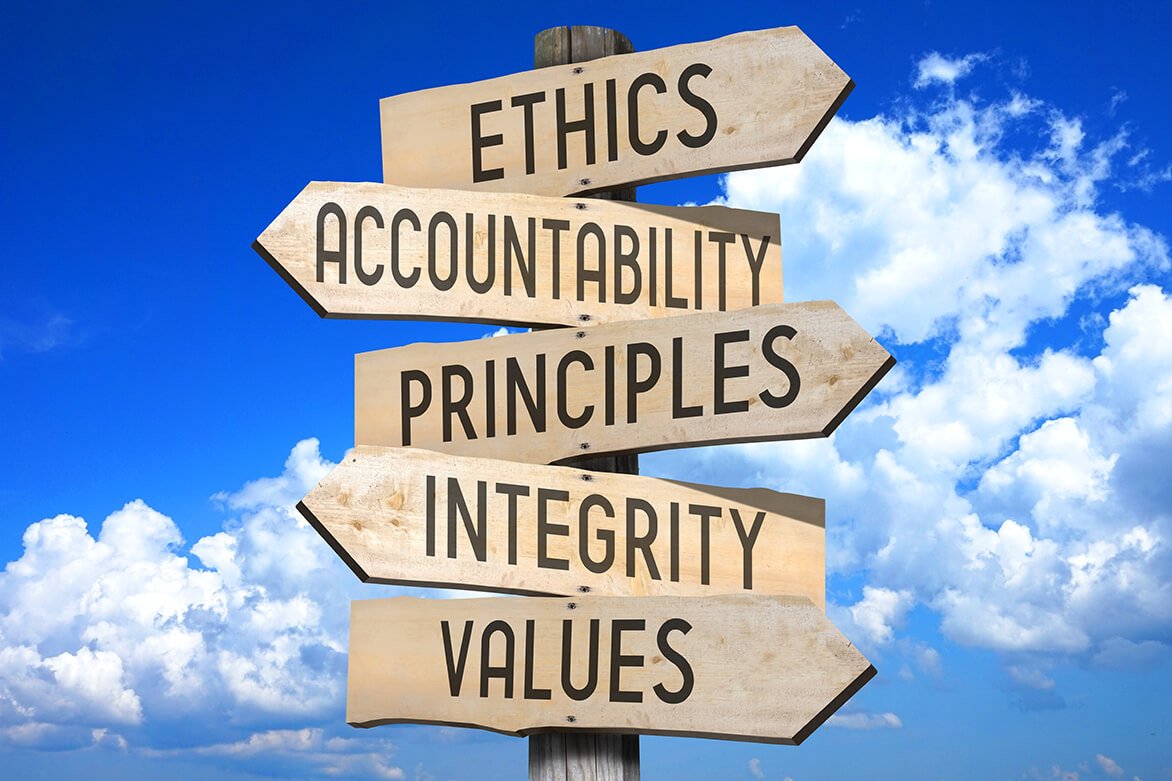
Further in a fashion to last Wednesday’s post on Quality: James Wilson on ethics, and how we might best think about them. He starts by referencing Bernard Williams‘ (and here) take on ethical inquiry– that it is about sense-making, starting from what we already care about, and always local– which led Williams to discourage scientistic models of philosophy, and to argue that philosophy should be seen as “part of a wider humanistic enterprise of making sense of ourselves and our activities.” Wilson invokes Dewey’s pragmatism to suggest that what is required is less a shift from scientistic to humanistic conceptions of philosophy, than for philosophers working in value inquiry to better align their aspirations for theory with what it can actually deliver.
His introduction…
Philosophy is the oldest academic discipline, but where philosophy should be placed within the space of disciplines remains elusive. In the essay that inspired this special issue, Bernard Williams (2006b) is sharply critical of what he describes as scientistic approaches to philosophy, which assimilate philosophy to a model of science exemplified by physics or chemistry. In place of scientism, he offers a vision of philosophy as a humanistic discipline.
Williams says little about what it is for a discipline to be humanistic, but takes history to be a central exemplar. Humanistic inquiry is pursued, in Moore’s elucidation ‘by humans, from their unique position in the world, to make sense both of themselves and of that position’ (Moore 2017, p. 45). Humanistic inquiry focuses on forms of sense- making, and on articulating in human terms the meaning of texts, institutions, norms, events, and artefacts through interpretation, criticism and argument. In Williams’s words, viewing philosophy as a humanistic discipline is to view it ‘as part of a wider humanistic enterprise of making sense of ourselves and our activities… in order to answer many of its questions it needs to attend to other parts of that enterprise, in particular to history’ (Williams 2006b, p. 197).
Not all forms of inquiry are, or should aspire to be, humanistic. Williams was sympathetic to the motivations that lead some to hope that science will be able to attain to what he described as an absolute conception of reality. It is a virtue of physics that it aspires to (and has succeeded in) providing an understanding of the world, which abstracts to a very great degree from our ‘own perspective, our peculiar and local ways of apprehending things’ (Williams 2006b, p. 185). However, he was sharply critical of the assumption that abstracting away from specifically human forms of sense-making will invariably improve our cognitive grip on ethical and political questions. As Williams argued, ‘in seeking to understand ourselves—we need concepts and explanations which are rooted in our more local practices, our culture, and our history, and these cannot be replaced by concepts which we might share with very different investigators of the world’ (Williams 2006b, p. 185).
While humanistic scholarship remains crucial for self-understanding, the longue durée has seen an apparently inexorable decline in the prestige of the humanities in relation to the sciences, and a continued narrowing in the scope of the questions that are taken to be best answered with humanistic means. The result has been a profound shift away from the humanities and towards science, technology, engineering and mathematics (STEM) in the intellectual resources used to educate children and ready them for the workforce, and in prevailing assumptions about which disciplines bring the greatest social benefit. A sense of this long-term decline is already present in Williams’s text, and in the 25 years since then, there has been an ever-growing discourse on the decline of the humanities. The view that the humanities are in crisis has become ubiquitous even amongst their defenders.
How should philosophy position itself in this changing intellectual landscape? One obvious move is for philosophers to reframe their discipline as a science — a move that Williams disparages as ‘scientism’. Scientism, on Williams’s account goes beyond a philosopher’s ‘interest or involvement in science’, and involves a ‘misunderstanding of the relations between philosophy and the natural sciences which tends to assimilate philosophy to the aims, or at least the manners, of the sciences’ (Williams 2006b, p. 182). Williams is unusual in directing his concerns about scientism towards conceptions of philosophy, rather than, as is more often the case in philosophical discussions of scientism, the encroachment and/or overvaluation of science more broadly (Ridder, Peels, and Woudenberg 2018). Hence, unlike some who critique scientism, Williams does not disparage either the aims or methods of science. His goal is limited to providing a principled account of why questions relating to human self-understanding are not best interpreted as questions that can be answered using scientific means.
Williams presents two main objections to scientism in philosophy. First, philosophical writing needs to be reflective, and that reflection requires styles of writing in which the reader’s sense of what is important is engaged, rather than ignored or kept at a distance. Second, philosophy (or at least those parts of philosophy Williams is most interested in) is about sense-making. Sense-making is to a significant degree interpretive, historically situated and local. For both reasons, importing scientific methods, or assumptions that philosophers should adhere more closely to scientific methods, ends up obscuring or misinterpreting philosophy as an activity, rather than shedding light on it.
Williams’s wide-ranging essay takes for granted the intellectual landscape of the end of the twentieth century, and makes some deep and provocative claims about what philosophy is and how it should be done. My response starts from the somewhat changed intellectual landscape of the mid-2020s, is similarly wide-ranging, and also aims to say something novel and provocative about how philosophy should be done. I engage closely with what Williams says, but with the aim of thinking about what philosophy now should be, rather than providing an interpretation that takes up every strand of Williams’s argument or is definitive even in the interpretation of those elements I do discuss.
I am sympathetic to Williams’s reasons for reasserting the importance of the humanistic in philosophy, but will question some of the assumptions about disciplinarity that seem to shape his argument. In particular, I argue that it is a mistake to think that there is an overall answer to the question whether philosophy belongs with the humanities or the sciences. Rather, the philosophical methods that it is most fruitful to adopt depend on the research question to be addressed (a point that Williams’s own philosophical practice showcases, even if his metaphilosophy makes this less clear).
Williams’s objections to scientism are most persuasive in cases where the domain to be investigated is, at least to a significant degree, constituted by and through human self-understandings. Williams, of course, thought that value inquiry — whether in ethics or political philosophy — is such a domain. However, this is a point on which Williams and his moral realist critics sharply disagree, with both sides at times thinking the other’s position not only wrong, but hopelessly confused and obscure.
Williams’s views about the nature of ethics both support, and are supported by his broader humanistic conception of philosophy, while other philosophers’ views of ethics as being akin to science (or to mathematics) both support and are supported by their distinctive conceptions of philosophy. This might lead to the worry that there is something question-begging about Williams’ argument. I shall suggest that appearances may be deceptive: to the extent that there are deep-seated and apparently intractable disagreements about the ontology and epistemology of ethical values, this is evidence in favour of Williams’s view rather than his moral realist opponents. I argue that it is helpful to view such disagreements through the lens of a transdisciplinary epistemology, in which incompatible methodologies and ontologies, and how to reconcile them, are central themes.
Looked at from this perspective, philosophy is an outlier: no other discipline suffers such a mismatch between the level of confidence of its competent practitioners that there are correct and highly general answers to its research questions, and the power of the methods adopted within the discipline to resolve disagreements between these same competent practitioners. Philosophers working in value inquiry would do better to be more honest about philosophy’s limits and more modest in what they expect it to do. Looked at in this way, it is Williams’s humanistic view of ethics that better comports with the totality of the evidence. I close by reconsidering the role of cases and thought experiments in ethics, and arguing that a suitably refined version of Williams’s position in ethics has much in common with Dewey’s pragmatism…
As we think about thinking, we might spare a thought for Dōgen; he died on this date in 1253. A Buddhist monk, writer, poet, and philosopher, he was the founder of the Sōtō school of Zen in Japan. Dōgen is known for his extensive writings like the Shōbōgenzō (Treasury of the True Dharma Eye, considered his magnum opus), the Eihei Kōroku (Extensive Record, a collection of his talks), the Eihei Shingi (the first Japanese Zen monastic code), along and his Japanese poetry, and commentaries.
Relevantly to the piece above, Dōgen’s perspective of virtue is discussed in the Shōbōgenzō as something to be practiced inwardly so that it will manifest itself on the outside– i.e., virtue is something that is both internal and external in the sense that one can practice internal good dispositions and also the expression of these good dispositions.
Dōgen watching the moon. Hōkyō-ji monastery, Fukui prefecture, circa 1250 (source)
We keep marveling at how fast the years go by. The deeper problem, Mike Mariani argues, is that we’re forgetting them — and losing the quiet, boring moments where memory forms…
We’ve long been ensorcelled by the passage of time. Puckered leaves fluttering from the spidery arms of barren trees. Grains of sand tumbling through the delicate neck of an hourglass. A curved cornice perched over a snow-covered mountain, awaiting an avalanche to bring it down. These evocative emblems of seasons, hours, and the vicissitudes they leave in their wake speak to the bittersweet relationship we’ve cultivated with this unit of measurement.
Whether in Proustian reveries, digital photo libraries, or the watchful doppelgänger that gazes out at us each morning, ever-so-slightly altered, we’re inclined to a tender wistfulness toward time — the persistent awareness that, however fast or slow, it’s forever slipping through our fingers.
But lately, our relationship to the months, years and decades that landscape our lives has shifted in some unsettling ways. Instead of regarding the passage of time with introspection or melancholy, many of us now observe it with a mounting sense of alarm.
You don’t have to look very far to find ample evidence that we are experiencing a metaphysical crack-up around time. There’s a growing conviction among people from all walks of life that time is moving faster than it did several decades ago — or even prior to the Covid pandemic. While this belief crept into the zeitgeist like a sly, slinking fog, the refrains are now so pervasive that they’ve started to supplant idle chatter on the weather. Our focus has shifted from rejoicing in cloudless days or grousing over gloomy skies to fixating on the dizzying speed at which our lives are hurtling by.
This is particularly evident on sites like Reddit, where users now regularly commiserate over how rapidly the years are passing. A farmer whose work cycles alongside the seasons “can’t believe how fast this year has gone.” A middle school teacher recounts how she finds herself “having these conversations with students … who are perturbed by the speed of life.” Perhaps most tellingly, for a programmer, the “pandemic years blurred together, and everything after feels compressed, like one long season instead of separate years.” Civilizational events, including not only Covid but also climate change, large-scale armed conflict and the rise of AI “have piled up so quickly that it feels like we’re living through multiple decades at once.”
In recent years, these stray observations have coalesced into a chorus. Everyone from Boomers to Zoomers is mystified at how the passage of time has sped up, and feels disoriented by the strange velocity that’s colored how we’re living through the 2020s. But to hear these stifled laments is also to observe the absurdity of contemporary American life: While so many of us agree that our relationship to time has been warped, our collective response has been to shake it off and move on. It’s as though we all started losing our depth perception at the same time — crashing into road medians, pratfalling down staircases — and instead of resolving to rectify the predicament, we’ve simply resigned ourselves to daily collisions and collapses.
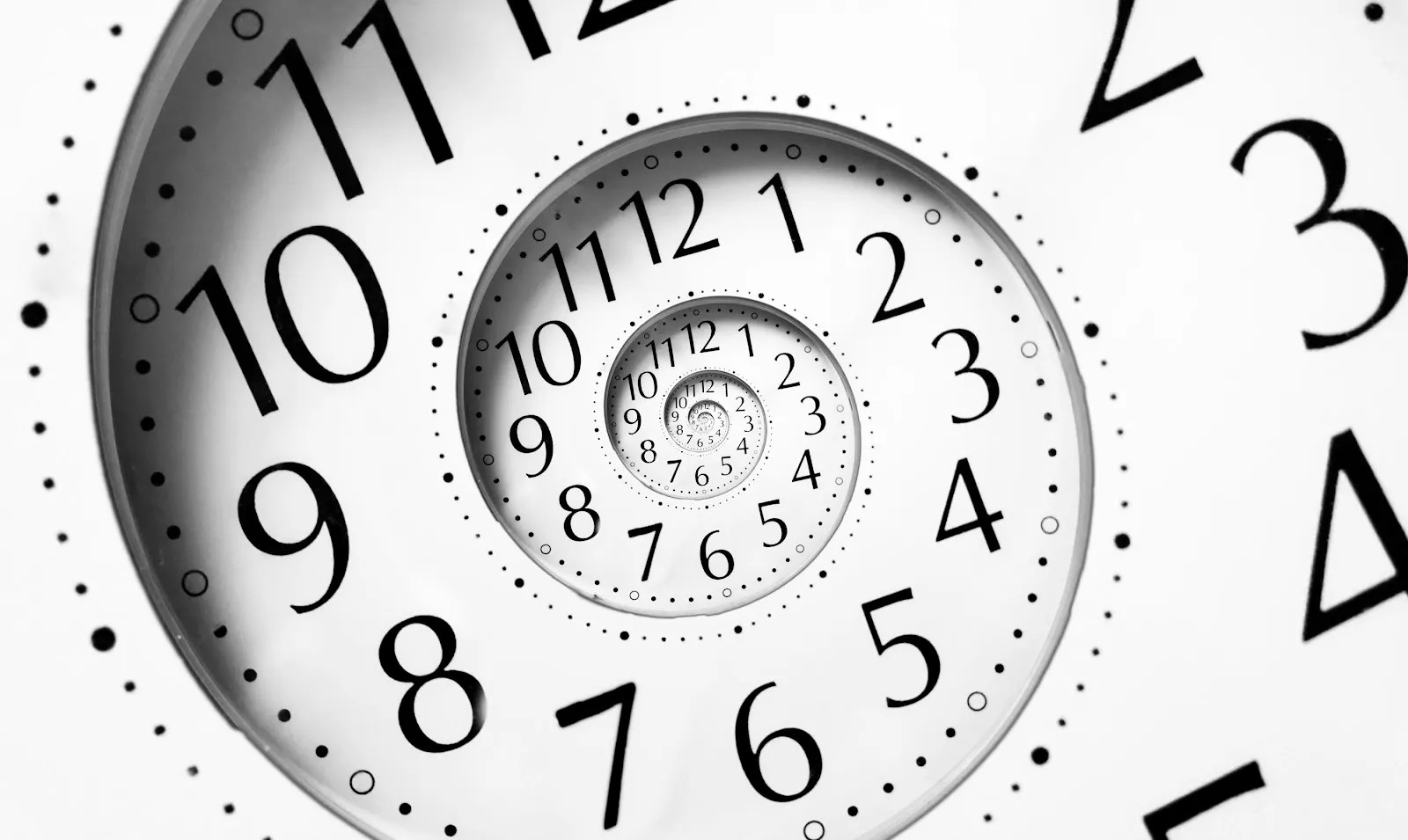
In some ways, the scale of this phenomenon resembles an episode of mass cognitive dissonance, or even a population-level folie à deux. It’s worth asking if something about our internal mechanisms for gauging the passage of time has changed — or been irrevocably thrown out of sync with human timekeeping and the atomic clocks we’ve structured civilization around for nearly a century. Or, alternatively, perhaps the pandemic spoiled our capacity to judge duration, expanding and contracting our sense of time over and over until the fabric grew loose and rippled, an undifferentiated mass of fibers stretched into a form we no longer recognize…
[Mariani considers the thinking of scientists and philosophers who’ve grappled with this issue since the 19th century, considers “the internal clock fallacy,” and explores the impact of modern technology (“Browsing, scrolling and swiping are more likely to quiet or even anesthetize our brains than activate them in the ways required to form memories…”). He concludes with a “defense” of boredom…]
The stakes of this phenomenon can sometimes seem low. Feeling like time is speeding up is not a “kitchen table issue”; it won’t raise your taxes or make you go hungry. But the TIMED project has demonstrated that people who feel like they’re losing time are genuinely unhappy and even distressed about it. Members of Gen Z, in particular, don’t talk about the quickening pace of their lives with disinterested curiosity or frivolous bemusement — they lament it. When we lose our grip on the passage of time, it can feel like we’re also losing grip on our own lives.
Western culture views time as a currency to be leveraged, channeled and optimized. The societal pressure to perform productivity at all times is so insistent and thrumming that many of us — myself included — have lost the ability to slow down and luxuriate in the inherent slowness of time, the way it oozes forward like honey slithering across a glass jar. When Aldous Huxley was asked about time by an interlocutor in “The Doors of Perception,” his reply was both simple and profound. “There seems to be plenty of it,” he said. Untethered from his ego and all the worldly attachments it clung to, Huxley was able to tap into the spaciousness of existence — an amplitude and abundance that’s permanent and inviolable, if only we still had the freedom to see it.
It’s true that technology has capitalized on this culture of synchronized compliance. The companies that manufacture our devices and make the programs that run on them have wedged themselves into this perverse relationship to productivity, offering the badges and motifs that signify a certain enterprising competence. As Jenny Odell points out in her book, “How to Do Nothing,” there’s a battle playing out “for our time, a colonization of the self by capitalist ideas of productivity and efficiency.” Through these products, we personify the ideals of practicality and industriousness.
The pandemic, too, eventually fed into the hungry zeitgeist of maximizing our output and sacrificing ourselves on the altar of “getting ahead.” The increased use of communications platforms like Slack, Teams and Zoom promoted a porousness between our work and home lives, allowing what Odell calls a “certain nervous feeling, of being overstimulated and unable to sustain a train of thought” to infiltrate spaces long insulated from them.
This explains why many people feel that the way they experienced time during the pandemic never snapped back to how they processed it before Covid. In the aftermath, we became even more tethered to these platforms and other virtual spaces where productivity lingers at a low, insistent hum 24 hours a day. With our minds more anxious and overstimulated, our perception of time never had the chance to return to an earlier, more composed pace.
Further, trends that predated Covid resurfaced as though shot out of a cannon, and the ambient pressure to advance our lots at all costs imbued our culture with a mercenary quality. We were all racing to make more money, afford a home, secure a job, #YOLO at the live events we were unceremoniously robbed of. Amid this competitive turbulence — and the technologies that capitalized on our unease about it — everything started to move faster.
If we accept this premise, then maybe the crisis of time speeding up is not as hopelessly irreversible as it often seems. According to the latest time perception research, the amount of information our brains engage with shapes our subjective sense of how fast time is moving. If we intentionally reduce the stimuli we’re exposing ourselves to in a given day or week, then our brains will gradually slow down. And if our brains slow down, then our perception of time will taper off, too.
For their part, Ogden and other TIMED researchers feel that society has imposed too much responsibility on the individual to limit their use of technology. “Maybe it’s time that we shifted some of that onto the creators,” Ogden said. “The key metric for the success of digital technology is how long users are on it for, and how many people they can get on it for as long as possible. How do we flip that?” While we wait for those larger systemic changes, though, Ogden emphasized the importance of using our devices in a more intentional fashion. “What are you trying to get out of this digital technology use?” she asked. “You need to have an awareness of your own goals.”
In addition to modifying our own individual behavior, however, we also need to change the culture surrounding how we spend our time. That means coming to terms with the reality that boredom and “doing nothing” are neither shameful nor necessary evils. “There is huge value in doing nothing,” Ogden said. “We need to move away from thinking that it’s weird, lazy or slovenly.” Asked how she would spend a perfect holiday, Ogden described something very close to what people now labor so strenuously to avoid. “It would be to go and sit in a square in Italy with a nice glass of wine and watch the world go by.”
In his “Principles of Psychology,” William James invites us to participate in an experiment. “Close your eyes and simply wait to hear somebody tell you that a minute has elapsed,” he writes. The length of that single minute, he explains, will feel overwhelming. “You engulf yourself into its bowels as into those of that interminable first week of an ocean voyage, and find yourself wondering that history can have overcome many such periods in its course.” Those 60 seconds feel so full, James goes on, because “you attend so closely to the mere feeling of the time per se.” When our senses are engaged and stimulated, time is compressed, disguised, eclipsed. “The feeling of bare time,” however, “is the least stimulating experience we can have.”
We used to tolerate those interminable minutes standing in a crowded grocery line, gazing out the convex glass window of an airplane, waiting for the dull red digits on an oven timer to run down to zero. These are now the endangered species of our day-to-day lives. And they are far more valuable than we ever could have known…
As we think about time, we might spare a thought for Richard Trentlage; he died on this date in 2016. A jingle writer, he wrote jingles for dozens of clients, including McDonald’s, the National Safety Council, and V8. But he is surely best remembered for penning the Oscar Mayer jingle:
“Oh, I wish I were an Oscar Mayer wiener / That is what I’d truly like to be / ’Cause if I were an Oscar Mayer wiener / Everyone would be in love with me”
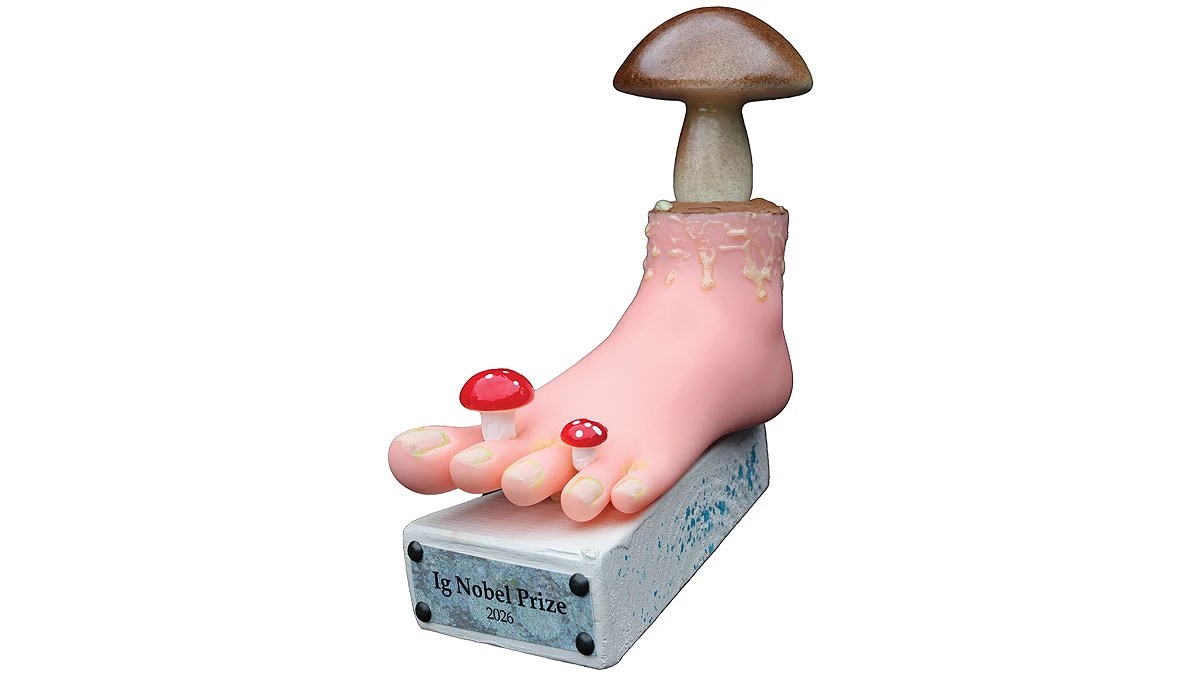
Quite a feet: Ig Nobel Prize winners took home this statuette, which was designed to celebrate the 2026 ceremony theme, fungi
It’s that time of year again: earlier this month, the Ig Nobel Prizes were awarded…
Scientists who studied cockroach milk proteins, splash-free urinals, and buried underpants garnered top honors at the 36th Ig Nobel Prize ceremony on Thursday, Sept. 3. The humorous honors, which are given “for achievements that first make people LAUGH, and then make them THINK,” were awarded in Zurich for the first time, after 35 years of ceremonies in the US. The Ig Nobel’s organizers at the magazine Annals of Improbable Research moved the ceremony because of safety concerns for international winners and journalists traveling to the US, according to Marc Abrahams, Ig Nobel founder and the master of ceremonies…
… The Ig Nobel in Biomechanics went to the University of Oxford’s Matilda Brindle and coworkers, who have redefined kissing as “non-agonistic interactions involving directed, intraspecific, oral-oral contact with some movement of the lips/mouthparts and no food transfer” after observing the behavior in ants, birds, polar bears, and primates (Evol. Hum. Behav. 2025, DOI: 10.1016/j.evolhumbehav.2025.106788).
The discovery that milk proteins from viviparous cockroaches—insects that nourish their developing offspring within their bodies instead of in an external egg case—possess three times as much energy as cow milk proteins garnered the coveted Chemistry Prize. A team led by Leonard M. G. Chavas at Dectris Japan and Subramanian Ramaswamy at Purdue University studied the proteins from living Diploptera punctata cockroaches (IUCrJ 2016, DOI: 10.1107/S2052252516008903).
For their study “Higher Social Class Predicts Increased Unethical Behavior,” Paul K. Piff at the University of California, Irvine, and coworkers took home the Economics Ig Nobel. Among other things, they learned that drivers of expensive, late-model cars were more likely to cut off other vehicles at a busy four-way intersection (Proc. Natl. Acad. Sci. U.S.A. 2012, DOI: 10.1073/pnas.1118373109)...
As we extol the eccentric, we might spare a thought for Orville Redenbacher; he died on this date in 1995. An agronomist and businessman, he was described by The New York Times as “the agricultural visionary who all but single-handedly revolutionized the American popcorn industry.” Redenbacher’s interest in popcorn blossomed early. It was the favorite snack on his family’s farm, and he grew it (and sold it from the back of his car) to earn extra spending money.
After graduating from Purdue, Redenbacher returned to agriculture, serving as a Farm Bureauextension agent, then working in fertilizer sales. In 1951, Redenbacher and partner Charles F. Bowman bought the George F. Chester and Son seed corn plant in Boone Grove, Indiana. Naming their company “Chester Hybrids,” they tried tens of thousands of hybrid strains of popcorn before settling on a hybrid they named “RedBow.” Over the next two decades, Chester became a worldwide supplier of popcorn seed while also selling its own varieties directly to consumers at its plant in Valparaiso, Indiana.
In 1970, the company introduced a new gourmet hybrid popping corn (developed by plant breeder Carl Hartman) and began distributing it to retail outlets. On the advice of an advertising agency, the product was branded under Orville Redenbacher’s name, and launched as Orville Redenbacher’s Gourmet Popping Corn (in 30-ounce jars)– with the tagline “World’s most expensive popping corn.”
While Orville Redenbacher-branded popcorn is still available, it is (a la last Wednesday’s post) no longer Orville’s passion product. In 1976, Redenbacher sold the company to Hunt-Wesson Foods, a division of Norton Simon, Inc. In 1983, Esmark purchased Norton Simon, which in turn was acquired by Beatrice Foods in 1984. In 1985 Kohlberg Kravis Robert acquired Beatrice with the goal of selling off businesses. In 1990, they sold the popcorn business and other old Hunt-Wesson businesses to agribusiness giant ConAgra.




You must be logged in to post a comment.