In order to bridge the yawning gulf between the humanities and the sciences, Gordon Gillespie suggests, we must turn to an unexpected field: mathematics…
In 1959, the English writer and physicist C P Snow delivered the esteemed Rede Lecture at the University of Cambridge [a talk now known as “The Two Cultures,” see here]. Regaled with champagne and Marmite sandwiches, the audience had no idea that they were about to be read the riot act. Snow diagnosed a rift of mutual ignorance in the intellectual world of the West. On the one hand were the ‘literary intellectuals’ (of the humanities) and on the other the (natural) ‘scientists’: the much-discussed ‘two cultures’. Snow substantiated his diagnosis with anecdotes of respected literary intellectuals who complained about the illiteracy of the scientists but who themselves had never heard of such a fundamental statement as the second law of thermodynamics. And he told of brilliant scientific minds who might know a lot about the second law but were barely up to the task of reading Charles Dickens, let alone an ‘esoteric, tangled and dubiously rewarding writer … like Rainer Maria Rilke.’
Sixty-plus years after Snow’s diatribe, the rift has hardly narrowed. Off the record, most natural scientists still consider the humanities to be a pseudo-science that lacks elementary epistemic standards. In a 2016 talk, the renowned theoretical physicist Carlo Rovelli lamented ‘the current anti-philosophical ideology’. And he quoted eminent colleagues such as the Nobel laureate Steven Weinberg, Stephen Hawking and Neil deGrasse Tyson, who agreed that ‘philosophy is dead’ and that only the natural sciences could explain how the world works, not ‘what you can deduce from your armchair’. Meanwhile, many humanities scholars see scientists as pedantic surveyors of nature, who may produce practical and useful results, but are blind to the truly deep insights about the workings of the (cultural) world. In his best-selling book The Fate of Rome (2017), Kyle Harper convincingly showed that a changing climate and diseases were major factors contributing to the final fall of the Roman Empire. The majority of Harper’s fellow historians had simply neglected such factors up to then; they had instead focused solely on the cultural, political and socioeconomic ones…
The divide between the two cultures is not just an academic affair. It is, more importantly, about two opposing views on the fundamental connection between mind and nature. According to one view, nature is governed by an all-encompassing system of laws. This image underlies the explanatory paradigm of causal determination by elementary forces. As physics became the leading science in the 19th century, the causal paradigm was more and more seen as the universal form of explanation. Nothing real fell outside its purview. According to this view, every phenomenon can be explained by a more or less complex causal chain (or web), the links of which can, in turn, be traced back, in principle, to basic natural forces. Anything – including any aspect of the human mind – that eludes this explanatory paradigm is simply not part of the real world, just like the ‘omens’ of superstition or the ‘astral projections’ of astrology.
On the opposing view, the human mind – be it that of individuals or collectives – can very well be regarded separately from its physical foundations. Of course, it is conceded that the mind cannot work without the brain, so it is not entirely independent of natural forces and their dynamics. But events of cultural significance can be explained as effects of very different kinds of causes, namely psychological and social, that operate in a sphere quite separate from that of the natural forces.
These divergent understandings underpin the worldviews of each culture. Naive realists – primarily natural scientists – like to point out that nature existed long before humankind. Nature is ordered according to laws that operate regardless of whether or not humans are around to observe. So the natural order of the world must be predetermined independently of the human mind. Conversely, naive idealists – including social constructivists, mostly encountered in the humanities – insist that all order is conceptual order, which is based solely on individual or collective thought. As such, order is not only not independent of the human mind, it’s also ambiguous, just as the human mind is ambiguous in its diverse cultural manifestations.
The clash of cultures between the humanities and the natural sciences is reignited over and over because of two images that portray the interrelationship of mind and nature very differently. To achieve peace between the two cultures, we need to overcome both views. We must recognise that the natural and the mental order of things go hand in hand. Neither can be fully understood without the other. And neither can be traced back to the other…
… The best mediator of a conciliatory view that avoids the mistake of the naive realist and the naive idealist is mathematics. Mathematics gives us shining proof that understanding some aspect of the world does not always come down to uncovering some intricate causal web, not even in principle. Determination is not explanation. And mathematics, rightly understood, demonstrates this in a manner that lets us clearly see the mutual dependency of mind and nature.
For mathematical explanations are structural, not causal. Mathematics lets us understand aspects of the world that are just as real as the Northern Lights or people’s behaviour, but are not effects of any causes. The distinction between causal and structural forms of explanation will become clearer in due course. For a start, take this example. Think of a dying father who wants to pass on his one possession, a herd of 17 goats, evenly to his three sons. He can’t do so. This is not the case because some hidden physical or psychological forces hinder any such action. The reason is simply that 17 is a prime number, so not divisible by three…
… In his ‘two cultures’ speech, Snow located mathematics clearly in the camp of the sciences. But… mathematics doesn’t adhere to the explanatory paradigm of causal determination. This distinguishes it from the natural sciences. Nevertheless, mathematics tells us a lot about nature. According to Kant, it does so because it tells us a lot about the human mind. Mind and nature are inseparable facets of the world we inhabit and conceive. So, why should the humanities not also count as a science? They can tell us just as much about that one world on a fundamental level as the natural sciences. Mathematics demonstrates this clearly…
… Mathematics undermines the causal explanatory paradigm not only in its natural scientific manifestations, but also in its uses in the humanities. We give explanations for a wide variety of phenomena by hidden causes way too often and way too fast, where the simple admission to having no explanation would not only be more honest, but also wiser. Wittgenstein spoke of the disease of wanting to explain. This disease shows itself not just in our private everyday exchanges and in the usual public debates, but also in scholarly discourse of the humanities. When confronted with individual or collective human thinking and behaviour, it is tempting to assume just a few underlying factors responsible for the thinking and behaviour. But, more often than not, there really is no such neat, analysable set of factors. Instead, there is a vast number of natural, psychological and societal factors that are all equally relevant for the emergence of the phenomenon one wants to explain. Perhaps a high-end computer could incorporate all these factors in a grand simulation. But a simulation is not an explanation. A simulation allows us to predict, but it doesn’t let us understand.
The aim of the humanities should not be to identify causes for every phenomenon they investigate. The rise and fall of empires, the economic and social ramifications of significant technological innovations, the cultural impact of great works of art are often products of irreducibly complex, chaotic processes. In such cases, trying to mimic the natural sciences by stipulating some major determining factors is a futile and misleading endeavour.
But mathematics shows that beyond the causal chaos there can be order of a different kind. The central limit theorem lets us see and explain a common regularity in a wide range of causally very different, but equally complex, natural processes. With this and many other examples of structural mathematical explanations of phenomena in the realm of the natural sciences in mind, it seems plausible that mathematical, or mathematically inspired, abstraction can also have fruitful applications in the humanities.
This is by no means meant to promote an uncritical imitation of mathematics in the humanities and social sciences. (The overabundance of simplistic econometric models, for instance, is a huge warning sign.) Rather, it is meant to motivate scholars in these fields to reflect more upon where and when causal explanations make sense. Complexity can’t always be reduced to a graspable causal explanation, or narrative. To the contrary, often the most enlightening enquiries are not those that propose new factors as the true explainers, but those that show by meticulous analysis that far more factors are crucially in play than previously thought. This, in turn, should motivate scholars to seek aspects of their subject of interest beyond causality that are both relevant and amenable to structural forms of explanation. Besides probability theory, chaos theoretical methods and game theory come to mind as mathematical sub-disciplines with potentially fruitful applications in this regard.
However, the main point of our discussion is not that mathematical applications in the humanities might bridge the gap between the natural sciences and the humanities. The point is that mathematics, not really belonging to either camp, shows them to be on an equal footing from the start. The natural scientific paradigm of explanation is not the role model any respectable form of enquiry has to follow. Mathematics shows that natural causes can’t explain every phenomenon, not even every natural phenomenon and not even in principle. So, there is no need for the humanities, the ‘sciences of the mind’, to always strive for explanations by causes that can be ‘reduced’ to more elementary, natural forces. Moreover, mathematics shows that causality, of any kind, is not the only possible basis on which any form of explanation ultimately has to stand. Take for example the semantic relationships between many of our utterances. It is not at all clear that these can be explained in terms of psychological causes, or any other causes. It is not unreasonable to believe that the world is irreducibly structured, in part, by semantic relations, just as it is structured by probabilistic relations…
… The divide between the natural sciences and the humanities does not stem from the supposed fact that only those mental phenomena are real that are explainable in natural-scientific terms. Nor is the divide due to some extra-natural mental order, determined by causal relationships of a very different kind than those studied in the natural sciences. The mental world and the physical world are one and the same world, and the respective sciences deal with different aspects of this one world. Properly understood, insofar as they deal with the same phenomena, they do not provide competing but complementary descriptions of these phenomena.
Mathematics provides the most impressive proof that a true understanding of the world goes beyond the discovery of causal relationships – whether they are constituted by natural or cultural forces. It is worth taking a closer look at this proof. For it outlines the bond that connects mind and nature in particularly bright colours. Kant understood this bond as a ‘transcendental’ one. The late Wittgenstein, on the other hand, demonstrated its anchoring in language – not in the sense of a purely verbal and written practice, but in the sense of a comprehensive practice of actions the mental and bodily elements of which cannot be neatly separated. In the words of Wittgenstein, ‘commanding, questioning, recounting, chatting are as much a part of our natural history as walking, eating, drinking, and playing.’
Mathematics too is part of this practice. As such, like every science, it is inseparably rooted in both nature and the human mind. Unlike the other sciences, this dual rootedness is obvious in the case of mathematics. One only has to see where it resides: beyond causality.
* C. P. Snow, The Two Culturesand the Scientific Revolution
###
As we come together, we might send carefully calculated birthday greetings to a man with a foot in each culture: Frank Plumpton Ramsey; he was born on this date in 1903. A philosopher, mathematician, and economist, he made major contributions to all three fields before his death (at the age of 26) on this date in 1930.
While he is probably best remembered as a mathematician and logician and as Wittgenstein’s friend and translator, he wrote three paper in economics: on subjective probability and utility (a response to Keynes, 1926), on optimal taxation (1927, described by Joseph E. Stiglitz as “a landmark in the economics of public finance”), and optimal economic growth (1928; hailed by Keynes as “”one of the most remarkable contributions to mathematical economics ever made”). The economist Paul Samuelson described them in 1970 as “three great legacies – legacies that were for the most part mere by-products of his major interest in the foundations of mathematics and knowledge.”
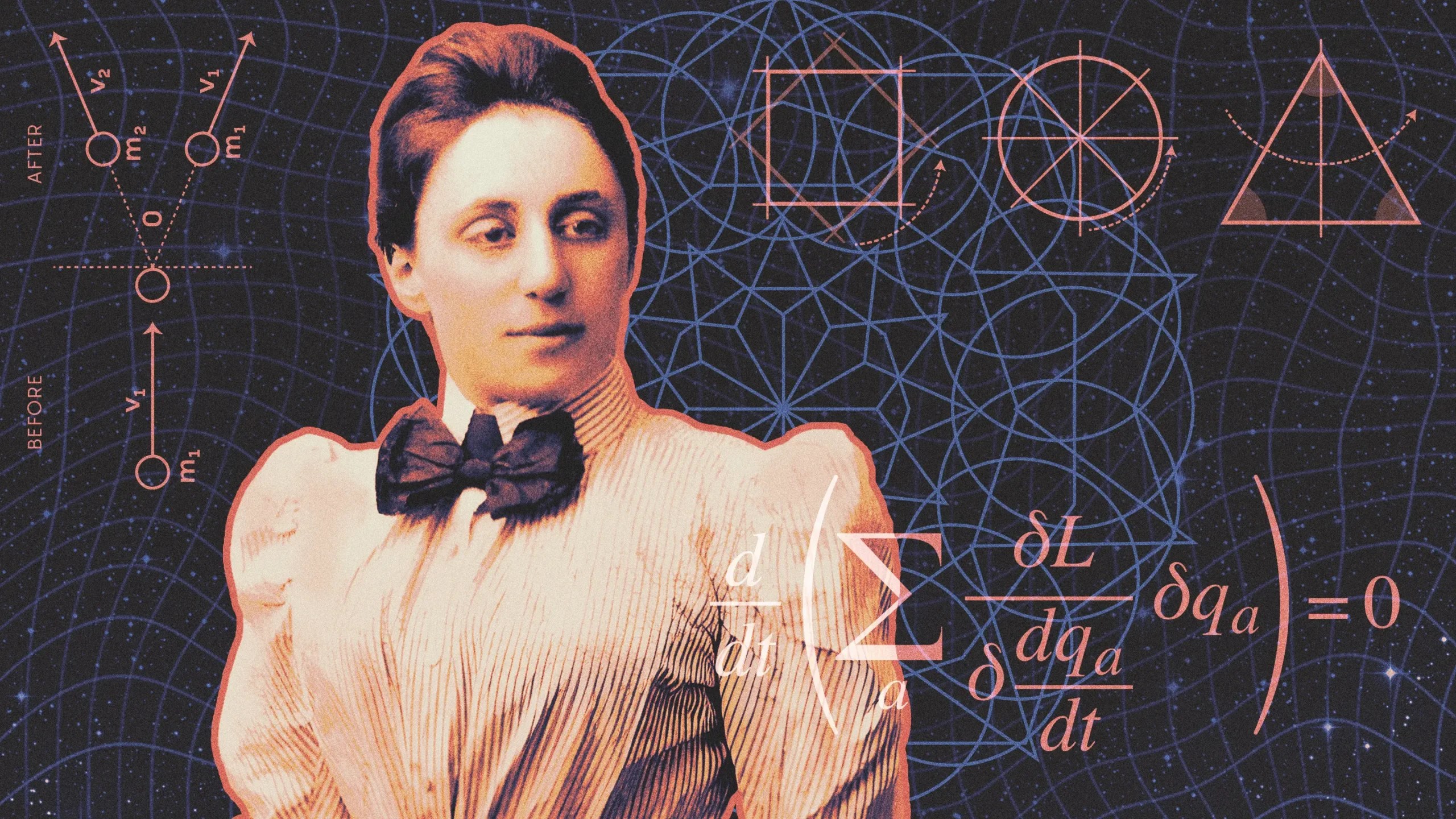
Emmy Noether showed that fundamental physical laws are themselves a consequence of simple symmetries. As Shalma Wegsman explains, a century later, her insights continue to shape physics…
In the fall of 1915, the foundations of physics began to crack. Einstein’s new theory of gravity seemed to imply that it should be possible to create and destroy energy, a result that threatened to upend two centuries of thinking in physics.
Einstein’s theory, called general relativity, radically transformed the meaning of space and time. Rather than being fixed backdrops to the events of the universe, space and time were now characters in their own right, able to curve, expand and contract in the presence of matter and energy.
One problem with this shifting space-time is that as it stretches and shrinks, the density of the energy inside it changes. As a consequence, the classical energy conservation law that previously described all of physics didn’t fit this framework. David Hilbert, one of the most prominent mathematicians at the time, quickly identified this issue and set out with his colleague Felix Klein to try to resolve this apparent failure of relativity. After they were stumped, Hilbert passed the problem on to his assistant, the 33-year-old Emmy Noether.
Noether was an assistant in name only. She was already a formidable mathematician when, in early 1915, Hilbert and Klein invited her to join them at the University of Göttingen. But other faculty members objected to hiring a woman, and Noether was blocked from joining the faculty. Regardless, she would spend the next three years prodding the fault line separating physics and mathematics, eventually setting off an earthquake that would shake the foundations of fundamental physics.
In 1918, Noether published the results of her investigations in two landmark theorems. One made sense of conservation laws in small regions of space, a mathematical feat that would later prove important for understanding the symmetries of quantum field theory. The other, now just known as Noether’s theorem, says that behind every conservation law lies a deeper symmetry.
In mathematical terms, a symmetry is something you can do to a system that leaves it unchanged. Consider the act of rotation. If you start with an equilateral triangle, you’ll find that you can rotate it by multiples of 120 degrees without changing how it looks. If you start with a circle, you can rotate it by any angle. These actions without consequences reveal the underlying symmetries of these shapes.
But symmetries go beyond shape. Imagine you do an experiment, then you move 10 meters to the left and do it again. The results of the experiment don’t change, because the laws of physics don’t change from place to place. This is called translation symmetry.
Now wait a few days and repeat your experiment again. The results don’t change, because the laws of physics don’t change as time passes. This is called time-translation symmetry.
Noether started with symmetries like these and explored their mathematical consequences. She worked with established physics using a common mathematical description of a physical system, called a Lagrangian.
This is where Noether’s insight went beyond the symbols on the page. On paper, symmetries seem to have no impact on the physics of the system, since symmetries don’t affect the Lagrangian. But Noether realized that symmetries must be mathematically important, since they constrain how a system can behave. She worked through what this constraint should be, and out of the mathematics of the Lagrangian popped a quantity that can’t change. That quantity corresponds to the physical property that’s conserved. The impact of symmetry had been hiding beneath the equations all along, just out of view.
In the case of translation symmetry, the system’s total momentum should never change. For time-translation symmetry, a system’s total energy is conserved. Noether discovered that conservation laws aren’t fundamental axioms of the universe. Instead, they emerge from deeper symmetries.
The conceptual consequences are hard to overstate. Physicists of the early 20th century were shocked to realize that a system that breaks time-translation symmetry can break energy conservation along with it. We now know that our own universe does this. The cosmos is expanding at an accelerating rate, stretching out the leftover light from the early universe. The process reduces the light’s energy as time passes…
… Noether’s theorem has shaped the quantum world too. In the 1970s, it played a big role in the construction of the Standard Model of particle physics. The symmetries of quantum fields dictate laws that restrict how fundamental particles behave. For instance, a symmetry in the electromagnetic field forces particles to conserve their charge.
The power of Noether’s theorem has inspired physicists to look toward symmetry to discover new physics. Over a century later, Noether’s insights continue to influence the way physicists think…
As we contemplate cosmology, we might send insightful birthday greetings to the man who “wrote the book” on perspective, Leon Battista Alberti; he was born on this date in 1404. The archetypical Renaissance humanist polymath, Alberti was an author, artist, architect, poet, priest, linguist, philosopher, cartographer, and cryptographer. He collaborated with Toscanelli on the maps used by Columbus on his first voyage, and he published the the first book on cryptography that contained a frequency table.
But he is surely best remembered as the author of the first general treatise– Della Pictura (1434)– on the the laws of perspective, which built on and extended Brunelleschi’s work to describe the approach and technique that established the science of projective geometry… and fueled the progress of painting, sculpture, and architecture from the Greek- and Arabic-influenced formalism of the High Middle Ages to the more naturalistic (and Latinate) styles of Renaissance.
Socrates was worried about the impact of a new technology– writing– on effetive intelligence of its users. Similar concerns have surfaced with the rise of other new communications technologies: moveable-type printing, photography, radio, television, and the internet. As Erik Hoel reminds us, AI is next on that list…
Unfortunately, there’s a growing subfield of psychology research pointing to cognitive atrophy from too much AI usage.
Evidence includes a new paper published by a cohort of researchers at Microsoft (not exactly a group predisposed to finding evidence for brain drain). Yet they do indeed see the effect in the critical thinking of knowledge workers who make heavy use of AI in their workflows.
To measure this, the researchers at Microsoft needed a definition of critical thinking. They used one of the oldest and most storied in the academic literature: that of mid-20th century education researcher Benjamin Bloom (the very same Benjamin Bloom who popularized tutoring as the most effective method of education).
Bloom’s taxonomy of critical thinking makes a great deal of sense. Below, you can see how what we’d call “the creative act” occupies the top two entries of the pyramid of critical thinking, wherein creativity is a combination of the synthesis of new ideas and then evaluative refinement over them.
To see where AI usage shows up in Bloom’s hierarchy, researchers surveyed a group of 319 knowledge workers who had incorporated AI into their workflow. What makes this survey noteworthy is how in-depth it is. They didn’t just ask for opinions; instead they compiled ~1,000 real-world examples of tasks the workers complete with AI assistance, and then surveyed them specifically about those in all sorts of ways, including qualitative and quantitative judgements.
In general, they found that AI decreased the amount of effort spent on critical thinking when performing a task…
… While the researchers themselves don’t make the connection, their data fits the intuitive idea that positive use of AI tools is when they shift cognitive tasks upward in terms of their level of abstraction.
We can view this through the lens of one of the most cited papers in all psychology, “The Magical Number Seven, Plus or Minus Two,” which introduced the eponymous Miller’s law: that working memory in humans caps out at 7 (plus or minus 2) different things. But the critical insight from the author, psychologist George Miller, is that experts don’t really have greater working memory. They’re actually still stuck at ~7 things. Instead, their advantage is how they mentally “chunk” the problem up at a higher-level of abstraction than non-experts, so their 7 things are worth a lot more when in mental motion. The classic example is that poor Chess players think in terms of individual pieces and individual moves, but great Chess players think in terms of patterns of pieces, which are the “chunks” shifted around when playing.
I think the positive aspect for AI augmentation of human workflows can be framed in light of Miller’s law: AI usage is cognitively healthy when it allows humans to mentally “chunk” tasks at a higher level of abstraction.
But if that’s the clear upside, the downside is just as clear. As the Microsoft researchers themselves say…
While GenAI can improve worker efficiency, it can inhibit critical engagement with work and can potentially lead to long-term over-reliance on the tool and diminished skill for independent problem-solving.
This negative effect scaled with the worker’s trust in AI: the more they blindly trusted AI results, the more outsourcing of critical thinking they suffered. That’s bad news, especially if these systems ever do permanently solve their hallucination problem, since many users will be shifted into the “high trust” category by dint of sheer competence.
The study isn’t alone. There’s increasing evidence for the detrimental effects of cognitive offloading, like that creativity gets hindered when there’s reliance on AI usage, and that over-reliance on AI is greatest when outputs are difficult to evaluate. Humans are even willing to offload to AI the decision to kill, at least in mock studies on simulated drone warfare decisions. And again, it was participants less confident in their own judgments, and more trusting of the AI when it disagreed with them, who got brain drained the most…
… Admittedly, there’s not yet high-quality causal evidence for lasting brain drain from AI use. But so it goes with subjects of this nature. What makes these debates difficult is that we want mono-causal universality in order to make ironclad claims about technology’s effect on society. It would be a lot easier to point to the downsides of internet and social media use if it simply made everyone’s attention spans equally shorter and everyone’s mental health equally worse, but that obviously isn’t the case. E.g., long-form content, like blogs, have blossomed on the internet.
But it’s also foolish to therefore dismiss the concern about shorter attention spans, because people will literally describe their own attention spans as shortening! They’ll write personal essays about it, or ask for help with dealing with it, or casually describe it as a generational issue, and the effect continues to be found in academic research.
With that caveat in mind, there’s now enough suggestive evidence from self-reports and workflow analysis to take “brAIn drAIn” seriously as a societal downside to the technology (adding to the list of other issues like AI slop and existential risk).
Similarly to how people use the internet in healthy and unhealthy ways, I think we should expect differential effects. For skilled knowledge workers with strong confidence in their own abilities, AI will be a tool to chunk up cognitively-demanding tasks at a higher level of abstraction in accordance with Miller’s law. For others… it’ll be a crutch.
So then what’s the take-away?
For one, I think we should be cautious about AI exposure in children. E.g., there is evidence from another paper in the brain-drain research subfield wherein it was younger AI users who showed the most dependency, and the younger cohort also didn’t match the critical thinking skills of older, more skeptical, AI users. As a young user put it:
It’s great to have all this information at my fingertips, but I sometimes worry that I’m not really learning or retaining anything. I rely so much on AI that I don’t think I’d know how to solve certain problems without it.
What a lovely new concern for parents we’ve invented!
Already nowadays, parents have to weather internal debates and worries about exposure to short-form video content platforms like TikTok. Of course, certain parents hand their kids an iPad essentially the day they’re born. But culturally this raises eyebrows, the same way handing out junk food at every meal does. Parents are a judgy bunch, which is often for the good, as it makes them cautious instead of waiting for some finalized scientific answer. While there’s still ongoing academic debate about the psychological effects of early smartphone usage, in general the results are visceral and obvious enough in real life for parents to make conservative decisions about prohibition, agonizing over when to introduce phones, the kind of phone, how to not overexpose their child to social media or addictive video games, etc.
Similarly, parents (and schools) will need to be careful about whether kids (and students) rely too much on AI early on. I personally am not worried about a graduate student using ChatGPT to code up eye-catching figures to show off their gathered data. There, the graduate student is using the technology appropriately to create a scientific paper via manipulating more abstract mental chunks (trust me, you don’t get into science to plod through the annoying intricacies of Matplotlib). I am, however, very worried about a 7th grader using AI to do their homework, and then, furthermore, coming to it with questions they should be thinking through themselves, because inevitably those questions are going to be about more and more minor things. People already worry enough about a generation of “iPad kids.” I don’t think we want to worry about a generation of brain-drained “meat puppets” next.
For individuals themselves, the main actionable thing to do about brain drain is to internalize a rule-of-thumb the academic literature already shows: Skepticism of AI capabilities—independent of if that skepticism is warranted or not!—makes for healthier AI usage.
In other words, pro-human bias and AI distrust are cognitively beneficial.
It’s said that first we shape our tools, then they shape us. Well, meet the new boss, same as the old boss… Just as, both as individuals and societies, we’ve had to learn our way into effective use of new technologes before, so we will with AI.
The enhancement and atrophy of human cognition go hand in hand: “brAIn drAIn,” from @erikphoel.
* “For this invention will produce forgetfulness in the minds of those who learn to use it, because they will not practice their memory. Their trust in writing, produced by external characters which are no part of themselves, will discourage the use of their own memory within them. You have invented an elixir not of memory, but of reminding; and you offer your pupils the appearance of wisdom, not true wisdom, for they will read many things without instruction and will therefore seem to know many things, when they are for the most part ignorant and hard to get along with, since they are not wise, but only appear wise.” – Socrates, in Plato’s dialogue Phaedrus 14, 274c-275b
###
As we think about thinking, we might send carefully-considered birthday greetings to Alfred North Whitehead; he was born on this date in 1861. Whitehead began his career as a mathematician and logician, perhaps most famously co-authoring (with his former student, Bertrand Russell), the three-volume Principia Mathematica (1910–13), one of the twentieth century’s most important works in mathematical logic.
But in the late teens and early 20s, Whitehead shifted his focus to philosophy, the central result of which was a new field called process philosophy, which has found application in a wide variety of disciplines (e.g., ecology, theology, education, physics, biology, economics, and psychology).
“There is urgency in coming to see the world as a web of interrelated processes of which we are integral parts, so that all of our choices and actions have consequences for the world around us.”
Wisdom for the exquisite Existential Comics (“A philosophy comic about the inevitable anguish of living a brief life in an absurd world. Also jokes.”)…
Frege was an early philosopher of language, who formulated a theory of semantics that largely had to do with how we form truth propositions about the world. His theories were enormously influential for people like Russel, Carnap, and even Wittgenstein early in his career. They all recognized that the languages we use are ambiguous, so making exact determinations was always difficult. Most of them were logicians and mathematicians, and wanted to render ordinary language as exact and precise as mathematical language, so we could go about doing empirical science with perfect clarity. Russell, Carnap, and others even vowed to create an exact scientific language (narrator: “they didn’t create an exact scientific language”).
Later on, Wittgenstein and other philosophers such as J.L. Austin came to believe that a fundamental mistake was made about the nature of language itself. Language, they thought, doesn’t pick out truth propositions about the world at all. Speech acts were fundamentally no different than other actions, and were merely used in social situations to bring about certain effects. For example, in asking for a sandwich to be passed across the table, we do not pick out a certain set of facts about the world, we only utter the words with the expectations that it will cause certain behavior in others. Learning what is and isn’t a sandwich is more like learning the rules of a game than making declarations about what exists in the world, so for Wittgenstein, what is or isn’t a sandwich depends only on the success or failure of the word “sandwich” in a social context, regardless of what actual physical properties a sandwich has in common with, say, a hotdog.
As we add mayonnaise, we might send thoughtful birthday greetings to Norbert Wiener; he was born on this date in 1894. A computer scientist, mathematician, and philosopher, Wiener is considered the originator of cybernetics, the science of communication as it relates to living things and machines– a field that has had implications for implications for a wide variety of fields, including engineering, systems control, computer science, biology, neuroscience, and philosophy. (Wiener credited Leibniz as the “patron saint of cybernetics.)
His work heavily influenced computer pioneer John von Neumann, information theorist ClaudeShannon, anthropologists Margaret Mead and Gregory Bateson, and many others. Wiener was one of the first to theorize that all intelligent behavior was the result of feedback mechanisms and could possibly be simulated by machines– an important early step towards the development of modern artificial intelligence.
Regular readers will have deduced that I am something of a techno-optimist. While I worry that human misapplication (exploitation) of new technologies could create new dangers and/or further concentrate wealth and power in too few hands, I believe that emerging tech could– should– help humanity deal with many of its gravest challenges, certainly including climate change. At the same time, I am disposed to thinking about large issues/problems systemically.
Rianne Riemens shares neither of my enthusiasms; she sounds a critical note on techno-optimism, systems thinking– and more specifically, on the application of the latter to the former…
Today, American tech actors express optimistic ideas about how to fix the Earth and halt climate change. Such “green” initiatives have in common that they capture the world in systems and propose large systemic, and mostly technological, solutions. Because of their reliance on techno-fixes, representatives of Silicon Valley express an ideology of ecomodernism, which believes that human progress can be “decoupled” from environmental decline. In this article, I show how “whole-systems thinking” has become a key discursive element in today’s ecomodernist discourses. This discourse has developed from the 1960s onwards – inspired by cybernetic, ecological and computational theories – within the tech culture of California. This paper discusses three key periods in this development, highlighting key publications: the Whole Earth Catalog of the 1960s, the Limits to Growth report in 1972 and the cyberspace manifestoes of the mid 1990s. These periods are key to understand how techno-fixes became a popular answer to the climate crisis, eventually leading to a vision of the world as an ecosystem that can be easily controlled and manipulated, and of technological innovation as harmless and beneficial. I argue that “whole-systems” thinking offers a naive and misleading narrative about the development of the climate crisis, that offers a hopeful yet unrealistic perspective for a future threatened by climate change, built on a misconception of Earth as a datafied planet.
In “The Techno-Optimist Manifesto” (Citation2023) venture capitalist Marc Andreessen argues why we should all be techno-optimists, especially if we are worried about the future impact of the climate crisis. According to Andreessen, promoting unlimited technological progress is the only option: “there is no inherent conflict between the techno-capital machine and the natural environment”. If we generate unlimited clean energy, we can improve the natural environment, whereas a “technologically stagnant society ruins it” (Andreessen, Citation2023). This is possible, he writes, because technologies enable processes of dematerialization and will eventually lead to material abundance. And, “We believe the market economy is a discovery machine, a form of intelligence—an exploratory, evolutionary, adaptive system” (Andreessen, Citation2023). The manifesto thus conceptualizes technology as immaterial and the capitalist economy as an evolutionary system: it presents techno-fixes as a harmless form of environmental action, and economic growth as an inevitable process that political powers should not interfere with.
The “Techno-Optimist Manifesto” is an example of a form of techno-optimism that places full trust in the potential of capitalist tech companies to help humanity “innovate” its way out of a climate crisis. Andreessen (Citation2023) cites historical figures including Buckminster Fuller, Stewart Brand, Douglas Engelbart and Kevin Kelly as the inspiration for his manifesto, showing that the work of these figures and their communities is being remixed and reappropriated into the future visions of contemporary techno-optimists. In this article, I analyse how the belief in the environmental potential of techno-fixes is engrained in the ideology and history of “Silicon Valley” and is discursively constructed through a language of “whole-systems thinking”. I use the concept of whole-systems thinking as a lens to study how simplified notions taken from whole-systems theory and cybernetics played and still play a key role in techno-environmental discourse in the post-war era in the United States. I zoom in on three key events that help explain the origins and evolution of popular whole-systems thinking: the Whole Earth Catalog community led by Stewart Brand in the 1960s, the Limits to Growth report by the Club of Rome in the 1970s and the cyberlibertarian community in the 1990s. I will show how a new language emerged that used simplified notions of systems-thinking to promote the idea that technology would help understand, manage and save a planet in peril.
Through a discourse analysis of primary sources and literature review I present a critical reading of these events in the light of today’s techno-optimistic environmental discourse. My corpus exists of a number of primary sources, including the aforementioned “Techno-Optimist Manifesto” (2023), Limits to Growth report (Meadows et al., Citation1972), editions of the Whole Earth Catalog and CoEvolution Quarterly, Barlow’s Declaration of the Independence of Cyberspace (1996), texts by Kevin Kelly (Citation1998) and Stewart Brand (Citation2009) and An Ecomodernist Manifesto (Asafu-Adjaye et al., Citation2015). I have discursively analysed these sources for their discussion of systems thinking as well as environmental concerns. By analysing how whole-systems thinking became a popular way of addressing environmental issues, I aim to provide a “post-war genealogy” (Pedwell Citation2022) of the term and critique today’s promises about how tech can save the climate. As Johnston (Citation2020) has argued, tracing the development of a cultural perception of trust in techno-fixes reveals a complex and multi-sided history. I claim that the environmental dimension of techno-optimistic discourses requires a critical reconsideration of the ideological underpinnings of Silicon Valley, described as the “Californian Ideology” by Barbrook and Cameron (Citation1996). I will demonstrate how ecomodernism, including its belief that human progress can be “decoupled” from environmental decline, allows us to better understand, and critique, the environmental ideology of Silicon Valley.
I will first expand on contemporary ecomodernism and present my thesis that “decoupling” nature from culture has come to underlie whole-systems thinking in contemporary techno-optimistic discourse. In the following three sections, I highlight a few historical moments to demonstrate the development of the cultural perception of techno-fixes, specifically as a means of managing the environment. I show how whole-systems thinking became popularized by the Whole Earth community, got incorporated in environmental debates through the Limits to Growth report and is reflected in cyberutopian dreams about immaterial societies. Building on my necessarily brief history, I argue that techno-fixes can be strategically presented as ideal solutions if the world and environment are imagined as simple systems and technology as immaterial and harmless. Finally, I return to contemporary US tech culture and argue that it is shaped by, and co-shapes, the ideology of ecomodernism in which nature and culture are decoupled. I conclude that this worldview expresses itself today in corporate visions, resulting in a false hope about how to innovate our way out of the climate crisis…
As we tangle with tech, we might pause to remember a man who bridged our understanding of the systems of the world from one paradigm to another: Sir Arthur Stanley Eddington, OM, FRS; he died in this date in 1944. An astrophysicist, mathematician, and philosopher of science known for his work on the motion, distribution, evolution and structure of stars, Eddington is probably best remembered for his relationship to Einstein: he was, via a series of widely-published articles, the primary “explainer” of Einstein’s Theory of General Relativity to the English-speaking world; and he was, in 1919, the leader of the experimental team that used observations of a solar eclipse to confirm the theory.





You must be logged in to post a comment.