Posts Tagged ‘Mathematics’
“We must not forget that the wheel is reinvented so often because it is a very good idea”*…

… but when was it first discovered? And, and given its obvious and ubiquitous utility, why there (and not somewhere else)? Kai James offers an answer…
Imagine you’re a copper miner in southeastern Europe in the year 3900 B.C.E. Day after day you haul copper ore through the mine’s sweltering tunnels.
You’ve resigned yourself to the grueling monotony of mining life. Then one afternoon, you witness a fellow worker doing something remarkable.
With an odd-looking contraption, he casually transports the equivalent of three times his body weight on a single trip. As he returns to the mine to fetch another load, it suddenly dawns on you that your chosen profession is about to get far less taxing and much more lucrative.
What you don’t realize: You’re witnessing something that will change the course of history – not just for your tiny mining community, but for all of humanity.
Despite the wheel’s immeasurable impact, no one is certain as to who invented it, or when and where it was first conceived. The hypothetical scenario described above is based on a 2015 theory that miners in the Carpathian Mountains – in present-day Hungary – first invented the wheel nearly 6,000 years ago as a means to transport copper ore.
The theory is supported by the discovery of more than 150 miniaturized wagons by archaeologists working in the region. These pint-sized, four-wheeled models were made from clay, and their outer surfaces were engraved with a wickerwork pattern reminiscent of the basketry used by mining communities at the time. Carbon dating later revealed that these wagons are the earliest known depictions of wheeled transport to date.
This theory also raises a question of particular interest to me, an aerospace engineer who studies the science of engineering design. How did an obscure, scientifically naive mining society discover the wheel, when highly advanced civilizations, such as the ancient Egyptians, did not?…
Read on to find out: “How was the wheel invented? Computer simulations reveal the unlikely birth of a world-changing technology nearly 6,000 years ago,” from @us.theconversation.com.
* “We must not forget that the wheel is reinvented so often because it is a very good idea; I’ve learned to worry more about the soundness of ideas that were invented only once.” – David Parnas
###
As we roll along, we might we might send a “Alles Gute zum Geburtstag” to man at the center of the question of the invention of another foundational “technology”: the polymathic Gottfried Wilhelm Leibniz, the philosopher, mathematician, inventor (of, among other things, an early calculator) and political adviser.
Leibnitz was important both as a metaphysician and as a logician, but who is probably best remembered for his independent invention of the calculus; he was born on this date in 1646. Leibniz independently discovered and developed differential and integral calculus, which he published in 1684; but he became involved in a bitter priority dispute with Isaac Newton, whose ideas on the calculus were developed earlier (1665), but published later (1687). Scholars largely agree that, in fact, Leibnitz and Newton independently developed “the greatest advance in mathematics that had taken place since the time of Archimedes.”

“I didn’t study theology out of piety. I studied it because I wanted to know.”*…

Beatrice Marovich on a discipline declining…
People often assume that theology is only for true believers: those who want to defend the existence of God against the skepticism of secular outsiders. But there’s an old open secret in the field: theologians often have a complicated relationship with belief, and some theologians are even non-believers. I’ve always been a secular—or non-religious—person. That’s the “tradition” I was raised in. But I’m also a theologian.
I knew that it was a risk, going into the field of theology. There are conversations I’ve been shut out of because I’m not religious enough. And I’m often marked as a troubling outsider by scholars who see themselves taking a purely secular approach to the interdisciplinary study of religion. But as a graduate student, and even early in my career as a faculty member at a small liberal arts college, I believed the field of theology was opening up, and becoming more complex. It felt, to me, as if there were a creative disintegration happening that might make more room for scholars like me. But after more than a decade in the field, I’ve come to feel that something else is happening instead. It feels like the field is dying.
People are still doing theology in public (if, by doing theology we mean talking about gods, spirits, and other divine powers). But the field I was trained in as a scholar—academic theology—feels like it’s dying. It’s a field that’s often philosophical, but always theoretical. Because of this, theology can verge quickly into the abstract, and the speculative. Theologians might make use of anthropological, sociological, and historical studies of religion. But they tend not to feel beholden to any of those disciplines. Indeed, theologians are often wading into explicitly interdisciplinary conversations about science, politics, gender, and race (among other things). In its lack of clear focus, theology might be the most undisciplined discipline in the American academy today. And that undisciplined discipline feels like it’s dying. At least to me.
But is theology really dying? Or is this just the feeling I have, as I’m being squeezed out of the field? Or, perhaps I’m I fixated on the mortality of this collective project because I’ve been writing, thinking, and teaching about death. When I looked at enrollment numbers at seminaries and theological schools, the numbers aren’t necessarily damning. At least not yet. They don’t necessarily confirm my feeling, or my mood. Neither did Sean Larsen’s 2020 State of Theology study, funded by the Templeton Religion Trust. There were people, in that study, who remained optimistic about the discipline’s prospects. And while Ted Smith’s 2023 book The End of Theological Education does acknowledge that the institutions that built theology in America are collapsing, he remains optimistic about what the church can do for the future of theology.
I needed to know if others shared my feeling, or mood. So, I decided to have a conversation with my colleagues. I reached out to people in my network, to see who felt compelled to weigh in. I had three questions for them: Is academic theology really dying? If so, how do you feel about this death? And, finally, If you could save one thing from the sinking ship that is academic theology, what would it be? This essay is a kind of report: it’s what my colleagues told me.
What you’ll read here does reflect a bias: these are voices from within my network. Nevertheless, I think their words are worth sharing. Whether or not academic theology is really dying, it may still be worth thinking about its mortality. If I’ve learned any lesson from writing and thinking about death, it’s that when we acknowledge that it’s there, when we remember that we’re always living in death’s shadows, we take what’s in front of us much more seriously. We can see the full fragility of things, and we can try—against the odds—to resist entropy and protect what we think is worth saving, inheriting, or carrying on into the future. And we can think about what we’re ready to let go of. Because all things, in time, do die. It’s only a question of when…
[Marovich examines the state of the field v ia a recounting of highlights from her conversations with colleagues…]
… I conducted these interviews in the spring of 2024, in what feels to me (now) like a different world. What David Kline so succinctly described as the “institutional frameworks for intellectual life” seem more fragile and threatened than ever, as the Trump administration rapidly defunds education and research, and attacks media outlets. And we can’t forget, of course, about the many threats that Artificial Intelligence—in the form of Large Language Models like ChatGPT—poses to these fragile frameworks for intellectual life. I’m aware that it may seem small-minded and naïve to worry about my own obscure little academic discipline, when the whole structure is falling apart. So, it does seem important for me to clarify that I have spent (and will continue to spend) many hours grieving, as if in anticipation, what feels like the evaporation of intellectual possibilities—intellectual life itself!—in America. I am torn up about all of this. And yet, simultaneously, I do remain concerned about the strange little ecosystem that comprises my corner of the world.
As I think over these conversations with my colleagues, I find myself torn between letting go and holding on—or, perhaps better said, trying to hold space. I agree with Hanna Reichel when they suggest that letting go of the growth mindset is painful and difficult for Americans, perhaps more than anyone else. And this contributes to so much of the damage that American life does to the planet we share with others. I recognize that this is a problem. And I am compelled by Colby Dickinson’s suggestion that perhaps learning to die—learning an ars moriendi—might be the best thing that theology could do right now. So much of what is good about theology is probably already in diaspora, as Amaryah Armstrong has suggested. I do have a certain kind of faith that much of the power of theology will live on, in some shape and form, wherever it goes.
And yet Sameer Yadav’s point about academic theology existing as a kind of “nowhere” space strikes me as so deeply true. That nowhere space has given me so much room to explore, it’s opened dimensions of life to me that I would never have seen, and it’s introduced me to so many incredible people—living and dead. I am grateful for this community, and I feel like I owe it something. I feel compelled to somehow preserve that generative and undisciplined nowhere space for others. Like Meg Mercury, I would like to see this nowhere space open up and expand, for those people who don’t feel as if they belong in traditional religious structures. And yet, I also recognize that the cash value of this sort of space—for the church and for the academy—is more or less zero. The odds that it will survive, even if (as David Congdon noted) there is some educational New Deal that revives higher education, are slim. But perhaps this is one of the reasons why I felt compelled to speak with my colleagues, and write this piece, in the first place. Perhaps it was a gesture at letting go. Or perhaps it was a little leap of faith—a little gesture towards expanding space and time for this nowhere community to find new forms of shelter in which to gather…
On doing hospice care for an academic discipline: “Is Theology Dying?” from @beamarovich.bsky.social in The Other Journal.
###
As we ponder the preservation of perspicacity, we might send controversial birthday greetings to a man whose experience illustrates (one episode in) the long history of theology’s peril, Bernard Lamy; he was born on this date in 1640. A French Oratorian and mathematician, he was was also an important theologian… whose teachings were judged alternately either controversial or irrelevent at the series of institutions to which he was forced continually to move throughout his career.

“Mathematics is the music of reason”*…
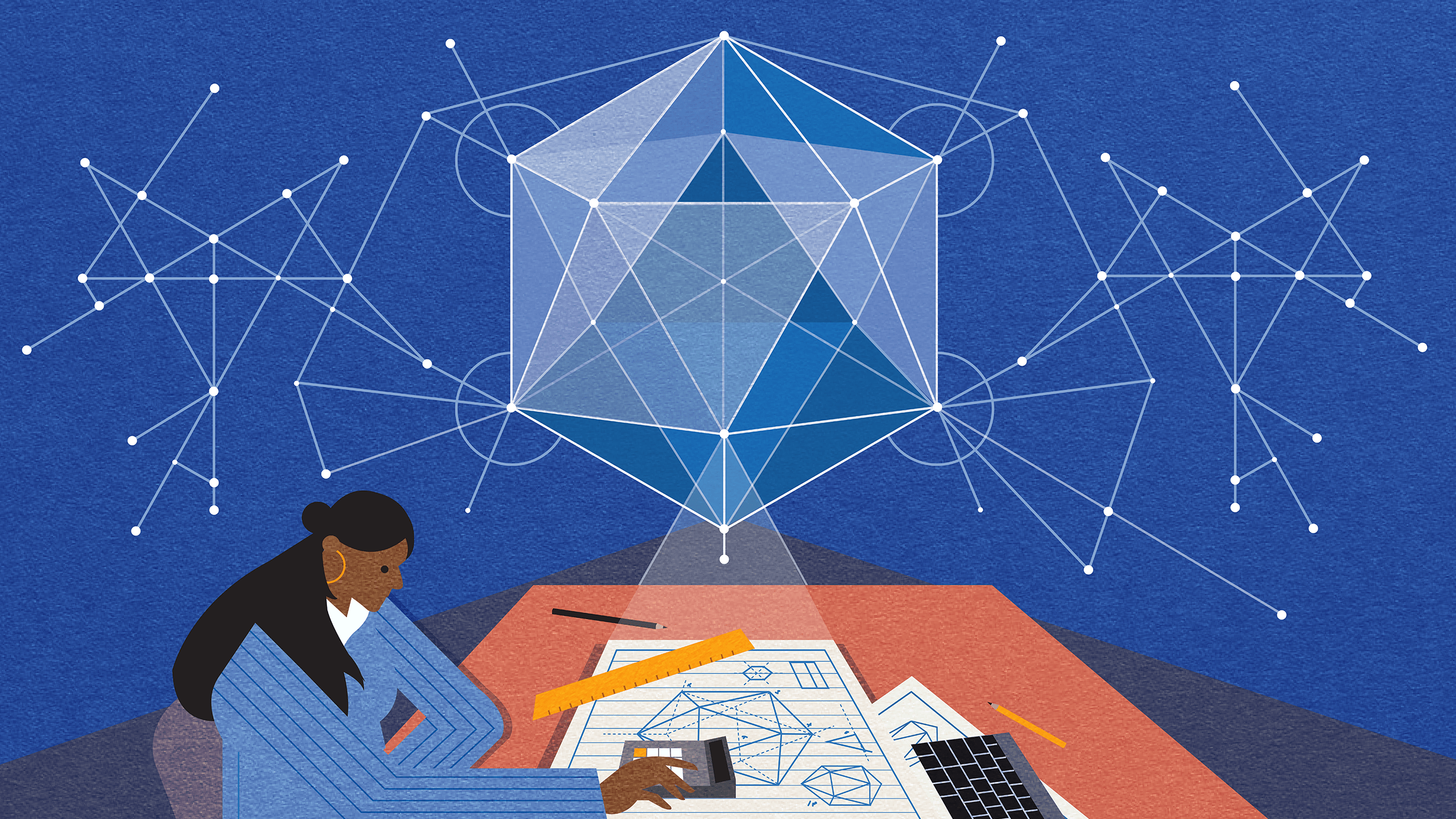
New technologies, most centrally AI, are arming scientists with tools that might not just accelerate or enhance their work, but altogether transform it. As Jordana Cepelewicz reports, mathematicians have started to prepare for a profound shift in what it means to do math…
Since the start of the 20th century, the heart of mathematics has been the proof — a rigorous, logical argument for whether a given statement is true or false. Mathematicians’ careers are measured by what kinds of theorems they can prove, and how many. They spend the bulk of their time coming up with fresh insights to make a proof work, then translating those intuitions into step-by-step deductions, fitting different lines of reasoning together like puzzle pieces.
The best proofs are works of art. They’re not just rigorous; they’re elegant, creative and beautiful. This makes them feel like a distinctly human activity — our way of making sense of the world, of sharpening our minds, of testing the limits of thought itself.
But proofs are also inherently rational. And so it was only natural that when researchers started developing artificial intelligence in the mid-1950s, they hoped to automate theorem proving: to design computer programs capable of generating proofs of their own. They had some success. One of the earliest AI programs could output proofs of dozens of statements in mathematical logic. Other programs followed, coming up with ways to prove statements in geometry, calculus and other areas.
Still, these automated theorem provers were limited. The kinds of theorems that mathematicians really cared about required too much complexity and creativity. Mathematical research continued as it always had, unaffected and undeterred.
Now that’s starting to change. Over the past few years, mathematicians have used machine learning models (opens a new tab) to uncover new patterns, invent new conjectures, and find counterexamples to old ones. They’ve created powerful proof assistants both to verify whether a given proof is correct and to organize their mathematical knowledge.
They have not, as yet, built systems that can generate the proofs from start to finish, but that may be changing. In 2024, Google DeepMind announced that they had developed an AI system that scored a silver medal in the International Mathematical Olympiad, a prestigious proof-based exam for high school students. OpenAI’s more generalized “large language model,” ChatGPT, has made significant headway on reproducing proofs and solving challenging problems, as have smaller-scale bespoke systems. “It’s stunning how much they’re improving,” said Andrew Granville, a mathematician at the University of Montreal who until recently doubted claims that this technology might soon have a real impact on theorem proving. “They absolutely blow apart where I thought the limitations were. The cat’s out of the bag.”
Researchers predict they’ll be able to start outsourcing more tedious sections of proofs to AI within the next few years. They’re mixed on whether AI will ever be able to prove their most important conjectures entirely: Some are willing to entertain the notion, while others think there are insurmountable technological barriers. But it’s no longer entirely out of the question that the more creative aspects of the mathematical enterprise might one day be automated.
Even so, most mathematicians at the moment “have their heads buried firmly in the sand,” Granville said. They’re ignoring the latest developments, preferring to spend their time and energy on their usual jobs.
Continuing to do so, some researchers warn, would be a mistake. Even the ability to outsource boring or rote parts of proofs to AI “would drastically alter what we do and how we think about math over time,” said Akshay Venkatesh, a preeminent mathematician and Fields medalist at the Institute for Advanced Study in Princeton, New Jersey.
He and a relatively small group of other mathematicians are now starting to examine what an AI-powered mathematical future might look like, and how it will change what they value. In such a future, instead of spending most of their time proving theorems, mathematicians will play the role of critic, translator, conductor, experimentalist. Mathematics might draw closer to laboratory sciences, or even to the arts and humanities.
Imagining how AI will transform mathematics isn’t just an exercise in preparation. It has forced mathematicians to reckon with what mathematics really is at its core, and what it’s for…
Absolutely fascinating: “Mathematical Beauty, Truth, and Proof in the Age of AI,” from @jordanacep.bsky.social in @quantamagazine.bsky.social. Eminently worth reading in full.
###
As we wonder about ways of knowing, we might spare a thought for a man whose work helped trigger an earlier iteration of this enhance/transform discussion and laid the groundwork for the one unpacked in the article linked above above: J. Presper Eckert; he died on this day in 1995. An electrical engineer, he co-designed (with John Mauchly) the first general purpose computer, the ENIAC (see here and here) for the U.S. Army’s Ballistic Research Laboratory. He and Mauchy went on to found the Eckert–Mauchly Computer Corporation, at which they designed and built the first commercial computer in the U.S., the UNIVAC.

“Truth is ever to be found in the simplicity, and not in the multiplicity and confusion of things”*…

From Kim (Scott) Morrison‘s and Dror Bar-Natan‘s, The Knot Atlas, “a complete user-editable knot atlas, in the wiki spirit of Wikipedia“– a marvelous example of a wide-spread urge in mathematics to find order through classification. As Joseph Howlett explains, that quest continues, even as it proves vexatious…
Biology in the 18th century was all about taxonomy. The staggering diversity of life made it hard to draw conclusions about how it came to be. Scientists first had to put things in their proper order, grouping species according to shared characteristics — no easy task. Since then, they’ve used these grand catalogs to understand the differences among organisms and to infer their evolutionary histories. Chemists built the periodic table for the same purpose — to classify the elements and understand their behaviors. And physicists made the Standard Model to explain how the fundamental particles of the universe interact.
In his book The Order of Things, the philosopher Michel Foucault describes this preoccupation with sorting as a formative step for the sciences. “A knowledge of empirical individuals,” he wrote, “can be acquired only from the continuous, ordered and universal tabulation of all possible differences.”
Mathematicians never got past this obsession. That’s because the menagerie of mathematics makes the biological catalog look like a petting zoo. Its inhabitants aren’t limited by physical reality. Any conceivable possibility, whether it lives in our universe or in some hypothetical 200-dimensional one, needs to be accounted for. There are tons of different classifications to try — groups, knots, manifolds and so on — and infinitely many objects to sort in each of those classifications. Classification is how mathematicians come to know the strange, abstract world they’re studying, and how they prove major theorems about it.Take groups, a central object of study in math. The classification of “finite simple groups” — the building blocks of all groups — was one of the grandest mathematical accomplishments of the 20th century. It took dozens of mathematicians nearly 100 years to finish. In the end, they figured out that all finite simple groups fall into three buckets, except for 26 itemized outliers. A dedicated crew of mathematicians has been working on a “condensed” proof of the classification since 1994 — it currently comprises 10 volumes and several thousand pages, and still isn’t finished. But the gargantuan undertaking continues to bear fruit, recently helping to prove a decades-old conjecture that you can infer a lot about a group by examining one small part of it.
Mathematics, unfettered by the typical constraints of reality, is all about possibility. Classification gives mathematicians a way to start exploring that limitless potential…[Howlett reviews attempts to classify numbers by “type” (postive/negative, rational/irrational), and mathematical objects by “equivalency” (shapes that can be stretched or squeezed into the other without breaking or tearing, like a doughnut and and coffee cup (see here)…]
… Similarly, classification has played an important role in knot theory. Tie a knot in a piece of string, then glue the string’s ends together — that’s a mathematical knot. Knots are equivalent if one can be tangled or untangled, without cutting the string, to match the other. This mundane-sounding task has lots of mathematical uses. In 2023, five mathematicians made progress on a key conjecture in knot theory that stated that all knots with a certain property (being “slice”) must also have another (being “ribbon”), with the proof ruling out a suspected counterexample. (As an aside, I’ve often wondered why knot theorists insist on using nouns as adjectives.)
Classifications can also get more meta. Both theoretical computer scientists and mathematicians classify problems about classification based on how “hard” they are.
All these classifications turn math’s disarrayed infinitude into accessible order. It’s a first step toward reining in the deluge that pours forth from mathematical imaginings…
“The Never-Ending Struggle to Classify All Math,” from @quantamagazine.bsky.social.
* Isaac Newton
###
As we sort, we might spare a thought for the author of our title quote, Sir Isaac Newton; he died in this date in 1727. A polymath, Newton excelled in– and advanced– mathematics, physics, and astronomy; he was a theologian and a government offical (Master of the Mint)… and a dedicated alchemist. He was key to the Scientific Revolution and the Enlightenment that followed.
Newton’s book Philosophiæ Naturalis Principia Mathematica (Mathematical Principles of Natural Philosophy), first published in 1687, achieved the first great unification in physics and established classical mechanics (e.g., the Laws of Motion and the principle of universal gravitation). He also made seminal contributions to optics, and shares credit with German mathematician Gottfried Wilhelm Leibniz for formulating infinitesimal calculus. Indeed, Newton contributed to and refined the scientific method to such an extent that his work is considered the most influential in the development of modern science.

“I love to talk about nothing. It’s the only thing I know anything about.”*…
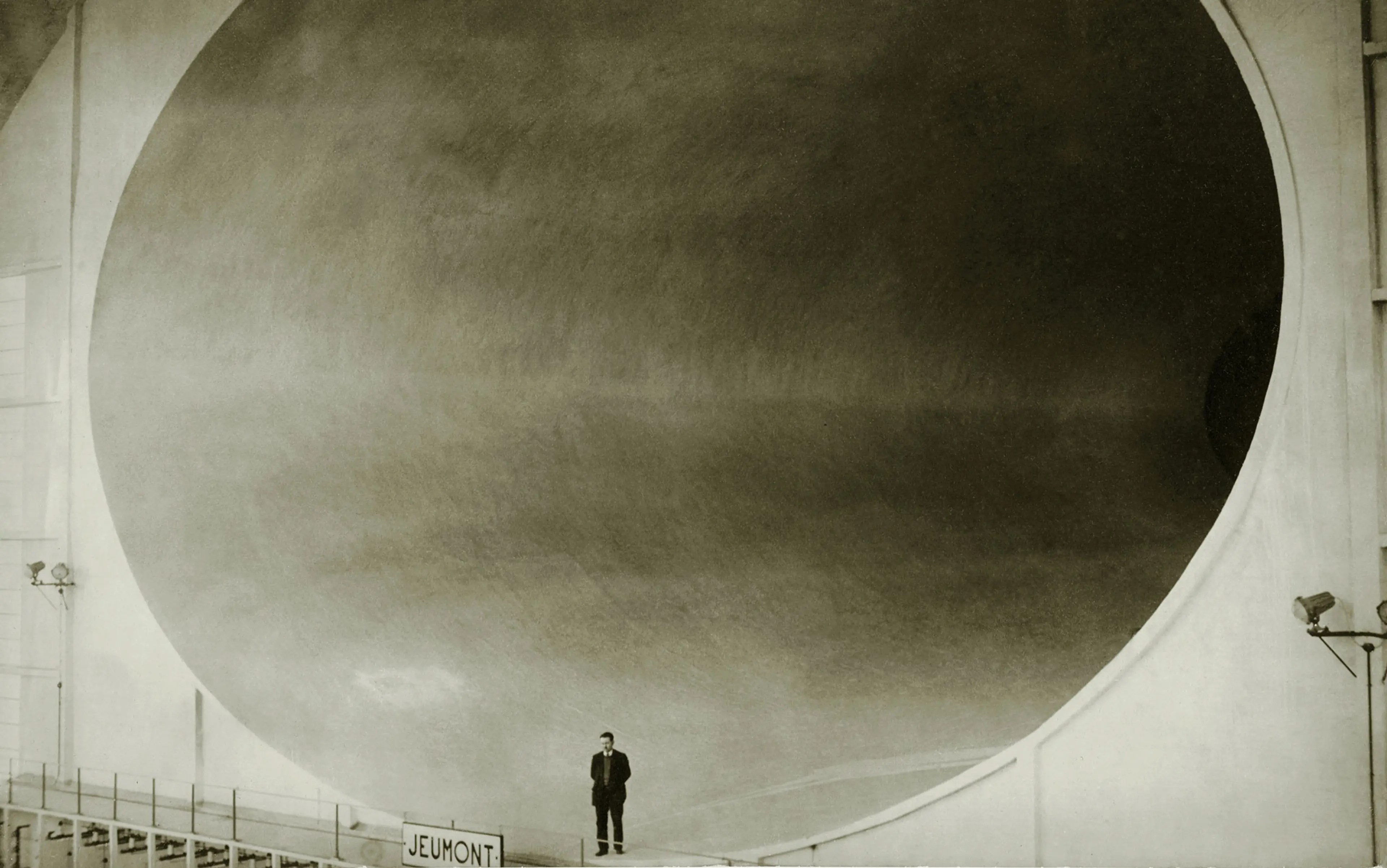
It took centuries for people to embrace the zero. Now, as Benjy Barnett explains, it’s helping neuroscientists understand how the brain perceives absences…
When I’m birdwatching, I have a particular experience all too frequently. Fellow birders will point to the tree canopy and ask if I can see a bird hidden among the leaves. I scan the treetops with binoculars but, to everyone’s annoyance, I see only the absence of a bird.
Our mental worlds are lively with such experiences of absence, yet it’s a mystery how the mind performs the trick of seeing nothing. How can the brain perceive something when there is no something to perceive?
For a neuroscientist interested in consciousness, this is an alluring question. Studying the neural basis of ‘nothing’ does, however, pose obvious challenges. Fortunately, there are other – more tangible – kinds of absences that help us get a handle on the hazy issue of nothingness in the brain. That’s why I spent much of my PhD studying how we perceive the number zero.
Zero has played an intriguing role in the development of our societies. Throughout human history, it has floundered in civilisations fearful of nothingness, and flourished in those that embraced it. But that’s not the only reason it’s so beguiling. In striking similarity to the perception of absence, zero’s representation as a number in the brain also remains unclear. If my brain has specialised mechanisms that have evolved to count the owls perched on a branch, how does this system abstract away from what’s visible, and signal that there are no owls to count?
The mystery shared between the perception of absences and the conception of zero may not be coincidental. When your brain recognises zero, it may be recruiting fundamental sensory mechanisms that govern when you can – and cannot – see something. If this is the case, theories of consciousness that emphasise the experience of absence may find a new use for zero, as a tool with which to explore the nature of consciousness itself…
[Barnett provides a fascinating history of the zero, of its uses, and of brain scientost’s attepts to understand the (not so masterful) human ability to perceive absence…]
… All of this returns us to zero. The question is, does the same underlying neural mechanism drive experiences of both zero and perceptual absence? If it does, this would show us that, when we’re engaged in mathematics using zero, we’re also invoking a more fundamental and automatic cognitive system – one that is, for instance, responsible for detecting an absence of birds when I’m birdwatching.
The brain systems used to extract positive numbers from the environment are relatively well understood. Parts of the parietal cortex have evolved to represent the number of ‘things’ in our environment while stripping away information of what those ‘things’ are. This system would simply indicate ‘four’ if I saw four owls, for example. It is thought to be central to learning the structure of our environment. If the neural systems that govern our ability to decide if we consciously see something or not were found to rely on this same mechanism, it would help theories like HOSS and PRM get a handle on how exactly this ability arises. Perhaps, just as this system learns the structure and regularities of our environment, it also learns the structure of our brain’s sensory activity to help determine when we have seen something. This is what PRM and HOSS already predict, but grounding the theories in established ideas about how the brain works may provide them with a stronger foothold in explaining the precise mechanisms that allow us to become aware of the world.
An intriguing hypothesis inspired by the ideas above is that, if the brain basis of zero relies on the kinds of absence-related neural mechanisms that the above frameworks take to be necessary for conscious experience, then for any organism to successfully employ the concept of zero, it might first need to be perceptually conscious. This would mean that understanding zero could act as a marker for consciousness. Given that even honeybees have been shown to enjoy a rudimentary concept of zero, this may seem – at least to some – far fetched. Nonetheless, it seems attractive to suggest that the similarities between numerical and perceptual absences could help reveal the neural basis of not only experiences of absence but conscious awareness more broadly. Jean-Paul Sartre testified that nothingness was at the heart of being, after all.
The evolution of the number zero helped unlock the secrets of the cosmos. It remains to be seen whether it can help to unpick the mysteries of the mind. For now, studying it has at least led to less disappointment about my birdwatching failures. Now I know that there’s great complexity in seeing nothing and that, more importantly, nothing really matters…
Noodling on nowt: “Why nothing matters,” from @benjyb.bsky.social in @aeon.co.
Apposite: Percival Everett‘s glorious novel, Dr. No.
* Oscar Wilde
###
As we analyze our apprehension of absence, we might send empty bithday greetings to a man who ruled out the use of “0” in one specific case: Georg Ohm; he was born on this date in 1789. A mathematician and physicist, he demonstrated by experiment (in 1825) that there are no “perfect” electrical conductors– that’s to say, no conductors with 0 resistance.
Working with the new electrochemical cell, invented by Italian scientist Alessandro Volta, Ohm found that there is a direct proportionality between the potential difference (voltage) applied across a conductor and the resultant electric current— a relationship since known as Ohm’s law (V=iR). The SI unit of resistance is the ohm (symbol Ω).

You must be logged in to post a comment.