Posts Tagged ‘zero’
“Things that are so far removed from our daily experience… are inherently hard to understand”*…

That’s certainly true of numbers. And as the numbers grow, the cognitive challenges grow with them. (Indeed, by way of example: 1 million seconds, is roughly 11.5 days; 1 billion seconds is almost 32 years.)
We’ve looked before at the mysterious extremes of math: zero and infinity [and here]. But as Dan Falk reminds us, the numbers in between can seem pretty strange as well– especially the extremely large ones. In a review of Richard Elwes‘ Huge Numbers: A Story of Counting Ambitiously, From 4½ to Fish 7, Falk spotlights some of the largest numbers humans have ever contemplated…
… Aficionados of huge numbers are called “googologists,” a reference to the number 10100, known as a googol. Such numbers have a peculiar sort of existence. For the vast majority of us, they’re of limited everyday value. Calculations at the supermarket checkout, or at tax time in April, typically involve far more modest figures. Perhaps we’ve read that the U.S. national debt is in excess of $38 trillion — a mind-numbing figure, to be sure, but it’s not as though any one individual needs to count it up in stacks of $20 bills.
And yet, much larger numbers await those who seek them out. Consider the kinds of numbers that crop up in problems involving combinations and permutations. For example, in how many distinct ways can one shuffle a deck of cards? Elwes takes us through the calculation, and we end up with a figure of about 8×1067. Compared to that number, the odds of getting a royal flush when dealt a five-card poker hand seem pretty decent, sitting at a mere 1 in 649,740 (still rare enough that many poker players have never held such a hand). Or consider that famous 1980s cultural touchstone, the Rubik’s cube. In how many ways can one scramble the cube? It turns out that the figure is about 43 quintillion, or 4.3×10¹⁹ — but in spite of that ridiculously large figure, people do routinely solve the puzzle, and champions can do it in mere seconds. In fact, as Elwes explains, no Rubik’s cube arrangement is more than 20 moves away from any other arrangement.
Or consider the age of the universe, estimated to be about 13.8 billion years. This may seem like a lengthy span of time, but our cosmic future is where the really big numbers come up. Elwes examines the so-called heat death of the universe, in which all matter has broken down into subatomic particles. We may reach this point in [10 raised to the 10th power, raised again to the 120th power] years — this dizzying figure is 10 raised to the power of 10120 — at which point, Elwes says, the universe will have ballooned up to a diameter of 10 to the power of 10 to the power of 10120 light years. (Yes, that’s [10 raised to the 10th power, again to the 10th power, then to the 120th power] light years.) Elwes adds a footnote: “At this point, the choice of units hardly matters; the distance is so immense that whether we choose to measure it in Planck lengths or giga-light years makes little difference.” Let that sink in!
As mind numbing as such figures are, the highest numbers contemplated by humans come not from physics but from pure mathematics and computer science. Like “Graham’s number” — an immense figure put forward as the upper-bound for solutions to a problem in a branch of mathematics known as Ramsey theory. Some readers may find the ensuing discussion of multi-dimensional hypercubes a bit challenging, but one can enjoy the payoff regardless: We end up with a number that can’t even be expressed in conventional notation, and which earned a mention in the 1980 edition of the “Guinness Book of World Records” as “the highest number ever used in a mathematical proof.”
Reading this book is a little bit like sitting in the back row of an auction house where a rare Picasso (let’s say) is up for grabs: How high is this thing going to go? And indeed, Elwes keeps going. We eventually meet the so-called busy beaver numbers, a set of numbers that crop up in theoretical computer science, when one tries to deduce whether a particular computer program will eventually stop, or keep going forever — a conundrum known as the “halting problem.” As Elwes explains, it’s not at all straightforward to distinguish the two types of programs (and if it was, it would help mathematicians tackle some of the most vexing problems in their field).
The fifth busy beaver number, known as BB(5) — associated with a computer program that can access five internal states — works out to 47,176,870. And that’s as far as we’ve gotten, Elwes explains. No one has worked out the value of BB(6), but he assures us that it’s beyond the range of any physical computer; and BB(16) leaves even Graham’s number in the dust.
But wait, there’s more! “Rayo’s number,” concocted by Agustín Rayo — a dean and professor at MIT — using set theory, is bigger still (here’s a fun video about it); and “Fish 7,” mentioned in the book’s subtitle, named for a Japanese googologist who goes by the pseudonym “Fish,” builds on Rayo’s number, and … well, the details are not easily digested, but the mind-melting nature of these numbers comes across as a feature, not a bug, of Elwes’s story… the narrative is enlivened by explorations of the peculiarities of math history…
… Archimedes tried to estimate how many grains of sand would be needed to fill up the known universe, back in the third century B.C. Did he simply have too much time on his hands? Not at all, insists Elwes: The Greek thinker was articulating an important idea — that no matter how unfathomably large a quantity may be, we can describe it with precision, thanks to mathematics. “Archimedes,” he writes, “was penning a manifesto for the expressive power of large numbers.”…
… [Elwes focuses] on numbers that are ridiculously large and yet finite. In the end, perhaps this is the most mind-boggling fact of all: that these enormous numbers, from Graham’s number to Fish 7 and beyond, fall as far short of infinity as does the humble number 1…
The mysteries of the massive: “The Mind-Boggling Science of Enormous Numbers,” @danfalk.bsky.social on @richardelwes.bsky.social in @undark.org.
###
As we enumerate enormity, we might spare a thought for a seminal mathematician, Alan Turing; he died on this date in 1954. He was a foundational computer science pioneer (inventor of the Turing Machine (an influential model for the general-purpose computer), creator of the “Turing Test” (only too relevant in these AI-infected times), inspiration for “The Turing Award” (the “Nobel Prize of computing“), and cryptographer (leading member of the team that cracked the Enigma code during WWII).

“I love to talk about nothing. It’s the only thing I know anything about.”*…
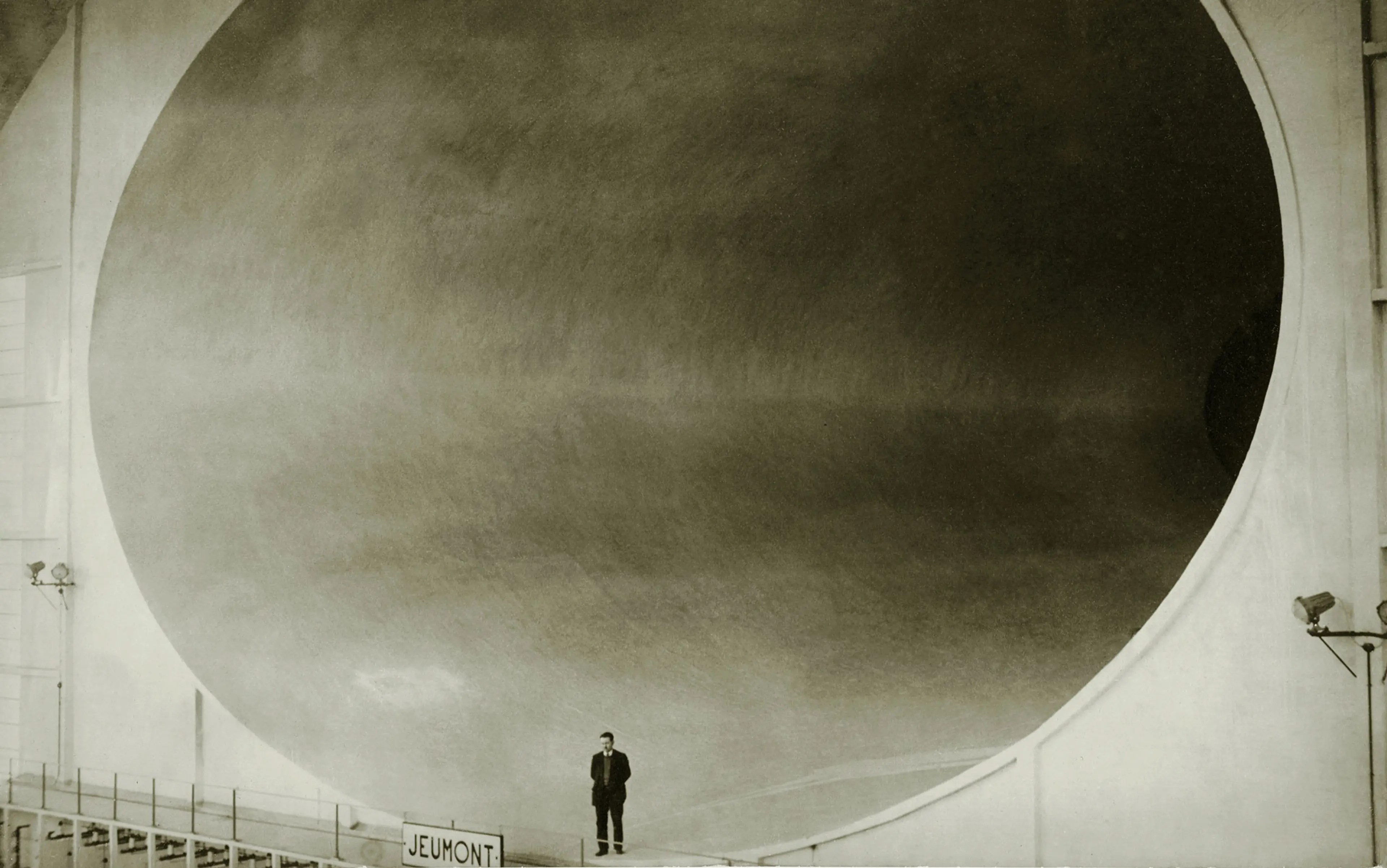
It took centuries for people to embrace the zero. Now, as Benjy Barnett explains, it’s helping neuroscientists understand how the brain perceives absences…
When I’m birdwatching, I have a particular experience all too frequently. Fellow birders will point to the tree canopy and ask if I can see a bird hidden among the leaves. I scan the treetops with binoculars but, to everyone’s annoyance, I see only the absence of a bird.
Our mental worlds are lively with such experiences of absence, yet it’s a mystery how the mind performs the trick of seeing nothing. How can the brain perceive something when there is no something to perceive?
For a neuroscientist interested in consciousness, this is an alluring question. Studying the neural basis of ‘nothing’ does, however, pose obvious challenges. Fortunately, there are other – more tangible – kinds of absences that help us get a handle on the hazy issue of nothingness in the brain. That’s why I spent much of my PhD studying how we perceive the number zero.
Zero has played an intriguing role in the development of our societies. Throughout human history, it has floundered in civilisations fearful of nothingness, and flourished in those that embraced it. But that’s not the only reason it’s so beguiling. In striking similarity to the perception of absence, zero’s representation as a number in the brain also remains unclear. If my brain has specialised mechanisms that have evolved to count the owls perched on a branch, how does this system abstract away from what’s visible, and signal that there are no owls to count?
The mystery shared between the perception of absences and the conception of zero may not be coincidental. When your brain recognises zero, it may be recruiting fundamental sensory mechanisms that govern when you can – and cannot – see something. If this is the case, theories of consciousness that emphasise the experience of absence may find a new use for zero, as a tool with which to explore the nature of consciousness itself…
[Barnett provides a fascinating history of the zero, of its uses, and of brain scientost’s attepts to understand the (not so masterful) human ability to perceive absence…]
… All of this returns us to zero. The question is, does the same underlying neural mechanism drive experiences of both zero and perceptual absence? If it does, this would show us that, when we’re engaged in mathematics using zero, we’re also invoking a more fundamental and automatic cognitive system – one that is, for instance, responsible for detecting an absence of birds when I’m birdwatching.
The brain systems used to extract positive numbers from the environment are relatively well understood. Parts of the parietal cortex have evolved to represent the number of ‘things’ in our environment while stripping away information of what those ‘things’ are. This system would simply indicate ‘four’ if I saw four owls, for example. It is thought to be central to learning the structure of our environment. If the neural systems that govern our ability to decide if we consciously see something or not were found to rely on this same mechanism, it would help theories like HOSS and PRM get a handle on how exactly this ability arises. Perhaps, just as this system learns the structure and regularities of our environment, it also learns the structure of our brain’s sensory activity to help determine when we have seen something. This is what PRM and HOSS already predict, but grounding the theories in established ideas about how the brain works may provide them with a stronger foothold in explaining the precise mechanisms that allow us to become aware of the world.
An intriguing hypothesis inspired by the ideas above is that, if the brain basis of zero relies on the kinds of absence-related neural mechanisms that the above frameworks take to be necessary for conscious experience, then for any organism to successfully employ the concept of zero, it might first need to be perceptually conscious. This would mean that understanding zero could act as a marker for consciousness. Given that even honeybees have been shown to enjoy a rudimentary concept of zero, this may seem – at least to some – far fetched. Nonetheless, it seems attractive to suggest that the similarities between numerical and perceptual absences could help reveal the neural basis of not only experiences of absence but conscious awareness more broadly. Jean-Paul Sartre testified that nothingness was at the heart of being, after all.
The evolution of the number zero helped unlock the secrets of the cosmos. It remains to be seen whether it can help to unpick the mysteries of the mind. For now, studying it has at least led to less disappointment about my birdwatching failures. Now I know that there’s great complexity in seeing nothing and that, more importantly, nothing really matters…
Noodling on nowt: “Why nothing matters,” from @benjyb.bsky.social in @aeon.co.
Apposite: Percival Everett‘s glorious novel, Dr. No.
* Oscar Wilde
###
As we analyze our apprehension of absence, we might send empty bithday greetings to a man who ruled out the use of “0” in one specific case: Georg Ohm; he was born on this date in 1789. A mathematician and physicist, he demonstrated by experiment (in 1825) that there are no “perfect” electrical conductors– that’s to say, no conductors with 0 resistance.
Working with the new electrochemical cell, invented by Italian scientist Alessandro Volta, Ohm found that there is a direct proportionality between the potential difference (voltage) applied across a conductor and the resultant electric current— a relationship since known as Ohm’s law (V=iR). The SI unit of resistance is the ohm (symbol Ω).

“Zero is powerful because it is infinity’s twin. They are equal and opposite, yin and yang.”*…

… and like infinity, zero can be a cognitive challenge. Yasemin Saplakoglu explains…
Around 2,500 years ago, Babylonian traders in Mesopotamia impressed two slanted wedges into clay tablets. The shapes represented a placeholder digit, squeezed between others, to distinguish numbers such as 50, 505 and 5,005. An elementary version of the concept of zero was born.
Hundreds of years later, in seventh-century India, zero took on a new identity. No longer a placeholder, the digit acquired a value and found its place on the number line, before 1. Its invention went on to spark historic advances in science and technology. From zero sprang the laws of the universe, number theory and modern mathematics.
“Zero is, by many mathematicians, definitely considered one of the greatest — or maybe the greatest — achievement of mankind,” said the neuroscientist Andreas Nieder, who studies animal and human intelligence at the University of Tübingen in Germany. “It took an eternity until mathematicians finally invented zero as a number.”
Perhaps that’s no surprise given that the concept can be difficult for the brain to grasp. It takes children longer to understand and use zero than other numbers, and it takes adults longer to read it than other small numbers. That’s because to understand zero, our mind must create something out of nothing. It must recognize absence as a mathematical object.
“It’s like an extra level of abstraction away from the world around you,” said Benjy Barnett, who is completing graduate work on consciousness at University College London. Nonzero numbers map onto countable objects in the environment: three chairs, each with four legs, at one table. With zero, he said, “we have to go one step further and say, ‘OK, there wasn’t anything there. Therefore, there must be zero of them.’”
In recent years, research started to uncover how the human brain represents numbers, but no one examined how it handles zero. Now two independent studies, led by Nieder and Barnett, respectively, have shown that the brain codes for zero much as it does for other numbers, on a mental number line. But, one of the studies found, zero also holds a special status in the brain…
Read on to find out the ways in which new studies are uncovering how the mind creates something out of nothing: “How the Human Brain Contends With the Strangeness of Zero,” from @QuantaMagazine.
Pair with Percival Everett’s provocative (and gloriously entertaining) Dr. No.
* Charles Seife, Zero: The Biography of a Dangerous Idea
Scheduling note: your correspondent is sailing again into uncommonly busy waters. So, with apologies for the hiatus, (R)D will resume on Friday the 25th…
###
As we noodle on noodling on nothing, we might send carefully-calculated birthday greetings to Erasmus Reinhold; he was born on this date in 1511. A professor of Higher Mathematics (at the University of Wittenberg, where he was ultimately Rector), Reinhold worked at a time when “mathematics” included applied mathematics, especially astronomy– to which he made many contributions and of which he was considered the most influential pedagogue of his generation.
Reinhold’s Prutenicae Tabulae (1551, 1562, 1571, and 1585) or Prussian Tables were astronomical tables that helped to disseminate calculation methods of Copernicus throughout the Empire. That said, Reinhold (like other astronomers before Kepler and Galileo) translated Copernicus’ mathematical methods back into a geocentric system, rejecting heliocentric cosmology on physical and theological grounds. Both Reinhold’s Prutenic Tables and Copernicus’ studies were the foundation for the Calendar Reform by Pope Gregory XIII in 1582… and both made copious use of zeros.

“I love to talk about nothing. It’s the only thing I know anything about.”*…

The computer you’re reading this article on right now runs on a binary — strings of zeros and ones. Without zero, modern electronics wouldn’t exist. Without zero, there’s no calculus, which means no modern engineering or automation. Without zero, much of our modern world literally falls apart.
Humanity’s discovery of zero was “a total game changer … equivalent to us learning language,” says Andreas Nieder, a cognitive scientist at the University of Tübingen in Germany.
But for the vast majority of our history, humans didn’t understand the number zero. It’s not innate in us. We had to invent it. And we have to keep teaching it to the next generation.
Other animals, like monkeys, have evolved to understand the rudimentary concept of nothing. And scientists just reported that even tiny bee brains can compute zero. But it’s only humans that have seized zero and forged it into a tool.
So let’s not take zero for granted. Nothing is fascinating. Here’s why…
It is indeed fascinating, as you’ll see at “The mind-bendy weirdness of the number zero, explained.”
Pair with: “Is a hole a real thing, or just a place where something isn’t?” and with The Ministry of Ideas’ podcast “Nothing Matters.”
* Oscar Wilde
###
As we obsess about absence, we might box a dome-shaped birthday cake for inventor, educator, author, philosopher, engineer, and architect R(ichard) Buckminster Fuller; he was born on this date in 1895. “Bucky” most famously developed the geodesic dome, the only large dome that can be set directly on the ground as a complete structure, and the only practical kind of building that has no limiting dimensions (i.e., beyond which the structural strength must be insufficient). But while he never got around to frankfurters, he was sufficiently prolific to have scored over 2,000 patents.
“Fullerenes” (molecules composed entirely of carbon, in the form of a hollow spheres, ellipsoids, or tubes), key components in many nanotechnology applications, were named for Fuller, as their structure mimes that of the geodesic dome. Spherical fullerenes (resembling soccer balls) are also called “buckyballs”; cylindrical ones, carbon nanotubes or “buckytubes.”
I have to say, I think that we are in some kind of final examination as to whether human beings now, with this capability to acquire information and to communicate, whether we’re really qualified to take on the responsibility we’re designed to be entrusted with. And this is not a matter of an examination of the types of governments, nothing to do with politics, nothing to do with economic systems. It has to do with the individual. Does the individual have the courageto really go along with the truth?
God, to me, it seems
is a verb,
not a noun,
proper or improper.
For more, see “And that’s a lot.”

You must be logged in to post a comment.