Posts Tagged ‘Georg Ohm’
“I love to talk about nothing. It’s the only thing I know anything about.”*…
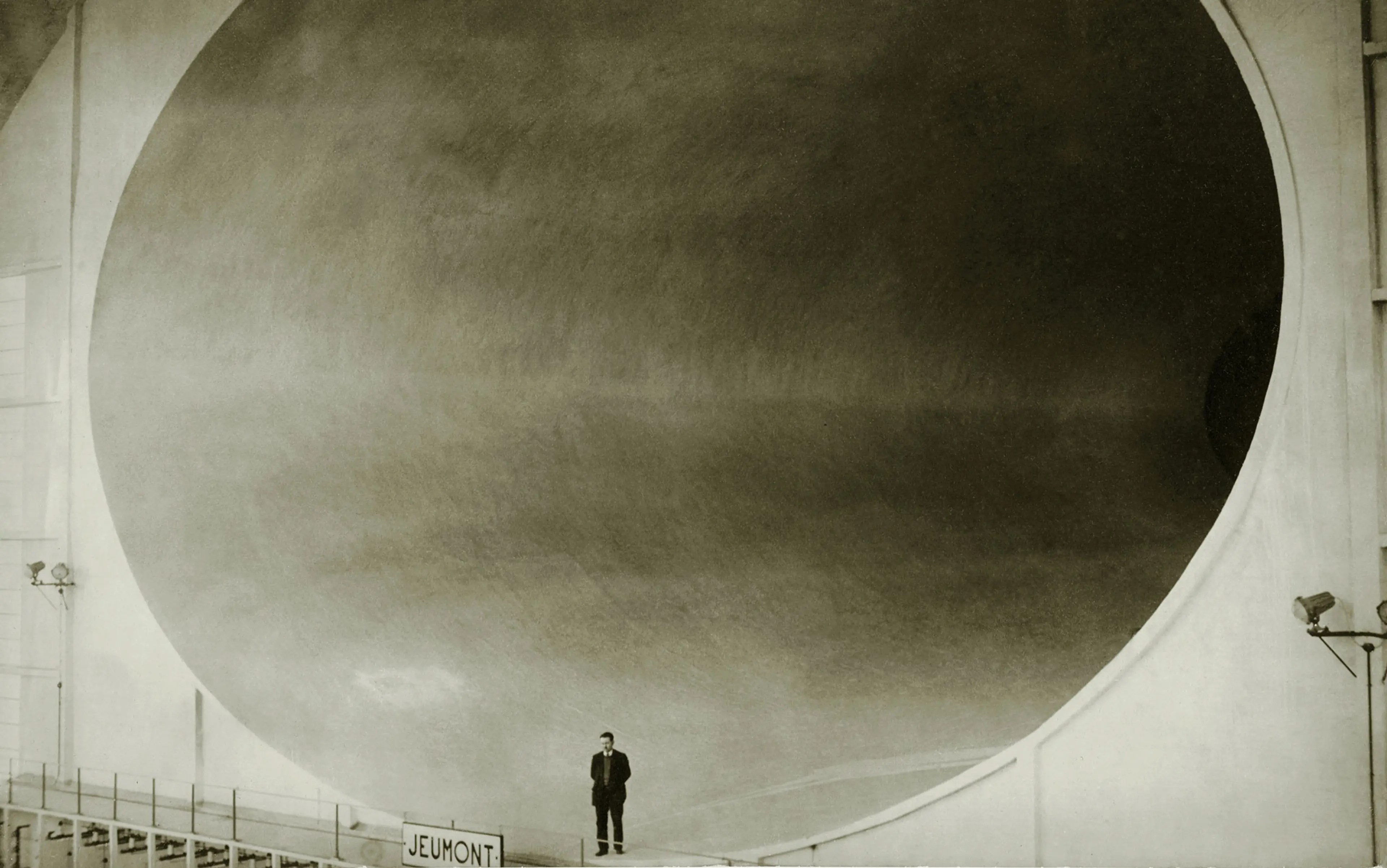
It took centuries for people to embrace the zero. Now, as Benjy Barnett explains, it’s helping neuroscientists understand how the brain perceives absences…
When I’m birdwatching, I have a particular experience all too frequently. Fellow birders will point to the tree canopy and ask if I can see a bird hidden among the leaves. I scan the treetops with binoculars but, to everyone’s annoyance, I see only the absence of a bird.
Our mental worlds are lively with such experiences of absence, yet it’s a mystery how the mind performs the trick of seeing nothing. How can the brain perceive something when there is no something to perceive?
For a neuroscientist interested in consciousness, this is an alluring question. Studying the neural basis of ‘nothing’ does, however, pose obvious challenges. Fortunately, there are other – more tangible – kinds of absences that help us get a handle on the hazy issue of nothingness in the brain. That’s why I spent much of my PhD studying how we perceive the number zero.
Zero has played an intriguing role in the development of our societies. Throughout human history, it has floundered in civilisations fearful of nothingness, and flourished in those that embraced it. But that’s not the only reason it’s so beguiling. In striking similarity to the perception of absence, zero’s representation as a number in the brain also remains unclear. If my brain has specialised mechanisms that have evolved to count the owls perched on a branch, how does this system abstract away from what’s visible, and signal that there are no owls to count?
The mystery shared between the perception of absences and the conception of zero may not be coincidental. When your brain recognises zero, it may be recruiting fundamental sensory mechanisms that govern when you can – and cannot – see something. If this is the case, theories of consciousness that emphasise the experience of absence may find a new use for zero, as a tool with which to explore the nature of consciousness itself…
[Barnett provides a fascinating history of the zero, of its uses, and of brain scientost’s attepts to understand the (not so masterful) human ability to perceive absence…]
… All of this returns us to zero. The question is, does the same underlying neural mechanism drive experiences of both zero and perceptual absence? If it does, this would show us that, when we’re engaged in mathematics using zero, we’re also invoking a more fundamental and automatic cognitive system – one that is, for instance, responsible for detecting an absence of birds when I’m birdwatching.
The brain systems used to extract positive numbers from the environment are relatively well understood. Parts of the parietal cortex have evolved to represent the number of ‘things’ in our environment while stripping away information of what those ‘things’ are. This system would simply indicate ‘four’ if I saw four owls, for example. It is thought to be central to learning the structure of our environment. If the neural systems that govern our ability to decide if we consciously see something or not were found to rely on this same mechanism, it would help theories like HOSS and PRM get a handle on how exactly this ability arises. Perhaps, just as this system learns the structure and regularities of our environment, it also learns the structure of our brain’s sensory activity to help determine when we have seen something. This is what PRM and HOSS already predict, but grounding the theories in established ideas about how the brain works may provide them with a stronger foothold in explaining the precise mechanisms that allow us to become aware of the world.
An intriguing hypothesis inspired by the ideas above is that, if the brain basis of zero relies on the kinds of absence-related neural mechanisms that the above frameworks take to be necessary for conscious experience, then for any organism to successfully employ the concept of zero, it might first need to be perceptually conscious. This would mean that understanding zero could act as a marker for consciousness. Given that even honeybees have been shown to enjoy a rudimentary concept of zero, this may seem – at least to some – far fetched. Nonetheless, it seems attractive to suggest that the similarities between numerical and perceptual absences could help reveal the neural basis of not only experiences of absence but conscious awareness more broadly. Jean-Paul Sartre testified that nothingness was at the heart of being, after all.
The evolution of the number zero helped unlock the secrets of the cosmos. It remains to be seen whether it can help to unpick the mysteries of the mind. For now, studying it has at least led to less disappointment about my birdwatching failures. Now I know that there’s great complexity in seeing nothing and that, more importantly, nothing really matters…
Noodling on nowt: “Why nothing matters,” from @benjyb.bsky.social in @aeon.co.
Apposite: Percival Everett‘s glorious novel, Dr. No.
* Oscar Wilde
###
As we analyze our apprehension of absence, we might send empty bithday greetings to a man who ruled out the use of “0” in one specific case: Georg Ohm; he was born on this date in 1789. A mathematician and physicist, he demonstrated by experiment (in 1825) that there are no “perfect” electrical conductors– that’s to say, no conductors with 0 resistance.
Working with the new electrochemical cell, invented by Italian scientist Alessandro Volta, Ohm found that there is a direct proportionality between the potential difference (voltage) applied across a conductor and the resultant electric current— a relationship since known as Ohm’s law (V=iR). The SI unit of resistance is the ohm (symbol Ω).

You must be logged in to post a comment.