Posts Tagged ‘anthropology’
“A strange idea was pecking at his brain like a chicken in the egg, and very, very much absorbed him”*…

The estimable Brad DeLong shares the prose outline of one of his lectures…
[In] my “roots of property, exchange, and the division of labor” lecture [I try] to make novel and strange the idea people think that they “own” things: to impress students with how just plain weird that is. And then there are the next steps: That people enter into reciprocal gift-exchange relationships with or using things they “own” is really weird. That reciprocal gift-exchange transforms into cash-on-the-barrelhead one-shot economic “trade” is perhaps the weirdest of all. Where do these things come from? And what are the chances that any Turing-Class intelligent social creature would ever develop them? And how much less efficient and functional as an action-taking anthology-intelligence could the East African Plains Ape possibly be without these social-institutional things that underpin the global-scale societal coördination mechanism we call the “market economy”?
What if we see the idea of “owning” something is one of humanity’s strangest inventions? Before markets, before money, there was a peculiar leap: the belief that things could be “mine” even when I’m not looking. Explore how property and exchange, far from being “natural”, are peculiar to the East African Plains Ape, are societal-scale technologies that turned us into a market-making species, and how that leap—property and exchange—became the foundation of our economic world and of a great deal of our success as an action-taking anthology-intelligence.
That we believe in property and exchange is absolutely key to the “market” institutional mode of organizing the practical-action coördination side of humanity as a successful anthology intelligence. And that is not all that property is key to, for spheres of ownership, action, and control that can be readjusted are very important parts of our conceptual map for a great deal of our additional collective modes and mechanisms of societal organization. And these ideas—not just “I will growl and bite you if you try to drag this zebra carcasse I am eating right now away from me”, but that this is mine and it stays mine even if I am not right here growling—is really weird.
Where and how does it originate?
And why did it make sense for the first of the homines erecti who added this to their shared conceptual maps?…
Touching on the thinking of Doug Jones (who locates the cultural emergence of “property” in the development of the hand-axe), Adam Smith, Aristoteles of Stagire, John Locke, Jean-Jacques Rousseau, and Friedrich Engels, DeLong concludes…
However, once we have constructed this jenga tower on top of its foundations of reciprocity and ownership, one of very key pieces of humanity’s glory and power as an action-taking coördinated anthology-intelligence has fallen into place.
The true genius of the market system lies in its capacity to decentralize decision-making, to push choices and authority out to the periphery—out to the individuals and enterprises who are closest to the ground, who possess the granular, local knowledge that no distant central planner or bureaucratic committee could ever hope to match. In this way, the market harnesses and aggregates the dispersed intelligence of society, transforming millions of individual judgments, preferences, and bits of information into a coherent pattern of production and allocation.
The result is an astonishingly adaptive and responsive system, one that can, at its best, direct resources toward their most valued uses with a minimum of wasted effort. But, and this is crucial, this remarkable coördination is only truly effective for rival and excludible commodities—goods and services for which one person’s consumption precludes another’s, and for which access can be limited to those who pay. In these domains, the market’s invisible hand is real and powerful, allocating goods through the interplay of supply, demand, and price.
When markets are functioning well—when property rights are secure, when contracts are enforced, when information is sufficiently available—they become the central nervous system of a vast, intricate organism. They coordinate sprawling networks of production and exchange, linking together farmers, manufacturers, merchants, workers, and consumers in a web of mutual interdependence. It is the division of labor, enabled and deepened by the existence of wide and deep markets, that serves as the engine of productivity and prosperity. As Adam Smith observed, the specialization of tasks allows individuals to become more skilled and efficient, unleashing a flood of innovation and output that no autarkic household or command economy could hope to rival.
Yet—and this is a point too often ignored—the benefits of this productivity are not distributed evenly or automatically. Who gets what, and how much, is determined by the prevailing structure of bargaining power and the existing arrangements of property. The market does not guarantee justice, only efficiency; it delivers abundance, but it apportions that abundance according to the rules of the game, rules that are themselves the product of history, law, and politics. Thus, while the market is a marvel of coordination, it is never a substitute for vigilance about the distributional consequences it generates…
How ownership and trade have made us truly weird: “‘Property’ & ‘Exchange’ as a Coördination Mechanism at Societal Scale,” from @delong.social.
Apposite (and in the spirit of both DeLong’s concluding observation and Aristotle’s injunction: “Property should be in a general sense common, but as a general rule private… In well-ordered states, although every man has his own property, some things he will place at the disposal of his friends, while of others he shares the use of them.”): “Think LIke a Commoner“
* Fyodor Dostoyevsky, Crime and Punishment
###
As we ponder property, we might send insightful birthday greetings to one of its most sardonic observers, William Makepeace Thackeray; he was born on this date in 1811. A novelist and illustrator, he is best known for his satirical works, particularly his 1847–1848 novel Vanity Fair, a panoramic– and piercing– portrait of British society, and the 1844 novel The Luck of Barry Lyndon (which was, of course, adapted for a 1975 film by Stanley Kubrick.

“I didn’t study theology out of piety. I studied it because I wanted to know.”*…

Beatrice Marovich on a discipline declining…
People often assume that theology is only for true believers: those who want to defend the existence of God against the skepticism of secular outsiders. But there’s an old open secret in the field: theologians often have a complicated relationship with belief, and some theologians are even non-believers. I’ve always been a secular—or non-religious—person. That’s the “tradition” I was raised in. But I’m also a theologian.
I knew that it was a risk, going into the field of theology. There are conversations I’ve been shut out of because I’m not religious enough. And I’m often marked as a troubling outsider by scholars who see themselves taking a purely secular approach to the interdisciplinary study of religion. But as a graduate student, and even early in my career as a faculty member at a small liberal arts college, I believed the field of theology was opening up, and becoming more complex. It felt, to me, as if there were a creative disintegration happening that might make more room for scholars like me. But after more than a decade in the field, I’ve come to feel that something else is happening instead. It feels like the field is dying.
People are still doing theology in public (if, by doing theology we mean talking about gods, spirits, and other divine powers). But the field I was trained in as a scholar—academic theology—feels like it’s dying. It’s a field that’s often philosophical, but always theoretical. Because of this, theology can verge quickly into the abstract, and the speculative. Theologians might make use of anthropological, sociological, and historical studies of religion. But they tend not to feel beholden to any of those disciplines. Indeed, theologians are often wading into explicitly interdisciplinary conversations about science, politics, gender, and race (among other things). In its lack of clear focus, theology might be the most undisciplined discipline in the American academy today. And that undisciplined discipline feels like it’s dying. At least to me.
But is theology really dying? Or is this just the feeling I have, as I’m being squeezed out of the field? Or, perhaps I’m I fixated on the mortality of this collective project because I’ve been writing, thinking, and teaching about death. When I looked at enrollment numbers at seminaries and theological schools, the numbers aren’t necessarily damning. At least not yet. They don’t necessarily confirm my feeling, or my mood. Neither did Sean Larsen’s 2020 State of Theology study, funded by the Templeton Religion Trust. There were people, in that study, who remained optimistic about the discipline’s prospects. And while Ted Smith’s 2023 book The End of Theological Education does acknowledge that the institutions that built theology in America are collapsing, he remains optimistic about what the church can do for the future of theology.
I needed to know if others shared my feeling, or mood. So, I decided to have a conversation with my colleagues. I reached out to people in my network, to see who felt compelled to weigh in. I had three questions for them: Is academic theology really dying? If so, how do you feel about this death? And, finally, If you could save one thing from the sinking ship that is academic theology, what would it be? This essay is a kind of report: it’s what my colleagues told me.
What you’ll read here does reflect a bias: these are voices from within my network. Nevertheless, I think their words are worth sharing. Whether or not academic theology is really dying, it may still be worth thinking about its mortality. If I’ve learned any lesson from writing and thinking about death, it’s that when we acknowledge that it’s there, when we remember that we’re always living in death’s shadows, we take what’s in front of us much more seriously. We can see the full fragility of things, and we can try—against the odds—to resist entropy and protect what we think is worth saving, inheriting, or carrying on into the future. And we can think about what we’re ready to let go of. Because all things, in time, do die. It’s only a question of when…
[Marovich examines the state of the field v ia a recounting of highlights from her conversations with colleagues…]
… I conducted these interviews in the spring of 2024, in what feels to me (now) like a different world. What David Kline so succinctly described as the “institutional frameworks for intellectual life” seem more fragile and threatened than ever, as the Trump administration rapidly defunds education and research, and attacks media outlets. And we can’t forget, of course, about the many threats that Artificial Intelligence—in the form of Large Language Models like ChatGPT—poses to these fragile frameworks for intellectual life. I’m aware that it may seem small-minded and naïve to worry about my own obscure little academic discipline, when the whole structure is falling apart. So, it does seem important for me to clarify that I have spent (and will continue to spend) many hours grieving, as if in anticipation, what feels like the evaporation of intellectual possibilities—intellectual life itself!—in America. I am torn up about all of this. And yet, simultaneously, I do remain concerned about the strange little ecosystem that comprises my corner of the world.
As I think over these conversations with my colleagues, I find myself torn between letting go and holding on—or, perhaps better said, trying to hold space. I agree with Hanna Reichel when they suggest that letting go of the growth mindset is painful and difficult for Americans, perhaps more than anyone else. And this contributes to so much of the damage that American life does to the planet we share with others. I recognize that this is a problem. And I am compelled by Colby Dickinson’s suggestion that perhaps learning to die—learning an ars moriendi—might be the best thing that theology could do right now. So much of what is good about theology is probably already in diaspora, as Amaryah Armstrong has suggested. I do have a certain kind of faith that much of the power of theology will live on, in some shape and form, wherever it goes.
And yet Sameer Yadav’s point about academic theology existing as a kind of “nowhere” space strikes me as so deeply true. That nowhere space has given me so much room to explore, it’s opened dimensions of life to me that I would never have seen, and it’s introduced me to so many incredible people—living and dead. I am grateful for this community, and I feel like I owe it something. I feel compelled to somehow preserve that generative and undisciplined nowhere space for others. Like Meg Mercury, I would like to see this nowhere space open up and expand, for those people who don’t feel as if they belong in traditional religious structures. And yet, I also recognize that the cash value of this sort of space—for the church and for the academy—is more or less zero. The odds that it will survive, even if (as David Congdon noted) there is some educational New Deal that revives higher education, are slim. But perhaps this is one of the reasons why I felt compelled to speak with my colleagues, and write this piece, in the first place. Perhaps it was a gesture at letting go. Or perhaps it was a little leap of faith—a little gesture towards expanding space and time for this nowhere community to find new forms of shelter in which to gather…
On doing hospice care for an academic discipline: “Is Theology Dying?” from @beamarovich.bsky.social in The Other Journal.
###
As we ponder the preservation of perspicacity, we might send controversial birthday greetings to a man whose experience illustrates (one episode in) the long history of theology’s peril, Bernard Lamy; he was born on this date in 1640. A French Oratorian and mathematician, he was was also an important theologian… whose teachings were judged alternately either controversial or irrelevent at the series of institutions to which he was forced continually to move throughout his career.

“Everywhere and always, when human beings either cannot or dare not take their anger out on the thing that has caused it, they unconsciously search for substitutes, and more often than not they find them.”*…

Rene Girard has been called the “Darwin of the Human Sciences.” A historian, literary critic, and philosopher of social science, he made contributions to literary criticism, critical theory, anthropology, theology, mythology, sociology, economics, cultural studies, and philosophy– most prominently, his psychology of desire: mimetic theory. But relatedly, he also developed a powerful interpretation of human culture and its use of what he called the “scapegoat mechanism.”
His thought has impacted scholarship, and also more worldly endeavors like marketing and sales, even online influencing.
But perhaps most saliently in our moment, it has informed and animated the thought and efforts of the techno-right. Here, a fascinating “intellectual history”– and critique– of the appropriation of Girard by Peter Thiel, J. D. Vance, and their fellow travelers…
This past summer, I was surprised to encounter a face I knew in two most unexpected places. The first was in a photo montage accompanying an article written by Josh Kovensky of Talking Points Memo in the wake of J.D. Vance becoming the Vice Presidential nominee, entitled “A Journey Through the Authoritarian Right.” Arranged in the collage among images of a ripped man with lasers shooting from his eyes, of anti-democracy blogger Curtis Yarvin, and of Peter Thiel rubbing Benjamins between his thumb and forefinger, was my former professor and friend from Stanford University, René Girard. I was in France at the time; mere hours after reading Kovensky’s piece, I saw through the window of a taxi René’s face again—this time in the form of a larger-than-life decal on a light rail car in Avignon, where as it happens he is one of a dozen local heroes permanently celebrated on the new transit system. What do the medieval, culturally-rich, Provençal city of Avignon and the American authoritarian right have in common? Both claim a bond with this influential philosopher and member of L’Académie Française, who died in 2015. Only one of the claims is legitimate. The misappropriation of Girard’s ideas by the American right is not just a matter of academic concern; it has significant implications for our political discourse and society.
As it turns out, I know exactly where this illegitimate claim to Girard’s legacy started. For several years in the 1990s, I was part of a small reading group that met bi-weekly on the Stanford campus in a trailer left over from the 1989 Loma Prieta earthquake. The group—a kaleidoscope of visiting scholars, a few former students [the author had been a Stegner Fellow at Stanford] and some of Girard’s campus friends—was led by Girard himself, and though he was already an influential thinker at the time, and though his theories and ideas pervaded our discussions and were the reason we gathered, one member of that intimate group of ten or so has gone on to eclipse Girard in terms of visibility and political influence: Peter Thiel.
That Thiel participated in this study group has been noted in a small subset of the countless articles that reference his connection to Girard. Journalists, podcasters, and young entrepreneurs alike have hoped to find in Thiel’s acknowledged devotion to Girard’s work a master key that, properly handled, could unlock the mystery of Thiel and explain everything from his success as a venture capitalist to his 2016 endorsement of Donald Trump. That some wannabe billionaires have ordered Violence and the Sacred or Deceit, Desire and the Novel from Amazon and scanned its chapters in search of an “open sesame” to affluence is as surreal a proposition as it is doubtless something that actually occurs—the aspiring mogul’s equivalent of clicking on one of those “one weird trick” links that promise a hack to making money and improving your health.
A mirror image of this shortcut-thinking is visible in those who scan Girard’s books with the opposite goal: to demystify and discredit Thiel. “Girardianism has become a secret doctrine of a strange new frontier in reactionary thought,” exclaimed Sam Kriss in Harper’s, in an essay referenced in a ninety-minute discussion between the co-hosts of the “Know Your Enemy” podcast and essayist John Ganz, entitled “René Girard and the New Right.” This podcast discussion stands out as an informed, thoughtful, and wide-ranging presentation of Girard’s work. Nevertheless—like Sam Kriss in Harper’s—the trio are unconvincing when they suggest a causal link between Girard and Peter Thiel’s right-wing politics. Indeed, all the critical discussions I have seen regarding Thiel’s reverence for Girard share a single pattern; they seek an opportunity for a negative judgment of Girard—believing this will help them cut Peter Thiel down to size and further their efforts to obliterate the reactionary right. Just like Thiel’s followers, these critics have followed Thiel to Girard. Only the one weird trick they hoped to pull off was not getting rich, but getting reassurance—confirmation that an assumed pillar of Thiel’s worldview was as shaky as they assumed it must be.
However, the real concern isn’t about misreadings from afar but about how Girard’s ideas are actively distorted by Thiel and other influential figures within powerful right-wing circles. This manipulation carries real-world consequences. Thiel’s profound engagement with Girard’s work has been instrumental in shaping his worldview, yet he selectively twists Girardian concepts in ways that distort their original meaning. This extends beyond Thiel to figures like his political protégé, J.D. Vance. Examining how both Thiel and Vance misconstrue Girard’s themes shows how their misreadings shape the way power is understood and exercised, affecting not just academic debates but the actual conduct of political life…
Eminently worth reading in full: “From Philosophy to Power:The Misuse of René Girard by Peter Thiel, J.D. Vance and the American Right,” from Salmagundi.
(Image above: source)
* Rene Girard… who also said: “Instead of blaming victimization on the victims, the Gospels blame it on the victimizers. What the myths systematically hide, the Bible reveals” and “Why is our own participation in scapegoating so difficult to perceive and the participation of others so easy? To us, our fears and prejudices never appear as such because they determine our vision of people we despise, we fear, and against whom we discriminate.”
###
As we practice what we preach, we might contemplate the ultimate consequences of these kinds of “misunderstandings”; one grim example (on the more benign end of the scale): on this day in 2013, Dominique Venner took his own life. A journalist, essayist, and historian, Venner was instrumental in founding founding the neo-fascist and white nationalist Europe-Action, before withdrawing from politics to focus on a career as a historian. Outraged by the recent legalization of same-sex marriage in France, which he believed would result in a white genocide, he killed himself inside the cathedral of Notre Dame de Paris. In a suicide note, he said his death was an act in “defence of the traditional family” and in the “fight against illegal immigration.”

“I know not all that may be coming, but be it what it will, I’ll go to it laughing”*…
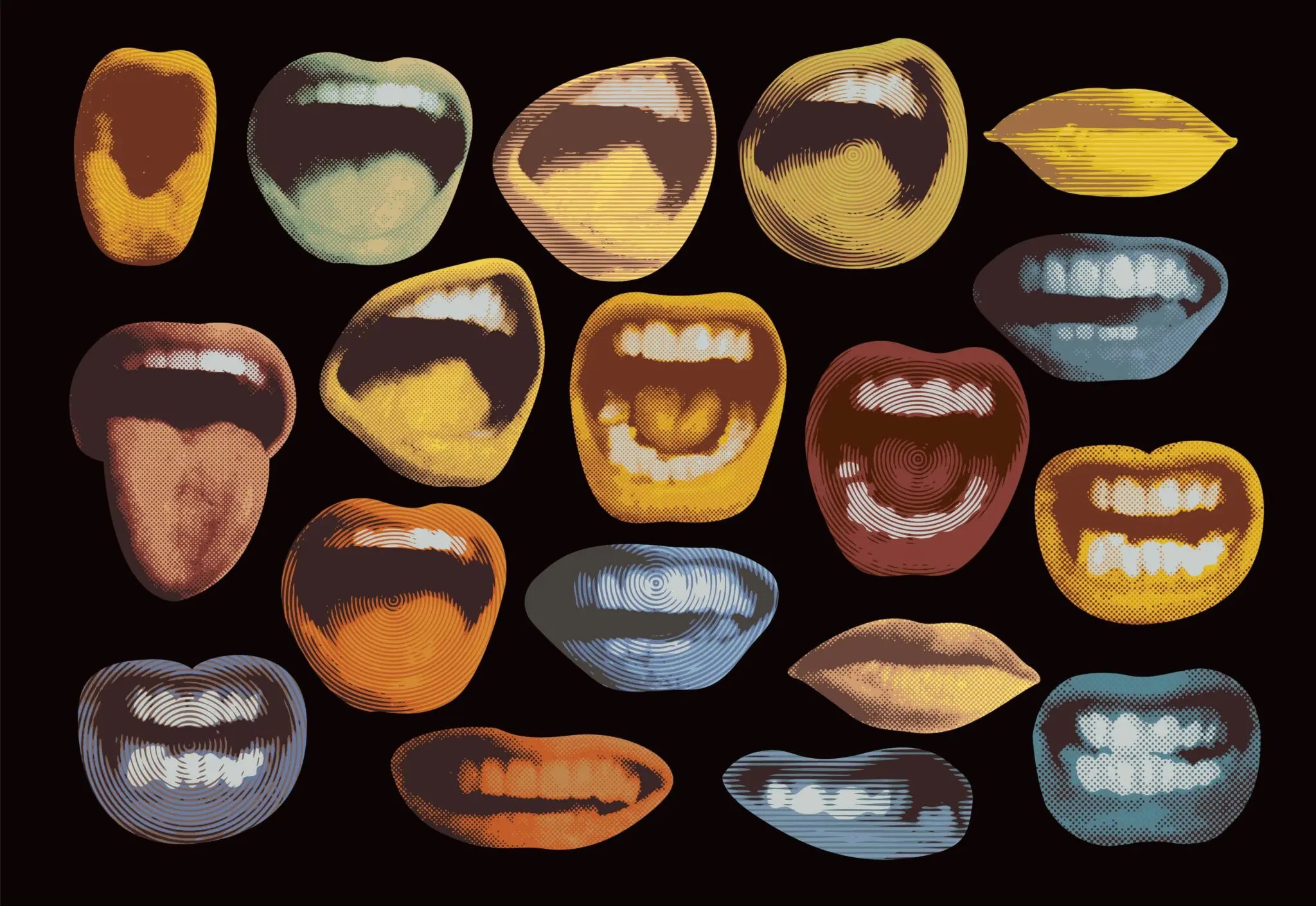
Antropologist Kristin Bell explores laughter as a far more complex phenomenon than simple delight, reflecting on its surprising power to disturb and disrupt…
… As an anthropologist specializing in health and medicine, laughter isn’t really in my professional wheelhouse—unless you subscribe to the view that laughter is the best medicine. My interest in the topic is more personal, not just because of my history as a former Giggling Gertie, but because it’s a behavior that is much less straightforward than it seems.
Ideally, laughter is something we share. According to anthropologist Munro Edmonson, laughter is sociable; it ideally invites a similar response. Indeed, it has contagious qualities: When we hear someone laugh, we often laugh, or at least smile, ourselves—an effect consistently shown through psychological research. This is how we ended up with canned laughter on sitcoms. Studios realized that the sound of laughter made their shows seem funnier to their audiences, while also giving them a degree of control over when people laughed…
… According to the anthropologist Munro Edmonson, the central feature of laughter is aspiration: We release a forceful puff of air as we laugh.
But laughter is also characterized by repetition. In fact, given the extraordinary variability in the sounds people make when they laugh, repetition is what makes laughter universally recognizable. This is why writers conventionalize laughter as “he-he-he,” “ha-ha-ha,” and “ho-ho-ho” (well, at least if you’re Santa Claus). Notably, this feature isn’t exclusive to English representations. Edmonson observed that laughter is represented in Russian as xe, xe, xe; in Tzotzil—a Mayan language spoken in Mexico—it’s ‘eh ‘eh ‘eh.
We don’t fully understand why humans make this sound when we laugh. When 19th-century biologist Charles Darwin set out to explore the biology of feelings in The Expression of the Emotions in Man and Animals, he wrote, “why the sounds which man utters when he is pleased have the peculiar reiterated character of laughter we do not know.” However, the response seems to occur well before culture is embedded in our behaviors: Recognizable laughter is evident in babies from 4 months old.
Nor is laughter unique to humans. Great apes respond to being tickled in much the same way that humans do. Of course, because chimps, bonobos, et cetera have a different vocal apparatus than humans, it sounds more like a dog panting or a person having an asthma attack or energetic sex. However, these primate sounds have the same “peculiar, reiterated character” that Darwin highlighted in humans. This is why laughter is characterized by scientists as a cross-species phenomenon.
Yet, while laughter is evident in the play of other primates, it’s unclear whether they have a sense of humor. Recent research provides evidence of a capacity for teasing through nonverbal behavior. But, as the evolutionary psychologist Robert Provine noted, “there is no evidence that they respond to apparently humorous behavior, their own or that of others, with laughter.”
Giving meaning to laughter seems to be distinctively human.
While some laughter is deliberate, much of it is outside conscious control—an attribute that goes a long way toward explaining the widespread Euro-American ambivalence toward the act. According to the literary scholar Sebastian Coxon, a growing anxiety about mirth is evident in the European historical record from the late Middle Ages. For example, the 16th-century Dutch philosopher Desiderius Erasmus, better known for advising children to “replace farts with coughs,” also warned against “loud laughter and immoderate mirth.”
Notably, Erasmus singled out the “neighing sound that some people make when they laugh” for particular opprobrium—an impulse evident in the contemporary tendency to compare unrestrained laughter with the cries of animals: “howling” with laughter, “hooting” in delight, “snorting” with amusement, and so on. Indeed, while the term “guffaw” might not be borrowed from animal noises, it certainly sounds like it could be.
These characterizations reveal an attempt to draw laughter into the realm of taste and civility—categories that are strongly tied to gender and class strictures. For instance, in an 1860 etiquette guide titled The Ladies’ Book of Etiquette and Manual of Politeness: A Complete Hand Book for the Use of the Lady in Polite Society, readers are counseled to moderate their laughter during a dinner party so that it’s neither too loud nor too soft: “To laugh in a suppressed way, has the appearance of laughing at those around you, and a loud, boisterous laugh is always unlady-like.”
Social judgments abound not just in relation to how we laugh but what we laugh at—as an early 19th-century artwork attests. “Laughter,” etched by British artist and social commentator Thomas Rowlandson, depicts a man laughing at his cat adorned in a bonnet and cloak.

The caption reads: ‘Laughter is one of the most pleasing of the Passions and is with difficulty accounted for, as risibility is frequently excited from the most simple causes—as is the case with the Countryman and his Cat.’ The implication is that “unsophisticated” countrymen lack “class” and are therefore easily amused. (For the record, I am equally unsophisticated, because I will never not find cats pictured with human props funny.)
Still, despite the association between humor and taste, it’s often physical comedy that gets the most laughs. It’s not a coincidence that the first truly global hit comedy was The Gods Must Be Crazy, whose sublime “Tati-like slapstick routines” drew audiences from New York and Caracas to Tokyo and Lagos, despite being widely condemned by film reviewers as apartheid propaganda.
Indeed, screenwriters have long predicted that physical humor will become increasingly prominent in Hollywood comedies because it “transcends dialogue and even most cultural differences,” and movies must increasingly appeal to a global market to produce reliable returns. (As far as I can tell, the future of Hollywood films is basically Marvel movies and slapstick comedies.)…
… As McDonald observes, laughter disrupts the notion of a stable, coherent self—reflected in terms like “cracking up” and “bursting.” Moreover, unrestrained laughter doesn’t just signify a lack of personal control; it can be politically dangerous as well. The literary historian Joseph Butwin writes of “seditious laughter” as a weapon of the oppressed that can serve to destabilize hierarchies and power relations.
In the end, it’s clear that laughter is a deeply curious thing. It’s simultaneously the most social of human expressions and the one most disruptive of social edifices and rules. Shared, sanctioned laughter might bring us together, but unsanctioned laughter shows the cracks, revealing that we’re not quite who we think…
“The Strange Power of Laughter“
* Herman Melville, Moby-Dick
###
As we muse on mirth (and lest we forget that sometimes laughter is simply a function of simple delight), we might recall that it was on this date in 1929 that Rube Goldberg‘s “The Inventions of Professor Lucifer Gorgonzola Butts, A.K.,” cartoon series first published in Colliers Weekly.

“The sentiment of justice is so natural, and so universally acquired by all mankind, that it seems to be independent of all law, all party, all religion”*…

Yunsuh Nike Wee, Daniel Sznycer, and Jaimie Arona Krems on an example of human values that seems due more to shared intuitions than local customs or social practices…
The Bible’s lex talionis – “Eye for eye, tooth for tooth, hand for hand, foot for foot” (Exodus 21:24-27) – has captured the human imagination for millennia. This idea of fairness has been a model for ensuring justice when bodily harm is inflicted.
Thanks to the work of linguists, historians, archaeologists, and anthropologists, researchers know a lot about how different body parts are appraised in societies both small and large, from ancient times to the present day.
But where did such laws originate?
According to one school of thought, laws are cultural constructions – meaning they vary across cultures and historical periods, adapting to local customs and social practices. By this logic, laws about bodily damage would differ substantially between cultures.
Our new study explored a different possibility – that laws about bodily damage are rooted in something universal about human nature: shared intuitions about the value of body parts.
Do people across cultures and throughout history agree on which body parts are more or less valuable? Until now, no one had systematically tested whether body parts are valued similarly across space, time and levels of legal expertise – that is, among laypeople versus lawmakers.
We are psychologists who study evaluative processes and social interactions. In previous research, we have identified regularities in how people evaluate different wrongful actions, personal characteristics, friends, and foods. The body is perhaps a person’s most valuable asset, and in this study we analyzed how people value its different parts. We investigated links between intuitions about the value of body parts and laws about bodily damage…
… If people have intuitive knowledge of the values of different body parts, might this knowledge underpin laws about bodily damage across cultures and historical eras?
To test this hypothesis, we conducted a study involving 614 people from the United States and India. The participants read descriptions of various body parts, such as “one arm,” “one foot,” “the nose,” “one eye” and “one molar tooth.” We chose these body parts because they were featured in legal codes from five different cultures and historical periods that we studied: the Law of Æthelberht from Kent, England, in 600 C.E., the Guta lag from Gotland, Sweden, in 1220 C.E., and modern workers’ compensation laws from the United States, South Korea, and the United Arab Emirates…
… Our findings were striking. The values placed on body parts by both laypeople and lawmakers were largely consistent. The more highly American laypeople tended to value a given body part, the more valuable this body part seemed also to Indian laypeople, to American, Korean and Emirati lawmakers, to King Æthelberht and to the authors of the Guta lag. For example, laypeople and lawmakers across cultures and over centuries generally agree that the index finger is more valuable than the ring finger, and that one eye is more valuable than one ear.
But do people value body parts accurately, in a way that corresponds with their actual functionality? There are some hints that, yes, they do. For example, laypeople and lawmakers regard the loss of a single part as less severe than the loss of multiples of that part. In addition, laypeople and lawmakers regard the loss of a part as less severe than the loss of the whole; the loss of a thumb is less severe than the loss of a hand, and the loss of a hand is less severe than the loss of an arm…
… Much of what counts as moral or immoral, legal or illegal, varies from place to place. Drinking alcohol, eating meat and cousin marriage, for example, have been variously condemned or favored in different times and places.
But recent research has also shown that, in some domains, there is much more moral and legal consensus about what is wrong, across cultures and even throughout the millennia. Wrongdoing – arson, theft, fraud, trespassing and disorderly conduct – appears to engender a morality and related laws that are similar across times and places. Laws about bodily damage also seem to fit into this category of moral or legal universals…
“An eye for an eye: People agree about the values of body parts across cultures and eras,” from @us.theconversation.com.
* Voltaire
###
As we contemplate corporeal consensus, we might recall that on this date in 1974 (after the 1973 airing of a series of made-for-TV movies that established the character), The Six Million Dollar Man debuted as a weekly hour-long series.
Unlike superhero movies today, The Six Million Dollar Man TV series was not based on a comic book title. Instead, the science fiction, fantasy, adventure series was based Martin Caidin’s 1972 novel Cyborg and its three sequels. The series starred Lee Majors as an astronaut whose life is forever changed after a NASA test flight accident. Colonel Steve Austin awoke after the accident to find that his body had been rebuilt with bionic parts including two legs, one arm and one eye. The cost of the operation ran roughly $6 million. Now a super-human, Austin could run over 60 mph and had incredible strength. He found work as a secret agent for the Office of Scientific Intelligence. Before the show debuted on this day in 1974, three movie pilots had already been shown on ABC the year before. In 1975, a two-part episode featured Jaime Sommers (Lindsay Wagner), a professional tennis player who experienced a parachuting accident and was given bionic parts as well. However, her body rejected these parts and died. Then again, he character was so popular, Sommers’ character came back to life to star in her own series, The Bionic Woman. Both series were hugely popular and ran through 1978. Then, three new made-for-TV movies starring the couple aired in 1987, 1989 and 1994 and all three also starred Lee Majors’ son (Lee Majors II) as OSI agent Jim Castillian… – source

You must be logged in to post a comment.