Posts Tagged ‘Charles Darwin’
“No man is an island, / Entire of itself; / Every man is a piece of the continent, / A part of the main.”*…

Individualism has been been a growing force in cultures around the world since the Enlightenment; it picked up momentum in the 20th century (c.f., e.g., Adam Curtis’ masterful Century of Self [and here]); and has become a– if not the— foundational concept in liberalism. But, Nils Gilman argues, the biological discovery of the holobiont gives the lie to “the autonomous individual” in a way that has massive implications not only for how we think about, but also how we govern ourselves…
We like to believe we end at our skin. This is the primary hallucination of modern political philosophy in the West, the foundational axiom upon which we have erected our laws, our economics, and our sense of self-worth. Philosophical liberalism imagines human individuals as discrete, bounded entities — monads moving through space, contained entirely within a fleshy envelope that separates “self” from “other.” This architectural model of the human being underpins the political concept of the autonomous liberal subject, just as it grounds the social scientific commitment to methodological individualism. It asserts that the basic unit of human reality is the singular actor, the “I” that thinks, chooses, and owns.
However, this model is a biological fiction. It is a map that corresponds to no territory found in nature. Over the last three decades the life sciences have undergone a quiet revolution that renders the classical liberal view of the subject not merely philosophical debatable, yet factually incorrect. The concept of the holobiont, coined by Adolf Meyer-Abich in 1943 but popularized in the anglophone world by Lynn Margulis in the 1990s, has shattered the idea of the unitary organism. We now know that every macro-organism is actually a dynamic ecosystem, a chimera composed of a host and billions of symbiotic microbes that function as a distinct, integrated biological unit. You are not a single entity. You are a walking coral reef, a plural assemblage of human and non-human cells negotiating a fragile, continuous existence. Roughly half the cells in your body are not human; they are bacterial, fungal, and viral. They do not merely hitch a ride. They digest your food, regulate your immune system, modulate your mood, and structure the development of your brain.
The implications of this biological reality for political theory are cataclysmic. The entire edifice of Liberalism, from Hobbes and Locke to modern libertarianism, rests on the assumption of the “atomic individual” — a sovereign state of one. This core concept of liberal political theory posits a world of separate, self-governing agents who enter into contracts and demand rights to protect their private sphere from intrusion. The liberal subject claims (and demands) to be walled off, protected, and kept clean of the influence of others.
Biology exposes this desire for total autonomy as not just false, but a death wish. In the logic of the holobiont, absolute immunity is not health; it is starvation. A body hermetically sealed against the “other” dies. Our physical existence requires constant contamination and collaboration with foreign agents. We cannot be “self-made” because we are constitutively “made-with.” Donna Haraway describes this shift as moving from autopoiesis (self-making) to sympoiesis (making-with). We do not precede our relationships; our relationships constitute us. If the political subject is physically constituted by “others,” the concept of self-sovereignty collapses. One cannot be the sole monarch of a kingdom occupied by foreign powers that provide the essential infrastructure for the kingdom’s survival…
[Gilman elaborates on the implications both for our political and management systems and for the social sciences that study them. And he explores why this new perspective is hard to internalize and embrace…]
The resistance to this holobiontic perspective is fierce because it is terrifying. As Rudyard Kipling observed (in a quote often misattributed to Nietzsche), “The individual has always had to struggle to keep from being overwhelmed by the tribe. If you try it, you will be lonely often, and sometimes frightened. But no price is too high to pay for the privilege of owning yourself.” The autonomous liberal subject offers psychological safety. It promises control. It tells us that we are captains of our souls. Embracing the holobiont requires admitting that we are porous, vulnerable, and inextricably entangled with things we cannot control. It demands that we surrender the fantasy of the impermeable border. The skin is not a wall; it is a heavily trafficked interface. The state is not a fortress; it is a metabolic node in a planetary flow.
We are living through the friction between our laws and our biology. We legislate for individuals, yet we live as assemblages. We worship independence while our bodies are grounded in interdependence. The future of political theory cannot simply be an adjustment of liberal categories. It requires a fundamental ontological revision that starts with relation rather than separation. We must stop trying to protect the self from the world and begin understanding the self as a spatially intensified instantiation of the world.
Clinging to the myth of the autonomous subject is a massive act of collective denial. It represents a refusal to look at the microscope and see the legions teeming inside us. We construct our societies around a myth of being that does not correspond to biogeochemical reality. The cost of this error is everywhere apparent — in the degradation of our ecology, the polarization of our politics, and the isolation of our private lives. We try to seal ourselves off, creating sterile environments that make us sick, physically and politically. The holobiont offers a different path, one that acknowledges that to be one is always to be many. We are not solitary thinkers looking out at nature. We are nature looking at itself, through a lens made of billions of other lives. The sovereign is dead. Long live the swarm…
“The Sovereign Individual Does Not Exist,” from @nilsgilman.bsky.social.
Further complicating the issue: “Externalities, Rights, and the Problem of Knowledge,” from Cyril Hédoin:
Very short summary: This essay explains how the knowledge problem [the challenge of a central authority having the information needed to make rational decisions for a complex system like a society] applies to the definition of jurisdictional rights. Jurisdictional rights define spheres of individual sovereignty. Rights are appropriately defined if they internalize all potential externalities. However, individuals may disagree about what counts as an externality. This disagreement stems from individuals’ preferences, which are typically dispersed and local. I discuss various solutions to this problem, including the use of polycentricity...
[Image above: source]
* John Donne
###
As we incorporate the interconnected, we might recall that it was on this date in 1859 that our perspective was shifted in a different kind of way: Charles Darwin published The Origin of the Species. Actually, on that day he published On the Origin of Species by Means of Natural Selection, or the Preservation of Favoured Races in the Struggle for Life; the title was shortened to the one we know with the sixth edition in 1872.

“The most important factor in survival is neither intelligence nor strength but adaptability”*…
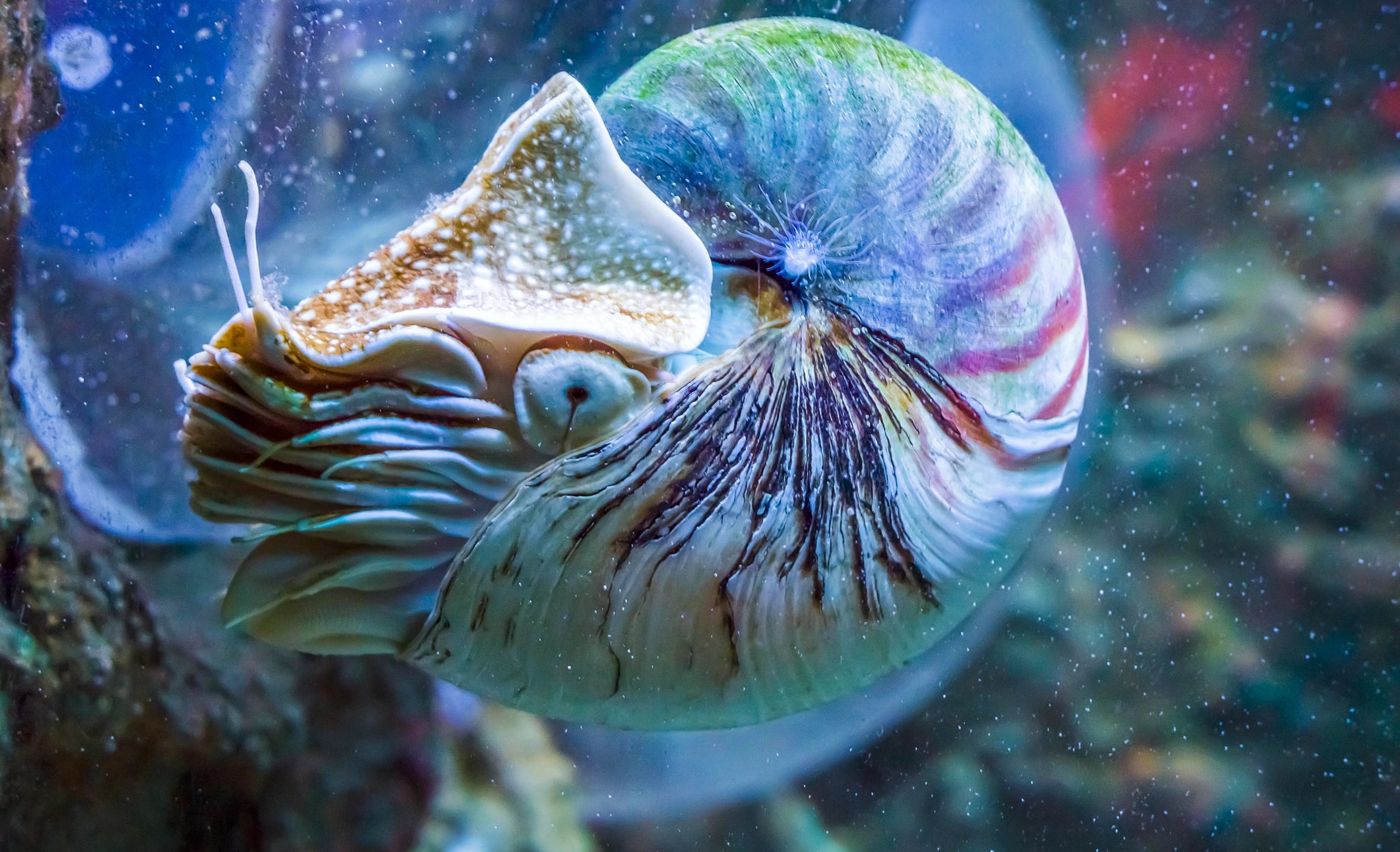
Indeed. Scientists have accepted this precept since Charles Darwin‘s publication of Origin of the Species. But how– and at what pace– does that adaptation happen? From those earliest days, the assumption was that change/adaptation happened slowly, roughly evenly– gradually– over time.
But in 1972, paleontologists Niles Eldredge and Stephen Jay Gould published a landmark paper developing their theory and called it punctuated equilibria. Their paper built upon Ernst Mayr‘s model of geographic speciation, I. M. Lerner‘s theories of developmental and genetic homeostasis, and their own empirical research. Eldredge and Gould proposed that the degree of gradualism commonly attributed to Darwin is virtually nonexistent in the fossil record, and that stasis dominates the history of most fossil species. Rather, they argued, when significant evolutionary change occurs, it is generally restricted to rare and geologically rapid events of branching speciation called cladogenesis (the process by which a species splits into two distinct species, rather than one species gradually transforming into another).
Jake Buhler reports on recent work that confirms the punctuated equilibrium theory and adds more detail…
Over the last half-billion years, squid, octopuses and their kin have evolved much like a fireworks display, with long, anticipatory pauses interspersed with intense, explosive changes. The many-armed diversity of cephalopods is the result of the evolutionary rubber hitting the road right after lineages split into new species, and precious little of their evolution has been the slow accumulation of gradual change.
They aren’t alone. Sudden accelerations spring from the crooks of branches in evolutionary trees, across many scales of life — seemingly wherever there’s a branching system of inherited modifications — in a dynamic not examined in traditional evolutionary models.
That’s the perspective emerging from a new mathematical framework (opens a new tab) published in Proceedings of the Royal Society B that describes the pace of evolutionary change. The new model, part of a roughly 50-year-long reimagining of evolution’s tempo, is rooted in the concept of punctuated equilibrium, which was introduced by the paleontologists Niles Eldredge and Stephen Jay Gould in 1972.
“Species would just sit still in the fossil record for millions of years, and then all of a sudden — bang! — they would turn into something else,” explained Mark Pagel, an evolutionary biologist at the University of Reading in the United Kingdom.
Punctuated equilibrium was initially a controversial proposal. The theory diverged from the dominant, century-long view that evolution adhered to a slow, steady pace of Darwinian gradualism, in which species incrementally and almost imperceptibly developed into new ones. It opened the confounding possibility that there was a discontinuity between the selection processes behind the microevolutionary changes that occur within a population and those driving the long-term, broad-scale changes that take place higher than the species level, known as macroevolution.
In the decades since, researchers have continued to debate these views as they’ve gathered more data: Paleontologists have accumulated fossil datasets tracing macroevolutionary changes in ancient lineages, while molecular biologists have reconstructed microevolution on a more compressed timescale — in DNA and the proteins they encode.
Now there are enough datasets to more fully test the theories of evolutionary change. Recently, a team of scientists blended insights from several evolutionary models with new methods to build a mathematical framework that better captures real evolutionary processes. When the team applied their tools to a selection of evolutionary datasets (including their own data from research into an ancient protein family), they found that evolutionary spikes weren’t just common, but somewhat predictably clustered at the forks in the evolutionary tree.
Their model showed that proteins contort themselves into new iterations more rapidly around the time they diverge from each other. Human languages twist and recast themselves at the bifurcations in their own family tree. Cephalopods’ soft bodies sprout arms and bloom with suckers at these same splits.
The new study adds to previous support for the punctuated equilibrium phenomenon, said Pagel, who wasn’t involved in the project. However, the rapid evolutionary behavior isn’t a unique process separate from natural selection, as Eldredge and Gould suggested, but rather the result of periods of extremely rapid adaptation propelling evolutionary change.
“This is really a rather beautiful story in the philosophy of science,” Pagel said…
Read on for the fascinating story of the updated evolutionary model shows that living systems evolve in a split-and-hit-the-gas dynamic, where new lineages appear in sudden bursts rather than during a long marathon of gradual changes: “The Sudden Surges That Forge Evolutionary Trees,” from @jakebuehler.bsky.social in @quantamagazine.bsky.social.
Given the strains that the Antropocene is putting on our environment, this could be timely…
* Charles Darwin
###
As we dissect development, we might spare a thought for Barabara McClintock; she died on this date in 1992. A cytogeneticist, she is regarded as one of the most important figures in the history of genetics. In the 1940s and 50s McClintock’s work on the cytogenetics of maize led her to theorize that genes are transposable – they can move around – on and between chromosomes. McClintock drew this inference by observing changing patterns of coloration in maize kernels over generations of controlled crosses. The idea that genes could move did not seem to fit with what was then known about genes, but improved molecular techniques of the late 1970s and early 1980s allowed other scientists to confirm her discovery. She was awarded the 1983 Nobel Prize in Physiology or Medicine, the first American woman to win an unshared Nobel Prize.
For more on McClintock’s work and its legacy, see here and here.

“The excitement that a gambler feels when making a bet is equal to the amount he might win times the probability of winning it.”*…

This afternoon’s Super Bowl is yet to be played, but it is already destined for the record books…
The American Gaming Association expects 50.4 million Americans to wager legally on the game (up over 61% from last year), for a total of $16 Billion at stake (more than twice last year’s betting). To put this into context, in 2022, U.S. legal gambling totaled about $55 billion.
It will also be the first Championship game with an on-site sports book (though attendees don’t need to leave their seats to wager; Arizona is one of the 33 states [plus D.C.] in which they can make bets in licensed betting shops on the way to the game… or, of course, they can just use their phones to bet online).
Sports betting is exploding in the U.S. About 20% of U.S. adults said that they had placed sports bets in 2022. Some of those bets were through legal channels. But The AGA estimates that American also wagered almost $64 billion in 2021 with illegal sports books– part of the $511 Billion bet on those books, iGaming websites, and “skill games.”
These figures exclude the purchase of state lottery tickets, which has grown to over $100 billion. The average American spent $46 on lottery tickets in the U.S. in 2022; but the amounts varied wildly from state-to-state– in Massachusetts, residents spent an average of $805.30.
See also: “How Sports Betting Upended the Economies of Native American Tribes.”
* Blaise Pascal, whose correspondence with Pierre de Fermat on gambling laid the foundation for the modern theory of probability
###
As we wonder about wagering, we might send insightful birthday greetings to Charles Darwin; he was born on this date in 1809. A naturalist, geologist, and biologist, he is widely known for his contributions to evolutionary biology. His proposition that all species of life have descended from a common ancestor is now generally accepted and considered a fundamental concept in science.
In a 1858 joint publication with Alfred Russel Wallace, he introduced his scientific theory that this branching pattern of evolution resulted from a process he called natural selection, in which the struggle for existence has a similar effect to the artificial selection involved in selective breeding. Darwin published a more complete version of his theory of evolution, with compelling evidence. in his 1859 book On the Origin of Species.
Darwin’s scientific discovery is the unifying theory of the life sciences, explaining the diversity of life– for which he has been described as one of the most influential figures in human history.

“Oh how wrong we were to think immortality meant never dying”*…

The John Templeton Foundation has undertaken a undertaken a deep investigation into the biology, philosophy, and theology of immortality research. Lorraine Boissoneault offers the first in a series of reports on their work…
Around 100,000 years ago, humans living in the region that would come to be called “Israel” did something remarkable. When members of the community died, those left behind buried the dead in a cave, placing some of the bodies with great care and arranging them near colorful pigments and shells. Although burial is so common today as to be almost unremarkable, for ancient humans to exhibit such behavior suggested a major development in cultural practices. The Qafzeh Cave is one of the oldest examples that humans understand death differently than many other creatures. We seem to have an innate desire to mark it with ritual.
It is an unavoidable fact of biology that all organisms die, whether by disease, disaster, or simply old age. Yet our species, Homo sapiens, seems to be the only creature blessed—or cursed—with the cognitive ability to understand our mortality. And thanks to our powerful intelligence, we’re also the only beings to imagine and seek out death’s opposite: immortality.
In religious traditions, spiritual afterlives and reincarnation offer continuation of the self beyond death. In myth and legend, sources of everlasting life abound, from the Fountain of Youth to elixirs of life. Some people seek symbolic immortality through procreation. Others aim for contributions to society, whether artistic, academic or scientific. And still others have pushed the bounds of technology in search of dramatic life extension or a digital self.
Where does this impulse come from?…
Find out: “Pre-life, Afterlife, and the Drive for Immortality,” from @boissolm @templeton_fdn.
###
As we internalize eternity, we might recall that it was on this date in 1826 that the HMS Beagle set sail from Plymouth on its first voyage, an expedition to conduct a hydrographic survey of Patagonia and Tierra del Fuego in support of the larger ship HMS Adventure.
The Beagle‘s second voyage (1831-1836) is rather better remembered, as it was on that expedition that the ship’s naturalist, a young Charles Darwin (whose published journal of the journey, quoted above, earned him early fame as a writer) made the observations that led him to even greater fame for his theory of evolution.

“… chasing everything in endless song out of one beautiful form into another”*…

From artist and photographer Doris Mitsch…
In Locked Down Looking Up, Bay Area photographer Doris Mitsch captures the swirling, shapeshifting flight patterns of birds and other winged creatures: a flock of vultures creates coils and whirls between rugged mesas, crows descend toward a forest in single-file trails, and gulls congregate above the sea in lengthy lines.
The ongoing project began early in 2020 when Mitsch set up a camera outside her front door and shot consecutive images of birds flying around her home. “While everything in my life has come to a standstill, up in the air, there is still a lot going on,” she writes. She’s since traveled along the California coast and to Moab’s desert landscapes capturing similar swarming phenomena featuring vultures, gulls, and crows…

See more of at “Photographic Composites Document the Mesmerizing Flight Trails of Vultures, Crows, and Bats,” in @Colossal and at Doris’ site.
- “Nature is ever at work building and pulling down, creating and destroying, keeping everything whirling and flowing, allowing no rest but in rhythmical motion, chasing everything in endless song out of one beautiful form into another.” – John Muir
###
As we ponder patterns, we might send faithfully-captured birthday greetings to Thomas Wedgwood; he was born on this date in 1771. An English inventor, he was the first person reliably documented to have used light-sensitive chemicals to capture silhouette images on durable media such as paper, and the first known to have attempted to photograph the image formed in a camera obscura. His practical experiments yielded only shadow image photograms that were not light-fast, but his conceptual breakthrough and partial success have led some historians to call him “the first photographer.”
Wedgwood was the son of Josiah Wedgwood, and so the uncle of Charles Darwin (the son of Thomas’ sister, Susannah), and he was a friend and patron of Samuel Taylor Coleridge.

You must be logged in to post a comment.