Archive for May 2025
“I have said before that metaphors are dangerous”*…

… still, metaphor animates much of our thought and of the received wisdom that it can become. Quinn Slobodian unpacks the ways in which metaphors of the natural sciences loom large in the neoliberalism conception, then walks us through its myriad permutations, concluding with metaphor’s corrosion at the hands of Silicon Valley’s reactionary accumulation regime…
Polyps confounded political theorists in the 18th century. The creatures that collectively make up coral reefs acted in ways that defied both expectations of divine design and the established hierarchy of the animal kingdom. How could these lowest of organisms create such enormous structures—especially ones that appeared to be the product of one mind? How could microscopic creatures obstruct the ships of the most powerful forces on Earth, rupturing their hulls and forcing them to chart their way around polyp metropoli risen into islands? It’s no wonder that the anarchist anthropologist James C. Scott later drew an analogy between polyps and peasants. “Just as millions of anthozoan polyps create, willy-nilly, a coral reef,” he wrote, “so do thousands upon thousands of individual acts of subordination and evasion create a political or economic barrier reef of their own.”
The historian of science Whitney Barlow Robles quotes Scott in her wonderful book, Curious Species, where she explains how coral unsettled certainties. Fed by sunlight like grass, plants with their tentacles laid down layers of limestone. The power of polyps turned ideas of agency on their head, a molecular sightless mass acting as architect. Robles imagines it would be like “suddenly learning that butterflies, not people, planted all the trees in Central Park.”
It was a similar wonder at the endless events of the natural world that led classical liberals to draw connections between the order of nature and the order created by human exchange in the profane world of political economy. Philip Mirowski reminds us that natural metaphors serve double duty: they are “reassuring and graphically concrete images of order, situating humanity squarely at home in ‘its’ universe” while they also tame the disorder of nature, making “an unintelligible alien world comprehensible.”
Nature offered what Deirdre McCloskey calls the ”metaphors economists live by.” Because so much of our politics relies on an explicit and implicit understanding of economics, this means we live by those metaphors too. The intellectual movement of neoliberalism arrived at its ideas of the good society by thinking with and through nature. As the post-Cold War consensus around neoliberal globalization crumbles and the boundaries of individual freedom narrow, new metaphors might help us understand the successor ideology…
[Slobodian outlines the intellectual history of neoliberalism, from Friedrich Hayek, its intwined connection with he sciences, and the centrality of the “garden” metaphor in economics. He describes the displacement of the graden with the “swarm” and argues that it is now being wrestled into a mechanistic, surveillance-centric vision of control– a factory…]
… In Curious Species, Whitney Robles reminds us that the polyp agglomerations—those coral structures built by tiny, collective labor—were dubbed “colonies” in the language of the European merchant empires and the Romans before them. The metaphor was no accident. Colonial science mapped political fantasies onto biological forms.
Robles insists that the polyps were never docile subjects. Yet, however resilient, the polyps are not immortal. When the waters around them acidify and warm, these vast reef-structures bleach and break apart. The microorganisms that once formed a community detach from the whole and float away—winking, fluttering, nearly invisible. A nothing. A dispersal. Polyp politics does not just teach us about creation. It teaches us about endings, too.
The neoliberal imagination, when it looked to nature, saw spontaneous order, unplanned complexity, and the beautiful unpredictability of emergent systems. But it often underestimated the possibility of collapse—not as failure of planning, but as a systemic consequence of the very freedom it prized.
What happens when the waters change? When the reef dissolves?
In our current moment, we are no longer just asking how order emerges, but how it vanishes. We are watching the garden trodden underfoot, the swarm militarized, the factory reinstalled as a total system of command. And in this long shift—from polyps to protocols, from butterflies to drones—there is a profound political lesson.
Freedom, when real, is fragile. So is spontaneity. So is improvisation. The forces of order may begin in a coral reef or a Central Park meadow, but they can end in a codebase, a drone cloud, or a boardroom with no windows.
The question is no longer whether we can find metaphors from the natural world to describe human society. It is whether we can preserve the kinds of life that those metaphors once made thinkable…
As Robert Frost once said, “unless you are educated in metaphor, you are not safe to be let loose in the world”: “Garden, Swarm, Factory,” from The Ideas Letter and @open-society.bsky.social.
Apposite: “Artificial intelligence” as we’re being encouraged to understand and accept it is a lie that depends on a worldview the richest people on the planet need you to believe in, namely that intelligence is “measurable and hierarchical” “Toolmen.”
And further: “A Reality Check for Tech Oligarchs.”
* Milan Kundera
###
As we analyze our analogies, we might send lyrical birthday greetings to a master of metaphor, Walt Whitman; he was born on this date in 1819. A poet, essayist, and journalist; he also wrote two novels. Whitman is considered one of the most influential poets in American and world literature. He incorporated both transcendentalism and realism in his writings and is often called the father of free verse. His work was controversial in his time, particularly his 1855 poetry collection Leaves of Grass, which was described by some at the time (and again, more recently) as obscene for its overt sensuality.
Whitman grew up in Brooklyn, where over time he moved from printing to teaching to journalism, becoming the editor of the Brooklyn Daily Eagle in 1846. He began experimenting with a new form of poetry, revolutionary at the time, free of a regular rhythm or rhyme scheme, that has come to be known as “free verse.” In 1855, Whitman published, anonymously and at his own expense, the first edition of Leaves of Grass— which was revolutionary too in its content, celebrating the human body and the common man. Whitman spent the rest of his life revising and enlarging Leaves of Grass; the ninth edition appeared in 1892, the year of his death.

Whitman and the Butterfly, from the 1889 edition of Leaves of Grass (source: Library of Congress)
“This is, if not a lifetime process, awfully close to it”*…

Shani Zhang paints weddings (and other events). Along the way, she’s drawn some fascinating conclusions…
Painting weddings for a few years now, I have spent a fair bit of time observing strangers move through a room. Seeing someone new, I always have a feeling of noticing their internal architecture. I did not realize that some people do not feel this way, at least not as intensely.
- By internal architecture, what I mean is, when someone talks to me, what I notice first are the supporting beams propping up their words: the cadence and tone and desire behind them. I hear if they are bored, fascinated, wanting validation or connection. I often feel like I can hear how much they like themselves.
- I hear the speed at which they metabolize information and the nature of their attention. Attention falls on the spectrum of jumping bean to steady stream. Where it falls depends on a person’s nature, and also how much they want to be in that conversation. Someone’s quality of attention is evident from the questions they ask (how much they diverge from what the speaker is saying), if their gaze is wandering elsewhere, if they are fidgeting, restless. The outlier is dissociation, when someone is noticeably vacant, their attention completely absent.
- Sometimes I see their feelings towards me when we talk, but that has the largest room for error in retrospect. Maybe the person I have the hardest time seeing clearly is still myself. I can see people more clearly when I am watching them talk to others.
- I watch the person with the loudest laugh. The most striking thing isn’t the volume—it’s the feverish pitch. As the night goes on, it begins to sound more like desperation. Their joy has a fraying quality; it is exhausting to carry because it comes with a desire to seem happy and make others happy at all times…
Read on for all “21 observations from people watching.”
* “This is, if not a lifetime process, awfully close to it. The writer broadens, becomes deeper, becomes more observant, becomes more tempered, becomes much wiser over a period time passing. It is not something that is injected into him by a needle. It is not something that comes on a wave of flashing, explosive light one night and say, ‘Huzzah! Eureka! I’ve got it!’ and then proceeds to write the great American novel in eleven days. It doesn’t work that way. It’s a long, tedious, tough, frustrating process, but never, ever be put aside by the fact that it’s hard.” – Rod Serling (and here and here)
###
As we look, we might send observant birthday greetings to Howard Hawks; he was born on this date in 1896. A key film director, producer, and screenwriter of the classic Hollywood era. Hawks explored many genres– comedies (screwball and straight), dramas, gangster films, science fiction, film noir, war films and Westerns– in films including Scarface (1932), Bringing Up Baby (1938), Only Angels Have Wings (1939), His Girl Friday (1940), To Have and Have Not (1944), The Big Sleep (1946), Red River (1948), The Thing from Another World (1951), and Rio Bravo (1959). His frequent portrayals of strong, tough-talking female characters came to define the “Hawksian woman“. Relevently to this post, Hawks directed Gentlemen Prefer Blondes (1953), which of course, ends with a double wedding.
A close observer of human behavior, Hawks transmuted what he learned into unique, powerful, and wonderfully-entertaining work. Critic Leonard Maltin called him “the greatest American director who is not a household name.” Roger Ebert called Hawks “one of the greatest American directors of pure movies, and a hero of auteur critics because he found his own laconic values in so many different kinds of genre material.”

“Sooner or later everyone sits down to a banquet of consequences”*…
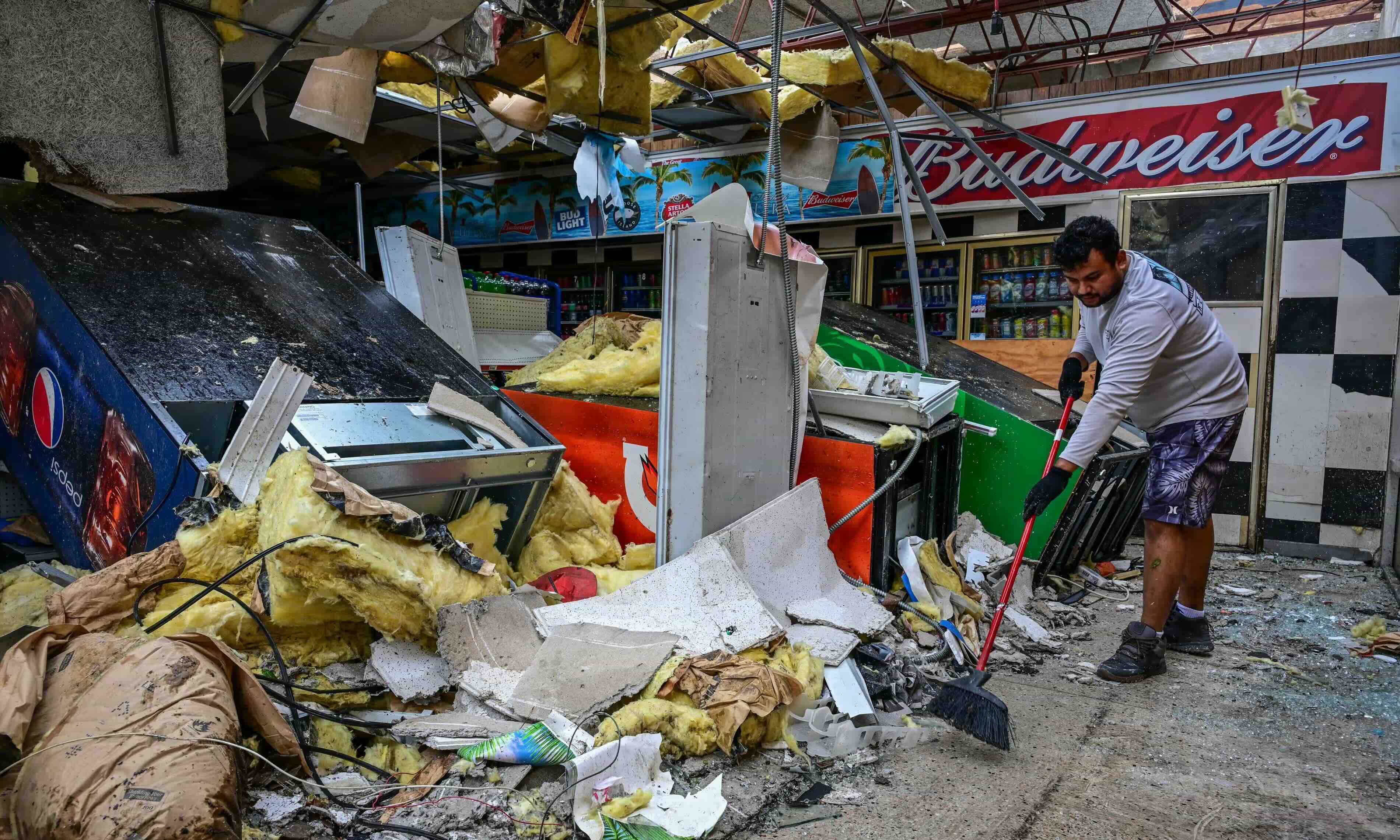
A report issued by International Chamber of Commerce late last year found that extreme weather cost $2tn globally over last decade; the U.S. suffered the greatest losses. As Damian Carrington reports, a leading insurance executive is warning that urgent action is needed to save the conditions under which markets – and civilization itself – can operate…
The climate crisis is on track to destroy capitalism, a top insurer has warned, with the vast cost of extreme weather impacts leaving the financial sector unable to operate.
The world is fast approaching temperature levels where insurers will no longer be able to offer cover for many climate risks, said Günther Thallinger, on the board of Allianz SE, one of the world’s biggest insurance companies. He said that without insurance, which is already being pulled in some places, many other financial services become unviable, from mortgages to investments.
Global carbon emissions are still rising and current policies will result in a rise in global temperature between 2.2C and 3.4C above pre-industrial levels. The damage at 3C will be so great that governments will be unable to provide financial bailouts and it will be impossible to adapt to many climate impacts, said Thallinger, who is also the chair of the German company’s investment board and was previously CEO of Allianz Investment Management.
The core business of the insurance industry is risk management and it has long taken the dangers of global heating very seriously. In recent reports, Aviva said extreme weather damages for the decade to 2023 hit $2tn, while GallagherRE said the figure was $400bn in 2024. Zurich said it was “essential” to hit net zero by 2050.
Thallinger said: “The good news is we already have the technologies to switch from fossil combustion to zero-emission energy. The only thing missing is speed and scale. This is about saving the conditions under which markets, finance, and civilisation itself can continue to operate.”
Nick Robins, the chair of the Just Transition Finance Lab at the London School of Economics, said: “This devastating analysis from a global insurance leader sets out not just the financial but also the civilisational threat posed by climate change. It needs to be the basis for renewed action, particularly in the countries of the global south.”
“The insurance sector is a canary in the coalmine when it comes to climate impacts,” said Janos Pasztor, former UN assistant secretary-general for climate change.
The argument set out by Thallinger in a LinkedIn post begins with the increasingly severe damage being caused by the climate crisis: “Heat and water destroy capital. Flooded homes lose value. Overheated cities become uninhabitable. Entire asset classes are degrading in real time.”
“We are fast approaching temperature levels – 1.5C, 2C, 3C – where insurers will no longer be able to offer coverage for many of these risks,” he said. “The math breaks down: the premiums required exceed what people or companies can pay. This is already happening. Entire regions are becoming uninsurable.” He cited companies ending home insurance in California due to wildfires.
Thallinger said it was a systemic risk “threatening the very foundation of the financial sector”, because a lack of insurance means other financial services become unavailable: “This is a climate-induced credit crunch.”
“This applies not only to housing, but to infrastructure, transportation, agriculture, and industry,” he said. “The economic value of entire regions – coastal, arid, wildfire-prone – will begin to vanish from financial ledgers. Markets will reprice, rapidly and brutally. This is what a climate-driven market failure looks like.”
No governments will realistically be able to cover the damage when multiple high-cost events happen in rapid succession, as climate models predict, Thallinger said. Australia’s disaster recovery spending has already increased sevenfold between 2017 and 2023, he noted.
The idea that billions of people can just adapt to worsening climate impacts is a “false comfort”, he said: “There is no way to ‘adapt’ to temperatures beyond human tolerance … Whole cities built on flood plains cannot simply pick up and move uphill.”
At 3C of global heating, climate damage cannot be insured against, covered by governments, or adapted to, Thallinger said: “That means no more mortgages, no new real estate development, no long-term investment, no financial stability. The financial sector as we know it ceases to function. And with it, capitalism as we know it ceases to be viable.”
The only solution was to cut fossil fuel burning, or capture the emissions, he said, with everything else being a delay or distraction. He said capitalism must solve the crisis, starting with putting its sustainability goals on the same level as financial goals.
Many financial institutions have moved away from climate action after the election of the US president, Donald Trump, who has called such action a “green scam”. Thallinger said in February: “The cost of inaction is higher than the cost of transformation and adaptation. If we succeed in our transition, we will enjoy a more efficient, competitive economy [and] a higher quality of life.”…
It’s time, if not past time, to act: “Climate crisis on track to destroy capitalism, warns top insurer,” from @dpcarrington.bsky.social in @theguardian.com.
Further to the point: “Get ready for several years of killer heat, top weather forecasters warn.”
See also: “Q&A: Kiley Bense on Climate Journalism in a New Information Environment.”
(Image above: source)
* Robert Louis Stevenson
###
As we contemplate craziness, we might recall that it was on this date in 2011 that the Wallow Fire started. A wildfire that started in the White Mountains near Alpine, Arizona, it was named for the Bear Wallow Wilderness area where the fire originated.
The fire eventually spread across the stateline into western New Mexico. By the time the fire was contained on July 8, it had consumed 538,049 acres of land, 522,642 acres in Arizona and 15,407 acres in New Mexico. It was the largest wildfire in Arizona history and did an estimated estimated cost was $109 million in damages. Smoke from the Wallow Fires and others in Arizona and New Mexico extended through Texas and Oklahoma up into the Great Lakes region, affecting air quality for large areas east of the Rocky Mountains.

“Who knows whether it is not true that phosphorus and mind are not the same thing?”*…

In an excerpt from his book White Light, Jack Lohmann explores the rare and special element phosphorus…
In the moments that follow the death of a whale, when the light disappears and is swallowed by dark, the body’s weight draws to the base of the sea and compresses. It settles in mud. It forms an environment known as a whale fall, a world that will last for decades.
The whale fall grows in stages. The larger species come, the eels, the sharks. They rip apart the dead whale’s flesh. The tail, the head, the organs are consumed. The size of predator lessens as the length of time extends. Tiny mouths clean the bones dry. A skeleton remains; bacteria descend upon it. They turn bones into nutrition, consuming the whale in a process that is almost imperceptibly slow. Worms arrive and burrow through the skeleton. Other organisms come and eat the worms. Larger predators reinhabit the space. Within a barren, lightless plain, on the basis of decaying bones, a world is born.
Whalebone contains an element that is rare: phosphorus, a limiting ingredient in life on Earth. Of all the elements of the periodic table, phosphorus is one of six that are absolutely necessary for the existence of life. Of those six, phosphorus is the most limited. Because of its rarity, it controls life—it determines who grows and shrinks, who lives and dies, what areas become biologically wealthy and which ones will be biologically poor. “The maximum mass of protoplasm which the land can support, like the maximum that the sea can support, is dictated by the phosphorus content,” Isaac Asimov, the biochemist, wrote in 1959. Phosphorus, he wrote, “is life’s bottleneck.”
Each of the six essential elements performs a vital role. Carbon forms long chains, connecting compounds together to create large, complicated structures. Hydrogen and oxygen combine to form water. Nitrogen and sulfur create proteins, providing organisms with food. Phosphorus converts energy, carries information, constructs cell membranes, and performs a host of other actions that underpin life’s complexity. Phosphorus allows seeds to grow and fruit to ripen. It is the main ingredient in matches. It both enables life and destroys it. Sarin gas, created from white phosphorus, is a potent agent of chemical warfare.
When it is isolated, phosphorus emits a steady, menacing glow. Phosphorescence is the name that is applied to this phenomenon: it describes materials that glow without ignition. The glow of the upper ocean is phosphorescent. Some paint glows. One consistent feature of the near-death experience, reported by people whose hearts stopped beating and bodies began to fade, has been the presence of a peculiar brightness all around. Images flash, the soul floats, and the body is left behind. The mind feels calm. (It is, in fact, surging with electricity: its final moments are seemingly near.)
When phosphorus burns, it bonds with oxygen, creating phosphate: one atom phosphorus, four atoms oxygen. Phosphate is remarkably prevalent in all life forms, although it is otherwise comparatively rare throughout the world. It is crucial to our existence. Outside of life, phosphate exists in geological form, made up of condensed, crystalline structures that are hidden in the crevices of our planet. Inside of life, it exists in every cell. It forms the membranes that hold the parts of cells together. It provides energy, in the form of adenosine triphosphate, ATP, which powers the actions of all life-forms. Even before birth, each of us gained identities by way of the cumulative influences of small phosphate groups, which held together the strands of our DNA. As we grew from zygote to cellular zillionaire, those groups enabled the replication of DNA and the formation of more complex beings—us.
The phosphorus in our bodies came, at first, from molten lava, hardened into rock. That rock eroded out of mountains, flowed down rivers, and fertilised the land below. The land supported the growth of plants, which allowed the spread of animals. The human body is, roughly speaking, one percent phosphorus. Phosphorus is spread throughout our cells, but it is concentrated mainly in our bones. We are extensions of the planet—we forage for phosphorus by eating plants and animals, and we fertilise the soil through waste and death. Plants thrive on this natural fertiliser. Phosphorus moves through the bodies of plants and animals, fungi and bacteria, and ultimately, usually, makes its way to the water. It is deposited as sediment: it forms new rock on the seafloor. The rock is made of compressed bodies, phosphorus squeezed from lives that are no more. It is littered with phosphatic bones, with phosphate-encrusted bivalves, with fossilised phosphate scraps. These things are hidden, set to be released in geologic time. As this time passes, the Earth’s plates move. The underwater rock becomes land. The land erodes. The cycle continues.
The story of phosphorus runs through every strand of DNA in every organism in the world. It runs through every piece of food and waste, and every living thing. But the story of how humans changed the phosphorus cycle is rooted in a few specific spots. We first found phosphate rock in England, and the fertiliser industry began. The industry changed when rock of greater scale was found in Florida; but today, the Florida rock is almost gone. Our global agricultural system rests upon the dictates of Morocco’s monarch.
Already, in some places around the world, the end of phosphate rock has occurred. It happened on the island of Nauru, far out in the Pacific, and there we see a world that passed its limits. It peaked, declined, and fell to ruin. Amid those ruins, the story of our broken phosphorus cycle comes to a close.
But it does not need to end there. There is mass resistance to the modern expansion of corporate farming methods. The world’s small farmers, who produce half our food, work their land with the nuanced understanding that agriculture has always been an ecological effort. They safeguard phosphate and replenish it.
Scientists, economists, and engineers are working to make phosphorus recycling compatible with modern life. Food, we now know, feeds our bodies better when it comes from healthy soils, and healthy soils come from nature, not from machines. Supported by this understanding, people are working to create a better agriculture. Cities are composting food scraps. Disenfranchised farmers are fighting for their land. If we listen to those with knowledge—rather than those with money—it is possible to restore the cycles of the earth.
There was once, long ago, a different kind of phosphate problem. When life first started, 4.5 billion years ago, the problem was that phosphorus existed only in rocks—and then, of course, no one was available to mine them. Life needed concentrated pockets of phosphorus in order to form. In a century of study, scientists have not come to an agreement about how nature solved its problem. Something happened in a pond, around a vent, near a meteor strike—something. We do not know exactly. We do know something happened, though, because we are here.
Today, phosphorus remains a part of the mix of chemical elements present in the earth’s magma, and volcanic eruptions create sprawling beds of igneous rock that hold within them trace amounts of the mineral. Now, however, humanity has transferred large amounts of phosphorus onto farmland, into streams and ponds, into rivers, and, ultimately, into the ocean.
The result of this is somewhat murky, but it appears that humans are changing the geology of the world. We are leaving a legacy in stone, and we are doing it by creating anew a world that once existed—one overrun with algae in the waters, with dying fish, with widespread oxygen loss in the sea. This new world is not, for us, ideal. (For algae lovers, it may be paradise.) But it is conducive to the formation of phosphate rock. This new rock will be formed and buried over intervals of millions of years. It will be hidden beneath the ground, prepared to be discovered in the future.
Just as phosphate enables life in humans, so too does it feed the life of the whale fall. The destruction of the bones of the whale provides enough fat to support a community of bacteria, and it releases enough phosphate to support the expansion of the ecosystem. The whale fall lasts because of the barrenness that surrounds it: the cold temperatures and darkness of the deep ocean preserve the whale carcass for the creatures that can access it, allowing the ecosystem to exist without floating away or being quickly eaten. Instead, whale falls remain as they begin—remote, shadowed, and teeming with life.
The nutrients provided by a whale fall represent, in a single day, two thousand years of sustenance. Their effect, ecologically, is strong enough that biologists have identified dozens of species of ocean-dwelling organism that evolved to specialise only in whale falls, those thousands of little worlds beneath the sea. There are four-foot worms and hairy crabs, clinging shrimp and curious sharks, bacteria that float, fish that feast, a mess of life, growing and thriving, a community unto itself, separated from all other beings by a dark emptiness that extends in all directions.
This blip of abundance seems bound to recede, and eventually it will. Over a period of half a century, the whale fall’s nutrients begin to dwindle, and the organisms that feasted on them go away in turn. The ecosystem fades into the landscape that surrounds it. Barrenness overtakes the ground. Just decades after a new world of opportunity opened up, life disappears; this little spot of seafloor is unlikely to be visited by such prosperity ever again…
Of the six chemical elements necessary for life, phosphorus is the rarest. It determines what grows and shrinks, who lives and dies: “Life’s Ancient Bottleneck,” via @quillette.bsky.social.
* Stendhal
###
As we esteem an exquisite element, we might recall that it was on this date in 1897 that Jell-O was introduced in strawberry, raspberry, orange and lemon fruit flavours. The product is based on gelatin, derived from a protein produced from collagen– importantly (a la whalebone) composed in part of phosphorus— extracted from boiled bones, connective tissues, and other animal products.
Peter Cooper, inventor and founder of the Cooper Union for the Advancement of Science and Art, obtained the first American patent for the manufacture of gelatin in 1845. In 1895, cough syrup manufacturer Pearl B. Wait purchased the patent and developed a packaged gelatin dessert. Wait’s wife, May David Wait named it “Jell-O.” In 1899, Wait sold Jell-O to “Orator Francis Woodward”, whose Genesee Pure Food Company produced the successful Grain-O health drink. While sales were intitially slow, they grew steadily, and Walt’s company (which changed its name to Jell-O Company) merged first with Postum, then General Foods, then Kraft– which reports that they sell more than a million packages of Jell-O brand gelatin each day.

“To call for close reading, in fact, is to do more than insist on due attentiveness to the text”*…
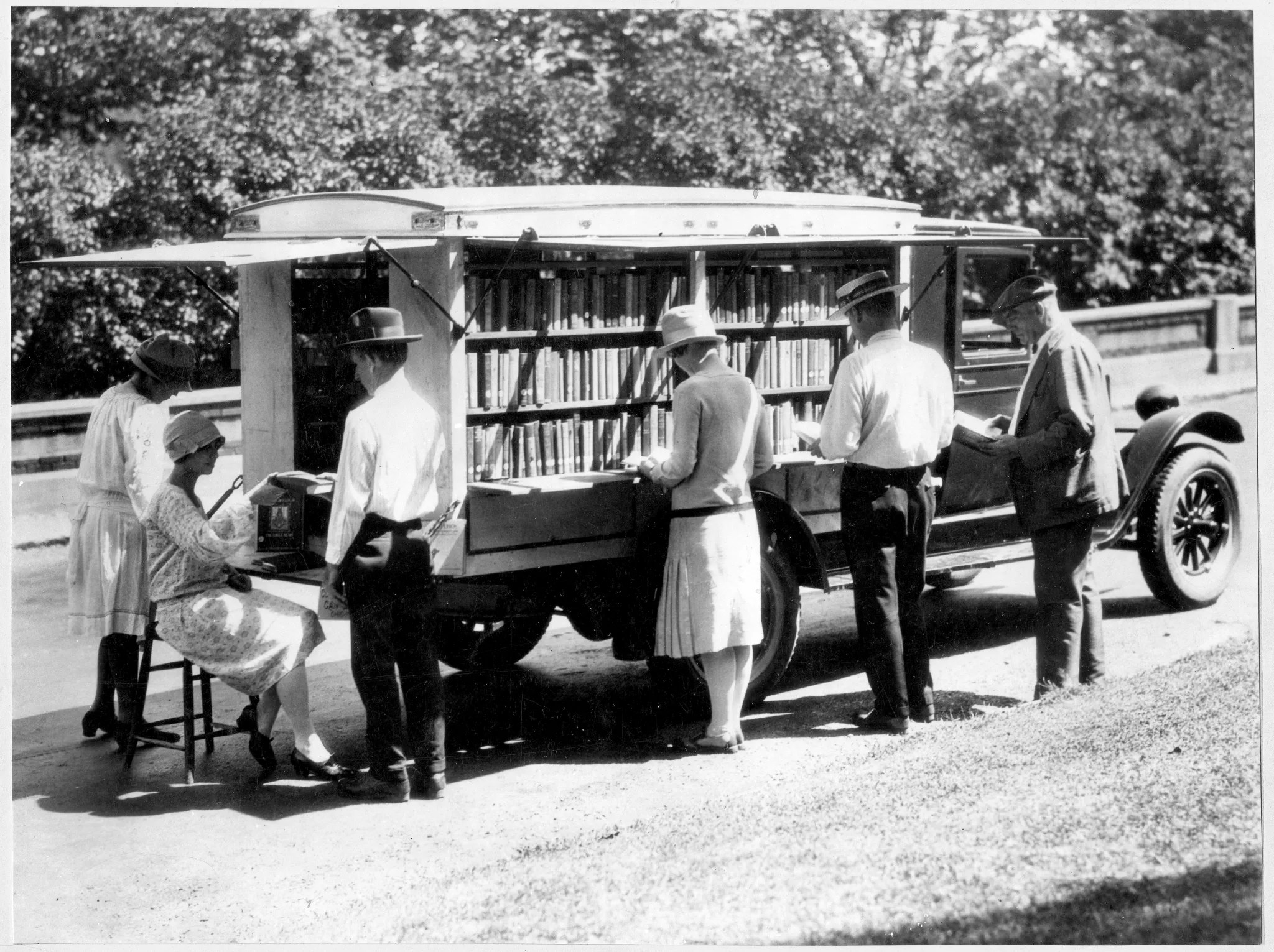
Dan Sinykin with a plea for reading– really reading…
In Sigrid Nunez’s 2018 novel The Friend, a famous writer kills himself. Not long before, he complains to the narrator about readers: “People talking about a book as if it were just another thing, like a dish, or a product like an electronic device or a pair of shoes, to be rated for customer satisfaction—that was just the goddamn trouble.” Students submit papers that say, “I hate Joyce, he’s so full of himself.” Online reviewers imply, “if a book didn’t affirm what the reader already felt—what they could identify with, what they could relate to—the author had no business writing the book at all.” The famous author quits teaching, quits writing. The state of the novel, its place in the world, is too depressing.
“But hasn’t it always been this way?” asks the narrator.
“No doubt,” says the famous writer. “But in the past the writer didn’t have to know, the problem wasn’t right there in your face.”
We know it’s been this way—or something like it—for more than a century, because that’s how long it’s been since I. A. Richards conducted his experiment. A young Cambridge professor in the 1920s, Richards printed poems with their authors redacted, sent them home with his students, and asked them to produce commentary. They did, and their commentary, from these otherwise good students, was riddled with errors. Without the context of who wrote the poems or when, the students failed to make out the plain sense. They connected poems to irrelevant memories, offered stock responses, indulged in sentimentality, and allowed preconceptions about what poetry is to skew what they saw on the page. At a time when literature professors either lectured grandly or lingered over the minutiae of history, Richards set out a new path; he wanted to provide support for “those who wish to discover for themselves what they think and feel about poetry.”
Reading, a skill easily taken for granted, is difficult—all the more so when reading literature that wields language as a medium for art. In the wake of Richards’ revelations, scholars in Britain and the United States developed a technique to address our failures. Eventually that technique took the name “close reading,” and it remains the principal methodology of literary studies.
Close reading is untimely. It bristles against today’s universities, which treat students as customers to please and as future workers to train rather than as people in pursuit of human flourishing. Jeff Bezos’ empire—Amazon; Goodreads; Kindle Direct Publishing, which dominates the perfervid world of self-publishing—encourages readers to “talk about a book as if it were just another thing, like a dish, or a product like an electronic device.” Social media compels us to attend to what we’re seeing for as long as it takes to scroll by. Every day, AI produces more of the words we come across, making it hard—maybe impossible—to care about reading them. I’m sure there were college courses this semester where students completed their work with AI and professors graded it with AI, cutting humans from the loop. It’s easy to see why close reading, which demands patience, openness to others, and slow, careful thought, is having a moment among academics.
In January, literary critic John Guillory, emeritus faculty at NYU, well known in the small world of literary studies, published a slim volume, On Close Reading, accompanied by an exhaustive annotated bibliography compiled by Rhodes College professor Scott Newstok that demonstrated that more people are writing about close reading now than ever. Jonathan Kramnick’s Criticism and Truth has garnered disproportionate attention, occasioning roundtables, special sections of journals, and many reviews. Much more, including a volume I co-edited, is forthcoming. After a spell of taking it for granted, academics are rediscovering the quiet excitement of close reading, a relief from the overheated corporate pablum routinely suffocating us.
But close reading is not just for academics, and it deserves a bigger audience. Not because it’s virtuous. Not because it makes us better people. (I know some great close readers who are real assholes.) But because it’s a thrilling way to think with others, to claw back some of the time taken from us daily by tech oligarchs (I have looked at Twitter impulsively several times while writing this pointedly long, difficult sentence), and relearn some of our capacity, atrophied into passivity by algorithms, for aesthetics, a term that arose in modernity to name a storehouse of values in dialectical opposition to those of capitalism: above all, treating texts as ends in themselves rather than as means to productive ends—treating them, that is, as art…
Rediscovering literature in these distracted times: “Close Reading Is For Everyone,” from @dan-sinnamon.bsky.social in the always illuminating @defector.com. Eminently worth reading in full.
* “To call for close reading, in fact, is to do more than insist on due attentiveness to the text. It inescapably suggests an attention to this rather than to something else: to the ‘words on the page’ rather than to the contexts which produced and surround them. It implies a limiting as well as a focusing of concern – a limiting badly needed by literary talk which would ramble comfortably from the texture of Tennyson’s language to the length of his beard. [then, after a breath] But in dispelling such anecdotal irrelevancies, ‘close reading’ also held at bay a good deal else: it encouraged the illusion that any piece of language, ‘literary’ or not, can be adequately studied or even understood in isolation. It was the beginnings of a ‘reification’ of the literary work, the treatment of it as an object in itself, which was to be triumphantly consummated in the American New Criticism.” – Terry Eagleton, Literary Theory: An Introduction [Your correspondent understands Sinykin’s plea as an altogether timely call, not to abandon context, but to the swing the pendulum back.]
###
As we pay close attention, we might send gritty birthday greetings to a man who was a master of prose the repays close reading– Samuel Dashiell Hammett; he was born on this date in 1894. Hammett worked as an agent of the Pinkerton National Detective Agency from 1915-1922, when– disillusioned by the organization’s role in strike-breaking– he left to become a writer, providing copy in an ad agency until his fiction earned enough to support him. Hammett drew for his fiction on his experiences as a “Pinkerton Man,” and created an extraordinary series of characters– Sam Spade (The Maltese Falcon), Nick and Nora Charles (The Thin Man), The Continental Op (Red Harvest and The Dain Curse)– on the way to becoming, as the New York Times called him, “the dean of the… ‘hard-boiled’ school of detective fiction.”
In his book The Simple Art of Murder, Raymond Chandler, considered by many to be Hammett’s successor, observed,
Hammett was the ace performer… He is said to have lacked heart; yet the story he himself thought the most of The Glass Key is the record of a man’s devotion to a friend. He was spare, frugal, hard-boiled, but he did over and over again what only the best writers can ever do at all. He wrote scenes that seemed never to have been written before.

You must be logged in to post a comment.