Posts Tagged ‘time’
“It is clear that there is no classification of the Universe that is not arbitrary and full of conjectures. The reason for this is very simple: we do not know what kind of thing the universe is.”*…

… Still, scientists try. Ethan Siegel on the current state of play– with special attention to whether or not our cosmic landscape is endless or not, and why the Universe is so uniform on large scales, but so non-uniform on smaller scales…
13.8 billion years ago, our Universe as we know it began with the hot Big Bang, which gave rise to a primordial soup of particles and antiparticles that led to the planets, stars, and galaxies we know today. The hot Big Bang itself was set up by a preceding phase known as cosmic inflation, but only the final tiny fraction-of-a-second gets imprinted onto our observable Universe. What we can observe about the Universe is finite, but what about the unobservable parts that lie beyond it: are they finite or infinite? What the data can tell us is limited, but here’s what we think and why…
Read on to find out: “Is the Universe finite or infinite?” from @StartsWithABang in @bigthink.
* Jorge Luis Borges, in “The Analytical Language of John Wilkins”
###
As we stargaze, we might send sunny birthday greetings to Herbert Friedman; he was born on this date in 1916. A physicist and astronomer, he made seminal contributions to the study of solar radiation. Friedman joined the Naval Research Laboratory in 1940 and developed defense-related radiation detection devices during WW II. In 1949, he obtained the first scientific proof that X rays emanate from the sun, when he directed the firing into space of a V-2 rocket carrying a detecting instrument. Through subsequent rocket astronomy, he also produced the first ultraviolet map of celestial bodies, and gathered information for the theory that stars are being continuously formed, on space radiation affecting Earth, and on the nature of gases in space. Friedman also made fundamental advances in the application of x rays to material analysis.

“Adopt the pace of nature. Her secret is patience.”*…

Further, in a way, to last Tuesday’s post, Vincent Ialenti explains how, as the treadmill of life speeds up, sublime outdoor spaces help us tap into timescales that are longer, slower, planetary…
Our experience of time is changing. For the philosopher Byung-Chul Han, the early 21st century has left us ‘whizzing without a direction’. Our world is shaped by the restless, disorienting rhythms of near-term deliverables, social media impression counts, technological obsolescence, shallow electoral cycles, rapid news cycles, frenzied culture wars, sudden stock market shifts, gig economy hustles, and occupational burnout. Though it all seems exhausting and unmanageable, the whizzing isn’t slowing: digital platforms now bombard us, minute by minute, with fragments of information that fail to cohere into meaningful narratives, and algorithms that hijack our neurochemical reward systems.
As the treadmill of post-industrial society speeds up, some of us have become so addicted to the stimulation that we struggle to imagine another way to live: psychological research shows that most people would rather receive electric shocks than sit quietly alone with their own thoughts. In his book The Scent of Time (2017), Han borrows a concept from Marcel Proust – une époche de hâte – to describe our overstimulated moment. The ‘age of haste’ has arrived. And its problems are pervasive.
When time whizzes by, individual moments blur together and we stop contemplating how each fits into broader arcs of history. We forget, Han laments, to engage in slower-moving forms of cognition such as wonder, curiosity and introspection. We forget how to reflect and be still. But what can we really do about the age of haste? For many of us, a slower, more contemplative life often feels unattainable. You may feel trapped by the directionless whizzing of the 21st century – trapped on an accelerating treadmill. Can you forge a new relationship with time?
Perhaps your first impulse is to find ways of escaping the age of haste. This is a mistake. We cannot simply break free by ‘exiting’ the world we inhabit. Confronting time requires more engagement with the wider world. This world, however, is not the one defined by near-term deliverables and neurochemically disrupting algorithms. It is the one that reveals itself when you glimpse the Milky Way on a cloudless night. It is the world that becomes clear when you gaze upon a mountain.
Encountering spectacular natural environments can cause a radical shift in how we think about ourselves and the world. According to the psychologist Dacher Keltner, feelings of awe, especially those inspired by natural scenery, can make us feel more collaborative, less egoistic, more altruistic, and more open to social connection. Over the past two decades, Keltner tested this idea through a series of experiments that examined how a person’s attitudes and behaviours change after experiencing awe-inspiring places or things. He found that natural splendour seems to put us in a headspace that lets us reflect on our short lives as ephemeral organisms dwelling on a fragile planet floating in a vast cosmos. This way of thinking can be transformative, but its power is not a recent discovery. Greco-Roman Stoic philosophers, for instance, encouraged retreats into the countryside to proactively ponder life. Venturing into breathtaking outdoor spaces seems to help us step back, slow down and, most importantly, think in the long term. I call this style of thinking ‘longstorming’ because encounters with sublime geophysical and ecological environments can invite the mind to brainstorm about our long-term futures and pasts…
…
Fortunately, you do not need to visit charismatic ecosystems, like redwood forests, to begin longstorming. Walking down any city street or a country road, you can attune to how the rocks beneath your feet have multimillion- or multibillion-year geological histories. You can attune to how the air you breathe is altered by decades of carbon emissions. You can attune to the evolutionary histories of the chirping birds or even the cells in your body. Contemplating the passage of time is, at some level, available to anyone willing and able to longstorm – to begin wondering about the longer timelines of the universe. When you return to your smartphone afterwards, you might even look differently at the device itself: less attuned to the newsfeeds and pings, and more attuned to the ancient geological histories of the elements and minerals that make it up. After all, many of the metals found in smartphones, such as gold and copper, were formed billions of years ago among distant stars.
That said, certain geophysical features (like mountain vistas or idyllic countryside), certain activities (like hiking or backpacking), and certain mental states (like awe or calm) tend to draw out more enriching temporal experiences than others. This has an unfortunate implication: opportunities to have life-transforming brushes with the deep time of our planet and cosmos are not evenly distributed across society. Not everyone is capable of leisurely neighbourhood walks, let alone treks up to mountaintop vistas. Not everyone has the resources to make such a trip, let alone the time. If we want all of society to resist the age of haste, we first need to reform its entrenched structures of poverty – temporal or otherwise.
In the age of haste, longstorming should be a necessity, not a luxury. Without a deeper attunement to planetary time, the therapies of the 21st century will deliver healing that soothes us only in the moment. The age of haste requires healing of a different kind: longer, slower, planetary…
On the essential role of nature in our lives: “Do you find the 21st century overstimulating? Try ‘longstorming’,” from @vincent_ialenti in @aeonmag. Eminently worth reading in full.
(Image above: source)
* Ralph Waldo Emerson
###
As we reground, we might send tectonic birthday slowly-accumulating birthday greetings to Émile Haug; he was born on this date in 1861. A geologist and paleontologist, he is known for his contributions to the theory of geosynclines (trenches that accumulate thousands of metres of sediment and later become crumpled and uplifted into mountain chains). From the position of the Alp he theorized that geosynclines form between stable continental platforms. He showed that geosynclinal subsidence accompanies marine regressions on the continental platform and that geosynclinal uplift accompanies marine transgressions on the continental platform. His Traité de géologie (1907-11), rapidly became an indispensable reference work. He also produced important works on the fundamentals of paleontology, stratigraphy, and tectonics.

“Nature does not hurry, yet everything is accomplished”*…

Paul Constance on a chain of dedicated scientists who are building data sets on the natural world around us, and how– coupled with emerging new nature apps that enable citizen scientists– they are expanding our ecological attention span into the long now…
Every two weeks from March to November, Chris Halsch walks a ten-mile loop near the Donner Pass, high up in California’s Sierra Nevada, for the sole purpose of counting butterflies.
It is one of five sites at various altitudes that Halsch, a PhD candidate at the University of Nevada, Reno, has been visiting with metronomic regularity for the past five years. At each one he retraces his steps, pausing every so often to jot down species and numbers in a notebook.
Along the way, he sometimes meets recreational birders or hikers who take photographs and use nature apps to identify species for fun. But unlike those random snapshots, Halsch’s notes are a coveted resource for scientists. Once he types them into a spreadsheet, each of his data points adds a new segment to a chain of observations that has been growing without interruption for half a century, in one the world’s longest-lived efforts to monitor butterfly populations. Like a relay runner, Halsch is extending a marathon of sustained attention that began 20 years before he was born.
Multi-decadal time-series of field observations are among the rarest and most valuable artifacts in ecosystem science because they help to overcome a peculiar weakness in our ability to perceive and interpret the natural world. Humans have developed powerful methods for reconstructing events in the distant past, from the birth of a galaxy to mass extinctions in the Devonian. We have built instruments that can parse the present down to the zeptosecond. But when it comes to the modest timescale of our own lifespans, we are like near-sighted moles.
Weren’t there more birds in this meadow when we were kids?
Doesn’t it seem like spring is a lot rainier than it used to be?
Are you sure it’s safe to eat fish from this river?
Our answers to these types of questions are notoriously unreliable. Think of the tendency to describe a single weather event as evidence for (or against) climate change, or the panic caused by invasive zebra mussels that, 20 years later, turns out to have been misplaced. Perceptions are distorted by selective memories, cognitive biases, political agendas and shifting baseline syndrome—the propensity of each generation to gradually forget past environmental conditions and accept present ones as normal. In an essay published in 01990, the zoologist John J. Magnuson wrote that this temporal myopia can trap us in the “invisible present,” a space where we fail to see slow changes and are unable to interpret effects that lag years behind their causes. “In the absence of the temporal context provided by long-term research, serious misjudgments can occur not only in our attempts to understand and predict change in the world around us, but also in our attempts to manage our environment,” he warned.
Magnuson was echoing a group of mid-century scientists who believed that some of the biggest questions in ecology could only be answered with field observations that were carefully structured and repeated at the same sites for at least two decades. The longer the time-series, the greater likelihood that the invisible present will “melt away,” exposing the complex and often unexpected dynamics of ecosystem change….
[Constance describes a variety of efforts underway…]
… Collectively, these efforts are widening the aperture of our ecological attention, enabling scientists to find and stitch together scattered fragments of temporal data into panoramas that tell a more illuminating story about the interactions that drive change. Unfortunately, the emerging picture is still largely focused on wealthy countries—particularly ones with long histories of field-based science. A map of the International LTER network, an association of 750 field stations that, like their U.S. counterparts, are making long-term observations, shows that more than two thirds are concentrated in Western Europe. Numerous countries in Asia, Africa and Latin America have no stations at all. Moreover, even as scientists like Moran and Grames are exploiting the new wealth of temporal evidence, it is not clear how this research will influence the wider culture, where the blinkered perceptions of the “invisible present” are still pervasive.
The trend that may ultimately overcome both of these limitations is driven, paradoxically, by smartphones. Non-scientists have long been a critical source of field labor for long time-series, most famously for the Audubon Society’s 122-year-old Christmas Bird Count, but also in hundreds of smaller projects that monitor other kinds of flora and fauna. Now, smartphones with powerful cameras and apps such as eBird, iNaturalist, Seek and Picture Insect have enabled millions of casual observers to supplement this pool of dedicated volunteers. Despite the lively debate on whether smartphone usage in the outdoors enhances or interferes with people’s appreciation of nature, one fact is clear: because nature apps automatically time-stamp, geo-reference and store each observation in a robust database, they are generating potential time-series at an unprecedented scale.
In the 20 years since the Cornell Lab of Ornithology launched eBird, the app has amassed more than one billion observations by 700,000 birders from every country in the world. Carrie Seltzer, who heads stakeholder engagement at iNaturalist, says that more than 2.4 million people have made observations on the app, at a rate that has grown between 50 percent and 100 percent per year since 02012… This torrent of raw field data vastly exceeds what even well-funded researchers could ever dream of gathering with traditional methods…
Understanding the world around us: “Peering into The Invisible Present,” from @presentbias and @longnow. Eminently worth reading in full– then browsing the other remarkable pieces available on the Long Now website.
* Lao Tzu
###
As we take the long view, we might send insightful birthday greetings to a man who encourages us to see in different ways, M. C. Escher; he was born on this date in 1898. A graphic artist inspired by mathematics, he created woodcuts, lithographs, and mezzotints, that— while largely ignored by the art world in his lifetime, have become widely celebrated. He’s been recognized as an heir to Parmigianino, Hogarth, and Piranesi.
His work features mathematical objects and operations including impossible objects, explorations of infinity, reflection, symmetry, perspective, truncated and stellated polyhedra, hyperbolic geometry, and tessellations. And though Escher believed he had no mathematical ability, he interacted with the mathematicians George Pólya, Roger Penrose, and Donald Coxeter, and the crystallographer Friedrich Haag, and conducted his own research into tessellation.
For more on (and more examples of) Escher’s work, see here.


“The greatest value of a picture is when it forces us to notice what we never expected to see”*…

The breath-takingly broadly talented Joesph Preistley left us much– not least, Alyson Foster explains, a then-new way of understanding history…
It’s a testament to the wide-ranging and unconventional nature of Joseph Priestley’s mind that no one has settled on a term to sum up exactly what he was. The eighteenth-century British polymath has been described as, among other things, a historian, a chemist, an educator, a philosopher, a theologian, and a political radical who became, for a period of time, the most despised person in England. Priestley’s many contradictions—as a rationalist Unitarian millenarian, as a mild-mannered controversialist, as a thinker who was both ahead of his time and behind it—have provided endless fodder for the historians who have debated the precise nature of his legacy and his place among his fellow Enlightenment intellectuals. But his contributions—however they are categorized—have continued to live on in subtle and surprisingly enduring ways, more than two hundred years after his death, at the age of seventy, in rural Pennsylvania.
Take, for example, A Chart of Biography, which is considered to be the first modern timeline. This unusual, and unusually beautiful, pedagogical tool, which was published by Priestley in 1765, while he was in his thirties and working as a tutor at an academy in Warrington, England, tends to get lost in the shuffle of Priestley’s more notable achievements—his seminal 1761 textbook on language, The Rudiments of English Grammar, say, or his discovery of nine gases, including oxygen, 13 years later. But the chart, along with its companion, A New Chart of History, which Priestley published four years later, has become a curious subject of interest among data visualization aficionados who have analyzed its revolutionary design in academic papers and added it to Internet lists of notable infographics. Recently, both charts have become the focus of an NEH-supported digital humanities project, Chronographics: The Time Charts of Joseph Priestley, produced by scholars at the University of Oregon.
Even those of us ignorant of (or uninterested in) infographics can look at the painstakingly detailed Chart of Biography for a moment or two and appreciate how it has become a source of fascination. The two-foot-by-three-foot, pastel-striped paper scroll—which contains the meticulously inscribed names of approximately 2,000 poets, artists, statesmen, and other famous historical figures dating back three millennia—is visually striking, combining a formal, somewhat ornate eighteenth-century aesthetic with the precise organization of a schematic. Every single one of the chart’s subjects is grouped vertically into one of six occupational categories, then plotted out chronologically along a horizonal line divided into ten-year increments. Despite the huge quantity of information it contains, it is extremely user-friendly. Any one of Priestley’s history students could run his eye across the chart and immediately gain a sense of the temporal lay of the land. Who came first: Copernicus or Newton? How many centuries separate Genghis Khan from Joan of Arc? Which artists were working during the reign of Henry VIII? The chart was a masterful blend of form and function…
The most significant design feature of Priestley’s chart—as historians point out—was the way in which he linked units of time to units of distance on the page, similar to the way a cartographer uses scale when creating a map. (The artist Pietro Lorenzetti lived two hundred years before Titian and thus is situated twice as far from Titian as Jan van Eyck, who predated Titian by about a century.) If this innovation is hard for contemporary viewers to fully appreciate, it’s probably because Priestley’s representation of time has become a convention that’s used everywhere in visual design and seems so obvious it’s now taken for granted.
To Priestley’s contemporaries, though, who were accustomed to cumbersome Eusebian-style [see here] chronological tables or the visually striking but often obscure “stream charts” created by the era’s chronographers, Priestley’s method of capturing time on the page revealed something revelatory and new—a way of seeing historical patterns and connections that would have otherwise remained hidden. “To many readers,” wrote Daniel Rosenberg and Anthony Grafton in their book, Cartographies of Time, Priestley’s Chart of Biography offered a never-before-seen “picture of time itself.”
It was no wonder, then, that eighteenth-century readers found themselves drawn to it. A Chart of Biography sold well in both England and the United States, accruing many fans along the way. Along with the New Chart of History, it would go on to be printed in at least 19 editions and spawn numerous imitations, including one by Priestley’s future friend Thomas Jefferson, who developed his own “time chart” of market seasons in Washington, and the historian David Ramsay, who acknowledged Priestley’s influence in his Historical and Biographical Chart of the United States. The time charts marked Priestley’s first major commercial success and played a key role in establishing his reputation as a serious intellectual, earning him an honorary degree from the University of Edinburgh, and helping him secure a fellowship nomination to the Royal Society of London.
As much as anything he published, and he published a staggering amount—somewhere between 150 and 200 books, articles, papers, and pamphlets—Priestley’s time charts encapsulate his uniqueness as a thinker. Of his many intellectual gifts, his gift for synthesis—for knitting together the seemingly disparate things that caught his attention—might have been his greatest…
Read on for how Priestley went on to become the most controversial man in England: “Joseph Priestley Created Revolutionary ‘Maps’ of Time,” by @alysonafoster in @humanitiesmag from @NEHgov.
More info on the Chart– and magnified views– here.
###
As we celebrate constructive charts, we might spare a thought for Edward Lorenz, a mathematician and meteorologist, best remembered as a pioneer of Chaos Theory; he died on this date in 2008. Having noticed that his computer weather simulation gave wildly different results from even tiny changes in the input data, he began investigating a phenomenon that he famously outlined in a 1963 paper— and that came to be known as the “butterfly effect,” that the flap of a butterfly’s wings could ultimately determine the weather thousands of miles away and days later… generalized in Chaos Theory to state that “slightly differing initial states can evolve into considerably different [later] states.”

“You may delay, but time will not”*…
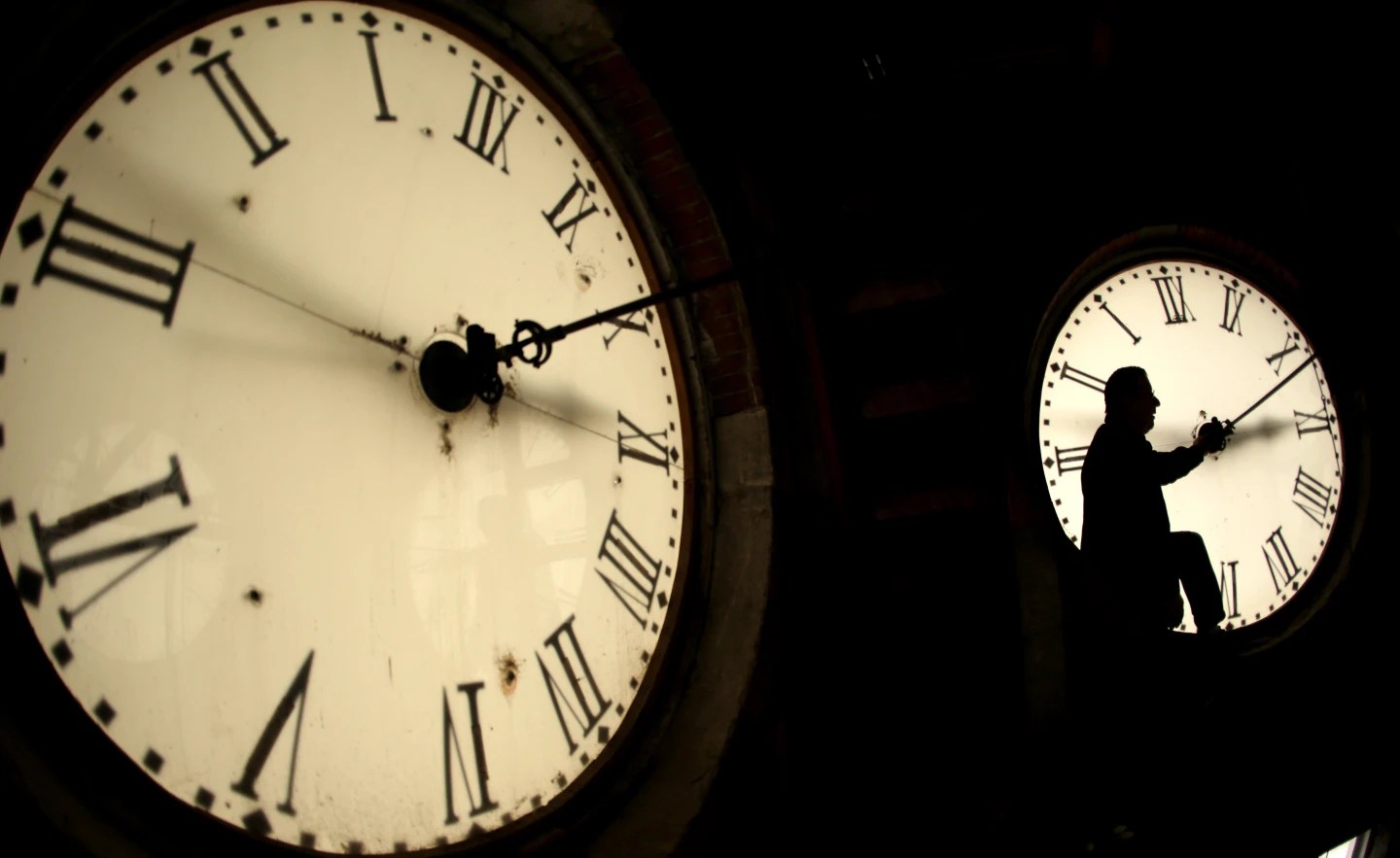
It turns out that our feeling that things are speeding up has some basis in science…
Earth’s changing spin is threatening to toy with our sense of time, clocks and computerized society in an unprecedented way — but only for a second.
For the first time in history, world timekeepers may have to consider subtracting a second from our clocks in a few years because the planet is rotating a tad faster than it used to. Clocks may have to skip a second — called a “negative leap second” — around 2029, a study in the journal Nature said Wednesday.
“This is an unprecedented situation and a big deal,” said study lead author Duncan Agnew, a geophysicist at the Scripps Institution of Oceanography at the University of California, San Diego. “It’s not a huge change in the Earth’s rotation that’s going to lead to some catastrophe or anything, but it is something notable. It’s yet another indication that we’re in a very unusual time.”
Ice melting at both of Earth’s poles has been counteracting the planet’s burst of speed and is likely to have delayed this global second of reckoning by about three years, Agnew said.
“We are headed toward a negative leap second,” said Dennis McCarthy, retired director of time for the U.S. Naval Observatory who wasn’t part of the study. “It’s a matter of when.”…
The full story: “A faster spinning Earth may cause timekeepers to subtract a second from world clocks,” from @AP.
For (even) more on leap seconds on their history, see “Will We Have a Negative Leap Second?“, by Demetrios Matsakis (also a retired director of time for the U.S. Naval Observatory).
See also: “Climate change is altering Earth’s rotation enough to mess with our clocks” (gift article): “in that one second, the Earth rotated about four football fields”
* Benjamin Franklin
###
As we muse on measurement, we might send carefully-observed birthday greetings to Sir Harold Spencer Jones; he was born on this date in 1890. An astronomer (indeed, for 23 years the tenth Astronomer Royal), he specialized in positional astronomy, particularly the motion and orientation of the Earth in space… a focus that helped him contribute to knowledge of the Earth’s rotation and improved timekeeping– efforts that led to Spencer Jones’ election (in 1947) as the first President of the Royal Institute of Navigation (which, In 1951, named its highest award, the Gold Medal, in his honor).

You must be logged in to post a comment.