How do AI models “understand” and represent reality? Is the inside of a vision model at all like a language model? As Ben Brubaker reports, researchers argue that as the models grow more powerful, they may be converging toward a singular “Platonic” way to represent the world…
Read a story about dogs, and you may remember it the next time you see one bounding through a park. That’s only possible because you have a unified concept of “dog” that isn’t tied to words or images alone. Bulldog or border collie, barking or getting its belly rubbed, a dog can be many things while still remaining a dog.
Artificial intelligence systems aren’t always so lucky. These systems learn by ingesting vast troves of data in a process called training. Often, that data is all of the same type — text for language models, images for computer vision systems, and more exotic kinds of data for systems designed to predict the odor of molecules or the structure of proteins. So to what extent do language models and vision models have a shared understanding of dogs?
Researchers investigate such questions by peering inside AI systems and studying how they represent scenes and sentences. A growing body of research has found that different AI models can develop similar representations, even if they’re trained using different datasets or entirely different data types. What’s more, a few studies have suggested that those representations are growing more similar as models grow more capable. In a 2024 paper, four AI researchers at the Massachusetts Institute of Technology argued that these hints of convergence are no fluke. Their idea, dubbed the Platonic representation hypothesis, has inspired a lively debate among researchers and a slewoffollow-upwork.
The team’s hypothesis gets its name from a 2,400-year-old allegory by the Greek philosopher Plato. In it, prisoners trapped inside a cave perceive the world only through shadows cast by outside objects. Plato maintained that we’re all like those unfortunate prisoners. The objects we encounter in everyday life, in his view, are pale shadows of ideal “forms” that reside in some transcendent realm beyond the reach of the senses.
The Platonic representation hypothesis is less abstract. In this version of the metaphor, what’s outside the cave is the real world, and it casts machine-readable shadows in the form of streams of data. AI models are the prisoners. The MIT team’s claim is that very different models, exposed only to the data streams, are beginning to converge on a shared “Platonic representation” of the world behind the data.
“Why do the language model and the vision model align? Because they’re both shadows of the same world,” said Phillip Isola, the senior author of the paper.
Not everyone is convinced. One of the main points of contention involves which representations to focus on. You can’t inspect a language model’s internal representation of every conceivable sentence, or a vision model’s representation of every image. So how do you decide which ones are, well, representative? Where do you look for the representations, and how do you compare them across very different models? It’s unlikely that researchers will reach a consensus on the Platonic representation hypothesis anytime soon, but that doesn’t bother Isola.
“Half the community says this is obvious, and the other half says this is obviously wrong,” he said. “We were happy with that response.”…
As we interrogate ideas and Ideas, we might recall that it was on this date that the fictional HAL 9000 computer became operational, according to Arthur C. Clarke’s 2001: A Space Odyssey., in which the artificially-intelligent computer states: “I am a HAL 9000 computer, Production Number 3. I became operational at the HAL Plant in Urbana, Illinois, on January 12, 1997.” (Kubrik’s 1968 movie adaptation put his birthdate in 1992.)
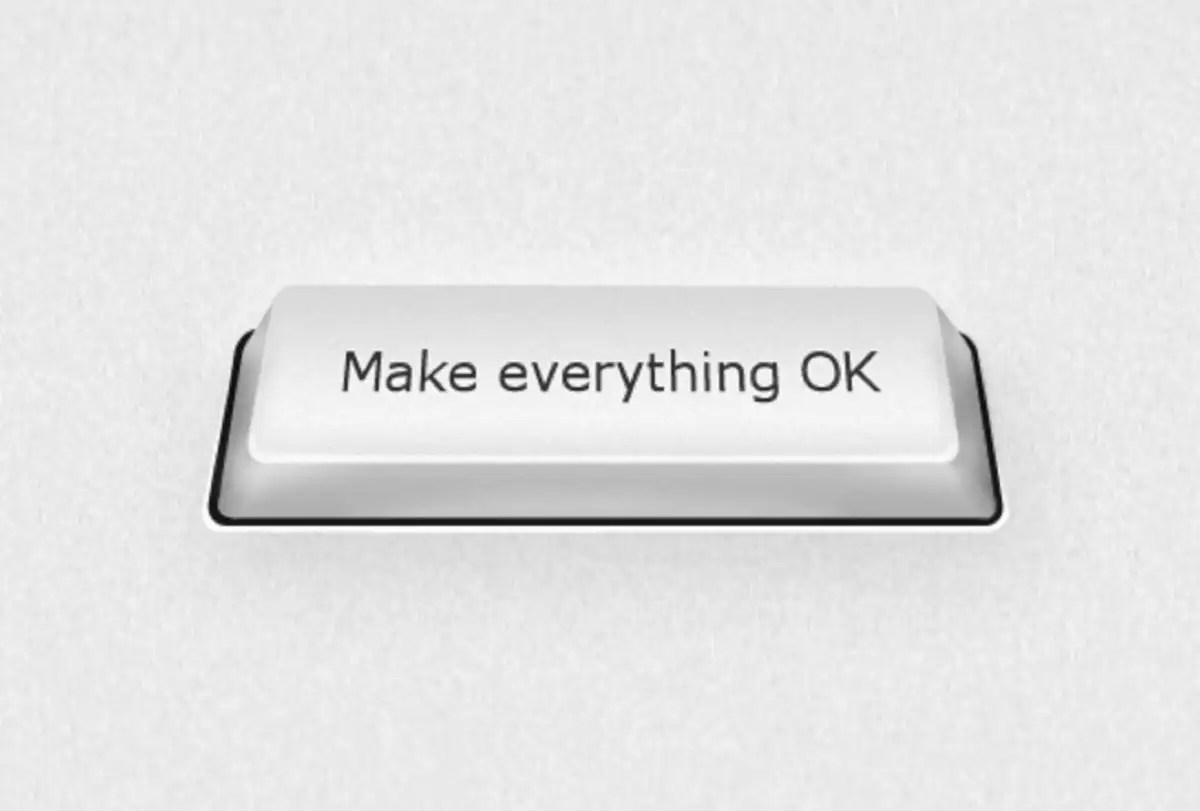
The “Make Everything OK” button is a website containing nothing but a single button. Press it, and after a moment of processing, you’re informed: “Everything is OK now. If everything is still not OK, try checking your settings of perception of objective reality.”…
As we press and press again, we might recall that on this date in 1949, after two days in which a few flakes fell, Los Angeles “enjoyed” a real snow fall (the first that anyone can recall).
Snow at Jet Propulsion Laboratory, La Cañada Flintridge, January 1949. Photo courtesy of NASA/JPL Archive. (As this post is being written, JPL– a leading center of study of the science of wildfires– has been evacuated due to the encroaching Eaton fire.)
Often called “the seeds of technology,” rare earths are a group 17 metallic elements (the 15 lanthanides plus scandium and yttrium) with unique magnetic, optical, and catalytic properties vital for electronics, defense, chemical processing, petroleum refining, and green energy.
China’s dominance over rare earth elements creates an unprecedented vulnerability in global supply chains that extends far beyond the relatively modest $6 billion market size. The risk of disruption in supply of rare earths has become a critical concern as the nation controls 69% of worldwide mining operations, 92% of refining capacity, and a staggering 98% of permanent magnet production, according to Goldman Sachs analysis from October 2025.
This concentration represents one of the most significant single points of failure in modern industrial infrastructure. Furthermore, the rare earth reserves distribution globally shows heavy concentration in geologically limited regions, making supply diversification extremely challenging.
The economic implications of this dominance become clear when considering potential disruption scenarios. Goldman Sachs warns that even a 10% disruption in industries reliant on rare earth elements could trigger $150 billion in lost economic output, alongside inflationary pressures cascading through multiple sectors. Despite rare earth markets being 33 times smaller than copper markets, their strategic importance creates disproportionate systemic risk…
Farrell Gregory explains why they figure so prominently in so much discussion of the global economy and of U.S.- China relations and what we might expect…
Over the course of the last year, we’ve seen China suspend rare earth exports twice, generating a short-lived round of public interest and short-lived “expertise” in America. Each crisis followed a similar progression: an aggrieved China introduces export licensing, effectively suspending US access to certain rare earth elements and downstream products. The American public is subjected to alternating shouts of panic and confident assertions that ‘rare’ is a misnomer and the necessary elements are actually abundant in the Earth’s crust. After a period of confrontation, and likely following concessions on both sides, access is reestablished before too much harm is done.
Examining the differences in each crisis is less important than establishing what is quickly becoming a pattern: China is increasingly willing and able to use its dominance in rare earths as leverage against the U.S. It’s worth noting what a change this is from even five years ago: during the entirety of the 2019-2020 U.S.-China trade war, Beijing never introduced export controls for rare earths, despite making threats to do so. Now China assesses its position differently — they’ve accumulated leverage and they’re willing to use it with increasing frequency.
This frequency might be in part because China’s dominant position in rare earths is a time bomb for both sides. The PRC likely wants to use its REE dominance to extract further concessions before the U.S. manages to defuse this dominance with some combination of reshoring and tech advances.
I think it’s a matter of when — not whether — China decides to activate its standing export control infrastructure. They’ve built up leverage, and over time, that leverage will dissipate. In the near-term future, throttling rare earth and magnet exports is still an effective threat to employ in trade disputes with the U.S. In the medium term, successful reshoring and reliance-decreasing efforts will diminish what concessions China can extract from the U.S.
So, expect the rare earth crisis cycle to play out again. When it does, here are a few clarifications on rare earths that may prove helpful for avoiding the most common misperceptions…
As we ponder paucity, we might recall that it was on this date in 1839 that the British East India Company [see here and here] established the Assam Tea Company and began the commercial production of tea (grown from slips furtively exported from China) in the region. Beginning in the 1850s, the tea industry rapidly expanded, consuming vast tracts of land for tea plantations. By the turn of the century, Assam became the leading tea-producing region in the world. That growth and innovations in tea preparation caused the price of tea to drop and demand to grow. Soon, London became the center of the international tea trade.
Don Moynihan argues that here has been a shift in the character– the instincts, the motivations, and thus the patterns of decision and action– of our government…
One of the strangest moments to emerge from the U.S. kidnapping of Nicolás Maduro was the flurry of images posted by President Trump on Truth Social. It felt a bit like a student who can’t decide which spring break photos look cutest, so they just upload them all.
The intent seemed to be to create an iconic image reminiscent of the White House Situation Room during the raid that killed Osama bin Laden—a gathering of stoic men (no girls allowed!) staring grimly at some unseen screen. The message: “Look how serious and important our work is!” Yet, the staged nature of these photos undermines that effect, leaving the whole scene feeling less like history in the making and more like an amateur theater production of a Broadway classic.
In one image, the Director of the CIA, the Chair of the Joint Chiefs of Staff, and the Secretary of Defense are grouped around a laptop. Behind them, unmistakably, a screen displays a feed from X—complete with a prominent yellow emoji. In other pictures, “Venezuela” appears to be in the search box.
With the best intelligence systems in the world at their fingertips, they were checking X in the midst of the mission? Combined with the curtains separating some section of Mar‑A‑Lago from the rest of the President’s resort, the images create an almost surreal air. It felt as if a group of twelve-year-old boys in a basement had been handed control of the most lethal military in history—and were using it to boost their online brands.
Trump is undoubtedly the American president who has most effectively wielded social media: drawing attention, reshaping norms, and fueling conspiracy theories. The successful use of social media, for example, turned avowed MAGA isolationists into enthusiastic colonial imperialists overnight.
But I want to suggest that what we are witnessing from the Trump administration is not just skillful manipulation of social media—it’s something more profoundly worrying. Today, we live in a clicktatorship, ruled by a LOLviathan. Our algothracy is governed by poster brains.
It’s worth remembering that social media operates like a drug, feeding us dopamine and rewiring our brains’ reward pathways. The fundamentally unhealthy dynamics are worsened by the fact that standing out online often demands being awful—channeling negative emotions like anger and outrage, usually based on misinformation or conspiracy theories.
None of this is new. Indeed, there is a booming political science literature on the effects of social media on voter behavior. Chris Hayes and others have written persuasively about the how toxic attention farming is for us personally and for our democracy. But I want to make the case that we should also consider how social media it is affecting how policymakers use public power.
What I’m arguing is that the Trump administration isn’t just using social media to shape a narrative. Many of its members are deeply addicted to it. We would be concerned if a senior government official was an alcoholic or drug addict, knowing it could impair judgment and decisionmaking. But we should be equally concerned about Pete Hegseth and Elon Musk’s social media compulsions—just as much as their alcohol or ketamine use, respectively.
Overexposure to online engagement has cooked the brains of some of the most powerful people in the world. This is not exclusively an American phenomenon. President Yoon Suk Yeol seemed to have genuinely believed online conspiracy theories about election fraud, motivating his declaration of martial law and triggering a constitutional crisis, and his eventual arrest, in Korea.
But in the US government, poster brain feels endemic. The Trump administration is made up of a cabinet of posters. For many, that’s how they won Trump’s attention. The head of the FBI, for example, is a podcaster—that’s his main qualifier for the job.
They view the world through a social media lens in a way that is plausibly corrupting their judgment and undermining their performance. Lets think through how poster brain can affect how people in government operate…
[Moynihan explores, with illustrative examples, online bubbles, conflicts between professional and online indentities, the degradation of professional norms and work practices, and the altering of decision-making to be responsive to social media– to create content]
I’m just scratching the surface here. Pick any federal agency, and you can find examples of poster brains making important decisions. This trend is likely to only get worse as digital natives enter key government roles. And there are likely a host of other ways these patterns are undermining the professional behavior of people in government that I have not identified. In particular, the Trump administration represents the intersection of poster brain, personalism, and authoritarianism that seems especially toxic…
… The bottom line is that it we need to take more seriously how social media has rewired the brains—and behavior—of those running our country.
You’ve probably seen a variation of this news on social media over the past few days: MTV officially shut down on New Year’s Eve, ending their final broadcast the same way the network started: With the clip “Video Killed the Radio Star” by The Buggles.
But those posts are misinformed. It’s New Year’s Day 2026, and MTV is still around. Granted, today the channel is playing a marathon of “The Big Bang Theory” sitcom repeats, so your interpretation of “MTV is still around” may vary…
Indeed, the reality shows and network re-runs are still flowing. But the new owners of MTV’s parent, Paramount Global, did end its dedicated, 24/7 music channels (like MTV Music, MTV 80s, MTV 90s) at the close of 2025 across most international markets, effectively ceding the video music turf to YouTube.
So it’s a propitious moment to pause and reflect on the legacy, the impact of MTV…
… MTV, the Music Television that launched a thousand careers and redefined a generation, is finally shutting down [as a music channel]. It’s bittersweet to see it go, but it’s also a perfect moment to reflect on just how profoundly this channel, born in a blaze of sound and vision, altered the landscape of music, media, and even society itself.
It’s hard to imagine now, but before August 1, 1981, music was primarily an auditory experience. You listened to it on the radio, on records, or at concerts. The idea of a 24-hour channel dedicated solely to music videos was revolutionary, a gamble by Warner-Amex Satellite Entertainment. They saw the burgeoning popularity of music videos, then mostly promotional tools for artists, and envisioned a dedicated platform. The very first video ever played, fittingly, was “Video Killed the Radio Star” by The Buggles – a prophetic title if there ever was one.
MTV’s early days were a chaotic, vibrant mix of rock, pop, and new wave, with VJs (video jockeys) becoming household names. It was raw, experimental, and deeply intertwined with the youth culture of the 80s. But what started as a niche cable channel quickly exploded into a global phenomenon, forever altering how we consumed and understood music. So, as we bid adieu, let’s explore ten ways MTV truly changed everything…




You must be logged in to post a comment.