Posts Tagged ‘sociology’
“Power tends to corrupt, and absolute power corrupts absolutely”*…
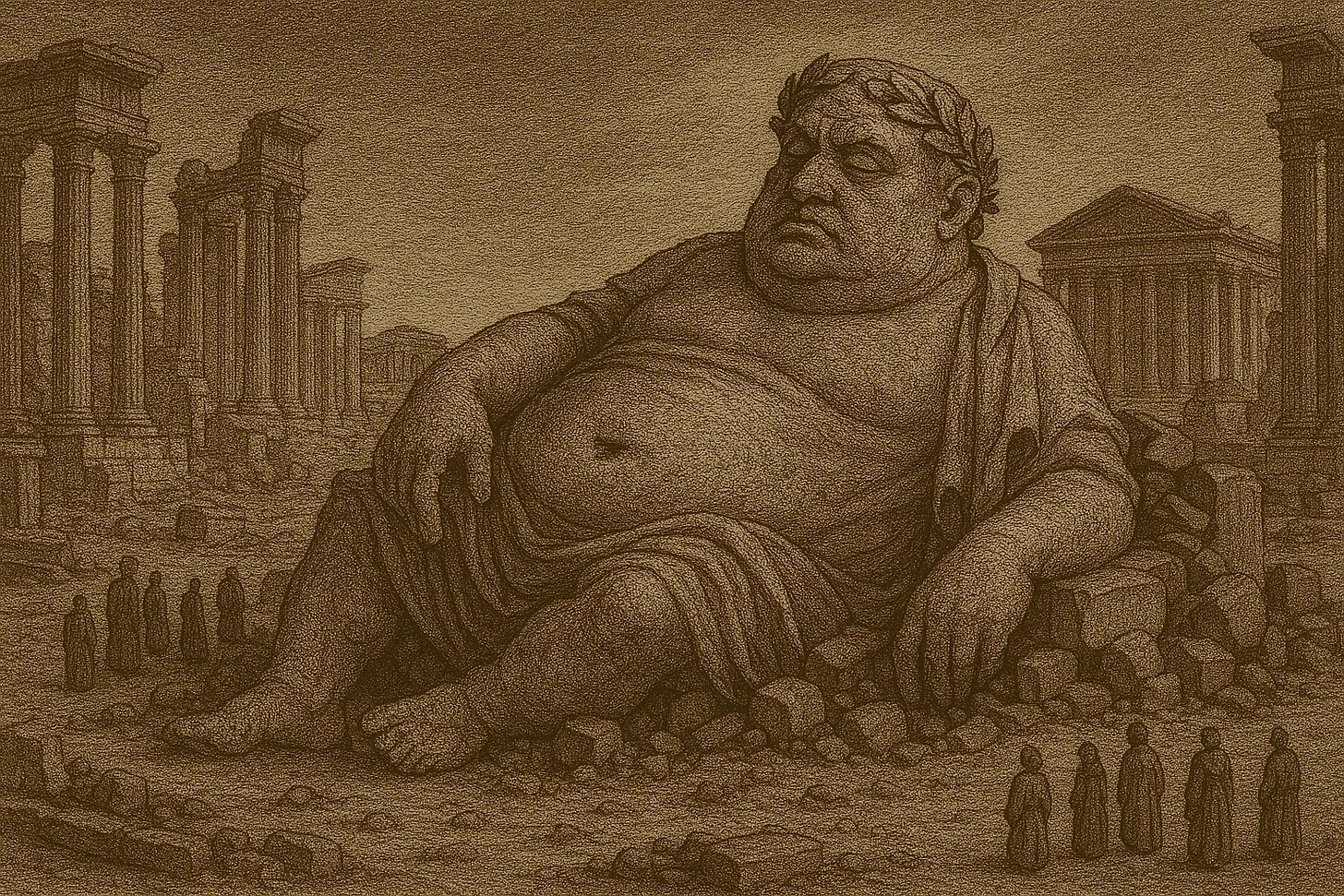
The estimable Henry Farrell has re-posted a (slightly revised) piece that was sub-linked in an early (R)D– a compelling argument that “we need, right at the moment, to think very clearly about how power is won or lost”…
… The current U.S. president is looking to seize power that he clearly is not entitled to under the law and the constitution, and that will usher through some kind of regime change if he succeeds. Many people are trying to resist. What are Trump’s strengths and weaknesses? What are the strengths and weaknesses of those who want to oppose him?
There’s a simple account of power that I think is useful here. It is developed in this paper by the late Russell Hardin, but really descends from David Hume’s understanding of politics.
The fundamental argument is this: that power in modern societies depends on social coordination. That is just as true of aspiring authoritarians like Trump as of the people who want to mobilize against him. As Hume says (quoted in Hardin):
No man would have any reason to fear the fury of a tyrant, if he had no authority over any but from fear; since, as a single man, his bodily force can reach but a small way, and all the farther power he possesses must be founded either on our own opinion, or on the presumed opinion of others.
Those who want to win power can only do so by persuading others. All tyrants must worry that their grip on power rests on such opinion. Hardin:
As a contemporary lawyer puts this argument: “No state could possibly compel people to obey all these rules at gunpoint; there would not be enough soldiers and policemen to hold the guns (a sort of Orwellian vision of society), they would have to sleep sooner or later, and then anarchy might break out.”
Equally, even if the people might overwhelm the tyrant if they ever joined together, it is very hard for them to organize against him, especially in a fully developed authoritarian state.
That is why authoritarian rulers devote a lot of time to preventing unrest from breaking out. Their best strategy for survival is to actually be popular. But that is hard to keep up. Acceptable substitutes include preventing people from discovering how unpopular the regime is, controlling media (to prevent coordination), and deploying the threat of physical violence to intimidate.
The problem with all of these strategies is that the ruler can do none of it on their own. Even the threat of violence, when looked at closely, requires some degree of willing coordination among the soldiers and policemen. That is why dictators are so careful about how they treat their armed forces. Authoritarians need to worry about the masses, but even more about their own coalitions.
More generally: struggles for power are struggles over the means of coordination. Who is capable of coordinating better, wins. And want-to-be authoritarians and mass publics face different coordination problems.
If you are an aspiring authoritarian, your strategy is to persuade others that they need to be part of your coalition. Hardin (this time on Adam Smith):
In a competitive world of pastoralists, one benefits best from association with the most powerful tribe. Hence, if someone rises to capable leadership with [sic] a tribe, others will be attracted to join with it. The result eventually will be remarkable power in the control of the leader of the tribe. Combination for the sake of survival then makes it possible not merely to survive but to thrive and even to plunder.
In more modern circumstances, your best strategy as an aspiring tyrant is likely to convince others (a) that they do live in a society of competing groups, and (b) that the smart money will always be on joining the dominant group, and not being one of the dominated ones.
Hardin continues:
This is essentially an argument from coordination. We coalesce because it is individually in our interest to do so as long as others do so as well. What we need to guide is in coalescing with others is merely the evidence of sufficient leadership and sufficient members to make our joining them clearly beneficial.
That, however, isn’t quite right. The authoritarian who wants to build a ruling coalition needs not only to make her success seem like a fait accompli. She also needs to persuade others that they will prosper rather than suffer from joining. The aspiring authoritarian needs to persuade allies that she (and they) will predate on outgroups, and that she will not predate on the allies themselves.
That process of persuasion becomes more difficult, the more unbounded the ambitions of the wannabe authoritarian are (I lay out a version of this argument here, in a paper that began from a conversation with Hardin and Margaret Levi a quarter of a century ago). The more powerful and unruly the authoritarian becomes, the more readily they can make promises or threats. Equally, the less credible those promises or threats become, both to allies and to enemies.
Absolute power implies absolute impunity: if I enjoy such power, I have no incentive to behave trustworthily to anyone. For just the same reason, no-one has any incentive to trust me. You will not believe my promises, and you may fear that if you give in to my threats, you will only open yourself to further abuse. Thus – as I, as an aspiring authoritarian move closer to unbounded control, I need to artfully balance the benefits that my power can bring to my allies with the fear those allies may reasonably have over what happens should that power be turned against them.
The problem faced by mass publics is different. For all the language about the ‘tyranny of the masses,’ they find it difficult to coordinate on rewarding friends and punishing enemies. That makes them less likely to go bad, at least in the way that tyrants can go bad. But it also makes it more difficult for them to coordinate against incipient tyranny, even when they know that everyone would be better off if they did.
On the one hand, under some circumstances, the costs of action may be quite low. If protest is cheap, then protestors are playing a nearly pure coordination game, where everyone will resist if they reasonably assume that everyone else will resist too. Hardin:
coordination may so greatly reduce costs that the latter are almost negligible, so that the slightest moral commitment may tip the scales toward action. Just as it would be odd for many Americans in communities in which voting is easy to balk at the minor cost in inconvenience, so it might seem odd for many workers or soldiers or others to balk at joining a crowd to march on the palace or the Bastille. This is not identical to a multiple coordination problem, such as that in the driving convention, in which one simply wants to go with the majority. In the revolutionary coordination, one has an active preference between the outcome of full attack and that of no attack. Still, one prefers to attack if enough others do and not to attack if enough others do not.
On the other, rulers and aspiring rulers can recognize this risk and counter-attack.
It was perhaps the startling ease with which spontaneous revolutions took control in cities that led the French under Thiers to put down the Paris Commune with such thoroughgoing brutality as to make it seem more nearly like murder than warfare. The answer to the coordination explanation of revolutionary action is draconian force. This lesson of the Commune has been learned well by many later regimes and leaders in various places, such as the Nazis in Czechoslovakia, Stalin in the Soviet Union, Pinochet in Chile, and Videla in Argentina, with their harsh, blanket suppression of dissenters and potential dissenters. They raise the likely costs of revolutionary activity enough to change its structure. … If the old state raises the costs enough to individuals for revolutionary activity, it overcomes the power of coordination to reduce the costs of revolutionary activity. It forces potential revolutionaries to see their problem overwhelmingly as a prisoner’s dilemma in which free-riding is in the individuals’ interest.
This helps explain some of the actions of Trump and those around him. Their approach to both universities and law firms has been to make simple coordination seem like a prisoner’s dilemma, by picking off opponents, one by one, and by trying to create a common understanding that collective resistance is useless, since your potential allies are likely to defect. The early decision of one extremely prominent law firm, Paul Weiss, to defect, shaped common expectations so that several others rushed immediately to defect too, for fear that they would be stranded amidst the dominated group, rather than joining the dominating coalition in a subordinated role.
To bring the different strands of the argument together, Trump’s strategy has been much less effective than it might have been. Trump has shown he is unwilling to stick by deals. Law firms that have submitted find that they are on the hook for far more than they bargained for. Columbia University, after making humiliating and profound concessions, finds that it is expected to make far greater ones, with no guarantee that even these will satisfy the Trump administration’s demands
As a whole body of research on “tying the king’s hands” argues, independent actors will prefer to flee monarchs who refuse to be bound rather than to cooperate with them, because they know that such monarchs can’t be trusted. Any deal that they make can later be un-made, and probably will be, if unmaking it is to the king’s advantage. The best option may be not to submit, especially if you believe that others are similarly unwilling to comply. This may, in effect, turn what was a prisoner’s dilemma (in which everyone’s best strategy is to defect) back into a nearly pure coordination game again, allowing easier collective resistance.
Or, it may not. If people don’t have reason to believe that others will stand up, then they still are unlikely to stand up themselves.
This then, gives us a simplified but useful understanding of where we are right now. The good news is that the Trump administration is playing its hand very badly. If Trump had been more willing to accept defectors into his camp, by sticking to deals that gave them something worth having, he would be in a much stronger situation than he is at the moment. Furthermore, and somewhat less obviously, this may also disrupt his own existing coalition. Wall Street, for example, may worry that it is next for the chopping block. Silicon Valley the same.
The bad news is that the opposition is much more disorganized than it ought to be. Coordination is bolstered by shared knowledge that others will coordinate too. We don’t have that, in part because of lack of leadership, in part because of a media landscape that makes it difficult to generate such shared knowledge. Remember Hume’s phrase about the “presumed opinion of others.” Our presumptions about what other people think can play an extraordinarily powerful role in shaping how we ourselves think, and what we are prepared to do. And in a country where such presumptions can be grossly skewed, it can be very hard to generate coordinated action. Finally, exactly because the opposition is disorganized, and because humans are human, it faces its own collective version of Trump’s temptation to humiliate and subjugate defectors from the other side, rather than welcoming them in.
The strategic implications for what to do are not surprising. Leadership is crucial. It is really, really hard to make a coalition cohere if the plausible leaders abdicate. More generally, figure out how to generate common knowledge that will enable coordination. Protests – especially if they are widespread, and especially if they happen in unusual places, or involve surprising coalitions can help generate information cascades. But getting media coverage and broader conversation is important.
Welcome in the strayed sheep, and work on widening the cracks in the other coalition. Leopard-face-eating memes may feel personally satisfying, but they usually do not ease the process of converting disillusioned opponents into active allies. As Adam Przeworski says, the Polish coalition to push back against the populists only succeeded when people who were ferociously divided over a moral issue agreed to make common cause.
Crucially, the parties forming the alliance agreed not to confront the major issue that divided them: abortion. They agreed that defending democracy was more important than whatever values divided them, and that conflicts over abortion would be managed once victory over PiS was secured. Hence, both the opponents and the supporters of the freedom of choice could promise their respective electorates that they would promote their values if democracy was restored, while claiming that the immediate task was to restore it.
If power involves coordination, coordinate! Help build your coalition as far as it can go. Do everything you can to minimize defections from it, and to maximize defections from the other side. Take advantage of the opposition’s vulnerabilities and mistakes – especially the trust problems that are likely to flourish in a coalition around an actor who aspires to untrammeled power and is deeply untrustworthy.. Assume that the other side is trying to attack your own vulnerabilities, and mitigate as much as possible. And do what you can now; things are likely to get much harder, very quickly, if the opposition’s victory becomes a self-confirming expectation…
The respective vulnerabilities of tyrants and crowds: “Absolute power can be a terrible weakness,” from @himself.bsky.social.
Pair with: “Power always reveals.”
And apposite: “Two scholars ask whether democracy can survive if AI does all the jobs,” gift article from The Economist.
###
As we get it together, we might recall that it was on this date in 1962 that Bob Dylan appeared for the first time at Carnegie Hall in New York City as part of a hootenanny which included his first public performance of “A Hard Rain’s a-Gonna Fall.”
“The first principle is that you must not fool yourself – and you are the easiest person to fool”*…

We live in a time when a growing number of “authorities” in the U.S. and around the world are actively trading fact for convenient fiction. Science is under attack; there’s (all-too-grounded) concern that we may be headed into a new “Dark Age.”
C. Brandon Ogbunu pushes back, arguing that science– and more particularly, the emerging research field of metascience, a form of scientific self-examination– is essential for navigating our uncertain future…
On May 24, Vice President J.D. Vance authored a post on X that highlighted a “reproducibility crisis” in the sciences. Vance offered this amid a series of other critiques of higher education to justify the withholding of federal science funding to universities over the past several months. His post was timed to accompany a White House executive order that invoked the language of open science to introduce sweeping changes to our federal scientific infrastructure. It came just weeks after the release of plans to cut science funding in the 2026 fiscal year budget.
The playbook is standard: Fuse an aggressive political agenda to a more palatable set of criticisms. In this case, many agree that processes within professional science have, for decades, had significant flaws. In my view, politicians in power are using this as a justification to burn it down. And outside of a few higher-education legal efforts to fight back, the scientific community remains shell-shocked, unable to gather the momentum to resist effectively.
But in addition to resisting the changes, there might be other ways that we can navigate an uncertain future. In recent years, a field called “metascience” (often referred to as “the science of science”) has emerged, charged with understanding the processes of science, how it operates, and identifying themes in what is produced. I argue that this area is going to be essential moving forward in stormy times, as it can dispel the myth that science is an ideological leviathan incapable of self-reflection and can help us rebuild science into a craft that interrogates its fragilities.
As described in a 2018 review, the science of science “is based on a transdisciplinary approach that uses large data sets to study the mechanisms underlying the doing of science—from the choice of a research problem to career trajectories and progress within a field.” It asks questions about aspects of the scientific enterprise, including employment, publishing trends, economic incentives, merit, and other forces that influence science in ways that may escape our intuition…
[Ogbunu explains metascience, and explores examples of work-to-date and questions like: Who is doing science? What are their incentives (and how do they shape behavior)? How innovative is science? He reminds us that “metascientists” are following in the footsteps of humanists and social scientists (Bruno Latour, for example) have examined science practice for many decades…]
… metascience offers a lens that is especially important at this critical moment. Support for science in the face of attacks is critical and necessary. But ironically, one of the best ways to defend the craft might be for scientists to identify the fragilities before the enemy does. We can use data and models, not solely our op-ed voices and social media timelines (though all can be useful). The field is already disabusing us of the notion that science as practiced is based on defensible incentives, neutrality of any kind, or merit, however defined.
Instead, it operates on what looks more like a runaway Matthew Effect, whereby the most established scientists benefit disproportionately from the system of reward — and thus the rich get richer. And the problem isn’t that the flaws exist, but that science’s practitioners aren’t interested in a critical lens towards them.
Metascience won’t fix our problems, but it formalizes ways that we can use to reflect, which may implore us to change science for the better…
Physicians (and other scientists) healing themselves: “Metascience Is More Important Now Than Ever,” from @cbo.bsky.social in @undark.org.
###
As we commit to comprehension, we might send insightful birthday greetings to a forefather of metascience, Charles Sanders Peirce; he was born on this date in 1839. A scientist, mathematician, logician, and philosopher, he was (per philosopher Paul Weiss) “the most original and versatile of America’s philosophers and America’s greatest logician”. Bertrand Russell wrote “he was one of the most original minds of the later nineteenth century and certainly the greatest American thinker ever.” He is considered by many to be “the father of pragmatism“; he helped formalize the field of statistics; and his contributions logic were foundational– helping to found semiotics (the study of signs).
For Peirce, logic encompassed much of what is now called epistemology and the philosophy of science. Peirce approached science as a practice, defining the concept of abductive reasoning to explain scientific advance, as well as rigorously formulating mathematical induction and deductive reasoning.

“The duty of a good Cuisinier is to transmit to the next generation everything he has learned and experienced.”*…

Five years ago, we marked the passage of Lynn Olver, a reference librarian who pretty much single-handedly created and maintained The Food Timeline: history of human eating habits for 20,000 years. Worried that her life’s work might lie fallow and spoil, her family was searching for a new host.
Happily, one was found. Later in 2020, Virginia Tech University Libraries and the College of Liberal Arts and Human Sciences (CLAHS) offered Virginia Tech as a new home for the physical book collection and the web resource– and the site lives on…
Ever wonder how the ancient Romans fed their armies? What the pioneers cooked along the Oregon Trail? Who invented the potato chip…and why? So do we!!! Food history presents a fascinating buffet of popular lore and contradictory facts. Some experts say it’s impossible to express this topic in exact timeline format. They are correct. Most foods are not invented; they evolve…
Dive into “The Food Timeline,” courtesy of @vtliberalarts.bsky.social.
See also (the source of the almanac entry below) chef James T. Ehler‘s marvelous FoodReference.com– “on this date” history and more.
(Image above: source)
###
As we dig in, we might send healthy birthday greetings to Gilbert Blane; he was born on this date in 1749. A Scottish physician who served on the Sick and Wounded Board of the Admiralty, he instituted health reform in the Royal Navy. Perhaps most memorably, he was largely responsible for requiring citrus juice (lemons, later limes) on all naval vessel to prevent scurvy.

“Whoever wishes to foresee the future must consult the past; for human events ever resemble those of preceding times”*…

In times like these, perspective is at a premium. Here, Derek Thompson on what we might learn from our not-so-terribly-distant past…
When we hear about technological change and social crisis in the 21st century, it is easy to imagine that we are living through a special period of history. But many eras have grappled with the problems that seem to uniquely plague our own. The beginning of the 20th century was a period of speed and technological splendor (the automobile! the airplane! the bicycle!), shattered nerves, mass anxiety, and a widespread sense that the world had been forever knocked off its historical axis: a familiar stew of ideas. I think we can learn a lot about the present by studying historical periods whose challenges rhyme with our own.
My favorite period of history is the 30- to 40-year span between the end of the 19th century and the early innings of the 20th century. It was an era of incredible change. From Abundance (which Thompson co-authored with Ezra Klein):
Imagine going to sleep in 1875 in New York City and waking up thirty years later. As you shut your eyes, there is no electric lighting, Coca-Cola, basketball, or aspirin. There are no cars or “sneakers.” The tallest building in Manhattan is a church.
When you wake up in 1905, the city has been remade with towering steel-skeleton buildings called “skyscrapers.” The streets are filled with novelty: automobiles powered by new internal combustion engines, people riding bicycles in rubber-soled shoes—all recent innovations. The Sears catalog, the cardboard box, and aspirin are new arrivals. People have enjoyed their first sip of Coca-Cola and their first bite of what we now call an American hamburger. The Wright brothers have flown the first airplane. When you passed into slumber, nobody had taken a picture with a Kodak camera or used a machine that made motion pictures, or bought a device to play recorded music. By 1905, we have the first commercial versions of all three—the simple box camera, the cinematograph, and the phonograph.
No book on turn-of-the-century history has influenced me more, or brought me more joy, than The Vertigo Years: Europe 1900-1914 by Philipp Blom. I think it might be the most underrated history book ever written. In my favorite chapters focusing on the years around 1910, Blom describes how turn-of-the-century technology changed the way people thought about art and human nature and how it contributed to a nervous breakdown across the west. Disoriented by the speed of modern times, Europeans and Americans suffered from record-high rates of anxiety and a sense that our inventions had destroyed our humanity. Meanwhile, some artists channeled this disorientation to create some of the greatest art of all time.
[Thompson uses passages from Blom to unpack those issues– a world moving too fast, the anxiety occasioned by technological change, and the responses of artists and creators of culture. He concludes with a consideration of two influential new theories of human nature that arose at that point…]
… Blom closes his chapter “1910: Human Nature Changed” by considering two intellectual giants of the time: the sociologist Max Weber and the psychoanalyst Sigmund Freud, whose International Psychoanalytic Association was founded in 1910. The tension between their theories of human nature are profoundly relevant today.
In his famous work The Protestant Ethic and the Spirit of Capitalism, Weber, a German sociologist, argued that certain Protestant—especially Calvinist—traditions supported habits that aligned with the development of modern capitalism. He argued that the Protestant tradition of northern European worshippers cultivated a disciplined approach to work, savings, and investment that proved valuable in commerce, while the Calvinist doctrine of divine grace “could lead believers to read worldly success as a possible sign of God’s favor,” as Blom summarizes. Weber believed that Protestantism not only encouraged followers to pour their energies into labor (hence the allusion to Work Ethic in the book’s title) but also helped create a culture of trade and investment that supported the rise of modern capitalism.
“It is easy to see how Freud’s analysis follows on from Weber’s,” Blom writes. To Freud, human nature was at risk of being fully dissolved by capitalism and modern society, like chalk dropped in acid. Beneath the polite masks demanded by modern society, he said, there lurked a more atavistic and instinctual self. Freud saw our psyche as a tug-of-war between the id (our animal urges) and superego (the voice in our head that internalizes society’s rules), with the ego stuck in the middle trying to negotiate an authentic identity in the face of mass inauthenticity. One of Freud’s most fantastic insights was that some people can channel or redirect their most raw and unacceptable urges toward productive and acceptable work. His name for this bit of psychological alchemy was sublimation.
Modern capitalism, in Freudian terms, was the sublimation of self-interest—or, one might even say, the sublimation of greed. “The suppression of natural urges is a necessary precondition for capitalist success,” Blom writes in summary, “but while it is productive for the group and its wealth, such an approach will eventually exact its revenge on the individual.” By this interpretation, the mass anxiety of the early 1900s—whether you call it neurasthenia, American Nervousness, or Newyorkitis—was price of modernity, technological development, and even capitalism itself.
There is little evidence that Freud and Weber ever debated one another. Yet when you set their theories side by side, it’s hard not to hear a conversation that still shapes much modern commentary. Weber wrote that modern capitalism evolved from religious doctrines that fit our nature, while Freud argued that human nature is unfit for a modern world that distorts and represses our basic urges. Are our most impressive inventions the ultimate expression of our humanity, or are they the ultimate threat to it? This is the question that every generation must answer for itself, including our own. It is a question equally worthy of the automobile and artificial intelligence. The troubling answer—for Weber and for Freud; for 1910 and for 2025—is: perhaps, both.
Learning from our past: “1910: The Year the Modern World Lost Its Mind,” from @dkthomp.bsky.social. Eminently worth reading in full.
Pair with another “history lesson,” a consideration of American mechanisms of voter restriction/suppression over the years (as context for the current application of the Orban playbook by the Trump Administration and states like Texas: “Competitive authoritarianism” and America’s slide toward it.” moves fueled by appeals to the very anxieties (and to false nostalgia for times that were free of it) discussed above.
* Machiavelli
###
As we look back to look forward, we might send altitudinous birthday greetings to a man whose work figured into the tale that Thompson and Blom tell: Orville Wright; he was born on this date in 1871. An inventor and aviator, he American inventor and aviator, he invented, with his elder brother Wilbur, the first powered airplane, Flyer, capable of sustained, controlled flight. In 1903, at Kitty Hawk, North Carolina, Orville made the first ever manned powered flight, airborn for 12 sec. By 1905, the brothers had improved the design, built and and made several long flights in Flyer III, which was the first fully practical airplane, able to fly up to 38-min and travel 24 miles (though not without incident). Their Model A was produced later in 1908, capable of over two hours of flight. By 1909 their flights were the subject of wide public interest, watched by leaders (like President Taft) and by public crowds of as many as a million people (in Manhattan during the Hudson-Fulton Celebration in New York City)… by 1910, flight and its future had become one of the many accelerating vectors driving the turmoil that THompson describes.

“I didn’t study theology out of piety. I studied it because I wanted to know.”*…

Beatrice Marovich on a discipline declining…
People often assume that theology is only for true believers: those who want to defend the existence of God against the skepticism of secular outsiders. But there’s an old open secret in the field: theologians often have a complicated relationship with belief, and some theologians are even non-believers. I’ve always been a secular—or non-religious—person. That’s the “tradition” I was raised in. But I’m also a theologian.
I knew that it was a risk, going into the field of theology. There are conversations I’ve been shut out of because I’m not religious enough. And I’m often marked as a troubling outsider by scholars who see themselves taking a purely secular approach to the interdisciplinary study of religion. But as a graduate student, and even early in my career as a faculty member at a small liberal arts college, I believed the field of theology was opening up, and becoming more complex. It felt, to me, as if there were a creative disintegration happening that might make more room for scholars like me. But after more than a decade in the field, I’ve come to feel that something else is happening instead. It feels like the field is dying.
People are still doing theology in public (if, by doing theology we mean talking about gods, spirits, and other divine powers). But the field I was trained in as a scholar—academic theology—feels like it’s dying. It’s a field that’s often philosophical, but always theoretical. Because of this, theology can verge quickly into the abstract, and the speculative. Theologians might make use of anthropological, sociological, and historical studies of religion. But they tend not to feel beholden to any of those disciplines. Indeed, theologians are often wading into explicitly interdisciplinary conversations about science, politics, gender, and race (among other things). In its lack of clear focus, theology might be the most undisciplined discipline in the American academy today. And that undisciplined discipline feels like it’s dying. At least to me.
But is theology really dying? Or is this just the feeling I have, as I’m being squeezed out of the field? Or, perhaps I’m I fixated on the mortality of this collective project because I’ve been writing, thinking, and teaching about death. When I looked at enrollment numbers at seminaries and theological schools, the numbers aren’t necessarily damning. At least not yet. They don’t necessarily confirm my feeling, or my mood. Neither did Sean Larsen’s 2020 State of Theology study, funded by the Templeton Religion Trust. There were people, in that study, who remained optimistic about the discipline’s prospects. And while Ted Smith’s 2023 book The End of Theological Education does acknowledge that the institutions that built theology in America are collapsing, he remains optimistic about what the church can do for the future of theology.
I needed to know if others shared my feeling, or mood. So, I decided to have a conversation with my colleagues. I reached out to people in my network, to see who felt compelled to weigh in. I had three questions for them: Is academic theology really dying? If so, how do you feel about this death? And, finally, If you could save one thing from the sinking ship that is academic theology, what would it be? This essay is a kind of report: it’s what my colleagues told me.
What you’ll read here does reflect a bias: these are voices from within my network. Nevertheless, I think their words are worth sharing. Whether or not academic theology is really dying, it may still be worth thinking about its mortality. If I’ve learned any lesson from writing and thinking about death, it’s that when we acknowledge that it’s there, when we remember that we’re always living in death’s shadows, we take what’s in front of us much more seriously. We can see the full fragility of things, and we can try—against the odds—to resist entropy and protect what we think is worth saving, inheriting, or carrying on into the future. And we can think about what we’re ready to let go of. Because all things, in time, do die. It’s only a question of when…
[Marovich examines the state of the field v ia a recounting of highlights from her conversations with colleagues…]
… I conducted these interviews in the spring of 2024, in what feels to me (now) like a different world. What David Kline so succinctly described as the “institutional frameworks for intellectual life” seem more fragile and threatened than ever, as the Trump administration rapidly defunds education and research, and attacks media outlets. And we can’t forget, of course, about the many threats that Artificial Intelligence—in the form of Large Language Models like ChatGPT—poses to these fragile frameworks for intellectual life. I’m aware that it may seem small-minded and naïve to worry about my own obscure little academic discipline, when the whole structure is falling apart. So, it does seem important for me to clarify that I have spent (and will continue to spend) many hours grieving, as if in anticipation, what feels like the evaporation of intellectual possibilities—intellectual life itself!—in America. I am torn up about all of this. And yet, simultaneously, I do remain concerned about the strange little ecosystem that comprises my corner of the world.
As I think over these conversations with my colleagues, I find myself torn between letting go and holding on—or, perhaps better said, trying to hold space. I agree with Hanna Reichel when they suggest that letting go of the growth mindset is painful and difficult for Americans, perhaps more than anyone else. And this contributes to so much of the damage that American life does to the planet we share with others. I recognize that this is a problem. And I am compelled by Colby Dickinson’s suggestion that perhaps learning to die—learning an ars moriendi—might be the best thing that theology could do right now. So much of what is good about theology is probably already in diaspora, as Amaryah Armstrong has suggested. I do have a certain kind of faith that much of the power of theology will live on, in some shape and form, wherever it goes.
And yet Sameer Yadav’s point about academic theology existing as a kind of “nowhere” space strikes me as so deeply true. That nowhere space has given me so much room to explore, it’s opened dimensions of life to me that I would never have seen, and it’s introduced me to so many incredible people—living and dead. I am grateful for this community, and I feel like I owe it something. I feel compelled to somehow preserve that generative and undisciplined nowhere space for others. Like Meg Mercury, I would like to see this nowhere space open up and expand, for those people who don’t feel as if they belong in traditional religious structures. And yet, I also recognize that the cash value of this sort of space—for the church and for the academy—is more or less zero. The odds that it will survive, even if (as David Congdon noted) there is some educational New Deal that revives higher education, are slim. But perhaps this is one of the reasons why I felt compelled to speak with my colleagues, and write this piece, in the first place. Perhaps it was a gesture at letting go. Or perhaps it was a little leap of faith—a little gesture towards expanding space and time for this nowhere community to find new forms of shelter in which to gather…
On doing hospice care for an academic discipline: “Is Theology Dying?” from @beamarovich.bsky.social in The Other Journal.
###
As we ponder the preservation of perspicacity, we might send controversial birthday greetings to a man whose experience illustrates (one episode in) the long history of theology’s peril, Bernard Lamy; he was born on this date in 1640. A French Oratorian and mathematician, he was was also an important theologian… whose teachings were judged alternately either controversial or irrelevent at the series of institutions to which he was forced continually to move throughout his career.

You must be logged in to post a comment.