Posts Tagged ‘photography’
“When words become unclear, I shall focus with photographs. When images become inadequate, I shall be content with silence.”*…

As Josh Begley elegantly demonstrates, silence may be nigh…
The New York Times published its first issue on September 18, 1851, but the first photos wouldn’t appear on the cover until the early 1900s over 60 years later. This visual timeline by self-described data artist Josh Begley captures the storied newspaper’s approach to layout and photography by incorporating every NY Times front page ever published into a single one-minute video. The timelapse captures decades text-only front pages before the newspaper began to incorporate illustrated maps and wood engravings. The liberal usage of black and white photography begins a century later and finally the first color photo appears in 1997. What a fascinating way to view history through image, over 60,000 front pages in all…
Showing instead of (simply) telling: “The Rise of the Image: Every NY Times Front Page Since 1852 in Under a Minute,” from @thisiscolossal.com (who found it via @kottke.org).
See the animated visualization here or here.
(TotH to EWW)
* Ansel Adams
###
As we ponder the prevalence of pictures, we might spare a thought for a man who made powerful– and beautiful– use of images, John James Audubon; he died on this date in 1851. An ornithologist, naturalist, and artist, Audubon documented all types of American birds with detailed illustrations depicting the birds in their natural habitats. His The Birds of America (1827–1839), in which he identified 25 new species, is considered one of the most important– and finest– ornithological works ever completed.

Happy Mozart’s Birthday!
“As a work of art, I know few things more pleasing to the eye, or more capable of affording scope and gratification to a taste for the beautiful, than a well-situated, well cultivated farm”*…

That sentiment dates for the middle of the 19th century. The business of feeding humans (and our livestock) has changed a good bit since. George Steinmetz has traveled the globe documenting current practices. While (on the evidence of his remarkable photos) the process is still beautiful, it does raise some important questions…
Since the domestication of plants began some 11,000 years ago, humans have converted 40% of the earth’s surface into farmland. With the global population expected to reach 9.7 billion by the year 2050, combined with the rising standard of living in rapidly developing nations, it is estimated that we will have to increase the global food supply by 60%. The Feed the Planet project is an examination of how the world can meet the rapidly expanding challenge of feeding humanity without putting more natural lands under the plow. Most of us only come into contact with raw food in the supermarket, and are unaware of the methods used to raise it. In many cases, the food industry goes to significant lengths to prevent us from seeing how our food is produced. Access to this information is central to the personal decisions we make about what we eat, which cumulatively have huge environmental impact. This project seeks to show how our food is produced, so that we can make more informed decisions…


Many more striking photos, and their illuminating stories, at: “Feed the Planet.”
###
As we study sustenance, we might recall that it was on this date in 1825 that Ezra Daggett and Thomas Kensett of New York City were granted the first U.S. patent for food storage in tin cans. Canning had been practiced at an “industrial” scale in the U.S. since 1812 (when Kensett established the first U.S. canning facility for oysters, meats, fruits and vegetables in New York); Daggett and Kensett had been canning seafood since 1819.

“Labor is the superior of capital, and deserves much the higher consideration”*…

Christopher Payne is watching Gay Burdick work, and I am watching Christopher Payne work.
We’re at the MTA’s 207th Street repair shop, which Payne has, for some time, been photographing for the New York Times. Payne says he wants to wrap up the shoot and publish the photos; the MTA has experienced some turnover since the project began; they want to meet with Payne (and writer David Waldstein) and get a better understanding of what his goals are. While we’re here, Payne wants to see Gay’s workstation again…
Spencer Wright with an appreciation of photographer Christopher Payne— and his chosen subject matter…
I became aware of Payne through his previous work in the Times, where he has published shoots from factories that make colored pencils, container ships, and the paper version of the Times itself. His photography is striking, and from the accounts in his most recent book, Made in America, his process is meticulous. Payne will apparently return to the same factory dozens of times, waiting for the moment when a production run lines up just right, or the material being processed is just the right color, or — I don’t know — his subject finally lifts their hand in a particularly elegant way. Payne is an artist, and his art documents, explains, and valorizes manufacturing, fabrication, and maintenance work.
Aspects of Payne’s work might be categorized as genre art. He captures moments in everyday time; he captures human intention and effort; he captures the infrastructure required to make stuff. His subjects are often highly engineered (he has photographed ASML’s EUV machines, Boeing’s 787 assembly line, and NASA’s Space Launch System), but just as often they’re highly soulful (Payne published a book about Steinway pianos; he has also photographed Martin’s guitar factory and Zildjian’s cymbal production process). Regardless of what he’s shooting, Payne’s photographs often feel just as carefully assembled as the objects in them…
…
… In the introduction to Made in America, Simon Winchester writes about industrialization, consumerization and the abstraction of knowledge and skill that occurred in the past few centuries. Before factories, it took forty-three individual craftsmen to make a block for the British Navy; in 1803, with the invention of Henry Maudslay’s block-making machines, that number was reduced to ten. Winchester writes of this transition with reverence, but he also suggests that Made in America “poses questions which, given the uncertain condition of our present-day planet, sorely need to be addressed.” I asked Payne what these questions were, and his answer mirrored something that he had written in the book’s afterward: “My photographs are a celebration of the making of things, of the transformation of raw materials into useful objects… They are also a celebration of teamwork and community…These are the people who make the stuff that fuels our economy, and in this time of social polarization and increasing automation, they offer a glimmer of hope.”
But I think that Payne himself is the one who offers a glimmer of hope. The factories he visits are complicated, complex, kludgy. Factories take knowledge away from craftspeople and turn it into bureaucracy and institutional anxiety. Factories pollute our waterways. Factories take razor-sharp lathe swarf and try to convince us it’s jewelry; factories enlist workers to help someone else fulfill their dreams. But then Christopher Payne comes in, and he crawls around for a few months, and he finds parts of the factory that we can be purely and unabashedly proud of. I don’t think that Payne’s work is asking questions at all; he’s just taking something messy, and pointing a spotlight on the honorable parts. And, to be honest, I think that’s probably what we need…
Documenting the making and maintenance of things– fascinating and beautifully illustrated: “The Honorable Parts,” from @the_prepared. Eminently worth reading in full.
* Abraham Lincoln
###
As we pay attention, we might recall that it was on this date in 1919 that fiery hot molasses poured into the streets of Boston, killing 21 people and injuring scores of others– the Great Boston Molasses Flood:
The United States Industrial Alcohol building was located on Commercial Street near North End Park in Boston. It was close to lunch time on January 15 and Boston was experiencing some unseasonably warm weather as workers were loading freight-train cars within the large building. Next to the workers was a 58-foot-high tank filled with 2.5 million gallons of crude molasses.
Suddenly, the bolts holding the bottom of the tank exploded, shooting out like bullets, and the hot molasses rushed out. An eight-foot-high wave of molasses swept away the freight cars and caved in the building’s doors and windows. The few workers in the building’s cellar had no chance as the liquid poured down and overwhelmed them.
The huge quantity of molasses then flowed into the street outside. It literally knocked over the local firehouse and then pushed over the support beams for the elevated train line. The hot and sticky substance then drowned and burned five workers at the Public Works Department. In all, 21 people and dozens of horses were killed in the flood. It took weeks to clean the molasses from the streets of Boston.
This disaster also produced an epic court battle, as more than 100 lawsuits were filed against the United States Industrial Alcohol Company. After a six-year-investigation that involved 3,000 witnesses and 45,000 pages of testimony, a special auditor finally determined that the company was at fault because the tank used had not been strong enough to hold the molasses. Nearly $1 million [over $15.5 million in today’s dollars] was paid in settlement of the claims… – source

“There is virtue in work and there is virtue in rest. Use both and overlook neither.”*…
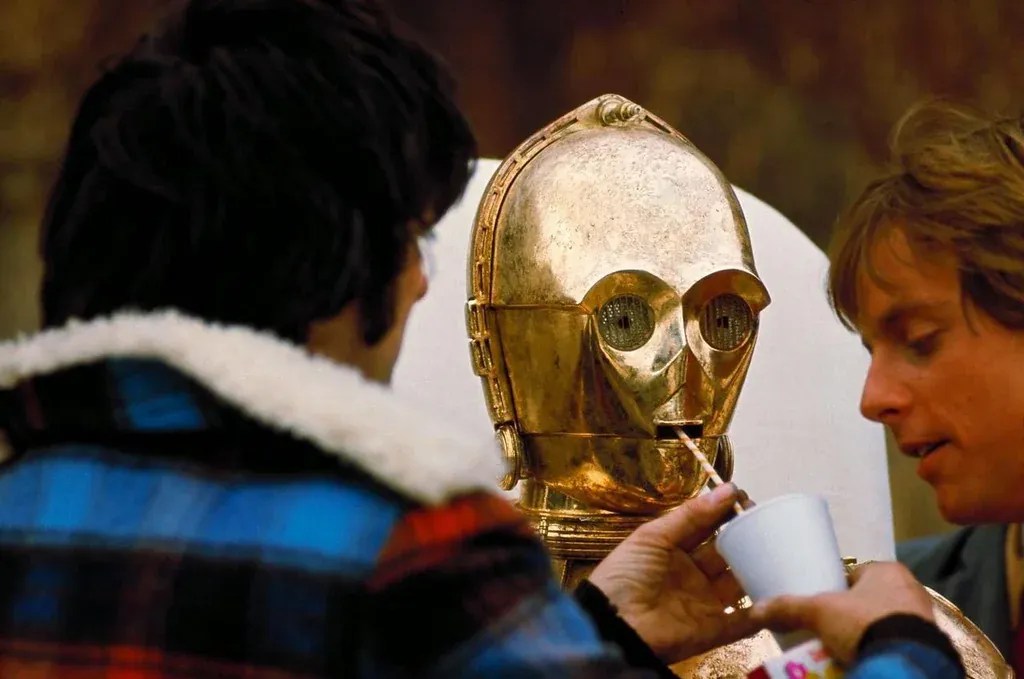
As we unwind into the weekend, sci-fi art curator Adam Rowe, with a collection of photos of famed sci-fi characters (and monsters) taking a break…


More at: “Break Time,” from @AdamRRowe.
* Alan Cohen
###
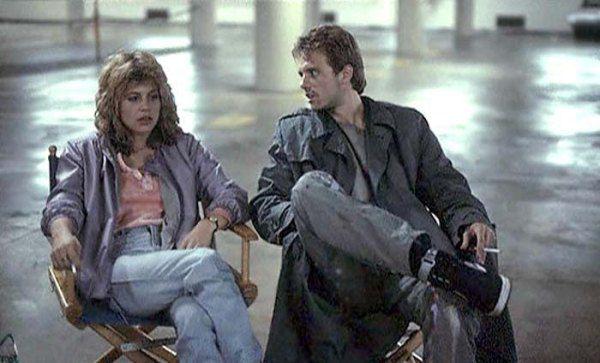
As we give it a rest, we might recall that it was on this date in 1984 that The Terminator was released. Directed by James Cameron and produced by Gale Anne Hurd, it starred Arnold Schwarzenegger as the Terminator, a cybernetic assassin sent back in time from 2029 to 1984 to kill Sarah Connor (Linda Hamilton), whose unborn son will one day save mankind from extinction by Skynet, a hostile artificial intelligence in a post-apocalyptic future. Kyle Reese (Michael Biehn) played a soldier sent back in time to protect Sarah. The screenplay was credited to Cameron and Hurd, while co-writer William Wisher Jr. received an “additional dialogue” credit.
Defying low pre-release expectations, The Terminator topped the United States box office for two weeks, eventually grossing $78.3 million against a modest $6.4 million budget. It is credited with launching Cameron’s film career and solidifying Schwarzenegger’s status as a leading man. The film’s success led to a franchise consisting of several sequels, a television series, comic books, novels and video games. In 2008, The Terminator was selected by the Library of Congress for preservation in the United States National Film Registry.
“What could be more simple and more complex, more obvious and more profound than a portrait?”*…

Philosopher Alex King talks with Steve Pyke, a renown photographer of philosophers…
Steve Pyke is a renowned portrait photographer. He has published ten books, including the award-winning I Could Read the Sky (with Timothy O’Grady). He has photographed politicians, astronauts, film directors, artists, laborers, and—in two collected volumes—philosophers. He was the staff photographer at The New Yorker for several years and, in 2004, was appointed an MBE. His work has been exhibited worldwide and is held in many permanent collections, including the National Portrait Gallery and the V&A Museum. See more at his website, Pyke-Eye…
… SP: I’ve made two series of portraits of philosophers. The first series was during the late ’80s and ’90s and contained about eighty people, and the second continued through the ’90s until 2008 and contained a hundred more.
The first series came about after Sir A.J. Ayer suggested I do it. The series had a big impact because it outed what philosophers actually looked like. Remember, when I photographed the philosophers the first time around, there was no internet. There was no way of knowing what a philosopher looked like unless they were pictured on a book jacket. I think Quine had a picture that was photographed in the forties! They were not that image-conscious a bunch. Not then.
I met the most amazing people—people like Jack Rawls and David Lewis. When I met Freddie Ayer, he was an 88- or 90-year-old man. He was very much seen as the face of philosophy after Bertrand Russell.
But I wasn’t able to speak their language, the language of philosophy. I don’t come from that world and in a lot of ways it’s not what interested me in the philosophy world. Even though I didn’t speak to Ayer about Language, Truth, and Logic, we had common ground. We’d both been part of the same time, and that narrative of our time was the common language. That and football—he was a Spurs supporter!
AK: How did you pick which philosophers to photograph?
SP: I don’t pick them at all. They pick themselves. Whenever I’d photograph a philosopher, I would ask them, “Who are ten people alive that have had an influence on your work that I should photograph?” And whenever the name came up three times, was mentioned by three philosophers, that’s when I contacted that person. It wasn’t easy to find them, either. At that time, I employed a researcher who tracked them down. Their job was to find someone like Martha Nussbaum, to literally call around and ask where I could find her…
Nobody had really photographed philosophers before as a series. This was the first time anyone had put together a survey of pictures of philosophers as a collection. No one knew what they looked like, and it seemed like there was little interest in knowing that, even amongst themselves. Admittedly there had been some interviews. Bryan Magee did a really famous set of interviews in the seventies, which had some pictures. Some of them were published in a very interesting book. But I started to realize the photographs were really of an unrecorded tribe…
… When I decided to do a second series, I was working in New York. One of the first people suggested to me, and the first portrait I did for that series, was Anthony Appiah. That was emblematic of the most notable difference. The first series had a very noticeable imbalance in gender, age, and race. Most were older white men. But the second time around was more diverse. Many of the philosophers were also younger, certainly closer in age to me, and we shared more cultural and social references. So we could sit around, talk, and drink… we used to party.
People like Delia Graff [Fara], Jason Stanley, David Chalmers, Stalnaker, Kripke, and Stephen Neale. Whoever would come to town, we’d hang out. I became very good friends with a number of people in the philosophy community.
Saul Kripke made a habit of coming to my photography shows. I had a private viewing of my Pictures of the Dead. It was pretty weird to have Saul Kripke come to things like that, but there he was.
The experience photographing the second series was much more social than the first series had been…
… AK: It’s so interesting to hear you talk about this. You have an outsider’s perspective on what philosophy culture is like, on what philosophers look like and what we are like, how we comport ourselves and how we interact with each other. And you see how we change over time. It reminds me of families. People who see their children all the time tend not to notice how much they’ve changed because it only happens incrementally. But people who see, say, their young cousins only once every few years are often shocked at how much they’ve grown and changed. I think we philosophers are a bit like the parents in this case—changes often happen very gradually, so we don’t notice them unless we take a step back. Doing these series puts you in something more like the cousin’s position, one where you can see immediately how dramatic the differences are.
The analogy you make to family is nice. It really is a family, the family of philosophers. And as with any family, there’s a lot of infighting. Maybe more than most families, because for you there are real philosophical points to be making.
When I made the first series, one of the things I was most amazed by was how intolerant philosophers seemed. I realized that this happened because their time was precious, and to have spent time with this “child,” their philosophy, to have nurtured it and brought it through, to have written a paper, had it accepted and published, and then to have somebody deny what they thought…
… AK: You don’t think that’s true in the Arts?
SP: Not in the same way. In the arts, a lot of the judging is outside of your tribe: curators, galleries, even museums. Philosophers are judged more from within. Also, much of philosophy is not for public consumption, or at least, it sort of is but sort of isn’t. You’re ultimately making things for your own family and they’re the ones judging you. The Arts function in a different way…

More of the interview (shooting “philosophical couples,” technique, plans for a third series): “What the Photographer Who’s Taken Hundreds of Philosopher Portraits Really Thinks of Philosophers,” in @ArtFlockTweets.
More of Pyke’s portraits on his site: “Philosophers, Vol 1” and “Philosophers, Vol 2.”
* Charles Baudelaire
###
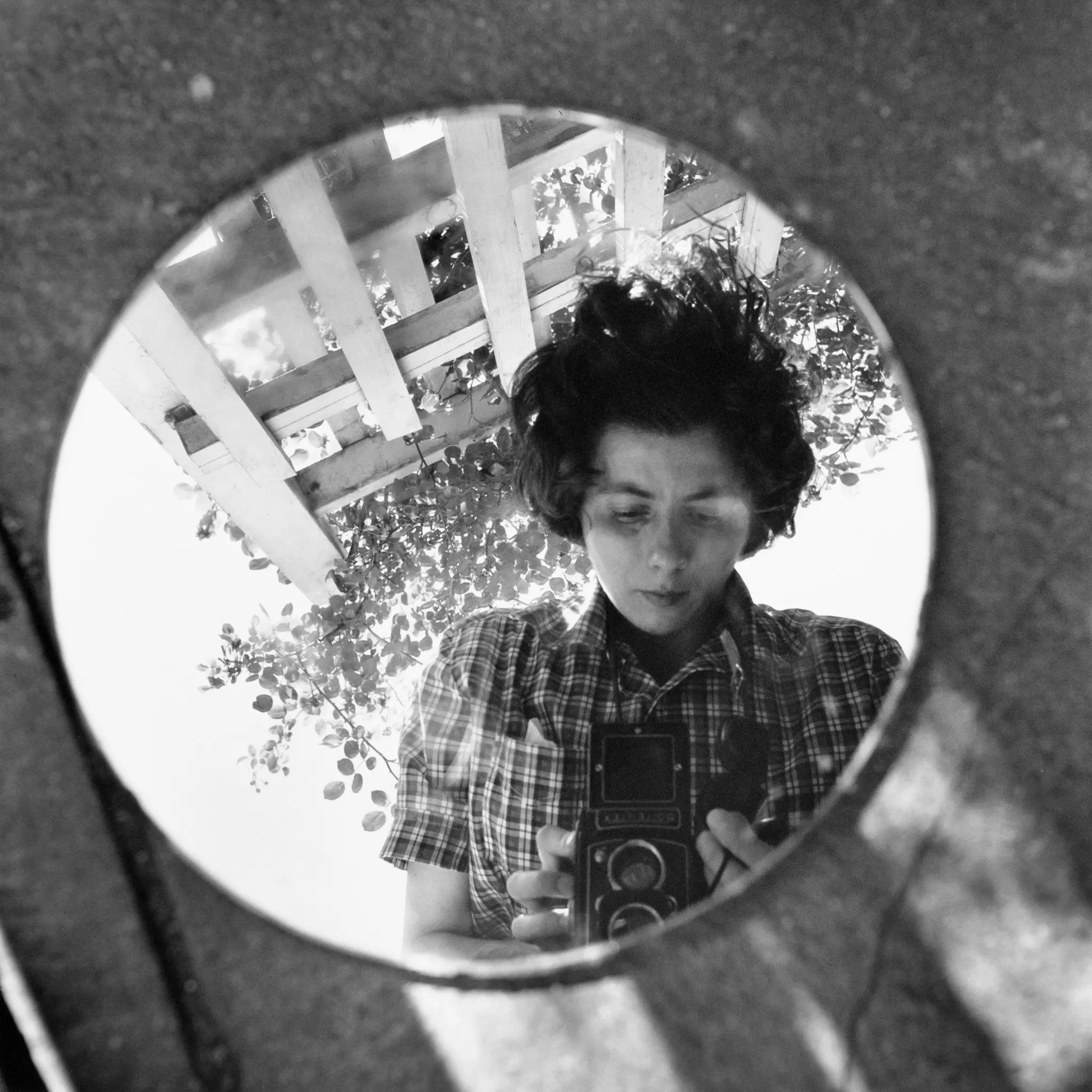
As we ponder portraits of those who ponder, readers in New York City might note that today is their final opportunity to see “Unseen Work,” a collection of early photographs from the remarkable street photographer Vivian Maier, on display at Fotografiska. From the show’s description:
Born in New York in 1926, Vivian Maier spent her early years in the Bronx. Throughout her time in New York City, Maier began to photograph the world around her and develop a visual language through the use of her camera, all while working as a nanny. Nearly a century later, Maier figures in the history of photography alongside the greatest masters of the twentieth century…
… Unseen Work explores Maier’s complete oeuvre from the early 1950s to the mid-1980s through approximately 200 works: vintage and modern prints, color, black and white, and Super 8 films and soundtracks, offering a complete vision of the dense, rich and complex architecture of this archive that provides a fascinating testimony to post-war America and the hell of the American dream…
More of Maier’s work here.

You must be logged in to post a comment.