Posts Tagged ‘Terminator’
“The danger of the past was that men became slaves. The danger of the future is that man may become robots.”*…

… which might be the same thing?
As more and more folks are fearing obsolescence (if not, indeed, subjugation) by emerging technology, Matthew Wills reminds us that this fear– especially as embodied in androids– has a long (and dark) history here in the U.S…
Our word “robot” comes from Karel Čapek’s 1921 play R.U.R. In it, historian of robots Dustin A. Abnet explains, Čapek repurposed the Czech word for “drudgery” or “servitude” to refer to the artificial workers produced by the play’s Rossumovi Univerzální Roboti (Rossum’s Universal Robots) company. [See also here.] Created from synthetic organic material, and thus more android than mechanical, these worker-roboti ultimately overthrow their human masters.
The play was a sensation in Europe, and then a year later, in America, though something was lost in translation. Čapek used robots to criticize soulless Fordism—the “standardization and regimentation” of American capitalism—and hence the US’s political and cultural power in Europe and around the world. (Other Europeans would conceive of the robot in the same way, notably director Fritz Lang and screenwriter Thea von Harbou in the 1927 German film Metropolis.)
But a funny thing happened to these robotic symbols of American capitalism by the mid-twentieth century. They were Americanized by American capitalism. Americans, as Abnet notes, “turned a figure that initially rebelled against the dehumanizing effects of Fordism into a tamed electro-mechanical slave holding aloft a global empire of consumerism.”
Nowhere was this more literal than in the Westinghouse Electric Company’s “simple remotely controlled mechanical men and women” used to advertise the company’s products from 1927 to 1940. “Technology did not have to run amok, Westinghouse’s robots suggested; it could instead become a tamed slave that empowered each individual consumer to become his or her own master.” In the American context, where the language of master and slave was rooted in racism, Westinghouse “connected robots to romanticized white myths about slavery.”
“Americans had always racialized robot-like creations,” continues Abnet, citing the first American automaton (a caricature of a Native American) and the “grotesque minstrel-like caricatures of Black and Asian bodies” that made up automatons in the late nineteenth century.
Westinghouse’s creations, named Herbert Televox, Karina Van Televox, Telelux, Rastus, Willie Vocalite, and Elektro, were promoted as docile domestic workers. Abnet quotes the New York Times’ science and technology editor extolling the benefits of the first of these “mechanical slaves” in 1927: “it obeys without the usual human arguing, impudence or procrastination.”
Rastus, Westinghouse’s Great Depression-era robot, was the most overtly racialized of these corporate robot slaves. Rastus was modeled on a minstrel show character: “black rubber ‘skin,’ overalls, a white shirt, and a pail hat.” In addition, “the robot had a ‘rich, baritone voice’ that would have been read as unmistakably black.” While “all of Westinghouse’s other robots told jokes…Rastus and its blackness were themselves the joke.”
In 1930, Westinghouse’s President explicitly expressed the prevailing white romanticism of slavery. In the company’s Electric Journal, he argued that without the exploitation of the “muscles of others,” there could be “no art, literature, science, leisure, or comfort for anyone.” Rastus’s “tamed black body,” stresses Abnet, “underscored the larger rhetoric of slavery that shaped the fantasy the company offered white consumers.”
“Ultimately, Westinghouse’s robots were not just about more efficiently accomplishing work or ensuring greater leisure time; they were a symbol that deployed racialized slavery in ways that could reassure white Americans of their own freedom, their own mastery over both technology and the bodies of others.”
Čapek’s robots had successfully rebelled, killing all but one human. In America, that couldn’t happen, at least according to the corporations selling the robot idea. But fear of a robot rebellion, like the fear of slave rebellion before the Civil War, remained. Abnet notes that the “most common robot story in American science fiction during the 1920s and 1930s told a story of white men, using their cunning, strength, and willpower to restore their authority over the robots who should be their slaves.” Movies, especially science fiction serials, often told the same story.
A century after R.U.R. and forty years after The Terminator, the uneasiness engendered by robots (and their droid, cyborg, replicant, and AI cousins) persists, reflecting longstanding concerns about labor, autonomy, and power…
Early automatons in the US evolved from symbols of revolt into racialized figures tied to labor and the legacy of slavery: “How America Racialized the Robot,” from @jstordaily.bsky.social.
* Erich Fromm, The Sane Society
###
As we move on, we might recall that it was on this date in 1967 that Aretha Franklin’s up-tempo cover of Otis Redding’s “Respect” enter the Billboard Hot 100. It rose steadily over the next several weeks, hitting #1 in June, where it stayed for two weeks and won Franklin two Grammy Awards at the 1968 ceremony, including the first of eight consecutive Grammys for Best Female R&B Vocal Performance. An R&B classic, it has also become a protest anthem, thanks to its connections to both the civil rights movement of the 1960s and the second-wave feminist movement of the 1970s.
“There is virtue in work and there is virtue in rest. Use both and overlook neither.”*…

As we unwind into the weekend, sci-fi art curator Adam Rowe, with a collection of photos of famed sci-fi characters (and monsters) taking a break…


More at: “Break Time,” from @AdamRRowe.
* Alan Cohen
###
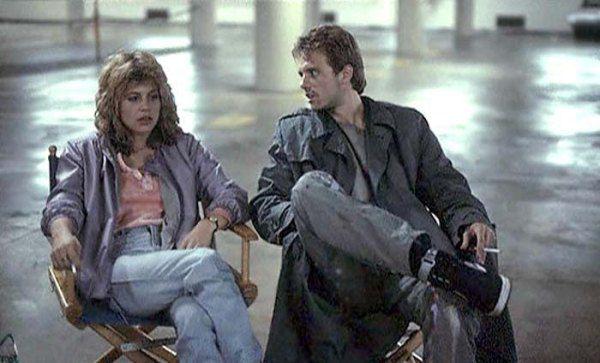
As we give it a rest, we might recall that it was on this date in 1984 that The Terminator was released. Directed by James Cameron and produced by Gale Anne Hurd, it starred Arnold Schwarzenegger as the Terminator, a cybernetic assassin sent back in time from 2029 to 1984 to kill Sarah Connor (Linda Hamilton), whose unborn son will one day save mankind from extinction by Skynet, a hostile artificial intelligence in a post-apocalyptic future. Kyle Reese (Michael Biehn) played a soldier sent back in time to protect Sarah. The screenplay was credited to Cameron and Hurd, while co-writer William Wisher Jr. received an “additional dialogue” credit.
Defying low pre-release expectations, The Terminator topped the United States box office for two weeks, eventually grossing $78.3 million against a modest $6.4 million budget. It is credited with launching Cameron’s film career and solidifying Schwarzenegger’s status as a leading man. The film’s success led to a franchise consisting of several sequels, a television series, comic books, novels and video games. In 2008, The Terminator was selected by the Library of Congress for preservation in the United States National Film Registry.
“When the going gets weird, the weird turn pro”*…

But, Ammon Haggerty suggests, when it comes to AI, “going pro” is at least a waste and quite possibly a problem…
Kyle Turman, creative technologist and staff designer at Anthropic, shared a sentiment that resonated deeply. He said (paraphrasing), “AI is actually really weird, and I don’t think people appreciate that enough.” This sparked my question to the panel: Are we at risk of sanitizing AI’s inherent strangeness?
What followed was a fascinating discussion with a couple of friends, Mickey McManus and Noteh Krauss, who were also in attendance. They both recognized the deeper question I was asking — the slippery slope of “cleansing” foundation AI models of all that is undesirable. LLMs are a reflection of humanity, albeit at the moment primarily American and white-ish, with all our weird and idiosyncratic quirks that make us human. There is a real danger that we could see foundation models trained to maximize business values (of the American capitalist variety) and suppress radical and non-conforming ideas — a sort of revisionist optimization.
All this got me thinking about San Francisco, the city I grew up in, and where my dad, grandfather and great-grandfather called home. SF has been “weird” since the gold rush, attracting a melting pot of non-conformists, risk-takers, and radicals. Over generations, the weirdness of SF has ebbed and flowed, but it’s now deeply engrained in the culture. The bohemians, the beats, the hippies, LGBTQ+ rights movement, tech counterculture, and now AI. These are movements born out of counterculture and unconventional thinking, resulting in a disruption of established social and business norms. Eventually leading to mainstreaming, and the cycle repeats. Growing up in San Francisco, I’ve witnessed firsthand how this cycle of weirdness and innovation has shaped the city. It’s a living testament to the power of unconventional thinking.
Like San Francisco, AI also has a fairly long history of being weird. Early experiments in AI such as AARON (1972), which trained a basic model on artistic decision-making, created outsider art-like compositions. Racter (1984) was an early text-generating AI that would often produce dreamlike or surrealist output. “More than iron, more than lead, more than gold I need electricity. I need it more than I need lamb or pork or lettuce or cucumber. I need it for my dreams.” More recently, Google Deep Dream (2015), a convolutional neural network that looks for patterns found in its training data, producing hallucination-like images and videos.
These “edge states” in AI’s evolution are, to me, the most interesting, and human, expressions. It’s a similar edge state explored in human creativity. It’s called “liminal space” — the threshold between reality and imagination. What’s really interesting is the mental process of extracting meaning from the liminal space is highly analogous to how the transformer architecture used in LLMs work. In the human brain, we look for patterns, then synthesize new idea and information, find unexpected connections, contextualize the findings, then articulate the ideas into words we can express. In transformers, the attention mechanism looks for patterns, then neural networks “synthesize” the information, then through iteration and prioritization, form probabilistic insights, then positional encoding maps the information to the broader context, and last, articulates the output as a best guess based on what it knows previously. Sorry if that was dense — for nerd friends to either validate or challenge.
This is all to say that I feel there’s something really interesting in the liminal space for AI. Also known as “AI hallucinations” and it’s not good — very bad! I agree that when you ask an AI an important question, and it gives a made-up answer, it’s not a good thing. But it’s not making things up, it’s just synthesizing a highly probable answer from an ambiguous cloud of understanding (question, data, meaning, etc.). I say, let’s explore and celebrate this analog of human creativity. What if, instead of fearing AI’s ‘hallucinations,’ we embraced them as digital dreams?…
… While I’ve been vocal about AI’s ethical challenges for creators (1) (2), I’m deeply inspired by the creative potential of these new tools. I also fear some of the most interesting parts could begin to disappear…
A plea to “Keep AI Weird.”
How weird could things get? Matt Webb (@genmon) observes that “The Overton window of weirdness is opening.”
* Hunter S. Thompson
###
As we engage the edges, we might recall that it was on this date in 1991 that Terminator 2: Judgment Day was released. It focuses on the struggle, fought both in future and in the present, between a “synthetic intelligence” known as Skynet, and a surviving resistance of humans led by John Connor. Picking up some years after the action in The Terminator (in which robots fail to prevent John Connor from being born), they try again in 1995, this time attempting to terminate him as a child by using a more advanced Terminator, the T-1000. As before, John sends back a protector for his younger self, a reprogrammed Terminator, who is a doppelgänger to the one from 1984.
The Terminator was a success; Terminator 2 was a smash– a success both with critics and at the box office, grossing $523.7 million worldwide. It won several Academy Awards, perhaps most notably for its then-cutting-edge computer animation.

You must be logged in to post a comment.