Posts Tagged ‘monsters’
“There is virtue in work and there is virtue in rest. Use both and overlook neither.”*…
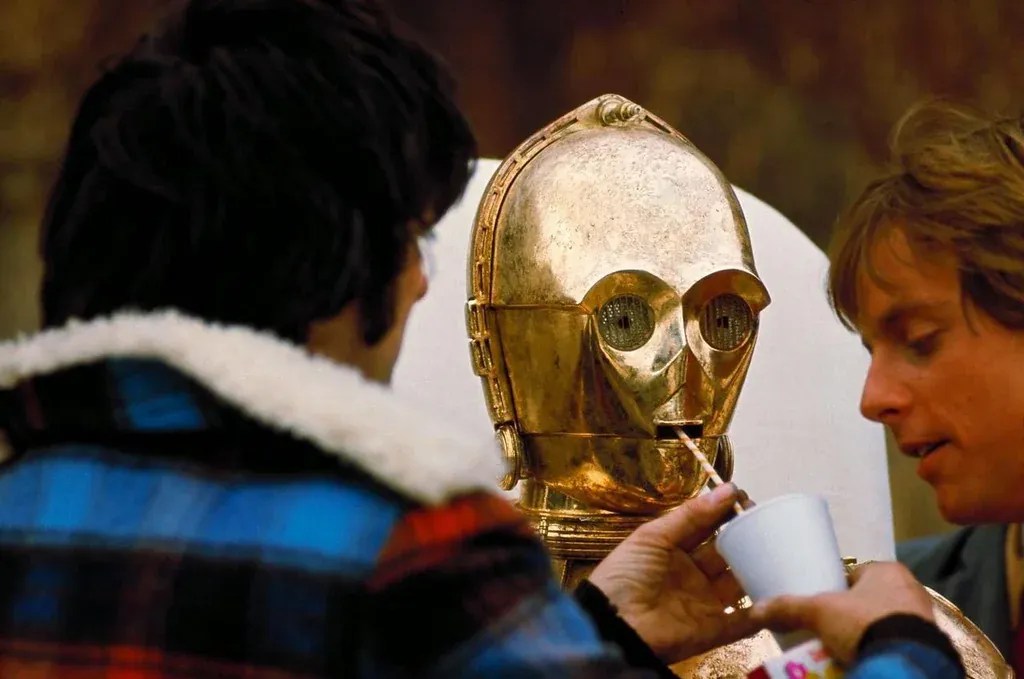
As we unwind into the weekend, sci-fi art curator Adam Rowe, with a collection of photos of famed sci-fi characters (and monsters) taking a break…


More at: “Break Time,” from @AdamRRowe.
* Alan Cohen
###
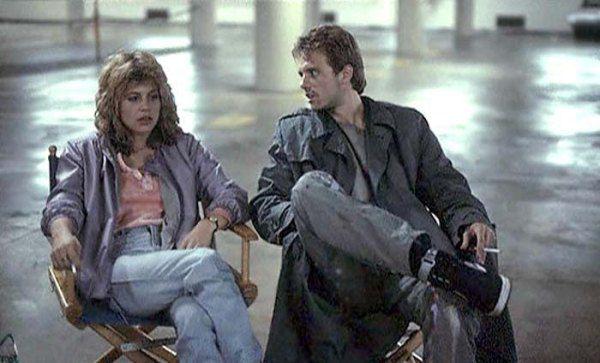
As we give it a rest, we might recall that it was on this date in 1984 that The Terminator was released. Directed by James Cameron and produced by Gale Anne Hurd, it starred Arnold Schwarzenegger as the Terminator, a cybernetic assassin sent back in time from 2029 to 1984 to kill Sarah Connor (Linda Hamilton), whose unborn son will one day save mankind from extinction by Skynet, a hostile artificial intelligence in a post-apocalyptic future. Kyle Reese (Michael Biehn) played a soldier sent back in time to protect Sarah. The screenplay was credited to Cameron and Hurd, while co-writer William Wisher Jr. received an “additional dialogue” credit.
Defying low pre-release expectations, The Terminator topped the United States box office for two weeks, eventually grossing $78.3 million against a modest $6.4 million budget. It is credited with launching Cameron’s film career and solidifying Schwarzenegger’s status as a leading man. The film’s success led to a franchise consisting of several sequels, a television series, comic books, novels and video games. In 2008, The Terminator was selected by the Library of Congress for preservation in the United States National Film Registry.
“Life swarms with innocent monsters”*…

“The Taming the Tarasque,” from Hours of Henry VIII, France, Tours, ca. 1500
From dragons and unicorns to mandrakes and griffins, monsters and medieval times are inseparable in the popular imagination. But medieval depictions of monsters—the subject of a fascinating new exhibition at the Morgan Library & Museum in Manhattan [which includes the image above]—weren’t designed simply to scare their viewers: They had many purposes, and provoked many reactions. They terrified, but they also taught. They enforced prejudices and social hierarchies, but they also inspired unlikely moments of empathy. They were medieval European propaganda, science, art, theology, and ethics all at once…
Finding the meaning in monsters: “The Symbols of Prejudice Hidden in Medieval Art.”
* Charles Baudelaire
###
As we decode dragons, we might recall that it was on this date in 1542, with Pope Paul III’s papal bull Licet ab initio, that the Roman Inquisition formally began. In the tradition of the medieval inquisitions, and “inspired” by the Spanish Inquisition, the Roman Inquisition gave six cardinals six cardinals the power to arrest and imprison anyone suspected of heresy, to confiscate their property, and to put them to death.
While not so much in the prudish spirit of Savonarola’s “Bonfire of the Vanities,” the Roman Inquisition– which lasted in the 18th century– was ruthless in rooting out what it considered dangerous deviations from orthodoxy. Copernicus, Galileo, Giordano Bruno, and Cesare Cremonini were all persecuted. While only Bruno was executed, the others were effectively (or actually) banished, and in the cases of Copernicus and Galileo, their works were placed on the Index Librorum Prohibitorum (the Catholic Church’s Index of Forbidden Books).

Loving Godzilla, 17 syllables at a time…

From SamuraiFrog, an arresting (and very amusing) collection of Godzilla Haiku.
“Monsters are born too tall, too strong, too heavy, they are not evil by choice; that is their tragedy”
– Ishiro Honda (Kurosawa friend, Toho director, and creator of Godzilla)
 Honda on the set of the original Godzilla
As we rethink our attraction to urban centers, we might compose a birthday rhyme for Torquato Tasso, the 16th Century Italian poet; he was born on this date in 1544. Though Tasso was a giant in his own time– he died in 1595, a few days before the Pope was to crown him “King of the Poets”– he had fallen out the core of the Western Canon by the end of the 19th century. Still, he resonates in the poems (Spencer, Milton, Byron), plays (Goethe), madrigals (Monteverdi), operas (Lully, Vivaldi, Handel, Haydn, Rossini, Dvorak) , and art work (Tintoretto, the Carracci, Guercino, Pietro da Cortona, Domenichino, Van Dyck, Poussin, Claude Lorrain, Tiepolo, Fragonard, Delacroix) that his life and work inspired.

You must be logged in to post a comment.