Jason Kottke on one artist’s attempt to illuminate those talents and the lives of those who practiced them…
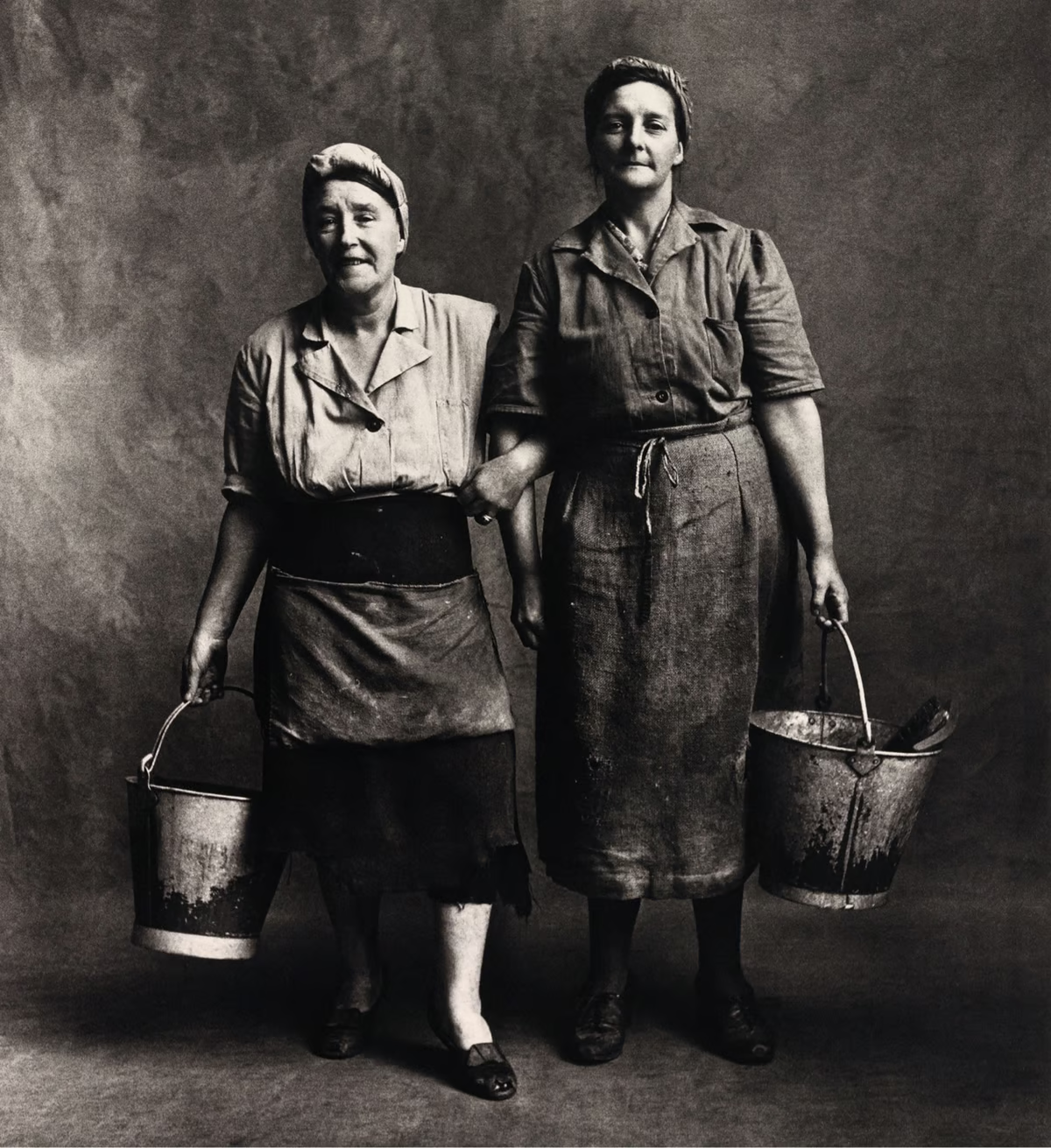
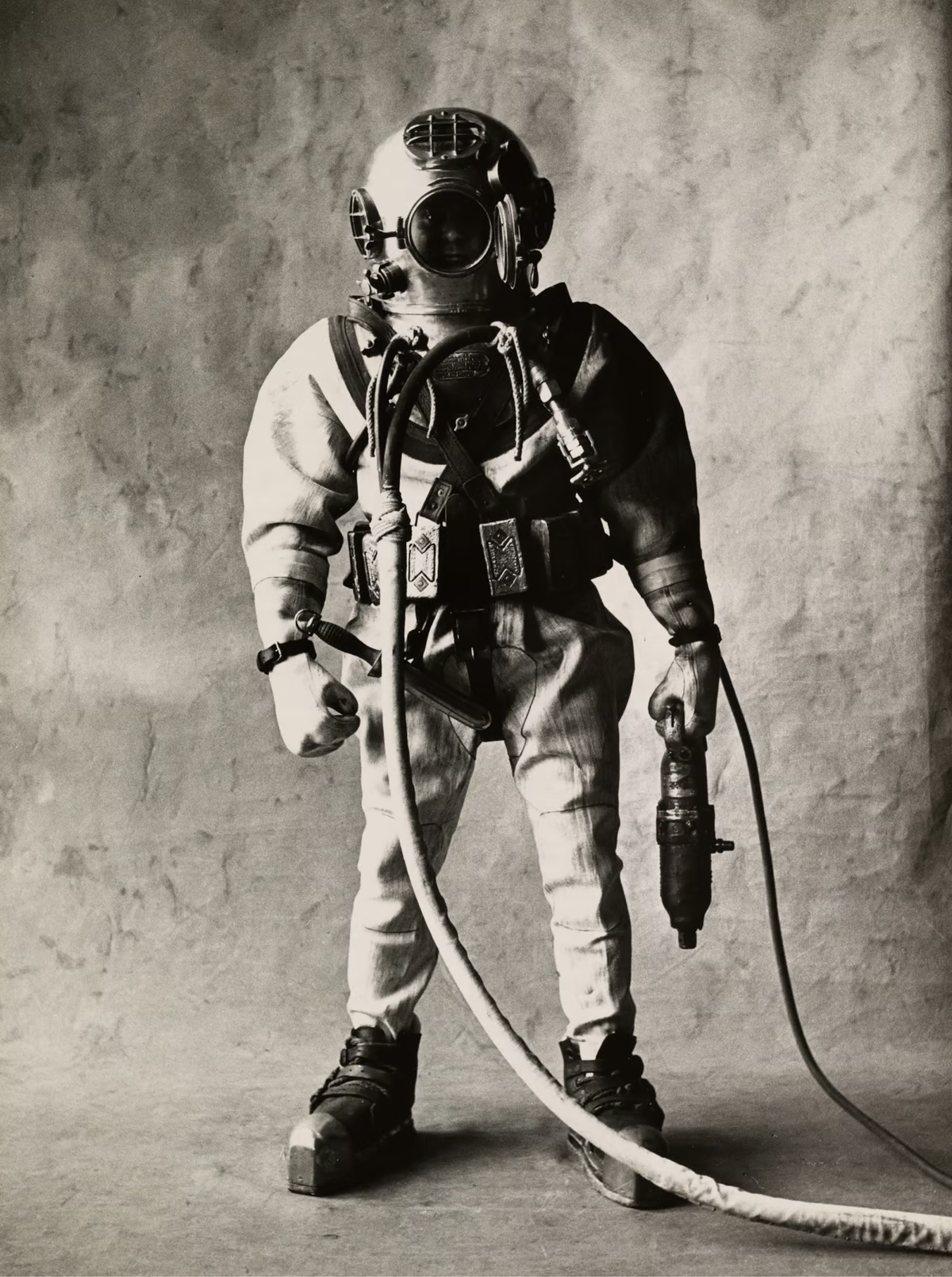
In 1950, master photographer Irving Penn set up a simple studio in Paris and started to photograph people of all kinds of professions, each wearing their work clothes and carrying the tools of their trade.
Working in the tradition of representing the petits métiers, Penn photographed fishmongers, firefighters, butchers, bakers, divers, baseball umpires, chefs, bike messengers, and sellers of goods of all kinds.
Penn continued photographing workers in New York and London, collecting the photos into a project called Small Trades.
Like everyone else who has recorded the look of tradesmen and workers, the author of this book was motivated by the fact that individuality and occupational pride seem on the wane. To a degree everyone has proved right, and since these photographs were made, London chimney sweeps have all but disappeared and in New York horseshoers — hard to find in 1950 — now scarcely exist…
As we peruse professions, we might send muckraking birthday greetings to Upton Sinclair; he was born on this date in 1878. A writer, activist, and politician, he is probably best remembered for his classic novel, The Jungle, which exposed labor and sanitary conditions in the U.S. meatpacking industry, causing a public uproar that contributed in part to the passage a few months later of the 1906 Pure Food and Drug Act and the Meat Inspection Act.
Many of his novels can be read as historical works. Writing during the Progressive Era, Sinclair describes the world of the industrialized United States from both the working man’s and the industrialist’s points of view: e.g., King Coal (1917, covering John D. Rockefeller and the 1914 Ludlow Massacre in the coal fields of Colorado), Oil! (1927, the Teapot Dome Scandal), and The Flivver King (1937, Henry Ford– his “wage reform,” his company’s Sociological Department, and his decline into antisemitism) describe the working conditions of the coal, oil, and auto industries at the time.
Sinclair ran (as a Democrat) for Governor of California in 1934, during the Great Depression, under the banner of the End Poverty in California campaign, but was defeated in the general election.
He was awarded he Pulitzer Prize for Fiction in 1943 for Dragon’s Teeth, which portrayed the Nazi takeover of Germany during the 1930s.
It is difficult to get a man to understand something, when his salary depends upon his not understanding it.
Upton Sinclair, ruminating on his gubernatorial loss
This print of a clockmaker is the work of Jost Amman (1533-1591), Swiss book illustrator and one of the last major production artists working with woodcuts. While it’s unlikely that Amman set out to catalog all of the jobs of his time, he did record them, and with great clarity. The result is a set of 16th-century pre-photographic “snapshots” of the ways in which people conducted their business and livelihood– an Alphabet of Trades.
Barber/Surgeon
Thong Maker
His illustrations were in collaboration with with Hans Sachs for Eygentliche Beschreibung Aller Staende Auff Erden, published in Frankfurt am Main in 1568. (The full text here is from Bibliothek des Seminars für Wirtschafts und Sozialgeschichte; another useful full-text here indexes the images; and another here provides an English indexing of the trades).
As we punch in, we might spare a thought for Washington Augustus Roebling; he died on this date in 1926. A civil engineer by training, he worked with his father, John Augustus Roebling, on the design of the Brooklyn Bridge; on his father’s death in 1869, Washington oversaw the completion of construction of the bridge– for twenty years from its opening in 1883, the longest suspension bridge in the world. (In 1872, he was disabled by decompression illness suffered in a caisson used in the construction; from that time on, he was directed operations from his home in Brooklyn overlooking the site.)



You must be logged in to post a comment.