Posts Tagged ‘inequality’
“The first wealth is health”*…

As Angela J. Wyse and Bruce D. Meyer explain, lack of health insurance explains five to twenty percent of the mortality disparity between high- and low-income Americans…
We examine the causal effect of health insurance on mortality using the universe of low-income adults, a dataset of 37 million individuals identified by linking the 2010 Census to administrative tax data. Our methodology leverages state-level variation in the timing and adoption of Medicaid expansions under the Affordable Care Act (ACA) and earlier waivers and adheres to a preregistered analysis plan, a rarely used approach in observational studies in economics. We find that expansions increased Medicaid enrollment by 12 percentage points and reduced the mortality of the low-income adult population by 2.5 percent, suggesting a 21 percent reduction in the mortality hazard of new enrollees. Mortality reductions accrued not only to older age cohorts, but also to younger adults, who accounted for nearly half of life-years saved due to their longer remaining lifespans and large share of the low-income adult population. These expansions appear to be cost-effective, with direct budgetary costs of $5.4 million per life saved and $179,000 per life-year saved falling well below valuations commonly found in the literature. Our findings suggest that lack of health insurance explains about five to twenty percent of the mortality disparity between high- and low-income Americans. We contribute to a growing body of evidence that health insurance improves health and demonstrate that Medicaid’s life-saving effects extend across a broader swath of the low-income population than previously understood…
“Saved by Medicaid: New Evidence on Health Insurance and Mortality from the Universe of Low-Income Adults,” from @nber.org.
Congress, of course, just moved to cut Medicaid; as the wording in the “Big, Beautiful BIll” stands, 8-10 million Americans stand to have the their covergae terminated orr severely reduced.
But even as we agree that extending coverage– fixing the “demand side” problem– could save lives, we should note that we have some serious supply side problems to address: 80% of the country, insured or not, lacks adequate access to healthcare service; and there’s a large and growing shortage of healthcare professionals and workers (a problem aggravated by the Trump administration’s draconian crackdown on immigration). Technology offers some hope, but humans remain at the center of the issue.
* Ralph Waldo Emerson
###
As we contemplate care, we might send insightful birthday greetings to Susan Lindquist; he was born on this date in 1949. A molecular biologist, she was a pioneer in the study of protein folding. She showed that alternate structural shapes of protein molecules could result in substantially different effects and demonstrated instances in fields as diverse as human diseases, evolution, and synthetic biomaterials designed to interact with biological systems. Her work laid the foundation for the development of AI-driven systems like Alpha-Fold that accelerate the discovery and development of new drugs and therapies.

“Constant attention by a good nurse may be just as important as a major operation by a surgeon”*…

A recent (R)D unpacked a recent Gallup survey of public trust in different professions/ocupations; the undisputed champion, nursing…. to which, friend MK responded: “What’s worse than 24 out of 25 people not trusting members of Congress is one out of four not trusting nurses.”
Edward Ongweso Jr. has a possible explanation– one that has little to do with nurse and all-too-much to do with the deterioration of the system of which they’re a part…
Hello everyone, I’ll keep this bit short this time! Thanks for all the emails with stories about your own experiences in Vegas, with gambling addiction, and with CES in response to my last piece, I read them all and responded to most except the ones pitching me Guaranteed Parlays That Will Hit! Thanks also for subscribing, we’ve jumped a bit and are just shy of 4,400 subscribers. If you like what you’ve read and want to support me further, you can become a paid subscriber for $7 a month or $70 a year. What do you get in return? My undying love, some recommendation posts every now and then, and paywalled essays/rants just as long as this one! Now, let’s get to today’s essay.
I have long believed that one of the greatest threats we face is the proliferation of the on-demand labor platform. The so-called “gig economy” is one of the larger altars to greed and misery in our civilization where millions of people are sacrificed in order to grow Smaugian hoards that are then transmuted into this or that form of power.
My earliest introduction to this was through the work of labor ethnographer and legal scholar Veena Dubal via her law journal article “The Drive to Precarity,” which maps out how militant workers turned San Francisco’s precarious taxi sector into a stable line of work, how companies responded with a wave of deregulation and de-unionization that immiserated workers, and how Uber sealed the deal in returning ride-hail to its earlier insecure form: poor working conditions and starvation wages, with every possible cost (healthcare, fuel, maintenance, etc.) offloaded onto workers and consumers.
Key forms of on-demand labor—namely, ride-hail and food delivery—have proliferated over the past few years, but not because they are particularly profitable or innovative business ventures. Most of them either have no real path to profitability, report dubiously calculated profits, or are operating illegally in hopes of realizing or sustaining them after sufficient lobbying and monopolization and exploitation of consumers/workers. The lazy and incurious view has been that they will grow into profitability, but the transparent reality is that the firms at the vanguard of the gig economy have thrived because they take advantage of a few key phenomena: worker misclassification, algorithmic discrimination, anti-competitive capital-intensive strategies, impressive public relations, robust political lobbying, and shoddy journalism, to name a few…
[Ongweso unpacks the history of ride-hailing apps and of the tactics– some legitimate, some questionable, and some plainly illegal– the industry has used to prevail. Then he turns to nursing…]
… As[ Shawn Carolan, a partner at Menlo Ventures and early investor in Uber] observed, however, ride-hail and delivery are not the only places where the “business model” at the heart of on-demand labor can be applied.
Over the past few years, nursing has emerged as a juicy target for investors and firms eager to liberate entire industries of antiquated regulatory frameworks. Last month, the Roosevelt Institute published a great report on what the application of the on-demand model will mean for nurses and it paints a grim picture. While some hail the emergence of an “Uber for nursing” model as a salve for our nursing shortage, Katie J. Wells and Funda Ustek Spilda detail how these apps reliably degrade working conditions, wages, and care standards.
These apps encourage nurses to work for less pay, fail to provide certainty about scheduling and the amount or nature of work, take little to no accountability for worker safety, and can threaten patient well-being by placing nurses in unfamiliar clinical environments with no onboarding or facility training. On-demand nursing platforms are also using the Uber playbook to lobby state legislatures in an attempt to exempt themselves from existing labor regulations.
I’ll be going through the report section by section to highlight key points as I think the report is phenomenal, but I encourage you to read it in full (linked above).
The premise of the “Uber for nursing” apps is relatively simple: lets use algorithmic systems to managing the scheduling, staffing, and management at medical facilities. For understaffed workplaces looking to cut costs and corners, this is attractive. For nurses and nursing assistants who want more control over their work, this is attractive. But this is especially enticing for investors who drool anytime a firm compares itself to Uber. Take ShiftMed—one of the darlings of this sector and a subject of the Roosevelt Institute report—which has raised hundreds of millions (but declines to share its valuation): $47 million in a May 2024 venture round, $200 million in a February 2023 round, $45 million in October 2021, and an early $6 million boost in an August 2019 round. What concretely are firms like ShiftMed offering to draw financing like this?
After a nurse downloads an on-demand nursing app and submits the requisite documents, they can use the app to indicate their interest in a 6-, 8-, or 12-hour shift at a hospital, nursing home, assisted living facility, surgical center, dental office, or, in some states, correctional facilities. An algorithmic scheduling software program, which is the heart of these new companies, then approves the worker for a shift, notifies both the medical facility and the worker, allows the worker to clock in and out, and, finally, sends a paycheck.
The on-demand nursing industry promises hospitals and medical administrators a different set of controls, namely the capacity to seamlessly staff facilities, reduce manager workloads, and lower labor costs.
On paper, this sounds lovely—the digital disruption of an old rickety system full of middlemen, inefficiencies, misallocation, overcharging, yadda yadda ya. But what’s the reality on the ground? Wells and Spilda found:
… serious safety and health risks for workers and patients. The nurses and nursing assistants who use these apps must pay fees to bid on shifts, and they win those bids by offering to work for lower hourly rates than their fellow workers. Poor internet or cell service in rural areas can cause the apps to fail, resulting in missed paychecks for work performed. These apps also rate the nurses they hire based on facility feedback and internal algorithmic determinations. If a worker must cancel a shift due to sickness or personal conflict, their rating goes down, and they often lose out on future shifts or can be banned from the app altogether. In at least one case, a nursing assistant went into work at a hospital while sick with COVID-19 because she could not figure out how to cancel a shift without lowering her rating. At most hospitals and medical facilities, no orientations are required for gig nurses and nursing assistants. Workers do not know where supply closets are located, how to access patient portals with medical histories and current medication lists, and whom to contact in the chain of command. With gig nursing, there is often little to no continuity of care. Despite hospitals’ attempts to automate nursing, care work is inherently tricky to de-skill and predict. Shifts do not neatly end when the apps say they do as, of course, patients’ health-care needs do not end just because the clock says they should. Human frailty—the essential subject of nursing—defies algorithmic management.
As the report will detail, gig nursing has already proven itself to be an unmitigated disaster and we are still relatively early in its assault on our lethargic healthcare system…
[Ongweso offers more chilling detail…]
… Often the deployment of new technology is used as cover to rollback reforms and regulations that have made old levels of profiteering unrealizable or outright illegal. That tends to be a function of who is steering the design, development, and deployment of said technologies. It is one thing when managers and financiers are in the drivers seat, and it would be another thing entirely if care workers were in control. It is not clear to me why anyone other than nurses should be in control of what sort of technology is introduced into their workplaces, how this technology is designed, why it is deployed, and when it is used. To close out with Wells and Splinda:
“It is important to not lose sight of the enormous amount of skill, coordination, understanding of human vulnerability and frailty, and treatment of patients with utmost decency required to provide good quality care. Technology could provide solutions to automate and unburden the nurses and health-care workers from the everyday management tasks of their work; however, decision-making around such solutions should include the nurses themselves, from design to deployment.”
The gig economy’s metastasis and its threat to healthcare: “Uber’s Bastards,” from @edwardongwesojr.com. Eminently worth reading in full.
###
As we contemplate care, we might send healing birthday greetings to Arthur Nicolaier; he was born on this date in 1862. A physician and bacteriologist, he isolated the tetanus bacterium and developed a successful cure for tetanus.
Nicolaier discovered that the tetanus bacterium lived in soil. Because of its presence in earth, it is responsible for infection from dirty wounds, which was a particularly significant issue in the cases of wounded soldiers during WW I. The toxin secreted by this bacterium, Clostridium tetani, travels along nerves to the spinal chord, causing increasingly severe, often fatal spasms of the head and neck and jaw– from which came the common name of the affliction: “lockjaw.” Thanks to Nicolaier, from 1915 injured soldiers– and any other sufferer– received an anti-toxin.
In the mid-1920s a tetanus vacine was developed. It has subsequently been improved, and has successfully warded off infection in those areas where it is administered. In 2013, it caused about 59,000 deaths worldwide—down from 356,000 in 1990; in the United States, from 2000 through 2007, an average of 31 cases were reported per year. Nearly all of the cases in the United States occur in unimmunized individuals, or individuals who have allowed their inoculations to lapse.

“The ultimate hidden truth of the world is that it is something we make and could just as easily make differently”*…

As a new collection of his writing is published, Rebecca Solnit remembers her friend David Graeber, the late activist and anarchist who believed ordinary people have the power to change the world…
David Graeber was a joyful, celebratory person. An enthusiast, voluble, on fire with the possibilities in the ideas and ideologies he wrestled with. Every time we met – from New Haven in the early 00s to London a few years before his death in 2020 – he was essentially the same: beaming, rumpled, with a restless energy that seemed to echo the constant motion of his mind, words tumbling out as though they were, in their unstoppable abundance, overflowing. But he was also much respected in activist circles for being a good listener, and his radical egalitarianism was borne out in how he related to the people around him.
He was always an anthropologist. After doing fieldwork among traditional peoples in Madagascar, he just never stopped, but he turned his focus to his own society. Essays such as Dead Zones of the Imagination: On Violence, Bureaucracy, and ‘Interpretive Labor’ and his book Bullshit Jobs came from using the equipment of an anthropologist on stuff usually regarded as boring, or not regarded at all – the function and impact of bureaucracy. His 2011 bestseller on debt reminded us that money and finance are among the social arrangements that could be rearranged for the better.
He insisted, again and again, that industrialised Euro-American civilisation was, like other societies past and present, only one way of doing things among countless options. He cited times when societies rejected agriculture or technology or social hierarchy, when social groups chose what has often been dismissed as primitive because it was more free. And he rejected all the linear narratives that present contemporary human beings as declining from primordial innocence or ascending from primitive barbarism. He offered, in place of a single narrative, many versions and variations; a vision of societies as ongoing experiments, and human beings as endlessly creative. That variety was a source of hope for him, a basis for his recurrent insistence that it doesn’t have to be this way.
As Marcus Rediker wrote in his review of David’s posthumous book Pirate Enlightenment, “Everything Graeber wrote was simultaneously a genealogy of the present and an account of what a just society might look like.” He was concerned about inequality of all kinds, including gender inequality in this society and others, and the violence that enforces inequality and unfreedom, as well as how they might be delegitimised and where and when societies might have escaped them. He focused, in short, on freedom and its impediments…
…
… The way that, as he wrote, “The ultimate hidden truth of the world is that it is something we make and could just as easily make differently.” If you truly believe that, if you perceive a world that is constructed according to certain assumptions and values, then you see that it can be changed, not least by changing those assumptions and values.
We have to recognise that ideas are tools that we wield – and with them, some power. David wanted to put these tools in everyone’s hands, or remind them that they are already there. Which is part of why he worked hard at – and succeeded in – writing in a style that wasn’t always simple but was always as clear and accessible as possible, given the material. Egalitarianism is a prose style, too. Our mutual friend the writer, film-maker, and debt abolitionist Astra Taylor texted him: “Re-reading Debt. You are such a damn good writer. A rare skill among lefties.” He texted back that August, a month before his demise: “Why thanks! Well at least I take care to do so – I call it ‘being nice to the reader,’ which is an extension of the politics, in a sense.”
In order to believe that people can govern themselves in the absence of coercive institutions and hierarchies, anarchists must have great faith in ordinary people, and David did. A sentence Lyndsey Stonebridge wrote about Hannah Arendt could apply equally well to him: “To fixate on her exceptional mind is to miss something that is important about her lessons in thinking: thinking is ordinary, she teaches; that is its secret power.”…
An edited extract from Solnit’s foreword to The Ultimate Hidden Truth of the World by David Graeber: “‘It does not have to be this way’- the radical optimism of David Graeber,” from @RebeccaSolnit in @guardian.
* David Graeber
###
As we promote possibility (and remember that on this date in 1973 then-President Richard Nixon averred in a speech that “I am not a crook”), we might send never-ending birthday greetings to August Möbius; he was born on this date in 1790. An astronomer and mathematician, he studied under mathematician Carl Friedrich Gauss while Gauss was the director of the Göttingen Observatory. From there, he went on to study with Carl Gauss’s instructor, Johann Pfaff, at the University of Halle, where he completed his doctoral thesis The occultation of fixed stars in 1815. In 1816, he became Extraordinary Professor in the “chair of astronomy and higher mechanics” at the University of Leipzig, where he remained for the rest of his career.
While he was an influential professor, he is best remembered for his creation of the “Möbius strip.”

“It is not great wealth in a few individuals that proves a country is prosperous, but great general wealth evenly distributed among the people”*…
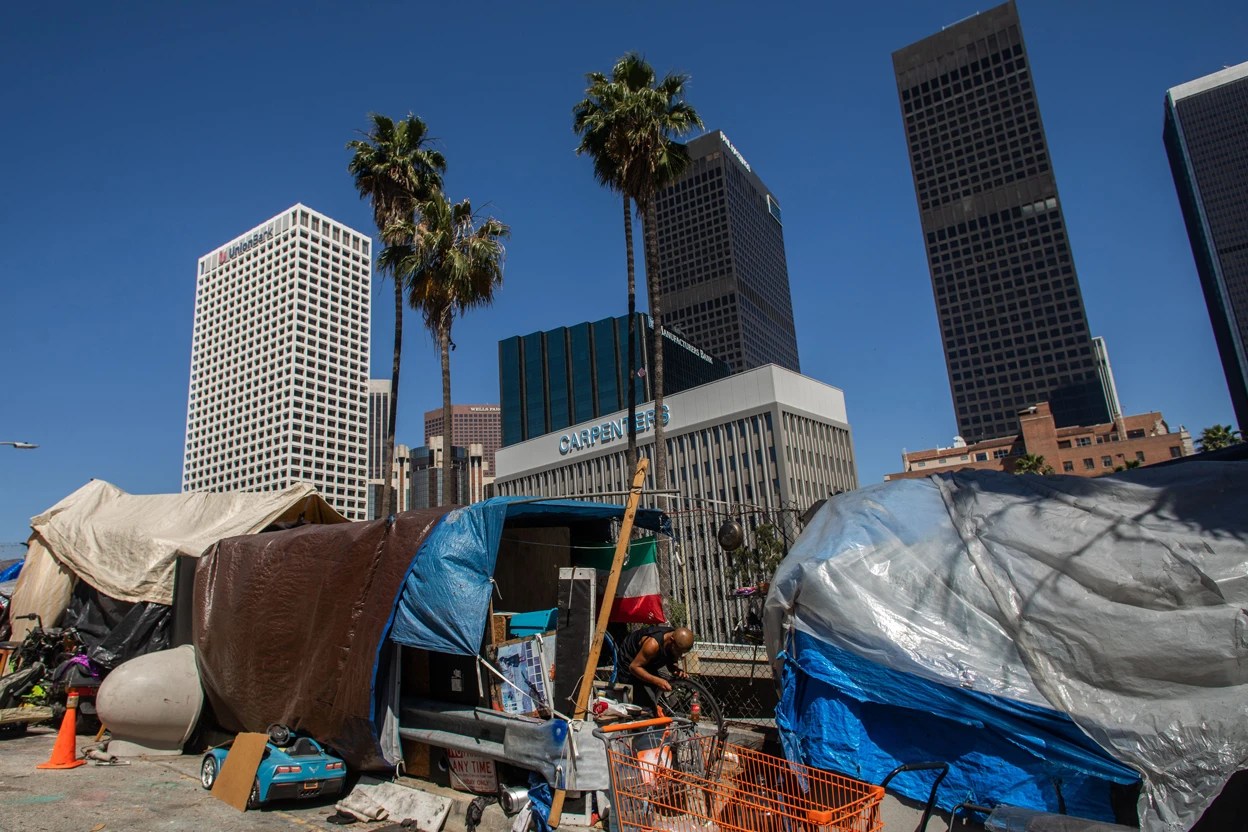
Richard Wilkinson and Kate Pickett on the research that suggest that greater equality is essential for sustainability, both natural and social. The science, they argue, is clear: people in more-equal societies are more trusting, cooperative, and more likely to protect the environment than are those in unequal, consumer-driven ones…
As environmental, social and humanitarian crises escalate, the world can no longer afford two things: first, the costs of economic inequality; and second, the rich. Between 2020 and 2022, the world’s most affluent 1% of people captured nearly twice as much of the new global wealth created as did the other 99% of individuals put together, and in 2019 they emitted as much carbon dioxide as the poorest two-thirds of humanity. In the decade to 2022, the world’s billionaires more than doubled their wealth, to almost US$12 trillion.
The evidence gathered by social epidemiologists, including us, shows that large differences in income are a powerful social stressor that is increasingly rendering societies dysfunctional. For example, bigger gaps between rich and poor are accompanied by higher rates of homicide and imprisonment. They also correspond to more infant mortality, obesity, drug abuse and COVID-19 deaths, as well as higher rates of teenage pregnancy and lower levels of child well-being, social mobility and public trust. The homicide rate in the United States — the most unequal Western democracy — is more than 11 times that in Norway (see go.nature.com/49fuujr). Imprisonment rates are ten times as high, and infant mortality and obesity rates twice as high.
These problems don’t just hit the poorest individuals, although the poorest are most badly affected. Even affluent people would enjoy a better quality of life if they lived in a country with a more equal distribution of wealth, similar to a Scandinavian nation. They might see improvements in their mental health and have a reduced chance of becoming victims of violence; their children might do better at school and be less likely to take dangerous drugs.
The costs of inequality are also excruciatingly high for governments. For example, the Equality Trust, a charity based in London (of which we are patrons and co-founders), estimated that the United Kingdom alone could save more than £100 billion ($126 billion) per year if it reduced its inequalities to the average of those in the five countries in the Organisation for Economic Co-operation and Development (OECD) that have the smallest income differentials — Denmark, Finland, Belgium, Norway and the Netherlands. And that is considering just four areas: greater number of years lived in full health, better mental health, reduced homicide rates and lower imprisonment rates.
Many commentators have drawn attention to the environmental need to limit economic growth and instead prioritize sustainability and well-being. Here we argue that tackling inequality is the foremost task of that transformation. Greater equality will reduce unhealthy and excess consumption, and will increase the solidarity and cohesion that are needed to make societies more adaptable in the face of climate and other emergencies…
Eminently worth reading in full: “Why the world cannot afford the rich,” from @ProfRGWilkinson and @ProfKEPickett in @Nature.
* Victoria Woodhull, the first woman to run for President of the United States, 1872
###
As we find balance, we might recall that it was on this date in 1914 that Charlie Chaplin first appeared as (what became is signature character) “The Tramp” in Mack Sennet’s Mabel’s Strange Predicament.

“What people these days call ‘Vibes’ is a smell, a taste of the soul”*…

Up? Down? Better? Worse? What’s actually going on in our economy? Noah Smith on the asymmetric warfare going on around that question…
As we gear up for election season, a big debate is whether the U.S. economy is doing well or not. Biden supporters point to extremely low unemployment, falling inflation, and real wages that have started rising again. Biden opponents — including both conservatives and socialists — contend that the inflation of 2021-22 left such a severe scar on Americans’ pocketbooks that low consumer confidence is perfectly justified. Biden supporters counter that since inflation has come down — and was never as severe as in the 1970s — the anger over the economy is just “vibes”.
Basically, the Biden supporters are right; the U.S. economy is truly excellent right now. Inflation looks beat, everyone has a job, incomes and wealth are rising, and so on. But on the other hand, I can’t command people to simply stop being mad about the inflation that reduced their purchasing power back in 2021-22. People care about what they care about.
At the same time, though, I think it’s possible for negative narratives about the economy to take hold among the general populace and distort people’s understanding of what’s actually going on. For example, John Burn-Murdoch of the Financial Times recently found [gift article] that consumer sentiment closely tracks real economic indicators in other countries, but has diverged in America since 2020:

Now this could be because Americans simply care about different things than Europeans; we might simply have started to really really hate interest rates since 2021, while Europeans didn’t. But a simpler explanation is that Americans’ negative sentiment is due to something other than economic indicators. And it’s possible that that “something” is a negative narrative — i.e., vibes…
“Vibes vs. data”
Indeed, as Burn-Murdoch observes in his analysis…
… It seems US consumer sentiment is becoming the latest victim of expressive responding, where people give incorrect answers to questions to signal wider tribal political or social affiliations. My advice: if you want to know what Americans really think of economic conditions, look at their spending patterns. Unlike cautious Europeans, US consumers are back on the pre-pandemic trendline and buying more stuff than ever…
“Should we believe Americans when they say the economy is bad?” (gift article)
But why? Jonathan Kirshner‘s review of Martin Wolf‘s important book The Crisis of Democratic Capitalism, suggest an unsettling answer…
The Crisis of Democratic Capitalism is an essential read for its articulation of the perilous crossroads at which the future of enlightened liberal civilization now stands. Wolf argues persuasively that, for all their visible flaws and imperfections, competitive market capitalism and liberal democracy are the best bad systems available for organizing human societies. And each requires the other to thrive—“[b]ut this marriage between those complementary opposites […] is always fragile.” Capitalism has been allowed to run amok, and it has elicited a backlash that threatens democracy…
Wolf’s central argument is that capitalism and democracy are inherently interdependent, yet also often in tension with one another—and managing the balance of that indispensable relationship is akin to walking a tightrope. In traditional autocracies, the economy has been captured by those that control the state, and that control is the basis of their power (which is why they are so reluctant to let go of the reins of authority). Liberal democracies today face the inverse problem: the capture of the state by those that control the economy. This is plutocracy, and aside from the injustice it visits on societies, it is also profoundly dangerous, because in democratic plutocracies (like the United States today), the simmering frustrations of mass polities will at some point lead to the voluntary election of an autocrat: “[I]nsecurity and fear are gateways to tyranny.” Decades of stagnant incomes, rising inequality, and the erosion of high-quality jobs for the middle class and the less-educated have allowed the relationship between capitalism and democracy to become dangerously unbalanced. The Crisis of Democratic Capitalism argues that the fault lies with the failure of public policy to tame the excesses of capitalism; it warns that those excesses will unleash the forces that destroy democracy.
Economic inequality, on the rise for 50 years, has soared to ever greater extremes in recent decades. As Wolf reports, from 1993 to 2015, the real income of the top 1 percent of the population in the United States nearly doubled; for everybody else, over those same years, aggregate real income grew by 14 percent. More pointedly, as the very rich got much, much richer from 2005 to 2014, 81 percent of US households had flat or falling real income—a weighty reminder that we continue to live in a world defined by the Global Financial Crisis and its aftermath…
… the financialization of the economy, especially after the 1990s, and the fortunes amassed from that process, were part and parcel of a larger shift towards “rigged capitalism”—the emergence of which The Crisis of Democratic Capitalism places at the heart of the matter. In a remarkable (and laudable) intellectual evolution, Wolf, who welcomed and celebrated the Thatcher revolution in Britain, and not so long ago penned the book Why Globalization Works (2004), now attributes the crisis of our time to “what Adam Smith warned us against—the tendency of the powerful to rig the economic and political systems against the rest of society.” Superseding a well-ordered market society, rigged capitalism—a toxic brew of developments and practices including financialization, winner-take-all markets, reduced competition, increased rent-seeking behavior (the use of concentrated economic power to extract monopoly profits), tax avoidance and evasion, and the erosion of ethical standards—has led to a widespread loss of confidence in the legitimacy of democracy…
These pathologies run deep, and well below the headlines. The use of political power to undermine competition—which must thrive at the heart of any capitalist society—is an endemic attribute of rigged capitalism. (And it is why we pay higher prices for most things than a “free market” would levy.) Many if not most giant corporations are now monopolies or near-monopolies, a situation that, as any card-carrying professional economist of even the most conservative stripe would agree, generates inefficiencies, rent-seeking behavior, and outright exploitation. Many markets have become shielded, protections reinforced by access to the corridors of power, with wealth extracted from consumers (and workers) in consequence: consider the atrocity of unskilled workers in fast food restaurants being forced to sign “non-compete” clauses, an act of collusive wage suppression.
Rigged capitalism—which yields massive concentrations of wealth for a sliver of largely-above-the-law plutocrats, combined with stagnation and declining opportunities for the majority—leads to a basic political problem: “How, after all, does a political party dedicated to the material interests of the top 0.1 percent of the income distribution win and hold power in a universal suffrage democracy? The answer is pluto-populism.” This is where race, identity politics, and the culture wars come into play. The century-long political hammerlock held by the Democratic Party on the Old South was based on voter suppression and other devices that guaranteed, for working-class whites, greater economic opportunity, access to the legal system, and higher social status than Blacks, in exchange for their political support. Bob Dylan, at 22 years old, saw through this in his song “Only a Pawn in Their Game” (1964)—and nearly 60 years later, that game hasn’t changed much…
rigged capitalism will nevertheless unleash forces not easily contained—and render liberal democracy unsustainable. As political scientist Rawi Abdelal has argued, “the social fact of unfairness is more important than the material fact of income and wealth distribution.” Endemic corruption, arbitrariness of justice, and fear for future prospects are poisonous to the body politic, undermining shared perceptions of the legitimacy of democratic society. In such settings, past and present, fear, despair, and frustration create the space for charismatic personalist authoritarians peddling promises of deliverance but who, once in power, consolidate their hold on the state by undermining the institutional constraints on their authority. And so, democracy dies from within.
What is bewildering about the American case is not that it has witnessed the rise of a leader who, as Wolf describes, “not only had no idea what a liberal democracy was but despised the idea,” and who was “instinctively authoritarian”—this, after all, is what pluto-populism conjures. What remains bizarre, however, is that, of all the possible choices, a hedonistic, ethically suspect, narcissistic grifter—who for decades was a signature beneficiary of rigged capitalism—would emerge as the people’s choice. Yet Donald Trump, like the gargantuan Stay-Puft Marshmallow Man from Ghostbusters, has been summoned by a collective subconscious rage to act as a malevolent score-settling agent of destruction…
“Rigged Capitalism and the Rise of Pluto-populism: On Martin Wolf’s ‘The Crisis of Democratic Capitalism’”
All three articles– and Wolf’s book– are eminently worth reading in full.
###
As we ponder populism, we might recall that it was on this date in 1865 that the 27th state (Georgia) ratified the 13th Amendment to the U.S. Constitution, abolishing slavery and involuntary servitude (except as punishment for a crime). Proclaimed on December 18, it was the first of the three Reconstruction Amendments adopted following the American Civil War.
The Emancipation Proclamation (made in September 1862; effective January 1, 1863) had freed all current slaves in the U.S. (though as a practical matter freedom took years longer). The Thirteenth Amendment assured that it would never be reinstated.


You must be logged in to post a comment.