Posts Tagged ‘the tramp’
“It is not great wealth in a few individuals that proves a country is prosperous, but great general wealth evenly distributed among the people”*…
Richard Wilkinson and Kate Pickett on the research that suggest that greater equality is essential for sustainability, both natural and social. The science, they argue, is clear: people in more-equal societies are more trusting, cooperative, and more likely to protect the environment than are those in unequal, consumer-driven ones…
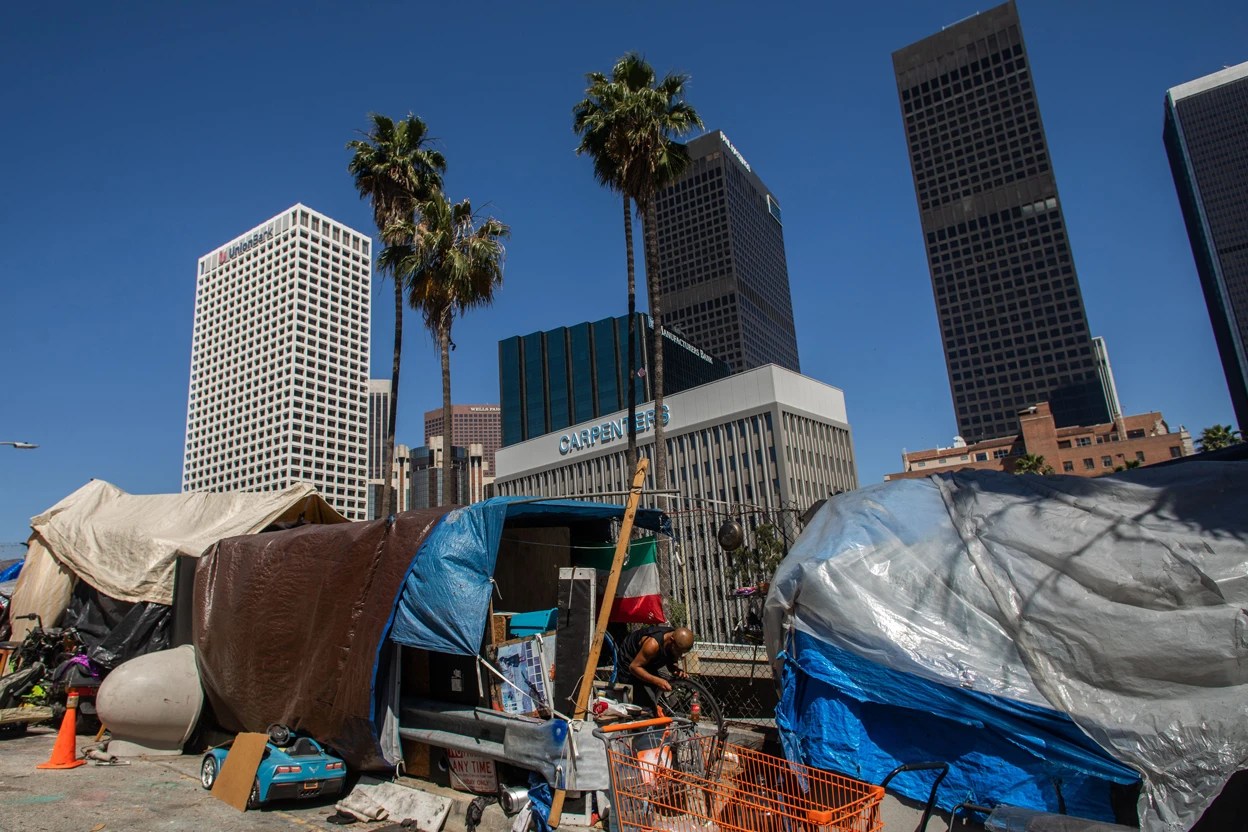
As environmental, social and humanitarian crises escalate, the world can no longer afford two things: first, the costs of economic inequality; and second, the rich. Between 2020 and 2022, the world’s most affluent 1% of people captured nearly twice as much of the new global wealth created as did the other 99% of individuals put together, and in 2019 they emitted as much carbon dioxide as the poorest two-thirds of humanity. In the decade to 2022, the world’s billionaires more than doubled their wealth, to almost US$12 trillion.
The evidence gathered by social epidemiologists, including us, shows that large differences in income are a powerful social stressor that is increasingly rendering societies dysfunctional. For example, bigger gaps between rich and poor are accompanied by higher rates of homicide and imprisonment. They also correspond to more infant mortality, obesity, drug abuse and COVID-19 deaths, as well as higher rates of teenage pregnancy and lower levels of child well-being, social mobility and public trust. The homicide rate in the United States — the most unequal Western democracy — is more than 11 times that in Norway (see go.nature.com/49fuujr). Imprisonment rates are ten times as high, and infant mortality and obesity rates twice as high.
These problems don’t just hit the poorest individuals, although the poorest are most badly affected. Even affluent people would enjoy a better quality of life if they lived in a country with a more equal distribution of wealth, similar to a Scandinavian nation. They might see improvements in their mental health and have a reduced chance of becoming victims of violence; their children might do better at school and be less likely to take dangerous drugs.
The costs of inequality are also excruciatingly high for governments. For example, the Equality Trust, a charity based in London (of which we are patrons and co-founders), estimated that the United Kingdom alone could save more than £100 billion ($126 billion) per year if it reduced its inequalities to the average of those in the five countries in the Organisation for Economic Co-operation and Development (OECD) that have the smallest income differentials — Denmark, Finland, Belgium, Norway and the Netherlands. And that is considering just four areas: greater number of years lived in full health, better mental health, reduced homicide rates and lower imprisonment rates.
Many commentators have drawn attention to the environmental need to limit economic growth and instead prioritize sustainability and well-being. Here we argue that tackling inequality is the foremost task of that transformation. Greater equality will reduce unhealthy and excess consumption, and will increase the solidarity and cohesion that are needed to make societies more adaptable in the face of climate and other emergencies…
Eminently worth reading in full: “Why the world cannot afford the rich,” from @ProfRGWilkinson and @ProfKEPickett in @Nature.
* Victoria Woodhull, the first woman to run for President of the United States, 1872
###
As we find balance, we might recall that it was on this date in 1914 that Charlie Chaplin first appeared as (what became is signature character) “The Tramp” in Mack Sennet’s Mabel’s Strange Predicament.

You must be logged in to post a comment.