Posts Tagged ‘vibes’
“The best way out is always through”*…
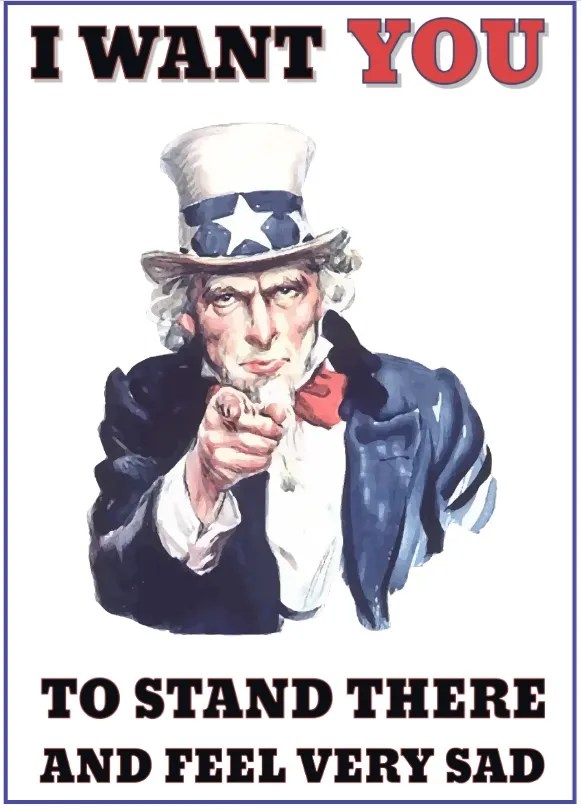
Adam Mastroianni (and here) with a diagnosis of the malaise (“Borg vibes,” as he calls them) that so many of us feel– and a remedy (or, at least, a constructive response)…
Everyone I know has given up. That’s how it feels, at least. There’s a creeping sense that the jig is up, the fix is in, and the party’s over. The Earth is burning, democracies are backsliding, AI is advancing, cities are crumbling—somehow everything sucks and it’s more expensive than it was last year. It’s the worst kind of armageddon, the kind that doesn’t even lower the rent.
We had the chance to prevent or solve these problems, the thinking goes, but we missed it. Now we’re past the point of no return. The world’s gonna end in fascists and ashes, and the only people still smiling are the ones trying to sell you something. It feels like we’re living through the Book of Revelation, but instead of the Seven Seals and the apocalyptic trumpeters, we have New York Times push notifications.
On the one hand, it’s totally understandable that these crises would make us want to curl up and die. If the world was withering for lack of hot takes, I’d assemble a daredevil crew and we’d be there in an instant. But if history is heading more in the warlords ‘n’ water wars direction, I’m out.
On other hand, this reaction is totally bonkers. If our backs are against the wall, shouldn’t we put up our dukes? For people supposedly facing the breakdown of our society, our response is less fight-or-flight and more freeze-and-unease, frown-and-lie-down, and despair-and-stay-there.
Maybe humanity has finally met its match, but even though people talk like that’s the case, the way they act is weirdly…normal. Every conversation has a dead-man-walking flavor to it, and yet the dead men keep on walking. “Yeah, so everything’s doomed and we’re all gonna die. Anyway, talk to ya later, I gotta put the lasagna in the oven.” If things are just about to go kaput, why is everyone still working 60 hours a week?
Something strange is going on here, and I’d like to offer an explanation in two parts: a wide circle, and a bullet with a foot in it…
Eminently worth the read: “Use this magic bullet to shoot yourself in the foot,” from @mastroianni.bsky.social.
Pair with: “Apocalypse 24/7” (an excerpt from Roy Scranton‘s Impasse: Climate Change and the Limits of Progress)… a deeper, darker– but sadly, all-too-credible– dive into the context that Mastrioanni sketches… while (as your correspondent reads it, anyway) it doesn’t contradict Mastroianni’s prescription (“pick up a sponge and start washing”), it reminds us just how much grime there is to get through… all the more reason to get started…
* Robert Frost
###
As we grapple, we might recall that it was on this date in 1965 that Bob Dylan’s “Positively 4th Street” was released. Dropping between Highway 61 Revisited and Blonde on Blonde, as the follow-up to Dylan’s hit single “Like a Rolling Stone“, it was not included on either album. But it reached No. 1 on Canada’s RPM chart, No. 7 on the U.S. Billboard Hot 100, and No. 8 on the UK Singles Chart, and has been ranked by Rolling Stone No. 203 in their 500 Greatest Songs of All Time list.

“What people these days call ‘Vibes’ is a smell, a taste of the soul”*…

Up? Down? Better? Worse? What’s actually going on in our economy? Noah Smith on the asymmetric warfare going on around that question…
As we gear up for election season, a big debate is whether the U.S. economy is doing well or not. Biden supporters point to extremely low unemployment, falling inflation, and real wages that have started rising again. Biden opponents — including both conservatives and socialists — contend that the inflation of 2021-22 left such a severe scar on Americans’ pocketbooks that low consumer confidence is perfectly justified. Biden supporters counter that since inflation has come down — and was never as severe as in the 1970s — the anger over the economy is just “vibes”.
Basically, the Biden supporters are right; the U.S. economy is truly excellent right now. Inflation looks beat, everyone has a job, incomes and wealth are rising, and so on. But on the other hand, I can’t command people to simply stop being mad about the inflation that reduced their purchasing power back in 2021-22. People care about what they care about.
At the same time, though, I think it’s possible for negative narratives about the economy to take hold among the general populace and distort people’s understanding of what’s actually going on. For example, John Burn-Murdoch of the Financial Times recently found [gift article] that consumer sentiment closely tracks real economic indicators in other countries, but has diverged in America since 2020:

Now this could be because Americans simply care about different things than Europeans; we might simply have started to really really hate interest rates since 2021, while Europeans didn’t. But a simpler explanation is that Americans’ negative sentiment is due to something other than economic indicators. And it’s possible that that “something” is a negative narrative — i.e., vibes…
“Vibes vs. data”
Indeed, as Burn-Murdoch observes in his analysis…
… It seems US consumer sentiment is becoming the latest victim of expressive responding, where people give incorrect answers to questions to signal wider tribal political or social affiliations. My advice: if you want to know what Americans really think of economic conditions, look at their spending patterns. Unlike cautious Europeans, US consumers are back on the pre-pandemic trendline and buying more stuff than ever…
“Should we believe Americans when they say the economy is bad?” (gift article)
But why? Jonathan Kirshner‘s review of Martin Wolf‘s important book The Crisis of Democratic Capitalism, suggest an unsettling answer…
The Crisis of Democratic Capitalism is an essential read for its articulation of the perilous crossroads at which the future of enlightened liberal civilization now stands. Wolf argues persuasively that, for all their visible flaws and imperfections, competitive market capitalism and liberal democracy are the best bad systems available for organizing human societies. And each requires the other to thrive—“[b]ut this marriage between those complementary opposites […] is always fragile.” Capitalism has been allowed to run amok, and it has elicited a backlash that threatens democracy…
Wolf’s central argument is that capitalism and democracy are inherently interdependent, yet also often in tension with one another—and managing the balance of that indispensable relationship is akin to walking a tightrope. In traditional autocracies, the economy has been captured by those that control the state, and that control is the basis of their power (which is why they are so reluctant to let go of the reins of authority). Liberal democracies today face the inverse problem: the capture of the state by those that control the economy. This is plutocracy, and aside from the injustice it visits on societies, it is also profoundly dangerous, because in democratic plutocracies (like the United States today), the simmering frustrations of mass polities will at some point lead to the voluntary election of an autocrat: “[I]nsecurity and fear are gateways to tyranny.” Decades of stagnant incomes, rising inequality, and the erosion of high-quality jobs for the middle class and the less-educated have allowed the relationship between capitalism and democracy to become dangerously unbalanced. The Crisis of Democratic Capitalism argues that the fault lies with the failure of public policy to tame the excesses of capitalism; it warns that those excesses will unleash the forces that destroy democracy.
Economic inequality, on the rise for 50 years, has soared to ever greater extremes in recent decades. As Wolf reports, from 1993 to 2015, the real income of the top 1 percent of the population in the United States nearly doubled; for everybody else, over those same years, aggregate real income grew by 14 percent. More pointedly, as the very rich got much, much richer from 2005 to 2014, 81 percent of US households had flat or falling real income—a weighty reminder that we continue to live in a world defined by the Global Financial Crisis and its aftermath…
… the financialization of the economy, especially after the 1990s, and the fortunes amassed from that process, were part and parcel of a larger shift towards “rigged capitalism”—the emergence of which The Crisis of Democratic Capitalism places at the heart of the matter. In a remarkable (and laudable) intellectual evolution, Wolf, who welcomed and celebrated the Thatcher revolution in Britain, and not so long ago penned the book Why Globalization Works (2004), now attributes the crisis of our time to “what Adam Smith warned us against—the tendency of the powerful to rig the economic and political systems against the rest of society.” Superseding a well-ordered market society, rigged capitalism—a toxic brew of developments and practices including financialization, winner-take-all markets, reduced competition, increased rent-seeking behavior (the use of concentrated economic power to extract monopoly profits), tax avoidance and evasion, and the erosion of ethical standards—has led to a widespread loss of confidence in the legitimacy of democracy…
These pathologies run deep, and well below the headlines. The use of political power to undermine competition—which must thrive at the heart of any capitalist society—is an endemic attribute of rigged capitalism. (And it is why we pay higher prices for most things than a “free market” would levy.) Many if not most giant corporations are now monopolies or near-monopolies, a situation that, as any card-carrying professional economist of even the most conservative stripe would agree, generates inefficiencies, rent-seeking behavior, and outright exploitation. Many markets have become shielded, protections reinforced by access to the corridors of power, with wealth extracted from consumers (and workers) in consequence: consider the atrocity of unskilled workers in fast food restaurants being forced to sign “non-compete” clauses, an act of collusive wage suppression.
Rigged capitalism—which yields massive concentrations of wealth for a sliver of largely-above-the-law plutocrats, combined with stagnation and declining opportunities for the majority—leads to a basic political problem: “How, after all, does a political party dedicated to the material interests of the top 0.1 percent of the income distribution win and hold power in a universal suffrage democracy? The answer is pluto-populism.” This is where race, identity politics, and the culture wars come into play. The century-long political hammerlock held by the Democratic Party on the Old South was based on voter suppression and other devices that guaranteed, for working-class whites, greater economic opportunity, access to the legal system, and higher social status than Blacks, in exchange for their political support. Bob Dylan, at 22 years old, saw through this in his song “Only a Pawn in Their Game” (1964)—and nearly 60 years later, that game hasn’t changed much…
rigged capitalism will nevertheless unleash forces not easily contained—and render liberal democracy unsustainable. As political scientist Rawi Abdelal has argued, “the social fact of unfairness is more important than the material fact of income and wealth distribution.” Endemic corruption, arbitrariness of justice, and fear for future prospects are poisonous to the body politic, undermining shared perceptions of the legitimacy of democratic society. In such settings, past and present, fear, despair, and frustration create the space for charismatic personalist authoritarians peddling promises of deliverance but who, once in power, consolidate their hold on the state by undermining the institutional constraints on their authority. And so, democracy dies from within.
What is bewildering about the American case is not that it has witnessed the rise of a leader who, as Wolf describes, “not only had no idea what a liberal democracy was but despised the idea,” and who was “instinctively authoritarian”—this, after all, is what pluto-populism conjures. What remains bizarre, however, is that, of all the possible choices, a hedonistic, ethically suspect, narcissistic grifter—who for decades was a signature beneficiary of rigged capitalism—would emerge as the people’s choice. Yet Donald Trump, like the gargantuan Stay-Puft Marshmallow Man from Ghostbusters, has been summoned by a collective subconscious rage to act as a malevolent score-settling agent of destruction…
“Rigged Capitalism and the Rise of Pluto-populism: On Martin Wolf’s ‘The Crisis of Democratic Capitalism’”
All three articles– and Wolf’s book– are eminently worth reading in full.
###
As we ponder populism, we might recall that it was on this date in 1865 that the 27th state (Georgia) ratified the 13th Amendment to the U.S. Constitution, abolishing slavery and involuntary servitude (except as punishment for a crime). Proclaimed on December 18, it was the first of the three Reconstruction Amendments adopted following the American Civil War.
The Emancipation Proclamation (made in September 1862; effective January 1, 1863) had freed all current slaves in the U.S. (though as a practical matter freedom took years longer). The Thirteenth Amendment assured that it would never be reinstated.


“Fashion is the armor to survive the reality of everyday life”*…

Need assistance in selecting that armor– in identifying your aesthetic? Aesthetics Wiki is here to help…
Our wiki is a comprehensive encyclopedia of online and offline aesthetics! We are a community dedicated to the identification, observation, and documentation of visual schemata…
From Acid Pixie to Zombie Apocalypse, dozens and dozens of “looks” and ways-of-being, each described, illustrated (both visually and with examples from TV/movies, music, and books), and cross-referenced to related trends (or vibes or whatever): “List of Aesthetics“
###
As we browse, we might encounter Neo-Romanism… and recall that it was on this date in 31 BCE that the forces of Octavian defeated the forces of Cleopatra and Mark Antony in the War of Actium, the last civil war of the Roman Republic. As a result, Cleopatra and Mark Antony fled to Egypt (where Octavian’s forces cornered them the following year), and ultimately committed suicide. Octavian was rewarded for bringing peace by being named Augustus and the first Roman emperor beginning the transformation of the Republic into the Roman Empire.

You must be logged in to post a comment.