Posts Tagged ‘future’
“For himself (and only for a short time) a man may postpone enlightenment in what he ought to know, but to renounce it for posterity is to injure and trample on the rights of mankind”*…

The 10,000-year clock is neither a ‘frightening’ ‘distraction,’ as its critics scorn, nor the ‘admirable objective’ its fans claim. It’s something else — a monument to long-term thinking that can unlock a deeper and more thoughtful spirit of interpretive patience. Vincent Ialenti considers The Clock of the Long Now…
… Stonehenge was not (to our knowledge) created with the intent of drawing people to think about the far future. However, like the clock, it can also relay a few relatively coherent messages across time. Its monolithic slabs were designed to align with the summer solstice’s sunrise and the winter solstice’s sunset. The clock was likewise designed to synchronize each day at solar noon.
As a result, the architectures of both can exhibit, for future societies, evidence of deliberate human-astronomical calibration. These features could, when encountered by successive generations, foster an ongoing awareness of humanity’s enduring attunement to the heavens. This could serve as a transgenerational reminder that, in the deeper time horizons of the universe, all of us humans are, ultimately, contemporaries — living and dying by the same star.
…
Long Now’s atmosphere of unhinged creativity and unapologetic eco-pragmatism provided a near-constant drip of bold, stimulating, outside-the-box ideas. There is, to my knowledge, no better setting for pondering the planetary challenges of climate adaptation, nuclear weapons risk and sociopolitical division we will all need to face in the years ahead.
If [Clock designer Danny] Hillis’ clock is a monument to this, then surely it stands for something important. Yet to appreciate why, one must first commit to approaching all timebound commentaries on the clock — including this one — with a patient, non-tempocentric, interpretive ambivalence. Five thousand years from now, after all, it may well be captivating millions, just as Stonehenge does today. What’s certain is that neither its designers nor its critics will live to find out.
The Long Now Foundation (@longnow) and its monumental incitement to take the long view: “Keeping Time Into The Great Beyond,” from @vincent_ialenti in @NoemaMag.
* Immanuel Kant, An Answer to the Question: What Is Enlightenment?
###
As we resolve to be good ancestors, we might spare a thought for another long-term thinker, Pierre Teilhard de Chardin; he died on this date in 1955. A Jesuit theologian, philosopher, geologist, and paleontologist, he conceived the idea of the Omega Point (a maximum level of complexity and consciousness towards which he believed the universe was evolving) and developed Vladimir Vernadsky‘s concept of noosphere. Teilhard took part in the discovery of Peking Man, and wrote on the reconciliation of faith and evolutionary theory. His thinking on both these fronts was censored during his lifetime by the Catholic Church (in particular for its implications for “original sin”); but in 2009, they lifted their ban.

“Human history seems to me to be one long story of people sweeping down—or up, I suppose—replacing other people in the process”*…

Max Roser argues that, if we keep each other safe – and protect ourselves from the risks that nature and we ourselves pose – we are only at the beginning of human history…
… The development of powerful technology gives us the chance to survive for much longer than a typical mammalian species.
Our planet might remain habitable for roughly a billion years. If we survive as long as the Earth stays habitable, and based on the scenario above, this would be a future in which 125 quadrillion children will be born. A quadrillion is a 1 followed by 15 zeros: 1,000,000,000,000,000.

A billion years is a thousand times longer than the million years depicted in this chart. Even very slow moving changes will entirely transform our planet over such a long stretch of time: a billion years is a timespan in which the world will go through several supercontinent cycles – the world’s continents will collide and drift apart repeatedly; new mountain ranges will form and then erode, the oceans we are familiar with will disappear and new ones open up…
… the future is big. If we keep each other safe the huge majority of humans who will ever live will live in the future.
And this requires us to be more careful and considerate than we currently are. Just as we look back to the heroes who achieved what we enjoy today, those who come after us will remember what we did for them. We will be the ancestors of a very large number of people. Let’s make sure we are good ancestors…
If we manage to avoid a large catastrophe, we are living at the early beginnings of human history: “The Future is Vast,” from @MaxCRoser @OurWorldInData.
* Alexander McCall Smith
###
As we take the long view, we might recall that it was on this date in 1915 that Mary Mallon, “Typhoid Mary,” was put in quarantine on North Brother Island, in New York City, where she was isolated until she died in 1938. She was the first person in the United States identified as an asymptomatic carrier of the pathogen associated with typhoid fever… before which, she first inadvertently, then knowingly spread typhoid for years while working as a cook in the New York area.
Mallon had previously been identified as a carrier (in 1905) and quarantined for three years, after which she was set free on the condition she changed her occupation and embraced good hygiene habits. But after working a lower paying job as a laundress, Mary changed her last name to Brown and returned to cooking… and over the next five years the infectious cycle returned, until she was identified and put back into quarantine.

“We are a species which is naturally moved by curiosity, the only one left of a group of species (the genus Homo) made up of a dozen equally curious species”*…

… and one thing that curiosity might lead us to wonder is where evolution might take humanity from here. As Nick Longrich points out…
Discussions of human evolution are usually backward looking, as if the greatest triumphs and challenges were in the distant past. But as technology and culture enter a period of accelerating change, our genes will too. Arguably, the most interesting parts of evolution aren’t life’s origins, dinosaurs, or Neanderthals, but what’s happening right now, our present – and our future.
He reasons to some fascinating possibilities…
Humanity is the unlikely result of 4 billion years of evolution.
From self-replicating molecules in Archean seas, to eyeless fish in the Cambrian deep, to mammals scurrying from dinosaurs in the dark, and then, finally, improbably, ourselves – evolution shaped us.
Organisms reproduced imperfectly. Mistakes made when copying genes sometimes made them better fit to their environments, so those genes tended to get passed on. More reproduction followed, and more mistakes, the process repeating over billions of generations. Finally, Homo sapiens appeared. But we aren’t the end of that story. Evolution won’t stop with us, and we might even be evolving faster than ever.
It’s hard to predict the future. The world will probably change in ways we can’t imagine. But we can make educated guesses. Paradoxically, the best way to predict the future is probably looking back at the past, and assuming past trends will continue going forward. This suggests some surprising things about our future…
Meet our future selves: “Future evolution: from looks to brains and personality, how will humans change in the next 10,000 years?“– @NickLongrich in @ConversationUS.
* Carlo Rovelli, Seven Brief Lessons on Physics
###
As we ponder the possible, we might send insightful birthday greetings to Richard Dawkins; he was born on this date in 1947. An evolutionary biologist, he made a number of important contributions to the public understanding of evolution. In his 1976 book The Selfish Gene, he popularized the gene-centred view of evolution and introduced the term meme. In The Extended Phenotype (1982), he introduced the influential concept that the phenotypic effects of a gene are not necessarily limited to an organism’s body, but can stretch far into the environment. And in The Blind Watchmaker (1986), he argued against the watchmaker analogy, an argument for the existence of a supernatural creator based upon the complexity of living organisms; instead, he described evolutionary processes as analogous to a blind watchmaker, in that reproduction, mutation, and selection are unguided by any designer.

“When the past is always with you, it may as well be present; and if it is present, it will be future as well.”*…
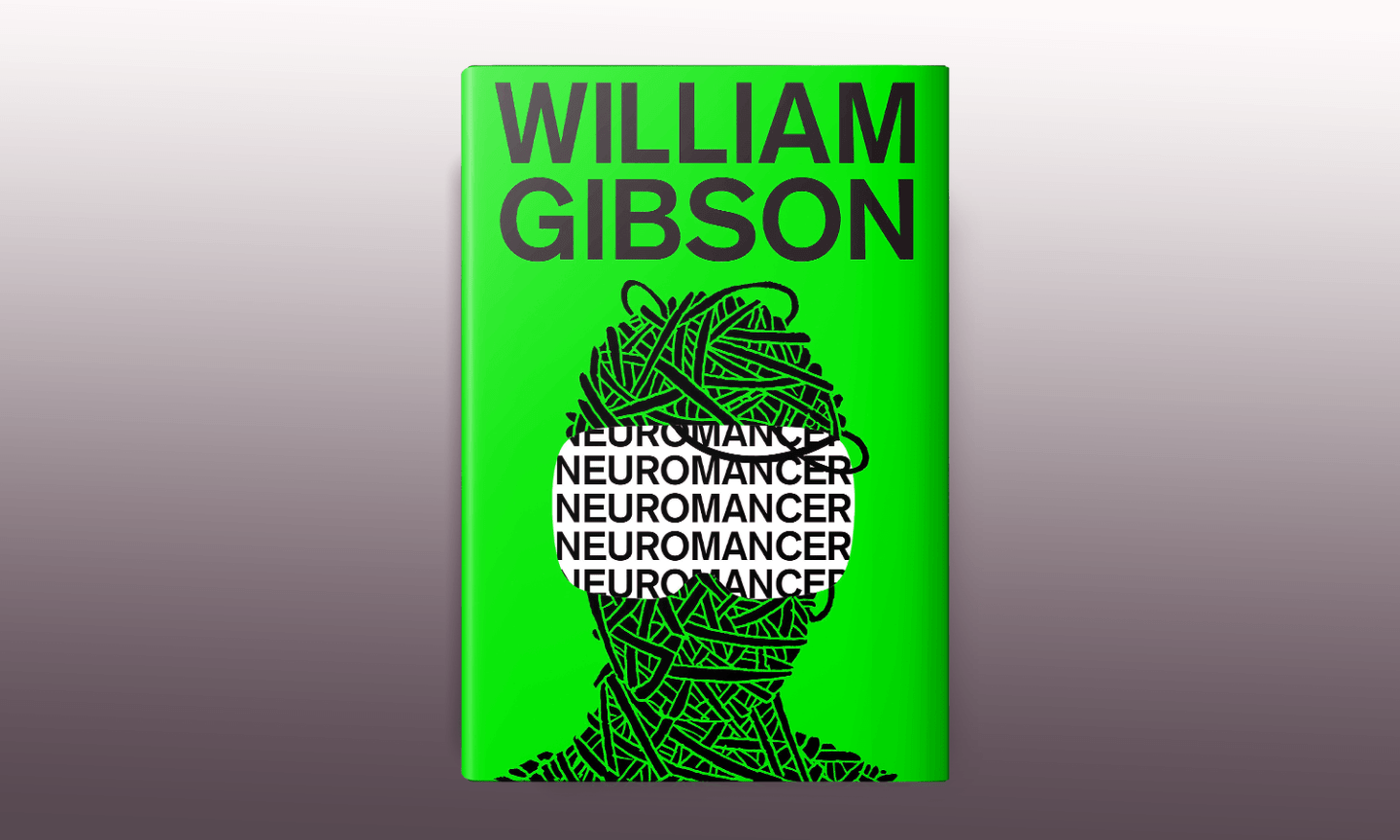
It’s been nearly 40 years since Gibson’s seminal Neuromancer was published. As Cory Doctorow notes, Eileen Gunn was a friend of Gibson’s from the earliest days, who while an exec at Microsoft, hosted him – then a penniless aspiring writer – in Seattle and took him to the hacker bars where he eavesdropped on what he calls “the poetics of the technological subculture.” She reflects on Neuromancer‘s impact– its lessons and the questions it raises– then and now…
… William Gibson’s cool, collected language doesn’t make a big deal about this being the future. Your brain glides smoothly past quotidian details that might have been futuristic the first time you read them, but now are just the way the world rolls. The transition to global connectedness and a global economy has been accomplished; cyberspace is here and people all over the world have casual access to it; outer space is an international arena and not just a US/Soviet hegemony. There are Russians here, or, at least, the clunky remains of their materiel, but, presciently, there are no Soviets in Neuromancer...
What is most interesting about Neuromancer is not the caper––although that’s certainly intricate and interesting itself. It’s not simply the suggestion of a compelling future––some of which has vanished from the text merely by coming to pass, but much of which is intact and captivating. What is most interesting to me, after forty years and many re-readings, is its meditation on the relationship between personality and memory and humanity, on originality and creativity, on what makes people real…
Gibson himself has said that, in creating a future that didn’t end in a global nuclear disaster, he thought he was creating an optimistic future. In the 1980s, reading Neuromancer’s grim future somehow alleviated, for me at least, the fear that the unknown future would be unsurvivable. It made today a familiar place. Our fears are different now, but Gibson’s books continue to serve that purpose….
I urge you to read and re-read not only Neuromancer, but Count Zero and Mona Lisa Overdrive, the subsequent books in the Sprawl trilogy. As Gibson continued to explore this alternate future, he continued to extend his mastery of craft and content. In the two following books, his larger vision of what he was writing about becomes evident, as I think it did to him as he wrote them. The Gibsonian world and the Gibsonian universe are larger and more diverse than Neuromancer, larger even than this entire trilogy. They contain multitudes. If you don’t already know them, I hope you will check them all out. His peculiar dystopian optimism, that humans will somehow elude complete obliteration, has grown larger over the years, and we need it more than ever…
Amen. “William Gibson’s Neuromancer: Does the Edge Still Bleed?,” from @eileen_gunn via @doctorow.
* William Gibson, Neuromancer
###
As we find our ways forward, we might send ruminative birthday greetings to a master of a different genre, Georges Joseph Christian Simenon; he was born on this date in 1903. A prolific author (who published nearly 500 novels and numerous short works), he is best known as the creator of the fictional detective Jules Maigret. His work is featured in the collection La Pléiade (inspiration for the Library of America), and in 1966 he was awarded the Mystery Writers of America’s highest honor, the Grand Master Award.

“Real generosity towards the future lies in giving all to the present”*…

Iwan Rhys Morus suggests that we’re enthralled to a Victorian paradigm that haunts us still: the idea that inventors and entrepreneurs hold the keys to the utopian future…
Tech titans like Elon Musk and Jeff Bezos present themselves as men who could single-handedly shape the future. For their supporters, their ruthless drive toward success is their key virtue. And their showmanship — Musk sending a Tesla Roadster into space on a Falcon Heavy rocket, or Bezos sending Captain Kirk into orbit with Blue Origin — is a way of demonstrating that virtue and asserting they are in control.
We owe to the Victorians the idea that there is a firm link between virtue and technological agency. They established a powerful paradigm that continues to haunt us: that the future is (or can be) a utopia, and inventors and entrepreneurs are the ones who know how to get there.
While our notions of virtue have shifted today, we still assume that future-making is the prerogative of very specific sorts of innovators — even as their imagined identities have fractured and transformed. The assumption that innovation is the property of charismatic individuals still underlies the way we think about technology.
…
The seductive power of Victorian thinking about the relationship between character, technology, and the future remains pervasive, even if views about just what the proper character of the inventor should be have shifted….
With its focus on individual virtue, the Victorian vision of the future is an exclusive one. When we subscribe to this paradigm about how — and by whom — the future is made, we’re also relinquishing control over that future. We’re acknowledging that tomorrow belongs to them, not to us.
“Back To The Victorian Future,” by @irmorus1 in @NoemaMag. Eminently worth reading in full.
* Albert Camus
###
As we ponder power and its purpose, we might send inclusive birthday greetings to Jacques Lucien Monod; he was born on this date in 1910. A biochemist, he shared (with with François Jacob and André Lwoff) the Nobel Prize in Physiology or Medicine in 1965, “for their discoveries concerning genetic control of enzyme and virus synthesis.”
But Monod, who became the director of the Pasteur Institute, also made significant contributions to the philosophy of science– in particular via his 1971 book (based on a series of his lectures) Chance and Necessity, in which he examined the philosophical implications of modern biology. The importance of Monod’s work as a bridge between the chance and necessity of evolution and biochemistry on the one hand, and the human realm of choice and ethics on the other, can be seen in his influence on philosophers, biologists, and computer scientists including Daniel Dennett, Douglas Hofstadter, Marvin Minsky, and Richard Dawkins.

You must be logged in to post a comment.