Posts Tagged ‘experience’
“Who would believe that so small a space could contain the image of all the universe? O mighty process!… Here the figures, here the colors, here all the images of every part of the universe are contracted to a point. O what a point is so marvelous!”*…
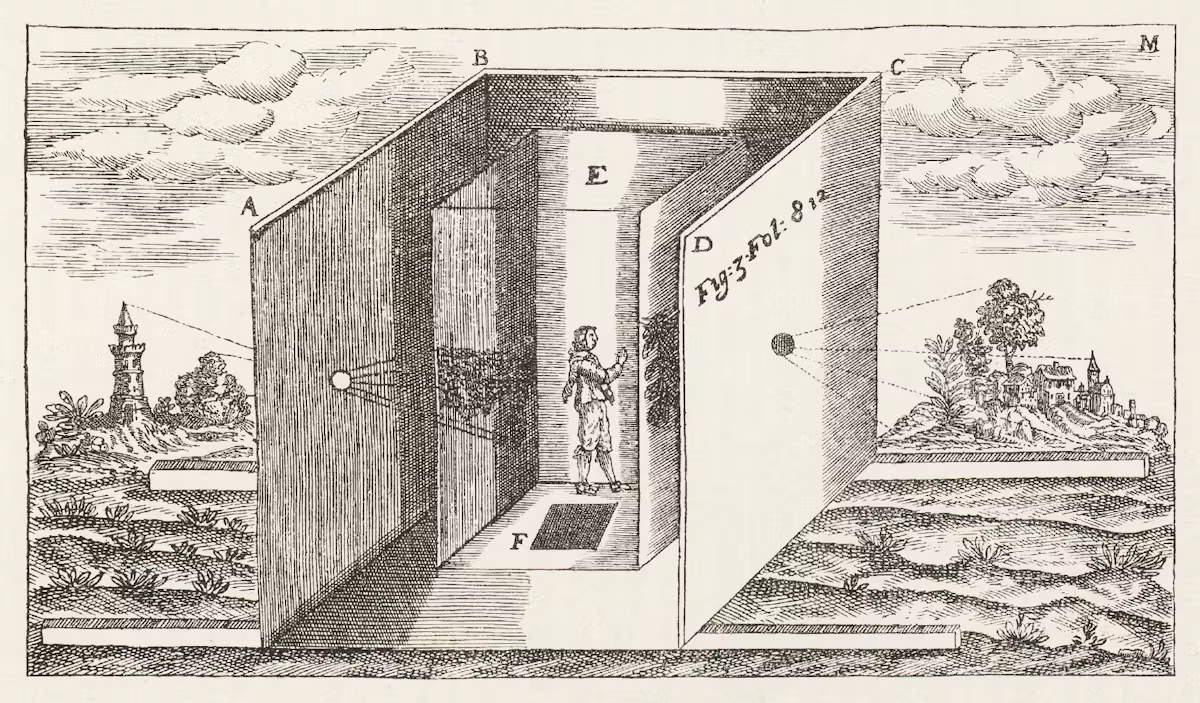
Centuries before photography froze the world into neat frames, scientists, poets, and artists streamed transient images into dark interior spaces with the help of a camera obscura. Julie Park explores the early modern fascination with this quasi-spiritual technology and the magic, melancholy, and dream-like experiences it produced…
The camera obscura, a device known as the photographic camera’s predecessor, was originally the size of a room. As an artist’s aid for rendering perspective, a scientific model for understanding optics, and a source of popular entertainment, it furnished observers with all kinds of information during the early modern period. In the context of pursuing knowledge about the natural world — whether in studying the sun, the light it emits, or the very organ for seeing, the eye — alchemists, astronomers, and mathematicians turned rooms in their homes into camera obscuras for revealing what was previously invisible.
In the most rudimentary terms, the camera obscura (whose Latin name means “dark chamber”) is a dark and enclosed environment with a hole on one side. This aperture allows light to stream into the interior space, casting moving images onto the opposite wall. Because its images of external reality appear reversed, both laterally and vertically — in colors deeper than their original, with movements intact but seemingly exaggerated — the camera obscura’s projections of the world re-envision it as a dream.
One of the very first mentions of the phenomenon behind the camera obscura is tied to the viewing of a solar eclipse. Aristotle, while observing a partial solar eclipse in the fourth century BCE, glimpsed its reflection in the play of light that seeped through the dense canopy of a tree. Here, the “dark chamber” is not a box or a room, but the critical space between solid things. Transposing this phenomenon onto the walls of domestic architecture, early modern natural philosophers made it possible to experience the domain of one’s personal space as a realm of marvelous reversal and illusion.
For Giambattista della Porta, polymath author of Natural Magic (1558), a book of natural philosophy and alchemy filled with magic tricks and scientific experiments, the camera obscura was a space for “see[ing] all things in the dark, that are outwardly done in the Sun, with the colours of them”. This evocative phrasing suggests the metaphysical happenings that the experience of being and peering inside a camera obscura offers. Della Porta’s instructions for engineering this “very pleasant and admirable” experience — among the “great secrets of Nature” — involve managing sources of light and creating the conditions by which it can be strategically channeled: “you must shut all the Chamber windows, and it will do well to shut up all holes besides”, except for one that is as wide and long as your hand. By covering the walls with paper or white cloth to create a viewing screen, the outside world will appear indoors, both familiar and estranged: “so shall you see all that is done without in the Sun, and those that walk in the streets, like to Antipodes, and what is right will be the left, and all things changed.”
A spiritual dimension inheres in this experience: the notion of illumination via obscuration that surrounds the early modern camera obscura carries remnants of the medieval period’s approach to darkness as the medium for perceiving the glorious light of God. Elina Gertsman explains how nowhere was this more evident than in windows through which light, both colored and clear, flooded into the darkness of cathedrals. Without the dimly lit cathedral space, this transmission of light as an expression of God’s splendor would not be so keenly felt. Both cathedrals and camera obscuras share the principle that dark places form the critical environment through which transformative light and its effects can be channeled. Yet in the case of camera obscuras, it was not just light alone, but ever more wondrous projections of the world that illuminated enclosed spaces…
[Park describes the camera obscuras of Johannes Kepler, Alexander Pope, Joshia Reynolds, and others…]
… While one might draw parallels with photographic technologies (both still and motion) — regarding how images are conjured by controlling an aperture — a key difference lies in the ephemerality of the viewing experience offered by the camera obscura. It captures life and its happenings as they take place, rather than preserving their images for the future. In other words, the moving images of the world it brings into its dark room are as transient as the dream state it appears to summon. And like dreams, the camera obscura could offer a new perspective on the world, to reveal things that might otherwise remain invisible. In 1764, the author of a dictionary entry on the camera obscura reflected on the ways in which the device underscores the motion of “the object itself”, such as a man walking, so that he appears to “have an undulating motion, or to rise up and down every step he takes”, in a way that could never be “observed in the man himself, as viewed by the naked eye”.
Despite their delight, the beguiled eighteenth-century viewers and inhabitants of the camera obscura’s worlds ineluctably expressed a sense of melancholy over the ephemerality of its projected scenes. Such sentiments are apparent in the numerous poems that appeared in the period conveying regret over the eventual disappearance of its pleasing phantoms. Yet, for a brief time, the camera obscura, especially when experienced as a room, gave individuals a sense of owning their own moving images of the world, in ways that might have felt far more vivid and evocative of one’s dream life than our own experiences with cinema are felt today. The moving images it mediates come from the viewer’s immediate environment, not from a world created by a scriptwriter and producer. This aspect of the camera obscura encouraged viewers to see reality in an unreal guise, both as an inner reality and a dream world, an elsewhere that is in fact quite nearby.
Paying attention to the historical role that the camera obscura played — allowing humans a safe and enclosed environment for accessing their imaginations, the sun, and many things in between — might transform the ways we look at our own spaces of solitude. Its visual effects can make us see that our emotional and mental landscapes are inseparable from the spaces in which we live and organize our lives. The very walls that provide us with shelter can also transform the world into scenes from a passing dream. By showing the world “with all things changed”, the camera obscura reveals just how clearly we can see in dark places…
More on– and many wonderful illustrations of– the early modern camera obscura: “Watching the World in a Dark Room,” from @publicdomainrev.bsky.social.
* Leonardo Da Vinci on the camera obscura
###
As we marvel, we might send birthday greetings to a modern photgrapher who has resurrected the technique, Abelardo Morell; he was born on this date in 1948. While his work is wide-ranging, he is perhaps best known for turning rooms into camera obscuras and then capturing the marriage of interior and exterior in large format photographs, for example:

More of Morell’s camera obscura work here.

“I regard consciousness as fundamental. I regard matter as derivative from consciousness. We cannot get behind consciousness. Everything that we talk about, everything that we regard as existing, postulates consciousness.”*…

Adam Frank argues that to understand life, we must stop treating organisms like machines and minds like code…
Much of our current discussion about consciousness has a singular fatal flaw. It’s a mistake built into the very foundations of how we view science — and how science itself is perceived and conducted across disciplines, including today’s hype around artificial intelligence.
What most popular attempts to explain consciousness miss is that no scientific explanations of any kind can be possible without accounting for something that is even more fundamental than the most powerful theories about the physical world: our experience.
Since the birth of modern science more than 400 years ago, philosophers have debated the fundamental nature of reality and the fundamental nature of consciousness. This debate became defined by two opposing poles: physicalism and idealism.
For physicalists, only the material that makes up physical reality is of consequence. To them, consciousness must be reducible to the matter and electromagnetic fields in the brain. For idealists, however, only the mind is real. Reality is built from the realm of ideas or, to put it another way, a pure universal essence of mind (the philosopher Hegel called it “Absolute Spirit”).
Physicists like me are trained to think of the world in terms of its physical representations: matter, energy, space and time. So it’s no surprise that we physicists tend to start off as physicalists, who approach the question of consciousness by inquiring about the physical mechanics that give rise to it, beginning with subatomic particles and then ascending the chain of sciences — chemistry, biology, neuroscience — to eventually focus in on the physical mechanics occurring in the neurons that must generate consciousness (or so the story goes).
This kind of “bottom-up” scientific approach has contributed to modern science’s success, and it is also why physicalism has become so compelling for most scientists and philosophers. This approach, however, has not worked for consciousness. Trying to account for how our lived experience emerges from matter has proven so difficult that philosopher David Chalmers famously referred to it as “the hard problem of consciousness.”
We use the term consciousness to describe our vividly intimate lives — “what it is like” to exist. But experience, which encapsulates our consciousness, thereby cuts more effectively to the core of our reality. An achingly beautiful red sunset, a crisp bite of an autumn Honeycrisp apple; according to the dominant scientific way of thinking, these are phantoms.
Philosophically speaking, from this physics-first view, all experiences are epiphenomena that are unimportant and surface-level. Neurobiologists might fret over how experience appears or works, but ultimately reality is about quarks, electrons, magnetic fields, gravity and so on — matter and energy moving through space and time. Today’s dominant scientific view is blind to the true nature of experience, and this is costing us dearly.
The optic nerve lies at the back of the human eye, connected to the retina, which is made up of receptors sensitive to incoming light. The nerve’s job is to transmit visual input gathered by those receptors to the brain. But the optic nerve’s location atop a tiny portion of the retina also means there is a blind spot in our vision, a region in the visual field that is literally unseen.
In science, that blind spot is experience.
Experience is intimate — a continuous, ongoing background for all that happens. It is the fundamental starting point below all thoughts, concepts, ideas and feelings. The philosopher William James used the term “direct experience.” Others have used words like “presence” or “being.” Philosopher Edmund Husserl spoke of the “Lebenswelt” or life-world to highlight the irreducible totality of our “already being in a living world” before we ask any questions about it.
From this perspective, experience is a holism; it can’t be pulled apart into smaller units. It is also a precondition for science: To even begin to develop a theory of consciousness requires being already embedded in the richness of experience. But dealing with this has been difficult for the philosophies that guide science as it’s currently configured…
[Frank introduces the perspectives of William James, Alfred North Whitehead, Edmund Husserl, Thomas Nagel, and Immanuel Kant, urging that we move beyond the machine metaphor, and work with concepts like autopoiesis and embodiment…]
… The problem is, once again, surreptitious substitution. Intelligence is mistaken as mere computation. But this assumption undermines the centrality of experience, as philosopher Shannon Vallor has argued. Once we fall into this kind of blind spot, we open ourselves to building a world where our deepest connections and feelings of aliveness are flattened and devalued; pain and love are reduced to mere computational mechanisms viewable from an illusory and dead third-person perspective.
The difference between the enactive approach to cognition and consciousness and the reductive view of physicalism could not be more stark. The latter focuses on a physical object, in this case the brain, asking how the movements of atoms and molecules within it create a property called consciousness. This view assumes that a third-person objective view of the world is possible and that the brain’s job is to provide the best representation of this world.
The enactive approach and similar phenomenologically grounded perspectives, however, don’t separate the brain from the body. That is because brains are not separate things. Like the unity of cell membranes and the cell, brains are part of the organizational unity of organisms with brains. Organisms with brains, therefore, aren’t just representing the world around them; they are co-creating it.
To be clear, there is, of course, a world without us. To claim otherwise would be solipsistic nonsense. But that world without us is not our world. It’s not the one we experience and from which we begin our scientific investigations. Therefore, this third-person perspective of a world without us and our experience, is nothing more than a sophisticated kind of fantasy…
[Frank oultines a line of inquiry that builds on these insights…]
… Moving beyond consciousness as a mechanism in the dead physical world toward a view of lived experience as embedded and embodied in a living world is essential for at least two reasons. It may be the fundamental reframing required to make scientific progress on a range of issues, from the interpretation of quantum mechanics to the understanding of cognition and consciousness.
Recognizing the primacy of experience also forces us to understand that all our scientific stories — and the technologies we build from them — must always include us and our place within the tapestries of life. Recognizing there is no such thing as an external view has consequences for how we think about urgent questions like climate change and AI. In this way, the new vision of nature that comes from an experience-centric perspective can help us take the next steps necessary for human flourishing. That goal, after all, was also one of the primary reasons we invented science in the first place…
“Why Science Hasn’t Solved Consciousness (Yet)” from @adamfrank4.bsky.social in @noemamag.com.
Apposite (both to the post above and to the post from July 15): “Human Stigmergy” from @marco-giancotti.bsky.social.
###
As we embrace experience, we might send critical birthday greetings to Herbert Marcuse; he was born on this date in 1898. A philosopher, social critic, and political theorist associated with the Frankfurt School of critical theory, he critiqued capitalism, modern technology, Soviet Communism, and popular culture, arguing that they represent new forms of social control. Best-known for Eros and Civilization (1955) and One-Dimensional Man (1964), he is considered “the Father of the New Left.”
To the degree to which they correspond to the given reality, thought and behavior express a false consciousness, responding to and contributing to the preservation of a false order of facts. And this false consciousness has become embodied in the prevailing technical apparatus which in turn reproduces it.
– Marcuse

“Nothing is poorer than a truth expressed as it was thought”*…
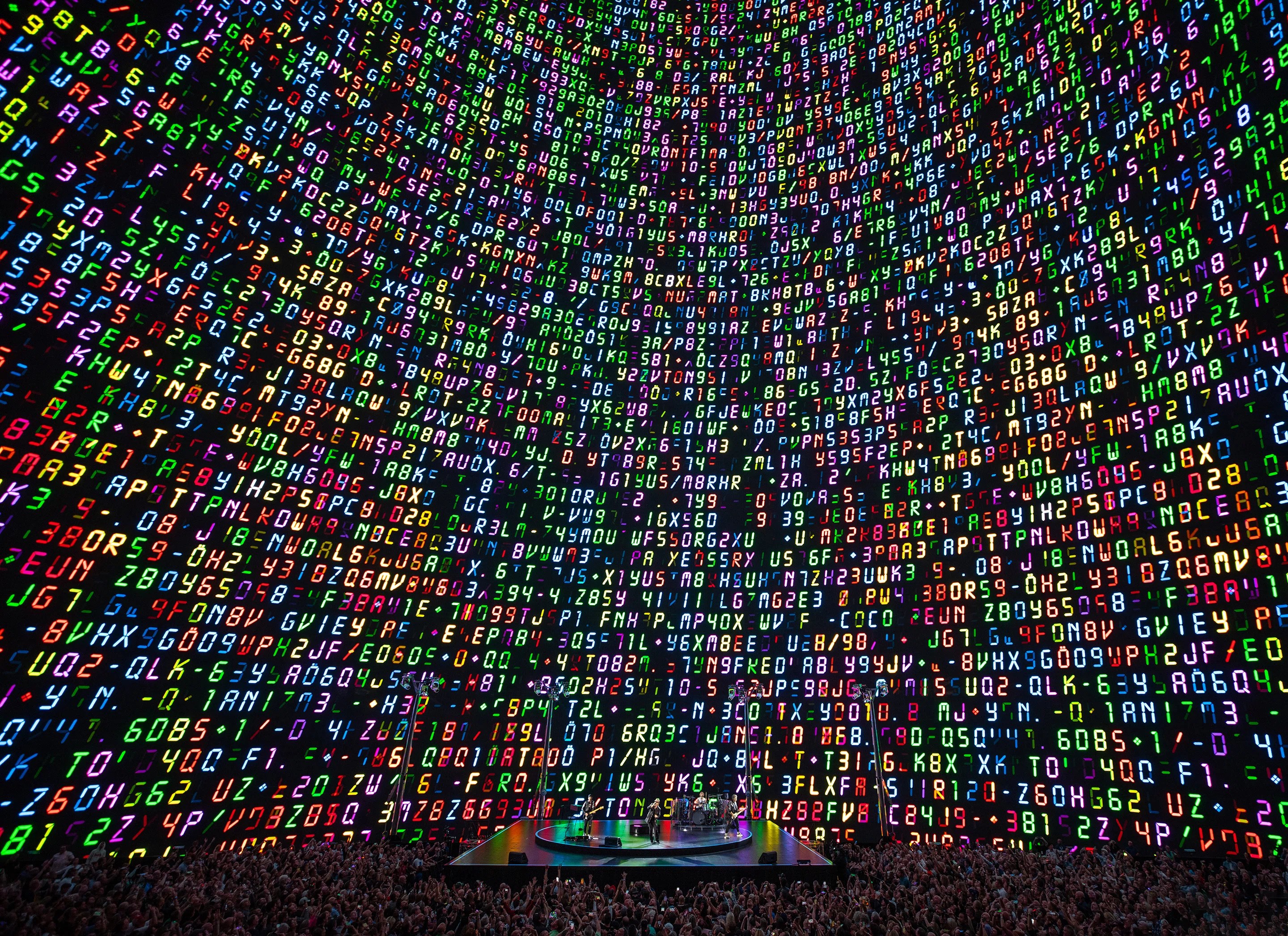
Many bemoan the experiential art that has taken over our galleries and screens, but is, Róisín Lanigan asks, it a populist fad or a way to make art more accessible?…
You don’t have to be a historian or a creative to notice it: art just isn’t what it used to be. Or at least, the act of experiencing art in public isn’t what it used to be. Whereas once we paid to go to galleries to silently view paint behind plexiglass, a new wave of curators and creators have decided that for art to be truly appreciated, we must be completely immersed in the audio, visual and experiential world it inhabits. From London’s Outernet to Yayoi Kusama’s Infinity Mirrors and Vegas’s controversial The Sphere, it’s never been clearer that we’re living in the midst of the immersive art boom.
Even if you’ve never been to one of these spaces – all immersive art exhibitions exist as ‘spaces’; ‘gallery’ is increasingly an archaic term – you’ll be cognisant of their existence. Because they don’t just live in the real world, they live on your screen too. Social media is awash with immersive exhibition selfies, with videos recommending the top ten best immersive art events to see for free in most big cities. The hashtag ‘immersive art’ clocks in at over 99 million views on TikTok and nearly half a million on Instagram (where in all fairness millennials are less amenable to the transformative power of the hashtag than the algorithmically attuned TikTok zoomers).
Outernet, based in Soho, sees around 1.5 million to their ‘district’ on a monthly basis, and say they’re on track to hit 6.8 million visitors this year alone, which would put them on track to be one of the most visited destinations in the UK, just one year after opening. The Smithsonian says that Kusama’s roving Infinity Mirrors exhibition has reached 330 million people across Twitter and other platforms. It’s not a leap to say we’re reaching, if we haven’t already, peak immersive art. But is that a bad thing? And if we’re already at the apex, where do we go from here?
It’s easy to take up the mantle that immersive-mania is, of course, wholly bad. The arguments for this always follow common throughlines; it’s common, it’s populist, it’s diluting the experience of what true art really is. In a recent scathing example, a Vulture review of Refik Anadol’s Unsupervised at Moma called the immersive exhibition “a glorified lava lamp” and accused it of being nothing more than “crowd-pleasing, like-generating mediocrity”.
But who decides what that experience is, what it looks like? The art world, much like the fashion and film industries, has undergone much-needed transformations in recent years to get rid of those antiquated ideals and cultural gatekeepers. Slowly but surely, it’s become more diverse, younger, more experimental and in the process, more accessible. For every charge that immersive events are diluting our experience of artistry, there’s a counterpoint to be made that it’s opening that experience out to people who might not normally gravitate towards it…
[But, she reports, there’s a snake in the garden…]
There is, though, for all the accessibility that immersive exhibitions offer, something antithetical to the experience of being moved by a piece of art when in the back of our minds we’re thinking about how many likes we might get for it on social media. Immersive events which actively encourage selfies and photo opportunities risk detracting from the art itself; a depressing natural end-point to queues to take photos in front of the Mona Lisa and cameras being banned from Basquiat’s recent exhibition in London. Although cameras could never be conceivably banned from the grid-ready world of immersive art, it’s a fine line to treat between posting too much too; leaving your exhibition open to an ‘Instagram vs Reality’ takedown, or revealing spoilers. In the case of Sphere, organisers briefly considered asking guests to put stickers over their phone cameras before realising that their footage is as much promotion as it is a leak…
… There are so many immersive pop-ups that even the gallerists and producers themselves are getting sick of it. Lizzie Pocock tells me almost every brief she’s received for the past five years has used the word “immersive”, a term she now calls “overused”. “I don’t want to sort of be disrespectful, but so many things that get called immersive, you still sort of just go and watch,” she says. “You don’t feel like you’re in them, or you’re affected by them. It’s almost a bit of a lazy word, a buzzword, isn’t it? It’s like, let’s do something that’s immersive. It’s perhaps an excuse to not really delve into sort of the deeper experience and the deeper reason for why you’re putting it live.”
If the people behind the immersive shows are getting sick of them, then perhaps we finally have reached peak immersive. Now we just have to wait for audiences to catch up, for the algorithm to get bored, and for the art world to determine what their next lucrative buzzword will be. Personally, my money’s on AI…
“Have we reached peak immersive art?,” from @rosielanners in @itsnicethat.
See also: “The Rise of ‘Immersive’ Art” and “Ready to plunge in? The rise and rise of immersive art.”
* “Nothing is poorer than a truth expressed as it was thought. Committed to writing in such cases, it is not even a bad photograph. Truth wants to be startled abruptly, at one stroke, from her self-immersion, whether by uproar, music or cries for help.” – Walter Benjamin
###
As we dive in, we might spare a thought for Michelangelo di Lodovico Buonarroti Simoni; he died on this date in 1564. A sculptor, painter, architect, poet, and engineer in the High Renaissance, Michelangelo was considered one of the greatest artists of his time. And given his profound influence on the development of Western art, he has subsequently been considered one of the greatest artists of all time. Indeed, he is widely held to be (with Leonardo da Vinci) the archetypal Renaissance man.
Further to the item above, we might also note that, via his painting on the ceiling of the Sistine Chapel in Rome, he was a pioneer of immersive art.

“One cries because one is sad. For example, I cry because others are stupid, and that makes me sad.”*…

From our friends at The Pudding, a case study in Chinese censorship: Manyun Zou watched the first 100 episodes of The Big Bang Theory that stream in the U.S. and on the Chinese streaming site Youku, side by side, and tracked 206 missing scenes from the Youku version…
Growing up in China, I had a blast watching American TV shows. They not only helped me learn English, but also introduced me to fresh perspectives and worldviews. The Big Bang Theory was among my favorites.
I quickly became a fan of the sitcom when it was officially introduced in China on a video streaming website in 2011. But when I rewatched the show in 2022 on Youku, a Chinese video streaming website backed by e-commerce giant Alibaba, I couldn’t help but notice weird jumps, pauses, and disconnected canned laughter…
What happened to the show?
To understand that, we have to back up a bit. This change can be traced to a sudden political decision in 2014. According to the state-owned media outlet Xinhua, streaming platforms received a private notification from regulators to remind them of one key rule:
“imported American and British TV shows must be ‘reviewed and approved by officials before streaming to the public.’”
Shortly thereafter, The Big Bang Theory was among a handful of imported shows pulled from Chinese websites. Audiences were only left with a black screen and a line: “video has been removed due to policy reasons.”
When these shows resurfaced, they were full of these weird jumps, signaling that scenes were removed during censorship because someone somewhere thought it would be inappropriate or illegal to stream such content.
So the question has to be asked: what kind of content has been removed, and why?
To find out, I compared 100 episodes of the original version of The Big Bang Theory with the edited Youku version to understand what was cut out and decipher the logic behind the decision…
A fascinating look at what Chinese censors fear: “The Big [Censored] Theory,” from @Manyun_Zou in @puddingviz.
* “Sheldon,” The Big Bang Theory, “The Gorilla Experiment” (Season 3, Episode 10)
###
As we contemplate censorship, we might spare a thought for Immanuel Kant; he died on this date in 1804. One of the central figures of modern philosophy, Kant is remembered primarily for his efforts to unite reason with experience (e.g., Critique of Pure Reason [Kritik der reinen Vernunft], 1781), and for his work on ethics (e.g., Metaphysics of Morals [Die Metaphysik der Sitten], 1797) and aesthetics (e.g., Critique of Judgment [Kritik der Urteilskraft], 1790). But he made important contributions to mathematics and astronomy as well; for example: Kant’s argument that mathematical truths are a form of synthetic a priori knowledge was cited by Einstein as an important early influence on his work. And his description of the Milky Way as a lens-shaped collection of stars that represented only one of many “island universes,” was later shown to be accurate by Herschel.
Act so as to treat humanity, whether in your own person or in that of another, at all times also as an end, and not only as a means.

“Reality is merely an illusion, albeit a very persistent one”*…

In an excerpt from his new book, The Rigor of Angels: Borges, Heisenberg, Kant, and the Ultimate Nature of Reality, the estimable William Egginton explains the central mystery at the heart of one of the most important breakthroughs in physics–quantum mechanics…
For all its astonishing, mind-bending complexity– for all its blurry cats, entangled particles, buckyballs, and Bell’s inequalities– quantum mechanics ultimately boils down to one core mystery. This mystery found its best expression in the letter Heisenberg wrote to Pauli in the fevered throes of his discovery. The path a particle takes ‘only comes into existence through this, that we observe it.’ This single, stunning expression underlies all the rest: the wave/particle duality (interference patterns emerge when the particles have not yet been observed and hence their possible paths interfere with one another); the apparently absurd liminal state of Schrodinger’s cat ( the cat seems to remain blurred between life and death because atoms don’t release a particle until observed); the temporal paradox (observing a particle seems to retroactively determine the path it chose to get here); and, the one that really got to Einstein, if the observation of a particle at one place and time instantaneously changes something about the rest of reality, then locality, the cornerstone of relativity and guarantee that the laws of physics are invariable through the universe, vanishes like fog on a warming windowpane.
If the act of observation somehow instantaneously conjures a particle’s path, the foundations not only of classical physics but also of what we widely regard as physical reality crumble before our eyes. This fact explains why Einstein held fast to another interpretation. The particle’s path doesn’t come into existence when we observe it. The path exists, but we just can’t see it. Like the parable of the ball in the box he described in his letter to Schrodinger, a 50 percent chance of finding a ball in any one of two boxes does not complete the description of the ball’s reality before we open the box. It merely states our lack of knowledge about the ball’s whereabouts.
And yet, as experiment after experiment has proven, the balls simply aren’t there before the observation. We can separate entangled particles, seemingly to any conceivable distance, and by observing one simultaneously come to know something about the other–something that wasn’t the case until the exact moment of observing it. Like the beer and whiskey twins, we can maintain total randomness up to a nanosecond before one of them orders, and still what the one decides to order will determine the other’s drink, on the spot, even light-years away.
The ineluctable fact of entanglement tells us something profound about reality and our relation to it. Imagine you are one of the twins about to order a drink (this should be more imaginable than being an entangled particle about to be observed, but the idea is the same). From your perspective you can order either a whiskey or a beer: it’s a fifty-fifty choice; nothing is forcing your hand. Unbeknownst to you, however, in a galaxy far, far away, your twin has just made the choice for you. Your twin can’t tell you this or signal it in any way, but what you perceive to be a perfectly random set of possibilities, an open choice, is entirely constrained. You have no idea if you will order beer or whiskey, but when you order it, it will be the one or the other all the same. If your twin is, say, one light-year away, the time in which you make this decision doesn’t even exist over there yet. Any signals your sibling gets from you, or any signals you send, will take another year to arrive. And still, as of this moment, you each know. Neither will get confirmation for another year, but you can be confident, you can bet your life’s savings on it–a random coin toss in another galaxy, and you already know the outcome.
The riddles that arise from Heisenberg’s starting point would seem to constitute the most vital questions of existence. And yet one of the curious side effects of quantum mechanics’ extraordinary success has been a kind of quietism in the face of those very questions. The interpretation of quantum mechanics, deciding what all this means, has tended to go unnoticed by serious physics departments and the granting agencies that support them in favor of the ‘shut up and calculate’ school, leading the former to take hold mainly in philosophy departments, as a subfield of the philosophy of science called foundations of physics. Nevertheless, despite such siloing, a few physicists persisted in exploring possible solutions to the quantum riddles. Some of their ideas have been literally otherworldly.
In the 1950s, a small group of graduate students working with John Wheeler at Princeton University became fascinated with these problems and kept returning to them in late-night, sherry-fueled rap sessions. Chief among this group was Hugh Everett III, a young man with classic 1950s-style nerd glasses and a looming forehead. Everett found himself chafing at the growing no-question zone that proponents of the Copenhagen interpretation had built around their science. Why should we accept that in one quantum reality, observations somehow cause nature to take shape out of a probabilistic range of options, whereas on this side of some arbitrary line in the sand we inhabit a different, classical reality where observations meekly bow to the world out there? What exactly determines when this change takes place? ‘Let me mention a few more irritating features of the Copenhagen Interpretation,’ Everett would write to its proponents: ‘You talk of the massiveness of macro systems allowing one to neglect further quantum effects … but never give any justification for this flatly asserted dogma.’…
A fascinating sample of a fascinating book: “Quantum Mechanics,” from @WilliamEgginton via the invaluable @delanceyplace.
Further to which, it’s interesting to recall that, in his 1921 The Analysis Of Mind, Bertrand Russell observed:
What has permanent value in the outlook of the behaviourists is the feeling that physics is the most fundamental science at present in existence. But this position cannot be called materialistic, if, as seems to be the case, physics does not assume the existence of matter…
via Robert Cottrell
See also: “Objective Reality May Not Exist, Quantum Experiment Suggests” (source of the image above).
* Albert Einstein
###
As we examine existence, we might spare a thought for Otto Frisch; he died on this date in 1979. A physicist, he was (with Otto Stern and Immanuel Estermann) the first to measure the magnetic moment of the proton. With his aunt, Lise Meitner, he advanced the first theoretical explanation of nuclear fission (coining the term) and first experimentally detected the fission by-products. Later, with his collaborator Rudolf Peierls, he designed the first theoretical mechanism for the detonation of an atomic bomb in 1940.


You must be logged in to post a comment.