Posts Tagged ‘experience’
“Reality is merely an illusion, albeit a very persistent one”*…

In an excerpt from his new book, The Rigor of Angels: Borges, Heisenberg, Kant, and the Ultimate Nature of Reality, the estimable William Egginton explains the central mystery at the heart of one of the most important breakthroughs in physics–quantum mechanics…
For all its astonishing, mind-bending complexity– for all its blurry cats, entangled particles, buckyballs, and Bell’s inequalities– quantum mechanics ultimately boils down to one core mystery. This mystery found its best expression in the letter Heisenberg wrote to Pauli in the fevered throes of his discovery. The path a particle takes ‘only comes into existence through this, that we observe it.’ This single, stunning expression underlies all the rest: the wave/particle duality (interference patterns emerge when the particles have not yet been observed and hence their possible paths interfere with one another); the apparently absurd liminal state of Schrodinger’s cat ( the cat seems to remain blurred between life and death because atoms don’t release a particle until observed); the temporal paradox (observing a particle seems to retroactively determine the path it chose to get here); and, the one that really got to Einstein, if the observation of a particle at one place and time instantaneously changes something about the rest of reality, then locality, the cornerstone of relativity and guarantee that the laws of physics are invariable through the universe, vanishes like fog on a warming windowpane.
If the act of observation somehow instantaneously conjures a particle’s path, the foundations not only of classical physics but also of what we widely regard as physical reality crumble before our eyes. This fact explains why Einstein held fast to another interpretation. The particle’s path doesn’t come into existence when we observe it. The path exists, but we just can’t see it. Like the parable of the ball in the box he described in his letter to Schrodinger, a 50 percent chance of finding a ball in any one of two boxes does not complete the description of the ball’s reality before we open the box. It merely states our lack of knowledge about the ball’s whereabouts.
And yet, as experiment after experiment has proven, the balls simply aren’t there before the observation. We can separate entangled particles, seemingly to any conceivable distance, and by observing one simultaneously come to know something about the other–something that wasn’t the case until the exact moment of observing it. Like the beer and whiskey twins, we can maintain total randomness up to a nanosecond before one of them orders, and still what the one decides to order will determine the other’s drink, on the spot, even light-years away.
The ineluctable fact of entanglement tells us something profound about reality and our relation to it. Imagine you are one of the twins about to order a drink (this should be more imaginable than being an entangled particle about to be observed, but the idea is the same). From your perspective you can order either a whiskey or a beer: it’s a fifty-fifty choice; nothing is forcing your hand. Unbeknownst to you, however, in a galaxy far, far away, your twin has just made the choice for you. Your twin can’t tell you this or signal it in any way, but what you perceive to be a perfectly random set of possibilities, an open choice, is entirely constrained. You have no idea if you will order beer or whiskey, but when you order it, it will be the one or the other all the same. If your twin is, say, one light-year away, the time in which you make this decision doesn’t even exist over there yet. Any signals your sibling gets from you, or any signals you send, will take another year to arrive. And still, as of this moment, you each know. Neither will get confirmation for another year, but you can be confident, you can bet your life’s savings on it–a random coin toss in another galaxy, and you already know the outcome.
The riddles that arise from Heisenberg’s starting point would seem to constitute the most vital questions of existence. And yet one of the curious side effects of quantum mechanics’ extraordinary success has been a kind of quietism in the face of those very questions. The interpretation of quantum mechanics, deciding what all this means, has tended to go unnoticed by serious physics departments and the granting agencies that support them in favor of the ‘shut up and calculate’ school, leading the former to take hold mainly in philosophy departments, as a subfield of the philosophy of science called foundations of physics. Nevertheless, despite such siloing, a few physicists persisted in exploring possible solutions to the quantum riddles. Some of their ideas have been literally otherworldly.
In the 1950s, a small group of graduate students working with John Wheeler at Princeton University became fascinated with these problems and kept returning to them in late-night, sherry-fueled rap sessions. Chief among this group was Hugh Everett III, a young man with classic 1950s-style nerd glasses and a looming forehead. Everett found himself chafing at the growing no-question zone that proponents of the Copenhagen interpretation had built around their science. Why should we accept that in one quantum reality, observations somehow cause nature to take shape out of a probabilistic range of options, whereas on this side of some arbitrary line in the sand we inhabit a different, classical reality where observations meekly bow to the world out there? What exactly determines when this change takes place? ‘Let me mention a few more irritating features of the Copenhagen Interpretation,’ Everett would write to its proponents: ‘You talk of the massiveness of macro systems allowing one to neglect further quantum effects … but never give any justification for this flatly asserted dogma.’…
A fascinating sample of a fascinating book: “Quantum Mechanics,” from @WilliamEgginton via the invaluable @delanceyplace.
Further to which, it’s interesting to recall that, in his 1921 The Analysis Of Mind, Bertrand Russell observed:
What has permanent value in the outlook of the behaviourists is the feeling that physics is the most fundamental science at present in existence. But this position cannot be called materialistic, if, as seems to be the case, physics does not assume the existence of matter…
via Robert Cottrell
See also: “Objective Reality May Not Exist, Quantum Experiment Suggests” (source of the image above).
* Albert Einstein
###
As we examine existence, we might spare a thought for Otto Frisch; he died on this date in 1979. A physicist, he was (with Otto Stern and Immanuel Estermann) the first to measure the magnetic moment of the proton. With his aunt, Lise Meitner, he advanced the first theoretical explanation of nuclear fission (coining the term) and first experimentally detected the fission by-products. Later, with his collaborator Rudolf Peierls, he designed the first theoretical mechanism for the detonation of an atomic bomb in 1940.


“No problem can be solved from the same level of consciousness that created it”*…

… perhaps especially not the problem of consciousness itself. At least for now…
A 25-year science wager has come to an end. In 1998, neuroscientist Christof Koch bet philosopher David Chalmers that the mechanism by which the brain’s neurons produce consciousness would be discovered by 2023. Both scientists agreed publicly on 23 June, at the annual meeting of the Association for the Scientific Study of Consciousness (ASSC) in New York City, that it is still an ongoing quest — and declared Chalmers the winner.
What ultimately helped to settle the bet was a key study testing two leading hypotheses about the neural basis of consciousness, whose findings were unveiled at the conference.
“It was always a relatively good bet for me and a bold bet for Christof,” says Chalmers, who is now co-director of the Center for Mind, Brain and Consciousness at New York University. But he also says this isn’t the end of the story, and that an answer will come eventually: “There’s been a lot of progress in the field.”
Consciousness is everything a person experiences — what they taste, hear, feel and more. It is what gives meaning and value to our lives, Chalmers says.
Despite a vast effort — and a 25-year bet — researchers still don’t understand how our brains produce it, however. “It started off as a very big philosophical mystery,” Chalmers adds. “But over the years, it’s gradually been transmuting into, if not a ‘scientific’ mystery, at least one that we can get a partial grip on scientifically.”…
Neuroscientist Christof Koch wagered philosopher David Chalmers 25 years ago that researchers would learn how the brain achieves consciousness by now. But the quest continues: “Decades-long bet on consciousness ends — and it’s philosopher 1, neuroscientist 0,” from @Nature. Eminently worth reading in full for background and state-of-play.
* Albert Einstein
###
As we ponder pondering, we might spare a thought for Vannevar Bush; he died on this date in 1974. An engineer, inventor, and science administrator, he headed the World War II U.S. Office of Scientific Research and Development (OSRD), through which almost all wartime military R&D was carried out, including important developments in radar and the initiation and early administration of the Manhattan Project. He emphasized the importance of scientific research to national security and economic well-being, and was chiefly responsible for the movement that led to the creation of the National Science Foundation.
Bush also did his own work. Before the war, in 1925, at age 35, he developed the differential analyzer, the world’s first analog computer, capable of solving differential equations. It put into productive form, the mechanical concept left incomplete by Charles Babbage, 50 years earlier; and theoretical work by Lord Kelvin. The machine filled a 20×30 ft room. He seeded ideas later adopted as internet hypertext links.

“No problem can be solved from the same level of consciousness that created it”*…
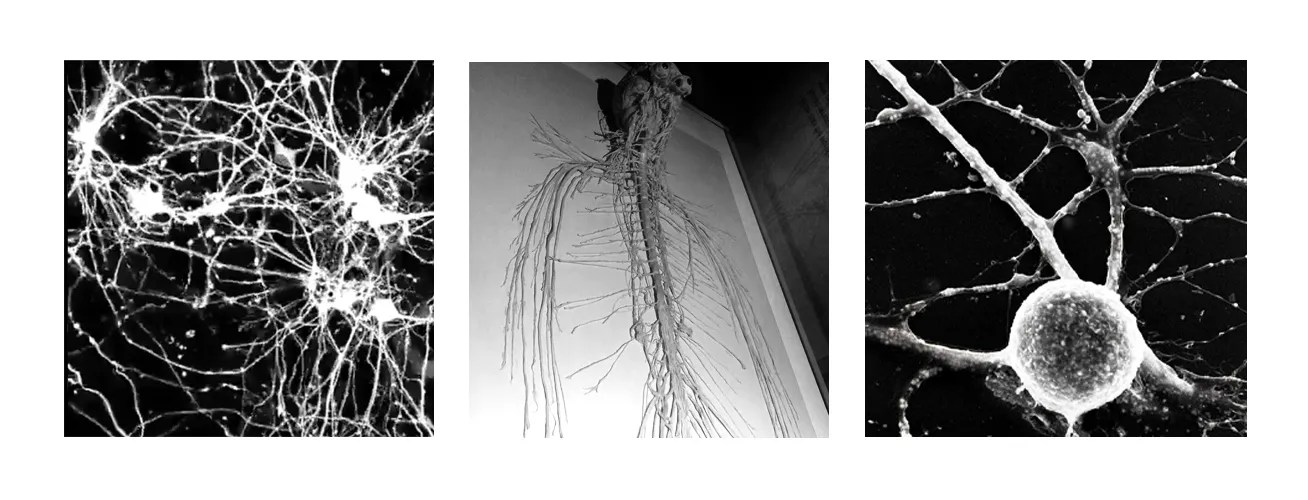
Annaka Harris on the difficulty in understanding consciousness…
The central challenge to a science of consciousness is that we can never acquire direct evidence of consciousness apart from our own experience. When we look at all the organisms (or collections of matter) in the universe and ask ourselves, “Which of these collections of matter contain conscious experiences?” in the broadest sense, the answer has to be “some” or “all”—the only thing we have direct evidence to support is that the answer isn’t “none,” as we know that at least our own conscious experiences exist.
Until we attain a significantly more advanced understanding of the brain, and of many other systems in nature for that matter, we’re forced to begin with one of two assumptions: either consciousness arises at some point in the physical world, or it is a fundamental part of the physical world (some, or all). And the sciences have thus far led with the assumption that the answer is “some” (and so have I, for most of my career) for understandable reasons. But I would argue that the grounds for this starting assumption have become weaker as we learn more about the brain and the role consciousness plays in behavior.
The problem is that what we deem to be conscious processes in nature is based solely on reportability. And at the very least, the work with split-brain and locked-in patients should have radically shifted our reliance on reportability at this point…
The realization that all of our scientific investigations of consciousness are unwittingly rooted in a blind assumption led me to pose two questions that I think are essential for a science of consciousness to keep asking:
- Can we find conclusive evidence of consciousness from outside a system?
- Is consciousness causal? (Is it doing something? Is it driving any behavior?)
The truth is that we have less and less reason to respond “yes” to either question with any confidence.And if the answer to these questions is in fact “no,” which is entirely possible, we’ll be forced to reconsider our jumping off point. Personally I’m still agnostic, putting the chances that consciousness is fundamental vs. emergent at more or less 50/50. But after focusing on this topic for more than twenty years, I’m beginning to think that assuming consciousness is fundamental is actually a slightly more coherent starting place…
“The Strong Assumption,” from @annakaharris.
See also: “How Do We Think Beyond Our Own Existence?“, from @annehelen.
* Albert Einstein
###
As we noodle on knowing, we might recall that it was on this date in 1987 that a patent (U.S. Patent No. 4,666,425) was awarded to Chet Fleming for a “Device for Perfusing an Animal Head”– a device for keeping a severed head alive.
That device, described as a “cabinet,” used a series of tubes to accomplish what a body does for most heads that are not “discorped”—that is, removed from their bodies. In the patent application, Fleming describes a series of tubes that would circulate blood and nutrients through the head and take deoxygenated blood away, essentially performing the duties of a living thing’s circulatory system. Fleming also suggested that the device might also be used for grimmer purposes.
“If desired, waste products and other metabolites may be removed from the blood, and nutrients, therapeutic or experimental drugs, anti-coagulants and other substances may be added to the blood,” the patent reads.
Although obviously designed for research purposes, the patent does acknowledge that “it is possible that after this invention has been thoroughly tested on research animals, it might also be used on humans suffering from various terminal illnesses.”
Fleming, a trained lawyer who had the reputation of being an eccentric, wasn’t exactly joking, but he was worried that somebody would start doing this research. The patent was a “prophetic patent”—that is, a patent for something which has never been built and may never be built. It was likely intended to prevent others from trying to keep severed heads alive using that technology…
Smithsonian Magazine

“No one ever explained the octopuses”*…

We humans are forward-facing, gravity-bound plodders. David Borkenhagen wonders if the liquid motion of the octopus can radicalize our ideas about time…
… The octopus may navigate its ocean home with ease, but it can seem like a creature from another planet. It populates our popular visions of cosmic beings and extraterrestrial life, with its eight arms, three hearts, and a malleable body without bones. What’s more, its ability to camouflage itself, coupled with a propensity to hide in tight holes, make it a master of disguise. If seen, a water siphon that expels inhaled water can instantly propel the creature away from danger in any direction in three-dimensional aquatic space. Its web of radially symmetrical arms allow it to crawl in any direction with equal competence, regardless of how its head is oriented. Its soft and malleable body can move through any crevasse larger than its beak. And with its two eyes positioned on opposite sides of its head, it has a near-total field of vision with almost nothing hidden ‘behind’. These abilities give the octopus a radically different relationship to its surroundings compared with other species, human or otherwise. It is a relationship free of constraints.
And what about our bodies? Compared with the octopus, human beings appear corporeally constrained. We lack the fluid mobility and wide field of vision of our (very, very) distant cephalopod cousins. Instead, we have two eyes stuck in the front of our heads. We have a paltry two legs, hardwired for forward movement. And we are bound to our terrestrial ecological niche, where our bodies must continually counteract the downward pull of gravity.
It’s not only that our experiences of space are different. Our experiences of time are likely different, too. We think about the passage of time through our terrestrial experience of unidirectional motion through space – our metaphors of time are almost all grounded in the way our bodies move forward through the environment. Given this fact, how would an octopus, who can easily see and move in all directions, conceptualise time? Current research methods may be able to take us only part of the way toward an answer, but it’s far enough to consider a radical possibility: if we became more like an octopus, could we free time, metaphorically speaking, from its constraints? Could we experience it as multidimensional, fluid and free?…
[Borkenhagen reviews the research on octopuses and what it tells us about how their relationships with time and death]
… In many ways, the octopus represents a challenge, or a profound limit, to our conventional ways of thinking about time and death. But it’s more than a challenge. It’s also an invitation. With its unconstrained movements and semelparous lifecycle, the octopus offers a radically different perspective on the fluidity and flexibility of existence. Could we learn to move through time as an octopus moves through space? With equal access to the past, present and future – viewed wide or with sharp focus – we might better navigate the challenges of living and dying on Earth. The octopus invites us to think in a way that dissolves the boundaries between the present and the future, understanding our ‘ending’ less as a fixed point and more as a fluid process stretching across generations. As the boundary between life and death dissolves and becomes more porous, so do the boundaries between ourselves and others. The metaphors we used to inhabit our time here may seem impoverished, but there’s another way. It’s in the unconstrained movements of an octopus traveling through space – fluid, flexible and free…
“Octopus Time,” from @posts_modern in @aeonmag. Eminently worth reading in full.
Pair with The Mountain in the Sea by Ray Nayler and/or “Stories of Your Life” in the short story collection of the same title, by Ted Chiang
* Gail Garriger (@gailcarriger)
###
As we re-understand unfolding, we might recall that it was on this date in 1871 that the American Museum of Natural History opened to the public in New York City. Organized into a series of exhibits, the Museum’s collection–which had been gathered from the time of the Museum’s founding in 1869– went on view for the first time in the Central Park Arsenal, the Museum’s original home, on the eastern side of Central Park. The cornerstone of the Museum’s first building was laid in Manhattan Square (79th Street and Central Park West), the Museum’s current location, in 1874; but it is obscured from view by the many Museum buildings in the complex that today occupy most of the Square.

“You are the music while the music lasts”*…

Composer (and Stanford professor) Jonathan Berger explains how music works its magic on our brains…
One evening, some 40 years ago, I got lost in time. I was at a performance of Schubert’s String Quintet in C major. During the second movement I had the unnerving feeling that time was literally grinding to a halt. The sensation was powerful, visceral, overwhelming. It was a life-changing moment, or, as it felt at the time, a life-changing eon.
It has been my goal ever since to compose music that usurps the perceived flow of time and commandeers the sense of how time passes. Although I’ve learned to manipulate subjective time, I still stand in awe of Schubert’s unparalleled power. Nearly two centuries ago, the composer anticipated the neurological underpinnings of time perception that science has underscored in the past few decades.
The human brain, we have learned, adjusts and recalibrates temporal perception. Our ability to encode and decode sequential information, to integrate and segregate simultaneous signals, is fundamental to human survival. It allows us to find our place in, and navigate, our physical world. But music also demonstrates that time perception is inherently subjective—and an integral part of our lives. “For the time element in music is single,” wrote Thomas Mann in his novel, The Magic Mountain. “Into a section of mortal time music pours itself, thereby inexpressibly enhancing and ennobling what it fills.”
We conceive of time as a continuum, but we perceive it in discretized units—or, rather, as discretized units. It has long been held that, just as objective time is dictated by clocks, subjective time (barring external influences) aligns to physiological metronomes. Music creates discrete temporal units but ones that do not typically align with the discrete temporal units in which we measure time. Rather, music embodies (or, rather, is embodied within) a separate, quasi-independent concept of time, able to distort or negate “clock-time.” This other time creates a parallel temporal world in which we are prone to lose ourselves, or at least to lose all semblance of objective time.
In recent years, numerous studies have shown how music hijacks our relationship with everyday time…
The fascinating story of “How Music Hijacks Our Perception of Time,” in @NautilusMag.
* T. S. Eliot
###
As we tangle with tempo, we might spare a thought for Charles Sumner Tainter; he died on this date in 1940. A scientific instrument maker, engineer, and inventor, he is best known for his collaborations with Alexander Graham Bell, and for his significant improvements to Thomas Edison’s phonograph, resulting in the Graphophone— which, beyond bringing music to living rooms around the world by making Edison’s idea commercially feasible, also spawned the Dictaphone.

You must be logged in to post a comment.