Posts Tagged ‘emergence’
“Reality is that which, when you stop believing in it, doesn’t go away”*…

Particles are nature’s smallest constituents, but that doesn’t mean they’re fundamental. So of what, physicist Felix Flicker asks, does the Universe consist?…
What is the world made of? For centuries, people have believed that matter is constructed from tiny, indivisible parts. Some of the earliest known references come from the Greek philosopher Democritus, who taught that the Universe was composed of atoms the size of dust motes floating in sunlight. Theravada Buddhism developed the concept of kalapas, indivisible bundles of properties fleeting into and out of existence. Alchemy’s description of fundamental ‘corpuscles’, expounded by Isaac Newton and others, derived from translations of Aristotle by mediaeval Islamic scholars. And Hideki Yukawa, winner of the 1949 Nobel Prize in Physics for his work developing the modern theory of elementary particles, took inspiration from a passage in the Zhuangzi, a Daoist text written during China’s warring states period, in which fast-moving entities puncture holes within formless chaos. Yukawa saw a parallel to particle collisions.
The concept of a particle, as we now refer to these indivisible parts, has therefore been repeatedly re-introduced in contradictory ways. The modern view continues this tradition. In late-19th-century physics, particles were tiny indivisible objects with well-defined positions and momenta. The advent of quantum mechanics led these clear waters to become muddied. But the basic idea persists: we are taught from a young age that matter is made of atoms, built from particles such as electrons, and electrons are not built from anything else. For this reason, these particles are sometimes said to be fundamental. But are they? Is the Universe really made from the smallest constituents, as a beach is made from sand?
The answer to this question, I will contest, is perhaps a surprising one: yes, the Universe is built from fundamental units – but fundamental need not mean smallest. This view is generally adopted by those physicists, such as myself, who work in the largest discipline within the subject: quantum matter. This is the study of quantum behaviours that manifest on everyday scales: the attraction of iron to a magnet, the flow of electricity along a wire, or the passage of sound through a crystal. In these settings, too, we find particles. But these particles are not elementary, like the electron: they are emergent.
The distinction can be pictured as follows. Imagine a lightbulb, its rays of light travelling to your eyes. We can ask what those rays are made of. Quantum mechanics has an answer: a ray of light is a stream of individual particles called photons. In turn, we can ask what the photons are made of. The answer this time is that they are not made of anything else: they are elementary. Now imagine that this lightbulb is of a vintage sort, and gives off a gentle hum. It emits waves of sound that travel to your ears. We can again ask what those waves are made of. And, once again, quantum mechanics has an answer: a wave of sound can be described by individual particles called phonons. Now, if you are familiar with the Standard Model of particle physics, you will know that it contains photons but not phonons. The reason is that phonons are not elementary. If you ask what a phonon is made of, there is an answer: it is a pattern of vibrations of the atoms in the air. In the study of quantum matter, however, we say it is an emergent particle.
So what are emergent particles? Are they as real as elementary particles? And, perhaps most importantly, can they tell us anything new about the nature of reality?…
[Flicker answers the first two of those questions, then turns to the third…]
… So, are elementary particles emergent? Even if we can ever answer this, we will be faced with the same question, whatever we find. In the end, whether you like the idea comes down to personal taste and, perhaps, a degree of cultural upbringing. The more widely publicised attempts at a ‘theory of everything’ always struck me as suspiciously similar to themes in the Old Testament: the Universe was once describable by a single mathematical formula, but that one, true quantum field spontaneously broke in a cataclysmic event that resulted in the messy collection of particles we find before us. I find that the quantum matter perspective, on the other hand, resonates with me in a similar manner to the Daoist texts such as the Zhuangzi. From this new perspective, it is our current world that is beautiful. It grew from a swamp of possible theories, each ugly in its arbitrariness: it doesn’t matter which way we followed, as they all lead here…
A physicist argues that our universe is more than the sum of its particles: “Reality Emerges,” from @aeon.co.
Resonant: “There Is No ‘Hard Problem Of Consciousness’,” from Carlo Rovelli
Also apposite (and fascinating): “Physicists just found a tiny flaw in time itself,” from ScienceDaily.
* Philip K. Dick
###
As we muse on materialization, we might send insightful birthday greetings to Jack Steinberger; he was born on this date in 1921. An experimental physicist, he worked on sub-atomic particles– the “elementary” constituents of matter discussed above– at Columbia, UC Berkeley, and CERN. He shared the 1988 Nobel Prize in Physics (with Leon M. Lederman and Melvin Schwartz) for the discovery of the muon neutrino.

“The brain has corridors surpassing / Material place…”*

Our brains, Luiz Pessoa suggests, are much less like machines than they are like the murmurations of a flock of starlings or an orchestral symphony…
When thousands of starlings swoop and swirl in the evening sky, creating patterns called murmurations, no single bird is choreographing this aerial ballet. Each bird follows simple rules of interaction with its closest neighbours, yet out of these local interactions emerges a complex, coordinated dance that can respond swiftly to predators and environmental changes. This same principle of emergence – where sophisticated behaviours arise not from central control but from the interactions themselves – appears across nature and human society.
Consider how market prices emerge from countless individual trading decisions, none of which alone contains the ‘right’ price. Each trader acts on partial information and personal strategies, yet their collective interaction produces a dynamic system that integrates information from across the globe. Human language evolves through a similar process of emergence. No individual or committee decides that ‘LOL’ should enter common usage or that the meaning of ‘cool’ should expand beyond temperature (even in French-speaking countries). Instead, these changes result from millions of daily linguistic interactions, with new patterns of speech bubbling up from the collective behaviour of speakers.
These examples highlight a key characteristic of highly interconnected systems: the rich interplay of constituent parts generates properties that defy reductive analysis. This principle of emergence, evident across seemingly unrelated fields, provides a powerful lens for examining one of our era’s most elusive mysteries: how the brain works.
The core idea of emergence inspired me to develop the concept I call the entangled brain: the need to understand the brain as an interactionally complex system where functions emerge from distributed, overlapping networks of regions rather than being localised to specific areas. Though the framework described here is still a minority view in neuroscience, we’re witnessing a gradual paradigm transition (rather than a revolution), with increasing numbers of researchers acknowledging the limitations of more traditional ways of thinking…
Complexity, emergence, and consciousness: “The entangled brain” from @aeon.co. Read on for the provocative details.
* Emily Dickinson
###
As we think about thinking, we might send amibivalent birthday greetings to Robert Yerkes; he was born on this date in 1876. A psychologist, ethnologist, and primatologist, he is best remembered as a principal developer of comparative (animal) psychology in the U.S. (his book The Dancing Mouse (1908), helped established the use of mice and rats as standard subjects for experiments in psychology) and for his work in intelligence testing.
But in his later life, Yerkes began to broadcast his support for eugenics. These views are broadly considered specious– based on outmoded/incorrect racialist theories— by modern academics.

“Tennyson said that if we could understand a single flower we would know who we are and what the world is”*…

Reality feels “stable” enough to talk about it– though all logic seems to point away from that possibility. Marco Giancotti unpacks what he suggests is the only line of reasoning that resolves that paradox…
What is the source of what we call order? Why do many things look too complex, too perfectly organized to arise unintentionally from chaos? How can something as special as a star or a flower even happen? And, for that matter, why do some natural phenomena seem designed for a purpose?
We live in a universe of forces eternally straining to crush things together or tear them apart. There is no physical law for “forming shapes”, no law for being separated from other things, no law for staying still.
Boundaries are in the eye of the beholder, not in the world out there. Out there is only tumult, clashing, and shuffling of everything with everything else.
And yet, our familiar world is filled with things stable and consistent enough for us to give them names—and to live our whole lives with.
In this essay we’ll tackle these questions at the very root. We need good questions to get good answers, so we’ll begin by clarifying the problem. It has to do with probabilities—we’ll see why those natural objects seem so utterly unlikely to happen by chance, and we’ll find the fundamental process that solves the dilemma.
This will take us most of the way, but we’ll have one final obstacle to overcome, a cognitive Last Boss: living things still feel a little magical in some way, imbued with a mysterious substance called “purpose” that feels qualitatively different from how inanimate things work. This kind of confusion runs very deep in our culture. To remove it, I’ll give a name to something that, as far as I know, hasn’t been named before: phenomena that I’ll be calling—enigmatically, for now—“Water Lilies.”…
Applying systems dynamics, complexity, and emergence to understanding reality itself: “Recursion, Tidy Stars, and Water Lilies,” from @marco_giancotti (the second in a trilogy of essays: part one here; subscribe to his newsletter for Part Three when it drops).
* Jorge Luis Borges, “The Zahir“
###
As we explore existence, we might spare a thought for Francis Simpson; he died on this date in 2003. An English naturalist, conservationist, and chronicler of the countryside and wild flowers of his native Suffolk, he became a botanist at Ipswich Museum, where he worked until his retirement in 1977.
He published one of the most highly regarded county floras, simply entitled Simpson’s Flora of Suffolk, and in 1938 saved a small meadow, famous for its snakeshead fritillaries, from being drained and ploughed into farmland. Using donations amounting to £75, he was able to purchase the field, Mickfield Meadow, for the Society for the Promotion of Nature Reserves. Today, it is one of the oldest nature reserves in the country, protecting the meadow flowers now surrounded by farmland.

“No problem can be solved from the same level of consciousness that created it”*…
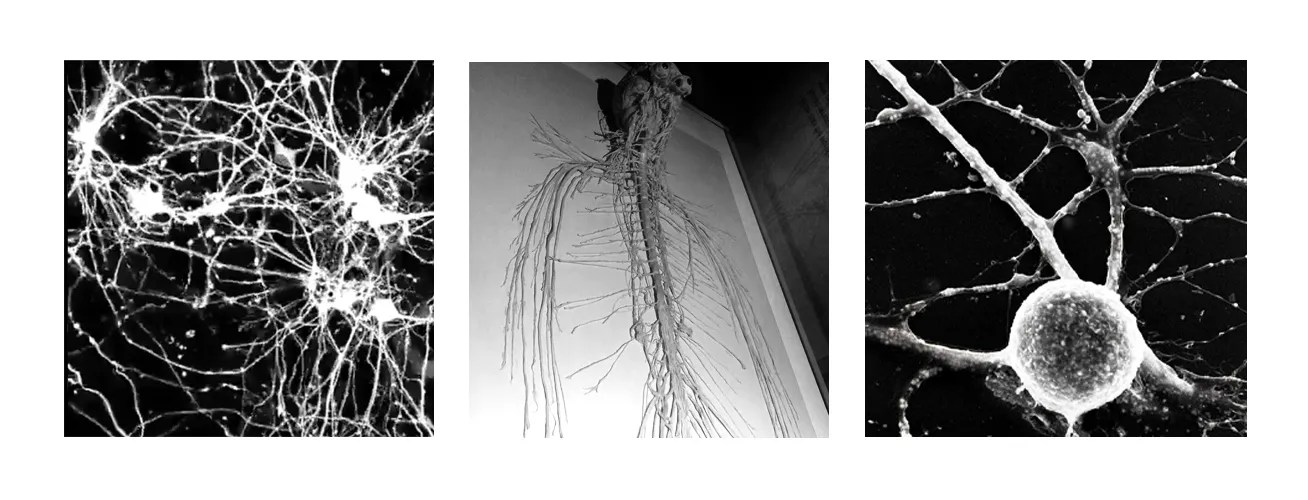
Annaka Harris on the difficulty in understanding consciousness…
The central challenge to a science of consciousness is that we can never acquire direct evidence of consciousness apart from our own experience. When we look at all the organisms (or collections of matter) in the universe and ask ourselves, “Which of these collections of matter contain conscious experiences?” in the broadest sense, the answer has to be “some” or “all”—the only thing we have direct evidence to support is that the answer isn’t “none,” as we know that at least our own conscious experiences exist.
Until we attain a significantly more advanced understanding of the brain, and of many other systems in nature for that matter, we’re forced to begin with one of two assumptions: either consciousness arises at some point in the physical world, or it is a fundamental part of the physical world (some, or all). And the sciences have thus far led with the assumption that the answer is “some” (and so have I, for most of my career) for understandable reasons. But I would argue that the grounds for this starting assumption have become weaker as we learn more about the brain and the role consciousness plays in behavior.
The problem is that what we deem to be conscious processes in nature is based solely on reportability. And at the very least, the work with split-brain and locked-in patients should have radically shifted our reliance on reportability at this point…
The realization that all of our scientific investigations of consciousness are unwittingly rooted in a blind assumption led me to pose two questions that I think are essential for a science of consciousness to keep asking:
- Can we find conclusive evidence of consciousness from outside a system?
- Is consciousness causal? (Is it doing something? Is it driving any behavior?)
The truth is that we have less and less reason to respond “yes” to either question with any confidence.And if the answer to these questions is in fact “no,” which is entirely possible, we’ll be forced to reconsider our jumping off point. Personally I’m still agnostic, putting the chances that consciousness is fundamental vs. emergent at more or less 50/50. But after focusing on this topic for more than twenty years, I’m beginning to think that assuming consciousness is fundamental is actually a slightly more coherent starting place…
“The Strong Assumption,” from @annakaharris.
See also: “How Do We Think Beyond Our Own Existence?“, from @annehelen.
* Albert Einstein
###
As we noodle on knowing, we might recall that it was on this date in 1987 that a patent (U.S. Patent No. 4,666,425) was awarded to Chet Fleming for a “Device for Perfusing an Animal Head”– a device for keeping a severed head alive.
That device, described as a “cabinet,” used a series of tubes to accomplish what a body does for most heads that are not “discorped”—that is, removed from their bodies. In the patent application, Fleming describes a series of tubes that would circulate blood and nutrients through the head and take deoxygenated blood away, essentially performing the duties of a living thing’s circulatory system. Fleming also suggested that the device might also be used for grimmer purposes.
“If desired, waste products and other metabolites may be removed from the blood, and nutrients, therapeutic or experimental drugs, anti-coagulants and other substances may be added to the blood,” the patent reads.
Although obviously designed for research purposes, the patent does acknowledge that “it is possible that after this invention has been thoroughly tested on research animals, it might also be used on humans suffering from various terminal illnesses.”
Fleming, a trained lawyer who had the reputation of being an eccentric, wasn’t exactly joking, but he was worried that somebody would start doing this research. The patent was a “prophetic patent”—that is, a patent for something which has never been built and may never be built. It was likely intended to prevent others from trying to keep severed heads alive using that technology…
Smithsonian Magazine

“All you can do is hope for a pattern to emerge”*…

If you construct a Lego model of the University of London’s Senate House – the building that inspired the Ministry of Truth in George Orwell’s novel Nineteen Eighty-Four – the Lego blocks themselves remain unchanged. Take apart the structure, reassemble the blocks in the shape of the Great Pyramid of Giza or the Eiffel Tower, and the shape, weight and colour of the blocks stay the same.
This approach, applied to the world at large, is known as atomism. It holds that everything in nature is made up of tiny, immutable parts. What we perceive as change and flux are just cogs turning in the machine of the Universe – a huge but ultimately comprehensible mechanism that is governed by universal laws and composed of smaller units. Trying to identify these units has been the focus of science and technology for centuries. Lab experiments pick out the constituents of systems and processes; factories assemble goods from parts composed of even smaller parts; and the Standard Model tells us about the fundamental entities of modern physics.
But when phenomena don’t conform to this compositional model, we find them hard to understand. Take something as simple as a smiling baby: it is difficult, perhaps impossible, to explain a baby’s beaming smile by looking at the behaviour of the constituent atoms of the child in question, let alone in terms of its subatomic particles such as gluons, neutrinos and electrons. It would be better to resort to developmental psychology, or even a narrative account (‘The father smiled at the baby, and the baby smiled back’). Perhaps a kind of fundamental transformation has occurred, producing some new feature or object that can’t be reduced to its parts.
The notion of emergence can help us to see what’s going on here. While atomism is all about burrowing down to basic building blocks, emergence looks upward and outward, to ask whether strange new phenomena might pop out when things get sufficiently large or complex…
Does everything in the world boil down to basic units – or can emergence explain how distinctive new things arise? Paul Humphreys helps us understand at “Out of nowhere.”
[Image above: source]
* Chuck Palahniuk, Lullaby
###
As we forage for the fundamental, we might send insightful birthday greetings to Ernest Everett Just; he was born on this date in 1883. A pioneering biologist, academic, and science writer, he contributed mightily to the understanding of cell division, the fertilization of egg cells, experimental parthenogenesis, hydration, cell division, dehydration in living cells, and the effect of ultra violet rays on egg cells.
An African-American, he had limited academic prospects on his graduation from Dartmouth, but was able to land a teaching spot at Howard University. Just met Frank R. Lillie, the head of the Department of Zoology at the University of Chicago and director of the Marine Biological Laboratory (MBL) at Woods Hole, Mass. In 1909 Lillie invited Just to spend first one, then several summers at Woods Hole, where Just pioneered the study of whole cells under normal conditions (rather than simply breaking them apart in a laboratory setting). In 1915, Just was awarded the first Spingarn Medal, the highest honor given by the NAACP.
But outside MBL, Just experienced discrimination. Seeking more opportunity, he spent most of the 1930s in various European universities– until the outbreak of WW II hostilities caused him to return to the U.S. in late 1940. He died of pancreatic cancer the next year.

You must be logged in to post a comment.