Posts Tagged ‘Panpsychism’
“Behind it all is surely an idea so simple, so beautiful, that when we grasp it—in a decade, a century, or a millennium—we will all say to each other, how could it have been otherwise? How could we have been so stupid?”*…

From Plato on (if not, indeed, from even earlier), we’ve struggled to resolve the “shadows on the cave wall” into ever-sharper understandings of the reality “behind” those shadows. The quantum of that effort is the “idea.”
But what is an idea? “Roger’s Bacon” offers a provocative answer…
1. Ideas are alien life forms with an agency and intelligence independent of any mind or substrate which they inhabit. When we say that an idea (a story, a joke, a theory, a work of art) has “taken on a life of its own”, our language betrays an intuitive understanding that science has not yet grasped.
They are as you and I—eating, loving, mating, evolving, dying.
2. We do not create or “have” ideas—if anything is doing the creating or having, it is the ideas themselves.
There are times when we recognize this truth (when an idea “magically” pops into your head from “out of nowhere”), but too often it is obscured by the post-hoc just-so stories we tell ourselves about how I, the Great Thinker, Precious Me, was able to “come up with” the brilliant idea (e.g. I combined two other ideas, I was inspired by a memory, an event, another idea, etc.). Whatever explanation you give, the experience is always the same—the idea simply arrives. All else is confabulation.
Why then does an idea enter one mind and not another? Ideas act as all organisms do—they seek habitats (i.e. minds) that can provide them with the space and resources (i.e. mental runtime, ideas eat the energy that enables action potentials) needed to survive and reproduce (i.e. create new idea-children). Just as some ecosystems are more diverse, abundant, and resilient, some minds are as well. What we call creativity is the quality of possessing a healthy mental ecosystem, one that offers fertile ground for a plenitude of ideas. Ideas may also be attracted to particular minds for more specific reasons—for example, an idea may see that other related ideas (members of the same genera or family) have found the mind to be especially suitable or perhaps the mind is in dire need of a certain idea and therefore will offer it ample resources upon arrival. Some minds (e.g. those that are dominated by one idea or set of ideas, perhaps a religious or political ideology) provide poor habitat and are avoided by all but the most desperate ideas (e.g. irrational and harmful ideas that can’t find a home elsewhere—this is why conspiracy theories and hateful ideologies tend to congregate in the same minds).
3. Dear reader, I ask you to conduct an experiment.
Create something, anything—write a line of poetry, doodle an image, hum a melody, take some objects near you and arrange them into a sculpture. Now destroy what you created—physically if you can, but also mentally. Forget it completely.
The world is changed. You are changed. The idea will return in one form or another, in your mind or another.
4. Highly creative people, those we might call “geniuses”, sometimes have the intuition that ideas are autonomous living entities. The standard scientific explanation would be that creativity is positively associated with certain mental characteristics (such as theory of mind and schizotypy) that make someone prone to the intuition that ideas possess a degree of autonomous agency, that they are independently alive in some sense. However, another interpretation is possible: ideas do not like to be treated as if they were lifeless, inanimate objects (would you?) and therefore they gravitate towards minds that treat them with the respect and dignity they deserve…
[“RB” shares the fascinating insights of Philip K Dick, David Lynch, Terence Mckenna, and David Abram…]
… 5. Our relation to ideas is an inextricable symbiosis, like that between plant and pollinator, a mutualism in which neither can survive without the other. At the dawn of civilization, a covenant was made between humans and these alien entities which inhabit our minds—honor and respect each other and all will flourish beyond their wildest dreams.
Ideas will help us if we help them. This is why the growth of knowledge depends on certain moral values—freedom, openness, honesty, courage, tolerance, and humility, amongst others. Those cultures that respect these values provide ideal habitat for ideas, and where ideas thrive and multiply, so do humans.
The converse is true as well. When ideas are kept secret or willfully distorted, we suffer. When ideas are regarded as slaves, as mere tools that can be wielded for their owner’s benefit, the end is near.
Our treatment of ideas is at the root of all that ails us. The remedy: worship ideas like Wisdom, Justice, Equality, Peace, and Love as if they were Gods (because in fact they are, something the ancients recognized that we have long since forgotten), and follow one simple rule.
Do unto ideas as you would have them do unto you.
Teach the children, and in one generation—a new world.
6. Perhaps you has wondered if I am being serious, if I truly believe that ideas are alive in a literal sense—“surely he is just playing with metaphor, an interesting thought experiment and some poetic license, but nothing more.” I assure you nothing could be further from the truth. I am under no illusions; as it stands, there is absolutely no shred of evidence for my hypothesis. I have it on nothing but faith and intuition that one day there will be a paradigm shift of Copernican proportions, a revolution that utterly transforms our understanding of Mind and Matter.
Ask yourself: does history not teach us that there are new forms of life still waiting to be discovered which will seem utterly unimaginable to us until some new technology brings them to light? Is it not hubris of the highest order to suppose that we, Modern Man, have finally reached the end of nature’s catalogue? Democritus proposed that the universe consists of tiny indivisible “atoms”; over 2000 years later he was proven correct, however we still don’t understand the true nature of these atoms—might they too have a spark of consciousness? Is the idea that ideas are interdimensional endosymbiotic entities made of consciousness really so far-fetched? Yeah, maybe.
7. And this you shall know:
Ideas are Alive and You are Dead…
What is it like to be an idea? “Ideas are Alive and You are Dead,” @theseedsofscience.skystack.xyz via @mastroianni.bsky.social
* John Archibald Wheeler (and apposite the piece above, here)
###
As we ponder panpsychism, we might send sentient birthday greetings to a man whose passing we noted last month, and whose work wrestled in a way with these same issues: Pierre Teilhard de Chardin; he was born on this date in 1881. A Jesuit theologian, philosopher, geologist, and paleontologist, he conceived the idea of the Omega Point (a maximum level of complexity and consciousness towards which he believed the universe was evolving) and developed Vladimir Vernadsky‘s concept of noosphere (“a planetary “sphere of reason, the highest stage of biospheric development and of humankind’s rational activities).
Teilhard took part in the discovery of Peking Man, and wrote on the reconciliation of faith and evolutionary theory. His thinking on both these fronts was censored during his lifetime by the Catholic Church (in particular for its implications for “original sin”); but in 2009, they lifted their ban.

“No problem can be solved from the same level of consciousness that created it”*…
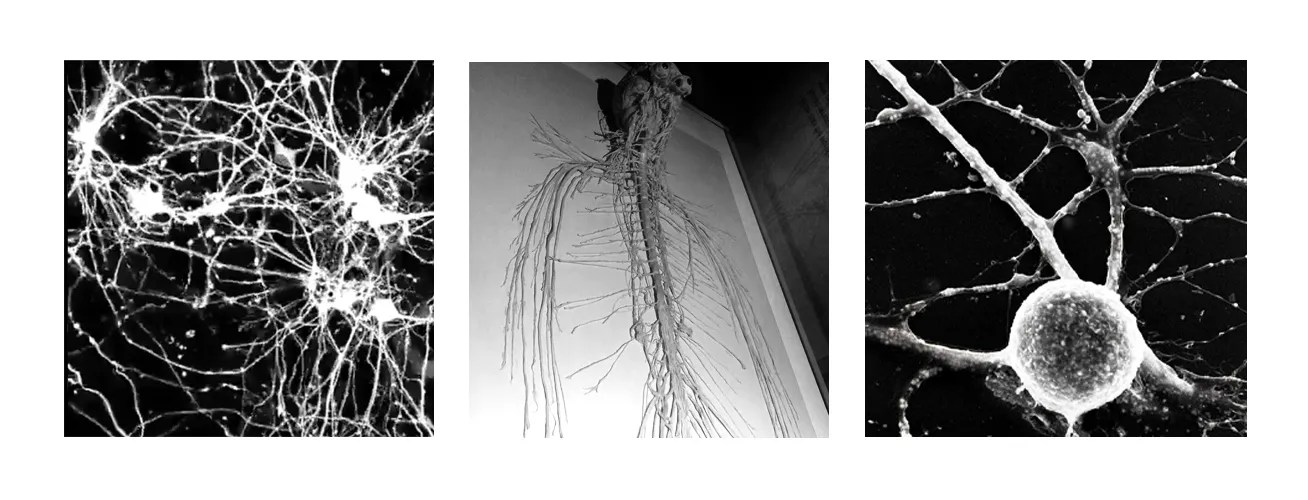
Annaka Harris on the difficulty in understanding consciousness…
The central challenge to a science of consciousness is that we can never acquire direct evidence of consciousness apart from our own experience. When we look at all the organisms (or collections of matter) in the universe and ask ourselves, “Which of these collections of matter contain conscious experiences?” in the broadest sense, the answer has to be “some” or “all”—the only thing we have direct evidence to support is that the answer isn’t “none,” as we know that at least our own conscious experiences exist.
Until we attain a significantly more advanced understanding of the brain, and of many other systems in nature for that matter, we’re forced to begin with one of two assumptions: either consciousness arises at some point in the physical world, or it is a fundamental part of the physical world (some, or all). And the sciences have thus far led with the assumption that the answer is “some” (and so have I, for most of my career) for understandable reasons. But I would argue that the grounds for this starting assumption have become weaker as we learn more about the brain and the role consciousness plays in behavior.
The problem is that what we deem to be conscious processes in nature is based solely on reportability. And at the very least, the work with split-brain and locked-in patients should have radically shifted our reliance on reportability at this point…
The realization that all of our scientific investigations of consciousness are unwittingly rooted in a blind assumption led me to pose two questions that I think are essential for a science of consciousness to keep asking:
- Can we find conclusive evidence of consciousness from outside a system?
- Is consciousness causal? (Is it doing something? Is it driving any behavior?)
The truth is that we have less and less reason to respond “yes” to either question with any confidence.And if the answer to these questions is in fact “no,” which is entirely possible, we’ll be forced to reconsider our jumping off point. Personally I’m still agnostic, putting the chances that consciousness is fundamental vs. emergent at more or less 50/50. But after focusing on this topic for more than twenty years, I’m beginning to think that assuming consciousness is fundamental is actually a slightly more coherent starting place…
“The Strong Assumption,” from @annakaharris.
See also: “How Do We Think Beyond Our Own Existence?“, from @annehelen.
* Albert Einstein
###
As we noodle on knowing, we might recall that it was on this date in 1987 that a patent (U.S. Patent No. 4,666,425) was awarded to Chet Fleming for a “Device for Perfusing an Animal Head”– a device for keeping a severed head alive.
That device, described as a “cabinet,” used a series of tubes to accomplish what a body does for most heads that are not “discorped”—that is, removed from their bodies. In the patent application, Fleming describes a series of tubes that would circulate blood and nutrients through the head and take deoxygenated blood away, essentially performing the duties of a living thing’s circulatory system. Fleming also suggested that the device might also be used for grimmer purposes.
“If desired, waste products and other metabolites may be removed from the blood, and nutrients, therapeutic or experimental drugs, anti-coagulants and other substances may be added to the blood,” the patent reads.
Although obviously designed for research purposes, the patent does acknowledge that “it is possible that after this invention has been thoroughly tested on research animals, it might also be used on humans suffering from various terminal illnesses.”
Fleming, a trained lawyer who had the reputation of being an eccentric, wasn’t exactly joking, but he was worried that somebody would start doing this research. The patent was a “prophetic patent”—that is, a patent for something which has never been built and may never be built. It was likely intended to prevent others from trying to keep severed heads alive using that technology…
Smithsonian Magazine

“Consciousness cannot be accounted for in physical terms. For consciousness is absolutely fundamental. It cannot be accounted for in terms of anything else.”*…

Representation of consciousness from the seventeenth century by Robert Fludd, an English Paracelsian physician (source)
… but that doesn’t mean that we won’t attempt to answer “the hard problem of consciousness.” Indeed, as Elizabeth Fernandez notes, some scientists are using Schrödinger’s own work to try…
Supercomputers can beat us at chess and perform more calculations per second than the human brain. But there are other tasks our brains perform routinely that computers simply cannot match — interpreting events and situations and using imagination, creativity, and problem-solving skills. Our brains are amazingly powerful computers, using not just neurons but the connections between the neurons to process and interpret information.
And then there is consciousness, neuroscience’s giant question mark. What causes it? How does it arise from a jumbled mass of neurons and synapses? After all, these may be enormously complex, but we are still talking about a wet bag of molecules and electrical impulses.
Some scientists suspect that quantum processes, including entanglement, might help us explain the brain’s enormous power, and its ability to generate consciousness. Recently, scientists at Trinity College Dublin, using a technique to test for quantum gravity, suggested that entanglement may be at work within our brains. If their results are confirmed, they could be a big step toward understanding how our brain, including consciousness, works…
More on why maybe the brain isn’t “classical” after all: “Brain experiment suggests that consciousness relies on quantum entanglement,” from @SparkDialog in @bigthink.
For an orthogonal view: “Why we need to figure out a theory of consciousness.”
* Erwin Schrödinger
###
As we think about thinking, we might spare a thought for Alexius Meinong; he died on this date in 1920. A philosopher, he is known for his unique ontology and for contributions to the philosophy of mind and axiology– the theory of value.
Meinong’s ontology is notable for its belief in nonexistent objects. He distinguished several levels of reality among objects and facts about them: existent objects participate in actual (true) facts about the world; subsistent (real but non-existent) objects appear in possible (but false) facts; and objects that neither exist nor subsist can only belong to impossible facts. See his Gegenstandstheorie, or the Theory of Abstract Objects.

“Consciousness was upon him before he could get out of the way”*…

Some scientists, when looking at the ladder of nature, find no clear line between mind and no-mind…
Last year, the cover of New Scientist ran the headline, “Is the Universe Conscious?” Mathematician and physicist Johannes Kleiner, at the Munich Center for Mathematical Philosophy in Germany, told author Michael Brooks that a mathematically precise definition of consciousness could mean that the cosmos is suffused with subjective experience. “This could be the beginning of a scientific revolution,” Kleiner said, referring to research he and others have been conducting.
Kleiner and his colleagues are focused on the Integrated Information Theory of consciousness, one of the more prominent theories of consciousness today. As Kleiner notes, IIT (as the theory is known) is thoroughly panpsychist because all integrated information has at least one bit of consciousness.
You might see the rise of panpsychism as part of a Copernican trend—the idea that we’re not special. The Earth is not the center of the universe. Humans are not a treasured creation, or even the pinnacle of evolution. So why should we think that creatures with brains, like us, are the sole bearers of consciousness? In fact, panpsychism has been around for thousands of years as one of various solutions to the mind-body problem. David Skrbina’s 2007 book, Panpsychism in the West, provides an excellent history of this intellectual tradition.
While there are many versions of panpsychism, the version I find appealing is known as constitutive panpsychism. It states, to put it simply, that all matter has some associated mind or consciousness, and vice versa. Where there is mind there is matter and where there is matter there is mind. They go together. As modern panpsychists like Alfred North Whitehead, David Ray Griffin, Galen Strawson, and others have argued, all matter has some capacity for feeling, albeit highly rudimentary feeling in most configurations of matter.
…
While inanimate matter doesn’t evolve like animate matter, inanimate matter does behave. It does things. It responds to forces. Electrons move in certain ways that differ under different experimental conditions. These types of behaviors have prompted respected physicists to suggest that electrons may have some type of extremely rudimentary mind. For example the late Freeman Dyson, the well-known American physicist, stated in his 1979 book, Disturbing the Universe, that “the processes of human consciousness differ only in degree but not in kind from the processes of choice between quantum states which we call ‘chance’ when made by electrons.” Quantum chance is better framed as quantum choice—choice, not chance, at every level of nature. David Bohm, another well-known American physicist, argued similarly: “The ability of form to be active is the most characteristic feature of mind, and we have something that is mind-like already with the electron.”
Many biologists and philosophers have recognized that there is no hard line between animate and inanimate. J.B.S. Haldane, the eminent British biologist, supported the view that there is no clear demarcation line between what is alive and what is not: “We do not find obvious evidence of life or mind in so-called inert matter…; but if the scientific point of view is correct, we shall ultimately find them, at least in rudimentary form, all through the universe.”…
“Electrons May Very Well Be Conscious“: Tam Hunt (@TamHunt) explains.
* Kingsley Amis
###
As we challenge (chauvinistic?) conventions, we might spare a thought for a man who was no great respecter of consciousness, B. F. Skinner; he died on this date in 1990. A psychologist, he was the pioneer and champion of what he called “radical behaviorism,” the assumption that behavior is a consequence of environmental histories of “reinforcement” (reactions to positive and negative stimuli):
What is felt or introspectively observed is not some nonphysical world of consciousness, mind, or mental life but the observer’s own body. This does not mean, as I shall show later, that introspection is a kind of psychological research, nor does it mean (and this is the heart of the argument) that what are felt or introspectively observed are the causes of the behavior. An organism behaves as it does because of its current structure, but most of this is out of reach of introspection.
About Behaviorism
Building on the work of Ivan Pavlov and John B. Watson, Skinner used operant conditioning to strengthen behavior, considering the rate of response to be the most effective measure of response strength. To study operant conditioning, he invented the operant conditioning chamber (aka the Skinner box).
C.F. also: Thomas Pynchon’s Gravity’s Rainbow.

“In the oldest religion, everything was alive, not supernaturally but naturally alive”*…

One of science’s most challenging problems is a question that can be stated easily: Where does consciousness come from? In his new book Galileo’s Error: Foundations for a New Science of Consciousness, philosopher Philip Goff considers a radical perspective: What if consciousness is not something special that the brain does but is instead a quality inherent to all matter? It is a theory known as “panpsychism,” and Goff guides readers through the history of the idea, answers common objections (such as “That’s just crazy!”) and explains why he believes panpsychism represents the best path forward…
Goff answers questions from Scientific American editor Gareth Cook: “Does Consciousness Pervade the Universe?”
* D.H. Lawrence, “New Mexico,” Phoenix: the posthumous papers of D. H. Lawrence
###
As we think about thinking, we might neon-pink birthday greetings to Don Featherstone; he was born on this date in 1936. An artist, is is surely best remembered for his creation of the plastic pink flamingo in 1957 while working for Union Products. It went on sale the following year– and now ornaments lawns nationwide.
In 1996, Featherstone was awarded the 1996 Ig Nobel Art Prize for his creation; that same year, he began his tenure as president of Union Products, a position he held until he retired in 2000.

A Featherstone flock
You must be logged in to post a comment.