Posts Tagged ‘experience’
“It is at Dusk that the most interesting things occur, for that is when simple differences fade away. I could live in everlasting Dusk.”*…
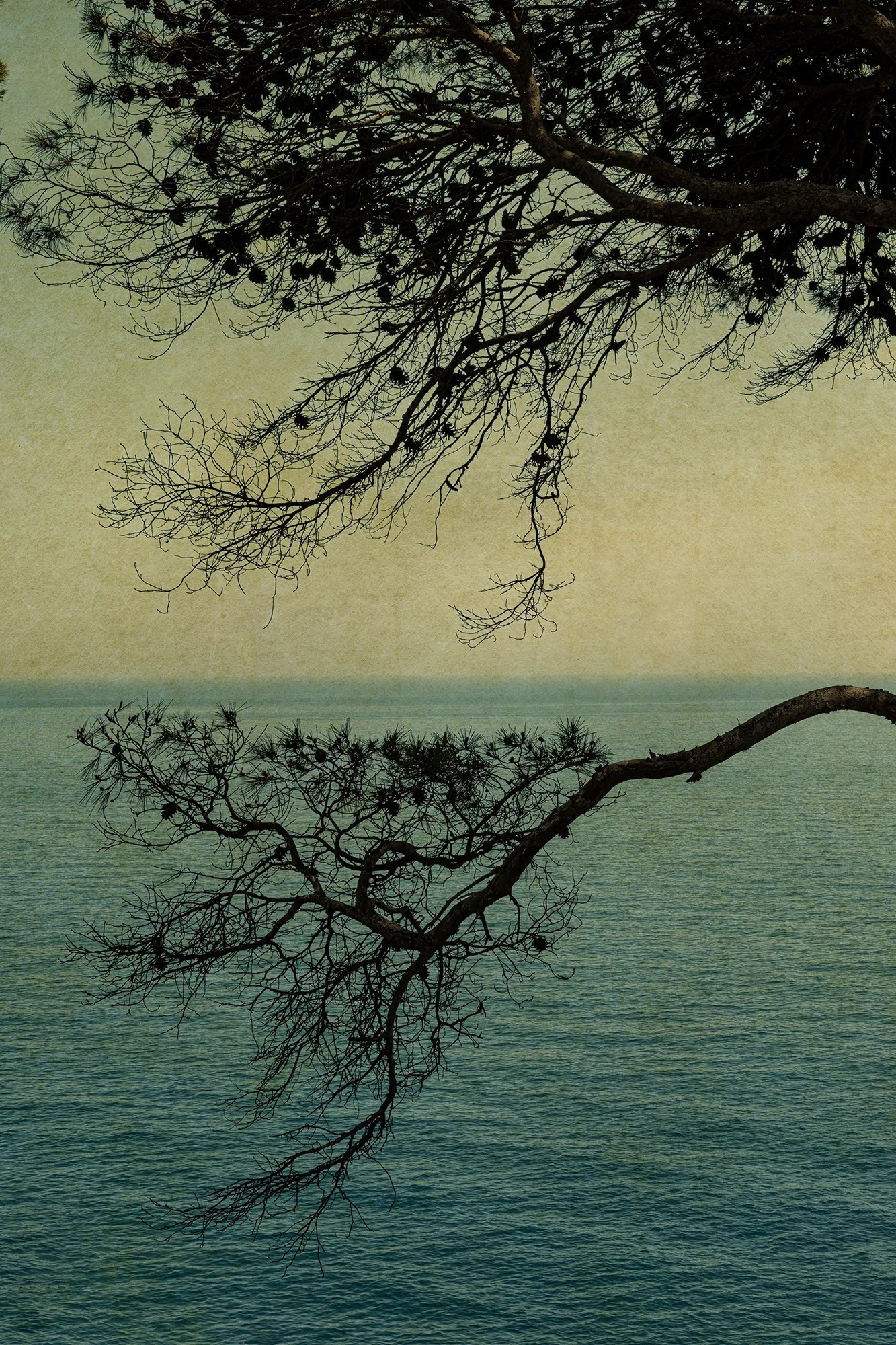
L. M. Sacasas on time and temporality…
… I’m tempted, as I often am, by the grand generalization, and I will yield. Pre-industrial culture was synchronized by the rhythms of nature, rhythms which were often imbued with sacral significance (a unity suggested by the shared root of cult, culture, and cultivate). Industrial culture was, as Lewis Mumford observed, driven not by the steam-engine but by the clock. Industrial time overthrew pre-industrial time—agricultural time, if you like—but yielded a new set of rhythms and patterns, with the 9-5 workday perhaps at its heart. Mass media, which is to say industrialized media, supplied its own public temporalities to the industrial age, a new quasi-sacral calendar with daily, seasonal, and yearly rituals, some of which were artificial simulations of the old pre-industrial rituals.
What we have now is a new temporal order. It is not a negation of industrial time, but a further development built upon the precision of mechanical time. Industrial time enabled the mass synchronizations industrial culture required. But now digital technology enables a new desynchronized society through even more refined timekeeping coupled with the computational capacity to mobilize and organize society along more fluid, just-in-time, and, yes, from a human perspective, stochastic patterns.
To put this another way, a culture ordered in its patterns, language, ethics, and imagination by the rhythms of the natural world gave way to a culture ordered in its patterns, language, ethics, and imagination by the rhythms of industrialized labor and mass media. While we might disagree as to the timing of the transition, it seems safe to say that we now inhabit yet another cultural configuration. To put it this way may seem like a banal restatement of the well-worn and contested pre-modern/modern/post-modern sequence. But I think it is useful to draw out the temporal dimension of these social dynamics. If we press into each of these four categories—patterns, language, ethics, and imagination—we will find surprising and profound links to the temporal heart beating out the dominant cultural rhythms, whether it be nature or the machine.
…
Inhabiting the order of measured, quantified time, as most of us do, already inhibits our capacity to imagine another way of being in time. Our enclosure within the human-built world, in both its analog and digital dimensions, obscures the markers of alternative temporal orders. It is possible, of course, to frame this as a liberation from the limits of time just as it is possible to frame our uprootedness as a liberation from the constraints of place. And, indeed, it sometimes is just that. But it is also possible that our liberation from older cultural forms, forms which were more directly informed by a place and its time, has been used against us. To be disembedded and desynchronized is also to become subject to the stochastic order of the digital economy.
The computer, after all, is, among other things, an agent of social organization and an instrument of control. But what forms of social organization does it enable and what forms of control does it make possible?
…
The most tempting thing is to go back to the kind of empirically verifiable harms which I mentioned in passing at the outset. That’s the surest way to make the case for a different set of practices, but, of course, that is itself part of the problem. Yes, there’s a case to be made on the grounds of basic health and well-being, ours and our fellow creatures, for seeking another way of ordering our material environment.
But I find myself reaching beyond such concerns to something more ambivalent and amorphous, toward not just the healthy but the good, toward a deep recalibration of our being in the world according to a different order of time. And perhaps in thinking again about the meaning of our experience of light and dark and, perhaps especially, the transitions between the two, we can discern a different set of rhythms. “We are not only creatures of the light,” Kohák reminds us. “We are creatures of the rhythm of day and night, and the night, too, is our dwelling place.”…
Eminently worth reading in full: “Whose Time? Which Temporality?” from @LMSacasas.
* Olga Tokarczuk, Drive Your Plow Over the Bones of the Dead
###
As we contemplate chronology, we might recall that it was on this date in 1918 that the U.S. Congress “standardized” time: the Standard Time Act (AKA, the Calder Act) became effective. Passed earlier in the year, it implemented across the U.S. both Standard Time (the creation of time zones anchored in UTC, the successor to GMT) and Daylight Saving Time.

“When you read a book, the story definitely happens inside your head. When you listen, it seems to happen in a little cloud all around it, like a fuzzy knit cap pulled down over your eyes.”*…

Audiobooks are on the rise. Karl Berglund explores what that might mean to literature, literacy, and the business of publishing…
For an increasing number of people, reading means listening to streamed audio files through a smartphone. The audiobook has a long history, of course, but what is new is its commercial impact: For the first time, audiobooks can no longer be seen as a niche market. Now, the audio medium competes with print books and ebooks for the attention of book readers in a large and diverse range of national book markets. Most people in the book trade believe that the audiobook share will continue to grow in the coming years. According to the Association of American Publishers (AAP), 8.1 percent of the revenues of the total US book trade in 2021 came from audiobooks. This figure can be compared to ebooks (11.6 percent), but also to change over time: in fact, it is audiobooks—in contrast to all other book formats—that have shown a rapid and steady increase over the past ten years.
The audiobook boom is altering the book business and reading culture. It provides opportunities for people to read more and in new ways, but it also affects how “reading” can be understood. In highlighting the complexities of popular fiction reading, Janice Radway once famously objected to the metaphor of consumption when equated with reading. Reading is not a passive thing, she claimed. I agree, and a multitude of readership scholars have convincingly proved this to be true: reading is active, participatory, social.
But thanks to audiobooks, we might need to update this reasoning. In fact, some of the audiobook practices surfacing indeed seem to be exactly this: passive. One can easily pose the argument that the rise of audiobooks is a sign of an ongoing crisis of our book culture, where people no longer actively engage in books but lend them half an ear as a mere distraction while doing something else. People are reading while doing the dishes, driving, working out, sleeping, etc. Can such practices really be regarded as reading? In any case, passivity must be a problem for literature, right?
In one sense, it is true. But it is also not true, since print-book sales are not dropping when audiobook streams are skyrocketing. Perhaps audiobooks are not primarily competing with print books and ebooks, but with podcasts and other audio media? If this is so, audiobooks could be regarded not as a threat to our book culture but, rather, as a defender. Well, I don’t believe that to be the case either. But I do believe that audiobooks are about to fundamentally change our reading habits.
In fact, what appears to be happening is rather that people are expanding how they make use of books. Or, if you will, expanding what reading is, and what it can be…
Read on for Berglund’s explication: “Audiobooks: Every Minute Counts,” in @PublicBooks.
Tangentially apposite (albeit not your correspondent’s sentiment): “Good riddance to long books.”
* Robin Sloan, Mr. Penumbra’s 24-Hour Bookstore
###
As we muse on metamorphosis, we might spare a thought for Edwin Abbott Abbott; he died on this date in 1926. A schoolmaster, theologian, and Anglican priest, he is best known as the author of the classic 1884 novella Flatland (c.f. also here and here)… a book that it’s hard to imagine consuming aurally…

“All that is solid melts into air”*…

Ideas replaced with feelings. A radical relativism that implies truth is unknowable. Politicians who revel in lying openly, shamelessly, as if being caught out is the point of politics. The notion of the people and the many redefined ceaselessly, words unmoored from meaning, ideas of the future dissolving into nasty nostalgias with enemies everywhere, conspiracy replacing ideology, facts equated to fibs, discussion collapsing into mutual accusations, where every argument is just another smear campaign, all information warfare … and the sense that everything under one’s feet is constantly moving, inherently unstable, liquid …
Almost a decade ago I left Russia because I was exhausted by living in a system where, to quote myself invoking Hannah Arendt, “nothing is true and everything is possible.” Those were still relatively vegetarian days in Moscow — before the invasion of Ukraine — but it was already a world where terms like liberal or democracy were used to mean their opposite, where paranoia was increasingly replacing reasoned argument, and where spectacle had pushed out sense. You were left with only gut feelings to lead your way through the fog of disinformation. I returned to the thing once known as “the West,” living in London and often working in the United States, because, in the words of my naïve self, I wanted to live in a world where “words have meaning,” where facts were not dismissed as “just information war.” Russia seemed a country unable to come to terms with the loss of the Cold War, or with any of the traumas of the 20th century. It was ultimately, I thought, a sideshow, a curio pickled in its own agonies. Russians stressed this themselves: in Western Europe, America, things are “normalno” they would tell me. If you have the chance, that is where you send your wives, children, money … to “normalnost.”
Back in the West, however, I soon noticed things that reminded me of Moscow…
Peter Pomerantsev in an essay from his new book, This Is Not Propaganda: Adventures in the War Against Reality: “Normalnost.”
Pair with his essay “The Info War of All Against All” and this review of his book.
[image above: source]
* Karl Marx and Friedrich Engels, The Communist Manifesto
###
As we get down with Diogenes, we might expect little or no help from today’s birthday boy, Henri-Louis Bergson; he was born on this date in 1859. A philosopher especially influential in the first half of the 20th Century, Bergson convinced many of the primacy of immediate experience and intuition over rationalism and science for the understanding reality…. many, but not the likes of Wittgenstein, Russell, Moore, and Santayana, who thought that he willfully misunderstood the scientific method in order to justify his “projection of subjectivity onto the physical world.” Still, in 1927 Bergson won the Nobel Prize (in Literature); and in 1930, received France’s highest honor, the Grand-Croix de la Legion d’honneur.
Bergson’s influence waned mightily later in the century. To the extent that there’s been a bit of a resurgence of interest, it’s largely the result, in philosophical circles, of Gilles Deleuze’s appropriation of Bergson’s concept of “mulitplicity” and his treatment of duration, which Deleuze used in his critique of Hegel’s dialectic, and in the religious and spiritualist studies communities, of Bergson’s seeming embrace of the concept of an overriding/underlying consciousness in which humans participate.

You must be logged in to post a comment.