Posts Tagged ‘phenomenology’
“Merely fact-minded sciences make merely fact-minded people”*…

As we float awash in the debate over who/what is conscious (only humans? animals? plants? AI? everything?), we might take a moment to ponder the role of consciousness. For example, in science.
Harald A. Wiltsche argues that physicists, and scientists in general, attempt to paint an objective picture of reality. Consciousness, experience, and subjectivity are forcibly pushed out of the picture. Indeed, even where science is empirical, this empiricism rarely involves a consideration of human consciousness, but rather the readings of some mechanical measuring device, or some hypothetical abstracted sum of all perspectives – a God’s eye view or view from nowhere.
A phenomenologist of science, Wiltsche paints a different picture. Physics, even in the form of quantum mechanics, has its origins in the phenomenology of human consciousness. No matter how hard scientists try, it can never escape those origins, and to truly move forward, it must understand and embrace them…
Physics and phenomenology are usually taken to inhabit different worlds. Physics aims at a description of objective reality in mathematical terms. Phenomenology—the philosophical movement inaugurated by Edmund Husserl—is an a priori investigation into consciousness and into the ways things appear in experience. Physics deals with equations, invariants, and symmetries, aiming to represent reality minus observers; phenomenology seems to concern precisely what physics leaves out: subjectivity, consciousness, meaning. If the two meet at all, it is only in polite, but ultimately inconsequential, interdisciplinary dialogue.
My claim is that this picture is mistaken. Physics does not stand outside phenomenology. It presupposes the very structures phenomenology seeks to analyse—above all, the structured correlation between subject and object through which objectivity first becomes intelligible. The task, therefore, is not to unite two distant domains, but to recognize a relation that has been there from the beginning…
[Wiltsche makes his point first with reference to spacetime physics, then to quantum mechanics. He concludes…]
… The question, then, is no longer whether physics and phenomenology should be united. As physics confronts its own conceptual foundations, the challenge is to bring into view the structures phenomenology has analyzed since its inception—and to explore how they can illuminate the meaning of objectivity in modern theory.
Eminently worth reading in full.
Physics cannot escape its roots in phenomenology: “Consciousness is the hidden architecture behind fundamental and quantum physics” (or archived version here) from @haraldwiltsche.bsky.social in @iai.tv.
Bonus question: if Wiltsche is right that consciousness is essential to advancing our understanding of reality, and consciousness is something that other things, living and “inanimate,” (do or can) possess, what does that mean for our quest to understand realit(ies)?… Or does a question like this simply (albeit implicitly) affirm anthropocentrism? How will we know?
See also: “A physicist is just an atom’s way of looking at itself“
* Edmund Husserl
###
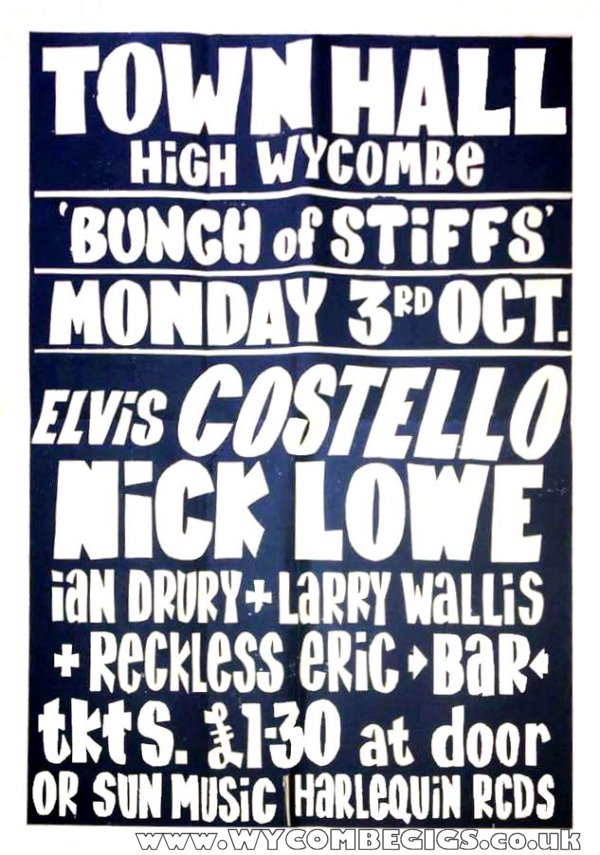
As we contemplate consciousness, we might note that it was on this date in 1977, at the High Wyncombe Town Hall in England, that the Bunch of Stiffs tour kicked off. It featured Nick Lowe’s Last Chicken in the Shop, Elvis Costello and The Attractions, Ian Dury and the Blockheads, Wreckless Eric and The New Rockets, and Larry Wallis’ Psychedelic Rowdies– acts managed by Dave Robinson and Jake Riviera before they formed the Stiff Records label, which released a live album of the festivities in February of 1978.
“Men have become the tools of their tools”*…

Visionary philosopher Bernard Stiegler argued that it’s not our technology that makes humans special; rather, it’s our relationship with that technology. Bryan Norton explains…
It has become almost impossible to separate the effects of digital technologies from our everyday experiences. Reality is parsed through glowing screens, unending data feeds, biometric feedback loops, digital protheses and expanding networks that link our virtual selves to satellite arrays in geostationary orbit. Wristwatches interpret our physical condition by counting steps and heartbeats. Phones track how we spend our time online, map the geographic location of the places we visit and record our histories in digital archives. Social media platforms forge alliances and create new political possibilities. And vast wireless networks – connecting satellites, drones and ‘smart’ weapons – determine how the wars of our era are being waged. Our experiences of the world are soaked with digital technologies.
But for the French philosopher Bernard Stiegler, one of the earliest and foremost theorists of our digital age, understanding the world requires us to move beyond the standard view of technology. Stiegler believed that technology is not just about the effects of digital tools and the ways that they impact our lives. It is not just about how devices are created and wielded by powerful organisations, nation-states or individuals. Our relationship with technology is about something deeper and more fundamental. It is about technics.
According to Stiegler, technics – the making and use of technology, in the broadest sense – is what makes us human. Our unique way of existing in the world, as distinct from other species, is defined by the experiences and knowledge our tools make possible, whether that is a state-of-the-art brain-computer interface such as Neuralink, or a prehistoric flint axe used to clear a forest. But don’t be mistaken: ‘technics’ is not simply another word for ‘technology’. As Martin Heidegger wrote in his essay ‘The Question Concerning Technology’ (1954), which used the German term Technik instead of Technologie in the original title: the ‘essence of technology is by no means anything technological.’ This aligns with the history of the word: the etymology of ‘technics’ leads us back to something like the ancient Greek term for art – technē. The essence of technology, then, is not found in a device, such as the one you are using to read this essay. It is an open-ended creative process, a relationship with our tools and the world.
This is Stiegler’s legacy. Throughout his life, he took this idea of technics, first explored while he was imprisoned for armed robbery, further than anyone else. But his ideas have often been overlooked and misunderstood, even before he died in 2020. Today, they are more necessary than ever. How else can we learn to disentangle the effects of digital technologies from our everyday experiences? How else can we begin to grasp the history of our strange reality?…
[Norton unspools Stiegler’s remarkable life and the development of his thought…]
… Technology, for better or worse, affects every aspect of our lives. Our very sense of who we are is shaped and reshaped by the tools we have at our disposal. The problem, for Stiegler, is that when we pay too much attention to our tools, rather than how they are developed and deployed, we fail to understand our reality. We become trapped, merely describing the technological world on its own terms and making it even harder to untangle the effects of digital technologies and our everyday experiences. By encouraging us to pay closer attention to this world-making capacity, with its potential to harm and heal, Stiegler is showing us what else is possible. There are other ways of living, of being, of evolving. It is technics, not technology, that will give the future its new face…
Eminently worth reading in full: “Our tools shape our selves,” from @br_norton in @aeonmag.
Compare and contrast: Kevin Kelly‘s What Technology Wants
* Henry David Thoreau
###
As we own up, we might send phenomenological birthday greetings to Immanuel Kant; he was born on this date in 1724. One of the central figures of modern philosophy, Kant is remembered primarily for his efforts to unite reason with experience (e.g., Critique of Pure Reason [Kritik der reinen Vernunft], 1781), and for his work on ethics (e.g., Metaphysics of Morals [Die Metaphysik der Sitten], 1797) and aesthetics (e.g., Critique of Judgment [Kritik der Urteilskraft], 1790).
But Kant made important contributions to mathematics and astronomy. For example: his argument that mathematical truths are a form of synthetic a priori knowledge was cited by Einstein as an important early influence on his work. And his description of the Milky Way as a lens-shaped collection of stars that represented only one of many “island universes,” was later shown to be accurate by Herschel.
Act so as to treat humanity, whether in your own person or in that of another, at all times also as an end, and not only as a means.

“All that is solid melts into air”*…

Ideas replaced with feelings. A radical relativism that implies truth is unknowable. Politicians who revel in lying openly, shamelessly, as if being caught out is the point of politics. The notion of the people and the many redefined ceaselessly, words unmoored from meaning, ideas of the future dissolving into nasty nostalgias with enemies everywhere, conspiracy replacing ideology, facts equated to fibs, discussion collapsing into mutual accusations, where every argument is just another smear campaign, all information warfare … and the sense that everything under one’s feet is constantly moving, inherently unstable, liquid …
Almost a decade ago I left Russia because I was exhausted by living in a system where, to quote myself invoking Hannah Arendt, “nothing is true and everything is possible.” Those were still relatively vegetarian days in Moscow — before the invasion of Ukraine — but it was already a world where terms like liberal or democracy were used to mean their opposite, where paranoia was increasingly replacing reasoned argument, and where spectacle had pushed out sense. You were left with only gut feelings to lead your way through the fog of disinformation. I returned to the thing once known as “the West,” living in London and often working in the United States, because, in the words of my naïve self, I wanted to live in a world where “words have meaning,” where facts were not dismissed as “just information war.” Russia seemed a country unable to come to terms with the loss of the Cold War, or with any of the traumas of the 20th century. It was ultimately, I thought, a sideshow, a curio pickled in its own agonies. Russians stressed this themselves: in Western Europe, America, things are “normalno” they would tell me. If you have the chance, that is where you send your wives, children, money … to “normalnost.”
Back in the West, however, I soon noticed things that reminded me of Moscow…
Peter Pomerantsev in an essay from his new book, This Is Not Propaganda: Adventures in the War Against Reality: “Normalnost.”
Pair with his essay “The Info War of All Against All” and this review of his book.
[image above: source]
* Karl Marx and Friedrich Engels, The Communist Manifesto
###
As we get down with Diogenes, we might expect little or no help from today’s birthday boy, Henri-Louis Bergson; he was born on this date in 1859. A philosopher especially influential in the first half of the 20th Century, Bergson convinced many of the primacy of immediate experience and intuition over rationalism and science for the understanding reality…. many, but not the likes of Wittgenstein, Russell, Moore, and Santayana, who thought that he willfully misunderstood the scientific method in order to justify his “projection of subjectivity onto the physical world.” Still, in 1927 Bergson won the Nobel Prize (in Literature); and in 1930, received France’s highest honor, the Grand-Croix de la Legion d’honneur.
Bergson’s influence waned mightily later in the century. To the extent that there’s been a bit of a resurgence of interest, it’s largely the result, in philosophical circles, of Gilles Deleuze’s appropriation of Bergson’s concept of “mulitplicity” and his treatment of duration, which Deleuze used in his critique of Hegel’s dialectic, and in the religious and spiritualist studies communities, of Bergson’s seeming embrace of the concept of an overriding/underlying consciousness in which humans participate.

“To me there is no past or future in art. If a work of art cannot live always in the present it must not be considered at all.”*…

Douglas Coupland, “Slogans for the 21st Century”
… Evangelical Christians look to the book of Revelations for clues as to what’s to come next; the secular world looks to contemporary art, which seems to operate in a world that has calcified into a self-propagating MFA‑ocracy as orthodox as any extremist religion. But when did making art and foretelling the future become the same thing? What’s the rush? The rush is already coming at us quickly enough. The future of art has to be something that will give us bit of slow. And I hope that it happens quickly…
From an essay by artist and novelist/essayist Douglas Coupland, “What is the Future of Art?”
* Pablo Picasso
###
As we celebrate, on 3.14.16, both Pi Day and Einstein’s birthday, we might send ontological birthday greetings to Maurice Merleau-Ponty; he was born on this date in 1908. a phenomenological philosopher who was strongly influenced by Husserl and Heidegger, Merleau-Ponty wrote about perception, art, and politics in the service of understanding the constitution of human experience and meaning. He served on the editorial board of Sartre’s Les Temps modernes. His work has been widely influential, from Hubert Dreyfus’s use of Merleau-Ponty’s thought in the seminal What Computers Can’t Do, to the rise of French, then European feminism. At his death (in 1961) he was working towards an understanding of “Ecophenomenology,” suggesting in notes left behind the need for “a radically transformed understanding of ‘nature'”: “Do a psychoanalysis of Nature: it is the flesh, the mother… Nature as the other side of humanity (as flesh, nowise as ‘matter’).”

You must be logged in to post a comment.