Posts Tagged ‘Heidegger’
“Few people have the imagination for reality”*…

Experiments that test physics and philosophy as “a single whole,” Amanda Gefter suggests, may be our only route to surefire knowledge about the universe…
Metaphysics is the branch of philosophy that deals in the deep scaffolding of the world: the nature of space, time, causation and existence, the foundations of reality itself. It’s generally considered untestable, since metaphysical assumptions underlie all our efforts to conduct tests and interpret results. Those assumptions usually go unspoken.
Most of the time, that’s fine. Intuitions we have about the way the world works rarely conflict with our everyday experience. At speeds far slower than the speed of light or at scales far larger than the quantum one, we can, for instance, assume that objects have definite features independent of our measurements, that we all share a universal space and time, that a fact for one of us is a fact for all. As long as our philosophy works, it lurks undetected in the background, leading us to mistakenly believe that science is something separable from metaphysics.
But at the uncharted edges of experience — at high speeds and tiny scales — those intuitions cease to serve us, making it impossible for us to do science without confronting our philosophical assumptions head-on. Suddenly we find ourselves in a place where science and philosophy can no longer be neatly distinguished. A place, according to the physicist Eric Cavalcanti, called “experimental metaphysics.”
Cavalcanti is carrying the torch of a tradition that stretches back through a long line of rebellious thinkers who have resisted the usual dividing lines between physics and philosophy. In experimental metaphysics, the tools of science can be used to test our philosophical worldviews, which in turn can be used to better understand science. Cavalcanti, a 46-year-old native of Brazil who is a professor at Griffith University in Brisbane, Australia, and his colleagues have published the strongest result attained in experimental metaphysics yet, a theorem that places strict and surprising constraints on the nature of reality. They’re now designing clever, if controversial, experiments to test our assumptions not only about physics, but about the mind.
While we might expect the injection of philosophy into science to result in something less scientific, in fact, says Cavalcanti, the opposite is true. “In some sense, the knowledge that we obtain through experimental metaphysics is more secure and more scientific,” he said, because it vets not only our scientific hypotheses but the premises that usually lie hidden beneath…
Gefter traces the history of this integrative train of thought (Kant, Duhem, Poincaré, Popper, Einstein, Bell), its potential for helping understand quantum theory… and the prospect of harnessing AI to run the necessary experiments– seemingly comlex and intensive beyond the scope of currenT experimental techniques…
Cavalcanti… is holding out hope. We may never be able to run the experiment on a human, he says, but why not an artificial intelligence algorithm? In his newest work, along with the physicist Howard Wiseman and the mathematician Eleanor Rieffel, he argues that the friend could be an AI algorithm running on a large quantum computer, performing a simulated experiment in a simulated lab. “At some point,” Cavalcanti contends, “we’ll have artificial intelligence that will be essentially indistinguishable from humans as far as cognitive abilities are concerned,” and we’ll be able to test his inequality once and for all.
But that’s not an uncontroversial assumption. Some philosophers of mind believe in the possibility of strong AI, but certainly not all. Thinkers in what’s known as embodied cognition, for instance, argue against the notion of a disembodied mind, while the enactive approach to cognition grants minds only to living creatures.
All of which leaves physics in an awkward position. We can’t know whether nature violates Cavalcanti’s [theorem] — we can’t know, that is, whether objectivity itself is on the metaphysical chopping block — until we can define what counts as an observer, and figuring that out involves physics, cognitive science and philosophy. The radical space of experimental metaphysics expands to entwine all three of them. To paraphrase Gonseth, perhaps they form a single whole…
“‘Metaphysical Experiments’ Probe Our Hidden Assumptions About Reality,” in @QuantaMagazine.
* Johann Wolfgang von Goethe
###
As we examine edges, we might send thoughtful birthday greetings to Rudolf Schottlaender; he was born on this date in 1900. A philosopher who studied with Edmund Husserl, Martin Heidegger, Nicolai Hartmann, and Karl Jaspers, Schottlaender survived the Nazi regime and the persecution of the Jews, hiding in Berlin. After the war, as his democratic and humanist proclivities kept him from posts in philosophy faculties, he distinguished himself as a classical philologist and translator (e.g., new translations of Sophocles which were very effective on the stage, and an edition of Petrarch).
But he continued to publish philosophical and political essays and articles, which he predominantly published in the West and in which he saw himself as a mediator between the systems. Because of his positions critical to East Germany, he was put under close surveillance by the Ministry for State Security (Ministerium für Staatssicherheit or Stasi)– and inspired leading minds of the developing opposition in East Germany.

“The problem with introspection is that it has no end”*…

Still, we persevere. Samantha Rose Hill considers Hannah Arendt‘s final unfinished work, in which the philosopher (and self-described political theorist) mounted an incisive critique of the idea that we are in search of our true selves. More specifically, she explores Arendt’s wrestling with the concept of authenticity…
… In the midst of the Second World War, French existentialism emerged out of German existentialism. If authenticity was a question of being for Heidegger and a question of freedom for Jaspers, for Jean-Paul Sartre, Simone de Beauvoir and Albert Camus it became a question of individual ethics. The underlying question shifted from ‘What is the meaning of Being?’ to ‘How should I be?’ The credo underpinning Sartre’s work – ‘existence precedes essence’ – meant that we are thrown into the world without any fixed substance, and this meant that we get to choose who we become. While philosophers like Thomas Hobbes and Jean-Jacques Rousseau tried to capture human nature by imagining what life was like before society, for Sartre, there is no human nature. We must always be imagining and reimagining who we are, which is to say we are always in the process of becoming. For Beauvoir, becoming was a creative enterprise, a work of art. And she argued that it was not enough to shape oneself within the existing conditions of the world, but that one must also shape the conditions of the world itself. Authenticity for the French existentialists was not about uncovering a pre-existing true self, but rather choosing to engage in a process of becoming.
Caught between German and French existentialism, Arendt offered a critique of authenticity in her final unfinished work, The Life of the Mind. In place of authenticity, Arendt turned to the concept of the will in order to think about how one decides to act in the world. A student of Heidegger and Jaspers, and a fellow traveller of Sartre, Camus and Beauvoir from 1933-41 during her years of exile in Paris, Arendt rejected the idea that a true self exists within the self. She was not a transcendental thinker. For her there was no capital-G God, and there was no capital-B Being. In place of an inner-authentic self, she argued that the inner organ of decision-making that guided one’s actions was the will.
Following the work of St Augustine and Jaspers, Arendt turned Heidegger on his head and argued that all thinking moves from experience in the world, not from Being. By arguing that thinking was a function of Being, Heidegger had tried to divorce thinking from the will in order to argue that it was one’s true inner Being that determined ultimately who they became in the world. But for Arendt, this was an abdication of personal responsibility and choice. It was a way of handing over one’s decision-making power. And for her, it is only the choices that we make in real time when confronted with decisions that determine who we will become, and in turn determine the kind of world that we will help to shape.
So, what is the will? And is it a persuasive alternative to authenticity?
Unlike ‘authenticity’, ‘willing’ is not a very desirable word. First of all, it’s not a thing one can possess, it’s an action, something one has to do. And unlike authenticity, there is no sense of comfort in ‘the will’. Authenticity promises certainty, whereas the will promises uncertainty. And in times of turmoil, it is all too human to prefer that which promises predictability to the unknown. Colloquially, willing usually appears around New Year’s Eve when people start talking about resolutions and how they’d like to change their lives. The will becomes a question of ‘willpower’. Or worse, willing can remind us of those difficult times when someone implores us ‘Are you willing to cooperate?’ ‘Are you willing to try?’ ‘Are you willing to do what it takes to get the job done?’ But for Arendt, the will was the means to our freedom, it was the promise that we can always be other than we are, and so to the world. The will is a space of tension inside the self where one actively feels the difference between where they are and where they would like to be.
Willing is the mental activity that goes on between thinking and judgment. It has the power to shape us by drawing us into conflict with ourselves. Without inner conflict, there is no forward movement. These are the basic principles of willing:
- Willing is characterised by an inner state of disharmony.
- Willing is experienced as a felt sense of tension within the body where the mind is at war with itself.
- Willing makes one aware of possible decisions, which creates a feeling of being pulled in multiple directions at once.
- Willing can feel very lonely. Decisions and choices are shaped by one’s environment, by the everydayness of being, but ultimately the responsibility for deciding is up to oneself.
- Willing makes one aware of the tension that exists between oneself as a part of the world, and oneself as an individual alone existing in relationship to the world.
- Willing is the principle of human individuation.
- Willing relates to the world through action.
- The will is the inner organ of freedom.
Everyone makes hundreds of decisions a day, but most of the time they aren’t conscious of the decisions they are making. Their decisions are not subjected to the will. Instead, they are simply following a routine of patterns that have been formed over time. In order to engage the will, one must be willing to pause. Because, while thinking moves from past experience, and imagination fixates on what might happen in the future, the past and the future are beyond the reach of the will. Willing is what happens before one acts. To be in a state of willing is to be in the Now.
Authenticity is attractive in part because it promises a sense of harmony, it is the promise that, if we know who we are, then we can act in a way where our actions are in alignment with our values. But the will is characterised by a sense of conflict. It is the inner organ that generates tension within the self, making one aware of the discrepancies between who they are and who they might like to be, or what they want and what they might be able to have. But it is this tension that is vital for bringing consciousness to decision-making…
Eminently worth reading in full: “Beyond authenticity,” from @Samantharhill in @aeonmag.
Pair with Lionel Trilling‘s Sincerity and Authenticity, the transcriptions of his 1970 Norton Lectures at Harvard, in which Trilling examined “the moral life in process of revising itself” as first sincerity (in the pre-Enlightenment, e.g., Shakespeare), then “authenticity” (in the 20th century, as the article linked above explains) became central to moral thought.
* Philip K. Dick
###
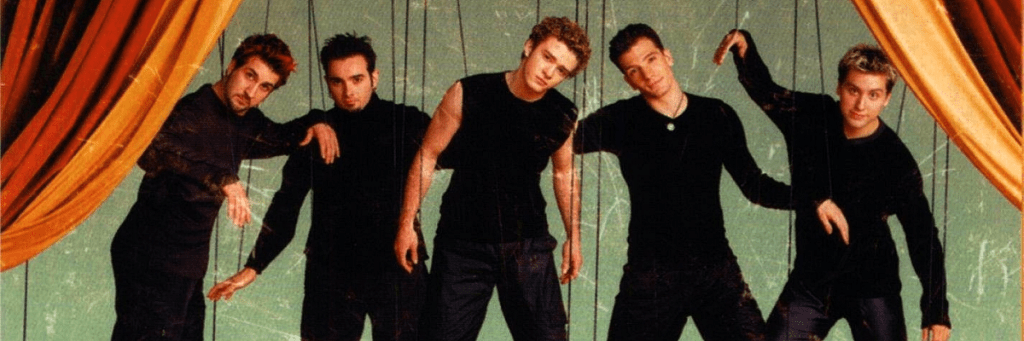
As we double down on determination, we might recall that it was on this date in 2000 that the boy band *NSYNC had its first number #1 hit, “It’s Gonna Be Me.”
“Men have become the tools of their tools”*…

Visionary philosopher Bernard Stiegler argued that it’s not our technology that makes humans special; rather, it’s our relationship with that technology. Bryan Norton explains…
It has become almost impossible to separate the effects of digital technologies from our everyday experiences. Reality is parsed through glowing screens, unending data feeds, biometric feedback loops, digital protheses and expanding networks that link our virtual selves to satellite arrays in geostationary orbit. Wristwatches interpret our physical condition by counting steps and heartbeats. Phones track how we spend our time online, map the geographic location of the places we visit and record our histories in digital archives. Social media platforms forge alliances and create new political possibilities. And vast wireless networks – connecting satellites, drones and ‘smart’ weapons – determine how the wars of our era are being waged. Our experiences of the world are soaked with digital technologies.
But for the French philosopher Bernard Stiegler, one of the earliest and foremost theorists of our digital age, understanding the world requires us to move beyond the standard view of technology. Stiegler believed that technology is not just about the effects of digital tools and the ways that they impact our lives. It is not just about how devices are created and wielded by powerful organisations, nation-states or individuals. Our relationship with technology is about something deeper and more fundamental. It is about technics.
According to Stiegler, technics – the making and use of technology, in the broadest sense – is what makes us human. Our unique way of existing in the world, as distinct from other species, is defined by the experiences and knowledge our tools make possible, whether that is a state-of-the-art brain-computer interface such as Neuralink, or a prehistoric flint axe used to clear a forest. But don’t be mistaken: ‘technics’ is not simply another word for ‘technology’. As Martin Heidegger wrote in his essay ‘The Question Concerning Technology’ (1954), which used the German term Technik instead of Technologie in the original title: the ‘essence of technology is by no means anything technological.’ This aligns with the history of the word: the etymology of ‘technics’ leads us back to something like the ancient Greek term for art – technē. The essence of technology, then, is not found in a device, such as the one you are using to read this essay. It is an open-ended creative process, a relationship with our tools and the world.
This is Stiegler’s legacy. Throughout his life, he took this idea of technics, first explored while he was imprisoned for armed robbery, further than anyone else. But his ideas have often been overlooked and misunderstood, even before he died in 2020. Today, they are more necessary than ever. How else can we learn to disentangle the effects of digital technologies from our everyday experiences? How else can we begin to grasp the history of our strange reality?…
[Norton unspools Stiegler’s remarkable life and the development of his thought…]
… Technology, for better or worse, affects every aspect of our lives. Our very sense of who we are is shaped and reshaped by the tools we have at our disposal. The problem, for Stiegler, is that when we pay too much attention to our tools, rather than how they are developed and deployed, we fail to understand our reality. We become trapped, merely describing the technological world on its own terms and making it even harder to untangle the effects of digital technologies and our everyday experiences. By encouraging us to pay closer attention to this world-making capacity, with its potential to harm and heal, Stiegler is showing us what else is possible. There are other ways of living, of being, of evolving. It is technics, not technology, that will give the future its new face…
Eminently worth reading in full: “Our tools shape our selves,” from @br_norton in @aeonmag.
Compare and contrast: Kevin Kelly‘s What Technology Wants
* Henry David Thoreau
###
As we own up, we might send phenomenological birthday greetings to Immanuel Kant; he was born on this date in 1724. One of the central figures of modern philosophy, Kant is remembered primarily for his efforts to unite reason with experience (e.g., Critique of Pure Reason [Kritik der reinen Vernunft], 1781), and for his work on ethics (e.g., Metaphysics of Morals [Die Metaphysik der Sitten], 1797) and aesthetics (e.g., Critique of Judgment [Kritik der Urteilskraft], 1790).
But Kant made important contributions to mathematics and astronomy. For example: his argument that mathematical truths are a form of synthetic a priori knowledge was cited by Einstein as an important early influence on his work. And his description of the Milky Way as a lens-shaped collection of stars that represented only one of many “island universes,” was later shown to be accurate by Herschel.
Act so as to treat humanity, whether in your own person or in that of another, at all times also as an end, and not only as a means.

You must be logged in to post a comment.