Posts Tagged ‘Existentialism’
“The problem with introspection is that it has no end”*…

Still, we persevere. Samantha Rose Hill considers Hannah Arendt‘s final unfinished work, in which the philosopher (and self-described political theorist) mounted an incisive critique of the idea that we are in search of our true selves. More specifically, she explores Arendt’s wrestling with the concept of authenticity…
… In the midst of the Second World War, French existentialism emerged out of German existentialism. If authenticity was a question of being for Heidegger and a question of freedom for Jaspers, for Jean-Paul Sartre, Simone de Beauvoir and Albert Camus it became a question of individual ethics. The underlying question shifted from ‘What is the meaning of Being?’ to ‘How should I be?’ The credo underpinning Sartre’s work – ‘existence precedes essence’ – meant that we are thrown into the world without any fixed substance, and this meant that we get to choose who we become. While philosophers like Thomas Hobbes and Jean-Jacques Rousseau tried to capture human nature by imagining what life was like before society, for Sartre, there is no human nature. We must always be imagining and reimagining who we are, which is to say we are always in the process of becoming. For Beauvoir, becoming was a creative enterprise, a work of art. And she argued that it was not enough to shape oneself within the existing conditions of the world, but that one must also shape the conditions of the world itself. Authenticity for the French existentialists was not about uncovering a pre-existing true self, but rather choosing to engage in a process of becoming.
Caught between German and French existentialism, Arendt offered a critique of authenticity in her final unfinished work, The Life of the Mind. In place of authenticity, Arendt turned to the concept of the will in order to think about how one decides to act in the world. A student of Heidegger and Jaspers, and a fellow traveller of Sartre, Camus and Beauvoir from 1933-41 during her years of exile in Paris, Arendt rejected the idea that a true self exists within the self. She was not a transcendental thinker. For her there was no capital-G God, and there was no capital-B Being. In place of an inner-authentic self, she argued that the inner organ of decision-making that guided one’s actions was the will.
Following the work of St Augustine and Jaspers, Arendt turned Heidegger on his head and argued that all thinking moves from experience in the world, not from Being. By arguing that thinking was a function of Being, Heidegger had tried to divorce thinking from the will in order to argue that it was one’s true inner Being that determined ultimately who they became in the world. But for Arendt, this was an abdication of personal responsibility and choice. It was a way of handing over one’s decision-making power. And for her, it is only the choices that we make in real time when confronted with decisions that determine who we will become, and in turn determine the kind of world that we will help to shape.
So, what is the will? And is it a persuasive alternative to authenticity?
Unlike ‘authenticity’, ‘willing’ is not a very desirable word. First of all, it’s not a thing one can possess, it’s an action, something one has to do. And unlike authenticity, there is no sense of comfort in ‘the will’. Authenticity promises certainty, whereas the will promises uncertainty. And in times of turmoil, it is all too human to prefer that which promises predictability to the unknown. Colloquially, willing usually appears around New Year’s Eve when people start talking about resolutions and how they’d like to change their lives. The will becomes a question of ‘willpower’. Or worse, willing can remind us of those difficult times when someone implores us ‘Are you willing to cooperate?’ ‘Are you willing to try?’ ‘Are you willing to do what it takes to get the job done?’ But for Arendt, the will was the means to our freedom, it was the promise that we can always be other than we are, and so to the world. The will is a space of tension inside the self where one actively feels the difference between where they are and where they would like to be.
Willing is the mental activity that goes on between thinking and judgment. It has the power to shape us by drawing us into conflict with ourselves. Without inner conflict, there is no forward movement. These are the basic principles of willing:
- Willing is characterised by an inner state of disharmony.
- Willing is experienced as a felt sense of tension within the body where the mind is at war with itself.
- Willing makes one aware of possible decisions, which creates a feeling of being pulled in multiple directions at once.
- Willing can feel very lonely. Decisions and choices are shaped by one’s environment, by the everydayness of being, but ultimately the responsibility for deciding is up to oneself.
- Willing makes one aware of the tension that exists between oneself as a part of the world, and oneself as an individual alone existing in relationship to the world.
- Willing is the principle of human individuation.
- Willing relates to the world through action.
- The will is the inner organ of freedom.
Everyone makes hundreds of decisions a day, but most of the time they aren’t conscious of the decisions they are making. Their decisions are not subjected to the will. Instead, they are simply following a routine of patterns that have been formed over time. In order to engage the will, one must be willing to pause. Because, while thinking moves from past experience, and imagination fixates on what might happen in the future, the past and the future are beyond the reach of the will. Willing is what happens before one acts. To be in a state of willing is to be in the Now.
Authenticity is attractive in part because it promises a sense of harmony, it is the promise that, if we know who we are, then we can act in a way where our actions are in alignment with our values. But the will is characterised by a sense of conflict. It is the inner organ that generates tension within the self, making one aware of the discrepancies between who they are and who they might like to be, or what they want and what they might be able to have. But it is this tension that is vital for bringing consciousness to decision-making…
Eminently worth reading in full: “Beyond authenticity,” from @Samantharhill in @aeonmag.
Pair with Lionel Trilling‘s Sincerity and Authenticity, the transcriptions of his 1970 Norton Lectures at Harvard, in which Trilling examined “the moral life in process of revising itself” as first sincerity (in the pre-Enlightenment, e.g., Shakespeare), then “authenticity” (in the 20th century, as the article linked above explains) became central to moral thought.
* Philip K. Dick
###
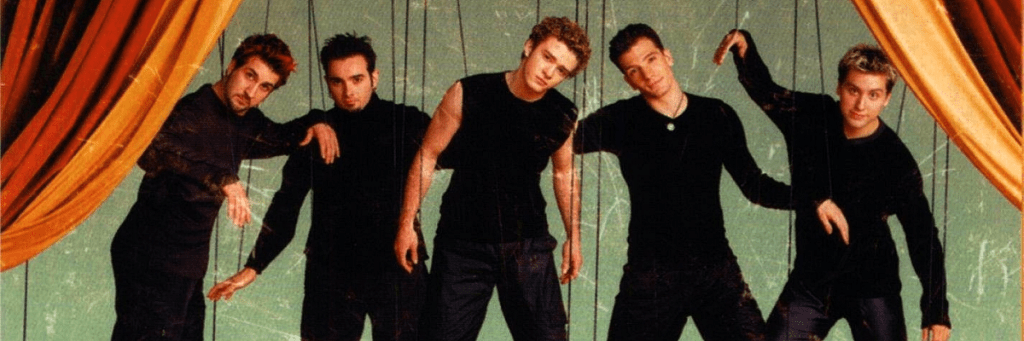
As we double down on determination, we might recall that it was on this date in 2000 that the boy band *NSYNC had its first number #1 hit, “It’s Gonna Be Me.”
“Life has no meaning a priori… It is up to you to give it a meaning, and value is nothing but the meaning that you choose”*…

Simone de Beauvoir and Jean-Paul Sartre in Paris, June 1977
Existentialism has a reputation for being angst-ridden and gloomy mostly because of its emphasis on pondering the meaninglessness of existence, but two of the best-known existentialists knew how to have fun in the face of absurdity. Simone de Beauvoir and Jean-Paul Sartre spent a lot of time partying: talking, drinking, dancing, laughing, loving and listening to music with friends, and this was an aspect of their philosophical stance on life. They weren’t just philosophers who happened to enjoy parties, either – the parties were an expression of their philosophy of seizing life, and for them there were authentic and inauthentic ways to do this…
Skye C. Cleary celebrates “Being and drunkenness: how to party like an existentialist.”
*
###
As we raise a glass, we might send provocative birthday greetings to Jean Baudrillard; he was born on this date in 1929. A sociologist, philosopher, cultural theorist, political commentator, and photographer, he is best known for his analyses of media, contemporary culture, and technological communication, as well as his formulation of concepts such as simulation and hyperreality. He wrote widely– touching subjects including consumerism, gender relations, economics, social history, art, Western foreign policy, and popular culture– and is perhaps best known for Simulacra and Simulation (1981). Part of a generation of French thinkers that included Roland, Barthes, Gilles Deleuze, Jean-François Lyotard, Michel Foucault, Jacques Derrida, and Jacques Lacan, with all of whom Baudrillard shared an interest in semiotics, he is often seen as a central to the post-structuralist philosophical school… which offered a response to nihilism complementary to that offered by the existentialists.

“Nature, Mr Allnut, is what we were put in the world to rise above”*…

Questions about what matters, and why, and what exists in the world, are quintessentially philosophical. The answers to many of these questions are informed by how we conceive of ourselves. How has what is often described as the ‘Copernican revolution’ effected by Charles Darwin changed our self-conception? One particularly surprising feature of evolutionary biology is that it lends significant support to existentialism…
Philosopher Ronnie de Souza suggests that ethics cannot be based on human nature because, as evolutionary biology tells us, there is no such thing: “Natural-born existentialists.”
[Photo above: “Children play on Omaha beach in Normandy, France, 1947,” by David Seymour/Magnum Photos. International Center of Photography]
* Katherine Hepburn to Humphrey Bogart in African Queen
###
As we sidle up to Sartre, we might spare a thought for Baruch (or Benedict) de Spinoza, the Dutch philosopher whose rationalism and determinism put him in opposition to Descartes and helped lay the foundation for The Enlightenment, and whose pantheistic views led to his excommunication from the Jewish community in Amsterdam; he died on this date in 1677.
As men’s habits of mind differ, so that some more readily embrace one form of faith, some another, for what moves one to pray may move another to scoff, I conclude … that everyone should be free to choose for himself the foundations of his creed, and that faith should be judged only by its fruits; each would then obey God freely with his whole heart, while nothing would be publicly honored save justice and charity.
– Tractatus Theologico-Politicus, 1670

“Oh housebuilder! Now you are seen”*…

Movie star Leonardo DiCaprio’s Malibu dream house hit the market on Friday, listing for $10.95 million. Leo purchased the midcentury California bungalow (can you still call something a bungalow when it costs more than $10 mil? The jury is out!) back in 1998, and the three bed, two bath home is a beaut. It’s on star-studded Carbon Beach, the views are killer, and the interiors are gorgeous.
But the truth is, life is probably meaningless and there is a strong chance that we all die alone. Could buying this house change any of that? Is it possible that life at 21844 Pacific Coast Highway, with your own private hot tub and large ocean front deck, could actually offer a reprieve from the agony of being a human in the world? Or, is it certain that “we cannot escape anguish, for we are anguish,” as John-Paul Sartre once put it? Great question!…
An existentialist interview with Leonardo DiCaprio’s real estate agent: “Leo DiCaprio’s $11 Million Malibu Beach House And The Soul-Crushing Agony Of Being Human.” [via the always-illuminating Pop Loser]
* Gautama Buddha
###
As we sigh, we might send nihilist birthday greetings to Friedrich Wilhelm Nietzsche; he was born on this date in 1844. A philosopher, poet, composer, cultural critic, and classical philologist, Nietzsche is probably best remembered for his concepts of the “death of God”, the Übermensch, the eternal recurrence, the Apollonian and Dionysian dichotomy, and the will to power… which, among them, have had an extraordinary impact on thinkers as diverse as Martin Heidegger and Ayn Rand on the one hand, and Michel Foucault (whose birthday this also is) and Jacques Derrida on the other.
When someone hides something behind a bush and looks for it again in the same place and finds it there as well, there is not much to praise in such seeking and finding. Yet this is how matters stand regarding seeking and finding “truth” within the realm of reason. If I make up the definition of a mammal, and then, after inspecting a camel, declare “look, a mammal’ I have indeed brought a truth to light in this way, but it is a truth of limited value.
– Über Wahrheit und Lüge im außermoralischen Sinn (On Truth and Lie in an Extra-Moral Sense), 1873

“Human relationships are not rocket science—they are far, far more complicated”*…

In the English language, the word “he” is used to refer to males and “she” to refer to females. But some people identify as neither gender, or both – which is why an increasing number of US universities are making it easier for people to choose to be referred to by other pronouns…
More at “Beyond ‘he’ and ‘she’: The rise of non-binary pronouns.”
* James W. Pennebaker, The Secret Life of Pronouns
###
As we revel in reference, we might send thoughtful birthday greetings to Naguib Mahfouz; he was born on this date in 1911. A prolific writer– he published 34 novels, over 350 short stories, dozens of movie scripts, and five plays over a 70-year career– he was one of the first writers in Arabic to explore Existentialist themes (e.g., the Cairo Trilogy, Adrift on the Nile). He was awarded the 1988 Nobel Prize for Literature.

You must be logged in to post a comment.