Posts Tagged ‘pop’
“It is generally understood that a party hardly ever goes the way it is planned or intended”*…

Scheduling note: as tomorrow is July 4, (Roughly) Daily will be off. Regular service will resume on July 5… and should continue uninterrupted for awhile. Meantime…
The “Great American State Fair,” ostensibly celebrating the 250th birthday of the U.S., is having a rocky run. After the talent for what was presented to them as a bi-partisan event largely withdrew, the Fair’s champion, President Trump, converted the opening into an unabashed “Trump Rally.” Thereafter, sparse attendance, equipment issues, high prices, and other embarassments.
As it happens, President Trump has some historical company. 100 years ago, in Philadelphia, dicey politicians hoped to replicate the success of the 1876 Centennial Exposition with a celebration of America’s 150th birthday. Instead, the 1926 “world’s fair” lost millions of dollars, hobbling the city’s finances on the eve of the Great Depression. Meilan Solly reports…
A century ago, the first visitors to Philadelphia’s Sesquicentennial International Exposition—held to mark the 150th anniversary of the United States’ founding—waded through mud and wandered along unpaved sidewalks to reach the heart of the fairgrounds, only to find carpenters still at work on half-finished exhibition halls and gaping holes marking the spots where attractions had yet to be built.
Dining and shopping options were limited, and some of the few exhibits on view stretched the very definition of “entertainment.” One was a model Post Office where “you could go send yourself a letter and watch it get canceled,” says historian Thomas H. Keels, author of Sesqui! Greed, Graft and the Forgotten World’s Fair of 1926. “That was it.”
The 200,000-plus Shriners in town for their fraternal organization’s national convention realized that their parades and rallies were the main events planned for these early days of the fair. Many went home disappointed, telling family and friends that the exposition wasn’t worth visiting…
Held in Philadelphia between May 31 and December 31, 1926, the fair—referred to as the Sesqui—celebrated the 150th anniversary of the United States’ founding. Little remembered today, the event was a financial failure that Varietydeemed “America’s greatest flop.” Exact figures are hard to come by, but Keels suggests that the fair lost the equivalent of more than $410 million in today’s dollars, effectively bankrupting the city of Philadelphia.
The exposition was America’s main celebration of the sesquicentennial. Congress authorized the fair and provided limited funding for it, in addition to issuing commemorative coins and encouraging local celebrations, but the scale of federal participation paled in comparison with that of the 1976 bicentennial and this year’s 250th anniversary of the signing of the Declaration of Independence.
Attendance at the Sesquicentennial Exposition also failed to match the numbers of Philadelphia’s 1876 centennial celebration, which attracted roughly 20 percent of the country’s population in an era when planes, cars and luxury liners had yet to make long-distance travel more accessible. Organizers predicted that 30 million people would visit the 1926 fair; ultimately, fewer than five million paid to attend. [For comparison, more than 44 million people visited the “World of Tomorrow” at the 1939-40 New York World’s Fair. Two and a half decades later, 51 million visitors flocked to the 1964-65 New York World’s Fair.]
What doomed the sesquicentennial? Poor planning and lukewarm reviews by the fair’s early visitors contributed to the disastrous outcome. So, too, did the streak of bad weather that plagued Philadelphia during the exposition’s run, with rain falling on more than half of the days the fair was open to the public.
Although some observers considered the lackluster public response a sign that the golden age of world’s fairs had come to an end, Chicago’s 1933-34 Century of Progress Exposition proved this prediction wrong, drawing more visitors than any of its predecessors. Overall, Keels attributes the 1926 fair’s failure to its “association with what was being viewed as an increasingly corrupt political machine,” headed by Pennsylvania Republican William Scott Vare.
After the fair incurred “nationwide ridicule,” Keels tells Smithsonian magazine, Vare and other local politicians were eager to move on from the endeavor, selling off leftover structures piecemeal “for pennies on the hundreds of dollars.” This push to forget the sesquicentennial has reverberated into the present: Just one building constructed for the 1926 fair stands in Philadelphia today…
More of the macabre story: “America’s 150th Birthday Celebration Was Deemed the Nation’s ‘Greatest Flop.’ What Went Wrong With the Sesquicentennial?” from @smithsonianmag.bsky.social.
Apposite: “America Is Trapped in the Grossest Pool Party of All Time.”
* John Steinbeck
###
As we rethink recreation, we might celebrate one of the great “public parties” of all time, recalling that it was on this date in 1970 that the Second Atlanta International Pop Festival opened in a soybean field adjacent to the Middle Georgia Raceway in Byron, Georgia. Running officially through the 5th (but actually ending around dawn on the 6th), 500-600,000 folks attended a festival designed to foster a sense of community that transcended race, region, and social class. And while the weather was boiling (local farmers brought watermelons and cantaloupes to help attendees), and there were reports of occasional nudity and recreational drug use, the three days were essentially trouble free… and a blast.
Performers included The Allman Brothers Band, the Chambers Brothers, Richie Havens, Grand Funk Railroad, It’s a Beautiful Day, B.B. King, Lee Michaels, Mott the Hoople, Mountain, Poco, Procol Harum, Rare Earth, John Sebastian, the Bob Seger System, Spirit, Ten Years After, Johnny Winter– and the Jimi Hendrix Experience who, at midnight on this date in 1970, played his rendition of the “Star-Spangled Banner” for nearly 500,000 people—the largest crowd of Hendrix’s career.
Georgia’s “colorful” governor at the time, Lester Maddox, who had tried repeatedly to prevent the festival from taking place, vowed that he would do whatever it took to block any similar event in the future. The state legislature willingly complied and enacted sufficient restrictions to make it much more difficult for anyone to organize another rock festival in the state. A third Atlanta Pop Festival never took place.
Georgia’s loss. As “Abraham Lincoln” said (in Bill and Ted’s Excellent Adventure), “Be excellent to each other. And… PARTY ON, DUDES!”

“The pencil is mightier than the pen”*…

Carson Monetti on an industrial rivalry that yielded the finest pencils in the world…
It was the summer of 1952, and the executives of Tombow Pencil were about to revolutionize the Japanese pencil industry—or, possibly, fall flat on their faces. Hachiro Ogawa, the son of founder Harunosuke Ogawa, was Tombow’s managing director, and he had just finished a years-long project, at enormous cost, to make the best pencil Japan had ever seen.
It was called “HOMO,” because in comparison with other Japanese pencils of its day, Tombow’s new model had a much more homogenous core. Pencil cores are a mixture of graphite and clay (thanks to Nicolas-Jacques Conté’s invention of the modern pencil in the late eighteenth century), and the components in early cores were not always evenly mixed. This was particularly true in Japan, where pencils had only been made since the turn of the century and advanced industrial equipment was just starting to become available.
Hachiro’s team at Tombow was determined to do whatever it took to produce more consistent cores. They struck up a working relationship with scientists at the University of Tokyo, a visionary move that yielded crucial technical research in 1948. Then, to implement the research findings, Tombow had to import more advanced industrial mills from the United States.
It was a gamble, but it worked, and suddenly Tombow could make much finer particles of graphite and clay than any other Japanese manufacturer. HOMO cores were stronger, smoother, and more consistent than anything else on the domestic market. They came in 17 grades, from 9H to 9B, a wide and finely graduated range that hadn’t been possible with Tombow’s old process.
They were also incredibly beautiful. Another import that had become available in the wake of World War II was incense cedar, the material of choice for high-quality pencils. Most of the pencil industry’s incense cedar comes from California, and Tombow quickly restarted its imports of the aromatic red wood. HOMO’s design takes full advantage of the material upgrade, with a subtle transparent lacquer that highlights the cedar’s color and grain.
For Hachiro Ogawa and his father Harunosuke, the completion of the HOMO project was the culmination of a dream, and it was undoubtedly a pioneering moment in Japanese industry. But as the company prepared to introduce HOMO at the grand Tokyo Kaikan meeting hall, the skeptics must have been hard to ignore. In the early 1950s, a Japanese pencil cost five or ten yen (about 25-50 cents in 2022 dollars.) Tombow’s technical leap forward had produced a model far superior to those inexpensive pencils, but they would also be pioneers in price. HOMO would cost 30 yen (about $1.50 today) for a single pencil, with boxes of twelve priced at 360 yen (about $19 today.)
Japanese consumers weren’t used to spending that kind of money on a pencil. But if Hachiro, Harunosuke, and their colleagues were nervous, their fears were surely resolved at the first-ever Tombow New Product Presentation. Tokyo Kaikan was the esteemed meeting place of foreign dignitaries, corporate titans, even heads of state—and now it was absolutely bustling with stationery wholesalers, curious people from other companies, and the press. Tombow took orders for 720,000 HOMO pencils on launch day alone.
Tombow’s surprising success with Japan’s first premium pencil, along with the ambition and competitive spirit of midcentury manufacturers, led to the most intense period of development the global pencil industry has ever seen.
We call it the Golden Age of Japanese Pencils.
The Golden Age began and ended with two Tombow launches: Hachiro’s pioneering HOMO launch in 1952 and the MONO 100 launch in 1967, fifteen years later. During this period, Tombow and its crosstown rival Mitsubishi Pencil created many of the greatest pencils of all time, including the two best-regarded models offered today…
[Monetti tells the story of that fertile period…]
… although Mitsubishi and Tombow didn’t know in advance that the Japanese pencil industry would reach its peak in 1966, both companies clearly saw it coming, and they had already prepared themselves for a future beyond pencils. One wonders why both companies continued to expend research and development resources on high-end pencils in the late 1960s, but they did—and on a personal note, this sometimes inexplicable tendency of Japanese manufacturers to perfect what doesn’t need to be perfected is a major reason why we’re so passionate about our Japanese imports…
[More detail…]
… In this pencil merchant’s opinion, there’s simply no need for a pencil more perfect than the best of Japan’s Golden Age. We can admire the heady moment and the strong personalities who created these pencils, and we can be forgiven for daydreaming about the even-more-perfect pencil, the one that would make our handwriting beautiful and our drawings perfectly proportional.
But when I sit down to sharpen my pencil (usually a Hi-Uni HB or Mitsubishi 9852 “Master Writing” B), my primary feeling is gratitude. The designers and engineers who created these tools didn’t know they would be made for 70 years, but they treated their seemingly small task with intense seriousness of purpose, and that passion produced outstanding tools that have still not been surpassed. Today, in 2022, I frequently speak with artists who tell me how much these pencils inspire them and enable their best work.
So I’m not regretful about the end of the Golden Age of Pencils, because in the ways that matter most, it never ended. Mitsubishi, in particular, has loyally maintained its midcentury product line, continuing to manufacture its pencils in Japan and even adding a minor new model now and then. (There’s an antiviral-coated Mitsubishi in light blue, new for 2022.) Artists and writers still debate the merits of Hi-Uni and MONO 100.
And I can’t speak for everyone who works here [St. Louis Art Supply], but personally, I’m excited every time I ship a fresh, unsharpened dozen to a new customer. For them, the Golden Age is just getting started…
A celebration of dedicated craft: “The Golden Age of Japanese Pencils, 1952-1967,” from @monetti.bsky.social, via Spencer Wright and his wonderful newsletter, Scope of Work.
See also: The Pencil, by Henry Petrosky
* Robert Pirsig (and here)
###
As we find poetry in the prosaic, we might recall that it was on this date in 1970 that the inaugural gathering of pencil users and their fans that we now know as San Diego Comic-Con was held. Originally called “San Diego’s Golden State Comic-Minicon,” it has grown into the the largest pop and culture festival in the world.

“The more that you read, the more things you will know. The more that you learn, the more places you’ll go.”*…
The end of the year approaches, and thoughts turn to retrospectives. In what has become a (Roughly) Daily tradition, today’s edition features a year-end recap from the estimable Tom Whitwell, who shares a full deck of fascinating things he learned in 2024. For example…
6. The London Underground has a distinct form of mosquito, Culex pipiens f. Molestus, genetically different from above-ground mosquitos, and present since at least the 1940s. [Katharine Byrne & Richard A Nichols]
7. Ozempic is a modified, synthetic version of a protein discovered in the venomous saliva of the Gila monster, a large, sluggish lizard native to the United States. [Scott Alexander]
22. In 2022, 55% of Macy’s income came from credit cards rather than retail sales. That’s fairly normal for US department stores. [Pan Kwan Yuk]
29. You can buy 200 real human molars for $900. [B for Bones, via Lauren]
32. In 1800, 1 in 3 people on earth were Chinese. Today, it’s less than 1 in 5. [Our World in Data, via Boyan Slat]
42. n the 2020s, over 16% of movies have colons in the title (Like Spider-Man: Homecoming), up almost 300% since the 1990s. [Daniel Parris]
46. Between the 1920s and 1950s, millions of ‘enemies of the people’ — often educated elites — were sent to prison camps in the Soviet Union. Today, the areas around those camps are more prosperous and productive than similar areas. [Toews & Vézina]
Many more fascinating factoids at: “52 things I learned in 2024,” from @TomWhitwell.
Previous lists: 2014 2015 2016 2017 2018 2019 2020 2021 2022 2023… and sprinkled throughout the December postings in (R)D over the years.
###
As we forage, we might recall that on this date in 1968 Marvin Gaye’s version of “I Heard It Through the Grapevine” was in the middle of its seven-week occupancy of the #1 spot on Billboard’s Hot 100.
A year earlier, Gladys Knight and the Pips had had a hit with the tune (#1 on the R&B chart; #2 on the Hot 100). Gaye’s version overtook its predecessor and became the biggest hit single on the Motown family of labels up to that point. The Gaye recording has since become an acclaimed soul classic. In 1998 the song was inducted into the Grammy Hall of Fame for “historical, artistic and significant” value.
“The Beatles were thugs who were put across as nice blokes, and the Rolling Stones were gentlemen who were made into thugs by Andrew [Loog Oldham, their manager]”*…

A reminder that your correspondent is traveling– to wit, more occasional posts. Regular service should resume on or about September 20…
John McMillan on a controversy that raged back when music mattered– politics and image in the age of “the wax manifesto”…
Many in the media were quick to notice the two groups’ contrasting styles. When the Rolling Stones arrived in the United States, the first Associated Press (AP) report described them as “dirtier, streakier, and more disheveled than the Beatles.” Tom Wolfe put things more sharply: “The Beatles want to hold your hand,” he quipped, “but the Stones want to burn down your town.” Since these comparisons proved useful to everyone, both the bands and the journalists collaborated on the charade. In the early 1960s, Keith Richards remarked, “nobody took the music seriously. It was the image that counted, how to manipulate the press and dream up a few headlines.” Peter Jones, who wrote about both bands for the Record Mirror, recalled being in a “difficult position” because he was expected to “gloss over” the Beatles’ tawdry indiscretions. “It was decreed that the Beatles should be portrayed as incredibly lovable, amiable fellows, and if one of them, without mentioning any names, wanted to have a short orgy with three girls in the bathroom, then I didn’t see it.”
Whether one preferred the Beatles or the Stones in the 1960s was largely a matter of aesthetic taste and personal temperament. Though clichéd and sometimes overdrawn, most of the Beatles/Stones binaries contain a measure of plausibility: the Beatles were Apollonian, the Stones Dionysian; the Beatles pop, the Stones rock; the Beatles erudite, the Stones visceral. But in the United States, during the watershed summer of 1968, the Beatles/Stones debate suddenly became a contest of political ideologies, wherein the Beatles were thought to have aligned themselves with flower power and pacifism, and the Stones with New Left militance. Though both of these immensely talented bands helped to construct images of youth culture that generated powerful confidence, self-awareness, and libidinal energy among their listeners, neither of them ever articulated, or proved willing to defend, a coherent political cosmology. The supposed “ideological rift” between the two bands was nearly as stylized as the contrasting costumes they wore on The Ed Sullivan Show.
Nowhere was the Beatles/Stones debate more fiercely fought than in American underground newspapers, which by 1968 could be found in every pocket of the country, and had a readership that stretched into the millions. “The history of the sixties was written as much in the Berkeley Barb as in the New York Times,” claimed literary critic Morris Dickstein. Freewheeling and accessible to all manner of left-wing writers, these papers generated some of the earliest rock criticism, and provided a nexus for a running conversation among rock enthusiasts nationwide. To recall how youths assayed the Beatles/Stones rivalry is to be reminded that when rock and roll was in its juvenescence, youths interrelated with their music heroes in a way that today seems scarcely fathomable. Amid the gauzy idealism and utopian strivings that characterized the late-1960s youthquake, they believed that the Beatles and the Rolling Stones—the biggest rock stars in the world!—should speak to them clearly and directly, about issues of contemporary significance, in a spirit of mutuality, and from a vantage of authenticity. Young fans believed that rock culture was inseparable from the youth culture that they created, shared, and enjoyed. In some fundamental way, they believed themselves to be part of the same community as John and Paul, and Mick and Keith. They believed they were all fighting for the same things….
…
… Even beyond the usual hysterical interest attracted by any new Beatles record,” Time magazine announced, “‘Hey Jude/Revolution,’” was “special.” Released in the United States on August 26, 1968, it soon became one of the best-selling 45s in music history. Many were drawn to “Hey Jude” for its infectious chorus and unconventional four-minute fade-out, but it was Lennon’s raucous “Revolution,” on side B, that captured the attention of American radicals that summer. “That’s why I did it,” Lennon later said. “I wanted to talk, I wanted to say my piece about revolutions.”
“Revolution” opens with Lennon screaming abrasively over heavily distorted guitars, but it quickly settles into a bluesy stomp, and it soon becomes apparent that Lennon’s sonic epistle to the New Left does not express solidarity, but disaffection. Though Lennon says he shares the goals of many radicals (“We all want to change the world”) he disavows the tactics of ultramilitants (“When you talk about destruction / Don’t you know that you can count me out?”)2 Elsewhere, he expresses skepticism of the New Left’s overwrought rhetoric (“Don’t you know it’s gonna be alright?”) and says he’s tired of being pestered for money for left-wing causes (“You ask me for a contribution, well you know / We’re all doing what we can”). The final verse amounted to an endorsement of the apolitical counterculture, and a toxic kiss-off to Movement radicals…
…
… Contra to “Revolution” was the Stones new single from Beggars Banquet “Street Fighting Man,” which was released in the United States on August 30, 1968, just four days after “Revolution.” (Years before, the two groups had agreed never to release their records on the same day, so as not to divide their fans.) Fearful that the song would further inflame the passions of militants involved in the now famous chaos surrounding the Democratic National Convention, most Chicago radio stations refused to play it. “No song better captured the feeling of 1968 than ‘Street Fighting Man,’” historian Jon Wiener argues. Jagger supposedly penned its lyrics after attending a March 1968 antiwar rally at London’s Grosvenor Square, where demonstrators and mounted policemen skirmished outside the U.S. Embassy. Witnesses are divided about the extent of Jagger’s participation; one remembers him “throwing rocks and having a good time,” while another recalls him “hiding [and] running.” Supposedly to his regret, Jagger had to abandon the protest after being recognized by fans and reporters. The song’s refrain was thought by some to evoke his feelings of impotence and frustration (“But what can a poor boy do? / except to sing for a rock ’n’ roll band? / ’Cause in sleepy London town / there’s just no place for a street fighting man”). Others saw the refrain as a hedge against the song’s more provocative lyrics…
Read this essay (from 2007) in full: “Beatles or Stones?” from @believermag. For even more, see the book into which this piece grew.
(Image above: source)
* Sean O’Mahony, publisher of both bands’ official fan magazines starting respectively in 1963 and 1964
###
As we choose a side, we might recall that it was on this date in 1963 that Swan Records released the Beatles’ “She Loves You”, with its flip side, “I’ll Get You” in the US. Although it was then number one in the UK, “She Loves You” was ignored Stateside until 1964 and the arrival of Beatlemania when it would reach the top of the US Pop chart.

“The problem with introspection is that it has no end”*…

Still, we persevere. Samantha Rose Hill considers Hannah Arendt‘s final unfinished work, in which the philosopher (and self-described political theorist) mounted an incisive critique of the idea that we are in search of our true selves. More specifically, she explores Arendt’s wrestling with the concept of authenticity…
… In the midst of the Second World War, French existentialism emerged out of German existentialism. If authenticity was a question of being for Heidegger and a question of freedom for Jaspers, for Jean-Paul Sartre, Simone de Beauvoir and Albert Camus it became a question of individual ethics. The underlying question shifted from ‘What is the meaning of Being?’ to ‘How should I be?’ The credo underpinning Sartre’s work – ‘existence precedes essence’ – meant that we are thrown into the world without any fixed substance, and this meant that we get to choose who we become. While philosophers like Thomas Hobbes and Jean-Jacques Rousseau tried to capture human nature by imagining what life was like before society, for Sartre, there is no human nature. We must always be imagining and reimagining who we are, which is to say we are always in the process of becoming. For Beauvoir, becoming was a creative enterprise, a work of art. And she argued that it was not enough to shape oneself within the existing conditions of the world, but that one must also shape the conditions of the world itself. Authenticity for the French existentialists was not about uncovering a pre-existing true self, but rather choosing to engage in a process of becoming.
Caught between German and French existentialism, Arendt offered a critique of authenticity in her final unfinished work, The Life of the Mind. In place of authenticity, Arendt turned to the concept of the will in order to think about how one decides to act in the world. A student of Heidegger and Jaspers, and a fellow traveller of Sartre, Camus and Beauvoir from 1933-41 during her years of exile in Paris, Arendt rejected the idea that a true self exists within the self. She was not a transcendental thinker. For her there was no capital-G God, and there was no capital-B Being. In place of an inner-authentic self, she argued that the inner organ of decision-making that guided one’s actions was the will.
Following the work of St Augustine and Jaspers, Arendt turned Heidegger on his head and argued that all thinking moves from experience in the world, not from Being. By arguing that thinking was a function of Being, Heidegger had tried to divorce thinking from the will in order to argue that it was one’s true inner Being that determined ultimately who they became in the world. But for Arendt, this was an abdication of personal responsibility and choice. It was a way of handing over one’s decision-making power. And for her, it is only the choices that we make in real time when confronted with decisions that determine who we will become, and in turn determine the kind of world that we will help to shape.
So, what is the will? And is it a persuasive alternative to authenticity?
Unlike ‘authenticity’, ‘willing’ is not a very desirable word. First of all, it’s not a thing one can possess, it’s an action, something one has to do. And unlike authenticity, there is no sense of comfort in ‘the will’. Authenticity promises certainty, whereas the will promises uncertainty. And in times of turmoil, it is all too human to prefer that which promises predictability to the unknown. Colloquially, willing usually appears around New Year’s Eve when people start talking about resolutions and how they’d like to change their lives. The will becomes a question of ‘willpower’. Or worse, willing can remind us of those difficult times when someone implores us ‘Are you willing to cooperate?’ ‘Are you willing to try?’ ‘Are you willing to do what it takes to get the job done?’ But for Arendt, the will was the means to our freedom, it was the promise that we can always be other than we are, and so to the world. The will is a space of tension inside the self where one actively feels the difference between where they are and where they would like to be.
Willing is the mental activity that goes on between thinking and judgment. It has the power to shape us by drawing us into conflict with ourselves. Without inner conflict, there is no forward movement. These are the basic principles of willing:
- Willing is characterised by an inner state of disharmony.
- Willing is experienced as a felt sense of tension within the body where the mind is at war with itself.
- Willing makes one aware of possible decisions, which creates a feeling of being pulled in multiple directions at once.
- Willing can feel very lonely. Decisions and choices are shaped by one’s environment, by the everydayness of being, but ultimately the responsibility for deciding is up to oneself.
- Willing makes one aware of the tension that exists between oneself as a part of the world, and oneself as an individual alone existing in relationship to the world.
- Willing is the principle of human individuation.
- Willing relates to the world through action.
- The will is the inner organ of freedom.
Everyone makes hundreds of decisions a day, but most of the time they aren’t conscious of the decisions they are making. Their decisions are not subjected to the will. Instead, they are simply following a routine of patterns that have been formed over time. In order to engage the will, one must be willing to pause. Because, while thinking moves from past experience, and imagination fixates on what might happen in the future, the past and the future are beyond the reach of the will. Willing is what happens before one acts. To be in a state of willing is to be in the Now.
Authenticity is attractive in part because it promises a sense of harmony, it is the promise that, if we know who we are, then we can act in a way where our actions are in alignment with our values. But the will is characterised by a sense of conflict. It is the inner organ that generates tension within the self, making one aware of the discrepancies between who they are and who they might like to be, or what they want and what they might be able to have. But it is this tension that is vital for bringing consciousness to decision-making…
Eminently worth reading in full: “Beyond authenticity,” from @Samantharhill in @aeonmag.
Pair with Lionel Trilling‘s Sincerity and Authenticity, the transcriptions of his 1970 Norton Lectures at Harvard, in which Trilling examined “the moral life in process of revising itself” as first sincerity (in the pre-Enlightenment, e.g., Shakespeare), then “authenticity” (in the 20th century, as the article linked above explains) became central to moral thought.
* Philip K. Dick
###
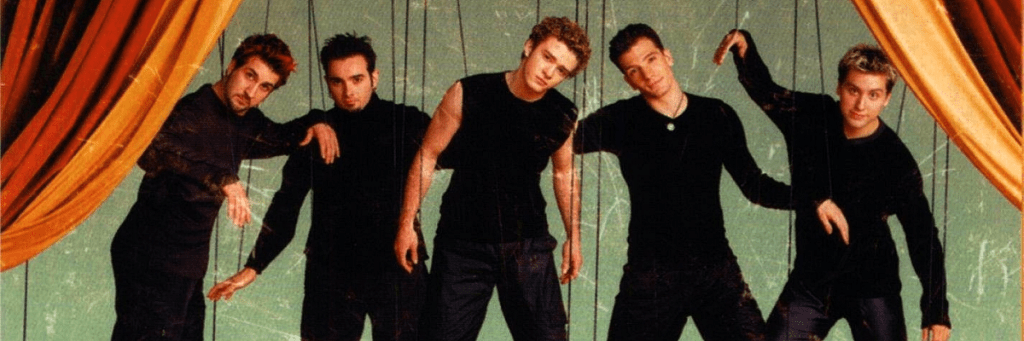
As we double down on determination, we might recall that it was on this date in 2000 that the boy band *NSYNC had its first number #1 hit, “It’s Gonna Be Me.”
You must be logged in to post a comment.