Posts Tagged ‘experiential art’
“Nothing is poorer than a truth expressed as it was thought”*…
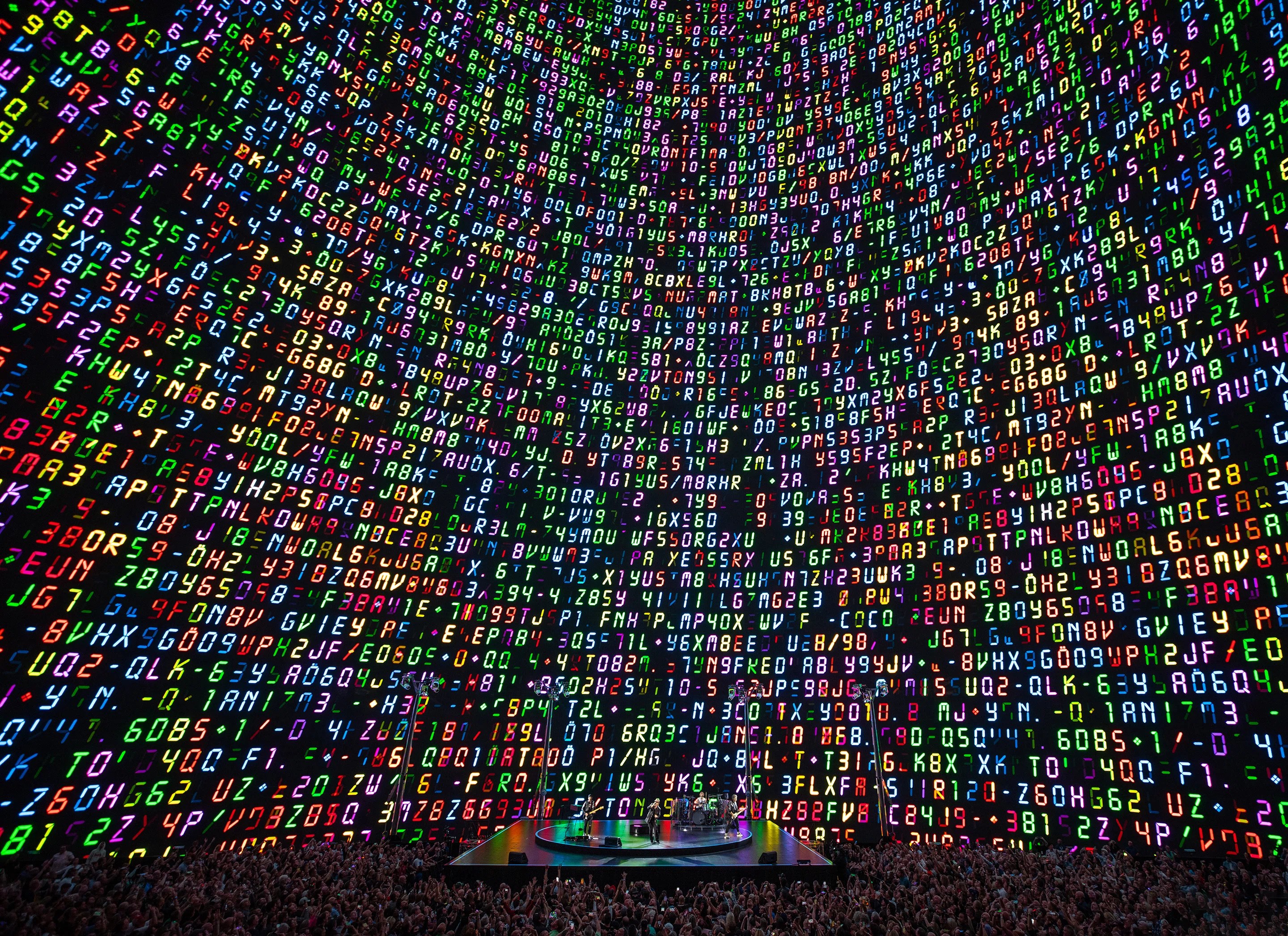
Many bemoan the experiential art that has taken over our galleries and screens, but is, Róisín Lanigan asks, it a populist fad or a way to make art more accessible?…
You don’t have to be a historian or a creative to notice it: art just isn’t what it used to be. Or at least, the act of experiencing art in public isn’t what it used to be. Whereas once we paid to go to galleries to silently view paint behind plexiglass, a new wave of curators and creators have decided that for art to be truly appreciated, we must be completely immersed in the audio, visual and experiential world it inhabits. From London’s Outernet to Yayoi Kusama’s Infinity Mirrors and Vegas’s controversial The Sphere, it’s never been clearer that we’re living in the midst of the immersive art boom.
Even if you’ve never been to one of these spaces – all immersive art exhibitions exist as ‘spaces’; ‘gallery’ is increasingly an archaic term – you’ll be cognisant of their existence. Because they don’t just live in the real world, they live on your screen too. Social media is awash with immersive exhibition selfies, with videos recommending the top ten best immersive art events to see for free in most big cities. The hashtag ‘immersive art’ clocks in at over 99 million views on TikTok and nearly half a million on Instagram (where in all fairness millennials are less amenable to the transformative power of the hashtag than the algorithmically attuned TikTok zoomers).
Outernet, based in Soho, sees around 1.5 million to their ‘district’ on a monthly basis, and say they’re on track to hit 6.8 million visitors this year alone, which would put them on track to be one of the most visited destinations in the UK, just one year after opening. The Smithsonian says that Kusama’s roving Infinity Mirrors exhibition has reached 330 million people across Twitter and other platforms. It’s not a leap to say we’re reaching, if we haven’t already, peak immersive art. But is that a bad thing? And if we’re already at the apex, where do we go from here?
It’s easy to take up the mantle that immersive-mania is, of course, wholly bad. The arguments for this always follow common throughlines; it’s common, it’s populist, it’s diluting the experience of what true art really is. In a recent scathing example, a Vulture review of Refik Anadol’s Unsupervised at Moma called the immersive exhibition “a glorified lava lamp” and accused it of being nothing more than “crowd-pleasing, like-generating mediocrity”.
But who decides what that experience is, what it looks like? The art world, much like the fashion and film industries, has undergone much-needed transformations in recent years to get rid of those antiquated ideals and cultural gatekeepers. Slowly but surely, it’s become more diverse, younger, more experimental and in the process, more accessible. For every charge that immersive events are diluting our experience of artistry, there’s a counterpoint to be made that it’s opening that experience out to people who might not normally gravitate towards it…
[But, she reports, there’s a snake in the garden…]
There is, though, for all the accessibility that immersive exhibitions offer, something antithetical to the experience of being moved by a piece of art when in the back of our minds we’re thinking about how many likes we might get for it on social media. Immersive events which actively encourage selfies and photo opportunities risk detracting from the art itself; a depressing natural end-point to queues to take photos in front of the Mona Lisa and cameras being banned from Basquiat’s recent exhibition in London. Although cameras could never be conceivably banned from the grid-ready world of immersive art, it’s a fine line to treat between posting too much too; leaving your exhibition open to an ‘Instagram vs Reality’ takedown, or revealing spoilers. In the case of Sphere, organisers briefly considered asking guests to put stickers over their phone cameras before realising that their footage is as much promotion as it is a leak…
… There are so many immersive pop-ups that even the gallerists and producers themselves are getting sick of it. Lizzie Pocock tells me almost every brief she’s received for the past five years has used the word “immersive”, a term she now calls “overused”. “I don’t want to sort of be disrespectful, but so many things that get called immersive, you still sort of just go and watch,” she says. “You don’t feel like you’re in them, or you’re affected by them. It’s almost a bit of a lazy word, a buzzword, isn’t it? It’s like, let’s do something that’s immersive. It’s perhaps an excuse to not really delve into sort of the deeper experience and the deeper reason for why you’re putting it live.”
If the people behind the immersive shows are getting sick of them, then perhaps we finally have reached peak immersive. Now we just have to wait for audiences to catch up, for the algorithm to get bored, and for the art world to determine what their next lucrative buzzword will be. Personally, my money’s on AI…
“Have we reached peak immersive art?,” from @rosielanners in @itsnicethat.
See also: “The Rise of ‘Immersive’ Art” and “Ready to plunge in? The rise and rise of immersive art.”
* “Nothing is poorer than a truth expressed as it was thought. Committed to writing in such cases, it is not even a bad photograph. Truth wants to be startled abruptly, at one stroke, from her self-immersion, whether by uproar, music or cries for help.” – Walter Benjamin
###
As we dive in, we might spare a thought for Michelangelo di Lodovico Buonarroti Simoni; he died on this date in 1564. A sculptor, painter, architect, poet, and engineer in the High Renaissance, Michelangelo was considered one of the greatest artists of his time. And given his profound influence on the development of Western art, he has subsequently been considered one of the greatest artists of all time. Indeed, he is widely held to be (with Leonardo da Vinci) the archetypal Renaissance man.
Further to the item above, we might also note that, via his painting on the ceiling of the Sistine Chapel in Rome, he was a pioneer of immersive art.

You must be logged in to post a comment.