Posts Tagged ‘Beauty’
“The daily hummingbird assaults existence with improbability”*…

Zito Madu‘s lovely meditation on– and appreciation of– the hummingbird…
… Hummingbirds are wondrous creatures. As Katherine Rundell wrote in her 2022 essay “Consider the Hummingbird”:
There is nothing I admire more than evolution. But it’s difficult, more than with any other living thing, to imagine hummingbirds beginning as archaebacteria among primordial murk, painstakingly working over millions of years to grow bright wings. They seem as if they were made in an instant, a spark of genius from an extravagant god.
They are the smallest living birds in the world. There are 366 known species of hummingbirds, with the smallest being the bee hummingbird that measures at two inches, and the largest being the giant hummingbird, which is 9.1 inches long. Most live in the tropics, largely in Central and South America, but there are around seventeen species in the United States. They have long needle-like beaks, can fly forward, backward, up, down, and in zigzags. They flap their wings faster than any other bird, up to fifty times per second, they have the largest heart-to-body-size rate in an animal, and that heart has typically 500 to 1200 beats per minute, according to The Hummingbird Handbook (2021) by John Shewey. When in a state of deep rest, and to conserve energy, the hummingbird can slow down its heart rate to only fifty beats per minute, and drop its metabolism by 95 percent.
In 2022, a study was published by Yale scientists on the range of colors in the plumage of hummingbirds, which “exceeds the known diversity of colors found in the plumages of all other bird species combined, increasing the total of known bird-visible plumage colors by 56 percent.”…
“Hummingbirds are Wondrous,” from @_Zeets in @Plough.
* Ursula K. Le Guin, No Time to Spare: Thinking About What Matters
###
As we appreciate abundance, we might send bucolic birthday greetings to Ralph Waldo Emerson; he was born on this date in 1803. An essayist, lecturer, philosopher, abolitionist, and poet, he articulated the philosophy of Transcendentalism in his 1836 essay “Nature.”
A mentor and friend of Henry David Thoreau, a fellow Transcendentalist, and remains among the linchpins of the American romantic movement.

“Now there is music from which a man can learn something”*…
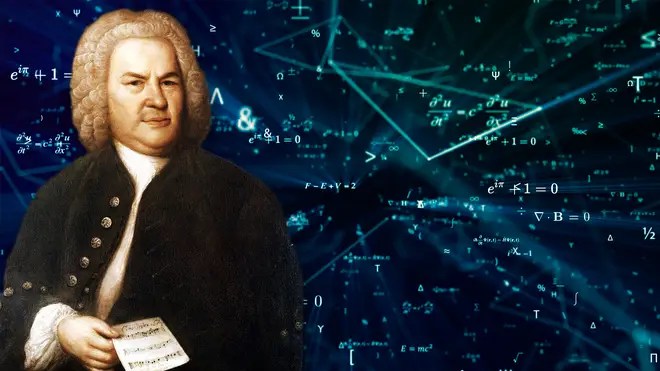
As Sienna Linton reports, mathematicians have analysed hundreds of Bach’s works, from toccatas to preludes, cantatas and chorales, and discovered his music may be even more impressive than we realized…
It’s no secret that J.S. Bach is one of the greatest composers of all time. Father of the fugue and organ music master, he was an immensely prolific musician, writing more than 1100 pieces in his lifetime.
Bach’s intricate and detailed approach to melody and harmony inspired generations of composers that followed. His compositional technique continues to form the musical foundation for budding musicians around the world, of all genres.
The composer himself had an intensely mathematical brain. He would sign his name in music, and would even hide little references to the numbers 14 and 41, which acted as his numerical signature, in his works.
Now, a mathematical study has revealed that Bach’s music may be even more intricate than we thought.
Researchers from the University of Pennsylvania have analysed hundreds of pieces of Bach’s music to investigate how well these works can convey information – and the results are fascinating for both the mathematically and musically inclined…
Fascinating: “Bach’s true mathematical genius has been revealed in new study,” from @ClassicFM.
See also: “Is Bach best?” and of course, Gödel, Escher, Bach.
* W. A. Mozart, on hearing Bach motets in Leipzig
###
As we glorify the GOAT, we might send him transcendent birthday greetings: Johann Sebastian Bach was born on this date in 1685 (at least according to the O.S. calendar by which he lived; his birthday is May 31 according to our calendar). Where to start? Well, there’s his orchestral music such as the Brandenburg Concertos; solo instrumental works such as the cello suites and sonatas and partitas for solo violin; keyboard works such as the Goldberg Variations and The Well-Tempered Clavier; organ works such as the Schubler Chorales and the Toccata and Fugue in D minor; and choral works such as the St Matthew Passion and the Mass in B minor.
Here’s the Netherlands Bach Society for All of Bach. As their name implies, there’s much more where this comes from…
“Man is unique not because he does science, and he is unique not because he does art, but because science and art equally are expressions of his marvelous plasticity of mind”*…

As Einstein once said, “After a certain high level of technical skill is achieved science and art tend to coalesce in aesthetics, plasticity, and form”…
Scientists have often invited the public to see what they see, using everything from engraved woodblocks to electron microscopes to explore the complexity of the scientific enterprise and the beauty of life. Sharing these visions through illustrations, photography and videos has allowed laypeople to explore a range of discoveries, from new bird species to the inner workings of the human cell.
As a neuroscience and bioscience researcher, I know that scientists are sometimes pigeonholed as white lab coats obsessed with charts and graphs. What that stereotype misses is their passion for science as a mode of discovery. That’s why scientists frequently turn to awe-inducing visualizations as a way to explain the unexplainable…
Professor Christine Curran explains how “Art illuminates the beauty of science – and could inspire the next generation of scientists young and old,” from @ConversationUS.
For more wonderful examples (in the realm of health and medicine), explore The Wellcome Collection.
* Jacob Bronowski
###
As we visualize, we might recall that it was on this date in 1910 that French chemist, engineer, and inventor Georges Claude switched on the first public display of neon lights– two large (39 foot long), bright red neon tubes– at the Paris Motor Show. Over the next decade, Claude lit much of Paris. Neon came to America in 1923 when Earl Anthony purchased signage from Claude, then transported it to Los Angeles, where Anthony installed it at his Packard dealership… and (literally) stopped traffic.

“Sooner or later, everything old is new again”*…

Maude Mayberg, a.k.a. Madame Yale, in her “laboratory”
On an April afternoon in 1897, thousands of women packed the Boston Theatre to see the nation’s most beguiling female entrepreneur, a 45-year-old former homemaker whose talent for personal branding would rival that of any Instagram celebrity today. She called herself Madame Yale. Over the course of several hours and multiple outfit changes, she preached her “Religion of Beauty,” regaling the audience with tales of history’s most beautiful women, a group that included Helen of Troy, the Roman goddess Diana and, apparently, Madame Yale.
The sermon was her 11th public appearance in Boston in recent years, and it also covered the various lotions and potions—products that Yale just happened to sell—that she said had transformed her from a sallow, fat, exhausted woman into the beauty who stood on stage: her tall, hourglass figure draped at one point in cascading white silk, her blond ringlets falling around a rosy-cheeked, heart-shaped face. Applause thundered. The Boston Herald praised her “offer of Health and Beauty” in a country where “every woman wants to be well and well-looking.”
Madame Yale had been delivering “Beauty Talks” coast to coast since 1892, cannily promoting herself in ways that would be familiar to consumers in 2020. She was a true pioneer in what business gurus would call the wellness space—a roughly $4.5 trillion industry globally today—and that achievement alone should command attention. Curiously, though, she went from celebrated to infamous virtually overnight, and her story, largely overlooked by historians, is all the more captivating as a cautionary tale…
A century before today’s celebrity health gurus, an American businesswoman was a beauty with a brand: “Madame Yale Made a Fortune With the 19th Century’s Version of Goop.”
* The Colorado Kid)
###
As we contemplate comeliness, we might spare a thought for writer who explored our fascination with fascinating, Philip Kindred Dick; he died on this date in 1982. A novelist, short story writer, essayist and philosopher, Dick published 44 novels and 121 short stories, nearly all in the Science Fiction genre. While he was recognized only within his field in his lifetime, and lived near poverty for much of his adult life, twelve popular films and TV series have been based on his work since his death in 1982 (including Blade Runner, Total Recall, A Scanner Darkly, Minority Report, Paycheck, Next, Screamers, The Adjustment Bureau, Impostor, and the Netflix series The Man in the High Castle). In 2005, Time magazine named Ubik one of the hundred greatest English-language novels published since 1923; and in 2007, Dick became the first science fiction writer to be included in The Library of America series.

We might also note that it’s the birthday of Chris Martin, front man of the inexplicably-popular pop group Coldplay, and the “consciously uncoupled” ex of Gwyneth Paltrow, the heir to Madame Yale.

“Everything has beauty, but not everyone sees it”*…

A tracing of an engraving of the Sosibios vase by John Keats
At least as far back as the ancient Greeks, poets and philosophers have struggled to define the nature of beauty. More recently—that is, for the past 150 years—psychologists have joined the effort to discover why we find certain sounds and images aesthetically appealing.
Answers remain elusive, and a new analysis in the journal Current Biology helps explain why. It finds some preferences—including our inclination to favor curves over angles—appear to be universal.
However, New York University psychologists Aenne Brielmann and Denis Pelli report that individual differences “outweigh general tendencies in most aesthetic judgments. Even for faces, which are popularly supposed to be consistently judged, individual taste accounts for about half the variance in attractiveness ratings.”
To a large extent, beauty really does seem to be in the eye—and brain—of the beholder…
A new analysis finds a few widely shared aesthetic preferences, and a whole lot of individual and cultural variation: “Beauty is, mostly, in the eye of the beholder.”
* Confucius
###
As we examine the exquisite, we might send intricately beautiful birthday greetings to Jan Švankmajer; he was born on this date in 1934. A self-proclaimed surrealist artist who has worked in many media, he is best known as a filmmaker, more specifically, as a stop-motion animator whose works have influenced Terry Gilliam, the Brothers Quay, and many others.
Here, an example of his work:
You must be logged in to post a comment.