Posts Tagged ‘Baroque music’
“[Handel] is the only person I would wish to see before I die, and the only person I would wish to be, were I not Bach.”*…

An essay from Charles King, adapted from his recent book, Every Valley: The Desperate Lives and Troubled Times that Made Handel’s Messiah…
… In the summer of 1717, as Handel ran through the movements of his Water Music, floating alongside George I’s royal barge on the Thames, he could only have marveled at his own meteoric rise. Yet he would also have been aware of the precariousness of the regime that now sustained him. An outsider dependent on staying on the right side of the powerful, Handel understood the many divisions that snaked through his adopted society. His income, as well as his art, rested on the favor of people who could also easily withdraw it. A generous supporter or advance ticket sales might cover some of the cost of a production, but opening night then hung on the goodwill of a patron or a public violently sensitive to prices. A change in ticket price could spark a riot, with theatergoers storming the stage and tearing apart sets and chandeliers. When shows ran at a loss, the typical course was for a producer simply “to banish himself from the kingdom” and outrun the creditors, an early historian reported, as one of the King’s Theater managers had chosen to do.
Amid the continuing craze for Italian music, in early 1719, a circle of opera enthusiasts proposed a different model. Their concept was to create a new production outfit structured as a joint-stock company. Supporters would be investors rather than donors, expecting a return on their outlay but also bearing the risk should things fail. A who’s who of Handel’s landlords and acquaintances signed on, among them Richard Boyle, Earl of Burlington, who owned the Piccadilly home where Handel had lived for a time, and James Brydges, later Duke of Chandos, under whose patronage Handel had begun his first serious attempt at setting English texts. Their hope was to gain a royal charter—the official imprimatur of the king, which could then be used to pull in further partners and paying audiences. By that summer, they had persuaded King George to grant the charter for what would become the Royal Academy of Music and provide a thousand pounds annually as capital. Other investors added perhaps nineteen thousand pounds in all. The Royal Academy’s board of directors named Handel as “Master of the Orchester with a Sallary” and empowered him to steal away Italian singers and musicians from their European engagements.
Over the previous century, Venetians, Florentines, Neapolitans, and others had together set in motion a revolution in sonic common sense: a profound change in the conventions of musical form, perceptions of beauty, and expectations about what counted as obvious or wrongheaded art.
Living in the artistic realm that Italians had created meant accepting the existing order of the world while also undermining it. You started by imagining a normalcy different from the one outside your window. A woman might sing a man’s part as a travesty—en travesti, meaning literally a change of clothes—a term that would only later come to mean abnormal or an affront. A man could sing from the edges of his vocal cords and leap into a high falsetto, his false voice. He could do so with even greater range as a castrato, someone whose testes had been removed before his voice had hardened in puberty, a procedure practiced in Italy, the Ottoman Empire, and elsewhere for centuries. Onstage he might play a steel-clad knight, soaring above the battlefield with the voice of an angel. Castrati superstars—Nicolini, Pasqualini, Paoluccio, Momo, Farinelli, Senesino, Guadagni—were paid gargantuan fees for a season’s performances. In public they could be swarmed by adoring admirers, both male and female. “Some of them had got it into their Heads, that truly the Ladies were in Love with them,” a lengthy French treatise on Italian castrati reported in 1718, “and fondly flattered themselves with mighty Conquests.”
In a theater, the powerful could sound like women. Ancient gods could walk among men. Wars could end not in gore and death but in communal song. Doing all of this well required intellect and discernment, knowledge of musical form and its effects, and, most important, a sense of sociability. Players and singers were guided by instructions written on a staff, but the notes were suggestions rather than edicts. In a soundscape that allowed uncertainty and impromptu change, musicians had to be both self-aware and neighborly, a skill also necessitated by the technology of the time. A quiet harpsichord could speak comfortably alongside a human voice or a few violins, but not more. A lute-like theorbo, with its gentle strings and absurdly long neck, could manage a coiled horn as a partner, but only if its bell were turned discreetly away from the listener. Even a trumpet could cooperate peaceably with other instruments when played in its upper register, where the physics of its metal tubing gave the player more notes to choose from, its timbre more like a warbling bird than a blaring call to arms.
No one had yet given music of this type a label. When they did, the one they chose was also a slur, like punk or grunge. It was the French baroque, used in English for the first time in 1765 and perhaps derived from a Portuguese term for a rough pearl or a mouthful of irregular teeth. To its enthusiasts, that was precisely the point. An orchestra of the period was also an intentional community, often assembled for a specific occasion, smaller than in later centuries, and with no need for a conductor—a role covered by the keyboard player or lead violinist and preserved in the modern term concertmaster. The music they made was solicitous and scrappy, risky and intimate. It soared and swerved, thrilling and dangerous, at odds with everything that had come before, and, to the artists who came after, the perfect example of wildness and excess. But to those who lived it, at the core of their work lay the belief that human creativity could best be used to make an intense, weird, and complicated conversation, sloughing off old conventions while manufacturing bold new ones. “We have freed ourselves from the narrow limits of ancient music,” Handel once said…
Baroque music’s glorious revolution: “The Famous Mr. Hendel” from @laphamsquarterly.bsky.social.
* Johann Sebastian Bach (Upon hearing the above statement, Mozart is said to have exclaimed: “Truly, I would say the same myself if I were permitted to put in a word.”)
###
As we conjure creation from chaos, we might send beautiful birthday greetings to Giuseppe Sammartini; he was born on this date in 1695. One of the finest oboe (and flute and recorder) players in London, he was a member of Handel’s orchestra— and a noted composer in his own right. Indeed, his recorder concerto is often performed and recorded in tandem with Handel’s (e.g., here).

“Now there is music from which a man can learn something”*…
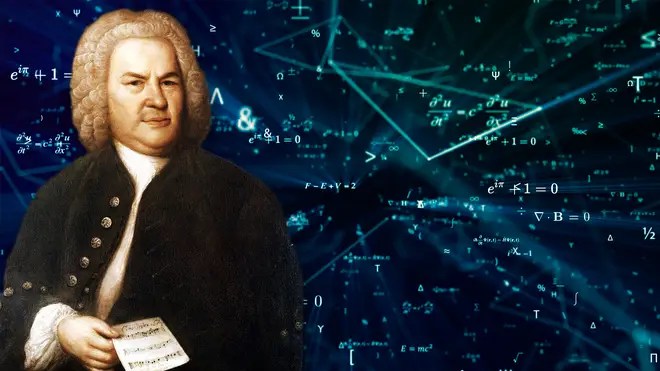
As Sienna Linton reports, mathematicians have analysed hundreds of Bach’s works, from toccatas to preludes, cantatas and chorales, and discovered his music may be even more impressive than we realized…
It’s no secret that J.S. Bach is one of the greatest composers of all time. Father of the fugue and organ music master, he was an immensely prolific musician, writing more than 1100 pieces in his lifetime.
Bach’s intricate and detailed approach to melody and harmony inspired generations of composers that followed. His compositional technique continues to form the musical foundation for budding musicians around the world, of all genres.
The composer himself had an intensely mathematical brain. He would sign his name in music, and would even hide little references to the numbers 14 and 41, which acted as his numerical signature, in his works.
Now, a mathematical study has revealed that Bach’s music may be even more intricate than we thought.
Researchers from the University of Pennsylvania have analysed hundreds of pieces of Bach’s music to investigate how well these works can convey information – and the results are fascinating for both the mathematically and musically inclined…
Fascinating: “Bach’s true mathematical genius has been revealed in new study,” from @ClassicFM.
See also: “Is Bach best?” and of course, Gödel, Escher, Bach.
* W. A. Mozart, on hearing Bach motets in Leipzig
###
As we glorify the GOAT, we might send him transcendent birthday greetings: Johann Sebastian Bach was born on this date in 1685 (at least according to the O.S. calendar by which he lived; his birthday is May 31 according to our calendar). Where to start? Well, there’s his orchestral music such as the Brandenburg Concertos; solo instrumental works such as the cello suites and sonatas and partitas for solo violin; keyboard works such as the Goldberg Variations and The Well-Tempered Clavier; organ works such as the Schubler Chorales and the Toccata and Fugue in D minor; and choral works such as the St Matthew Passion and the Mass in B minor.
Here’s the Netherlands Bach Society for All of Bach. As their name implies, there’s much more where this comes from…
“The real art of conducting consists in transitions”*…
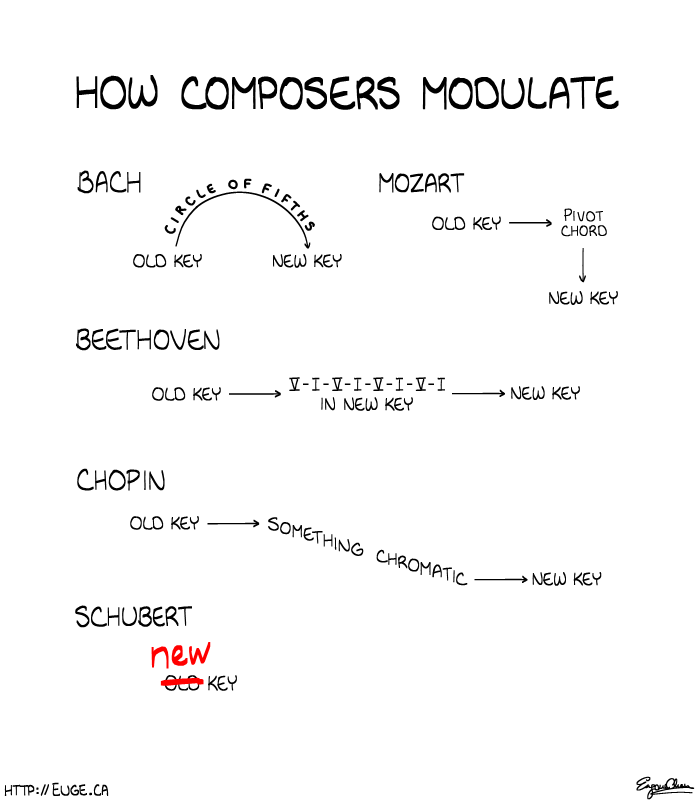

More in Eugene Chan‘s wonderful series Don’t Shoot the Piano Player. [TotH to friend SS.]
* Gustav Mahler
###
As we marvel at music, we might send well-composed birthday greetings to Henry Lawes; he was born on this date in 1596. The leading English songwriter of the mid-17th century (and brother of composer William Lawes), Henry worked both for Charles I and (roundhead) John Milton (for whom he composed Arcades and arranged for Milton to write the masque Comus). At the Restoration Lawes was reinstated in his old positions in the King’s Musick; he was buried in the cloisters of Westminster Abbey after his death in 1662.
What technology hath wrought…
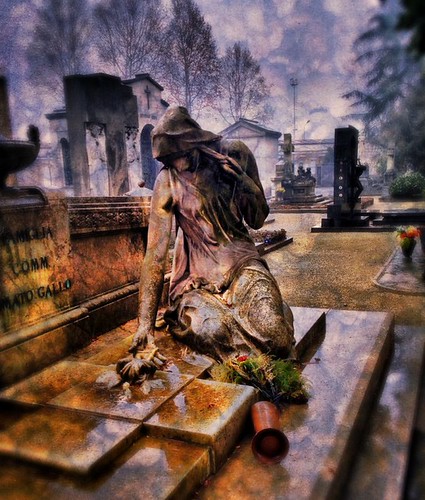
Davide Capponi explains:
I have always been in love with photography, but kept my shots for myself and a few people around me.
Then, being the possessor of an iPhone, I was pointed by a friend to Instagram and discovered iPhoneography (or Mobile Photography in a wider sense).
iPhoneography is about shooting and editing your photos only with an iPhone, usually with a Low-Fi sentiment and a creative approach; it is about publishing and sharing your work with other fellow iPhoneographers.
For some reason this made a huge difference to me.


See more of Davide’s work at Rubicorno.
As we limber up our clicking fingers, we might hum an intricately-melodic birthday ditty to Baroque composer, priest, and virtuoso violinist Antonio Lucio Vivaldi; “the Red Priest” (so called because of his red hair) was born on this date in 1678.
Click here to hear an excerpt from Vivaldi’s Four Seasons “Winter” in MP3 format; here to access it in OGG.

You must be logged in to post a comment.