Posts Tagged ‘publishing’
“With the greater part of rich people, the chief enjoyment of riches consists in the parade of riches”*…

As insurance premiums rise, global warming’s effects are impacting collectors’ bank accounts, especially in disaster-prone states like California and Florida where risky conditions have become the norm…
Art collectors in California, Florida and other states experiencing weather-related disasters aggravated by climate change are finding fine art insurance becoming more expensive, with policies increasingly difficult to obtain (or renew) and containing new restrictions.
Earthquake-prone California, which has faced a series of massive wildfires (often followed by landslides) in recent years, is one epicentre in this struggle to find insurance coverage for homes and the art within them, with the annual cost of homeowners policies rising as much as 40% and the premiums for fine art insurance coverage increasing between 5% and 12%, according to Amee Yunn, assistant vice president of the New York-based Berkley Asset Protection, an insurance company specialising in fine art, jewellery and other high-value, personal and commercial assets. Florida, with its increasingly intense hurricanes and floods, is also a concern for the insurance industry.
“Many wealthy people flocked to Florida due to the pandemic,” Yunn says, “and they took their art with them.” That concentration of wealth assets in areas prone to flooding and hurricane damage creates significant risks to the financial wellbeing of insurance carriers. “We are seeing far more billion-dollar claims now than just 10 years ago,” Yunn says, causing companies like hers to write fewer new policies, increase their prices and add deductibles and exclusions. “The problem is acute.”
…
These days, insurance carriers track the advance of climate change as much as environmental scientists. “We have a corporate catastrophe team, which tracks the company’s total catastrophe exposure,” Yunn says. The risks from tornadoes in the Great Plains, hurricanes up and down the East Coast and earthquakes on the West Coast are well known, but the increasing intensity of hurricanes and tornadoes, as well as the rising numbers of them, are alarming signals. The tornado that ripped through Kentucky and several other states last year in a 200-mile path during the unlikely month of December was yet another sign of a climate that is becoming less predictable, as were a series of hurricanes, wildfires and freezing temperatures that have struck in Texas since 2017. In February 2021 a combination of snow, sleet and freezing rain paralysed Texas’s power grid for weeks, causing more than 200 deaths and nearly $200bn in damage.
“It would seem that there is nowhere safe from the effects of climate change,” [senior managing director at Risk Strategies Steve] Pincus says, all of which impacts the fine art insurance world, leading to higher prices and less available coverage…
“‘The only way to stop the bleeding is to stop writing policies’: climate change is making it more expensive to insure art,” from @TheArtNewspaper.
Via @WaltHickey, in his invaluable Numlock News, who observes “Listen, if ‘boo hoo, it’s getting too expensive to insure my vast art collection’ is the thing that gets rich people to actually care about climate change I’m still gonna take that as a win.”
* Adam Smith
###
As we ponder protection, we might recall that it was in this date in 1885 that the first issue of Good Housekeeping was published. A “woman’s magazine” (featuring articles on women’s interests, recipes, diet, and health), it is also known for its product testing service and its the “Good Housekeeping Seal”, a limited warranty program that is popularly known as the “Good Housekeeping Seal of Approval.” One of the oldest continuously-published magazines in the U.S., it remains popular in its category.

“With my tongue in one cheek only, I’d suggest that had our palaeolithic ancestors discovered the peer-review dredger, we would be still sitting in caves”*…

As a format, “scholarly” scientific communications are slow, encourage hype, and are difficult to correct. Stuart Ritchie argues that a radical overhaul of publishing could make science better…
… Having been printed on paper since the very first scientific journal was inaugurated in 1665, the overwhelming majority of research is now submitted, reviewed and read online. During the pandemic, it was often devoured on social media, an essential part of the unfolding story of Covid-19. Hard copies of journals are increasingly viewed as curiosities – or not viewed at all.
But although the internet has transformed the way we read it, the overall system for how we publish science remains largely unchanged. We still have scientific papers; we still send them off to peer reviewers; we still have editors who give the ultimate thumbs up or down as to whether a paper is published in their journal.
This system comes with big problems. Chief among them is the issue of publication bias: reviewers and editors are more likely to give a scientific paper a good write-up and publish it in their journal if it reports positive or exciting results. So scientists go to great lengths to hype up their studies, lean on their analyses so they produce “better” results, and sometimes even commit fraud in order to impress those all-important gatekeepers. This drastically distorts our view of what really went on.
There are some possible fixes that change the way journals work. Maybe the decision to publish could be made based only on the methodology of a study, rather than on its results (this is already happening to a modest extent in a few journals). Maybe scientists could just publish all their research by default, and journals would curate, rather than decide, which results get out into the world. But maybe we could go a step further, and get rid of scientific papers altogether…
A bold proposal: “The big idea: should we get rid of the scientific paper?,” from @StuartJRitchie in @guardian.
Apposite (if only in its critical posture): “The Two Paper Rule.” See also “In what sense is the science of science a science?” for context.
###
As we noodle on knowledge, we might recall that it was on this date in 1964 that AT&T connected the first Picturephone call (between Disneyland in California and the World’s Fair in New York). The device consisted of a telephone handset and a small, matching TV, which allowed telephone users to see each other in fuzzy video images as they carried on a conversation. It was commercially-released shortly thereafter (prices ranged from $16 to $27 for a three-minute call between special booths AT&T set up in New York, Washington, and Chicago), but didn’t catch on.

“A good bookshop is like a genteel black hole that knows how to read”*…

Some good news…
Riding strong gains in the second half of the year, bookstore sales increased 28% in 2021 over 2020, according to preliminary estimates from the U.S. Census Bureau. Sales were $9.03 billion, compared to sales of $6.50 billion in pandemic-ravaged 2020.
The rebound was not quite enough to bring 2021 bookstore sales back to 2019 levels, falling 1% below 2019 sales of $9.13 billion… [but] was higher than the 19.3% increase for the entire retail sector…
Book shops are back: “Bookstore Sales Rose 28% in 2021,” from @PublishersWkly
* Terry Pratchett
###
As we browse, we might spare a thought for an author whose works are eminently worth picking up on one’s next bookstore run: social reformer, orator, writer, and statesman Frederick Douglass (Frederick Augustus Washington Bailey); he died on this date in 1895. Born into slavery, he escaped to become a national leader of the abolitionist movement in Massachusetts and New York, famous for his oratory and incisive antislavery writings.
He was described by abolitionists in his time as a living counterexample to slaveholders’ arguments that slaves lacked the intellectual capacity to function as independent American citizens; indeed, some Northerners at the time found it hard to believe that such a great thinker had once been a slave.
Douglass believed in dialogue and in making alliances across racial and ideological divides, and in the liberal values of the U.S. Constitution. When radical abolitionists, under the motto “No Union with Slaveholders,” criticized Douglass’s willingness to engage in dialogue with slave owners, he replied: “I would unite with anybody to do right and with nobody to do wrong.”

“I suppose illustration tends to live in the streets, rather than in the hermetically sealed atmosphere of the museum, and consequently it has come to be taken less seriously”*…

But surely, it shouldn’t necessarily be so…
Old Book Illustrations was born of the desire to share illustrations from a modest collection of books, which we set out to scan and publish. With the wealth of resources available online, it became increasingly difficult to resist the temptation to explore other collections and include these images along with our own. Although it would have been possible to considerably broaden the time-frame of our pursuit, we chose to keep our focus on the original period in which we started for reasons pertaining to taste, consistency, and practicality: due to obvious legal restrictions, we had to stay within the limits of the public domain. This explains why there won’t be on this site illustrations first published prior to the 18th century or later than the first quarter of the 20th century.
We are not the only image collection on the web, neither will we ever be the largest one. We hope however to be a destination of choice for visitors more particularly interested in Victorian and French Romantic illustrations—we understand French Romanticism in its broadest sense and draw its final line, at least in the realm of book illustration, at the death of Gustave Doré.
We also focused our efforts on offering as many different paths and avenues as possible to help you find your way to an illustration, whether you are looking for something specific or browsing randomly. The many links organizing content by artist, language, publisher, date of birth, and more are designed to make searching easier and indecision rewarding…
And rewarding it is! See for yourself at Old Book Illustrations (@obillustrations)
(TotH to @Recomendo6)
* master illustrator Quentin Blake
###
As we visualize, we might send powerfully-drawn birthday greetings to Silvio “Sal” Buscema; he was born on this date in 1936. An illustrator and comic artist, he is best remembered for his time at Marvel, especially his ten-year run as artist of The Incredible Hulk and his eight-year run as artist of The Spectacular Spider-Man.
Comics were a family business. His elder brother John is similarly renown for his work on The Avengers, The Silver Surfer, and Conan the Barbarian.

“I like boring things”*…
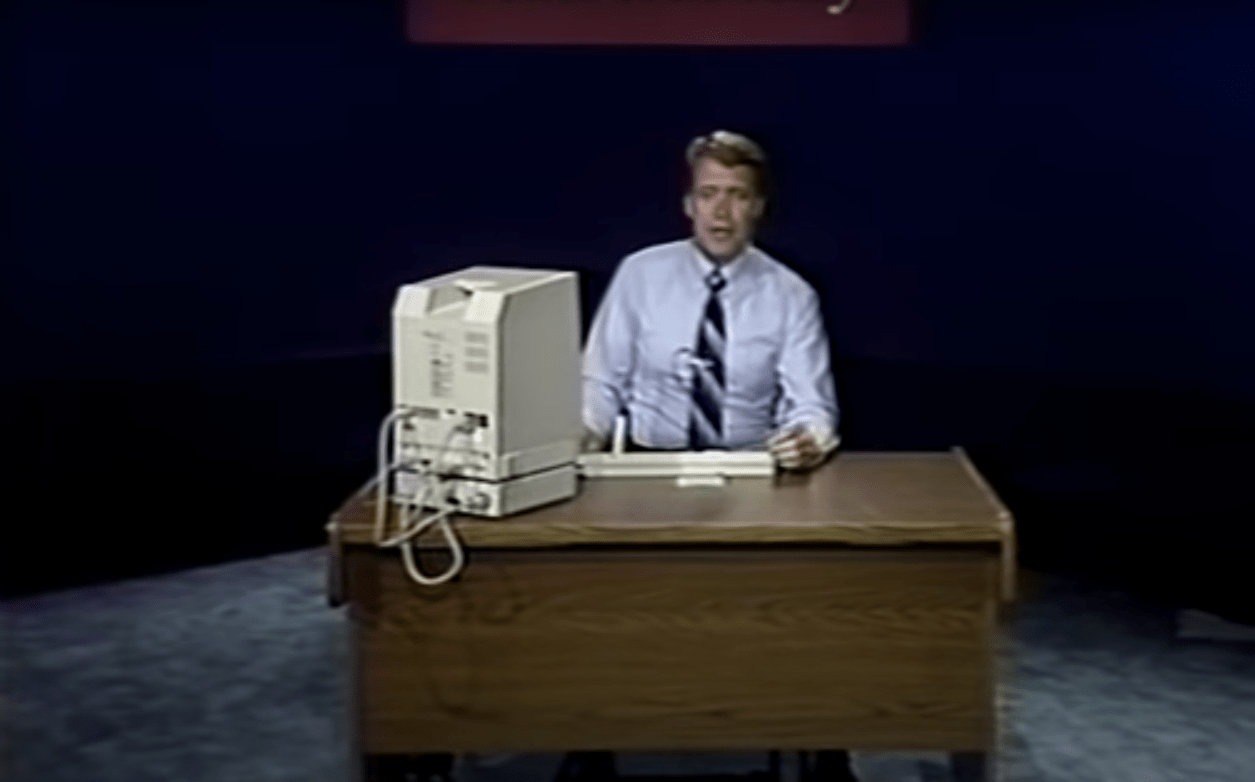
What’s not to like?…
A Youtube video titled “THE MOST BORING VIDEO EVER MADE (Microsoft Word tutorial, 1989) has accrued over 1.5 million views despite its self-proclaimed boringness. The video, an hour and forty-seven-minute computer tutorial, appears to have been recorded in one long take. It’s a time capsule to the early days of home computers and despite the monotonous, sleep-inducing narration, the instructions are quite thorough. In the video’s comments, viewers point out the mind-blowing drama at minute 59 and the charming quote “no ‘command m’ for ‘miracle.'”
“1989 Microsoft Word tutorial is ‘the most boring video ever made’,” from Annie Rauwerda @BoingBoing
Pair with this 1984 video of Stanley Kubrick discussing his favorite software manuals:
* Andy Warhol
###
As we take on tedium, we might send qualified birthday greetings to Edward William Bok; he was born on this date in 1863. An editor and Pulitzer Prize-winning author, he is best remembered for his 30-year stewardship of the Ladies’ Home Journal.
Bok’s overall concern was to promote his socially conservative vision of the ideal American household, with the wife as homemaker and child-rearer. At the Ladies Home Journal, Bok authored more than twenty articles opposed to women’s suffrage, women working outside the home, woman’s clubs, and education for women. He wrote that feminism would lead women to divorce, ill health, and even death. Bok viewed suffragists as traitors to their sex, saying “there is no greater enemy of woman than woman herself.”
(See here for a glimpse at his ambitions and impact.)

You must be logged in to post a comment.