Posts Tagged ‘Life’
“Too few people understand a really good sandwich”*…

Every week author Talia Levin (and her editor David Swanson) drop an installment of what has become one of your correspondent’s favorite newsletters, The Sword and the Sandwich: “Notable Sandwiches, the feature where I, alongside my editor David Swanson, plunge into the strange waters of Wikipedia’s List of Notable Sandwiches, in alphabetical order.” It is, as advertised, a profile of one instance of that noble culinary form; at the same time, it is a cultural history lesson and a meditation on life itself. This week’s installment…
First things first, as they rarely are in this series: the kumru is a delightful Turkish variant on the grilled cheese—although, in this case, it is the cheese itself that is grilled. Sometimes called a Çeşme Kumrusu, the sandwich includes the aforementioned cheese (usually sharp kaşar), tomato, and a specialized ovoid chickpea-sourdough bun topped with sesame seeds. Optional but frequent toppings are griddled ribbons of spicy garlic sausage called sujuk (aka “meat spaghetti”); Turkish salami; green pepper; and pickles, served either atop the sandwich or as a side dish.
The sandwich originated in, and is one claim to fame of, the seaside town of Çeşme, facing onto the crystal waters of the Aegean sea from the westernmost point of Anatolia. The bread, in particular, is an ingredient found principally in the Aegean-Mediterranean vicinity: its signature chickpea sourdough starter, baked into generously-seeded loaves, is known in Turkey as kumru, in Greece as eftazymo, in Cyprus as Arkatena. The Greek and Cypriot names are somewhat straightforward: eftazymo, means “to knead seven times”; arkatena comes from arktis, the Cypriot term for chickpea foam. The Greeks seem to have it right: by all accounts, the chickpea-fermentation-sourdough process is temperamental and tricky; one nineteenth-century author, the dashing yet ill-starred Archduke Ludwig Salvator, claimed in an account of his Ionian travels that “to make this bread successfully you needed a black-handled knife, a red blanket and a holy book.”
The Turkish name for this temperamental bread, however, goes full-on figurative, which is where things start getting interesting. Due to the distinctive, pinch-ended oval shape of the kumru’s loaves, the name means “Turkish dove”—a bright-eyed little bird also known as the “collared dove.”

While not literally a bird in a starched ruff (although that’s wonderful to contemplate), the collared dove is an Eurasian species that is one of the great migrants of the avian world. It looks quite a bit like a mourning dove in a kind of abbreviated clerical collar, there to minister to its (literal) flock. Known as a “colonizer” among bird species, the avian “kumru” leapt from Southeast Asia to Turkey to the Balkans, and thence throughout Europe and eventually to the U.S. Its scientific name—bestowed upon it by a nineteenth century Hungarian entomologist and sometime-ornithologist named Imre Frivaldszky—is Streptopelia decaocto, “Streptopelia” meaning “wearing a twisted metal collar or torc” in Greek, and “deca-octo” meaning “eighteen.”
The number, here, is somewhat mysterious. As is often the case in sandwich stories, I’m working from third-or-fourth-hand hearsay, across a few centuries and multiple languages. But I tracked down Frivaldszky’s paper from 1837, in which he describes having discovered the species in Phillipopolis (the ancient Roman name for the modern city of Plovdiv, in Bulgaria), and hearing the following story from villagers (Google-translated from Hungarian, subsequently cleaned up by me):
“A poor but pious girl came to serve a miserly woman; from morning to night she worked, yet had hardly a mouthful of bread, and she was scolded constantly; but her annual salary consisted of 18 pennies. Discouraged under the burden of her meager fate, she raised her burning prayers to the heavens from the bottom of her heart, in order to make the world aware of the unworthiness of her fate. Zeus took pity on her and turned her into a dove, which now, in a turban, announces this bitter fate to the world.”
The bird’s cry does kind of sound like “deca-octo” if you really strain to hear that. It’s a weird story, honestly—quite possibly the inhabitants of Plovdiv were messing around with the scientist in their midst. (Frivaldszky sounds like a cool dude, though—he loved cave diving, explored the Balkans, and discovered 126 separate species, plus had god-tier nineteenth century facial hair). But also…what is the deal with Greek gods transforming people into things as an answer to prayers? This lady wanted a raise, not to become a bird! Maybe she pecked out her shitty employer’s eyes. Who knows. Personally, I would be wary of praying to Zeus, especially as a woman; if he’s not turning you into a dove or flower or whatever, he’s probably gonna turn himself into a bull or a swan and then try to have his way with you. And then you have to wear a torc and coo forever and the Turks name a loaf of bread after you, and you still don’t get a raise! If only there had been a “Servants of Misers Union” and things could have ended very differently. On the other hand, this bird would likely have had a less colorful name.
Anyway, I was extremely grumpy all day for reasons unrelated to this column, and felt the shitty, ozonic, bad-air swelter of a New York summer in all its oppressiveness, and a curdled lump of despair in my chest and gut and I briefly thought I’d lost the ability to write. (It turned out the cure was to poke around in old source material and get very excited about it. It took me like two hours to find the Frivaldszky paper—I had to go through a brief English summary and then a chatty German compatriot of the entomologist first—and, incidentally, all the contemporary English sources about this bird say it’s an “ancient Greek myth” about the servant girl and her eighteen pennies. They are all wrong, because in fact it was a bunch of nineteenth century Bulgarians pulling the leg of a credulous Hungarian traveler).
But before my journey of discovery I had to sulk for like, fifteen hours. It’s part of the process. So there I was, sitting and smoking on my back steps, really working myself up into a good sulk, building up a weighty inner bulkhead of surliness, and suddenly something moving very quickly hits my shoulder and I scream and flail because I have the startle response of a frightened rabbit on meth, and then a tiny little bird falls over next to me, dazed. He’s hopping a bit but seems to be favoring one wing, which is deeply concerning, because my neighborhood is absolutely full of ravenous feral cats, rats, and other things hazardous to an injured bird’s health.
I take a (hot, gross) breath and start getting very upset that I’ve inadvertently caused irreparable harm. I certainly didn’t mean to, just reacting to a feathered projectile striking me at speed. I hop on the phone and first call Animal Control, which directs me to the Wild Bird Fund. This little guy is sitting next to me the whole time:

Just as I’m about to leave a message for the Wild Bird Fund and gather my broken-winged little buddy in a shoebox and drop him off at Columbus and 86th, I try giving him a little stroke on his little wing, and all of a sudden he flies away, beautifully, like a feathered dart. He just needed to catch his little breath.
It turns out he was a fledgling mourning dove—apparently they’re adorably mottled while they’re little and still figuring out how to fly, before becoming the smooth and elegant avians of adulthood. So there I was, brooding over dove-shaped bread. And I thought I killed a dove, and it turned out he was OK! He flew off like a shot. He’s figuring it out! Sometimes life just smacks you with a metaphor. Learning to fly is hard. Even Simone Biles, the greatest gymnast in history, lost herself in the air once on the way to a towering height. But in the end she came up golden. Our little dove is going to be OK.
And so am I. And so are you. And I really want a chickpea loaf full of grilled Turkish cheese, and meat spaghetti, and tomatoes. But I’m not going to complain about it too loudly, because I’m worried some errant god will turn me into a bird whose call sounds faintly like “sandwich!” and a Balkan ornithological anthropology moment will ensue. I can’t risk it! From now on, I will not mourn my fate so bitterly. After all, I didn’t lose my ability to write, as I’d feared. The words are still here, numerous as sesame seeds on the top of a perfect, dove-shaped bun…
There’s much more where this came from: “Notable Sandwiches #104: Kumru,” from @mobydickenergy and @DavidSwansonNYC. You can check out past entries and add The Sword and the Sandwich to your newsletter haul here.
* James Beard
###
As we contemplate the cultural consequences of compact comestibles, we might recall that today celebrates an auspicious choice of accompaniment to a sandwich: its National Root Beer Float Day.

“A time will come when men will stretch out their eyes. They should see planets like our Earth.”*…

Not long ago the search for extraterrestrials was considered laughable nonsense. Today, as Adam Frank explains, it’s serious and scientific…
Suddenly, everyone is talking about aliens. After decades on the cultural margins, the question of life in the Universe beyond Earth is having its day in the sun. The next big multibillion-dollar space telescope (the successor to the James Webb) will be tuned to search for signatures of alien life on alien planets and NASA has a robust, well-funded programme in astrobiology. Meanwhile, from breathless newspaper articles about unexplained navy pilot sightings to United States congressional testimony with wild claims of government programmes hiding crashed saucers, UFOs and UAPs (unidentified anomalous phenomena) seem to be making their own journey from the fringes.
What are we to make of these twin movements, the scientific search for life on one hand, and the endlessly murky waters of UFO/UAP claims on the other? Looking at history shows that these two very different approaches to the question of extraterrestrial life are, in fact, linked, but not in a good way. For decades, scientists wanting to think seriously about life in the Universe faced what’s been called the ‘giggle factor’, which was directly related to UFOs and their culture. More than once, the giggle factor came close to killing off the field known as SETI (the search for extraterrestrial intelligence). Now, with new discoveries and new technologies making astrobiology a mainstream frontier of astrophysics, understanding this history has become important for anyone trying to understand what comes next. But for me, as a researcher in the field of technosignatures (signs of advanced alien tech) – the new face of SETI – getting past the giggle factor poses an existential challenge.
I am the principal investigator of NASA’s first ever grant to study signatures of intelligent life from distant exoplanets. My colleagues and I are tasked with developing a library of technosignatures or evidence of technology-wielding life forms on distant planets. Taking on that role has been the culmination of a lifetime fascination with the question of life and the Universe, a fascination that formed when I was a kid in the 1970s, drinking deep from the well of science fiction novels, UFO documentaries and Star Trek reruns. Early on, as a teenager reading both Carl Sagan and Erich von Däniken (the author of Chariots of the Gods), I had to figure out how to separate the wheat from the chaff. This served as a kind of training ground for dealing with questions facing me and my colleagues about proper standards of evidence in astrobiology. It’s also why, as a public-facing scientist, I must work to understand how people not trained in science come to questions surrounding UFOs as aliens. That is what drove me, writing a recent popular-level account of astrobiology’s frontiers called The Little Book of Aliens (2023), to stare hard into the entangled history of UFOs, the scientific search for life beyond Earth, and the all-important question of standards of evidence…
[Frank explains the efforts underway, their history, and the rigor being applied in sifting for credible evidence…]
… With the giggle factor receding for the scientific search for life, where does that leave UFOs and UAPs? There, the waters remain muddied. It is a good thing that pilots feel they can report sightings without fear of reprisal as a matter of air safety and national defence. And an open, transparent and agnostic investigation of UAPs could offer a masterclass in how science goes about its business of knowing rather than just believing. In The Little Book of Aliens, I even explained how such an investigation might be conducted (the recent NASA UAP panel and the Galileo Project are exploring these kinds of options). But if my colleagues and I claimed we’d found life on another world, we’d be required to provide evidence that meets the highest scientific standards. While we should let future studies lead us where they may, there is simply no such evidence surrounding UFOs and UAPs that meets these standards today. In fact, at a recent hearing conducted by NASA’s UAP panel, it was revealed that government studies show only a small percentage of reported sightings failed to find a reasonable explanation. Many of the remaining cases did not have enough data to even begin an attempt at identification. The sky is simply not awash in unexplained phenomena.
In the end, what matters is that, after thousands of years of arguing over opinions about life in the Universe, our collective scientific efforts have taken us to the point where we can finally begin a true scientific study of the question. The next big space telescope NASA is planning will be called the Habitable Worlds Observatory. The name tells you all you need to know. We’re going all in on the search for life in the Universe because we finally have the capabilities to search for life in the Universe. The giggle factor is finally history.
How UFOs almost killed the search for life in the universe: “Alien life is no joke,” from @AdamFrank4 in @aeonmag.
For more on a related field, see Astrobiology (@carnegiescience)
Also apposite (and typically for him, both informative and very amusing): John Oliver on UFOs
* the foresightful Christopher Wren
###
As we look up, we might recall that it was on this date in 1930 that Pluto was announced to be the name chosen for the newly-discovered ninth planet (previously known as Planet X) by Roger Lowell Putnam, trustee of Lowell Observatory, Flagstaff, Arizona, (and nephew of the late Percival Lowell who had established the observatory and initiated the search there for the ninth planet). Pluto had been located there on in February of that year at that institution by Clyde Tombaugh.
Putnam was quoted on the front page of the New York Times, saying, “We felt in making our choice of a name for Planet X, that the line of Roman gods for whom the other planets are named should not be broken, and we believe that Dr. Lowell, whose researches led directly to its discovery, would have felt the same way.” Pluto in mythology was the ruler of the underworld, regions of darkness. “P.L.” is also Lowell’s monogram.
While it’s still known as Pluto, in 2006 the International Astrophysical Union demoted it from a “planet” to a “dwarf planet.”

“Analysis of death is not for the sake of becoming fearful but to appreciate this precious lifetime”*…

As Alex Blasdel explains, new research into the dying brain suggests the line between life and death may be less distinct than previously thought…
… For all that science has learned about the workings of life, death remains among the most intractable of mysteries. “At times I have been tempted to believe that the creator has eternally intended this department of nature to remain baffling, to prompt our curiosities and hopes and suspicions all in equal measure,” the philosopher William James wrote in 1909.
…
In 1976, the New York Times reported on the burgeoning scientific interest in “life after death” and the “emerging field of thanatology”. The following year, Moody and several fellow thanatologists founded an organisation that became the International Association for Near-Death Studies. In 1981, they printed the inaugural issue of Vital Signs, a magazine for the general reader that was largely devoted to stories of near-death experiences. The following year they began producing the field’s first peer-reviewed journal, which became the Journal of Near-Death Studies. The field was growing, and taking on the trappings of scientific respectability. Reviewing its rise in 1988, the British Journal of Psychiatry captured the field’s animating spirit: “A grand hope has been expressed that, through NDE research, new insights can be gained into the ageless mystery of human mortality and its ultimate significance, and that, for the first time, empirical perspectives on the nature of death may be achieved.”
But near-death studies was already splitting into several schools of belief, whose tensions continue to this day. One influential camp was made up of spiritualists, some of them evangelical Christians, who were convinced that near-death experiences were genuine sojourns in the land of the dead and divine. As researchers, the spiritualists’ aim was to collect as many reports of near-death experience as possible, and to proselytise society about the reality of life after death. Moody was their most important spokesman; he eventually claimed to have had multiple past lives and built a “psychomanteum” in rural Alabama where people could attempt to summon the spirits of the dead by gazing into a dimly lit mirror.
The second, and largest, faction of near-death researchers were the parapsychologists, those interested in phenomena that seemed to undermine the scientific orthodoxy that the mind could not exist independently of the brain. These researchers, who were by and large trained scientists following well established research methods, tended to believe that near-death experiences offered evidence that consciousness could persist after the death of the individual. Many of them were physicians and psychiatrists who had been deeply affected after hearing the near-death stories of patients they had treated in the ICU. Their aim was to find ways to test their theories of consciousness empirically, and to turn near-death studies into a legitimate scientific endeavour.
Finally, there emerged the smallest contingent of near-death researchers, who could be labelled the physicalists. These were scientists, many of whom studied the brain, who were committed to a strictly biological account of near-death experiences. Like dreams, the physicalists argued, near-death experiences might reveal psychological truths, but they did so through hallucinatory fictions that emerged from the workings of the body and the brain. (Indeed, many of the states reported by near-death experiencers can apparently be achieved by taking a hero’s dose of ketamine.) Their basic premise was: no functioning brain means no consciousness, and certainly no life after death. Their task, which Borjigin took up in 2015, was to discover what was happening during near-death experiences on a fundamentally physical level.
Slowly, the spiritualists left the field of research for the loftier domains of Christian talk radio, and the parapsychologists and physicalists started bringing near-death studies closer to the scientific mainstream. Between 1975, when Moody published Life After Life, and 1984, only 17 articles in the PubMed database of scientific publications mentioned near-death experiences. In the following decade, there were 62. In the most recent 10-year span, there were 221. Those articles have appeared everywhere from the Canadian Urological Association Journal to the esteemed pages of The Lancet.
Today, there is a widespread sense throughout the community of near-death researchers that we are on the verge of great discoveries…
…
… Perhaps the story to be written about near-death experiences is not that they prove consciousness is radically different from what we thought it was…
… there is something that binds many of these people – the physicalists, the parapsychologists, the spiritualists – together. It is the hope that by transcending the current limits of science and of our bodies, we will achieve not a deeper understanding of death, but a longer and more profound experience of life. That, perhaps, is the real attraction of the near-death experience: it shows us what is possible not in the next world, but in this one…
Eminently worth reading in full: “The new science of death: ‘There’s something happening in the brain that makes no sense’,” from @unkowthe_again in @guardian.
* Dalai Lama
###
As we ponder passages, we might send innovative (and painless) birthday greetings to Robert Andrew Hingson; he was born on this date in 1913. An anesthesiologist and inventor, he is best known for three major inventions that continue to relieve pain and suffering worldwide today. One is a very portable respirator anesthesia gas machine and resuscitator, called the Western Reserve Midget, used to deliver a short-term, general anesthetic.
The second came from extensive experiments in the use of anesthesia to prevent pain during childbirth, leading to the invention of the continuous caudal epidural anesthesia technique.
The third and best known is his “peace gun,” a pistol-shaped jet injector that enabled efficient, mass, needle-less inoculation worldwide against such diseases as small pox, measles, tuberculosis, tetanus, leprosy, polio, and influenza. It can inoculate 1,000 persons per hour with several simultaneous vaccines.

“Every living thing is made of cells, and everything a living thing does is done by the cells that make it up”*…
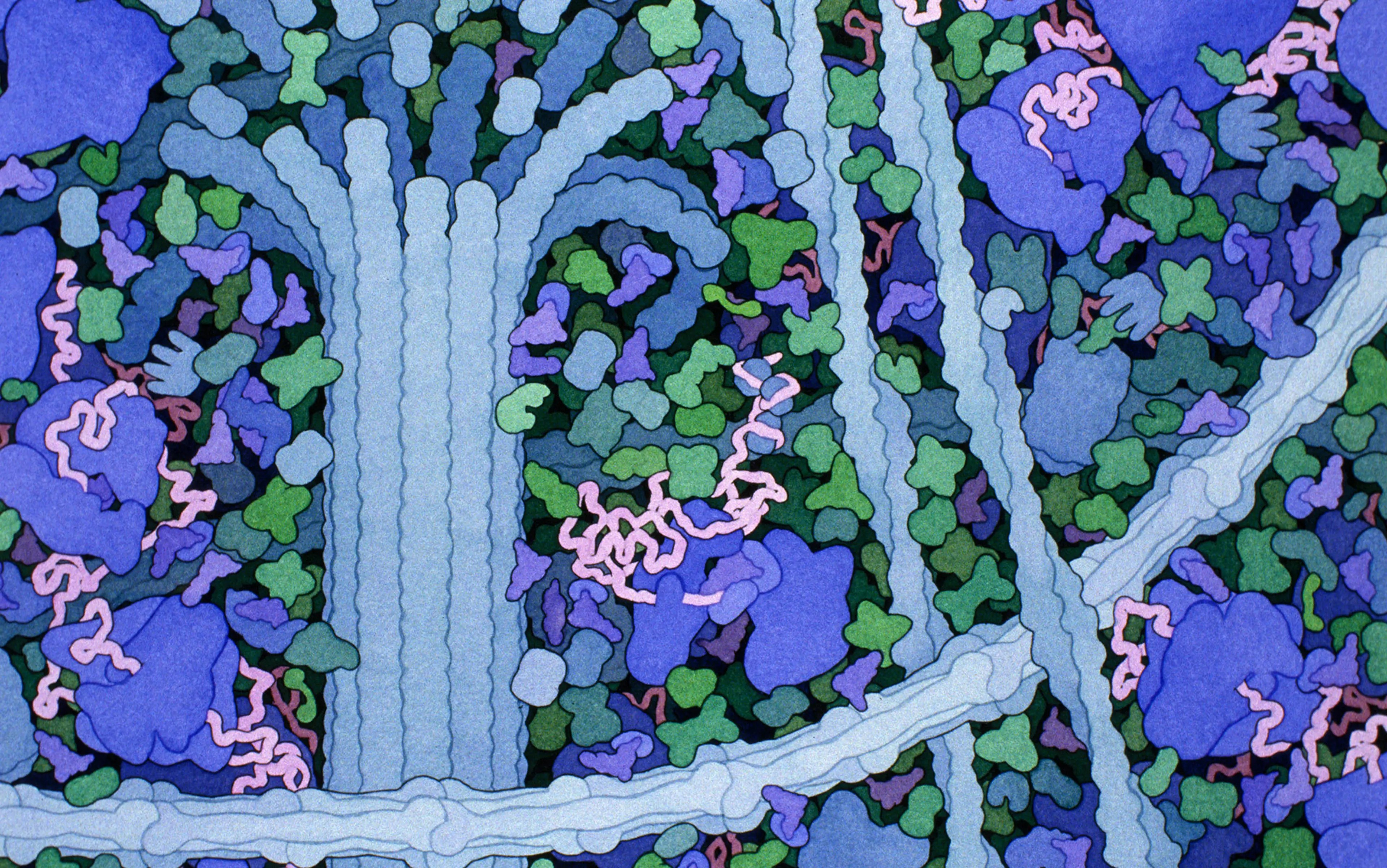
And so, as Charudatta Navare explains, we need to be thoughtful about how we talk about them, as prevailing scientific narratives project human social hierarchies onto nature in misleading ways…
When you think about it, it is amazing that something as tiny as a living cell is capable of behaviour so complex. Consider the single-cell creature, the amoeba. It can sense its environment, move around, obtain its food, maintain its structure, and multiply. How does a cell know how to do all of this? Biology textbooks will tell you that each eukaryotic cell, which constitutes a range of organisms from humans to amoeba, contains a control centre within a structure called the nucleus. Genes present in the nucleus hold the ‘information’ necessary for the cell to function. And the nucleus, in turn, resides in a jelly-like fluid called the cytoplasm. Cytoplasm contains the cellular organelles, the ‘little organs’ in the cell; and these organelles, the narrative goes, carry out specific tasks based on instructions provided by the genes.
In short, the textbooks paint a picture of a cellular ‘assembly line’ where genes issue instructions for the manufacture of proteins that do the work of the body from day to day. This textbook description of the cell matches, almost word for word, a social institution. The picture of the cytoplasm and its organelles performing the work of ‘manufacturing’, ‘packaging’ and ‘shipping’ molecules according to ‘instructions’ from the genes eerily evokes the social hierarchy of executives ordering the manual labour of toiling masses. The only problem is that the cell is not a ‘factory’. It does not have a ‘control centre’. As the feminist scholar Emily Martin observes, the assumption of centralised control distorts our understanding of the cell.
A wealth of research in biology suggests that ‘control’ and ‘information’ are not restricted at the ‘top’ but present throughout the cell. The cellular organelles do not just form a linear ‘assembly line’ but interact with each other in complex ways. Nor is the cell obsessed with the economically significant work of ‘manufacturing’ that the metaphor of ‘factory’ would have us believe. Instead, much of the work that the cell does can be thought of as maintaining itself and taking ‘care’ of other cells.
Why, then, do the standard textbooks continue to portray the cell as a hierarchy? Why do they invoke a centralised authority to explain how each cell functions? And why is the imagery so industrially loaded?…
We need better metaphors to describe cellular life: “The cell is not a factory,” from @charudatta_n in @aeonmag.
* cytologist and author L.L. Larison Cudmore
###
As we avoid anthropomorphism, we might recall that it was on this date in 1981 that the first patent for a life form (U.S. No. 4,259,444) was issued to Ananda Chakrabarty (who had done his research at GE). Chakrabarty had developed Pseudomonas bacterium (now called Burkholderia cepacia) which can be used to clean up toxic spills (as it can break down crude oil into simpler substances that can even become food for aquatic life)– an ability possessed by no naturally occurring bacteria.
The application had been originally denied by the patent office, on the grounds that under patent law at that time, living things were generally understood to not be patentable subject matter under 35 U.S.C. § 101.
Chakrabarty (and GE) appealed (to the Board of Patent Appeals and Interferences), lost, and appealed again ( the United States Court of Customs and Patent Appeals) and prevailed…. At which point, the Patent Office (led by director Sydney Diamond) appealed in civil court.
Ultimately, the Supreme Court ruled (5-4, Diamond v. Chakrabarty) in Chakrabarty’s favor. As Chief Justice Warren Burger wrote for the majority, life can be patented if they are the outcome of “human ingenuity and research” and not “nature’s handiwork”– a ruling that cleared the way for patents to be issued on genetically-engineered mice and other animals, seeds, and more.

“Without debatement further, more or less, / He should the bearers put to sudden death, / Not shriving time allow’d.”*…
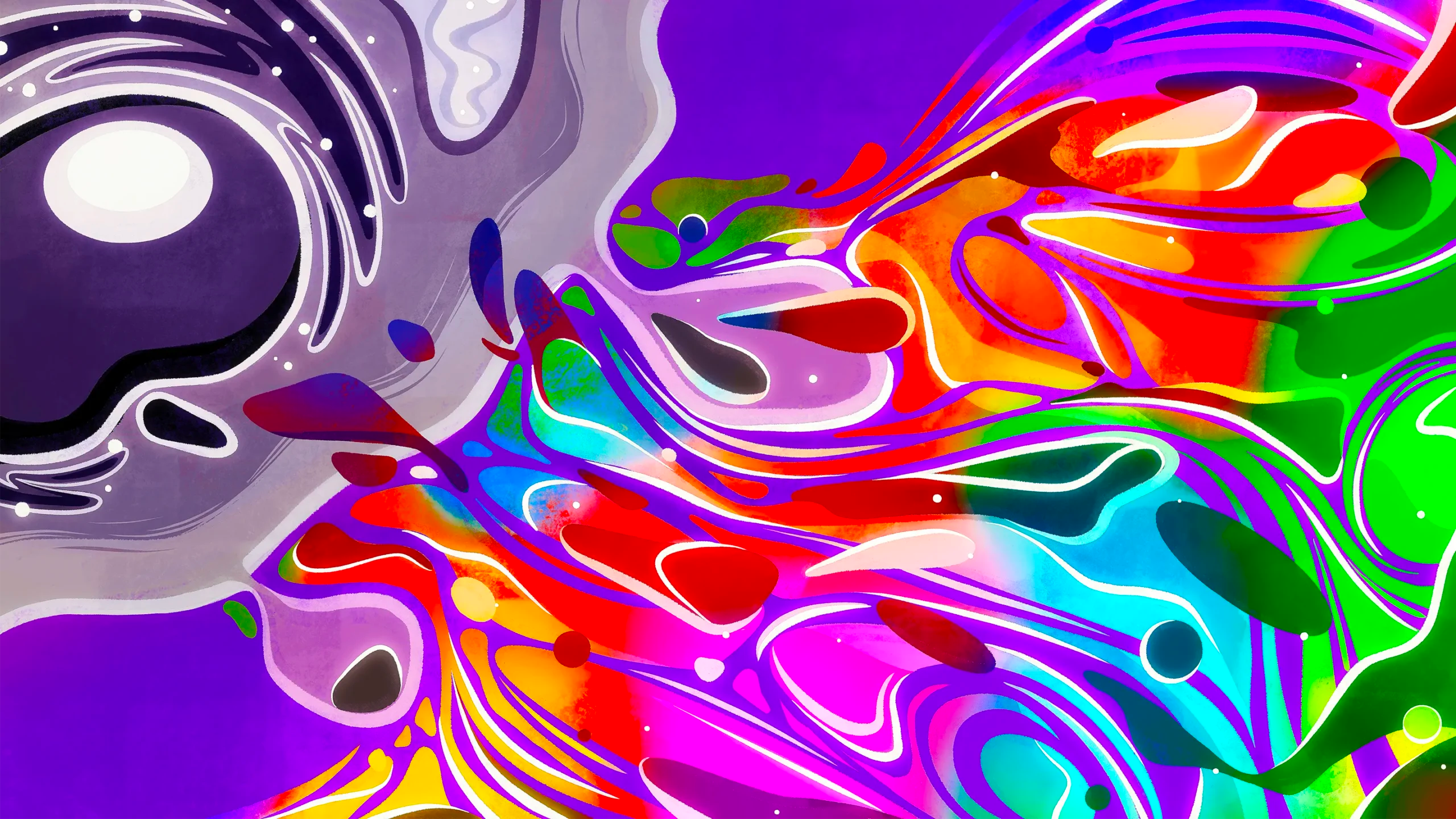
“Cell suicide” is inherently self-destructive, and yet it’s an essential and productive process in complex organisms. How did cells evolve a process to end their own lives? As Veronique Greenwood reports, recent research suggests it first arose, first arose billions of years ago… but why?…
It can be hard to tell, at first, when a cell is on the verge of self-destruction.
It appears to be going about its usual business, transcribing genes and making proteins. The powerhouse organelles called mitochondria are dutifully churning out energy. But then a mitochondrion receives a signal, and its typically placid proteins join forces to form a death machine.
They slice through the cell with breathtaking thoroughness. In a matter of hours, all that the cell had built lies in ruins. A few bubbles of membrane are all that remains.
“It’s really amazing how fast, how organized it is,” said Aurora Nedelcu, an evolutionary biologist at the University of New Brunswick who has studied the process in algae.
Apoptosis, as this process is known, seems as unlikely as it is violent. And yet some cells undergo this devastating but predictable series of steps to kill themselves on purpose. When biologists first observed it, they were shocked to find self-induced death among living, striving organisms. And although it turned out that apoptosis is a vital creative force for many multicellular creatures, to a given cell it is utterly ruinous. How could a behavior that results in a cell’s sudden death evolve, let alone persist?…
The story in full: “Cellular Self-Destruction May Be Ancient. But Why?“, from @vero_greenwood in @QuantaMagazine.
* Shakespeare, Hamlet (Act 5, Scene 2)
###
As we appreciate apoptosis, we might send healthy birthday greetings to Lillian Wald; she was born on this date in 1867. A nurse, humanitarian, political reformer, and author, she was instrumental in establishing a nationwide system of nurses in public schools. Known as “the Angel of Henry Street” (for her founding and running of the Henry Street Settlement in New York City), she directed the Henry Street Visiting Nurse Service, while at the same time tirelessly opposing political and social corruption. She helped initiate the revision of child labor laws, improved housing conditions in tenement districts, drove the enactment of pure food laws, championed and improved education for the mentally handicapped, and led the passage of enlightened immigration regulations.

You must be logged in to post a comment.