Posts Tagged ‘economics’
“Where grows?–where grows it not? If vain our toil, / We ought to blame the culture, not the soil.”*…

Even as agricultural land is becoming a coveted investment (as manifest in the purchases of billionaires like Stan Kroenke, Bill Gates, and Jeff Bezos, and by institutions like Nuveen and the Canadian Pension Investment Board and by publicly-traded REITs like Farmland Partners and Gladstone Land Corp), there’s another class of investor– with a very different use case– on the hunt. Joy Shin and Ryan Duffy report…
Last year, a datacenter developer started working the phones along Green Hill Road in Silver Spring Township, PA, outside Harrisburg. Mervin Raudabaugh got the call: a mystery buyer wanted to buy his 261 acres of farmland. The developer offered him $60,000 an acre for the land the 86-year-old had farmed for six decades. Mervin turned it down, selling to Lancaster Farmland Trust for <$2M instead, thereby locking the soil into agricultural use. “I was not interested in destroying my farms,” he told a local Fox affiliate.
Two things about this story might have been unthinkable a generation ago: that anyone would offer a farmer nearly $16M for that land, and that it’d be worth more dead (paved over) than alive (producing food).
The Supermarket of the World
For the better part of a century, that’s what America was. From 1959 through 2018, the country ran an agricultural trade surplus every single year, peaking near $27B in 1981, when soybeans, corn, wheat, and rice flowed out of the heartland in volumes that functioned as soft power and hard trade leverage. (When the Soviet harvest failed in 1963, Khrushchev had to buy American wheat through private US grain companies: at market rate, without credit, shipped on American vessels, which was a humiliation leveraged by his enemies to oust him the following year.)
Then, in 2019, the curves crossed. The U.S. has since run a deficit in four of the last six fiscal years. Last year, we imported $43.7B more in agricultural products than we sold.
Washington has started saying the right words. Last month, the USDA and Department of War signed a memorandum designating agriculture as a national security priority. Multiple bills linking food security to national security percolated through the last Congress. If you talk to the right folks in Washington, you’ll hear agriculture now being discussed the way semiconductors were in 2021 — as a sovereign capacity that a serious country cannot offshore.
All of which sounds right, none of which changes what is happening on the ground. Because the ground is the problem.
In real estate, you think in square feet, in proximity, in comps. Farmland trades in acreage, water tables, growing seasons, and soil composition. And right now, profitably farming that acre is just about the hardest it’s ever been.
Since 2020, seed costs have climbed 18%, fertilizer 37%, fuel 32%, and interest on operating loans 73%. Labor is up 50%. These costs never came back down after the 2021-22 supply chain shock, but crop prices did, creating a double squeeze on farmers. Farmland has appreciated nearly four-fold from ~$1,090/acre in 2000 to $4,170 in 2024.
Some 40% of U.S. farmers are over 65. The American Farmland Trust estimates nearly 300M acres will change hands through inheritance in the next two decades. When it does, the math facing each heir will look a lot like Mervin’s. What would you do: keep farming a business with collapsing margins, or if one was offered, take the check?
A Collision of Old & New Economies
Datacenters, chip fabs, and other megaprojects need what farms need: flat land, abundant water, reliable power, and access to transport.
In Loudoun County, VA, ground zero of America’s datacenter buildout, farmland already lists at $55,000–$79,000/acre, a significant premium over the statewide average because markets are pricing in the possibility the land will convert from farmland to computerland.
Conversions are large and getting larger. Meta’s $10B compute cluster in Richland Parish, Louisiana, sits on 2,250 acres of former soybean fields. Samsung’s new $17B fab occupies 1,200 acres outside Taylor, Texas, a town that once called itself the largest inland cotton market in the world. Micron’s $100B megafab is going up on 1,400 acres of former agricultural land and wetlands in Clay, New York. These are some of the largest private investments in American history, and among the most economically and strategically consequential bets we’re making as a country. You can’t help but notice the symbolism of it all: each is being built on rural land that was growing something one or two generations ago.
Datacenter developers, who already need some PR help, have seen local opposition to these projects emerge as a real planning risk, with farming families showing up at county meetings to argue that once the land converts, it will never come back.
Nobody should pretend this is irrational. A fab generates more economic value per acre than any soybean field ever will, the jobs pay better, and the strategic logic of onshoring chips is sound. But the math that makes each individual conversion obvious is the same math that, in the aggregate, leaves you structurally short on food. The country is losing about 2,000 acres a day, with 18M more projected to convert by 2040.
The Flow of Capital
As Washington works to subsidize the farming, to the tune of $10–$15B in federal support each year, Wall Street is betting on the land underneath it leaving farming.
Nuveen Natural Capital, a subsidiary of TIAA, manages $13.1B in farmland across 3M acres globally and recently launched a REIT targeting $3B in new capital. Those holdings have appreciated far beyond what crop income would justify, because it follows the pattern of a conversion optionality play: buy well-located agricultural land at agricultural tax rates and wait for rezoning.
Nearly 95% of American farms are still family-run, but most are modest operations. The 6% of farms generating $1M+ in sales produce 78% of everything, up from 69% just five years ago. Farming has developed the power-law distribution of a winner-take-most industry, except the winners don’t get to set their own prices. The family farm persists in name, but the economics (and economies of scale) increasingly push it to operate like a corporation or exit.
And institutional investors have some strange bedfellows on their side of the orderbook. Foreign investors held an interest in nearly 46M acres as of 2023 – 3.6% of all privately held farmland – up 85% since 2010. Canada alone holds 15M acres. China, which cannot feed its population from its own soil, built COFCO International into a state-backed grain trader that does $38.5B a year and accumulated millions of acres globally. Saudi Arabia was pumping Arizona’s groundwater through Fondomonte, a state-linked operation growing alfalfa for export, until Arizona killed the leases in 2023. Those countries treat productive soil as something worth a sovereign premium, and something you want to physically control…
[The authors recount the history of “Agro-Doomerism” and consider the (largely technological) potential solutions to the conundrum: “This is a hard problem, but it is a solvable one, as shown by the long history of technological revolutions in agriculture. Today, a set of technologies that were each too expensive or immature a decade ago have converged to the point where the raw inputs for a farm, ex land, can get radically cheaper, all at once.” They enumerate some of those potential saviors, and conclude…}
… The long arc of agro-doomerism and technological revolutions say there’s reasons for optimism. Many times before, the “math” said we’d run out of food; many times before, new science, systems, and processes came along that changed the denominator and proved the doomers wrong. Hoping and praying for AGI or another Norman Borlaug [the father of the Green Revolution] to save our bacon is not a strategy, but abundance-oriented technology stacks that don’t force a zero-sum choice between preservation and productivity might be. We should look at systems that help unfallow and uplift acres, making farmland competitive enough that we don’t pave over too much and one day realize we want the topsoil back – or our ag trade deficit erased.
The bet worth making is 1) to never bet against America, of course, and 2) that something similar will happen here: that productivity, not preservation alone, will close the gap. This is a generational opportunity, a category deeply in the national interest, and a sector wanting more capital, technology, engineers, and founders to show up. Those who get there first will be serving a gigantic market, and attacking a problem that Washington has acknowledged is existential but has no idea how to productively solve.
The supermarket of the world was built on cheap land and cheap water. Neither are cheap anymore, and both are being bid up by us – via population growth – as well as the industrial renaissance that we care so deeply about. But that doesn’t mean we can forget foundational inputs – literally – to our way of life…
Farming vs. fabs (and data centers)… American agriculture is caught in a collision between old and new economies: “The Supermarket of the World.”
* Alexander Pope
###
As we contemplate cultivation, we might note that this, the third week in March, is National Agriculture Week.

“What is really amazing, and frustrating, is mankind’s habit of refusing to see the obvious and inevitable until it is there, and then muttering about unforeseen catastrophes”*…

One of the effectively-secret ingredients in the world’s economic growth over the last couple of centuries has been insurance. The ability to insure against catastrophic loss has underwritten (pun intended) the trillions and trillions of dollars of loans that have funded the construction and acquisition that has enabled the growth of both commercial endeavor and the the accumulation of personal wealth (directly through home ownership and indirectly through equity ownership in those commercial endeavors or participation in pension schemes that own that equity).
But in a way that was enitrely predictable, climate change is rendering a growing portion of the world uninsurable. Gavin Evans ponders what that might mean…
The Florida peninsula looks like a sore thumb. It juts into the Gulf of Mexico and the Atlantic, where the water is getting warmer year on year, prompting fiercer hurricanes that can blow down houses like collapsing decks of cards. Climate scientists are convinced all hell will break loose sooner or later when a monster-sized, property-destroying storm makes a direct hit on Miami or Tampa-St Petersburg. Given three near-misses in the recent past, the experts view such a calamity as inevitable. It’s a huge risk for anyone living there – they stand to lose everything – but also for those bearing the financial side of this risk, the insurance companies. Some in the industry are seeing this as a portent for their future – an impending existential threat with profound implications for the economic system.
There are no easy solutions for people still paying off mortgages and those who want to buy property along the Florida coast, because the potential payout on the back of a mammoth storm is so high that the reinsurers (who insure the insurers against catastrophe) are refusing to underwrite their clients and, with no reinsurance, there’s no insurance; and with no insurance, no mortgages; and with no mortgages, no property market. Insurance protects investments against loss and is therefore a pillar of the economic system. If it goes, economies are destabilised.
Many panicked homeowners have rushed to make their houses less risky for insurance companies by reinforcing their roofs with hurricane clips, installing impact-resistant windows, doors and shutters, and strengthening their foundations. But it’s not just storms and higher, warmer seas that concern insurers. Rising temperatures mean that the frequency, range and ferocity of wildfires are also on the rise.
So far this year, 3,374 wildfires have burned an area of Florida totalling 231,172 acres (at the time of writing), and it is even worse in California where 7,855 blazes have killed at least 31 people, destroyed more than 17,000 houses and devoured 525,208 acres of land, at an estimated cost of more than $250 billion. Here, too, homeowners rushed to make their properties more palatable to cold-footed insurers – clearing their surroundings of anything flammable, covering yards with gravel, sheathing houses with fire-resistant stucco, and replacing wooden roofs with steel.
But, even for the most diligent, insurance companies have turned tail, dumping existing clients and abandoning fire-prone and storm-prone areas altogether. On the Californian fire front, 2024 was a turning point as several insurers ceased issuing new policies because of fire-associated risks, including the United States’ biggest property insurer, State Farm, which cancelled policies in parts of Los Angeles. It is all too easy to view this cynically, but it’s happening because property insurers have been reporting year-on-year losses from climate change-related payouts.
Insurance companies survive by making more money from covering risk than they lose from these risks, which is why they prefer clients less likely to claim (insofar as they can predict the risk involved) and require them to pay substantial excess to discourage claims. When payouts rise above the premium intake, insurance companies either hike up these premiums or withdraw. But when that risk is considered catastrophic, potentially affecting many thousands of clients, as with Floridian storms and Californian fires, it is the reinsurers who are the first to retreat because they will ultimately bear most of the cost.
Reinsurers aggregate payout patterns to establish the likelihood of having to make huge payouts from future natural catastrophes. They do this by gathering exposure data from existing insurers in a geographical area, and by examining catastrophe models (computer simulations that estimate potential losses from natural perils). When they put all this together with detailed analysis of conditions within the area, they come up with a figure for their total potential loss if a catastrophic event strikes.
This is why reinsurers focus so intensely on climate change. Take a glance at the websites of big ones like Swiss Re and Munich Re and you get a sense of how central this is to their calculations – a concern that has spread to property insurers who are starting to hire climate consultants. Even more than market volatility, climate is their biggest headache. ‘You won’t meet a single insurance or reinsurance CEO who doesn’t believe in climate change,’ the insurance investor and former Lombard Insurance CEO James Orford told me. ‘They see it in the numbers – a combination of more extreme, less predictable events, combined with big losses of sums insured. All the modelling suggests these are uninsurable risks.’…
[Evans recaps the history of insurance, starting in Genoa, in the mid-14th century, with the insuring of maritime expeditions; examines the current state of play; examines the efforts (and gauges the weaknesses) of state’s efforts to step up with coverage when insurers step away; then considers another role for states…]
If states do withdraw from insurance and reinsurance, some of the most lucrative areas of the US, Canada, Europe, Asia, Africa and Australia will be devastated: no mortgages and no banks, leading to more ghost towns and villages. ‘It ends with depopulation and abandonment,’ said Agarwala. ‘Climate change reduces the operating space for humanity.’ In the UK, rising sea levels and coastal erosion could literally reduce operating space, putting 200,000 British homes at risk by 2050. There’s no coastal-erosion insurance, which puts more burden on the state, mainly to pay for new defences, but also to help people move.
Governments can take action in other ways, by investing greater sums in risk-prevention and management. There are signs of this happening such as the ‘fire-hardening’ and storm-prevention efforts in Florida, and improved flood defences in the UK; meanwhile, the EU’s Recovery and Resilience Facility is being used in several countries to build and renovate operations centres to cope with wildfires, and to buy firefighting helicopters.
In future, it is likely that voters will demand that their state and national governments do far more, regardless of the cost. They will want tougher building codes, including limitations on building in risky areas; expensive fire-prevention and fire-fighting schemes; better flood and storm defences; improved early catastrophe management, involving relocating people from risky areas and, when disaster strikes, rapid life-saving interventions such as large-scale emergency evacuations. If the insurance industry is forced to retreat by the climate crisis, all of this infrastructural investment will require vast chunks of taxpayers’ money. It is hard to avoid the feeling that this is part of our destiny, and that the sore thumb of the Florida peninsula is pointing us to the future…
Whole regions of the world are now uninsurable, bringing radical uncertainty to the economy: “The insurance catastrophe,” from @aeon.co.
See also: “An Uninsurable Country” (a report form NRDC), “The Insurance Crisis Is So Desperate People Are Turning Socialist” (a gift article from Bloomberg), and “The Uninsurable Future: The Climate Threat to Property Insurance, and How to Stop It” (from Yale Law Review)
* Isaac Asimov
###
As we cover up, we might send highly-charged birthday greetings to a man who made foundational contributions both to the detection of climatic conditions and to a technology that may help allieviate climate change: John Frederic Daniell was born on this date in 1790. Named the first professor of chemistry at the newly founded King’s College London in 1831, he was an avid meteorologist. He invented the dew-point hygrometer known by his name and a register pyrometer; in 1830 he erected a water-barometer in the hall of the Royal Society.
But Daniell is better remembered as a chemist (and physicist), especially for his invention of the Daniell cell, an element of an electric battery much better than voltaic cells, the standard before him. Indeed, the Daniell cell is the historical basis for the contemporary definition of the volt (the unit of electromotive force in the International System of Units). All advances in battery technology since then were “from” the base that Daniell laid.

“People of the same trade seldom meet together, even for merriment and diversion, but the conversation ends in a conspiracy against the public, or in some contrivance to raise prices”*…

Max Haiven has shared a provocative essay on capitalism that “moves beyond the conventional framing of cheating as the exceptional malfeasance of bad economic actors, as well as beyond the claim that capitalism’s drive to profit encourages dishonesty and manipulation (thought that is indeed true). Rather, it proposes we recognize cheating at capitalism’s ideological and operational core, not its periphery.” Haiven offers three case studies, then notes that the perspective he sketches “can help us recognize some elements of the rise of reactionary, far-right, and fascistic sentiment and politics today. These in many cases revolve around a rhetoric of cheating that misrecognizes the culprits, targeting poor and precarious minorities rather than those at the commanding heights of the economy.” From the introduction…
We are, by now, so familiar with the economy being described as a game that the metaphor often passes without notice (Cudd; Mooney). Scholars from a wide diversity of disciplines and across the political spectrum have explored the importance of metaphors to the functioning of the economy, both for economists and policymakers and for more humble market actors, including consumers, workers, and small investors (McCloskey; Gramm; Young). The metaphor of the game not only affirms that capitalism is competitive and rule-bound, it also frequently implies that it is at least ideally fair. Metaphors of a ‘level playing field’, for example, were crucial to the neoliberal project that promised that trade liberalization, privatization, and deregulation would lead to a system where hard work and talent were rewarded and where innovation would thrive (Krarup). That ideology never promised equality, and indeed inequality was crucial to the driving motivations of its actors, but it did promise fairness. And yet, forty years into the neoliberal revolution and it would be hard to find anyone who believes the game is fair.
This exploratory essay presents three scenes where cheating can be seen to be at the ideological core of the free-market project. Its purpose is to contribute to the argument that cheating is not simply, as defenders of neoliberal capitalism and financialization tend to claim, the exceptional and regrettable outcome of individual amorality or regulatory failure (see Jaeggi). Nor is it simply, as many critics of the system contend, a matter of the rich and powerful breaking or bending the rules, as for example in the use of tax havens and other tax avoidance schemes, or lobbying efforts, insider trading, or the gaming of regulations to avoid the inconvenience of human or environmental responsibility (Shaxson). It also goes beyond the Marxist supposition (with which I agree) that capitalism is fundamentally built on the inherent swindle of the wage relation, where workers, deprived of the means of production, are forced to sell their labor power in return for a fraction of its actual value, the rest being pocketed by their boss and reinvested in the expansion of capitalist accumulation (Harvey). Rather, across three cases, I seek to sketch a pattern where cheating is integrated into the very ideological and operational core of capitalism.
My purpose is not to make a moral critique of free-market capitalism or a structural analysis of financial accumulation, although both might be well-served by my argument. Rather, it is to lay the groundwork for an explanation for our present-day conjunctural political salience of the cheat and cheating. Why is it that today’s far-right, fascistic, and reactionary politicians, influencers, and personalities so successfully mobilize vitriol against supposed cheaters? Donald Trump is only the most famous example in his claims that he must be given profoundly antidemocratic powers to save democracy from cheats: political miscreants alleged to have cheated him and his supporters of the 2020 elections; migrants accused of cheating the ostensibly fair border regime; racialized grifters supposedly cheating the capitalist meritocracy with their cynical claims to oppression and demands for bureaucratic remedies (preferential hiring or university admissions, etc.); and, more generally, ‘elites’ said to have cheated the hardworking and entrepreneurial (white) American everyman of his due.
The success of Trump’s antics are all the more surprising given that he is himself a convicted cheat, and proud of it (Haberman and Feuer). His policies have hamstrung or completely eliminated many government bodies tasked with controlling corporate crime and he has used Presidential fiat to pardon multiple notorious wealthy cheats (Claypool; Goldstein and Silver-Greenberg). It appears almost certain the he cynically deployed his bellicose threats of tariffs to undertake one of the world’s most staggering acts of insider trading (Faturechi, Rebala, and Roberts) and that he has developed a cryptocurrency as a means to essentially sell political influence in plain sight (Chayka).
But Trump is only the most egregious, telegenic, and bombastic of many such characters. Many similar accusations could be leveled at Brazil’s Jair Bolsonaro (Nunes), South Korea’s Yoon Suk Yeol (Yang), Argentina’s Javier Milei (Callison and Gago), Italy’s Silvio Berlusconi (Stille), or India’s Narendra Modi (Auvray). All of them are illiberal democratic autocrats who have wielded accusations of widespread cheating to fuel pro-market reactionary politics, while at the same time overseeing parties or regimes that are significantly built on cheating. These and other far-right political revanchists mobilize a public rhetoric that revolves around fostering the anger of manufactured majorities against what I will call the ‘cheating other’, minorities who are rumored to be defrauding society and refusing to play by the rules. The claim is often that this cheating has either been intentionally allowed by venal political elites or permitted because of the stupidity and gullibility of liberal or left-wing policies, and that matters have become so dire and corrupt that it requires radical actions that contravene the law, human rights, and other such inconveniences.
Meanwhile, somewhat predictably, actual well-documented cheating continues in plain sight. For example, none of these regimes have done anything meaningful to reign in the use of tax havens and other forms of tax evasion whereby the wealthiest members of society essentially use legal loopholes to cheat the common purse. Indeed, many of these reactionary political actors and their supporters are named in leaked documents such as the Panama Papers or Paradise Papers (Tax Justice Network, 2024).
However, the purpose of this essay is not to point to the rank hypocrisy of these actors, which is rarely hidden and whose revelation seems to do little good. Nor is it to provide a complete account of how we came to live under what I will, elsewhere, call ‘the rule of the cheat’ (Haiven, forthcoming). Rather, it is to try and understand a tendency deep at work within financialized neoliberal capitalism, one that has helped feed the revanchist political sentiments that gave rise to the popularity of reactionary politics (Haiven).
Those sentiments brood within financialized subjects. Forty years into the global neoliberal revolution and its accompanying processes of financialization, we have witnessed profound pressures on the formation of subjectivities, as individuals are compelled to conform to an increasingly competitive, austere, and precarious socio-economic environment (Cooper). Yet, as many theorists have demonstrated, this is rarely encountered or interpreted as the grim imposition of market domination, but rather as a set of agentic opportunities to speculate, perform, and compete (Lazzarato; Martin; Haiven). For example, while housing precariousness has increased in many jurisdictions thanks to the financialization of urban real estate, many non-elite subjects have embraced property speculation as an opportunity to profit and improve their life chances (Stein). Likewise, although work has generally become more precarious, many subjects see increased opportunities to start their own businesses or invest in financial assets, from publicly traded shares to cryptocurrencies (Lorusso). The affordances of social media and other platform corporations offer opportunities to leverage one’s personality and talents in the name of becoming an influencer or streamer, which are among the top career aspirations for young people today (Bollmer and Guinness). While these opportunities are themselves the result of the economic forces that generally tend to increase precariousness, inequality, and the domination of society by the market, they nevertheless are experienced by many individuals as pathways to freedom. This is more than ideological false consciousness in any simplistic sense. Financialized neoliberal capitalism’s unique success has been to not merely subdue but to seduce our agency.
As Wark and Jagoda note, such conscription of agency often feels like – and is frequently expressed in terms of – a game. Even though success in capitalism is extremely rare, each of us is tasked with reimagining ourselves as a ‘player’, convincing ourselves that the game is or at least ideally should be meritocratic and fair, even if far from equal. And yet most of us will fail while we watch others, whom we imagine to be less talented or hardworking, succeed. We increasingly feel cheated. This feeling is compounded by fines, fees, and costs, including inflation. These have, ironically, increased under neoliberal financialization largely thanks to the deregulation of capital and the privatization of public services, despite claims that the system would eliminate the red tape of overprotective government bureaucracy (Cooper). It is this figure of the ‘cheated player’, the financialized subject whose sense of agency and possibility has been betrayed, that is especially susceptible to the siren song of the reactionary political commentators, influencers, and political candidates who promise to apprehend and take revenge on people and populations they depict as cheaters.
This essay takes this set of problems as a point of departure, but ultimately seeks to excavate three moments in the genealogy of contemporary financialized neoliberal capitalism where we can observe cheating being at the very center of its operations, not simply because certain cheating individuals or institutions hold pivotal roles, but because forms of activity that can very well be understood to be cheating are incorporated into the core operations of the system. Such an analysis would not only undermine neoliberal claims that capitalism fulfills the liberal dream of a society built on the Rawlsian principle of procedural justice – that is, one in which markets may generate inequality but nonetheless remain fair (see Hunt). It would also contribute to a complication of Marxist approaches which, in their zeal to understand the abstract laws of capitalist accumulation and the ways these are enabled by a legal superstructure, have tended to downplay the crucial role of cheating, fraud, and criminal activity.
In the first case, I take up the imperialist ‘great game’ on which modern capitalism was founded: the operations of imperialist states and their corporations and companies. Here, the ‘great game’ was one that promised to bring freedom, ‘fair play’, and free trade to colonized people, but in fact established a rigged game. European powers imposed punitive and exploitative trade relations on their protectorates while also insisting that they submit to their colonizers’ sanctimonious tutelage.
In the second case, I take up the paradigm of game theory, which has become a pivotal element in neoliberal financialized capitalism, both as a powerful weapon in its ideological arsenal as well as a crucial mechanism in financial decision-making, geopolitical strategy, public policy, and the development of digital technology. Within game theory’s, cheating has a specific meaning, namely defection from a previous agreement. But cheating is also anticipated and incorporated into game theory’s fundamental assumptions, whereby it is rational and expected that optimal players will almost inevitably ‘cheat’.
In the final case, I look much more broadly at what I would frame as the normalization of cheating in recent financial history, which we can trace via the work of acclaimed and highly influential financial reporter Michael Lewis, whose books have tended to focus on the rule-bending or rule-breaking mavericks whose defiance of the conventional norms (and sometimes laws) that govern finance quickly comes to be common practice and around which a new set of rules and norms quickly form.
In each of these three cases, I am not seeking to make a categorical historical argument. Rather, my effort is to paint, in broad strokes, an overarching pattern.
By way of conclusion, I take up Johann Huizinga’s distinction between the cheat and the spoilsport: the former may be unethical, but is often accepted and sometimes admired because they bend but do not break the rules, allowing the game to continue; the latter is loathsome because, in their (often justified) refusal to play a game they think is stupid, rigged, or fruitless, they call into question the wisdom, morality, or agency of their fellow players. This has significant consequences for our consideration of strategies against fascistic politics and for collective liberation…
Eminently worth reading in full: “Capitalism cheats: Three moments of normalized swindling,” from @maxhaiven.bsky.social.
* Adam Smith, The Wealth of Nations, Book 1 Chapter 8). to which he added (in Book 1, Chapter 11): “The interest of [businessmen] is always in some respects different from, and even opposite to, that of the public … The proposal of any new law or regulation of commerce which comes from this order … ought never to be adopted till after having been long and carefully examined … with the most suspicious attention. It comes from an order of men … who have generally an interest to deceive and even to oppress the public…” As Branco Milanovic observes, the oft-called “Father of Capitalism” was no blind worshipper of the market economy.
###
As we rethink the rules, we might recall that it was on this date in 2019 that Forbes annoited Kylie Jenner “the world’s youngest ever billionaire” (at age 21). A media personality and socialite, Jenner had been involved (with her sister Kendall) in the clothing company PacSun, had launched her own cosmetics line, and had, of course, featured in the reality TV show Keeping Up with the Kardashians and had “starred” in its spin-off, Life of Kylie. A year later Forbes released a statement accusing Jenner of forging tax documents so she would appear to be a billionaire.

“Jobs in factories will come roaring back into our country”*…
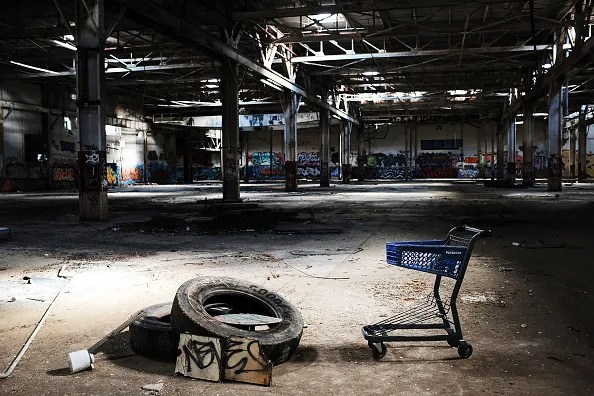
When President Trump announced sweeping tariffs on “Liberation Day” last spring, the promise was that manufacturing– and the jobs it provides– would return to the U.S. Scott Lincicome (from the conservative Cato Institute) assesses the “progress” to date…
US manufacturing ended 2025 with a thud, capping a rough year for the sector. To recap, manufacturers shed 63,000 jobs, according to the latest data from the Bureau of Labor Statistics. It wasn’t just labor that was hurting. The Institute for Supply Management’s manufacturing index clocked in at 47.9 for December, marking the 10th consecutive month of contraction as new orders were especially weak and costs at historically elevated levels.
Then there’s the Federal Reserve’s Beige Book of regional economic conditions and surveys from the regional Fed banks, which have repeatedly documented cases of manufacturers delaying hiring and investment amid weak market conditions, rising costs, shrinking profit margins and persistent uncertainty. As for the “hard” data, manufacturing capacity and output, while incomplete, sagged through the Fall.
Overall, the evidence reveals a sector that’s stagnant at best, and a long way from the manufacturing renaissance President Donald Trump promised when he took office for a second time a year ago. No wonder administration officials have pivoted from predicting a factory boom in 2025 to now saying it will happen in 2026 and beyond.
Better tax, regulatory, and monetary policy should indeed provide a tailwind for manufacturing, but the sector will probably continue to struggle. If so, Trump’s tariffs will be a big reason why…
[Lincicome unpacks the several ways that Trump’s tariffs have confounded domestic manufacturing: increased costs (especially on materials/compnents not available in the U.S.) and tariff and policy/regulations that might be politely called “inconsistent” (or less politely, “flighty”); last year, the US tariff code was amended 50 times)– which has added management/coordination costs (Federal Reserve economists estimate that domestic manufacturers will pay $39 billion to $71 billion annually to comply with the new regime, representing time and money they can’t spend on their businesses); but perhaps even more damagingly, has created uncertainty that has slowed corporate action/investment. Lincicome concludes…]
… The harms to manufacturers are consistent with research on past tariff episodes and help to explain why the sector struggled in 2025 — and why things might not get much better this year. Recent forecasts also suggest caution, with manufacturers and supply chain professionals predicting continued headwinds due to the costs, uncertainty and complexity of tariffs. And the Supreme Court won’t save them. If it invalidates Trump’s “emergency” tariffs in the coming days, administration officials have promised to invoke alternate authorities to recreate them.
Global supply chains took years to develop. They’ll take even longer to reorganize and will do so at great cost if, that is, they don’t break altogether in the meantime…
“America’s Manufacturing Renaissance Is Missing in Action,” (gift article) by @scottlincicome.bsky.social in @opinion.bloomberg.com.
Relatedly, Trump’s immigration policy was (like the “manufacturing boom”) supposed to have reduced the federal deficit. The Administration is deporting immigrants at a brisk clip– but at an extraordinary cost, both economically and constitutionally. That’s not to mention the costs to the targeted immigrants themselves, to their familires and to the companies and economies of which they have been preponderantly positive and productive parts. Indeed, a different group at Cato recently published a thorough study demonstrating that– far from being a drag on the economy– immigrants have reduced federal (and state and local) deficits by $14.5 Trillion since 1994… though, of course that contribution is now, thanks to the ICE storm, slowing down.
The immigration crackdown was also supposed to turbo-charge job growth (for the U.S.-born); it has not. Indeed, the climate of fear and the difficulty in securing visas has led to a hiring boom abroad: “Silicon Valley can’t import talent like before. So it’s exporting jobs.”
It’s easy to see Trump’s election and the imposition of his economic and immigration policies as America’s Brexit. That abrupt rupture of social, cultural, and economic conventions is now about a decade old… and the results aren’t pretty…
Brexit, the United Kingdom’s decision to withdraw from the European Union, is a rare contemporary example of a major developed economy raising trade barriers and more generally pulling back from international economic integration. When the Brexit referendum took place in 2016, academic and professional economists generally forecast that the policy about-face would result in a negative hit to the United Kingdom’s economy of about 4% of GDP over the long-term. Rather than a sudden, visible economic shock following the vote, the costs of Brexit have been gradual and cumulative. Now, almost a decade later, new research aims to assess Brexit’s actual impact on the United Kingdom’s economy, which involves the challenging task of comparing the country’s economic indicators to what they would have been if the United Kingdom had remained in the European Union. This research finds that, ten years on, the economic cost of Brexit has been larger than analysts predicted and that prolonged policy uncertainty contributed importantly to the magnitude of the impact… We estimate that by 2025, Brexit had reduced UK GDP by 6% to 8%, with the impact accumulating gradually over time… Understanding the ways in which Brexit resulted in a drag on economic growth for the United Kingdom provides potential lessons about the costs of abruptly pulling back from the global economy for other countries… – “The Economic Costs of Brexit on the UK” (where there is much more detail)
* Donald Trump
###
As we interrogate empty promises (and lest we think that history doesn’t rhyme), we might recall that it was on this date in 1856 that the Know Nothing Party (dba, “the American Party” and “Native American Party”) convened in Philadelphia to nominate its first presidential candidate. A nativist (and largely anti-Catholic) group composed of anti-immigrant/Old Stock breakaways from the American Republican and Whig parties, the Know Nothings nominated Millard Fillmore.
The last member of the Whig Party to serve as President, Fillmore had been a Congressional Representative from New York who was elected to the Vice Presidency in 1848 on Zachary Taylor’s ticket. When Taylor died in 1850, Fillmore became the second V.P. to assume the presidency between elections.
Fillmore’s signature accomplishment was the passage of the Compromise of 1850 passed, a bargain that led to a brief truce in the battle over slavery– but was so ill-conceived (it contained the Fugitive Slave Act) and unpopular that Fillmore failed to get his own party’s nomination for President in the election of 1852, which he sat out. Unwilling to follow Lincoln into the new Republican Party, he got the nomination of the Know Nothings– though he was not a member of the party and hadn’t sought it; he was out of the country during the convention. Fillmore finished third in the 1856 election. By the 1860 election, the Know Nothings were no longer a serious national political movement.

“You get what you measure”*…

Matt Stoller takes the occasion of Trump’s selection of Kevin Warsh to head the Fed (“an orthodox Wall Street GOP pick, though he is married to the billionaire heiress of the Estee Lauder fortune and was named in the Epstein files. He’s perceived not as a Trump loyalist but as an avatar of capital”) to ponder why public satisfaction with the economy is so low (“if you judge solely by consumer sentiment, Trump’s first term was the third best economy Americans experienced since 1960. Trump’s second term is not only worse than his first, it is the worst economic management ever recorded by this indicator”).
Stoller argues that we’re mesuring the wrong things (or, in some cases, the right things in the wrong ways)…
… the models underpinning how policymakers think about the economy just don’t reflect the realities of modern commerce. The fundamental dynamic is that those models were constructed in an era where America was one discrete economy, with Wall Street and the public tied together by the housing finance system. But today, Americans increasingly live in tiered bubbles that have less and less to do with one another. Warsh will essentially be looking at the wrong indicators, pushing buttons that are mislabeled.
While corporate America is experiencing good times, much of the country is experiencing recessionary conditions. Let’s contrast consumer sentiment indicators with statistics showing an economic boom. Last week, the government came out with stats on real gross domestic product increasing at a scorching 4.4% in the third quarter of last year. There’s higher consumer spending, corporate investment, government spending, and a better trade balance. Inflation, according to the Consumer Price Index, is low at 2.6.% over the past year. And while official numbers aren’t out for the final three months of the year, the Atlanta Fed’s GDPNow forecast shows that it estimates growth at 4.2%. And there are other indicators showing prosperity, from low unemployment to high business formation, which was up about 8% last year, as well as record corporate profits…
… Behavioral economists and psychologists have all sorts of reasons to explain that people don’t really understand the economy particularly well. But in general, when the stats and the public mood conflict, I believe the public is usually correct. Often, there are some weird anomalies with the data used by policymakers. In 2023, I noticed that the consumer price index, the typical measure of inflation, didn’t account for borrowing costs, so the Fed hike cycle, which caused increases in credit card, mortgage, auto loan, payday loans, et al, just wasn’t incorporated. The public wasn’t mad at phantom inflation, they were mad at real inflation that the “experts” didn’t see.
I don’t think that’s the only miscalculation…
[Stoller goes on to explain the ways in which “consumer spending” doesn’t tell us much about consumers anymore, about the painful reality of “spending inequality,” and about the obscure(d) problem of monopoly-driven inflation. He concludes…]
… Finally, there’s a more philosophical point, which I don’t think explains the short-term frustrations people feel, but is directionally correct. Do people actually want what the economy is producing? For most of the 20th century, the answer was yes. When Simon Kuznets invented these measurement statistics in 1934, financial value and the value that Americans placed on products and services were similar. A bigger economy meant things like toilets and electricity spreading across rural America, and cars and food and washing machines.
Today? Well, that’s less clear. According to the Bureau of Labor Statistics, the second fastest growing sector of the economy in terms of GDP growth from 2019-2024 was gambling. Philip Pilkington wrote a good essay last summer on the moral assumptions behind our growth statistics. There is no agreed upon notion of what makes up an economically valuable object or activity, so our stats are inherently subtle moral judgments. Classic moral philosophers like Adam Smith believed in the “use value” of an item, meaning how it could be used, whereas neoclassical economists believed in the “exchange value” of an item, making no judgments about use and are just counting up its market price.
Normal people subscribe on a moral level to use value. Most of us see someone spending money on a gambling addiction as doing something worse than providing Christmas presents for kids, but not because of price. However, our GDP models use the market value basis. Kuznets, presumably, was not amoral, he just thought that our laws would ban immoral activities like gambling, and so use value and market value wouldn’t diverge. But they have.
It’s not just things like gambling or pornography or speculation. A lot of previously unmeasured activity has been turned into data and monetized, which isn’t actually increasing real growth but measuring what already existed. Take the change from meeting someone at a party to using a dating app. One is part of GDP, the other isn’t. Both are real, but only one would show a bigger economy.
Beyond that much of our economy is now based on intangibles – the fastest growing sector was software publishing. Is Microsoft moving to a subscription fee model for Office truly some sort of groundbreaking new product? It’s hard to say, while corporate assets used to be hard things like factories, today much of it is intangibles like intellectual property.
A boomcession, where the rich and corporate America experience a boom while working people feel a recession, is a very unhealthy dynamic. It’s certainly possible to create metrics to measure it, and to help policymakers understand real income growth among different subgroups. You could start looking at real income after non-discretionary consumer spending, or find ways of adjusting for price discrimination.
But I think a better approach is to try to knit us into one society again. The kinds of policymakers who could try to create metrics to understand the different experiences of classes, and ameliorate them, don’t have power. Instead, the people in charge still use models which presume one economy and one relatively uniform set of prices, where “consumer spending” means stuff consumers want.
I once noted a speech in 2016 by then-Fed Chair Janet Yellen in which she expressed surprise that powerful rich firms and small weak ones had different borrowing rates, which affected the “monetary transmission channel” the Fed relied on. Sure it was obvious in the real world, but she preferred theory.
Or they don’t use models at all; Kevin Warsh is not an economist, he’s a lawyer and political operative, and is uninterested in academic theory. He cares about corporate profits and capital formation. That probably won’t work out well either.
At any rate, we have to start measuring what matters again. If we don’t, then we’ll continue to be baffled that normal people hate the economy that looks fine on our charts…
The models used by policymakers to understand wages, economic growth, and consumer spending are misleading. That’s why corporate America is having a party, and everyone else is mad. Eminently worth reading in full: “The Boomcession: Why Americans Hate What Looks Like an Economic Boom,” from @matthewstoller.bsky.social (or @mattstoller.skystack.xyz).
* Richard Hamming (and also to the article above, see “Goodhart’s law“)
###
As we ponder the pecuniary, we might recall that it was on this date in 1958 that Benelux Economic Union was founded, creating the seed from the European Economic Community, then the European Union grew.
On that same day, Philadelphia doo wop group The Silhouettes started five weeks at the top of the Billboard R&B chart with their first single, “Get A Job.”
You must be logged in to post a comment.