Posts Tagged ‘organized crime’
“Ritual and ceremony in their due times kept the world under the sky and the stars in their courses. It was astonishing what ritual and ceremony could do.”*…

The estimable Henry Farrell, responding to thoughts from Adam Tooze (here and here) and Paul Krugman (here) in trying to make sense of what happened in Davos last week, draws on the thinking of Michael Chwe’s Rational Ritual: Culture, Coordination and Common Knowledge (on why a game theoretic account of why ritual is important) to suggest that Europe and Carney disrupted Trump’s ceremony of self-anointment…
… I take two lessons from his book. First, that Davos fits very clearly into his definition of `ritual.’ Second, that rituals are important because they create common knowledge.
What we have seen at Davos over the last few days was an effort by the Trump administration to create new common knowledge in the world, an agreement that Trump was in charge, and that politics revolved around him. That effort has failed because of pushback from politicians, both Europeans who were furious at Trump, and Canada’s prime minister, Mark Carney who gave a quite extraordinary speech. However, the result is most certainly not a decisive victory for Europe, Canada, and the other forces allied with them. Instead, it is one significant moment in a longer story of struggle and contention…
… Rituals often take place in consecrated places. British kings are crowned in Westminster Abbey. They also often take place at a particular time of the year (see churches and organized religion, passim). So it is not at all a stretch to see the Davos meeting as a ritual that is held in the same overcrowded place at much the same time every year. Like many rituals, its boredom and its ceremony go hand in hand. For many years, Davos’s most obvious social purpose was to reinforce the consensus about globalization, in predictable ceremonial language. Its very dullness and lack of surprise was a side effect of its power.
That was then; this is now. I don’t think that it is at all implausible to see Trump’s planned descent on Davos this year as a version of a royal progress (see Stacie Goddard and Abe Newman on “neo-royalism”). Swooping into Davos, and making the world’s business and political elite bend their knees, would have created collective knowledge that there was a new political order, with Trump reigning above it all.
Business elites would be broken and cowed into submission, through the methods that Adam describes. The Europeans would be forced to recognize their place, having contempt heaped on them, while being obliged to show their gratitude for whatever scraps the monarch deigned to throw onto the floor beneath the table. The “Board of Peace” – an alarmingly vaguely defined organization whose main purpose seems to be to exact fealty and tribute to Trump – would emerge as a replacement for the multilateral arrangements that Trump wants to sweep away. And all this would be broadcast to the world. Adam’s combination of stage, convening and acting would provide a means to shape the collective understanding of a global audience that Trump was now in charge.
That, of course, is not what happened. First, the Europeans were finally pushed to the point where they pushed back. As Belgium’s prime minister put it, “Living as a happy vassal is one thing, existing as a miserable slave is another.” It was clear that the Europeans were finally becoming willing to retaliate against Trump. That in turn had consequences for business.
As Adam suggests, businesses are unwilling to visibly step up to oppose Trump one on one. But businesses are not only individual participants in the ceremony. They are also members of a vast and depersonalized audience, via the anonymizing mechanism of the market, and, as Chwe suggests, it is the collective understanding of the audience that is most important. Just as the ouija board allows individuals to express their desires without being held accountable to them (thanks to the ‘ideomotor effect’ so too, the invisible hand of the market moves the planchette of stock prices in ways that no business can be held accountable for. When stock markets fall, even at the prospect of trade conflict between Europe and the United States, politicians pay attention. “Market fundamentals” (a loaded and problematic term) provided a very different understanding of the shared consensus than the one Trump sought to impose.
Second, Carney’s speech laid out an entirely different understanding of what was happening, and what had gone before. In his words:
Let me be direct: We are in the midst of a rupture, not a transition. Over the past two decades, a series of crises in finance, health, energy and geopolitics have laid bare the risks of extreme global integration. But more recently, great powers have begun using economic integration as weapons. Tariffs as leverage. Financial infrastructure as coercion. Supply chains as vulnerabilities to be exploited.
… from Chwe’s more immediate perspective, what is more important than the vision of the past and future is where Carney said it and how he framed it. If you are planning a grand coronation ceremony, which is supposed to create collective knowledge that you are in charge, what happens when someone stands up to express their dissent in forceful terms?
The answer is that collective knowledge turns into disagreement. By giving the speech at Davos, Carney disrupted the performance of ritual, turning the Trumpian exercise in building common knowledge into a moment of conflict over whose narrative ought prevail…
… He wasn’t telling people anything that they didn’t know as individuals. He was, instead, turning that private knowledge into a putative collective understanding that countered the alternative collective understanding that Trump wanted to impose upon the world…
… The ceremony was disrupted by European threats of retaliation, which in turn led the market audience to express its unhappiness, and by Carney’s quite deliberate and self-conscious effort to crack the illusion of inevitability.
That does not mean that the Trump political project has been defeated. It is going to be very hard for Europe and Carney to build a viable counter-consensus. Already, Trump is looking to discipline Canada and seize back control of the narrative. What we have seen was a battle, not a war. But to appreciate the weapons that the battle was fought with, and understand the prize that was contended for, it is really helpful to emphasize the relationship between ritual and collective expectations. Chwe’s book is the clearest account of this relationship that I know of…
Eminently worth reading in full: “Davos is a rational ritual,” from @himself.bsky.social.
[Image above: source]
* Terry Pratchett, Pyramids
###
As we grapple with geopolitics, we might send illicit birthday greetings to Frank Costello; he was born Francesco Castiglia on this date in 1891. Having gotten his start in bootlegging during Prohibition, Costello became the head of the the Luciano crime family. a position he held (albeit for a few years in the 1950s remotely, as he served a federal prision sentence for tax evasion) until his retirement in 1957 after he had survived an assassination attempt ordered by Vito Genovese.
Costello had an “unusual” relationship with the man who could/should have been his primary antagonist, J. Edgar Hoover.
During the 1930s, Hoover persistently denied the existence of organized crime, despite numerous organized crime shootings as Mafia groups struggled for control of the lucrative profits deriving from illegal alcohol sales during Prohibition, and later for control of prostitution, illegal drugs and other criminal enterprises. Hoover [protested that] was reluctant to pursue the Mafia as he knew that organized crime investigations typically required excessive man hours while resulting in a relatively small number of arrests. He also feared that placing underpaid FBI agents—who had a starting annual salary $5,500 in the mid 1950s—in close contact with wealthy mobsters could undermine the FBI’s reputation of incorruptibility.
Many writers believe Hoover’s denial of the Mafia’s existence and his failure to use the full force of the FBI to investigate it were due to Mafia gangsters Meyer Lansky and Frank Costello‘s possession of embarrassing photographs of Hoover in the company of his protégé, FBI Deputy Director Clyde Tolson. [E.g., here] Other writers believe Costello corrupted Hoover by providing him with horseracing tips, passed through a mutual friend, gossip columnist Walter Winchell. Hoover had a reputation as “an inveterate horseplayer” and was known to send Special Agents to place $100 bets for him. Hoover once said the Bureau had “much more important functions” than arresting bookmakers and gamblers…
– source

“I seen my opportunities and I took em”*…

Since he kicked off his campaign, Trump’s business empire has landed billions of dollars of deals at home and abroad. Max Abelson and Annie Massa bring the receipts…
The way Donald Trump sees it, he’s the greatest businessman to campaign for the White House.
“I’m the most successful person ever to run,” he told an Iowa reporter in 2015. “I have a Gucci store that’s worth more than Romney.”
That might have been an exaggeration, but this isn’t: A decade later, no modern American president has positioned his family to make so much money while in the White House. Already, since the early days of his reelection campaign, he’s more than doubled his net worth to about $5.4 billion.
In that time, the Trump name has powered more than $10 billion of real estate projects, a multibillion-dollar valuation for his money-losing social-media company, more than $500 million in sales from just one of his crypto ventures and millions of dollars more from stakes in companies that offer financial services, guns and drone parts. Family members have also scored an array of corporate positions — at least seven new roles as an adviser or executive for his oldest son, Donald Trump Jr., alone.
Compared with the tumult of the presidency, the empire’s approach is consistent and clear: Sell the family name. In any other era, this scale of presidential moneymaking would threaten to be the story of the year, but political uproar has hogged most of the attention.
In his first months in power, Trump put tariffs on and took some off, blamed Ukraine for Russia’s attacks, sent immigrants to a foreign prison and teased a third term that the Constitution doesn’t allow. And as he’s hacked away at the government’s workforce and budget, he’s shrunk the agencies and offices that oversee his public company, crypto projects and even conflicts of interest.
Trump has loosened constraints on overseas dealmaking that were put in place in his last administration. (He also let Elon Musk, the billionaire leading an effort to slash government spending, police his own conflicts). This week, he’s scheduled to dine with his new memecoin’s top holders.
What makes this era even more remarkable is how close Trump came to ruin. His first term ended with a riot at the Capitol, later followed by a $454 million civil fraud judgment and his conviction for falsifying business records. Trump has appealed both.
Now, his assets are in a trust overseen by his oldest son. And despite talk of a recession, the clan stands to get richer than ever.
“President Trump has been the most transparent president in history in all respects, including when it comes to his finances,” said a White House spokesperson. “President Trump handed over his multibillion-dollar empire in order to serve our country, and he has sacrificed greatly. President Trump has disclosed his financial holdings through his annual financial disclosure report and he will continue to do so.”
Trump Jr. said he shouldn’t be expected to change his career on account of his dad’s power.
“I’m a private citizen who has been a businessman and serial investor my entire adult life,” he said in a statement. “It’s ridiculous to expect me to stop doing what I’ve always done to provide for my five children just because my dad was elected president.”
These are the corporate connections, crypto projects and licensing deals — all of them since the 2024 campaign began — that the Trumps are using to climb higher than ever…
The gory (and mind-boggling) details: “The Trump Family’s Money-Making Machine” (gift link) from @bloomberg.com.
Apposite: “A World of MAGA Liquor Is Exploding Online. But What If It’s Not Real?“
* “Everybody is talkin’ these days about Tammany men growin’ rich on graft, but nobody thinks of drawin’ the distinction between honest graft and dishonest graft. There’s an honest graft, and I’m an example of how it works. I might sum up the whole thing by sayin’: “I seen my opportunities and I took ’em.” — George Washington Plunkitt, New York State Senator and “Sage of Tammany Hall” (See also)
###
As we ponder probity (and its absence), we might spare a thought for Jonathan Wild; he died on this date in 1725. An English thief-taker and a major figure in the organization and growth of London’s criminal underworld, he was notable for operating on both sides of the law: posing as a public-spirited vigilante known as the “Thief-Taker General,” he simultaneously ran a significant criminal empire, and used his crimefighting role to remove rivals and launder the proceeds of his own crimes (fencing, but also selling goods he’d stolen back to their owners).

“It’s morally wrong to allow a sucker to keep his money”*…

Rachel Browne with the telling story of how a Montreal copywriter swindled victims out of $200 million by pretending to be a legendary psychic…
Patrice Runner was sixteen years old, in Montreal in the 1980s, when he came across a series of advertisements in magazines and newspapers that enchanted him. It was the language of the ads, the spare use of words and the emotionality of simple phrases, that drew him in. Some ads offered new products and gadgets, like microscopes and wristwatches; some offered services or guides on weight loss, memory improvement, and speed reading. Others advertised something less tangible and more alluring—the promise of great riches or a future foretold.
“The wisest man I ever knew,” one particularly memorable ad read, “told me something I never forgot: ‘Most people are too busy earning a living to make any money.’” The ad, which began appearing in newspapers across North America in 1973, was written by self-help author Joe Karbo, who vowed to share his secret—no education, capital, luck, talent, youth, or experience required—to fabulous wealth. All he asked was for people to mail in $10 and they’d receive his book and his secret. “What does it require? Belief.” The ad was titled “The Lazy Man’s Way to Riches,” and it helped sell nearly 3 million copies of Karbo’s book.
This power of provocative copywriting enthralled Runner, who, in time, turned an adolescent fascination into a career and a multi-million-dollar business. Now fifty-seven, Runner spent most of his life at the helm of several prolific mail-order businesses primarily based out of Montreal. Through ads in print media and unsolicited direct mail, he sold self-help guides, weight-loss schemes, and, most infamously, the services of a world-famous psychic named Maria Duval. “If you’ve got a special bottle of bubbly that you’ve been saving for celebrating great news, then now’s the time to open it,” read one nine-page letter that his business mailed to thousands of people. Under a headshot of Duval, it noted she had “more than 40 years of accurate and verifiable predictions.” The letter promised “sweeping changes and improvements in your life” in “exactly 27 days.” The recipients were urged to reply and enclose a cheque or money order for $50 to receive a “mysterious talisman with the power to attract LUCK and MONEY” as well as a “Guide to My New Life” that included winning lottery numbers.
More than a million people in Canada and the United States were captivated enough to mail money in exchange for various psychic services. Some people, though, eventually began to question whether they were truly corresponding with a legendary psychic and felt they had been cheated. In 2020, after being pursued by law enforcement for years, Runner was arrested in Spain and extradited to the US on eighteen counts, including mail fraud, wire fraud, and conspiracy to commit money laundering, for orchestrating one of the biggest mail-order scams in North American history…
Read on: “The Greatest Scam Ever Written,” from @rp_browne in @thewalrus.
* W. C. Fields
###
As we tread carefully, we might spare a thought for Meyer Harris “Mickey” Cohen; he died on this date in 1976. After a career as a boxer, Cohen joined the mob, moving around the country and rising through the ranks until he was a close associate of Benjamin “Bugsy” Siegel in Los Angeles. In 1950, Cohen was investigated along with many other underworld figures by a U.S. Senate committee known as the Kefauver Commission. As a result, Cohen was convicted of tax evasion in June 1951, and sentenced four years in prison.
On his release in 1955, Cohen became an international celebrity. He ran floral shops, paint stores, nightclubs, casinos, gas stations, a men’s haberdashery– he even drove an ice cream van on San Vicente Boulevard in the Brentwood section of Los Angeles. In 1957, TIME magazine wrote a brief article about Cohen’s meeting with Christian evangelist Billy Graham. Cohen said: “I am very high on the Christian way of life. Billy came up, and before we had food he said—What do you call it, that thing they say before food? Grace? Yeah, grace. Then we talked a lot about Christianity and stuff.” Allegedly when Cohen did not change his lifestyle, he was confronted by Christian acquaintances. His response: “Christian football players, Christian cowboys, Christian politicians; why not a Christian gangster?”
In 1961, Cohen was again convicted of tax evasion and sent to Alcatraz. He was the only prisoner ever bailed out of Alcatraz– his bond signed by U.S. Supreme Court Chief Justice Earl Warren. After his appeals failed, Cohen was sent to a federal prison in Atlanta, Georgia. In 1972, Cohen was released from the Atlanta Federal Penitentiary, where he had spoken out against prison abuse. He had been misdiagnosed with an ulcer, which turned out to be stomach cancer. After undergoing surgery, he continued touring the United States and made television appearances, once with Ramsey Clark.

“Horse sense is the thing a horse has which keeps it from betting on people”*…

Still, people do an awful lot of betting. Legal sports betting currently runs at almost $77 Billion per year in the U.S. and is growing by double digits; last year, 40 percent of people aged 18 to 44 gambled online (sports and casino wagering combined), nearly double the 21 percent of those aged 45 to 54. Illegal gambling (for understandable reasons, harder to gauge) is estimated at (at least) $1.7 Trillion globally, and also on the rise (in part because it’s such a handy way to launder money).
As football season gets underway, Jeopardy! champ (and gambler) James Holzhauer considers the ways in which a sports wagerer is like a stock market investor…
The sports betting marketplace has many parallels to the world of finance: both are essentially populated with speculators trying to make money by outsmarting everyone else. Some sportsbook conglomerates have even been run by people with experience on Wall Street. But how do the two compare side by side? Let’s look at some key similarities and differences between the two modes of investing…
Diversification, insider trading, derivatives, inflation concerns: “How sports betting and the stock market compare,” from @James_Holzhauer in @TheAthletic.
(Image above: source)
* W.C. Fields
###
As we punt, we might recall that it was on this date in 1930 that Al “Scarface” Capone enlisted former rivals into partnership to form a giant co-operative organization to control the beer/spirits, vice, and gambling “industries” in Chicago. The Syndicate, as it was known, was headed by Capone and run by a cabinet, with each member controlling different areas of the business: alcohol sales, alcohol running, gambling, vice, and war on those outside the Syndicate.
The following year, Capone was charged with tax evasion; in 1932 he was convicted and sentenced to the Federal Penitentiary in Atlanta; in 1934 he was transferred to Alcatraz.

“It is difficult to get a man to understand something when his salary depends upon his not understanding it”*…
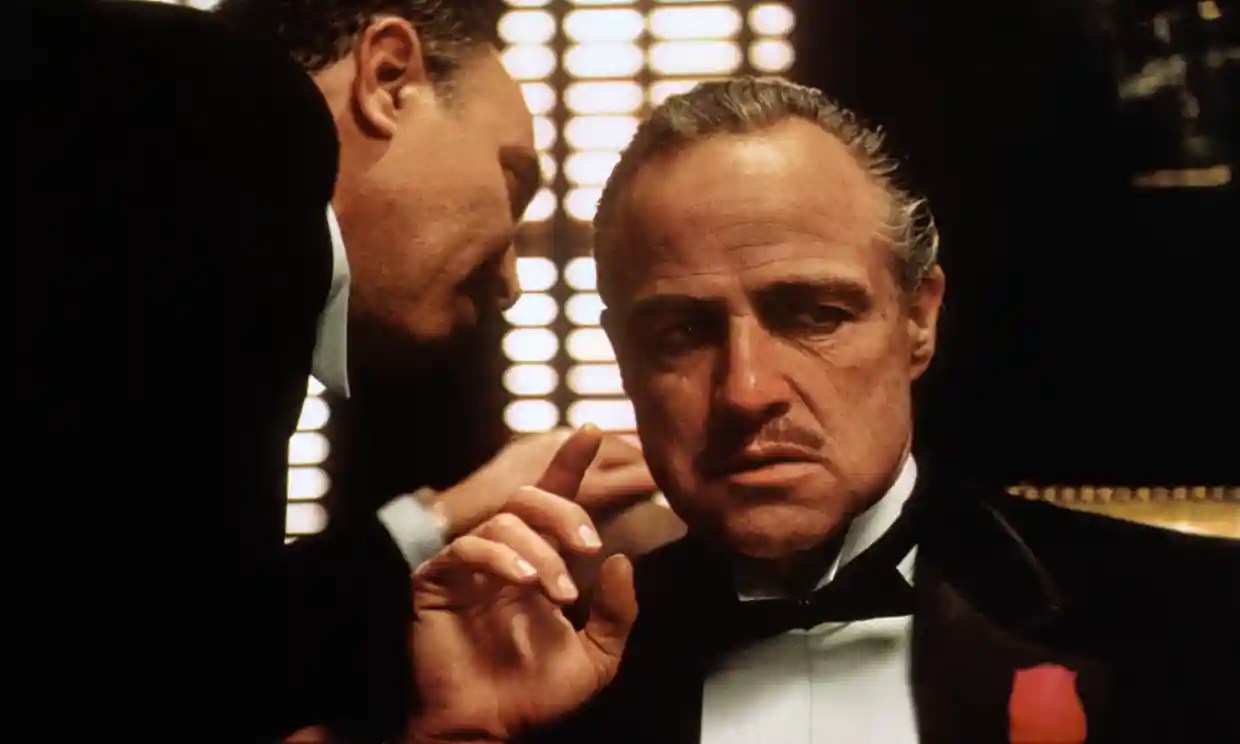
It seems that money can trump sin, at least in the professional services arena in Italy…
We investigate if organized crime groups (OCG) are able to hire good accountants. We use data about criminal records to identify Italian accountants with connections to OCG. While the work accountants do for the OCG ecosystem is not observable, we can determine if OCG hire “good” accountants by assessing the overall quality of their work as external monitors of legal businesses. We find that firms serviced by accountants with OCG connections have higher quality audited financial statements compared to a control group of firms serviced by accountants with no OCG connections. The findings provide evidence OCG are able to hire good accountants, despite the downside risk of OCG associations. Results are robust to controls for self-selection, for other determinants of auditor expertise, direct connections of directors and shareholders to OCG, and corporate governance mechanisms that might influence auditor choice and audit quality.
“Does the Mafia Hire Good Accountants?“
Commenting on the report, Cory Doctorow (@doctorow) notes…
The authors suggest that when the mafia chooses an accountant, they have to choose between two mutually exclusive strategies:
I. Hire a stupid accountant that you can trick into signing off on dirty books; or
II. Hire a smart accountant who can turn your dishonest business into one that is honest on paper, even if that erodes your profits.
The authors make a compelling case that the mafia choose the second strategy. What’s more, they show that even accountants with known mob connections have no trouble finding non-criminal clients (“it is disheartening the Mafia can hire seemingly good accountants who appear to suffer no adverse reputation effects from their Mafia ties”).
Perhaps that’s because the mafia is so crucial to both the Italian and global business world: the authors quote a 2017 ISTAT study that says that 12% of Italian GDP is mafia activity and a 2011 UNODC study that attributes 3.6% of global GDP to Italian mafia groups.
But it would be a mistake to think that just because the mafia has clean books that it runs good businesses. Businesses that are run or colonized by mobsters aren’t good firms – they pay poorly, produce low-quality goods and services, and engage in a variety of crimes and regulatory violations.
This is a fascinating and clever analysis, though it’s short on recommendations. The most concrete policy proposal the authors advance is for police to maintain a public registry of accountants under investigation for mafia ties, and to bar those accountants from practicing until they are cleared…
* Upton Sinclair
###
As we deconstruct the devil’s due, we might note that today is Groundhog Day, rooted in Pennsylvania Dutch lore that if a groundhog emerging from its burrow on this day sees its shadow due to clear weather, it will retreat to its den and winter will persist for six more weeks; if it does not see its shadow because of cloudiness, spring will arrive early.
While the tradition remains popular in the 21st century, studies have found no consistent correlation between a groundhog seeing its shadow and the subsequent arrival time of spring-like weather.

You must be logged in to post a comment.