Posts Tagged ‘corruption’
“It is mutual trust, even more than mutual interest, that holds human associations together”*…
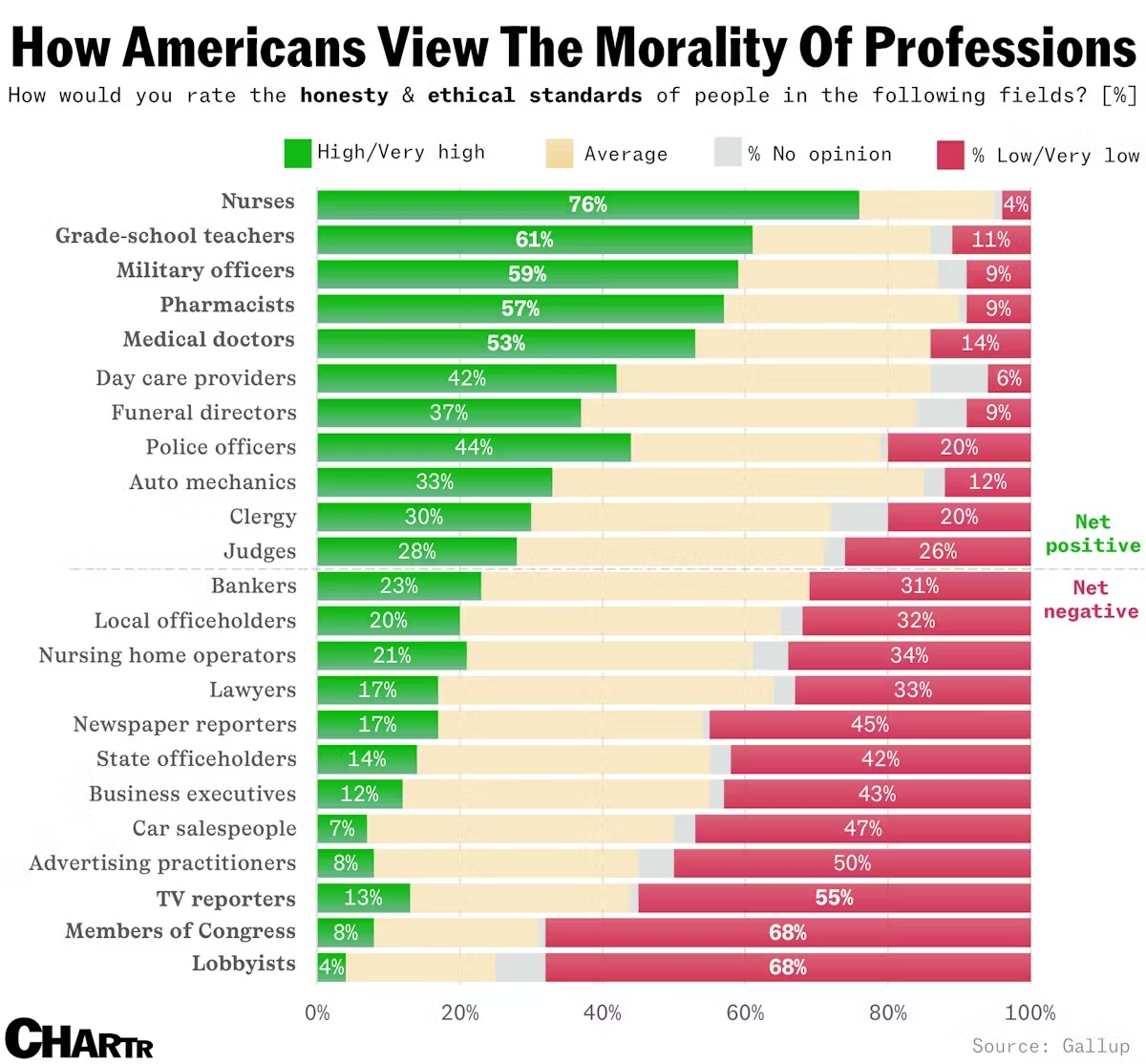
… and in its absence? Millie Giles on the state of trust in American professions…
When choosing a career, there are several (often contradictory) factors that determine people’s decisions: pay, of course; personal interests; work-life balance; location; public perception; and how a particular job might weigh on their conscience.
But which professions do Americans trust the most?
A recent Gallup poll, [published last Monday], found that 76% of US adults considered nurses to have high or very high honesty and ethical standards, with teachers, military officers, and pharmacists also scoring highly amongst those surveyed.
Conversely, Americans were skeptical about the ethical standards of TV reporters (55% considered low or very low), members of Congress (68%), and lobbyists (68%) — perhaps because the public perception of professionals in political and media-related fields is that many of them have ulterior motives, as is the case with stereotypically mercenary car salespeople and lawyers, which also ranked negatively overall.
Lloyd Blankfein, the former CEO of Goldman Sachs, infamously said in November 2009 — with the impacts of the global financial crisis still reverberating loudly — that he and his fellow bankers were “doing God’s work.” Ridiculed at the time, he might be pleased to see his once vilified profession ranked not far behind the clergy, per Gallup.
Zooming out: the average of high/very high ethical ratings across the core 11 professions sunk to just 30% in 2024, with trust in medical doctors in particular having dropped 14 percentage points since 2021…
“America’s most trusted professions,” from @sherwood.news @Gallup
* H. L. Mencken
###
As we contemplate confidence, we might recall that it was on this date in 1980 that news of the FBI’s Abscam operation, targeting corrupt Congress members and other elected officials, broke publicly. The two-year investigation had initially targeted trafficking in stolen property and illicit business people, but later evolved into a corruption investigation; it led to the convictions of six members of the United States House of Representatives and one member of the United States Senate, along with one member of the New Jersey State Senate, members of the Philadelphia City Council, the Mayor of Camden, New Jersey, and an inspector for the Immigration and Naturalization Service.
The Abscam operation wass dramatized in the 2013 feature film American Hustle, directed by David O. Russell, which received ten Academy Award nominations.

“Without debatement further, more or less, / He should the bearers put to sudden death, / Not shriving time allow’d.”*…

“Cell suicide” is inherently self-destructive, and yet it’s an essential and productive process in complex organisms. How did cells evolve a process to end their own lives? As Veronique Greenwood reports, recent research suggests it first arose, first arose billions of years ago… but why?…
It can be hard to tell, at first, when a cell is on the verge of self-destruction.
It appears to be going about its usual business, transcribing genes and making proteins. The powerhouse organelles called mitochondria are dutifully churning out energy. But then a mitochondrion receives a signal, and its typically placid proteins join forces to form a death machine.
They slice through the cell with breathtaking thoroughness. In a matter of hours, all that the cell had built lies in ruins. A few bubbles of membrane are all that remains.
“It’s really amazing how fast, how organized it is,” said Aurora Nedelcu, an evolutionary biologist at the University of New Brunswick who has studied the process in algae.
Apoptosis, as this process is known, seems as unlikely as it is violent. And yet some cells undergo this devastating but predictable series of steps to kill themselves on purpose. When biologists first observed it, they were shocked to find self-induced death among living, striving organisms. And although it turned out that apoptosis is a vital creative force for many multicellular creatures, to a given cell it is utterly ruinous. How could a behavior that results in a cell’s sudden death evolve, let alone persist?…
The story in full: “Cellular Self-Destruction May Be Ancient. But Why?“, from @vero_greenwood in @QuantaMagazine.
* Shakespeare, Hamlet (Act 5, Scene 2)
###
As we appreciate apoptosis, we might send healthy birthday greetings to Lillian Wald; she was born on this date in 1867. A nurse, humanitarian, political reformer, and author, she was instrumental in establishing a nationwide system of nurses in public schools. Known as “the Angel of Henry Street” (for her founding and running of the Henry Street Settlement in New York City), she directed the Henry Street Visiting Nurse Service, while at the same time tirelessly opposing political and social corruption. She helped initiate the revision of child labor laws, improved housing conditions in tenement districts, drove the enactment of pure food laws, championed and improved education for the mentally handicapped, and led the passage of enlightened immigration regulations.

“I Seen My Opportunities and I Took ’Em”*

U.S. Senators and Congresspeople are routinely privy to news that easily fits the definition of insider information (“a fact about a public company’s plans or finances that has not yet been revealed to shareholders and that could give an unfair advantage to its possessors if acted upon“), investing on which would constitute the crime of insider trading in any other setting. There are easy ways to avoid this risk (blind trusts, widely-held stock funds, et al.); still, over half of our elected representatives trade individual stocks.
The chart above is from Quiver Strategies, a company with a “democratizing” mission:
Over the past decade, alternative data has exploded in popularity among professional money managers. Alternative data allows investors to tap into new and unique data sources to aid their decisions. However, alternative data is typically priced for institutional clients, and is not widely available to retail investors.
Trends in FinTech such as commissions-free trading have made it easier than ever to actively manage your own portfolio, which has created millions of retail traders around the world.
Quiver was founded by two college students in February of 2020, with the goal of bridging this information gap between Wall Street and non-professional investors.
Maybe not surprisingly, one of the most successful families of strategies they’ve identified tracks the stock trades of Senators and Congresspeople (per the illustration above; use pull-down to see others).
Huge majorities of Americans favor a ban on Congressional trading; and a few legislators have introduced a bill to curtail it (along with others). But it been tried before, and failed. As for this wave, as Reuters reports “It was unclear when the legislation might be considered in committee or whether it will advance to the full Senate for debate and votes anytime this year.”
[Toth to Mark Frauenfelder and Boing Boing]
* Tammany Hall boss George Washington Plunkitt, as part of his justification of what he called “honest graft“
###
As we hold our noses, we might note that today is National Happy Hour Day.

“Two and two makes five”*…

Boots are stamping on faces, but the trains are not running on time. The estimable Noah Smith brings the receipts…
The selling point of authoritarian rule has always been that dictators, oligarchs, and strongmen are competent and purposeful — that democracies dither while authoritarians act. When people tell you that “Mussolini made the trains run on time”, this is what they mean.
I’m not prepared to render a verdict on whether and when democracies or autocracies are more effective at governance (there is a very long academic literature on this, but few solid conclusions). I would certainly never claim that only democracies can govern effectively — Park Chung-hee, Deng Xiaoping, and Lee Kuan Yew certainly put that notion to rest. But I want to push back on the notion of authoritarian effectiveness in two concrete ways…
The authoritarians of the world are making a pretty good case for liberal democracy simply by being incredibly incompetent: “Authoritarians are not governing effectively,” from @Noahpinion.
* George Orwell, 1984
###
As we contemplate competency, we might recall that it was on this date in 1970 that Richard Nixon’s Vice President, Spiro T. Agnew, gave in to the Nattering Nabobs of Negativism (and to charges of extortion, tax fraud, bribery and conspiracy) and resigned.

“It is difficult to get a man to understand something when his salary depends upon his not understanding it”*…
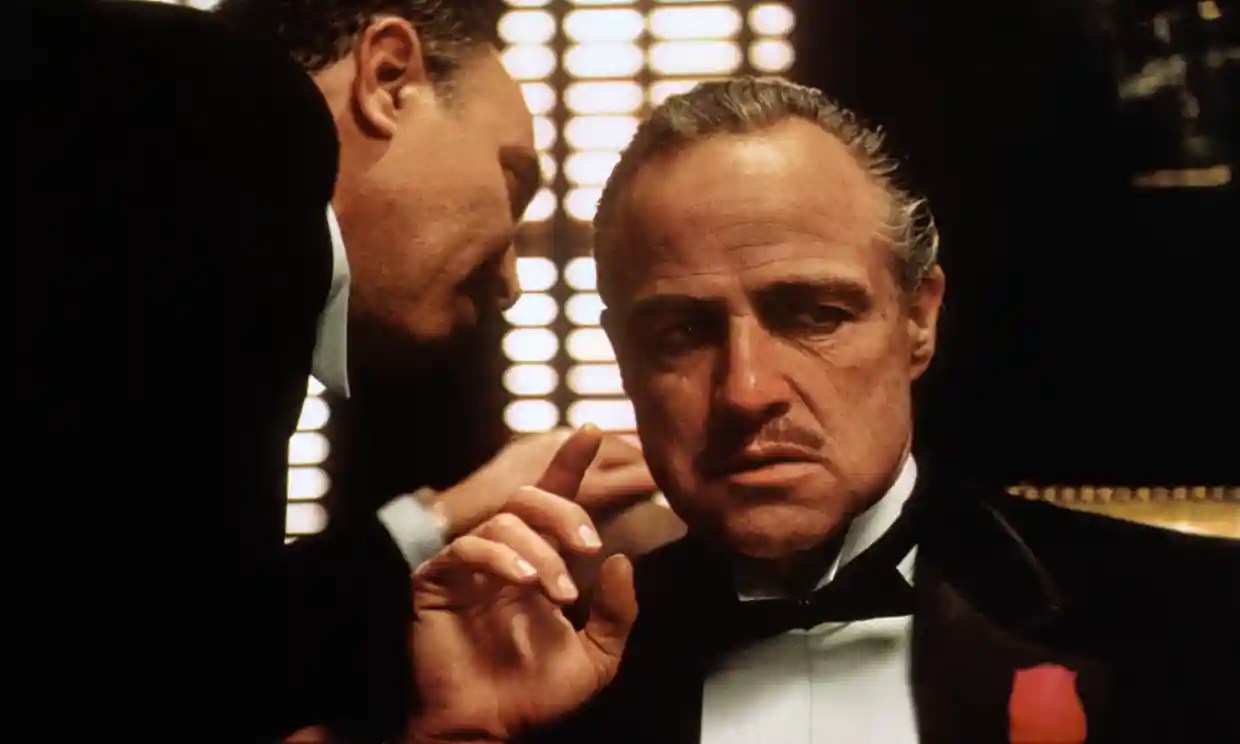
It seems that money can trump sin, at least in the professional services arena in Italy…
We investigate if organized crime groups (OCG) are able to hire good accountants. We use data about criminal records to identify Italian accountants with connections to OCG. While the work accountants do for the OCG ecosystem is not observable, we can determine if OCG hire “good” accountants by assessing the overall quality of their work as external monitors of legal businesses. We find that firms serviced by accountants with OCG connections have higher quality audited financial statements compared to a control group of firms serviced by accountants with no OCG connections. The findings provide evidence OCG are able to hire good accountants, despite the downside risk of OCG associations. Results are robust to controls for self-selection, for other determinants of auditor expertise, direct connections of directors and shareholders to OCG, and corporate governance mechanisms that might influence auditor choice and audit quality.
“Does the Mafia Hire Good Accountants?“
Commenting on the report, Cory Doctorow (@doctorow) notes…
The authors suggest that when the mafia chooses an accountant, they have to choose between two mutually exclusive strategies:
I. Hire a stupid accountant that you can trick into signing off on dirty books; or
II. Hire a smart accountant who can turn your dishonest business into one that is honest on paper, even if that erodes your profits.
The authors make a compelling case that the mafia choose the second strategy. What’s more, they show that even accountants with known mob connections have no trouble finding non-criminal clients (“it is disheartening the Mafia can hire seemingly good accountants who appear to suffer no adverse reputation effects from their Mafia ties”).
Perhaps that’s because the mafia is so crucial to both the Italian and global business world: the authors quote a 2017 ISTAT study that says that 12% of Italian GDP is mafia activity and a 2011 UNODC study that attributes 3.6% of global GDP to Italian mafia groups.
But it would be a mistake to think that just because the mafia has clean books that it runs good businesses. Businesses that are run or colonized by mobsters aren’t good firms – they pay poorly, produce low-quality goods and services, and engage in a variety of crimes and regulatory violations.
This is a fascinating and clever analysis, though it’s short on recommendations. The most concrete policy proposal the authors advance is for police to maintain a public registry of accountants under investigation for mafia ties, and to bar those accountants from practicing until they are cleared…
* Upton Sinclair
###
As we deconstruct the devil’s due, we might note that today is Groundhog Day, rooted in Pennsylvania Dutch lore that if a groundhog emerging from its burrow on this day sees its shadow due to clear weather, it will retreat to its den and winter will persist for six more weeks; if it does not see its shadow because of cloudiness, spring will arrive early.
While the tradition remains popular in the 21st century, studies have found no consistent correlation between a groundhog seeing its shadow and the subsequent arrival time of spring-like weather.

You must be logged in to post a comment.