One punctuation mark in particular is having a moment… a not-altogether-welcome one…
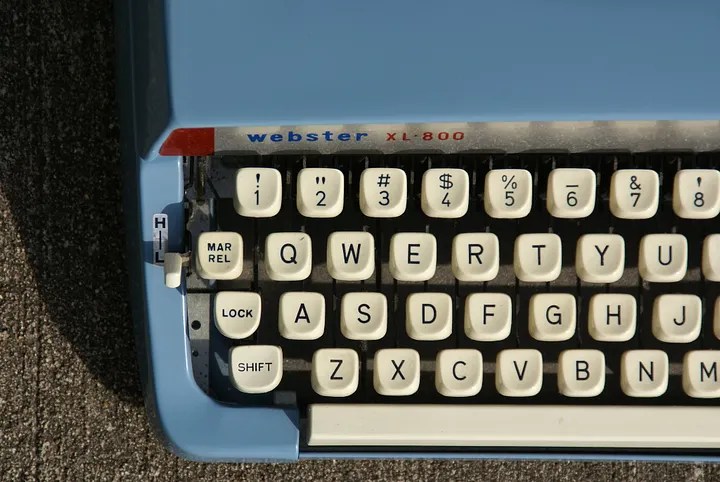
Of the many tips and tricks people are coming up with to determine whether a piece of writing has been written with a little help from AI, the world seems to have homed in on the use of one particular punctuation mark: the em dash.
Though some writers have rushed in to defend the dash — the overuse of which sits alongside pizza glue and bluebberrygate in the pantheon of things people laugh at AI about — perhaps a key reason the prevalence of the punctuation mark seems so bot-like to readers is that, as writers, Americans hardly use it.
Indeed, per a recent YouGov survey, dashes are some of the least used pieces of punctuation in Americans’ arsenals, ranking just ahead of colons and semicolons, per the poll.
As you might imagine, the survey revealed that American adults who describe themselves as “good” or “very good” writers are more likely to use the rarer forms of punctuation on the list. However, for the majority of Americans, marks like the semicolon and the em dash remain mostly reserved for esteemed authors and English teachers… or those who aren’t above enlisting a chatbot for a little help to jazz up their communications.
Interestingly, the vast majority of Americans said they do little writing outside of sending texts and emails, with journaling, nonfiction and fiction writing, and other forms of creative or academic writing all falling by the wayside in 2025, according to YouGov’s research…
As we muse on marks, we might that it was on this date in 1956 that Fortran was introduced to the world. A third-generation, compiled, imperative computer programming language that is especially suited to numeric computation and scientific computing. Developed by an IBM team led by John Backus, it became the go-to language for high-performance computing and is used for programs that benchmark and rank the world’s fastest supercomputers.
In a 1979 interview with Think, the IBM employee magazine, Backus explained Fortran’s origin: “Much of my work has come from being lazy. I didn’t like writing programs, and so, when I was working on the IBM 701, writing programs for computing missile trajectories, I started work on a programming system to make it easier to write programs.”
To the item at the top, it’s worth noting that Fortran is a language with four uses for the dash– subtraction operator, negative sign, line continuation symbol, and range separator (in data processing)– but no em dash.
For a piece of Fortran’s pre-history, see here; and for an important extension, see here.
How do we accomodate ourselves to the prospect of an intelligence far greater than our own? In a consideration of J.D. Beresford’s The Hampdenshire Wonder (the first recognized appearance of the concept in modern Englis-language literature), Ted Chiang unspools the intellectual and cultural history of this now-prevalant trope…
J.D. Beresford’s The Hampdenshire Wonder is generally considered to be the first fictional treatment of superhuman intelligence, or “superintelligence.” This is a familiar trope for readers of science fiction today, but when the novel was originally published in 1911 it was anything but. What intellectual soil needed to be tilled before this idea could sprout?
At least since Plato, Western thought has clung to the idea of a Great Chain of Being, also known as the scala naturae, a system of classification in which plants rank below animals; humans rank above animals but below angels; and angels rank above humans but below God. There was no implied movement to this hierarchy; no one expected that plants would turn into animals given enough time, or that humans would turn into angels.
But by the 1800s, naturalists like Lamarck were questioning the assumption that species were immutable; they suggested that over time organisms actually grew more complex, with the human species as the pinnacle of the process. Darwin brought these speculations into public consciousness in 1859 with On the Origin of Species, and while he emphasized that evolution branches in many directions without any predetermined goal in mind, most people came to think of evolution as a linear progression.
Only then, I think, was it possible to conceive of humanity as a point on a line that could keep extending, to imagine something that would be more than human without being supernatural.
Darwin’s half-cousin, Francis Galton, was the first to suggest the idea that mental attributes like intelligence could be quantified. Galton published a volume called Hereditary Genius in 1869, and during the 1880s and ’90s he measured people’s reaction times as a way of gauging their mental ability, pioneering what we now call the field of psychometrics. By 1905, Alfred Binet had introduced a questionnaire to measure children’s intelligence; such questionnaires would evolve into IQ tests. The validity of psychometrics is quite controversial nowadays, as people disagree about what “intelligence” means and to what extent it can be measured. Some modern cognitive scientists do not consider the term intelligence particularly useful, instead preferring to use more specific terms like executive function, attentional control, or theory of mind. In the future “intelligence” may be regarded as a historical curiosity, like phlogiston, but until we develop a more precise vocabulary, we continue to use the term. Our contemporary notion of intelligence first gained currency around the time that Beresford was writing, and one can see how that converged with the idea of the superhuman in The Hampdenshire Wonder.
The titular character of The Hampdenshire Wonder is a boy named Victor Stott…
… Victor is born with an enormous head but an ordinary body, which disappoints his athletic father but also points to certain assumptions we have about the relationship between the mental and the physical. Beresford could have made Victor both an athlete and a genius, but he opted instead to follow a trope perhaps originated by Wells: the idea that evolution is pushing humanity toward a giant-brained phenotype, which is itself implicitly premised on the idea that mental ability and physical ability are in opposition to one another. This has remained a common trope in science fiction, although there are occasional depictions of mental and physical ability going hand in hand…
[Chiang traces the development of the “superintelligence,” the problems it raises, and the ways that they are treated in The Hampdenshire Wonder and elsewhere– “whatever your wisdom, you have to live in a world of comparative ignorance, a world which cannot appreciate you, but which can and will fall back upon the compelling power of the savage—the resort to physical, brute force.”…]
… In 1993 [Vernor] Vinge [here] argued that progress in computer technology would inevitably lead to a machine form of superintelligence. He proposed the term “the singularity” to describe the date—in the next few decades—beyond which events would be impossible to imagine. Since then, the technological singularity has largely replaced biological superintelligence as a trope in science fiction. More than that, it has become a trope in the Silicon Valley tech industry, giving rise to a discourse that is positively eschatological in tone. Superintelligence lies on the other side of a conceptual event horizon. When considered as a purely fictional idea, it imposes a limit on the kind of narratives one can tell about it. But when you start imagining it as something that could exist in reality, it becomes an end to human narratives altogether.
TheHampdenshireWonder does posit a kind of eschatological scenario, but of a completely different order. After Victor’s downfall, Challis recounts the conclusion he came to after a conversation he’d had with the child, revealing a profound terror about the finiteness of knowledge:
Don’t you see that ignorance is the means of our intellectual pleasure? It is the solving of the problem that brings enjoyment—the solved problem has no further interest. So when all is known, the stimulus for action ceases; when all is known there is quiescence, nothingness. Perfect knowledge implies the peace of death…
… The idea that the search for understanding will inevitably lead to a kind of cognitive heat death is an interesting one. I don’t believe it and I doubt any scientist believes it, so it’s curious that Beresford—clearly an admirer of scientists—apparently did. Challis talks about the need for mysteries that elude explanation, which is a surprisingly anti-intellectual stance to find in a novel about superintelligence. While there is arguably a strain of anti-intellectualism in stories where superintelligent characters bring about their own downfall, those can just as easily be understood as warnings about hubris, a literary device employed as far back as the first recorded literature, “The Epic of Gilgamesh.” But The Hampdenshire Wonder, in its final pages, is making an altogether different claim: The pursuit of knowledge itself is ultimately self-defeating.
Nowadays we associate the word “prodigy” with precocious children, but in centuries past the word was used to describe anything monstrous. Victor Stott clearly qualifies as a prodigy in the modern sense, but he qualifies in the older sense too: Not only does he frighten the ignorant and superstitious, he induces a profound terror in the educated and intellectual. Seen in this light, the first novel about superintelligence is actually a work of horror SF, a cautionary tale about the dangers of knowing too much…
As we wrestle with reason, we might wish a Joyeux Anniversaire to silk weaver Joseph Marie Jacquard; he was born on this date in 1752. Jacquard’s 1805 invention of the programmable power loom, controlled by a series of punched “instruction” cards and capable of weaving essentially any pattern, ignited a technological revolution in the textile industry… indeed, it set off a chain of revolutions: it inspired Charles Babbage in the design of his “Difference Engine” (the ur-computer), and later, Herman Hollerith, who used punched cards in the “tabulator” that he created for the 1890 Census… and in so doing, pioneered the use of those cards for computer input… which is to say that Jacquard helped create the preconditions for AI (among all of the other things that computers can do).
Indeed, in the 1980s, even as nanotech pioneer Erik Drexler, a graduate student at MIT at the time, was doing the early work of defining and charting a course for the nascent field, MIT’s departments of electric engineering and computer science refused to approve his Ph.D. topic and plan of study (though ultimately the Media Lab did, and Erik earned his doctorate).
Nanotechnology is the manipulation of matter at scales from a fraction of a nanometer to a few hundred nanometers — sizes between individual atoms and small single-celled organisms — at which it has radically different properties. Nanotech is already significant in many industries. Integrated circuits are a form of nanotech. Other nanotech provides the light, strong composites in aircraft and space vehicles. Still other nanotech powers the solid-state lasers used to transmit information through the internet and the light-emitting diodes in LED light bulbs and flat-screen TVs. Nanotech also makes possible solar cells, the batteries in electric cars, and medical technologies such as vaccines. It is thus the unifying thread of many of today’s most advanced technologies. Unfortunately, America is falling behind.
In the future, nanotech-based quantum computing and communications will lead to more powerful computers, transforming national security and internet commerce by making currently secret communications insecure. Medical nanotechnologies will permit targeted interventions at the cellular level, providing new weapons against diseases, biological weapons, and defenses against them. China is known to be working on these.
Much of the science underpinning these advances was developed at firms and universities in the US. But the huge manufacturing industries built on it are mostly overseas. For example, the organic light-emitting diode (OLED) technology Kodak created didn’t save that firm from going bankrupt in 2012. But it did enable lucrative businesses for Korea’s Samsung, to whom Kodak licensed the technology, and LG, which bought Kodak’s entire OLED business in 2009. Today, American firms like Nanosys and Universal Display develop important nanotechnologies, but do not actually manufacture the end products and are thus relatively small.
How did the US get itself into this situation? A major government program, the National Nanotechnology Initiative (NNI), has been funded since 2001, but Washington failed to appreciate the importance of having both a technology and a manufacturing strategy. The prevailing wisdom was that if the academic science was supported, mass manufacturing would follow automatically. By contrast, successful rival nations in nanotech have focused on making these technologies manufacturable at scale, employing every policy tool from R&D subsidies to cheap capital to tariffs. A 2020 National Academies review of the NNI urged that the US recognize that ‘the recent, focused, and in some cases novel commercialization approaches of other nations may be yielding better societal outcomes.’…
As we get small, we might send miniscule birthday greetings to a man who whose work has contributed to the development of medical applications of nanotech: Bert Sakmann; he was born on this date in 1942. A cell physiologist, he shared the Nobel Prize in Physiology or Medicine (with Erwin Neher) in 1991 for their work on “the function of single ion channels in cells”– work made possible in part by their invention of the patch clamp.
New technologies, most centrally AI, are arming scientists with tools that might not just accelerate or enhance their work, but altogether transform it. As Jordana Cepelewicz reports, mathematicians have started to prepare for a profound shift in what it means to do math…
Since the start of the 20th century, the heart of mathematics has been the proof — a rigorous, logical argument for whether a given statement is true or false. Mathematicians’ careers are measured by what kinds of theorems they can prove, and how many. They spend the bulk of their time coming up with fresh insights to make a proof work, then translating those intuitions into step-by-step deductions, fitting different lines of reasoning together like puzzle pieces.
The best proofs are works of art. They’re not just rigorous; they’re elegant, creative and beautiful. This makes them feel like a distinctly human activity — our way of making sense of the world, of sharpening our minds, of testing the limits of thought itself.
But proofs are also inherently rational. And so it was only natural that when researchers started developing artificial intelligence in the mid-1950s, they hoped to automate theorem proving: to design computer programs capable of generating proofs of their own. They had some success. One of the earliest AI programs could output proofs of dozens of statements in mathematical logic. Other programs followed, coming up with ways to prove statements in geometry, calculus and other areas.
Still, these automated theorem provers were limited. The kinds of theorems that mathematicians really cared about required too much complexity and creativity. Mathematical research continued as it always had, unaffected and undeterred.
Now that’s starting to change. Over the past few years, mathematicians have used machine learning models (opens a new tab) to uncover new patterns, invent new conjectures, and find counterexamples to old ones. They’ve created powerful proof assistants both to verify whether a given proof is correct and to organize their mathematical knowledge.
They have not, as yet, built systems that can generate the proofs from start to finish, but that may be changing. In 2024, Google DeepMind announced that they had developed an AI system that scored a silver medal in the International Mathematical Olympiad, a prestigious proof-based exam for high school students. OpenAI’s more generalized “large language model,” ChatGPT, has made significant headway on reproducing proofs and solving challenging problems, as have smaller-scale bespoke systems. “It’s stunning how much they’re improving,” said Andrew Granville, a mathematician at the University of Montreal who until recently doubted claims that this technology might soon have a real impact on theorem proving. “They absolutely blow apart where I thought the limitations were. The cat’s out of the bag.”
Researchers predict they’ll be able to start outsourcing more tedious sections of proofs to AI within the next few years. They’re mixed on whether AI will ever be able to prove their most important conjectures entirely: Some are willing to entertain the notion, while others think there are insurmountable technological barriers. But it’s no longer entirely out of the question that the more creative aspects of the mathematical enterprise might one day be automated.
Even so, most mathematicians at the moment “have their heads buried firmly in the sand,” Granville said. They’re ignoring the latest developments, preferring to spend their time and energy on their usual jobs.
Continuing to do so, some researchers warn, would be a mistake. Even the ability to outsource boring or rote parts of proofs to AI “would drastically alter what we do and how we think about math over time,” said Akshay Venkatesh, a preeminent mathematician and Fields medalist at the Institute for Advanced Study in Princeton, New Jersey.
He and a relatively small group of other mathematicians are now starting to examine what an AI-powered mathematical future might look like, and how it will change what they value. In such a future, instead of spending most of their time proving theorems, mathematicians will play the role of critic, translator, conductor, experimentalist. Mathematics might draw closer to laboratory sciences, or even to the arts and humanities.
Imagining how AI will transform mathematics isn’t just an exercise in preparation. It has forced mathematicians to reckon with what mathematics really is at its core, and what it’s for…
As we wonder about ways of knowing, we might spare a thought for a man whose work helped trigger an earlier iteration of this enhance/transform discussion and laid the groundwork for the one unpacked in the article linked above above: J. Presper Eckert; he died on this day in 1995. An electrical engineer, he co-designed (with John Mauchly) the first general purpose computer, the ENIAC (see here and here) for the U.S. Army’s Ballistic Research Laboratory. He and Mauchy went on to found the Eckert–Mauchly Computer Corporation, at which they designed and built the first commercial computer in the U.S., the UNIVAC.
Eckert (standing and gesturing) and Mauchy (at the console), demonstrating the UNIVAC to Walter Cronkite (source)
A while ago, I was lucky enough to attend a presentation on a Google DeepMind project called “The Habermas Machine”. It’s a really intriguing use of the LLM technology – basically, you take a lot of people who disagree with each other and ask them what they think about an issue. Then you feed their answers into a model, which tries to produce a statement of minimal agreement that all of them might sign up to. They score the extent to which they do agree with it (which trains the model), and explain what it is that they don’t like about the statement. This second round allows the model to come up with another, better version, which also clarifies to the participants what the other side’s reasons are for disagreeing with them.
It’s called “The Habermas Machine” because it’s meant to, loosely speaking, do a similar job to Jurgen Habermas’ “Ideal Speech Environment,” In tests, there seems to be decent evidence that not only is the machine better than a human moderator at coming up with consensus statements, but that the machine-moderated process leads to more convergence of opinions among the actual participants. (I think I might have predicted this; the model obviously has a “flat” affect, and unlike a human being, isn’t always leaking clues from its intonation and body language about what it really thinks of the participants. That might suggest that as LLMs get better at simulating human responses, they might be worse for this purpose!)
There’s really a lot to say and think about this. But it’s Friday [as he wrote this] and I’m a facetious person, so instead I’m going to share the notes I’ve been making ever since seeing the presentation on which other philosophers and social theorists might also benefit from having machines made out of them.
The Giddens Machine – in accordance with the principle of double hermeneutics, it’s the Habermas Machine, but only for reaching agreement on interpretations of Habermas.
The Goffman Machine – after your side lost on the Habermas Machine, it comes along and generates a set of reasons why you shouldn’t feel so bad about that and should come back for another go.
The Bourdieu Machine – you type your views into it, and then it repeats them with slight and subtle adjustments to make you sound more middle class
The Fourcade/Healy Machine – it gives you a score, then makes you do the work of finding out how to change your views so as to increase your score. Finding equilibrium for the machine is your job now.
The Gambetta Machine – instead of finding a consensus, it selects the most awful version of each conflicting view, and then everyone switches to that in order to show how committed they are.
The Austin Machine – instead of telling the machine “I agree with this statement”, you have to tick a box saying “I hereby agree with this statement”.
The Grice Machine – like the Habermas one, but via conversational implicature it aims to create consensus among all the views that you haven’t expressed rather than the ones you have.
The Derrida Machine – everyone keeps asserting the same statements, but the AI brings them into agreement by changing the meaning of the words themselves.
The Crenshaw Machine – in each round the machine finds a new issue to divide up the group in a different way. Equilibrium is reached when everyone realises they’re on their own and need to get along with each other anyway…
As we delegate discourse, we might recall that it was on this date in 1981 that the first production model of the DeLorean sports car rolled off the assembly line at the Dunmurry factory, located a few miles from Belfast City Centre in Northern Ireland.






You must be logged in to post a comment.