Posts Tagged ‘Jacquard’
“Do not fold, spindle, or mutilate”*…

Punched cards have a long history in machine control (dating back to Jacquard) and computing (starting with Babbage‘s Difference Engine), but it was Herman Hollerith who brought them into modern computation in the late 1880s… where punch cards remained for about 100 years. From the Smithsonian’s American History Museum…
In the late 1880s, American engineer Herman Hollerith saw a railroad punch card when he was trying to figure out new ways of compiling statistical information for the U.S. Census. His first punch card, like those used on railways, only had holes along the edges. The meaning of each hole was indicated on the card. By the time Hollerith tabulating equipment was used in the 1890 U.S. Census, holes were scattered across the cards, although their meaning was not indicated on it.
Hollerith and his employees at the Tabulating Machine Company in Washington, D.C. soon developed punched cards for use in compiling information for commercial enterprises such as railroads. They and staff of the U.S. Census Bureau prepared improved machines—these devices are shown in the object group on tabulating equipment. By the 1920s, the United States had two major manufacturers of punch card equipment, International Business Machines (the descendent of the Tabulating Machine Company) and Remington Rand (the descendent of Powers Accounting Machine Company established by Russian emigré and former Census Bureau employee James Powers). Each manufacturer developed a distinctive standard punch card. IBM cards had eighty columns of rectangular holes while those of Remington Rand had ninety columns of circular holes. Tabulating machines were widely used in both government and commerce, with cards designed to meet the needs of customers. For example, checks issued by the U.S. government often came on punch cards.
When IBM and Remington Rand began selling electronic computers in the years following World War II, punch cards became the preferred method of entering data and programs onto them. They also were used in later minicomputers and some early desktop calculators. Punch cards surviving in the Smithsonian collections reflect the widespread use of computers – they announced scores on standardized tests, served as a library cards, were part of the proof of mathematical theorems, and kept medical records. Some are printed with the names of users, from university computer centers and computer clubs to the Library of Congress to Bell Laboratories…
Browse the collection: “Punch Cards for Data Processing“
See also: here, here, and here.
* Ubiquitous warning on punch cards:
… in the 1950s, after the invention of the computer and its widespread business use, that everyone began to see punch cards. Companies sent punch cards out with bills: the telephone company, utility companies, and even department stores realized that they could save a step in their billing process, as well as making it easier for them to process the returned check, by using the cards themselves as the bills. By the 1960s, punch cards were familiar, everyday objects.
While company employees could be trusted to take care of the cards, the person in the street could not. Warnings were necessary. In the 1930s the University of Iowa used cards for student registration; on each card was printed “Do not fold or bend this card.” Cards reproduced in an IBM sales brochure of the 1930s read “Do not fold, tear, or mutilate this card” and “Do not fold tear or destroy.” I’m not sure when the canonical “Do not fold, spindle, or mutilate” first appeared; it’s one of those traditions whose author and origin is lost in the mists of time. Let’s consider the words one at a time, stop and take them seriously…
– “A Cultural History of the Punch Card” (from 1991; eminently worth reading in full)
###
As we contemplate chads (of which, punch cards produced a gracious plenty), we might spare a thought for Gerald Hawkins; he died on this date in 2003. An astronomer and author, he was best known for his work in archaeoastronomy— most of all, for his 1965 book, Stonehenge Decoded. In the early 1960s, Hawkins had used punch cards to load data modeling sun and moon movements onto magnetic tapes, then into an IBM 7090. The results led him to conclude, as the book argues, that the features at the monument were arranged in such a way as to predict a variety of astronomical events– that Stonehenge was a giant prehistoric observatory and computer. While some archaeologists are hesitant to accept Hawkins’ theories, many archaeoastronomers have built upon his work. More widely, scholars accept that the importance of astronomical alignment and large complexes being planned and constructed to fulfill cosmology has been demonstrated at other prehistoric sites, such as the Snake Mound and Cahokia in the U.S.

“I’ve been discovering, much to my dismay, that I’m not a criminal mastermind or anything. I’m just brute force and my powers in no way include super-intelligence, which kind of pisses me off.”*…
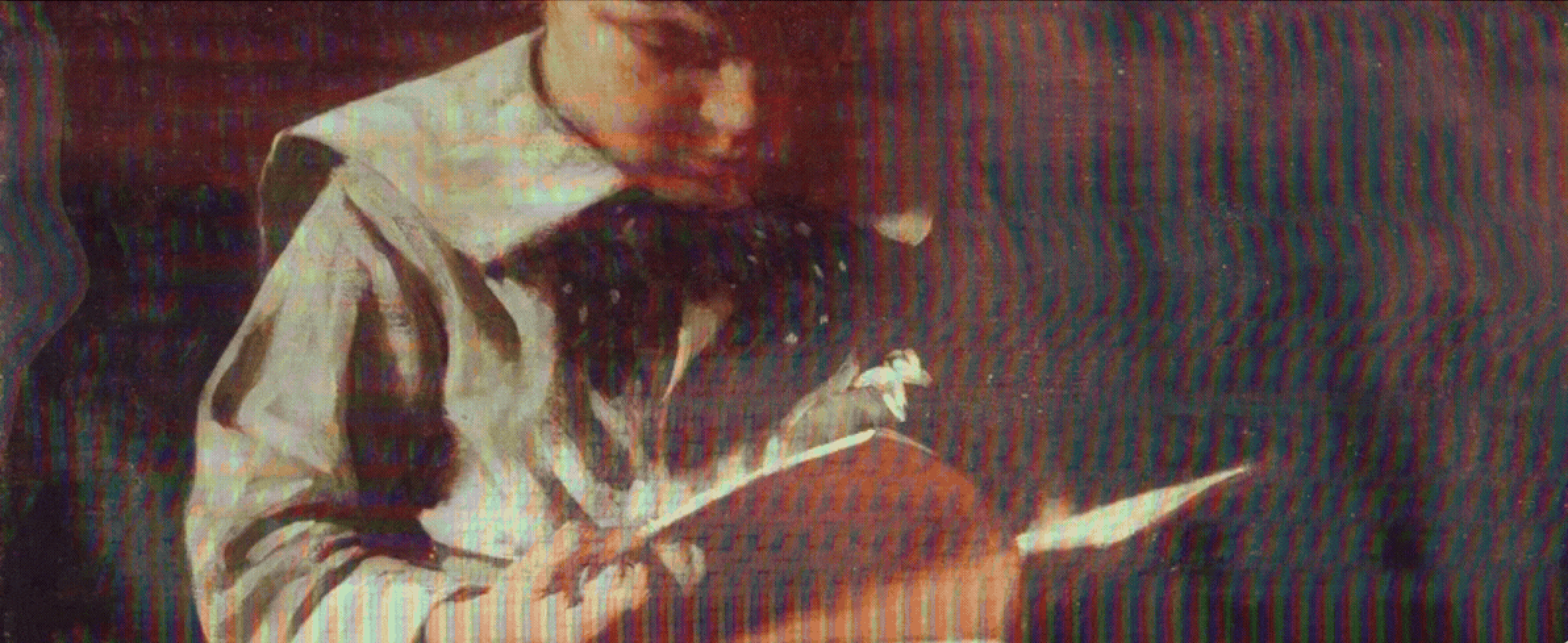
How do we accomodate ourselves to the prospect of an intelligence far greater than our own? In a consideration of J.D. Beresford’s The Hampdenshire Wonder (the first recognized appearance of the concept in modern Englis-language literature), Ted Chiang unspools the intellectual and cultural history of this now-prevalant trope…
J.D. Beresford’s The Hampdenshire Wonder is generally considered to be the first fictional treatment of superhuman intelligence, or “superintelligence.” This is a familiar trope for readers of science fiction today, but when the novel was originally published in 1911 it was anything but. What intellectual soil needed to be tilled before this idea could sprout?
At least since Plato, Western thought has clung to the idea of a Great Chain of Being, also known as the scala naturae, a system of classification in which plants rank below animals; humans rank above animals but below angels; and angels rank above humans but below God. There was no implied movement to this hierarchy; no one expected that plants would turn into animals given enough time, or that humans would turn into angels.
But by the 1800s, naturalists like Lamarck were questioning the assumption that species were immutable; they suggested that over time organisms actually grew more complex, with the human species as the pinnacle of the process. Darwin brought these speculations into public consciousness in 1859 with On the Origin of Species, and while he emphasized that evolution branches in many directions without any predetermined goal in mind, most people came to think of evolution as a linear progression.
Only then, I think, was it possible to conceive of humanity as a point on a line that could keep extending, to imagine something that would be more than human without being supernatural.
Darwin’s half-cousin, Francis Galton, was the first to suggest the idea that mental attributes like intelligence could be quantified. Galton published a volume called Hereditary Genius in 1869, and during the 1880s and ’90s he measured people’s reaction times as a way of gauging their mental ability, pioneering what we now call the field of psychometrics. By 1905, Alfred Binet had introduced a questionnaire to measure children’s intelligence; such questionnaires would evolve into IQ tests. The validity of psychometrics is quite controversial nowadays, as people disagree about what “intelligence” means and to what extent it can be measured. Some modern cognitive scientists do not consider the term intelligence particularly useful, instead preferring to use more specific terms like executive function, attentional control, or theory of mind. In the future “intelligence” may be regarded as a historical curiosity, like phlogiston, but until we develop a more precise vocabulary, we continue to use the term. Our contemporary notion of intelligence first gained currency around the time that Beresford was writing, and one can see how that converged with the idea of the superhuman in The Hampdenshire Wonder.
The titular character of The Hampdenshire Wonder is a boy named Victor Stott…
… Victor is born with an enormous head but an ordinary body, which disappoints his athletic father but also points to certain assumptions we have about the relationship between the mental and the physical. Beresford could have made Victor both an athlete and a genius, but he opted instead to follow a trope perhaps originated by Wells: the idea that evolution is pushing humanity toward a giant-brained phenotype, which is itself implicitly premised on the idea that mental ability and physical ability are in opposition to one another. This has remained a common trope in science fiction, although there are occasional depictions of mental and physical ability going hand in hand…
[Chiang traces the development of the “superintelligence,” the problems it raises, and the ways that they are treated in The Hampdenshire Wonder and elsewhere– “whatever your wisdom, you have to live in a world of comparative ignorance, a world which cannot appreciate you, but which can and will fall back upon the compelling power of the savage—the resort to physical, brute force.”…]
… In 1993 [Vernor] Vinge [here] argued that progress in computer technology would inevitably lead to a machine form of superintelligence. He proposed the term “the singularity” to describe the date—in the next few decades—beyond which events would be impossible to imagine. Since then, the technological singularity has largely replaced biological superintelligence as a trope in science fiction. More than that, it has become a trope in the Silicon Valley tech industry, giving rise to a discourse that is positively eschatological in tone. Superintelligence lies on the other side of a conceptual event horizon. When considered as a purely fictional idea, it imposes a limit on the kind of narratives one can tell about it. But when you start imagining it as something that could exist in reality, it becomes an end to human narratives altogether.
The Hampdenshire Wonder does posit a kind of eschatological scenario, but of a completely different order. After Victor’s downfall, Challis recounts the conclusion he came to after a conversation he’d had with the child, revealing a profound terror about the finiteness of knowledge:
Don’t you see that ignorance is the means of our intellectual pleasure? It is the solving of the problem that brings enjoyment—the solved problem has no further interest. So when all is known, the stimulus for action ceases; when all is known there is quiescence, nothingness. Perfect knowledge implies the peace of death…
… The idea that the search for understanding will inevitably lead to a kind of cognitive heat death is an interesting one. I don’t believe it and I doubt any scientist believes it, so it’s curious that Beresford—clearly an admirer of scientists—apparently did. Challis talks about the need for mysteries that elude explanation, which is a surprisingly anti-intellectual stance to find in a novel about superintelligence. While there is arguably a strain of anti-intellectualism in stories where superintelligent characters bring about their own downfall, those can just as easily be understood as warnings about hubris, a literary device employed as far back as the first recorded literature, “The Epic of Gilgamesh.” But The Hampdenshire Wonder, in its final pages, is making an altogether different claim: The pursuit of knowledge itself is ultimately self-defeating.
Nowadays we associate the word “prodigy” with precocious children, but in centuries past the word was used to describe anything monstrous. Victor Stott clearly qualifies as a prodigy in the modern sense, but he qualifies in the older sense too: Not only does he frighten the ignorant and superstitious, he induces a profound terror in the educated and intellectual. Seen in this light, the first novel about superintelligence is actually a work of horror SF, a cautionary tale about the dangers of knowing too much…
Superintelligence and its discontents, from @ted-chiang.bsky.social in @literaryhub.bsky.social.
Another powerful (and not unrelated) piece from Chiang: “Will A.I. Become the New McKinsey?“
* Kelly Thompson, The Girl Who Would Be King
###
As we wrestle with reason, we might wish a Joyeux Anniversaire to silk weaver Joseph Marie Jacquard; he was born on this date in 1752. Jacquard’s 1805 invention of the programmable power loom, controlled by a series of punched “instruction” cards and capable of weaving essentially any pattern, ignited a technological revolution in the textile industry… indeed, it set off a chain of revolutions: it inspired Charles Babbage in the design of his “Difference Engine” (the ur-computer), and later, Herman Hollerith, who used punched cards in the “tabulator” that he created for the 1890 Census… and in so doing, pioneered the use of those cards for computer input… which is to say that Jacquard helped create the preconditions for AI (among all of the other things that computers can do).

“Our Universe is simply one of those things which happen from time to time”*…

The “many-worlds interpretation” is a reading of quantum mechanics that implies that all possible alternative histories and futures are real, each representing an actual “world” (or “universe”). That’s to say, the hypothesis holds, that there is a very large—perhaps infinite—number of universes, and that everything that could possibly have happened in our past, but did not, has occurred in the past of some other universe or universes… All very well, but what does it mean?
Happily, Sean Hartter is here to illustrate: his “Alternate Universe Movie Posters” give one a peek at one-sheets one might have seen if one lived a couple of universes over…


Many, many more glimpses across the folds of space-time at Sean’s site.
[TotH to Dangerous Minds]
* Professor Edward P. Tryton, Columbia University (as quoted by Bill Bryson in A Short History of Nearly Everything)
###
As we take a mulligan, we might send very carefully-crafted birthday greetings to Jacques de Vaucanson; he was born on this date in 1709. A mechanical genius, de Vaucanson invented a number of machine tools still in use (e.g., the slide rest lathe) and created the first automated loom (the inspiration for Jacquard). But he is better remembered as the creator of extraordinary automata. Among his most famous creations: The Flute Player (with hands gloved in skin) and The Tambourine Player, life-sized mechanical figures that played their instruments impressively. But his masterpiece was The Digesting Duck; remarkably complex (it had 400 moving parts in each wing alone), it could flap its wings, drink water, eat grain– and defecate.
Sans…le canard de Vaucanson vous n’auriez rien qui fit ressouvenir de la gloire de la France. (Without…the duck of Vaucanson, you will have nothing to remind you of the glory of France)
– Voltaire

You must be logged in to post a comment.