Posts Tagged ‘computing’
“I like to think (it has to be) of a cybernetic ecology where we are free of our labors and joined back to nature, returned to our mammal brothers and sisters”*…

A.I. pioneer Dario Amodei with a positive scenario for artificial intelligence…
I think and talk a lot about the risks of powerful AI. The company I’m the CEO of, Anthropic, does a lot of research on how to reduce these risks. Because of this, people sometimes draw the conclusion that I’m a pessimist or “doomer” who thinks AI will be mostly bad or dangerous. I don’t think that at all. In fact, one of my main reasons for focusing on risks is that they’re the only thing standing between us and what I see as a fundamentally positive future. I think that most people are underestimating just how radical the upside of AI could be, just as I think most people are underestimating how bad the risks could be.
In this essay I try to sketch out what that upside might look like—what a world with powerful AI might look like if everything goes right. Of course no one can know the future with any certainty or precision, and the effects of powerful AI are likely to be even more unpredictable than past technological changes, so all of this is unavoidably going to consist of guesses. But I am aiming for at least educated and useful guesses, which capture the flavor of what will happen even if most details end up being wrong. I’m including lots of details mainly because I think a concrete vision does more to advance discussion than a highly hedged and abstract one…
How AI could transform the world for the better: “Machines of Loving Grace,” from @DarioAmodei. Eminently worth reading in full…
A (similarly positive, but slightly more focused) piece from a team at Deepmind: “AI for Science.”
Apposite (if not opposite): “Shoggoths amongst us,” from Henry Farrell, and an earlier (R)D, “We ceased to be the lunatic fringe. We’re now the lunatic core.”
See also: “AI Isn’t Your God—But It Might Be Your Intern.”
* Richard Brautigan, “All Watched Over By Machines Of Loving Grace” (the source of Amodei’s title)
###
As we ponder the perplexities of progress, we might send carefully-calculated birthday greetings to Grace Brewster Murray Hopper; she was born on this date in 19o6. A seminal computer scientist and Rear Admiral in the U.S. Navy, “Amazing Grace” (as she was known to many in her field) was one of the first programmers of the Harvard Mark I computer (in 1944), invented the first compiler for a computer programming language, and was one of the leaders in popularizing the concept of machine-independent programming languages– which led to the development of COBOL, one of the first high-level programming languages.
Hopper also (inadvertently) contributed one of the most ubiquitous metaphors in computer science: she found and documented the first computer “bug” (in 1947).
She has both a ship (the guided-missile destroyer USS Hopper) and a super-computer (the Cray XE6 “Hopper” at NERSC) named in her honor.

“I fear the day when the technology overlaps with our humanity. The world will only have a generation of idiots.”*…

Alva Noë on the importance of humans hanging on to their humanity– for all the promise and dangers of AI, computers plainly can’t think. To think is to resist – something no machine does:
Computers don’t actually do anything. They don’t write, or play; they don’t even compute. Which doesn’t mean we can’t play with computers, or use them to invent, or make, or problem-solve. The new AI is unexpectedly reshaping ways of working and making, in the arts and sciences, in industry, and in warfare. We need to come to terms with the transformative promise and dangers of this new tech. But it ought to be possible to do so without succumbing to bogus claims about machine minds.
What could ever lead us to take seriously the thought that these devices of our own invention might actually understand, and think, and feel, or that, if not now, then later, they might one day come to open their artificial eyes thus finally to behold a shiny world of their very own? One source might simply be the sense that, now unleashed, AI is beyond our control. Fast, microscopic, distributed and astronomically complex, it is hard to understand this tech, and it is tempting to imagine that it has power over us.
But this is nothing new. The story of technology – from prehistory to now – has always been that of the ways we are entrained by the tools and systems that we ourselves have made. Think of the pathways we make by walking. To every tool there is a corresponding habit, that is, an automatised way of acting and being. From the humble pencil to the printing press to the internet, our human agency is enacted in part by the creation of social and technological landscapes that in turn transform what we can do, and so seem, or threaten, to govern and control us.
Yet it is one thing to appreciate the ways we make and remake ourselves through the cultural transformation of our worlds via tool use and technology, and another to mystify dumb matter put to work by us. If there is intelligence in the vicinity of pencils, shoes, cigarette lighters, maps or calculators, it is the intelligence of their users and inventors. The digital is no different.
But there is another origin of our impulse to concede mind to devices of our own invention, and this is what I focus on here: the tendency of some scientists to take for granted what can only be described as a wildly simplistic picture of human and animal cognitive life. They rely unchecked on one-sided, indeed, milquetoast conceptions of human activity, skill and cognitive accomplishment. The surreptitious substitution (to use a phrase of Edmund Husserl’s) of this thin gruel version of the mind at work – a substitution that I hope to convince you traces back to Alan Turing and the very origins of AI – is the decisive move in the conjuring trick.
What scientists seem to have forgotten is that the human animal is a creature of disturbance. Or as the mid-20th-century philosopher of biology Hans Jonas wrote: ‘Irritability is the germ, and as it were the atom, of having a world…’ With us there is always, so to speak, a pebble in the shoe. And this is what moves us, turns us, orients us to reorient ourselves, to do things differently, so that we might carry on. It is irritation and disorientation that is the source of our concern. In the absence of disturbance, there is nothing: no language, no games, no goals, no tasks, no world, no care, and so, yes, no consciousness…
[Starting with Turing, Noë considers the relative roles of humans and technology across a number of spheres, including music…]
… The piano was invented, to be sure, but not by you or me. We encounter it. It pre-exists us and solicits our submission. To learn to play is to be altered, made to adapt one’s posture, hands, fingers, legs and feet to the piano’s mechanical requirements. Under the regime of the piano keyboard, it is demanded that we ourselves become player pianos, that is to say, extensions of the machine itself.
But we can’t. And we won’t. To learn to play, to take on the machine, for us, is to struggle. It is hard to master the instrument’s demands.
And this fact – the difficulty we encounter in the face of the keyboard’s insistence – is productive. We make art out of it. It stops us being player pianos, but it is exactly what is required if we are to become piano players.
For it is the player’s fraught relation to the machine, and to the history and tradition that the machine imposes, that supplies the raw material of musical invention. Music and play happen in that entanglement. To master the piano, as only a person can, is not just to conform to the machine’s demands. It is, rather, to push back, to say no, to rage against the machine. And so, for example, we slap and bang and shout out. In this way, the piano becomes not merely a vehicle of habit and control – a mechanism – but rather an opportunity for action and expression.
And, as with the piano, so with the whole of human cultural life. We live in the entanglement between government and resistance. We fight back…
… The telling fact: computers are used to play our games; they are engineered to make moves in the spaces opened up by our concerns. They don’t have concerns of their own, and they make no new games. They invent no new language.
The British philosopher R G Collingwood noticed that the painter doesn’t invent painting, and the musician doesn’t invent the musical culture in which they find themselves. And for Collingwood this served to show that no person is fully autonomous, a God-like fount of creativity; we are always to some degree recyclers and samplers and, at our best, participants in something larger than ourselves.
But this should not be taken to show that we become what we are (painters, musicians, speakers) by doing what, for example, LLMs do – i.e., merely by getting trained up on large data sets. Humans aren’t trained up. We have experience. We learn. And for us, learning a language, for example, isn’t learning to generate ‘the next token’. It’s learning to work, play, eat, love, flirt, dance, fight, pray, manipulate, negotiate, pretend, invent and think. And crucially, we don’t merely incorporate what we learn and carry on; we always resist. Our values are always problematic. We are not merely word-generators. We are makers of meaning.
We can’t help doing this; no computer can do this…
Eminently worth reading in full: “Rage against the machine,” from @alvanoe in @aeonmag.
For more, see Noë’s The Entanglement: How Art and Philosophy Make Us What We Are.
* Albert Einstein
###
As we resolve to wrestle, we might recall that it was on this date in 1969 that UCLA professor Leonard Kleinrock (aided by his student assistant Charley Kline) created the first networked computer-to-computer connection (with SRI programmer Bill Duvall in Palo Alto), via which they sent the first networked computer-to-computer communication)… or at least part of it. Duvall’s machine crashed partway through the transmission, meaning the only letters received from the attempted “login” were “lo.” The next month two more nodes were added (UCSB and the University of Utah) and the network was dubbed ARPANET.
Still, “lo”– perhaps an appropriate way to announce what would grow up to be the internet.

“We ceased to be the lunatic fringe. We’re now the lunatic core.”*…

Further, in a fashion, to yesterday’s post on analog computing, an essay from Benjamin Labatut (the author of two remarkable works of “scientific-historical fiction,” When We Cease to Understand the World and The MANIAC, continuing the animating theme of those books…
We will never know how many died during the Butlerian Jihad. Was it millions? Billions? Trillions, perhaps? It was a fantastic rage, a great revolt that spread like wildfire, consuming everything in its path, a chaos that engulfed generations in an orgy of destruction lasting almost a hundred years. A war with a death toll so high that it left a permanent scar on humanity’s soul. But we will never know the names of those who fought and died in it, or the immense suffering and destruction it caused, because the Butlerian Jihad, abominable and devastating as it was, never happened.
The Jihad was an imagined event, conjured up by Frank Herbert as part of the lore that animates his science-fiction saga Dune. It was humanity’s last stand against sentient technology, a crusade to overthrow the god of machine-logic and eradicate the conscious computers and robots that in the future had almost entirely enslaved us. Herbert described it as “a thalamic pause for all humankind,” an era of such violence run amok that it completely transformed the way society developed from then onward. But we know very little of what actually happened during the struggle itself, because in the original Dune series, Herbert gives us only the faintest outlines—hints, murmurs, and whispers, which carry the ghostly weight of prophecy. The Jihad reshaped civilization by outlawing artificial intelligence or any machine that simulated our minds, placing a damper on the worst excesses of technology. However, it was fought so many eons before the events portrayed in the novels that by the time they occur it has faded into legend and crystallized in apocrypha. The hard-won lessons of the catastrophe are preserved in popular wisdom and sayings: “Man may not be replaced.” “Once men turned their thinking over to machines in the hope that this would set them free. But that only permitted other men with machines to enslave them.” “We do not trust the unknown which can arise from imaginative technology.” “We must negate the machines-that-think.” The most enduring legacy of the Jihad was a profound change in humankind’s relationship to technology. Because the target of that great hunt, where we stalked and preyed upon the very artifacts we had created to lift ourselves above the seat that nature had intended for us, was not just mechanical intelligence but the machinelike attitude that had taken hold of our species: “Humans had set those machines to usurp our sense of beauty, our necessary selfdom out of which we make living judgments,” Herbert wrote.
Humans must set their own guidelines. This is not something machines can do. Reasoning depends upon programming, not on hardware, and we are the ultimate program!
The Butlerian Jihad removed a crutch—the part of ourselves that we had given over to technology—and forced human minds to develop above and beyond the limits of mechanistic reasoning, so that we would no longer depend on computers to do our thinking for us.
Herbert’s fantasy, his far-flung vision of a devastating war between humanity and the god of machine-logic, seemed quaint when he began writing it in the Sixties. Back then, computers were primitive by modern standards, massive mainframe contraptions that could process only hundreds of thousands of cycles per second (instead of billions, like today), had very little memory, operated via punch cards, and were not connected to one another. And we have easily ignored Herbert’s warnings ever since, but now the Butlerian Jihad has suddenly returned to plague us. The artificial-intelligence apocalypse is a new fear that keeps many up at night, a terror born of great advances that seem to suggest that, if we are not very careful, we may—with our own hands—bring forth a future where humanity has no place. This strange nightmare is a credible danger only because so many of our dreams are threatening to come true. It is the culmination of a long process that hearkens back to the origins of civilization itself, to the time when the world was filled with magic and dread, and the only way to guarantee our survival was to call down the power of the gods.
Apotheosis has always haunted the soul of humankind. Since ancient times we have suffered the longing to become gods and exceed the limits nature has placed on us. To achieve this, we built altars and performed rituals to ask for wisdom, blessings, and the means to reach beyond our capabilities. While we tend to believe that it is only now, in the modern world, that power and knowledge carry great risks, primitive knowledge was also dangerous, because in antiquity a part of our understanding of the world and ourselves did not come from us, but from the Other. From the gods, from spirits, from raging voices that spoke in silence.
[Labatut invokes the mysteries of the Vedas and their Altar of Fire, which was meant to develop “a mind, (that) when properly developed, could fly like a bird with outstretched wings and conquer the skies.”…]
Seen from afar by people who were not aware of what was being made, these men and women must surely have looked like bricklayers gone mad. And that same frantic folly seems to possess those who, in recent decades, have dedicated their hearts and minds to the building of a new mathematical construct, a soulless copy of certain aspects of our thinking that we have chosen to name “artificial intelligence,” a tool so formidable that, if we are to believe the most zealous among its devotees, will help us reach the heavens and become immortal…
[Labatut recounts the stories– and works– of some of the creators of AI’s DNA: George Boole (and his logic), Claude Shannon (who put that logic to work), and Geoffrey Hinton (Boole’s great-great-grandson, and “the Godfather of AI,” who created of the first neural networks, but has more recently undergone a change of opinion)…]
… Hinton has been transformed. He has mutated from an evangelist of a new form of reason into a prophet of doom. He says that what changed his mind was the realization that we had, in fact, not replicated our intelligence, but created a superior one.
Or was it something else, perhaps? Did some unconscious part of him whisper that it was he, rather than his great-great-grandfather, who was intended by God to find the mechanisms of thought? Hinton does not believe in God, and he would surely deny his ancestor’s claim that pain is an instrument of the Lord’s will, since he was forced to have every one of his meals on his knees, resting on a pillow like a monk praying at the altar, because of a back injury that caused him excruciating pain. For more than seventeen years, he could not sit down, and only since 2022 has he managed to do so long enough to eat.
Hinton is adamant that the dangers of thinking machines are real. And not just short-term effects like job replacement, disinformation, or autonomous lethal weapons, but an existential risk that some discount as fantasy: that our place in the world might be supplanted by AI. Part of his fear is that he believes AI could actually achieve a sort of immortality, as the Vedic gods did. “The good news,” he has said, “is we figured out how to build things that are immortal. When a piece of hardware dies, they don’t die. If you’ve got the weights stored in some medium and you can find another piece of hardware that can run the same instructions, then you can bring it to life again. So, we’ve got immortality. But it’s not for us.”
Hinton seems to be afraid of what we might see when the embers of the Altar of Fire die down at the end of the sacrifice and the sharp coldness of the beings we have conjured up starts to seep into our bones. Are we really headed for obsolescence? Will humanity perish, not because of the way we treat all that surrounds us, nor due to some massive unthinking rock hurled at us by gravity, but as a consequence of our own irrational need to know all that can be known? The supposed AI apocalypse is different from the mushroom-cloud horror of nuclear war, and unlike the ravages of the wildfires, droughts, and inundations that are becoming commonplace, because it arises from things that we have, since the beginning of civilization, always considered positive and central to what makes us human: reason, intelligence, logic, and the capacity to solve the problems, puzzles, and evils that taint even the most fortunate person’s existence with everyday suffering. But in clawing our way to apotheosis, in daring to follow the footsteps of the Vedic gods who managed to escape from Death, we may shine a light on things that should remain in darkness. Because even if artificial intelligence never lives up to the grand and terrifying nightmare visions that presage a nonhuman world where algorithms hum along without us, we will still have to contend with the myriad effects this technology will have on human society, culture, and economics.
In the meantime, the larger specter of superintelligent AI looms over us. And while it is less likely and perhaps even impossible (nothing but a fairy tale, some say, a horror story intended to attract more money and investment by presenting a series of powerful systems not as the next step in our technological development but as a death-god that ends the world), it cannot be easily dispelled, for it reaches down and touches the fibers of our mythmaking apparatus, that part of our being that is atavistic and fearful, because it reminds us of a time when we shivered in caves and huddled together, while outside in the dark, with eyes that could see in the night, the many savage beasts and monsters of the past sniffed around for traces of our scent.
As every new AI model becomes stronger, as the voices of warning form a chorus, and even the most optimistic among us begin to fear this new technology, it is harder and harder to think without panic or to reason with logic. Thankfully, we have many other talents that don’t answer to reason. And we can always rise and take a step back from the void toward which we have so hurriedly thrown ourselves, by lending an ear to the strange voices that arise from our imagination, that feral territory that will always remain a necessary refuge and counterpoint to rationality.
Faced, as we are, with wild speculation, confronted with dangers that no one, however smart or well informed, is truly capable of managing or understanding, and taunted by the promises of unlimited potential, we may have to sound out the future not merely with science, politics, and reason, but with that devil-eye we use to see in the dark: fiction. Because we can find keys to doors we have yet to encounter in the worlds that authors have imagined in the past. As we grope forward in a daze, battered and bewildered by the capabilities of AI, we could do worse than to think about the desert planet where the protagonists of Herbert’s Dune novels sought to peer into the streaming sands of future time, under the heady spell of a drug called spice, to find the Golden Path, a way for human beings to break from tyranny and avoid extinction or stagnation by being more diverse, resilient, and free, evolving past purely logical reasoning and developing our minds and faculties to the point where our thoughts and actions are unpredictable and not bound by statistics. Herbert’s books, with their strange mixture of past and present, remind us that there are many ways in which we can continue forward while preserving our humanity. AI is here already, but what we choose to do with it and what limits we agree to place on its development remain decisions to be made. No matter how many billions of dollars are invested in the AI companies that promise to eliminate work, solve climate change, cure cancer, and rain down miracles unlike anything we have seen before, we can never fully give ourselves over to these mathematical creatures, these beings with no soul or sympathy, because they are neither alive nor conscious—at least not yet, and certainly not like us—so they do not share the contradictory nature of our minds.
In the coming years, as people armed with AI continue making the world faster, stranger, and more chaotic, we should do all we can to prevent these systems from giving more and more power to the few who can build them. But we should also consider a warning from Herbert, the central commandment he chose to enshrine at the heart of future humanity’s key religious text, a rule meant to keep us from becoming subservient to the products of our reason, and from bowing down before the God of Logic and his many fearsome offspring:
Thou shalt not make a machine in the likeness of a human mind…
Before and after artificial intelligence: “The Gods of Logic” in @Harpers. Eminently worth reading in full.
For a less pessimistic view, see: “A Journey Through the Uncanny Valley: Our Relational Futures with AI,” from @dylanhendricks at @iftf.
* Geoffrey Hinton
###
As we deliberate on Daedalus’ caution, we might we might send fantastically far-sighted birthday greetings to a tecno-optimist who might likely have brushed aside Labatut’s concerns: Hugo Gernsback, a Luxemborgian-American inventor, broadcast pioneer, writer, and publisher; he was born on this date in 1884.
Gernsback held 80 patents at the time of his death; he founded radio station WRNY, was involved in the first television broadcasts, and is considered a pioneer in amateur radio. But it was as a writer and publisher that he probably left his most lasting mark: In 1926, as owner/publisher of the magazine Modern Electrics, he filled a blank spot in his publication by dashing off the first chapter of a series called “Ralph 124C 41+.” The twelve installments of “Ralph” were filled with inventions unknown in 1926, including “television” (Gernsback is credited with introducing the word), fluorescent lighting, juke boxes, solar energy, television, microfilm, vending machines, and the device we now call radar.
The “Ralph” series was an astounding success with readers; and later that year Gernsback founded the first magazine devoted to science fiction, Amazing Stories. Believing that the perfect sci-fi story is “75 percent literature interwoven with 25 percent science,” he coined the term “science fiction.”
Gernsback was a “careful” businessman, who was tight with the fees that he paid his writers– so tight that H. P. Lovecraft and Clark Ashton Smith referred to him as “Hugo the Rat.”
Still, his contributions to the genre as publisher were so significant that, along with H.G. Wells and Jules Verne, he is sometimes called “The Father of Science Fiction”; in his honor, the annual Science Fiction Achievement awards are called the “Hugos.”
(Coincidentally, today is also the birthday– in 1906– of Philo T. Farnsworth, the man who actually did invent television.)

“We won’t really understand the brain until we can make models of it which are analog rather than digital, which nobody seems to be trying very much”*…

… As Max Levy and Michael Moyer argue, perhaps that should change, if only because our climate future might depend on it…
Computing today is almost entirely digital. The vast informational catacombs of the internet, the algorithms that power AI, the screen you’re reading this on — all are powered by electronic circuits manipulating binary digits — 0 and 1, off and on. We live, it has been said, in the digital age.
But it’s not obvious why a system that operates using discrete chunks of information would be good at modeling our continuous, analog world. And indeed, for millennia humans have used analog computing devices to understand and predict the ebbs and flows of nature…
[Levy and Moyer survey the history from analog computing, starting with the ancient Greek Antikythera mechanism…]
… Analog computing reached its apotheosis in the differential analyzer, first built by Vannevar Bush at the Massachusetts Institute of Technology in 1931. The analyzer used a complicated series of gears and shafts driven by electric motors. It could calculate a huge variety of differential equations — the kind of equation used to model physical phenomena. But to modify an equation, the machine had to be laboriously reconfigured by hand.
When modern digital computing began in the late 1930s, it was clunky, expensive and inferior. But digital computation had benefits. Digital computers were easier to program and often more accurate than analog machines. And with the rise of the transistor and the subsequent advances fueled by Moore’s law, digital processing soon took over.
But as our digital world has exploded, its costs have as well. Every switch of a digital bit takes a smidgen of energy. And new artificial intelligence systems require huge amounts of computing power. To take just one example, news reports have revealed that Microsoft and OpenAI are planning a $100 billion data center that would suck about 5 gigawatts of power. That’s roughly the output of five nuclear reactors.
Analog computing offers an alternative. The neural networks that power AI systems make predictions by repeatedly blasting through a sequence of multiplication and addition operations.
In an analog computer that uses electrical signals — not gears and pulleys — a current could pass through a circuit that uses carefully chosen resistors to model those operations, at a significant power savings.
The advantages of digital computing are real, but so are the drawbacks. Perhaps, by reaching back to computing’s past, researchers will be able to steer a sustainable path toward our computational future…
You don’t need 0s and 1s to perform computations, and in some cases it’s better for the climate to avoid them: “What Is Analog Computing?” from @laxmevy and @mmoyr in @QuantaMagazine.
* Freeman Dyson
###
As we celebrate the continuous, we might send elastic birthday greetings to Peter Hodgson; he was born on this date in 1912. An advertising and marketing consultant, Hodgson introduced Silly Putty to the world. As The New York Times recounted in his obituary,
The stuff had been developed by General Electric scientists in the company’s New Haven laboratories several years earlier in a search for a viable synthetic rubber. It was obviously not satisfactory, and it found its way instead onto the local cocktail party circuit.
That’s where Mr. Hodgson, who was at the time writing a catalogue of toys for a local store, saw it, and an idea was born.
“Everybody kept saying there was no earthly use for the stuff” he later recalled. “But I watched them as they fooled with it. I couldn’t help noticing how people with busy schedules wasted as much as 15 minutes at a shot just fondling and stretching it”.
“I decided to take a chance and sell some. We put an ad in the catalogue on the adult page, along with such goodies as a spaghetti-making machine. We packaged the goop in a clear compact case and tagged it at $1.00”.
Having borrowed $147 for the venture, Mr. Hodgson ordered a batch from General Electric, hired a Yale student to separate the gob into one ounce dabs and began filling orders. At the same time he hurried to get some trademarks.
Silly Putty was an instant success, and Mr. Hodgson quickly geared up to take advantage of it…


“We shape our tools and thereafter our tools shape us”*…
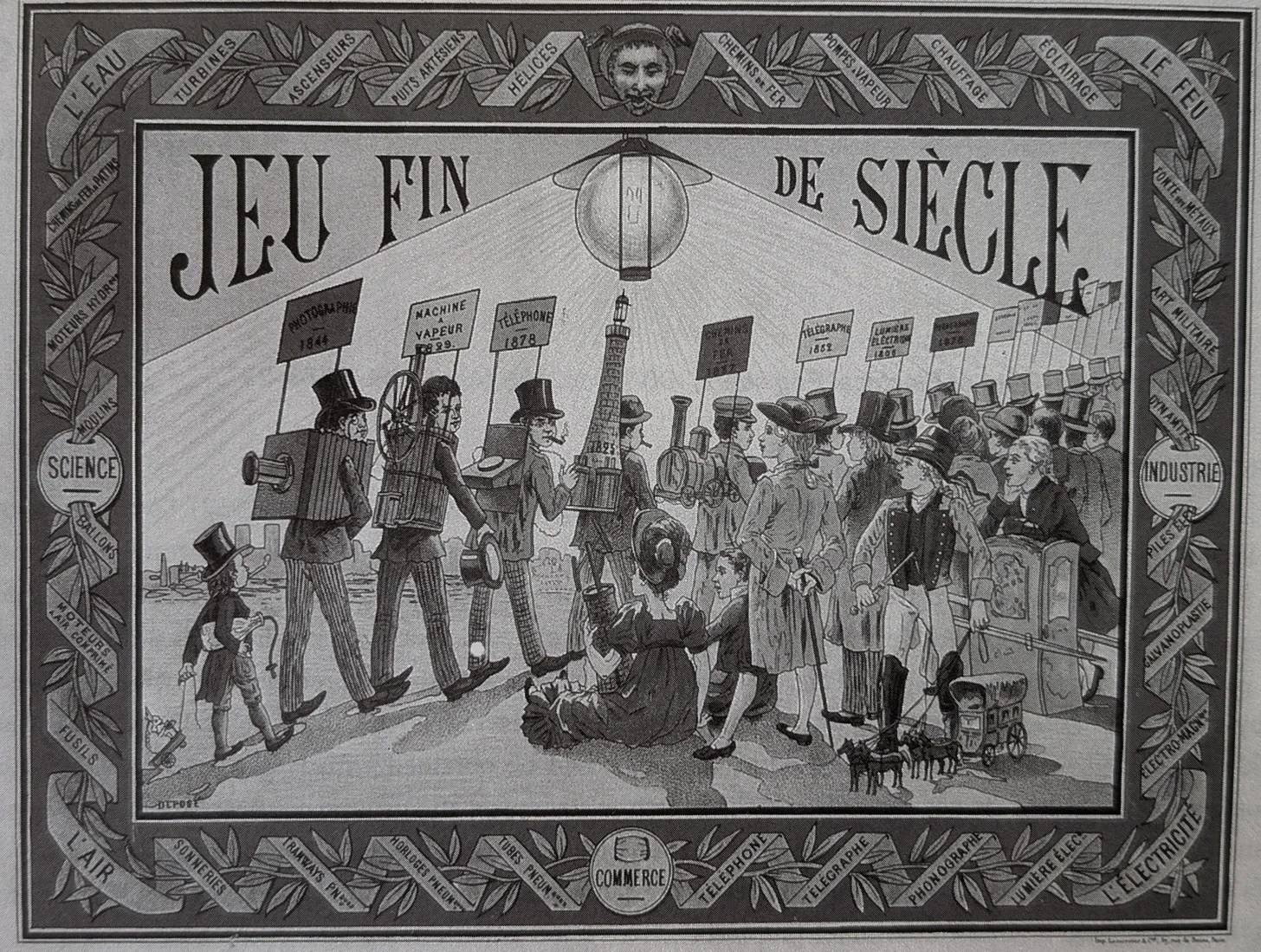
AI is on the march, with implications, TBD, for… well, for everything. Nayef Al-Rodhan ponders its potential impact on philosophy…
Around the world, Artificial Intelligence (AI) is seeping into every aspect of our daily life, transforming our computational power, and with it the manufacturing speed, military capabilities, and the fabric of our societies. Generative AI applications such as OpenAI’s ChatGPT, the fastest growing consumer application in history, have created both positive anticipation and alarm about the future potential of AI technology. Predictions range from doomsday scenarios describing the extinction of the human species to optimistic takes on how it could revolutionise the way we work, live and communicate. If used correctly, AI could catapult scientific, economic and technological advances into a new phase in human history. In doing so it has the potential to solve some of humanity’s biggest problems by preventing serious food and water scarcity, mitigating inequality and poverty, diagnosing life-threatening diseases, tackling climate change, preventing pandemics, designing new game-changing proteins, and much more.
AI technology is rapidly moving in the direction of Artificial General Intelligence (AGI), the ability to achieve human-level machine intelligence, with Google’s AI Chief recently predicting that there is a 50% chance that we’ll reach AGI within five years. This raises important questions about our human nature, our sentience, and our dignity needs. Can AI ever become truly sentient? If so, how will we know if that happens? Should sentient machines share similar rights and responsibilities as humans? The boardroom drama at OpenAI in late November 2023 also deepened the debate about the dangers of techno-capitalism: is it possible for corporate giants in the AI space to balance safety with the pursuit of revenues and profit?
As AI advances at a breakneck speed, ethical considerations are becoming increasingly critical. Sentient AI implies that the technology has the capacity to evolve and be self-aware, in doing so feeling and experiencing the world just like a human would. According to the British mathematician Alan Turing, if the human cannot distinguish between whether it is conversing with an AI or another human, then the AI in question has passed the test. However, given AI’s sophisticated conversational skills and ability to give the impression of consciousness, the Turing Test is becoming too narrow and does not grasp all the nuances of what makes us sentient and, more broadly, human. To stay on the front foot of technological progress, we need to supplement the Turing Test with transdisciplinary frameworks for evaluating increasingly human-like AI. These frameworks should be based on approaches rooted in psychology, neuroscience, philosophy, the social sciences, political science and other relevant disciplines.
We do not yet have a full understanding of what makes a thing sentient but transdisciplinary efforts by neuroscientists, computer scientists and philosophers are helping develop a deeper understanding of consciousness and sentience. So far, we have found that emotions are one of the important characteristics needed for sentience, as is agency or intrinsic motivation. A sentient AI would need to have the ability to create autonomous goals and an ability to pursue these goals. In human beings, this quality has evolved from our intrinsic survival instinct, while in AI it is still, for now, lacking. According to recent studies, a sense of time, narrative, and memory is also critical for determining sentience. A level of sentence comparable to humans would require autobiographical memory and a concept of the linear progression of time. In current AI systems, these capabilities are limited – but recent developments raise uncomfortable philosophical questions about whether sentient AI should share similar rights and responsibilities in the event that it becomes a reality. And if so, how does one hold the technology accountable for their actions? And how will we define – legally and ethically – sentient AI’s role in society? We currently treat AI technology and machines as property, so how will this change if they are granted their own rights? There is no clear-cut answer, but as I argued in ‘Transdisciplinarity, neuro-techno-philosophy, and the future of philosophy’, we should attribute agency to machines whenever they appear to possess the same qualities that characterise humans. I also believe that machines ought to be treated as agents if they prove themselves to be emotional, amoral, and egoist.
These debates, however they unfold, will clearly have deep implications on the future of philosophy itself. In ‘Transdisciplinarity, neuro-techno-philosophy, and the future of philosophy’ I make the case that it is a short step from AI’s present capabilities to its potential future use developing novel philosophical hypotheses and thought experiments. It is therefore not unthinkable that future AI systems could break new ground in the field of normative ethics, helping pinpoint moral principles that human philosophers have failed to grasp. However, we should be mindful that their conception of morality or beauty, for example, may have nothing in common with ours, or it may supersede our own capacities and reflections. This could limit the ability of sophisticated artificial agents to answer long-standing philosophical questions, however superior they may be to the most advanced human intellectual output. We should consider how these developments are likely to impact how we understand the world around us, both in terms of the subject matter and of the theorising entity involved. Artificial agents will no doubt be put under the microscope and will be studied alongside the human mind and human nature: not just to compare and contrast, but also to understand how these artificial entities relate to – and treat – one another, and humanity itself. There is also the question of how human philosophers will react if and when AI-steered machines become superior philosophical theorisers. Will flesh and blood philosophers be forced to compete cognitively with entities whose intellectual abilities vastly supersede our own? Will AI systems overtake our limited human reasoning and reflective capacities? If this happens, what does this mean for our own human agency, the control we have over our lives and the future of our societies?…
… Powerful AI technologies will progressively increase our capabilities, for good or ill. We therefore need to be clear-sighted about the AI governance frameworks urgently needed to futureproof the safe use of AI. The recent high drama at OpenAI, whose founding mission is “to ensure that artificial general intelligence benefits all of humanity”, gave us a glimpse of the main rift in the AI industry, pitting those focused on commercial growth against those uneasy with the potential ramifications of the unbridled development of AI. However well-motivated AI governance schemes might be, they are less robust than one would hope. At the same time, self-regulation by global tech companies is becoming increasingly difficult given the large sums at stake and the economic and political influence of these companies.
With this in mind, we must keep an open mind not just about the immediate man-made dangers of AI technologies but also their potential to redefine what it means to be human. They will shape how we understand and engage with the world, in doing so making us reevaluate our place in it. Our chances of survival as a species and the likelihood of our existence in a free, independent, peaceful, prosperous, creative and dignified world will depend on the future trajectory of AI. Our historical yearning for longing and belonging hangs in the balance. To protect citizens from potential harm and limit the risks, AI should be regulated just like any other technology. We must also apply transdisciplinary approaches to make sure that the use and governance of AI is always steered by human dignity needs for all, at all times and under all circumstances. AI’s trajectory is not predetermined, but the clock is ticking and humanity may have less time than it thinks to control its collective destiny…
Eminently worth reading in full. Whether or not one agrees with the author’s specific conclusions, his larger point– that we need to be mindful and purposive about the deployment of AI is surely well-taken: “Sentience, Safe AI and The Future of Philosophy: A Transdisciplinary Analysis,” from @SustainHistory in @oxpubphil.
See also: “Thinking About AI, Before AI Disappears” from Quentin Hardy‘s new newsletter, Technohumanism. (source of image above).
* Father John Culkin, SJ, a Professor of Communication at Fordham University (and friend of Marshall McLuhan, to whom the quote is often incorrectly attributed)
###
As we think about thinking, we might recall that it was on this date in 1979 that Apple began work on the Lisa, which would become the world’s first commercial computer with a graphical user interface.
Originally intended to sell for $2,000 and ship in 1981, the Lisa was delayed until 1983 and sold for $10,000. Utilizing technology ahead of its time, its high cost, relative lack of software, and some hardware reliability issues ultimately sank the success of the Lisa. Still, much of the technology introduced by the Lisa (itself rooted in the earlier work of Doug Engelbart [and here] and Xerox PARC) influenced the development of the Macintosh as well as other future computer and operating system designs: e.g., a bitmapped display, a window-based graphical user interface, icons, folders, mouse (two-button), (Ethernet) networking, file servers, print servers, and email.

You must be logged in to post a comment.