Posts Tagged ‘wisdom’
“The hours of folly are measur’d by the clock, / But of wisdom: no clock can measure.”*…
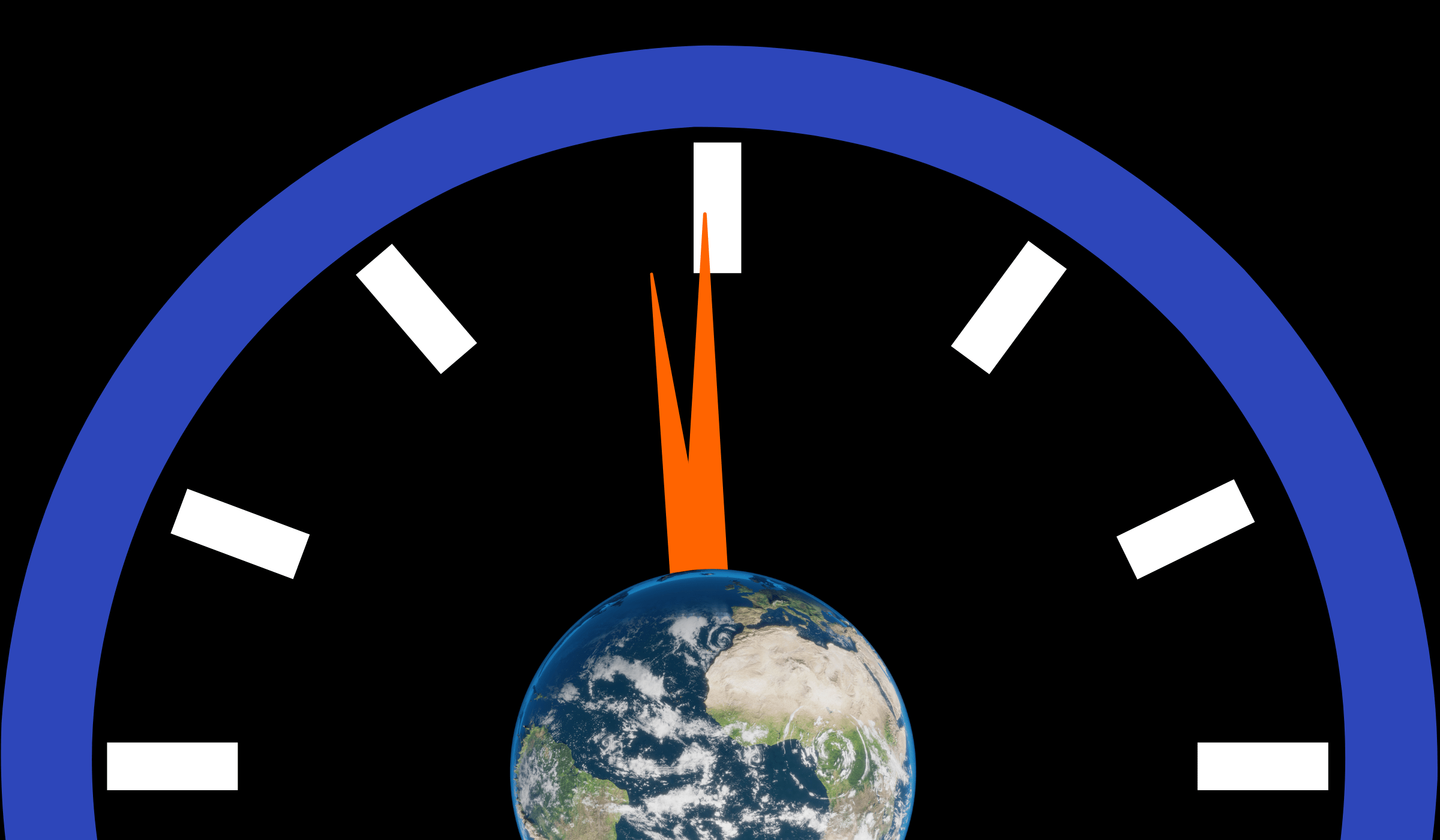
Our problems are so vast, our distance from them so great. Benjamin Cohen asks how we navigate our “derangement of scale”?
… Parents say the days are long but the years are short. Sophocles says time eases all things. Thoreau says time is but the stream we go a-fishing in. Einstein tells us time is an illusion. I don’t know what I’m supposed to do with that. All of them are right.
A human life can be 70, 80, maybe 90 years. The tuataras, a New Zealand reptile, can live to be 100, as can a crocodile. A Seychelles giant tortoise can live close to 200 years. Sea animals have us all beat. Bowhead whales can live past 200 years. For some sea urchin species, it’s 300. The ocean quahog clam can live past 500. On the other end are insects. An adult dragonfly might live a week. Shadflies, also called mayflies or fishflies, live just a day or two.
Geological time has an entirely different range of long and short. My friend studies ice cores from millions of years ago, examining glacial variation to better understand how climates change. The Pleistocene, Pliocene, Miocene. These are epochs, an official scientific term for a measure of time—less than a period, more than an age. Epochs span millions of years. They put our biological lifespans to shame. We are shadflies to the sandstone sediment of the Miocene.
Our current epoch, scientists argue, is called the Anthropocene. It’s new. The term comes from Paul J. Crutzen, a Nobel Prize-winning chemist who wrote that “human activities are exerting increasing impacts on the environment on all scales”—impacts so profound that we created an entirely new stamp on the timeline. The Anthropocene is a commentary on our scales of time as well as space. It isn’t just how old things are or how long they take, but how big they are and how vast their dimensions are.
I’ll admit a little hesitancy for the concept. It’s an audacious move, to declare the dawn of a new epoch from within; I’m not sure if there’s a bit too much modern exceptionalism at work. But I also can’t say the full scientific validity matters for me. Say what you will about the Anthropocene, but I nod to it for trying to gauge what’s so strange and difficult about our moment. It is the relationship between biological generations and geological epochs, between the scope of mortal activity and that of global planetary activity. It is all scales everywhere all at once.
Understanding the significance of our own lives requires some understanding of scale. “Just as the microscope and telescope extended our vision into spatial realms once too minuscule or too immense for us to see, geology provides a lens through which we can witness time in a way that transcends the limits of our human experiences,” Marcia Bjornerud, a geologist, writes. The Anthropocene, she suggests, is a fine time to “adopt a geologic respect for time and its capacity to transfigure, destroy, renew, amplify, erode, propagate, entwine, innovate, and exterminate.” We need to know how to navigate our epoch: to recognize our profusion of scales and strive to understand, amidst their collisions, not just how to care for the world beyond us but how a person can be, what it means to stand as a morally vested individual.
And yet we humans are still not particularly good at seeing ourselves in time or space. I’m certainly not. So here we are. Not only has our age come face to face with an emergency of scalar challenges—brashly called a global climate crisis—but we have produced a daunting sense of distance from addressing it. The problems are physically too far away, too large, too vast; the psychological distance we feel from addressing them is too great. It’s a double-distancing. Hopelessness comes from the scalar mismatch between we individuals, who are wee individuals, and the problems of an 8,000-mile-diameter earth.
All of this was on my mind when I first met Robert Socolow [here], an 88-year-old physicist who, over the course of his life, turned to environmental science and technology to help humanity respond to our most complex challenges of scale. One of those efforts has been with the Bulletin of the Atomic Scientists, where Socolow helps with their Doomsday Clock. That’s the device that, since 1947, tracks humanity’s proximity to self-destruction. The clock is a metaphor, presuming to measure Blake’s hours of folly by minute and second hand; the hands are set by “nuclear risk, climate change, disruptive technologies, and biosecurity,” among other concerns. They’ve changed positions 26 times in the decades since they began metaphorically ticking. Since 2010, the clock’s hands have only moved closer to midnight.
In 2025, Socolow himself revealed the face of the clock at a press conference in Washington, DC. It was January and he was at the US Institute of Peace in Foggy Bottom. With a crowd of reporters looking on, cameras flashing and shutters digitally clicking, Socolow stood by a modernist wooden stand and spun a turntable to reveal the clock hands at a small, acute angle against midnight. A world of scalar challenges fell into an urgent sort of order. The end was 89 seconds away.
Most of us are daunted, every day, by the vastness of planetary activity and the proximity of our personal choices. We look at the clock, unsure how to balance clashing scopes of time and space. But if I’m unsettled, I want proximity to settle me. I want to be close, I want to feel part of the world I inhabit and see and feel, I want to hold those I love near to me. So what should we do?…
… The confusion may come from what the writer Timothy Clark calls “derangements of scale.” Our experiences as modern global humans, Clark writes, are like being “lost in a small town” and then handed a map of the entire earth for locating yourself and finding your way. In the Anthropocene, he writes, “we have a map, [and] its scale includes the whole earth, but when it comes to relating the threat to daily questions of politics, ethics, or specific interpretations of history, culture, literature, etc., the map is often almost mockingly useless.” Our scales are too imbalanced; we are unable to think the unthinkable. It goes without saying that it can be paralyzing, demoralizing, to be an individual acting as part of the collective, globe-sized world…
[Cohen shares his conversations with Socolow, with call-outs to Tolstoy, Camus, Augustine, and Solnit…]
… The attempt to capture our smallness inside the grandness of the universe is a timeless human quest, I get that. Tolstoy’s theological view is a typical one; God is that which is without scale. Even if I’m not so theological about it, I share the modern anxiety. And that anxiety is currently a dominant emotion.
Clark writes that “deranged jumps in scale and fantasies of agency may recall rhetoric associated with the atomic bomb in the 1950s and after.” After talking to Socolow a number of times, I don’t think it recalls so much as continues that rhetoric. The new atomic age was a test case for the coming collisions of scale that derange us now. The Doomsday Clock was about sounding the alarm. It was meant to shake people, to grab them by the shoulders and yell that they pay attention to human-made catastrophe.
We’ve flipped in the past 50 years, nearly the exact span of my own life. A half century later, and so many people have gone from urgency to hopelessness. They feel bombarded by all scales, not just the next one.
There’s room to reconsider that bombardment. There’s time to think to the next scale. Socolow has been doing it his entire adult life. So were Augustine and Tolstoy and Camus and so is Solnit. It isn’t new, we aren’t alone.
And so Socolow and I stand in his home office, trying to measure. It’s misty outside and calm inside. He is thinking in linear feet of books, where the spatial scale of distance is a proxy for the temporal scale of his life’s work. I’m thinking in years, measuring my sense of contribution and belonging against the shadfly-like limitations of a mere biological lifespan. I’m cautious, excited, gratified that the two of us can talk and compare across the scales of our current lives. That Blake couplet in the epigraph above [title quote] runs through my head. Socolow’s keenly aware of his own place in our epoch. Nearly a hundred linear feet of a life’s work at an archive, and still, as we consider our various measures, he tells me, “I am searching for ways to be constructive, and there are small opportunities here and there so far.” There is wisdom here, even if no clock can measure it…
Eminently worth reading in full: “By All Measures,” from @longreads.com.
* William Blake, “Proverbs of Hell”
###
As we take the long view, we might we might rejoice in the naively and nobly inventive: it was on this date in 1605 that El Ingenioso Hidalgo Don Quijote de la Mancha (or The Ingenious Hidalgo Don Quixote of La Mancha— aka Don Quixote), the masterwork of Miguel de Cervantes (and of the Spanish Golden Age) and a founding work of Western literature, was first published. Widely considered the first modern novel (published in the Western world), it is also considered by many (still) to be the best; it is in any case the second most translated work in the world (after the Bible).

“Man towers above the rest of creation so long as he realizes his own nature, and when he forgets it, he sinks lower than the beasts”*…

The estimable Jill Lepore on her strategy for coping during the “First 100 Days”…
On the twentieth of January, the year of our Lord 2025, Donald Trump’s one hundred days began.
Thank you. Thank you very much, everybody. (Applause.) Wow. Thank you very, very much.
I read his second Inaugural Address early the next morning in bed, curled, bent to the glow of an iPhone in dark mode, a morning ritual that always feels like sin.
From this day forward, our country will flourish and be respected again all over the world.
Then, dutifully, I scrolled through the Day One executive orders:
A full, complete and unconditional pardon . . . offenses related to events that occurred at or near the United States Capitol on January 6, 2021 . . .
. . . the privilege of United States citizenship does not automatically extend to persons born in the United States . . .
. . . establishes the Department of Government Efficiency . . .
. . . eliminate the “electric vehicle (EV) mandate” . . .
. . . directing that it officially be renamed the Gulf of America.
The Day One executive orders included—and depended on—the President’s formal, executive declarations of not one, not two, but three national emergencies: an immigration emergency, an energy emergency, and a terrorism emergency. There was also the Donald-Trump-is-President-again emergency.
I buried my phone under my pillow and closed my eyes. Blindly, I reached over to my nightstand and groped for a book. I pulled off the stack the first of the Penguin Little Black Classics, a collection of slender paperbacks that I’d been meaning to read, each as thin and sleek as my phone, bound in black, with white type on a plain cover. Dark mode.
No. 1, Giovanni Boccaccio, “Mrs Rosie and the Priest,” is described on the back cover as “bawdy tales of pimps, cuckolds, lovers and clever women from the fourteenth-century Florentine masterpiece The Decameron.” The book opened like a flower, like a hinge, like a butterfly, like a pair of hands in blessing. I turned to the first page:
I was told some time ago about a young man from Perugia called Andreuccio, the son of a certain Pietro and a horse-dealer by trade.
My heart leapt. I had found my doomscrolling methadone. With five hundred gold florins in his bag, Andreuccio set off for Naples. And I made a vow to read one volume of the Penguin Little Black Classics each morning in bed, matins, for a hundred days. Two and a half times Lent. In case of emergency, break open a book…
And read she did– each morning, before the day’s decrees, she turned to a slim book, hoping for sense, or solace… and happily for us, she kept a journal: “A Hundred Classics to Get Me Through a Hundred Days of Trump,” from @newyorker.com. (In the event of a paywall: an archived version.)
* “Indeed, the condition of human nature is just this; man towers above the rest of creation so long as he realizes his own nature, and when he forgets it, he sinks lower than the beasts. For other living things to be ignorant of themselves, is natural; but for man it is a defect.” – Boethius, The Consolation of Philosophy
###
As we pursue perspective, we might recall that it was on this date in 1968 that Aretha Franklin impatrted some timeless advice: she released “Think” (which she had co-written with Ted White), the first single from her upcoming album Aretha Now. It reached No. 7 on the Billboard Hot 100, Franklin’s seventh top 10 hit in the United States and hit number 1 on the magazine’s Hot Rhythm & Blues Singles, her sixth single to top that chart.

“I’ve run more risk eating my way across the country than in all my driving”*…

On the occasion of his retirement from his weekly column, a dean of British culinary criticism, Jay Rayner (the Observer‘s/Guardian‘s Happy Eater), observes that, while much has changed in the food world, there are a few truths that still hold…
I have been writing this column for 15 years. That means there have been 180 of them, filled with wisdom, insight, whimsy, prejudice, contradiction and sometimes just outrageous stupidity, all of it interrogating the way we cook and eat now. As this is my last of these columns I thought, as a service, I should summarise the key points. Are you ready? Good. Let’s go.
Individual foods are not pharmaceuticals; just eat a balanced diet. There is nothing you can eat or drink that will detoxify you; that’s what your liver and kidneys are for. No healthy person needs to wear a glucose spike monitor; it’s a fad indulged by the worried well. As is the cobblers of being interested in “wellness”, because nobody is interested in “illness”. People have morals but food doesn’t, so don’t describe dishes as “dirty”. And stop it with the whole “clean eating” thing. It’s annoying and vacuous.
Fat is where the flavour is and salt is the difference between eating in black and white and eating in Technicolor, even if your cardiologist would disagree. Brown foods and messy foods are the best foods, and picnics are a nightmare. Buffets are where good taste goes to die. Most dishes can be improved with the addition of bacon. The kitchen knives in holiday rentals are always terrible; take your own. Hyper-expensive foods are never about deliciousness; they are about status. Don’t bother with them. Bechamel sauce is easy to make; just follow the damn recipe.
Often, good food takes a while to cook and sometimes it requires skill; all those cookbooks with words like “simple” and “express” in the title may not be your friend. If we’re going to slaughter animals for our dinner, we have a responsibility to eat as much of that animal as we can, including the inner wobbly bits. Some of the best foods carry with them the faint whiff of death. Making chutney at home from your allotment glut is a lovely hobby, but you really don’t have to share what you’ve made with your neighbours.
Tipping should be abolished. It’s wrong that restaurant staff should be dependent on the mood of the customer for the size of their wage. They should be paid properly. It works in Japan, France and Australia. It can work in the UK. All new restaurants should employ someone over 50 to check whether the print on the menu is big enough to be read, the lighting bright enough for it to be read by and the seats comfortable enough for a lengthy meal. If a waiter has to explain the “concept” behind a menu there is something wrong with the menu.
By all means serve small sharing plates, but make sure the table is big enough for all the dishes that are going to arrive, and they come out in an order that makes sense. The kind of wines that natural-wine fans adore smell of uncleaned pig’s bottom and are horrible. Waiters should always write down orders. Eating alone in a restaurant is dinner with someone you love and a delicious opportunity for people watching. Great food can be found in the scuzziest of places. Gravy stains down your shirt are not a source of embarrassment; they are a badge of honour. Expensive restaurants are wasted on the people who can afford them. And food should always, always, be served on plates. Not on slates. Not on garden trowels. Not on planks. On plates…
Words to eat by: “This is my final OFM column. Here’s what I’ve learned about buffets, ‘clean eating,’ and what not to serve food on” from @jayrayner1.bsky.social in @theguardian.com.
###
As we dine out, we might recall that it was on this date in 1989 that Jack Dietz (son of “Watermelon King” Bob Dietz) set the still-standing world’s record for watermelon seed spitting– 66 feet 11 inches. Contests are held throughout the U.S. each year in an attempt to best Jack.

A young competitor (source)
“The recognition of oneself as a part of nature, and reliance on natural things, are disappearing for hundreds of millions of people who do not know that anything is being lost.”*…

The estimable Alan Jacobs on the (glorious) novels of Robertson Davies, and (what Jacobs suggests is) a central question running throughout them: What ways of Wisdom have been discarded by modern Knowledge?…
Long ago every village in England had a cunning man, or woman—an untrained but intuitive healer, a person with a good nose for other people’s troubles and a tactical shrewdness about how to handle them. If your problems were simple and obvious, if you needed a broken bone set or a bad tooth pulled, you’d go to the surgeon. Everyone knew that. But what if you weren’t quite sure what was wrong with you? What if your spirit was troubled but also your digestion, and you didn’t know which was causing which, or if they were separate miseries? Then you needed to consult the cunning ones.
The Cunning Man is the last novel by the great Canadian writer Robertson Davies, and its titular figure is a man of the late twentieth century named Jonathan Hullah, who grew up in a remote outpost in northern Ontario and got his first ideas about healing by hanging around with Elsie Smoke, an Ojibwa herbalist and healer, a “wise woman”—a cunning woman. Hullah ultimately becomes a doctor and a practitioner of what some now call “holistic medicine,” though that term is not used in the book by Hullah or anyone else. Hullah thinks of himself as a disciple of the great Renaissance physician Paracelsus— the first person to theorize that physical disease can be the product of what we now would call psychological distress. As Hullah comments, “The problem for a Paracelsian physician like me is that I see diseases as disguises in which people present me with their wretchedness.” It is a problem because people are happy to speak of their diseases but reluctant to acknowledge their wretchedness.
Hullah’s creator almost certainly learned about Paracelsus through reading Carl Jung, who was perhaps the most important guiding figure of Davies’s intellectual and religious life. From my point of view, which is that of a generally orthodox Christian, Davies’s embrace of Jungian ideas is a convenient way to get all the benefits of belief in transcendent order with none of the obligations of obedience to a personal God. Nevertheless, there is much in Davies’s picture of the cunning man—and in closely related ideas that he developed in the latter part of his career as a novelist—from which thinking Christians can and should learn. Above all, I think, we should adopt a kind of historically aware intellectual pluralism, a willingness to learn from and make use of the past, and especially those elements of the past that have been discarded by modernity as refuse and waste. The thoughtful Christian should be a cunning practitioner of filth therapy.
In Davies’s wicked and wonderful novel The Rebel Angels, a scholar named Clement Hollier—whom Davies refers to as a “paleo-psychologist,” a student of ancient and discarded ways of thinking—grows fascinated by what he calls “Filth Therapy.” He suspects that a scientific colleague is pursuing a similar path: “He works with human excrement—what is rejected, what is accounted of no worth to mankind—and in it I suppose he hopes to discover something that is of worth.”…
…
… In his many novels Davies returns over and over again to this theme. He portrays modernity as a world in which we love our crowns even as we despise and try to rip up our roots. The Rebel Angels is the first novel in what has come to be known as the Cornish Trilogy because it deals with the Cornish family, and in the novel that follows it, What’s Bred in the Bone, a young painter named Francis Cornish struggles with his love of Renaissance painting— struggles because he doesn’t just admire the Old Masters but wants to paint as they painted. And yet, he thinks, “surely one must paint in the manner of one’s day?” Anything else is “a kind of fakery, or a deliberate throw-back, like those PreRaphaelites.” And he has a very specific reason for believing that one must choose between “the manner of one’s own day” and a historically informed “fakery”: “Even if you are a believer, you cannot believe as the great men of the past believed.”
Cornish’s mentor, a brilliant restorer of art named Saraceni, disputes this, and constantly holds out to young Cornish the challenge of acquiring “the ability to work truly in the technique and also in the spirit of the past.” And Cornish achieves this ability, at least to Saraceni’s satisfaction; but when his masterful painting is discovered to be new rather than old, it is immediately and universally decried as a fake— even though Cornish never pretended that the painting was by anyone else. For artists and connoisseurs of our age, only the crown—the thought-world of the moment—can provide an authentic and valid mode of artistic (or religious) experience. To work from the root is necessarily to be inauthentic…
…
In a city in Paraguay you may find a curious assembly of musicians called La Orquesta de Instrumentos Reciclados de Cateura—the Recycled Instruments Orchestra of Cateura. But these instrumentos are not professionally designed and built objects that have been discovered and repaired: they have been made out of recycled materials. Violins are constructed from cans and bent forks, a discarded oil drum forms the body of a cello, a saxophone somehow emerges from a drainpipe and a few bent spoons. Most of the musicians are teenagers from Cateura, which is a slum, and a slum built on and around a landfill. They too are among the world’s discards, thought to be without value, people in whom society invests no hope. But Fabio Chavez, the creator and director of the orchestra, has invested in them. He has said, “People realize that we shouldn’t throw away trash carelessly. Well, we shouldn’t throw away people either.”
In The Rebel Angels Maria’s mother healed the souls of great instruments that had been damaged by time and use. This is a wondrous art and worthy of great praise.
But then what praise is appropriate for those who have taken the filth of the world and given it souls, souls capable of the loveliest utterance? And what wonder is adequate to the imaginative dedication of Fabio Chavez, whose name should be known throughout the world? “The world sends us garbage,” he says. “We send back music.”…
Eminently worth reading in full: “Filth Therapy: A Cunning Word.” Also eminently worth reading: every one of Robertson Davies’ novels.
This essay dates from 2017. Jacobs brought it back up in response to his reading of a fascinating new book: Cunning Folk: Life in the Era of Practical Magic, by Tabitha Stanmore. It’s on Google Books, here.
* Robertson Davies, The Rebel Angels
###
As we find treasure in trash, we might recall that it was in this date in 1953 that John Kraft (the younger brother of James Kraft, the founder of Kraft Cheese [later Kraft Foods]) received U.S. patent No. 2,641,545 for the manufacture of soft surface cured cheese. Just one year earlier, the company had introduced Cheez Whiz.

“In our society (that is, advanced western society) we have lost even the pretence of a common culture”*…

In 1959. C.P. Snow gave a now-famous series of lectures (quickly published): The Two Cultures, lamenting the cleaving of Western culture into spheres of science and humanities, neither of which could clearly understand, thus effectively communicate with the other. Jeroen Bouterse reminds us that Snow had a predecessor…
Several years before C.P. Snow gave his famous lecture on the two cultures, the American physicist I.I. Rabi wrote about the problem of the disunity between the sciences and the humanities. “How can we hope”, he asked, “to obtain wisdom, the wisdom which is meaningful in our own time? We certainly cannot attain it as long as the two great branches of human knowledge, the sciences and the humanities, remain separate and even warring disciplines.”
Rabi had been interested in science since his teenage years, and grown up to be a Nobel-prize winning physicist. He had also been an important player in the Allied technological effort during World War II, as associate director of the ‘Rad Lab’: the radiation laboratory at MIT that developed radar technology. The success of Rad Lab, Rabi later reflected, had not been a result of a great amount of theoretical knowledge, but of the energy, vitality, and self-confidence of its participants. In general, Rabi’s views on science and technology were somewhat Baconian: science should be open to the unexpected, rather than insisting on staying in the orbit of the familiar.
In Rabi’s accounts of his time leading Rad Lab, he would also emphasize the way in which he insisted on being let in on military information. “We are not your technicians”, he quoted himself, adding: “a military man who wants the help of scientists and tells them half a story is like a man who goes to a doctor and conceals half the symptoms.” Indeed, the key to understanding Rabi’s worries about the two cultures – he would go on to embrace Snow’s term – is his view of the role science ought to play in public life. Scientists should not just be external consultants, delivering inventions or discoveries on demand or listing the options available to the non-specialist. In some stronger sense, they should be involved in directing policy decisions.
Even more than Rabi’s positive experience with the military during the war, his views were informed by his frustration with the lack of agency scientific experts were able to exercise in the immediate aftermath. Already in 1946, he complained in a lecture that scientists had been used to create the atom bomb, but they had not been consulted about its use, and the fact that many of them had been opposed to it had made no difference. “To the politician, the scientist is like a trained monkey who goes up to the coconut tree to bring down choice coconuts.”
This feeling would increase with the decision to develop a hydrogen bomb. In 1949, Rabi was one of eight experts in the General Advisory Committee (GAC) to the Atomic Energy Commission (AEC), in which capacity he co-signed a unanimous report arguing that the ‘Super’ should not be built. (Rabi, together with Fermi, signed a minority opinion to the effect that the US should first get the USSR to pledge that it would not seek to develop an H-bomb.)
Rather than signaling to the world that he sought to avoid an arms race, however, President Truman did the opposite: without knowing that it was even possible, he announced publicly that the US would “continue its work on all forms of atomic weapons, including the so-called hydrogen or super-bomb.” Rabi would never forgive Truman…
… in the context of Rabi’s broader thinking about science in modern culture, as he came to develop and express it in the decades after the war [the] was not just that more technical expertise needed to be brought to the decision tables; the point was that scientists should make their moral views heard. In the atomic age, where science created so much power, science’s representatives should wield some of that power. From the perspective of the scientists, this was because the atom bomb had demonstrated beyond doubt that science was not a disinterested search for objective truth; it had consequences, and scientists should accept responsibility for those consequences. They should consider not just the means, but the goals…
…
It is a soft law in two cultures discourse that precisely those who most bewail the chasm between science and the humanities end up deepening it. In Rabi’s case, the reason is that he believed in the two cultures; he believed there was something special about the culture and tradition of modern natural science that was a source of wisdom and strength, and that in many ways the project of the humanities was its opposite. Understanding of nature was progressive and forward-looking, was a matter of hope and optimism, while understanding of the human world was old, had already been achieved in ancient societies, and was more a matter of transmission than of innovation. Historian of physics Michael Day notes that over time, Rabi talked less about merging the two traditions and more about putting science at the center of education…
In spite of this, I think Rabi saw correctly that picturing science and the humanities as opposing forces helped him to identify a real fault line in modern culture. The notion that science has to stay on one side of the fact-value-distinction, while the humanities are closer to the actual formation of values, was not a figment of his imagination, and it did stand in the way of his cultural ideals. While not quite the synthesis between the two sides that he sometimes claimed to aim for, the answer he gave – that neither science nor the humanities, nor committees ‘discover’ values, but that values are immanent in activities, in ways of life; that the age of science came with the scientific way of life, with its own values, and that these values were potentially culture-defining – was compelling…
… there remains something inspiring in Rabi’s vision of a common quest for knowledge and understanding, of people working together in activities that are both exciting and important, and of a society that takes those people and their projects not as resources to be exploited, but as models to be emulated.
“The atom bomb and the two cultures: I.I. Rabi on the sciences and the humanities,” from @jeroenbou in @3QD. Eminently worth reading in full.
(Image above: source)
* C. P. Snow, The Two Cultures
###
As we search for synthesis, we might send insightful birthday greetings to Walter Kohn; he was born on this date in 1923. A theoretical physicist and theoretical chemist, he shared the 1998 Nobel Prize in Chemistry (with John Pople); Kohn was honored for his development of density functional theory, which made it possible to calculate quantum mechanical electronic structure by equations involving electronic density (rather than the much more complicated many-body wavefunction). This computational simplification led to more accurate calculations on complex systems and to many new insights, and became an essential tool for materials science, condensed-phase physics, and the chemical physics of atoms and molecules.

You must be logged in to post a comment.