Posts Tagged ‘dining’
“…my age is as a lusty winter, / Frosty, but kindly…”*…

Aging is tough; Catherine Hiller offers a guide…
For some people, being old just comes naturally. They’ve acted old for years, and they know just what to do. They are the lucky ones—the “old souls,” if you will. For many others, being old just seems weird. They think, Really? How did I get here? What do I wear? How do I navigate this new geography?
This guide is expressly written for those who are bewildered by the face in the mirror and somehow think that 70 qualifies as middle-aged. These people need gentle guidance so that they, too, can enjoy the special perks of being old, beyond the senior discounts. This guide aims to help newcomers fit in with their cohort and enjoy their well-earned privileges.
At 79, I know something about old age, and I’ve compiled the following guidelines hoping they will empower you to enjoy your entitlements…
Read on for such useful tips as…
… Your health is vital to you, so it must be important to others as well. People want to hear about your ailments, even the minor ones, as well as all the cures you’ve ever tried. Your every test result is intriguing to your family and friends, so you should discuss the details. Oddly, the health problems of others are of little interest to you, unless they mirror your own…
… Everything really was better when you were young. Your mind tells you that every generation feels this way (including the Athenians in the Golden Age, 400 years BC), but your heart tells you that this time, you are actually right! You came of age in the Summer of Love, which lasted about a decade. There was joy in the air, and a sense of personal and social freedom. Humankind would progress. Everything would be better! Be sure to talk to your children and grandchildren constantly about what it was like when you were young, and how very much worse things are today.
Embrace your inner curmudgeon! You have every right to be cranky, because many things are difficult, and the news is always appalling. At this point, you’ve had many disappointments, and likely some physical problems as well. There’s no need to mute your general displeasure. Being old is the time to express it fully, forcefully and funnily. (At least you assume your tirades are amusing.)…
… Your clothing choices will be determined entirely by comfort. In this, you and other old people are in the fashion vanguard. Remember the “little old ladies in tennis shoes”? Well, who wears sneakers now? Only everyone, all the time! Celebrate your preference for flowing clothes in neutral colors. Turns out some of you have been “coastal grandmothers” long before it was a thing. For years you’ve been wearing pants with elastic waistbands or drawstrings, predating and predicting pandemic dressing, when everyone wore sweatpants. Turns out old people are the true fashionistas!…
More pearls at: “How to Be Old,” from @oldstermag.bsky.social.
* Shakespeare, As You Like It, Act II, Scene 3
###
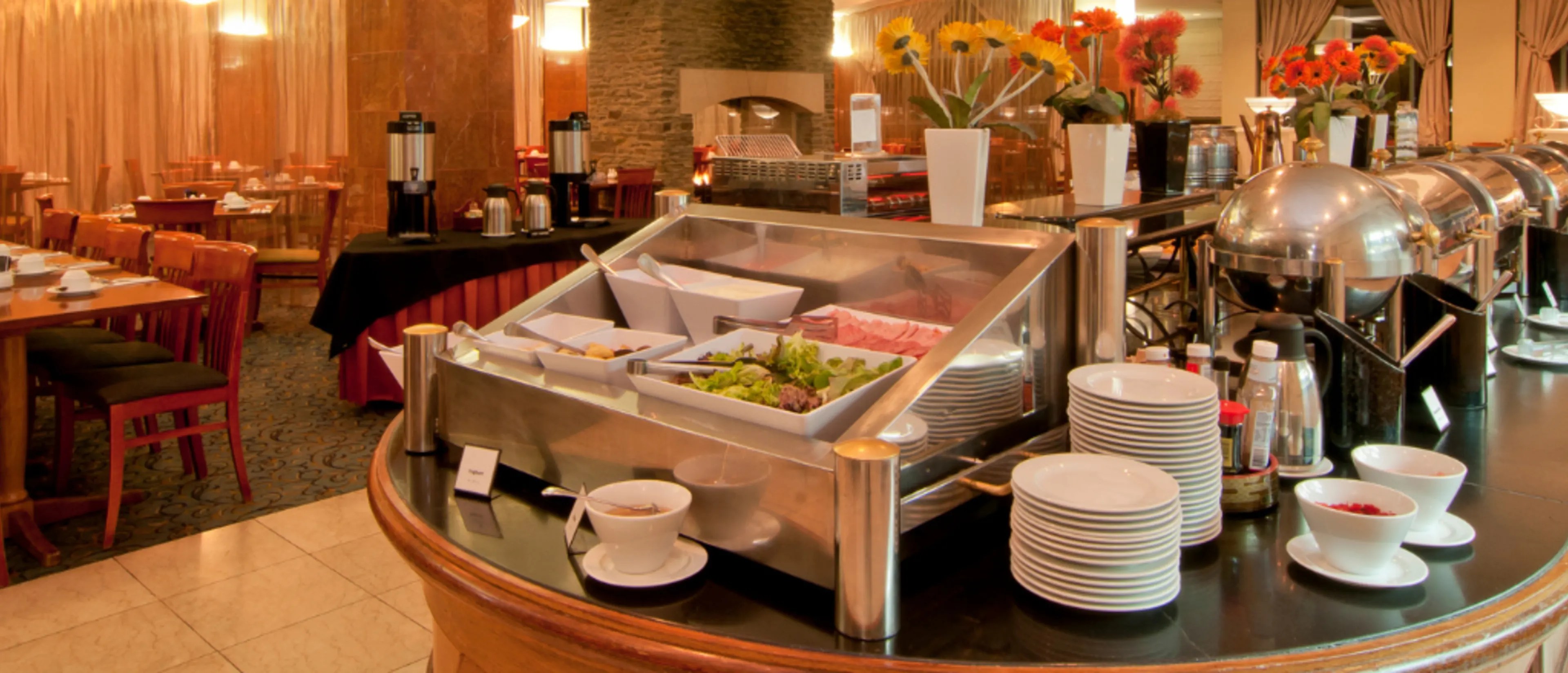
As we muse on maturity, we might note that today is National Buffet Day, an annual celebration of an occasion for the senescent to practice most of the advice Hiller gives in the piece featured above.
“I’ve run more risk eating my way across the country than in all my driving”*…

On the occasion of his retirement from his weekly column, a dean of British culinary criticism, Jay Rayner (the Observer‘s/Guardian‘s Happy Eater), observes that, while much has changed in the food world, there are a few truths that still hold…
I have been writing this column for 15 years. That means there have been 180 of them, filled with wisdom, insight, whimsy, prejudice, contradiction and sometimes just outrageous stupidity, all of it interrogating the way we cook and eat now. As this is my last of these columns I thought, as a service, I should summarise the key points. Are you ready? Good. Let’s go.
Individual foods are not pharmaceuticals; just eat a balanced diet. There is nothing you can eat or drink that will detoxify you; that’s what your liver and kidneys are for. No healthy person needs to wear a glucose spike monitor; it’s a fad indulged by the worried well. As is the cobblers of being interested in “wellness”, because nobody is interested in “illness”. People have morals but food doesn’t, so don’t describe dishes as “dirty”. And stop it with the whole “clean eating” thing. It’s annoying and vacuous.
Fat is where the flavour is and salt is the difference between eating in black and white and eating in Technicolor, even if your cardiologist would disagree. Brown foods and messy foods are the best foods, and picnics are a nightmare. Buffets are where good taste goes to die. Most dishes can be improved with the addition of bacon. The kitchen knives in holiday rentals are always terrible; take your own. Hyper-expensive foods are never about deliciousness; they are about status. Don’t bother with them. Bechamel sauce is easy to make; just follow the damn recipe.
Often, good food takes a while to cook and sometimes it requires skill; all those cookbooks with words like “simple” and “express” in the title may not be your friend. If we’re going to slaughter animals for our dinner, we have a responsibility to eat as much of that animal as we can, including the inner wobbly bits. Some of the best foods carry with them the faint whiff of death. Making chutney at home from your allotment glut is a lovely hobby, but you really don’t have to share what you’ve made with your neighbours.
Tipping should be abolished. It’s wrong that restaurant staff should be dependent on the mood of the customer for the size of their wage. They should be paid properly. It works in Japan, France and Australia. It can work in the UK. All new restaurants should employ someone over 50 to check whether the print on the menu is big enough to be read, the lighting bright enough for it to be read by and the seats comfortable enough for a lengthy meal. If a waiter has to explain the “concept” behind a menu there is something wrong with the menu.
By all means serve small sharing plates, but make sure the table is big enough for all the dishes that are going to arrive, and they come out in an order that makes sense. The kind of wines that natural-wine fans adore smell of uncleaned pig’s bottom and are horrible. Waiters should always write down orders. Eating alone in a restaurant is dinner with someone you love and a delicious opportunity for people watching. Great food can be found in the scuzziest of places. Gravy stains down your shirt are not a source of embarrassment; they are a badge of honour. Expensive restaurants are wasted on the people who can afford them. And food should always, always, be served on plates. Not on slates. Not on garden trowels. Not on planks. On plates…
Words to eat by: “This is my final OFM column. Here’s what I’ve learned about buffets, ‘clean eating,’ and what not to serve food on” from @jayrayner1.bsky.social in @theguardian.com.
###
As we dine out, we might recall that it was on this date in 1989 that Jack Dietz (son of “Watermelon King” Bob Dietz) set the still-standing world’s record for watermelon seed spitting– 66 feet 11 inches. Contests are held throughout the U.S. each year in an attempt to best Jack.

A young competitor (source)
“The poets have been mysteriously silent on the subject of cheese”*…

… not so, Americans, who have been, as Millie Giles reports, speaking loudly with their wallets…
Topping off a pizza. Eyeballing a slice for cracker-stacking. Perfecting your own combination for a grilled sandwich. Many of us have spent time ruminating on one of life’s great questions: what’s the right amount of cheese?
The answer turns out to be exactly the same reply you’d give to a Parmesan-doling server: just a little more…
A great report from Bloomberg’s Ilena Peng last week outlined how America’s dairy processors are planning to build new facilities across the US to meet surging demand, which is a headline that could have been from just about any decade in the last 50 years. Indeed, data from the US Department of Agriculture shows that American consumption of cheese amounted to a record-breaking ~42 pounds per year for the average person in 2022, the latest figure available — more than double the amount reported in 1975.
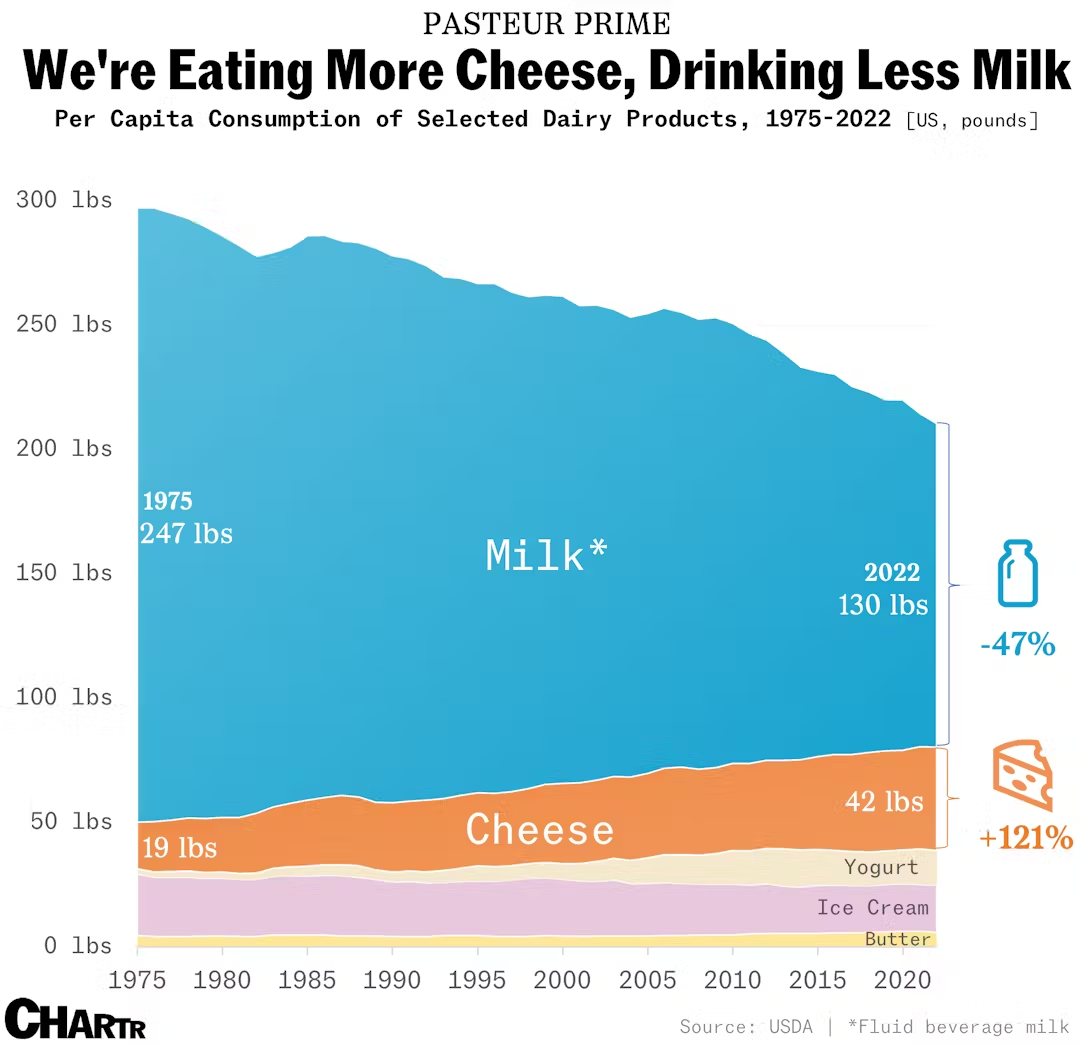
Interestingly, cheese is something of an exception in the world of dairy. As America has sprinkled, grated, and sliced its way through more and more cheese, there’s also been a concurrent 47% decline in fluid milk consumption observed over the same period. In the 20th century, drinking milk was a mainstay of daily life, with its nutritional completeness cementing its place in the American ideal of “growing big and strong” (as well as giving us arguably the best ad campaign of the ‘90s).
Today, a considerable number of people have ditched dairy in favor of plant-based milks like almond, soy, and oat for ethical and dietary reasons (parallel with a counterculture of anti-milk drinking, which some people think is simply “gross”). The boom in alt-milks created a lucrative landscape for fledgling brands like Oatly, which at one point was worth an eye-watering $13 billion (although it is now worth just a tiny fraction of that, some $530 million).
Meanwhile, non-dairy cheeses haven’t taken off in quite the same way. Iterations have struggled to recreate the flavor and texture, with some people, frankly, scarred by sampling a few of these pseudo-cheese attempts, as even VeganCheese.co itself admits.
The discrepancy between these dairy dupes might boil down to one of the unique selling points of regular dairy cheese. As outlined by Bloomberg, the process of making a complex, artisan-derived product from a few simple ingredients, which is hard to do at home, carries weight with an increasingly organic-oriented public.
As well as this, the high protein content of dairy cheese is resonating with a growing number of “gains-conscious” consumers. For example, typically divisive but protein-dense cottage cheese has recently blown up on social media. The longer list of generally viral TikTok recipes also has a very high hit rate for having cheese as a main ingredient.
As Americans dine out more, they may also err on the side of their favorite foods — many of which involve at least some degree of cheese (think: pizza, burgers, pasta)…
Americans eat mozzarella more than any other cheese, with the average citizen getting through 12.55 pounds in 2022, per the USDA.
Consumption of the semi-soft Italian cheese has been sharply on the rise since it knocked cheddar off the top spot back in 2010; though, cheddar has hardly fallen out of favor, with the average person eating over 11 pounds of it each year. Interestingly, processed cheese (think: melty slices) has been mounting a comeback since 2020, after consumption dropped at the turn of the millennium.
What do crude oil and cheese have in common? Not a lot, except that America can’t seem to function without either… and, in recent years, they’ve both become an important American export.
Indeed, while most of America’s favorite cheeses originally derive from elsewhere in the world, the US still makes much of its own supply, accounting for some 29% of the world’s cheese production, second only to the European Union, per the USDA. And, in recent years, it’s started selling more of it abroad.
The US has been a net exporter of cheese since 2010, sending over 450,000 metric tons at its 2022 peak to large international markets like Mexico, where America accounts for 87% of all imported cheese… sales of American cheese abroad are only expected to grow, with the USDA forecasting cheese exports to rise 17% from 2023-24…
… While authentic varieties from places like France and Italy must still be shipped into the country, the US has gone all-in on its own overseas sales. Part of this can be chalked up to the continued drive in global demand for cheese, but the US also has a history of having too much of it lying around.
In 1981, when faced with a milk surplus, the federal government under Ronald Reagan began storing the product as cheese in huge quantities. In fact, the ~560 million pounds of cheese mostly kept in subterranean facilities was at one point costing the government ~$1 million a day in storage and interest costs, according to the Washington Post.
While many countries follow the same food stockpiling rulebook to stabilize prices, a recent surge in milk production, alongside the decline in milk consumption, has meant that America’s cheese pile hasn’t gone anywhere. New, tariff-subsidized deals and a greater national appetite for the yellow stuff have helped… but not by enough. As of August 2024, the total cheese cold in storage holdings in the US was reported to be ~1.4 billion pounds…
More on “Making America Grate Again”: “America is eating, and exporting, more cheese than ever before,” from @chartrdaily.
* G. K. Chesterton
###
As we stuff the crust, we might note that today is National Farmers Day in the U.S.

“If I could go to dinner with one person, alive or dead, I think I would choose alive”*…

… OK, but when? Nathan Yau unpacks the data on when Americans eat dinner…
I know dinner time varies around the world, but I wanted to know if dinner time was different within the United States, and if so, by how much. Who eats the earliest? Who eats the latest?
Using data from the American Time Use Survey [here], between 2018 to 2022, we can see the percentage of households in the country who were eating during a given time…
The tasty results: “When is Dinner, By State,” from @flowingdata.
* B. J. Novak
###
As we take our seats, we might send tasty and nutritious birthday greetings to Antoine-Augustin Parmentier; he was born on this date in 1737. A pharmacist and nutritionist, he pioneered the extraction of sugar from sugar beets and (in 1805, when he was Inspector-General of the Health Service under Napoleon) established the first mandatory smallpox vaccination campaign. But he is best remembered as a vocal promoter of the potato as a food source for humans.
Starting in the 1870s, many dishes including potatoes were named in honor of: potage, velouté, or crème Parmentier, a potato and leek soup (AKA vichyssoise); hachis Parmentier, a cottage or shepherd’s pie; brandade de morue parmentier, salt cod mashed with olive oil and potatoes; pommes or garniture Parmentier, cubed potatoes fried in butter; purée Parmentier, mashed potatoes; and salade Parmentier, potato salad.
Thought it’s probably coincidental, today is also National Julienne Fries Day.

“Every restaurant needs to have a point of view”*…

Launched in 1931 by former amateur boxer Art Whizin, the Chili Bowl chain had 22 outposts at its peak. Each building was round and shaped like a chili bowl with 26 stools around a circular counter where diners could get the signature dish: an open-faced burger blanketed with chili. This 1937 photo shows the original Chili Bowl, located at 3012 Crenshaw Boulevard.
One stop on a wonderful tour of La La Land’s most exceptional eateries; see them all at: “LA’s Awesome History Of Weird, Food-Shaped Restaurants.”
* Danny Meyer
###
As we muse on the mimetic, we might sparea thought for Charles Elmé Francatelli; he died on this date in 1876. A Italian chef working in England, renown in his time, he was chef to Queen Victoria and Prince Albert for a time, chef of the St. James Club, among other prestigious postings . But he is probably better remembered for his best-selling cookbooks, The Modern Cook (1845), A Plain Cookery Book for the Working Classes, The Cook’s Guide and Housekeeper’s & Butler’s Assistant, and The Royal English and Foreign Confectionery Book.


You must be logged in to post a comment.