Posts Tagged ‘knowledge’
“With my tongue in one cheek only, I’d suggest that had our palaeolithic ancestors discovered the peer-review dredger, we would be still sitting in caves”*…

As a format, “scholarly” scientific communications are slow, encourage hype, and are difficult to correct. Stuart Ritchie argues that a radical overhaul of publishing could make science better…
… Having been printed on paper since the very first scientific journal was inaugurated in 1665, the overwhelming majority of research is now submitted, reviewed and read online. During the pandemic, it was often devoured on social media, an essential part of the unfolding story of Covid-19. Hard copies of journals are increasingly viewed as curiosities – or not viewed at all.
But although the internet has transformed the way we read it, the overall system for how we publish science remains largely unchanged. We still have scientific papers; we still send them off to peer reviewers; we still have editors who give the ultimate thumbs up or down as to whether a paper is published in their journal.
This system comes with big problems. Chief among them is the issue of publication bias: reviewers and editors are more likely to give a scientific paper a good write-up and publish it in their journal if it reports positive or exciting results. So scientists go to great lengths to hype up their studies, lean on their analyses so they produce “better” results, and sometimes even commit fraud in order to impress those all-important gatekeepers. This drastically distorts our view of what really went on.
There are some possible fixes that change the way journals work. Maybe the decision to publish could be made based only on the methodology of a study, rather than on its results (this is already happening to a modest extent in a few journals). Maybe scientists could just publish all their research by default, and journals would curate, rather than decide, which results get out into the world. But maybe we could go a step further, and get rid of scientific papers altogether…
A bold proposal: “The big idea: should we get rid of the scientific paper?,” from @StuartJRitchie in @guardian.
Apposite (if only in its critical posture): “The Two Paper Rule.” See also “In what sense is the science of science a science?” for context.
###
As we noodle on knowledge, we might recall that it was on this date in 1964 that AT&T connected the first Picturephone call (between Disneyland in California and the World’s Fair in New York). The device consisted of a telephone handset and a small, matching TV, which allowed telephone users to see each other in fuzzy video images as they carried on a conversation. It was commercially-released shortly thereafter (prices ranged from $16 to $27 for a three-minute call between special booths AT&T set up in New York, Washington, and Chicago), but didn’t catch on.

“A mind that is stretched by a new idea can never go back to its original dimensions”*…
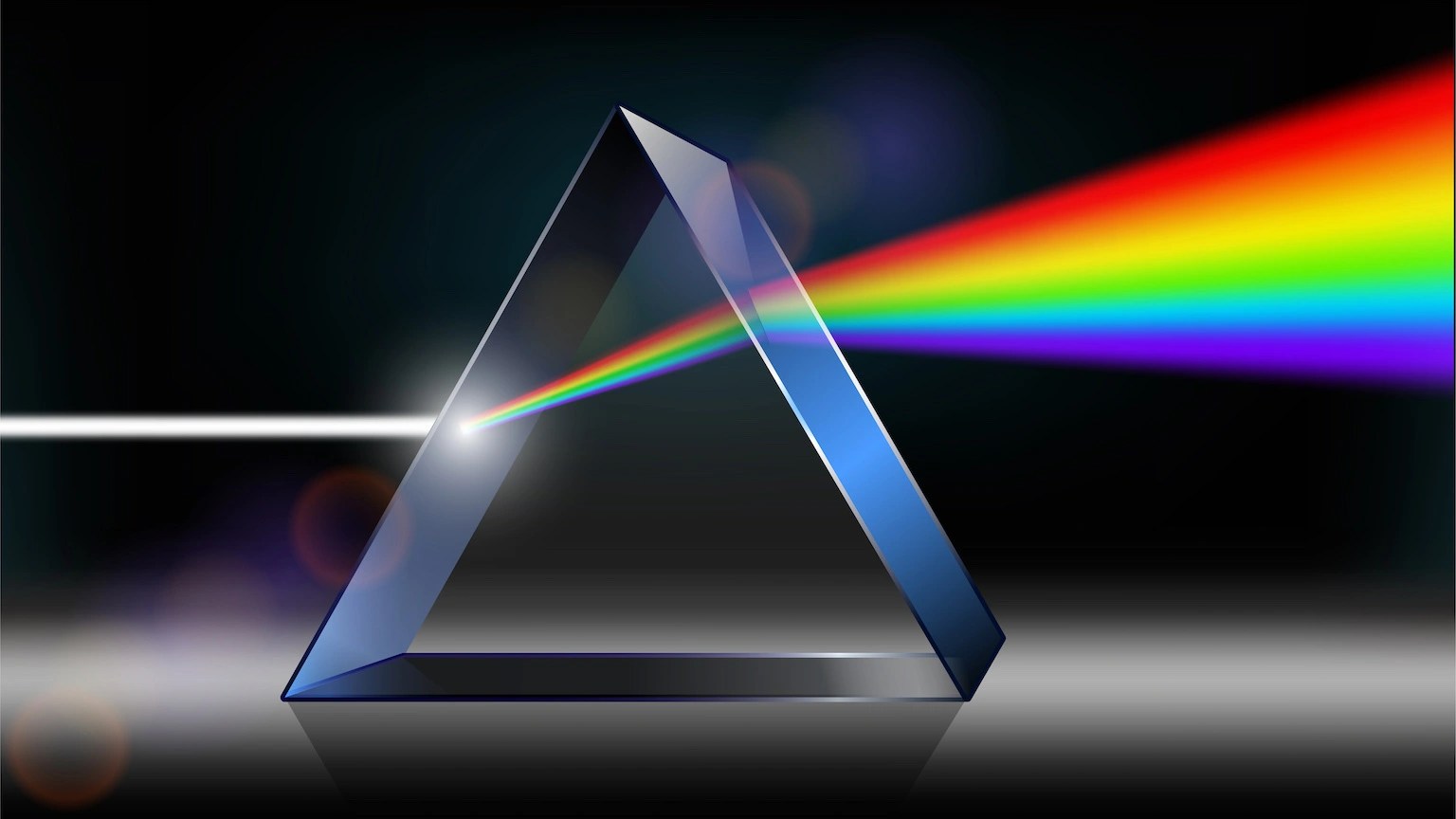
Alex Berezow observes (in an appreciation of Peter Atkins‘ Galileo’s Finger: The Ten Great Ideas of Science) that, while scientific theories are always being tested, scrutinized for flaws, and revised, there are ten concepts so durable that it is difficult to imagine them ever being replaced with something better…
In his book The Structure of Scientific Revolutions, Thomas Kuhn argued that science, instead of progressing gradually in small steps as is commonly believed, actually moves forward in awkward leaps and bounds. The reason for this is that established theories are difficult to overturn, and contradictory data is often dismissed as merely anomalous. However, at some point, the evidence against the theory becomes so overwhelming that it is forcefully displaced by a better one in a process that Kuhn refers to as a “paradigm shift.” And in science, even the most widely accepted ideas could, someday, be considered yesterday’s dogma.
Yet, there are some concepts which are considered so rock solid, that it is difficult to imagine them ever being replaced with something better. What’s more, these concepts have fundamentally altered their fields, unifying and illuminating them in a way that no previous theory had done before…
The bedrock of modern biology, chemistry, and physics: “The ten greatest ideas in the history of science,” from @AlexBerezow in @bigthink.
* Oliver Wendell Holmes
###
As we forage for first principles, we might send carefully-calcuated birthday greetings to Georgiy Antonovich Gamov; he was born on this date in 1904. Better known by the name he adopted on immigrating to the U.S., George Gamow, he was a physicist and cosmologist whose early work was instrumental in developing the Big Bang theory of the universe; he also developed the first mathematical model of the atomic nucleus. In 1954, he expanded his interests into biochemistry and his work on deoxyribonucleic acid (DNA) made a basic contribution to modern genetic theory.
But mid-career Gamow began to shift his energy to teaching and to writing popular books on science… one of which, One Two Three… Infinity, inspired legions of young scientists-to-be and kindled a life-long interest in science in an even larger number of other youngsters (including your correspondent).

“Learning never exhausts the mind”*…

As regular readers know, each year Tom Whitwell shares a list of the more intriguing things he’s learned over the year; happily, 2021 is no exception…
10% of US electricity is generated from old Russian nuclear warheads. [Geoff Brumfiel]
The entire global cosmetic Botox industry is supported by an annual production of just a few milligrams of botulism toxin. Pure toxin would cost ~$100 trillion per kilogram. [Anthony Warner]
Wearing noise cancelling headphones in an open-plan office helps a little bit — reducing cognitive errors by 14% — but actual silence reduces those errors by one third. [Benjamin Müller & co]
Until 1873, Japanese hours varied by season. There were six hours between sunrise and sunset, so a daylight hour in summer was 1/3rd longer than an hour in winter. [Sara J. Schechner]
48 other fascinating finds at: “52 things I learned in 2021,” from @TomWhitwell.
* Leonardo da Vinci
###
As we live and learn, we might recall that it was on this date in 1545, in response to the Protestant Reformation, that the Council of Trent (Concilium Tridentinum) was convened by the Roman Catholic Church. Its work concluded in 1563; and its results were published in 1564, condemning what the Catholic Church deemed to be the heresies of Protestants. The embodiment of the Counter-Reformation, The Council of Trent established a firm and permanent distinction between the two practices of faith.

“Beware of him who would deny you access to information, for in his heart he dreams himself your master”*…

Stewart Brand once suggested that “Information wants to be free. Information also wants to be expensive. …That tension will not go away.” Indeed, it seems to be growing…
Aaron Swartz was 26 years old when he took his own life. He did so under the shadow of legal prosecution, pursued by government lawyers intent on maximal punishment. If found guilty, he potentially faced up to 50 years in prison and a $1 million dollar fine. Swartz’s crime was not only legal, but political. He had accessed a private computer network and gained possession of highly valuable information with the goal of sharing it. His actions threatened some of the most powerful, connected, and politically protected groups in the country. Their friends in the government were intent on sending a message.
It’s the kind of story you would expect about some far-off political dissident. But Swartz took his life in Brooklyn on a winter day in 2013 and his prosecutor was the U.S. federal government. When Swartz died, he was under indictment for 13 felony charges related to his use of an MIT computer to download too many scientific articles from the academic database JSTOR, ostensibly for the purpose of making them freely available to the public. Ultimately, Swartz potentially faced more jail time for downloading academic papers than he would have if he had helped Al Qaeda build a nuclear weapon. Even the Criminal Code of the USSR stipulated that those who stored and distributed anti-Soviet literature only faced five to seven years in prison. While prosecutors later pointed toward a potential deal for less time, Aaron would still have been labeled a felon for his actions—and to boot, JSTOR itself had reached a civil settlement and didn’t even pursue its own lawsuit.
But Aaron’s cause lived on. This September marks the ten-year anniversary of Sci-Hub, the online “shadow library” that provides access to millions of research papers otherwise hidden behind prohibitive paywalls. Founded by the Kazakhstani computer scientist Alexandra Elbakyan—popularly known as science’s “pirate queen”—Sci-Hub has grown to become a repository of over 85 million academic papers.
The site is popular globally, used by millions of people—many of whom would otherwise not be able to finish their degrees, advise their patients, or use text mining algorithms to make new scientific discoveries. Sci-Hub has become the unacknowledged foundation that helps the whole enterprise of academia to function.
Even when they do not need to use Sci-Hub, the superior user experience it offers means that many people prefer to use the illegal site rather than access papers through their own institutional libraries. It is difficult to say how many ideas, grants, publications, and companies have been made possible by Sci-Hub, but it seems undeniable that Elbakyan’s ten-year-old website has become a crucial component of contemporary scholarship.
The success of Sci-Hub has made it a target for injunctions and investigations. Academic publishers have sued Sci-Hub repeatedly, opponents have accused the site’s creators of collaborating with Russian intelligence, and private sector critics have dubbed it a threat to “national security.” Elbakyan recently tweeted out a notification she received that the FBI had requested her personal data from Apple.
Whatever happens to Sci-Hub or Elbakyan, the fact that such a site exists is something of a tragedy. Sci-Hub currently fills a niche that should never have existed. Like the black-market medicine purchased by people who cannot afford prescription drugs, its very being indicts the official system that created the conditions of its emergence…
The cost of individually purchasing all the articles required to complete a typical literature review could easily amount to thousands of dollars. Beyond paying for the articles themselves, academics often have to pay steep fees to publish their research. Meanwhile, most peer reviewers and editors charged with assessing, correcting, and formatting papers do not receive compensation for their work.
It’s particularly ironic that this situation exists alongside a purported digital “infodemic” of misinformation. The costs of this plague are massive, from opposition to the pandemic response to the conspiracy theories that drove a loving father to fire his gun inside a pizza parlor and a man to kill a mafia boss accused of having ties to the deep state. But few public figures, if any, draw the direct connection between the expensive barricades around scientific research and the conspicuous epistemic collapse of significant portions of the American political discourse…
Whether intended or not, the impossibly high paywalls of academic publishers only serve to keep scientific information out of the population’s hands. What makes this even more discordant is that the people being prevented from accessing the information are often also the taxpayers who helped fund the research in the first place.
By framing the debate about Sci-Hub as one concerning property rights, both advocates of Elbakyan’s site and its detractors fall afoul of what John Gall called the “operational fallacy.” In his book The Systems Bible, Gall defined the operational fallacy as a situation where “the system itself does not do what it says it is doing.” In other words, what a system calls itself is not always a reliable indicator of its true function. In this case, the name of the “academic publishing industry” implies that it is supposed to be involved in the dissemination of scholarship. But the effective function of the academic publishing industry as it actually exists is to prevent the dissemination of scholarly work.
Given the example of Sci-Hub, the easy logistics of internet publication, and the funding structure of academic research, it seems clear that in the absence of the academic publishing industry, scholarship would be more widely available, not less. If the academic publishing industry did not exist, scientists could still do their research—in fact, it would be easier to do so as more people would have access to scholarly literature. The peer-review process could still function normally—though there are good reasons to change that as well. And the resulting papers could simply be posted in a place where anyone could read them.
When we explore the actual function of the academic publishing industry—restricting access to scholarly research—we see that these publishers have little in common with the companies that have opposed other file-sharing sites. When several record companies sued Napster in 2001, they could make the legitimate case that the economic well-being of the musicians, producers, and all the people who were needed to distribute recorded music was at stake. No such parallel exists in the case of Sci-Hub. Scientists are not paid by the publishers. Peer reviewers are not paid by the publishers. Distribution itself, as proven by Sci-Hub and its more law-abiding brother arXiv, is cheap enough to be provided to the public for free. It’s not surprising, then, that polls reveal that scientists overwhelmingly support Sci-Hub…
Eminently worth reading in full– the civic tragedy of academic publishing: “A World Without Sci-Hub,” from Jason Rhys Perry (@JRhysParry) in @palladiummag.
###
As we share and share alike, we might recall that it was on this date in 1970 that the Public Broadcasting Service– PBS– premiered, when it took over (most of) the functions of its predecessor, National Educational Television.
Unlike the five major commercial broadcast television networks in the United States (ABC, CBS, NBC, Fox, and The CW) PBS is technically not a network, but rather a program distributor that provides television content and related services to its member stations. Each station sets its own schedule and programs local content (e.g., local/state news, interviews, cultural, and public affairs programs) that supplements content provided by PBS and other public television distributors.

“Reality is merely an illusion, albeit a very persistent one”*…

Objective reality has properties outside the range of our senses (and for that matter, our instruments); and studies suggest that our brains warp sensory data as soon as we collect it. So we’d do well to remember that we don’t have– and likely won’t ever have– perfect information…
Many philosophers believe objective reality exists, if “objective” means “existing as it is independently of any perception of it.” However, ideas on what that reality actually is and how much of it we can interact with vary dramatically.
Aristotle argued, in contrast to his teacher Plato, that the world we interact with is as real as it gets and that we can have knowledge of it, but he thought that the knowledge we could have about it was not quite perfect. Bishop Berkeley thought everything existed as ideas in minds — he argued against the notion of physical matter — but that there was an objective reality since everything also existed in the mind of God. Immanuel Kant, a particularly influential Enlightenment philosopher, argued that while “the thing in itself” — an object as it exists independently of being subjectively observed — is real and exists, you cannot know anything about it directly.
Today, a number of metaphysical realists maintain that external reality exists, but they also suggest that our understanding of it is an approximation that we can improve upon. There are also direct realists who argue that we can interact with the world as it is, directly. They hold that many of the things we see when we interact with objects can be objectively known, though some things, like color, are subjective traits.
While it might be granted that our knowledge of the world is not perfect and is at least sometimes subjective, that doesn’t have to mean that the physical world doesn’t exist. The trouble is how we can go about knowing anything that isn’t subjective about it if we admit that our sensory information is not perfect.
As it turns out, that is a pretty big question.
Science both points toward a reality that exists independently of how any subjective observer interacts with it and shows us how much our viewpoints can get in the way of understanding the world as it is. The question of how objective science is in the first place is also a problem — what if all we are getting is a very refined list of how things work within our subjective view of the world?
Physical experiments like the Wigner’s Friend test show that our understanding of objective reality breaks down whenever quantum mechanics gets involved, even when it is possible to run a test. On the other hand, a lot of science seems to imply that there is an objective reality about which the scientific method is pretty good at capturing information.
Evolutionary biologist and author Richard Dawkins argues:
“Science’s belief in objective truth works. Engineering technology based upon the science of objective truth, achieves results. It manages to build planes that get off the ground. It manages to send people to the moon and explore Mars with robotic vehicles on comets. Science works, science produces antibiotics, vaccines that work. So anybody who chooses to say, ‘Oh, there’s no such thing as objective truth. It’s all subjective, it’s all socially constructed.’ Tell that to a doctor, tell that to a space scientist, manifestly science works, and the view that there is no such thing as objective truth doesn’t.”
While this leans a bit into being an argument from the consequences, he has a point: Large complex systems which suppose the existence of an objective reality work very well. Any attempt to throw out the idea of objective reality still has to explain why these things work.
A middle route might be to view science as the systematic collection of subjective information in a way that allows for intersubjective agreement between people. Under this understanding, even if we cannot see the world as it is, we could get universal or near-universal intersubjective agreement about something like how fast light travels in a vacuum. This might be as good as it gets, or it could be a way to narrow down what we can know objectively. Or maybe it is something else entirely.
While objective reality likely exists, our senses might not be able to access it well at all. We are limited beings with limited viewpoints and brains that begin to process sensory data the moment we acquire it. We must always be aware of our perspective, how that impacts what data we have access to, and that other perspectives may have a grain of truth to them…
Objective reality exists, but what can you know about it that isn’t subjective? Maybe not much: “You don’t see objective reality objectively: neuroscience catches up to philosophy.”
* Albert Einstein
###
As we ponder perspective, we might send thoughtful birthday greetings to Confucius; he was born on this date in 551 BCE. A a Chinese philosopher and politician of the Spring and Autumn period, he has been traditionally considered the paragon of Chinese sages and is widely considered one of the most important and influential individuals in human history, as his teachings and philosophy formed the basis of East Asian culture and society, and continue to remain influential across China and East Asia today.
His philosophical teachings, called Confucianism, emphasized personal and governmental morality, correctness of social relationships, justice, kindness, and sincerity. Confucianism was part of the Chinese social fabric and way of life; to Confucians, everyday life was the arena of religion. It was he who espoused the well-known principle “Do not do unto others what you do not want done to yourself,” the Golden Rule.

You must be logged in to post a comment.