Posts Tagged ‘humor’
“A good name is rather to be chosen than riches”*

From Gregory Ross and his lovely blog Futility Closet…
Unusual names of racehorses, collected by Paul Dickson in What’s in a Name?, 1996:
- Bates Motel
- Disco Inferno
- Up Your Assets
- Race Horse
- Crashing Bore
- English Muffin
- Leo Pity Me
- Cold Shower
- T.V. Doubletalk
- Ranikaboo
- Holy Cats
- Hadn’t Orter
- Strong Strong
- Honeybunny Boo
After the Jockey Club rejected several names for one filly in the 1960s, the exasperated owner wrote “You Name It” on the application form. “We did,” said registrar Alfred Garcia. “We approved the name You Name It, and I think she turned out to be a winner, too.”
This race, run at Monmouth Park in 2010, seems to take on a deeper significance near the end:
(Thorouhbred racing remains a controversial endeavor. Whenever a racing accident severely injures a well-known horse, such as the major leg fractures that led to the euthanization of 2006 Kentucky Derby winner Barbaro, or 2008 Kentucky Derby runner-up Eight Belles, animal rights groups have denounced the Thoroughbred racing industry. On the other hand, advocates of racing argue that without horse racing, far less funding and incentives would be available for medical and biomechanical research on horses. They note that though horse racing is hazardous, veterinary science has advanced. Previously hopeless cases can now be treated, and earlier detection through advanced imaging techniques like scintigraphy can keep at-risk horses off the track. Still, the argument continues.
More fundamentally, there is a class divide at the root of the sport: racehorse owners are largely the wealthy; “railbirds”– those who bet on the sport– largely working class.)
* Proverbs 22:1 (usually attributed to Solomon)
###
As noodle on nomenclature, we might recall tah it was on this date in 1896 that Paulding Farnham of Tiffany & Co. begona work on a commission to create a silver cup to be awarded to the winner of the Belmont Stakes (the third leg of the Triple Crown).
It was commissioned by August Belmont Jr., in memory of his late father August Belmont, the namesake of the Belmont Stakes. Farnham used 350 ounces of sterling silver to craft a 27-inch high, 30-pound acorn-shaped bowl supported by a pedestal composed of three Thoroughbred horse statues representing the foundation stallions Eclipse, Matchem, and Herod. The bowl was 15 inches across and 14 inches at the base and had a prominent acorn and oak motif symbolizing the development of modern racing Thoroughbreds from those three foundation sires. The lid was crowned with a statue of the elder Belmont’s racehorse Fenian who secured Belmont’s first win in the Belmont Stakes in 1869.
The cup cost $1,000 to create and augmented the $4,000 in prize money given to the race winner. In the event, August Belmont, Jr. himself won the Cup when his horse Hastings won the race.
The burden of parting with such a creation– more and more costly over the years was such that, from 1908, winners are presented the permanent trophy for ceremonial purposes only, the winning owner of the Belmont Stakes receives a smaller replica of the trophy to keep. The winning trainer and jockey are also presented with (even smaller) replicas, while the winning groom is given a statuette to commemorate the victory.

“What’s for breakfast?”*…
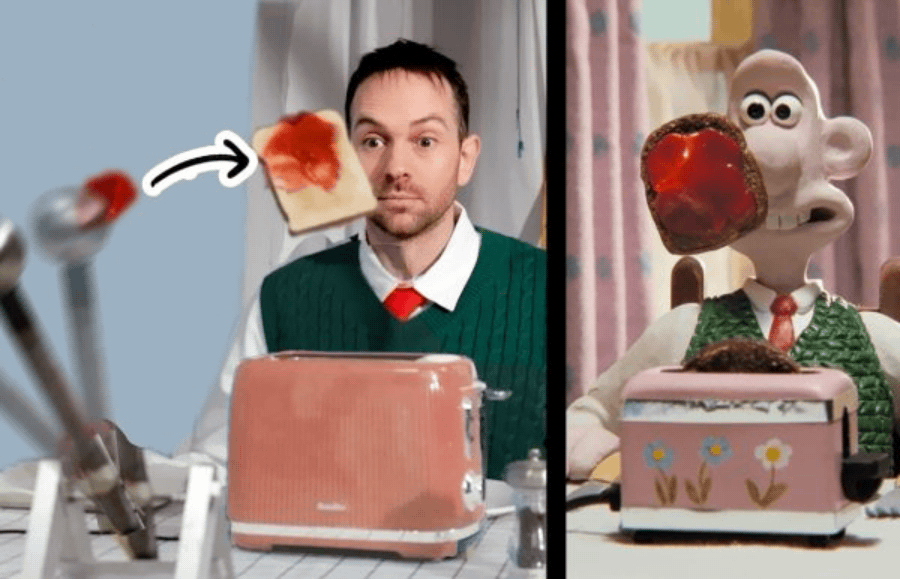
… and, we moderns tend to ask, how can we make it faster and easier?… a tendency lampooned, a la Rube Goldberg, in Aardman‘s Classic Wallace and Gromit outing The Wrong Trousers:
Joseph Herscher, proprietor of the wonderful Joseph’s Machines, put the concept to test: he built it…
I’m sure it comes as no surprise that Wallace & Gromit: The Wrong Trousers was a favourite of mine growing up, so this machine has been extra special to create! This video not only contains TWO different versions of the final result, but I also take you through my process of figuring out dangerous stunts, solving sticky jam complications and treating dog stage fright. Fun fact: The trousers at the very end were lent to me by Aardman Studios!
Modernizing the most important meal of the day: “Joseph’s Machines recreates Wallace & Gromit’s automated breakfast machine,” via the terrific The Kids Should See This.
* “When you wake up in the morning, Pooh,” said Piglet at last, “what’s the first thing you say to yourself?”
“What’s for breakfast?” said Pooh. “What do you say, Piglet?”
“I say, I wonder what’s going to happen exciting today?” said Piglet.
Pooh nodded thoughtfully. “It’s the same thing,” he said.”
– A. A. Milne
###
As we ponder progress, we might recall that today is National Quiche Lorraine Day.

“I know not all that may be coming, but be it what it will, I’ll go to it laughing”*…
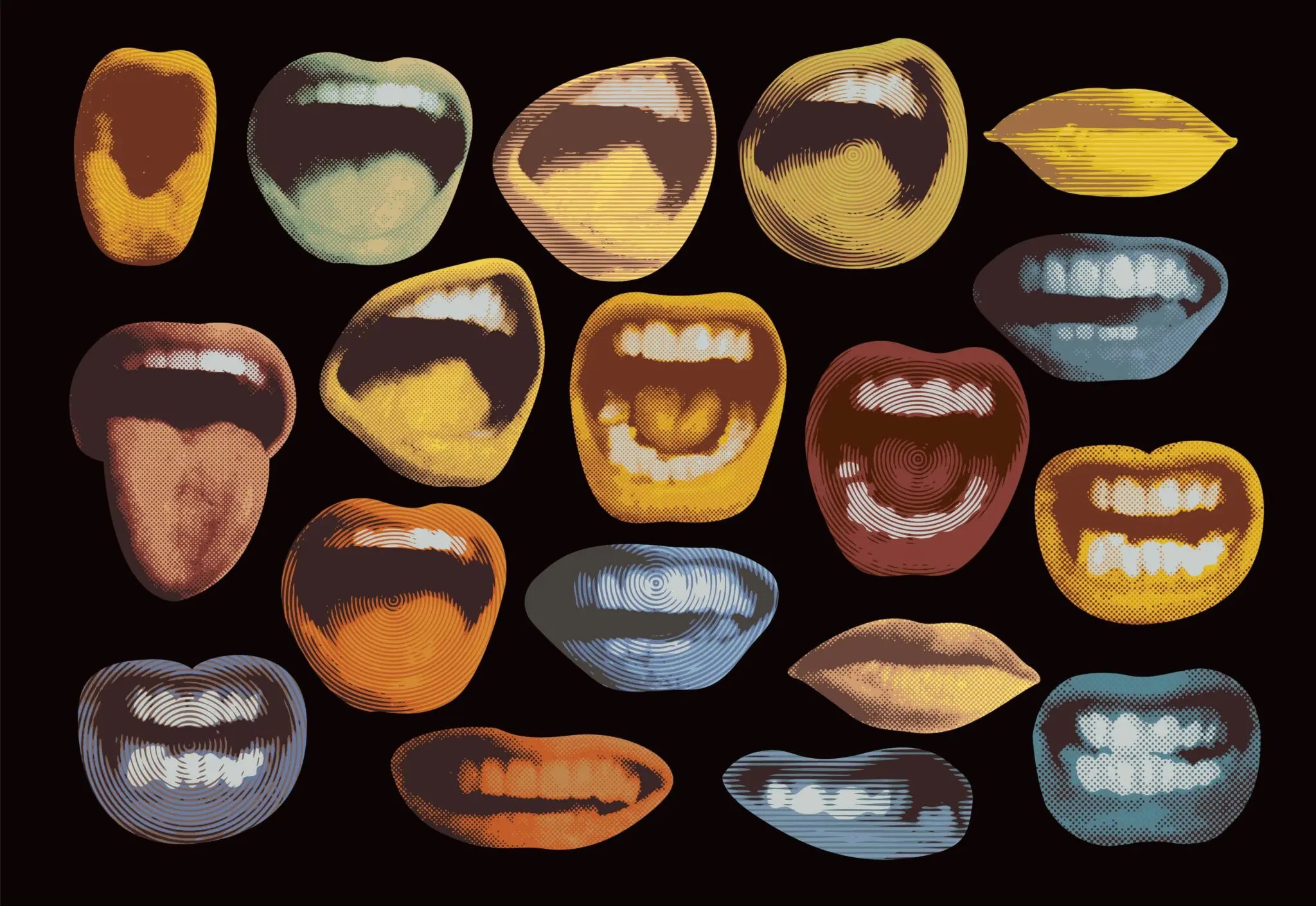
Antropologist Kristin Bell explores laughter as a far more complex phenomenon than simple delight, reflecting on its surprising power to disturb and disrupt…
… As an anthropologist specializing in health and medicine, laughter isn’t really in my professional wheelhouse—unless you subscribe to the view that laughter is the best medicine. My interest in the topic is more personal, not just because of my history as a former Giggling Gertie, but because it’s a behavior that is much less straightforward than it seems.
Ideally, laughter is something we share. According to anthropologist Munro Edmonson, laughter is sociable; it ideally invites a similar response. Indeed, it has contagious qualities: When we hear someone laugh, we often laugh, or at least smile, ourselves—an effect consistently shown through psychological research. This is how we ended up with canned laughter on sitcoms. Studios realized that the sound of laughter made their shows seem funnier to their audiences, while also giving them a degree of control over when people laughed…
… According to the anthropologist Munro Edmonson, the central feature of laughter is aspiration: We release a forceful puff of air as we laugh.
But laughter is also characterized by repetition. In fact, given the extraordinary variability in the sounds people make when they laugh, repetition is what makes laughter universally recognizable. This is why writers conventionalize laughter as “he-he-he,” “ha-ha-ha,” and “ho-ho-ho” (well, at least if you’re Santa Claus). Notably, this feature isn’t exclusive to English representations. Edmonson observed that laughter is represented in Russian as xe, xe, xe; in Tzotzil—a Mayan language spoken in Mexico—it’s ‘eh ‘eh ‘eh.
We don’t fully understand why humans make this sound when we laugh. When 19th-century biologist Charles Darwin set out to explore the biology of feelings in The Expression of the Emotions in Man and Animals, he wrote, “why the sounds which man utters when he is pleased have the peculiar reiterated character of laughter we do not know.” However, the response seems to occur well before culture is embedded in our behaviors: Recognizable laughter is evident in babies from 4 months old.
Nor is laughter unique to humans. Great apes respond to being tickled in much the same way that humans do. Of course, because chimps, bonobos, et cetera have a different vocal apparatus than humans, it sounds more like a dog panting or a person having an asthma attack or energetic sex. However, these primate sounds have the same “peculiar, reiterated character” that Darwin highlighted in humans. This is why laughter is characterized by scientists as a cross-species phenomenon.
Yet, while laughter is evident in the play of other primates, it’s unclear whether they have a sense of humor. Recent research provides evidence of a capacity for teasing through nonverbal behavior. But, as the evolutionary psychologist Robert Provine noted, “there is no evidence that they respond to apparently humorous behavior, their own or that of others, with laughter.”
Giving meaning to laughter seems to be distinctively human.
While some laughter is deliberate, much of it is outside conscious control—an attribute that goes a long way toward explaining the widespread Euro-American ambivalence toward the act. According to the literary scholar Sebastian Coxon, a growing anxiety about mirth is evident in the European historical record from the late Middle Ages. For example, the 16th-century Dutch philosopher Desiderius Erasmus, better known for advising children to “replace farts with coughs,” also warned against “loud laughter and immoderate mirth.”
Notably, Erasmus singled out the “neighing sound that some people make when they laugh” for particular opprobrium—an impulse evident in the contemporary tendency to compare unrestrained laughter with the cries of animals: “howling” with laughter, “hooting” in delight, “snorting” with amusement, and so on. Indeed, while the term “guffaw” might not be borrowed from animal noises, it certainly sounds like it could be.
These characterizations reveal an attempt to draw laughter into the realm of taste and civility—categories that are strongly tied to gender and class strictures. For instance, in an 1860 etiquette guide titled The Ladies’ Book of Etiquette and Manual of Politeness: A Complete Hand Book for the Use of the Lady in Polite Society, readers are counseled to moderate their laughter during a dinner party so that it’s neither too loud nor too soft: “To laugh in a suppressed way, has the appearance of laughing at those around you, and a loud, boisterous laugh is always unlady-like.”
Social judgments abound not just in relation to how we laugh but what we laugh at—as an early 19th-century artwork attests. “Laughter,” etched by British artist and social commentator Thomas Rowlandson, depicts a man laughing at his cat adorned in a bonnet and cloak.

The caption reads: ‘Laughter is one of the most pleasing of the Passions and is with difficulty accounted for, as risibility is frequently excited from the most simple causes—as is the case with the Countryman and his Cat.’ The implication is that “unsophisticated” countrymen lack “class” and are therefore easily amused. (For the record, I am equally unsophisticated, because I will never not find cats pictured with human props funny.)
Still, despite the association between humor and taste, it’s often physical comedy that gets the most laughs. It’s not a coincidence that the first truly global hit comedy was The Gods Must Be Crazy, whose sublime “Tati-like slapstick routines” drew audiences from New York and Caracas to Tokyo and Lagos, despite being widely condemned by film reviewers as apartheid propaganda.
Indeed, screenwriters have long predicted that physical humor will become increasingly prominent in Hollywood comedies because it “transcends dialogue and even most cultural differences,” and movies must increasingly appeal to a global market to produce reliable returns. (As far as I can tell, the future of Hollywood films is basically Marvel movies and slapstick comedies.)…
… As McDonald observes, laughter disrupts the notion of a stable, coherent self—reflected in terms like “cracking up” and “bursting.” Moreover, unrestrained laughter doesn’t just signify a lack of personal control; it can be politically dangerous as well. The literary historian Joseph Butwin writes of “seditious laughter” as a weapon of the oppressed that can serve to destabilize hierarchies and power relations.
In the end, it’s clear that laughter is a deeply curious thing. It’s simultaneously the most social of human expressions and the one most disruptive of social edifices and rules. Shared, sanctioned laughter might bring us together, but unsanctioned laughter shows the cracks, revealing that we’re not quite who we think…
“The Strange Power of Laughter“
* Herman Melville, Moby-Dick
###
As we muse on mirth (and lest we forget that sometimes laughter is simply a function of simple delight), we might recall that it was on this date in 1929 that Rube Goldberg‘s “The Inventions of Professor Lucifer Gorgonzola Butts, A.K.,” cartoon series first published in Colliers Weekly.

“I set records that will never be equaled, 90% I hope are never printed”*…

The Inimitable Ray Ratto in the always-illuminating Defector on the legend that was Bob Uecker, who died, ten days shy of his 91st birthday, on January 16…
It is not difficult to find people who loved Bob Uecker unreservedly. There is a good reason for this: He was the last genuinely and instinctively funny person in baseball history. He was the god of Milwaukee even if you include all the Green Bay Packers going back to before Vince Lombardi. He was the face and voice of baseball cinema, the man whose line-reading made “Ju-u-u-u-st a bit outside” so good that “iconic” doesn’t remotely cover its impact. Even if you’re not a seamhead, you likely came across Bob Uecker and smiled.
So Thursday’s announcement that Uecker has died at age 90, due to small cell lung cancer, came as a blow. Nine decades is a good long run, but there was never a sense that he was running out of material; Uecker was still a joy to hear on Brewers broadcasts even in Year 54 of being the voice of Wisconsin baseball for two-and-a-half generations. The reaction to his passing was unanimous in the same ways and for the same reasons that the response to Vin Scully’s death was unanimous—it was an outpouring of both sadness at the loss and gratitude for all the time we got to spend with him. In an epochally angry time in America, at a moment when it isn’t hard to find even anti-puppy polemics with a keystroke, Uecker gets a pass from most everyone. Yes he defined baseball, but he also managed to become more than merely Mister Baseball. From the moment of his first appearance on Johnny Carson’s definitive version of the Tonight Show, which Uecker earned merely by mastering the tripartite arts of comedy writing, unabashed self-deprecation, and martini-dry humor, he was recognizable as that rarest of Americans, the guy you’d sit back down to listen to even if you were already halfway out the door. Put another way, Norm Macdonald thought he was one of the funniest men he ever met. Beat that with a stick.
He did WrestleManias. He starred in a not-entirely-forgettable sitcom, Mr. Belvedere. He did Major League and Homeward Bound; he did Puppy Dog Pals and Futurama. He did beer commercials that didn’t make you want to hurl bricks through your appliances. He did a Hall of Fame speech that exceeds all other such orations by a significant margin because he’d had years to perfect it, even though his playing career was its direct antithesis. Uecker was skilled enough to remain in the major leagues for six years, and smart enough to parlay a lifetime batting average of .19973—not .200, which is what his Baseball Reference page reads—into a career. One-ninety-nine-and-change. He managed to make that his calling card until he could replace it with his far superior ability to help others enjoy their day.
Like Scully, Uecker passed through life with almost no detractors, and not just because his methodology was to beat everyone to the detracting. He gave off an aura of knowing who he was and was not. Just as important, he knew where he was and was not. Uecker was more than content with being the definition of Milwaukee, staying in the Brewers’ radio booth for more than half a century, all while doing the movies and ads and national broadcasts that somehow made him even more Milwaukee-centric. It was an act of rooting to the ground that is almost unheard of today. Uecker didn’t put a shine on the Brewers when they didn’t deserve one, but he didn’t kick them when they were down, either. That’s because he wasn’t parlaying the Brewers gig into some better team in a bigger city. Mostly, he was revered for never leaving town even when Los Angeles might have been more logistically favorable. Who knew that being grounded was the best way to fly?
There will be flurries of other tributes in the next few days, from all corners; Uecker covered a great deal of ground despite starting his public life in a perpetual squat. Unlike nearly every other athlete of his era, Uecker was actually far better and more popular at everything that wasn’t athletics-based. He got 90 years out of this simple-to-explain-and-hard-to-deliver formula, and he succeeded less by luck or planning and more by simply being what he was—the guy who made everyone happier by the simple act of entering their space…
“Bob Uecker Was Just the Best” (gift article) from @rayratto.bsky.social in @defector.bsky.social.
* Bob Uecker, in his Hall of Fame speech
###
As we honor the authentic, we might spare a thought for Henry Louis “Hank” Aaron; he died on this date in 2021. Considered one of the greatest Major League baseball players in history, he spent 21 seasons with the Milwaukee/Atlanta Braves in the National League (NL) and two seasons with the Milwaukee Brewers in the American League (AL). At the time of his retirement, Aaron held most of the game’s key career power-hitting records. He broke the long-standing MLB record for career home runs held by Babe Ruth and remained the career leader for 33 years, until Barry Bonds surpassed his famous total of 755 in 2007. He hit 24 or more home runs every year from 1955 through 1973 and is one of only two players to hit 30 or more home runs in a season at least fifteen times.
Aaron and Uecker were teammates in Milwaukee…
“Say what you will about the ten commandments, you must always come back to the pleasant fact that there are only ten of them”*…

The Republican Governor of Louisiana, Jeff Landry, recently signed a law requiring state’s classrooms to display a copy of the Ten Commandments. The Onion explores the pros and cons of requiring religious doctrine in public schools…
- PRO: A good way to cover up the bullet holes.
- CON: Use of woke “Thou/Thy” pronouns.
- PRO: Great example of counting to 10 in the real world.
- CON: Just finished building golden calf.
- PRO: Least out-of-date thing in classroom.
- CON: True believers would display the entirety of the King James Bible.
- PRO: Distracts from how weird the Pledge of Allegiance is.
- CON: Not enough funding to print it out.
“Pros And Cons of Displaying The 10 Commandments in Every Classroom,” from @TheOnion.
* H. L. Mencken
###
As we ponder piety, we might recall that on this date in 1862, Charles Lutwidge Dodgson, a young Oxford mathematics don, took the daughters of the Dean of Christ Church College– Alice Liddell and her sisters– on a boating picnic on the River Thames in Oxford. To amuse the children he told them the story of a little girl, bored by a riverbank, whose adventure begins when she tumbles down a rabbit hole into a topsy-turvy world called “Wonderland.” The story so captivated the 10-year-old Alice that she begged him to write it down. The result was Alice’s Adventures in Wonderland, published in 1865 under the pen name “Lewis Carroll,” with illustrations by John Tenniel.

You must be logged in to post a comment.