Posts Tagged ‘humor’
“The study of taxonomy in its broadest sense is probably the oldest branch of biology or natural history as well as the basis for all the other branches, since the first step in obtaining any knowledge of things about us is to discriminate between them and to learn to recognize them”*…

The Holotypic Occlupanid Research Group (HORG) is a tongue-in-cheek non-profit organization founded in 1994 by John Daniel (a visual effects artist with a background in invertibrate zoology). It playfully researches and classifies plastic bread clips, calling them “occlupanids,” as if they were a species in a scientific taxonomy (Kingdom: Plasticae), documenting their diverse forms from around the world. They treat these common, often-ignored objects as fascinating organisms, collecting specimens and creating a taxonomy and a database of their shapes, colors, and “species”…
This site contains several years of research in the classification of occlupanids. These small objects are everywhere, dotting supermarket aisles and sidewalks with an impressive array of form and color. The Holotypic Occlupanid Research Group has taken on the mantle of classifying this most common, yet most puzzling, member of phylum Plasticae…
Occlupanids are generally found as parasitoids on bagged pastries in supermarkets, hardware stores, and other large commercial establishments. Their fascinating and complex life cycle is unfortunately severely under-researched. What is known is that they take nourishment from the plastic sacs that surround the bagged product, not the product itself, as was previously thought. Notable exceptions to this habit are those living off rubber bands and on analog watch hands.
In most species, they often situate themselves toward the center of the plastic bag, holding in the contents. This leads to speculation that the relationship may be more symbiotic than purely parasitic.
Their stunning diversity and mysterious habits have entranced many a respectable scientist into studying, collecting, and cataloging specimens late into the night.
This site contains several years of research in the classification of occlupanids. For those of you who do not consume sliced bread, occlupanids do not form an important part of your life. For the rest of the world, These small objects are everywhere, dotting supermarket aisles and sidewalks with an impressive array of form and color.
The Holotypic Occlupanid Research Group has taken on the mantle of classifying this most common, yet most puzzling, member of phylum Plasticae.
They’ve even created a handy, free print-your-own set of cut-out identifcation placards “for the excitable amateur scientists out there who want to start their own collection!”
Ready, set, browse: HORG- Holotypic Occlupanid Research Group
For more on HORG, see here and here.
###
As we contemplate classification, we might send insightful birthday greetings to a man who revolutionized the understanding of the taxonomy of his field, Harold Varmus; he was born on this date in 1939. A microbiologist and medical doctor, he shared (with J. Michael Bishop) the 1989 Nobel Prize in Physiology or Medicine for discovery of the cellular origin of retroviral oncogenes— a discovery that led to great strides in the understanding, diagnosis, and treatment of a variety of cancers.

“For the simplicity on this side of complexity, I wouldn’t give you a fig. But for the simplicity on the other side of complexity, for that I would give you anything I have.”*…

Indeed. And as Jordana Cepelewicz reports, mathematicians are on the case…
Repetition doesn’t always have to be humdrum. In mathematics, it is a powerful force, capable of generating bewildering complexity.
Even after decades of study, mathematicians find themselves unable to answer questions about the repeated execution of very simple rules — the most basic “dynamical systems.” But in trying to do so, they have uncovered deep connections between those rules and other seemingly distant areas of math.
For example, the Mandelbrot set, which I wrote about last month [see also the almanac entry here], is a map of how a family of functions — described by the equation f(x) = x2 + c — behaves as the value of c ranges over the so-called complex plane. (Unlike real numbers, which can be placed on a line, complex numbers have two components, which can be plotted on the x- and y-axes of a two-dimensional plane.)
No matter how much you zoom in on the Mandelbrot set, novel patterns always arise, without limit. “It’s completely mind-blowing to me, even now, that this very complex structure emerges from such simple rules,” said Matthew Baker of the Georgia Institute of Technology. “It’s one of the really surprising discoveries of the 20th century.”
The complexity of the Mandelbrot set emerges in part because it is defined in terms of numbers that are themselves, well, complex. But, perhaps surprisingly, that isn’t the whole story. Even when c is a straightforward real number like, say, –3/2, all sorts of strange phenomena can occur. Nobody knows what happens when you repeatedly apply the equation f(x) = x2 – 3/2, using each output as the next input in a process known as iteration. If you start iterating from x = 0 (the “critical point” of a quadratic equation), it’s unclear whether you will produce a sequence that eventually converges toward a repeating cycle of values, or one that continues to endlessly bounce around in a chaotic pattern…
[Cepelewicz runs through mathemeticians’ efforts to understand– and find explanation, if not order– in the complexity, concluding with the “entropy bagel”…]
… Galois conjugates [see here] also paved the way to the discovery of a mysterious object dubbed the “entropy bagel,” a glowing fractal ring in the complex plane. Entropy is a measure of randomness; in this context, it measures how difficult it is to predict the sequence of numbers generated by iterating x2 + c. In the last paper he wrote before he died in 2012, the renowned topologist William Thurston graphed the set of entropy values corresponding to almost a billion different real values of c — together with the Galois conjugates of those entropy values, which can be complex. The notion of entropy “is just on the real line, but somehow you can still see this shadow of the complex world,” Tiozzo said.
“You see that this is organizing itself into this incredible lacy fractal structure,” Koch said. “It’s so cool.” The entropy bagel is only one very complicated pattern that emerges from the iteration of real quadratic equations. “We’re still learning all these magical statements — little gems — about real quadratic polynomials,” she added. “You can always go back and be surprised by this thing you thought you knew extremely well.”…
Simple rules in simple settings continue to puzzle mathematicians, even as they devise intricate tools to analyze them: “‘Entropy Bagels’ and Other Complex Structures Emerge From Simple Rules,” from @jordanacep.bsky.social in @quantamagazine.bsky.social.
* Oliver Wendell Holmes
###
As we untangle, we might spare a thought for cherished creator of chaos, Milton Supman (better known by his stage name, Soupy Sales); he died on this date in 2009. A comedian, actor, radio-television personality, and jazz aficionado, he is best remembered for his local and network children’s television series, Lunch with Soupy Sales (later titled The Soupy Sales Show), which ran from 1953–1966, a collection of comedy sketches frequently ending with Sales receiving a pie in the face, which became his trademark.

“Metaphors and similes (puns, too, I might add) extend the dimensions and expand the possibilities of the world”*…
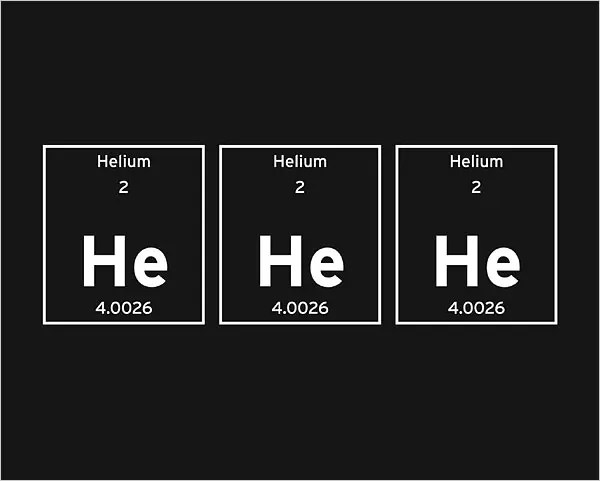
A. J. Jacobs, in defense of “the lowest form of humor“…
… I used to hate puns. Here’s an anti-pun passage from my first book, The Know-It-All – it occurs when I’m describing my trip to a Mensa convention (that’s the high IQ society).
Mensans love puns. I heard about how the eating of frogs’ legs makes the frogs hopping mad. A person who is interested in architecture has an edifice complex. When I met one Mensan who worked in a photo shop, he told me “It gives me a very negative outlook on life.”
“I shudder to think,” I responded, which simultaneously earned his respect and made me hate myself a lot.
Two reactions on re-reading this passage:
First, a photo shop? Things have certainly changed in twenty-plus years.
Second, maybe I shouldn’t have had so much self-loathing (and maybe I should have gone with the sentence “Things have certainly developed in twenty-plus years).
The point is, since writing my first book, I’ve made a U-turn on puns, or at least non-obvious twisty puns. I don’t consider myself a great punster. I’m no Myq Kaplan. But in recent years, I’ve improved a bit (or gotten worse, depending on your view of puns).
One reason for my newfound respect for puns is that I host a podcast all about word puzzles, which wouldn’t really exist without puns. Another is that my wife Julie is president of Watson Adventures Scavenger Hunts, a company that puts on events where teams work together to solve punny riddles (and have a delightful time doing it!)
But I like to tell myself that another reason I’m now pro-pun is that I had an epiphany: Puns serve a greater purpose. They make us more aware of something important about language: That it is often arbitrary, slippery, and ambiguous.
I believe my interest in puns has helped me become more linguistically aware, a more flexible thinker. Whenever I read the news nowadays, I’m hyper-conscious of the different meanings of words, which makes me more skeptical of people who try to manipulate language to make their point.
Consider the word “free” as an example. “Free” has multiple definitions. Mostly, it’s got a positive aura to it. So when you say “free market,” for instance, you’re immediately disposed to like a free market. But if a market is totally “free” in this sense—zero government regulations whatsoever—it may cause the opposite of freedom in other ways: monopolies thrive, customers lack freedom of choice, and workers lack freedom to negotiate.
Do I have proof that puns make us better thinkers? Sadly, there’s no decades-long study in which a pun-loving population and a pun-hating population create two societies from scratch, allowing us to study which is more susceptible to propaganda and authoritarianism.
But if you conduct a Google Scholar search, you can find some hints that back up my idea. Such as…
—A study in the journal Personality and Individual Differences argues that pun-based humor “not only facilitates insight problem-solving directly, but may also exert an indirect positive influence on insight problem-solving through cognitive flexibility.”
—A neuroscience paper arguing that puns ignite the same areas of the brain as frame-shifting, which is key for problem-solving.
—A paper linking awareness of ambiguous words with critical thinking.
So…maybe?
Puns, of course, have their downsides. First, I’ve been in conversations with people who are so focused on making puns that they can’t engage in meaningful dialogue.
Some argue, as Samuel Johnson allegedly did, that puns are a “lower form of wit.” (It’s not clear he said this, but he did once write that Shakespeare’s weakness for following puns “engulfed him in the mire.” Johnson later — allegedly, again — confessed to his own pun use, saying: “If I were to be punishèd for every pun I shed, there would be no puny shed of my punnish head.”)
Also in puns’ disfavor: people often refer to puns as “groaners.” But I’d argue not all puns are groaners. Only the easy ones. If someone on a tennis court complains about losing his balls and his friend replies with a comment about testicles, I don’t think the friend should automatically be awarded the Mark Twain Prize for American Humor.
On the other side of the spectrum, there are the puns so complex and intricate that they require mental gymnastics of a Simone Biles-ian level.
Perhaps the most elaborate pun I’ve run across is by Thomas Pynchon. In his novel Gravity’s Rainbow, Pynchon relates a story about the classic film director Cecille B. DeMille, a fleet of rowboats, and a bunch of criminals in the fur trade. Does this story advance the novel’s plot? Not at all, but it allowed Pynchon to write the following sentence at the end of the section:
“For DeMille, young fur henchman cannot be rowing.”
Get it? I didn’t. But when I looked it up, it turns out to be an elaborate pun on the phrase “40 million Frenchmen can’t be wrong,” which was a 1920s phrase arguing that France’s pro-alcohol, sex-positive attitudes were superior to America’s puritanism.
Perhaps you could accuse Pynchon of making too great a leap — that it’s no fun if there’s so little chance of figuring the pun out. But I still appreciate the effort.
I also appreciate when puns are pushed to their limit in another direction – namely, a relentless barrage of puns. In fact, I’ll end with my friend (and new dad!) Joe Sabia’s award-winning pun routine in the O. Henry Museum Pun-Off World Championships a few years back…
“Can Puns Save Democracy? Probably not. But maybe a little?“
See also: “Pun for the Ages” (gift article, and source of te image above)
And for contrast(?), enjoy: “A Collection of Terrible Puns.”
* “Metaphors and similes (puns, too, I might add) extend the dimensions and expand the possibilities of the world. When both innovative and relevant, they can wake up a reader, make him or her aware, through elasticity of verbiage, that reality—in our daily lives as well as in our stories—is less prescribed than tradition has led us to believe.” Tom Robbins, Wild Ducks Flying Backwards
###
As we double down on doble entendre, we might send painfully-observant birthday greetings to a man in whose repertoire puns sometimes figured, Lenny Bruce; he was born on this date in 1925. A comedian, social critic, and satirist, he was ranked (in a 2017 Roling Stone poll) the third best stand-up comic of all time– behind Richard Pryor and George Carlin, both of whom credit Bruce as an influence.
“The American Constitution was not written to protect criminals; it was written to protect the government from becoming criminals.”- Lenny Bruce

“The difference between screwing around and science is writing it down”*…

It’s that time of year again: the 2025 IgNobel Awards have been awarded. Jennifer Ouellette reports…
Does alcohol enhance one’s foreign language fluency? Do West African lizards have a preferred pizza topping? And can painting cows with zebra stripes help repel biting flies? These and other unusual research questions were honored tonight in a virtual ceremony to announce the 2025 recipients of the annual Ig Nobel Prizes… when the serious and the silly converge—for science.
Established in 1991, the Ig Nobels are a good-natured parody of the Nobel Prizes; they honor “achievements that first make people laugh and then make them think.” The unapologetically campy awards ceremony features miniature operas, scientific demos, and the 24/7 lectures whereby experts must explain their work twice: once in 24 seconds and the second in just seven words.
Acceptance speeches are limited to 60 seconds. And as the motto implies, the research being honored might seem ridiculous at first glance, but that doesn’t mean it’s devoid of scientific merit. In the weeks following the ceremony, the winners will also give free public talks, which will be posted on the Improbable Research website…
Read on for accounts (each both amusing and fascinating) of this year’s winners: “Meet the 2025 Ig Nobel Prize winners,” @jenlucpiquant.bsky.social in @arstechnica.com.
More at the web site of Improbable Research— “research that makes people LAUGH, then THINK”– the organization behind the IgNobels.
* Adam Savage (@asavage.bsky.social)
###
As we have some serious fun, we might we might spare a thought for a man who embodied the marriage of science and glee: Ron Toomer; he died on this date in 2011. Toomer began his career as an aeronautical engineer who contributed to the heat shields on NASA’s Apollo spacecraft. But in 1965, he joined Arrow Development, an amusement park ride design company, where he became a legendary creator of steel roller coasters. His first assignment was “The Run-Away Mine Train” (at Six Flags Over Texas), the first “mine train” ride, and the second steel roller coaster (after Arrow’s Matterhorn Ride at Disneyland). Toomer went on to design 93 coasters worldwide, and was especially known for his creation of the first “inversion” coasters (he built the first coasters with 1, 2, 3, 4, 5, 6, and 7, loops). In 2000, he was inducted in the International Association of Amusement Parks and Attractions (IAAPA) Hall of Fame as a “Living Legend.”


“Here is a book so dull that a whirling dervish could read himself to sleep with it. If you were to recite even a single page in the open air, birds would fall out of the sky and dogs drop dead”*…

Mark Frauenfelder surfaces a 1978 review from the marvelous Clive James…
In 1978, Clive James reviewed the official biography of Leonid Ilyich Brezhnev (General Secretary of the Communist Party of the Soviet Union from 1964 to 1982) by the Institute of Marxism-Leninism, CPSU Central Committee. “I read the whole thing from start to finish, waiting for the inevitable slip-up which would result in a living sentence. It never happened.”…
… Here’s an excerpt from the biography:
The plenum once again proved convincingly the CPSU’s monolithic unity, its stand on Leninist principles, and its political maturity. It demonstrated the fidelity of the Party and its Central Committee to Marxism-Leninism and expressed the unswerving determination of Communists to adhere to and develop steadfastly the Leninist standards of Party life and the principles of Party leadership, notably that of collective leadership, and boldly and resolutely to set aside every impediment to the creative work of Party and people...
“A review of the most boring book in the world,” from @boingboing.net.
And for the masochists among us: the full text of the biography.
* Clive James, from the review
###
As we tackle tedium, we might spare a thought for a spiritual forebearer of James: Samuel Johnson; he was born on this date in 1709. A poet, essayist, moralist, literary critic, biographer, editor, and lexicographer, Johnson’s best-known work was surely A Dictionary of the English Language, which he published in 1755, after nine years work– and which served as the standard for 150 years (until the completion of the Oxford English Dictionary [see the almanac entry in the “Clive James” link above]). That said, Dr. Johnson, as he was known, is probably best remembered as the subject of what Walter Jackson Bate called “the most famous single work of biographical art in the whole of literature”: James Boswell’s Life of Samuel Johnson.
But Johnson was, in his time, also a famous aphorist– the very opposite of a man he described to Boswell in 1784: “He is not only dull himself, but the cause of dullness in others”– a role he often played as an influential critic…
“What is written without effort is in general read without pleasure.”
“Worth seeing, yes; but not worth going to see.”
“A writer only begins a book. A reader finishes it.”
“I never desire to converse with a man who has written more than he has read.”
“A man who uses a great many words to express his meaning is like a bad marksman who, instead of aiming a single stone at an object, takes up a handful and throws at it in hopes he may hit.

Joshua Reynolds’ portrait of Dr. Johnson
You must be logged in to post a comment.